Opening a DMV renewal notice can turn a routine errand into an immediate question: why does this letter say STAR station required? The answer usually isn't that your car needs a completely different kind of emissions test. It means California has directed you to a station with an additional Bureau of Automotive Repair certification.
An all star smog check follows the state's normal inspection process, but the station must meet higher operational and performance standards. This guide explains when STAR certification matters, how to verify a legitimate station, what happens in the testing bay, and what you should do if your vehicle fails.
Table of Contents
- What an All Star Smog Check Really Means
- How the STAR Program Started and Why It Exists
- STAR vs Regular and Test-Only Stations
- The Higher Standards STAR Stations Must Meet
- When California Requires a STAR Smog Check
- How to Verify a Station and What Testing Involves
- Your Next Steps for Booking a STAR Smog Check
What an All Star Smog Check Really Means
STAR is a certification for the station, not a separate test for the vehicle. California's Smog Check process can include an OBD II inspection, visual emissions-control checks, and other required procedures depending on the vehicle. The California Smog Check program explains that vehicles from model year 2000 onward are inspected primarily through OBD II, while older vehicles may require additional evaporative-system and fuel-cap checks.
Think of STAR like a higher-level license displayed over the regular station license. A standard licensed station may be authorized to perform ordinary Smog Check inspections. A STAR-certified station has also demonstrated that it can meet BAR requirements for equipment, operations, and inspection performance.
That distinction matters because California doesn't send every vehicle to the same type of station. Some drivers can choose a regular licensed station. Others receive a DMV notice directing them to a STAR station, which means the certification changes where the inspection may be completed.
What STAR changes for you
At the bay, the technician still connects the vehicle to testing equipment and checks the systems required for that vehicle. The practical difference is the station's authority and oversight. A STAR station has been approved to handle vehicles that California considers part of a higher-risk inspection group, including vehicles identified through DMV direction.
A test-only STAR station can inspect and certify a vehicle, but it doesn't sell repair work. That separation can make the process easier to understand because the business evaluating the vehicle isn't also diagnosing and selling the repair.
Practical rule: Read the DMV notice before booking. If it says STAR station required, a nearby regular shop may not be able to complete the certification you need.
You can also review a plain-language explanation of what STAR-certified smog testing means before choosing a location. The four questions to answer are simple: Is STAR required for this vehicle, is the station certified, what will the inspection include, and what happens if the result is a fail?
How the STAR Program Started and Why It Exists
You arrive for a Smog Check expecting a simple pass-or-fail result. Behind that result, California also needs confidence that the station followed the right procedure and recorded the vehicle's information accurately. The STAR program was created to provide that added oversight.
California established STAR through Assembly Bill 2289, and the program began on January 1, 2013. It replaced the former Gold Shield Program, which ended on December 31, 2012. The Bureau of Automotive Repair STAR FAQ explains that STAR was designed to improve inspection quality and support California's emissions-reduction requirements.
The basic model works like a quality-control system. California identifies stations that can perform inspections under closer performance controls, then uses the program to direct certain vehicles to those locations. STAR certification applies to both test-only and test-and-repair businesses. It describes how a station's inspection work is monitored, not whether the business performs mechanical repairs.
Why station quality affects the driver
Your vehicle is only one part of a Smog Check. The technician must use approved equipment, follow the required testing procedure, enter accurate vehicle details, and interpret the result correctly. A skipped step or poorly maintained machine can produce a result that does not accurately reflect the vehicle's condition.
For the driver, STAR changes the level of accountability surrounding the inspection. BAR uses performance measures to compare a station's results with those of similar vehicles and reviews incidents that may indicate testing problems. This does not guarantee a passing result or make every repair recommendation correct. It gives the inspection process a clearer system for identifying problems and monitoring station performance.
The program also handles a large share of California's testing. In California's 2025 data, STAR stations represented 49% of licensed Smog Check stations but performed 83% of all Smog Check tests, according to BAR's STAR program information. STAR locations therefore completed a disproportionately large share of inspections compared with their number of facilities.
That reach explains why STAR is more than a label on a shop sign. It affects how California manages inspection quality and, for some drivers, which station can complete the required inspection.
STAR vs Regular and Test-Only Stations
Drivers often treat “STAR,” “test-only,” and “test-and-repair” as three competing station categories. They are different labels that describe different things. STAR describes certification, while test-only and test-and-repair describe what the business is allowed to do after inspecting the vehicle.
A regular station may perform standard Smog Check services for vehicles that aren't subject to a STAR direction. A STAR station may be test-only or test-and-repair, but it must meet the additional BAR requirements attached to STAR certification.
| Station Type | Can Perform Repairs | Can Process STAR or Directed Notices | Best For |
|---|---|---|---|
| Regular test-and-repair station | Yes | Not necessarily | Drivers whose renewal doesn't require STAR and who want inspection and repair at one business |
| Regular test-only station | No | Not necessarily | Drivers seeking an inspection without repair sales when STAR isn't required |
| STAR test-and-repair station | Yes | Yes, when authorized for the vehicle | Drivers who need STAR testing and may want diagnosis or repairs at the same location |
| STAR test-only station | No | Yes | Drivers who need STAR certification and prefer a testing-only business |
The important distinction after a failure
A test-only station can't repair the vehicle. If the inspection finds a problem, the station should provide the inspection result and explain the next step, but you'll need a separate repair provider. A STAR test-and-repair station may diagnose and repair the vehicle, although the station's authority to certify a particular directed vehicle still depends on the applicable rules.
A regular shop isn't automatically less competent at repairs. It may just not have the STAR certification needed for a DMV-directed inspection. Conversely, a STAR label doesn't mean the station is a full-service repair facility.
The BAR's explanation of STAR-certified test-only centers can help you understand why some drivers deliberately choose a station that doesn't sell repairs. The model separates the inspection decision from repair revenue, which gives the customer a clearer boundary between testing and fixing.
Prices vary by station, vehicle, location, and services included. A STAR station may charge a different fee from a nearby regular station, so ask for the current price before authorizing the inspection.
The Higher Standards STAR Stations Must Meet
STAR certification rests on measurable requirements rather than a sign on the building. BAR reviews station performance and can evaluate whether the business continues to meet the program's standards. That means certification isn't a permanent reward earned once and kept without review.
The BAR STAR program requirements include several performance measures. One compares the station's Similar Vehicle Failure Rate with the industry-wide failure rate for similar vehicles. For STAR eligibility, that station rate must be at least 50% of the industry-wide failure rate for similar vehicles. The same source lists a Gear Shift Incident rate no greater than 2% of certified vehicles and an Excessive Test Deviation Rate of no more than 1.
What the scorecard means in everyday terms
| Metric | Standard Required |
|---|---|
| Similar Vehicle Failure Rate | At least 50% of the industry-wide failure rate for similar vehicles |
| Gear Shift Incident rate | No greater than 2% of certified vehicles |
| Excessive Test Deviation Rate | No more than 1 |
| Ongoing program compliance | The station must continue meeting BAR operational and performance requirements |
A failure-rate comparison doesn't mean a STAR station should make every vehicle pass. A vehicle with a genuine emissions problem should fail, regardless of the station's certification. The comparison helps BAR identify unusual station patterns that may deserve closer review.
Gear-shift incidents and test deviations relate to how the inspection is carried out. For a driver, those controls support a more consistent process, particularly when the vehicle's result is unexpected. The standards also give BAR a basis for accountability if testing behavior falls outside acceptable limits.
STAR certification is best understood as a continuing performance obligation, not a one-time quality badge.
The certification also doesn't promise a repair, a pass, or a particular wait time. It tells you that the station has qualified for the STAR program and must continue operating within the program's rules.
When California Requires a STAR Smog Check
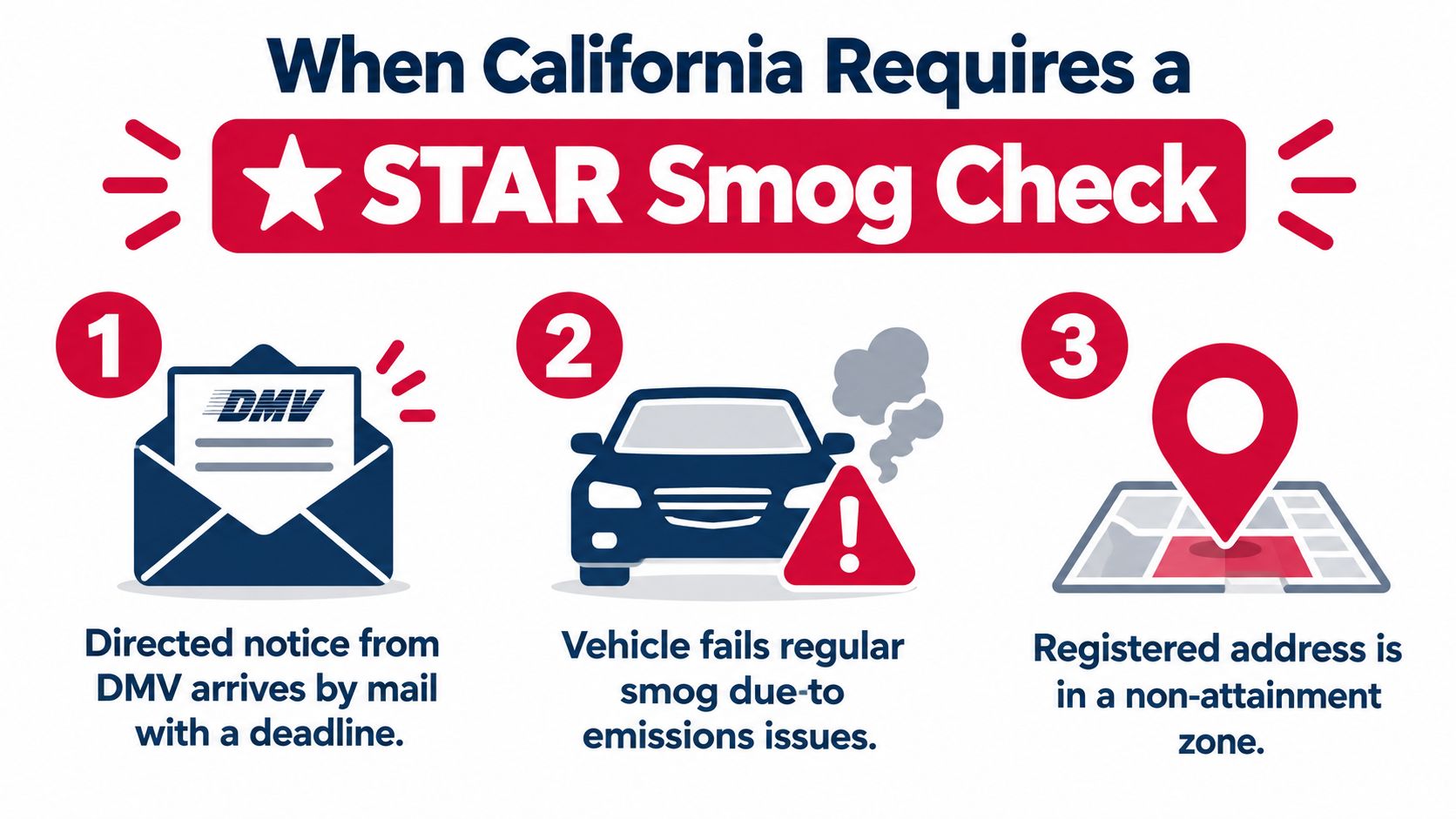
You are renewing your registration, and the DMV notice says your vehicle must visit a STAR station. That instruction changes where you can test. It is different from a general reminder to complete a Smog Check, so read the notice carefully before booking an appointment or driving to a shop.
A directed notice places the vehicle in a more controlled inspection pathway. California may direct a vehicle because of its testing history or emissions profile. Vehicle age, an ownership transfer, or a routine renewal can require a Smog Check without automatically requiring STAR testing.
Check the instruction, not the rumor
Use the notice as your starting point:
- Read the renewal notice. Look for wording that requires a STAR station or identifies a specific inspection type.
- Match the vehicle details. Confirm that the notice belongs to the vehicle you are taking for testing and that the registration information is current.
- Check the station listing. Use the BAR listing to find nearby STAR-certified businesses and see whether each offers test-only or test-and-repair service.
- Call before your visit. Ask whether the station can process the exact requirement shown on your notice.
A first-time California registration or ownership transfer may involve a Smog Check, but neither situation alone establishes a STAR requirement. A failed ordinary inspection also does not automatically mean every later test must take place at a STAR station. The DMV instruction or applicable BAR process determines the required testing location.
After a directed test, the station must submit the required electronic certification. If that certification is missing, the DMV may be unable to complete your registration renewal. A failed result can lead to repairs and another inspection, but the result itself does not turn every future test into a STAR requirement.
California also has special provisions for older and collector vehicles. BAR's current materials state that collector-vehicle exemptions are scheduled to be extended in stages beginning January 1, 2028, subject to final rulemaking, as reflected in the DMV's Smog Inspections guidance. Abbreviated inspections remain available for certain vehicles that are 35 years old or older. Check the current requirements before assuming your vehicle qualifies for an exemption.
How to Verify a Station and What Testing Involves
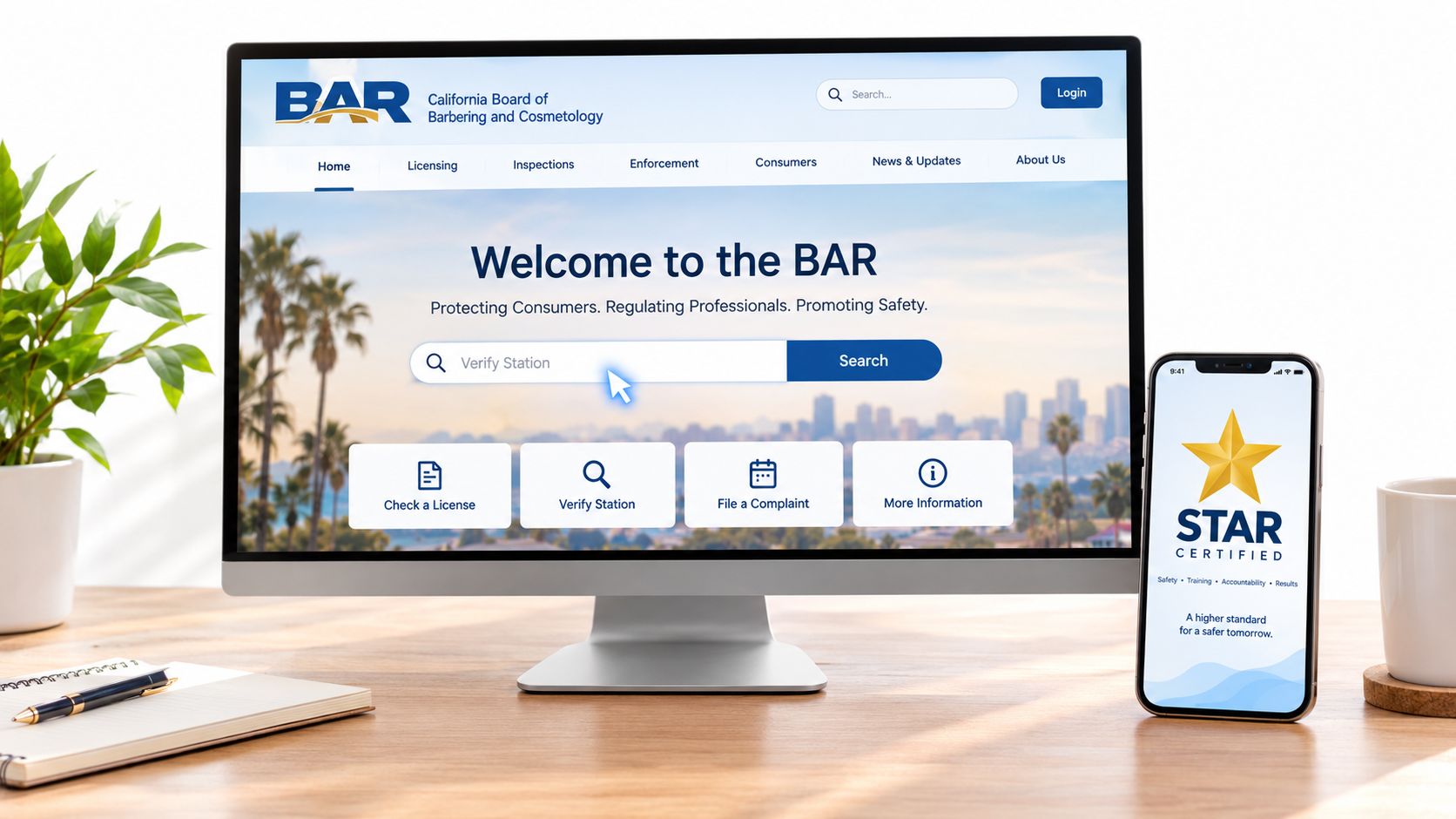
Start with the BAR station lookup rather than relying only on a business name, search advertisement, or a sign in a parking lot. Enter the location information, review the station's listing, and confirm the STAR designation, station type, license information, and any disciplinary information shown in the official record.
A legitimate business should also display the required station information at its location. Look for a posted STAR decal or other official signage, then compare the business name and address with the BAR listing. If the listing says test-only but an employee immediately proposes repair work, ask who would perform the repair and whether the inspection business is separate.
What the technician checks
For a newer vehicle, the technician generally connects an approved tool to the vehicle's OBD II system and reviews emissions-related information. The malfunction indicator lamp must illuminate with the key on and engine off, then turn off once the engine is running. If that required behavior isn't present, the vehicle fails the OBD portion.
The inspection can also include visual and functional checks of emissions equipment. Older vehicles may require different procedures, including tailpipe or evaporative-system checks, depending on the vehicle and the applicable program rules. A technician should be able to explain which procedure applies without promising a result in advance.
The visit length varies with the vehicle, station workload, and inspection type. Ask about the expected timing when you book rather than relying on a generic estimate.
After a pass, the station electronically sends the certification to DMV. You generally don't need to carry a paper certificate to a DMV counter, although you should keep your receipt and any inspection documentation.
After a fail, a test-only station can explain the result and provide the report, but it doesn't perform the repair. BAR and DMV guidance direct failed vehicles toward the appropriate next steps, including the BAR Referee Program in situations where that process applies.
Your Next Steps for Booking a STAR Smog Check
You can avoid most last-minute problems by treating the appointment as a document and deadline task, not just a quick drive to a repair shop.
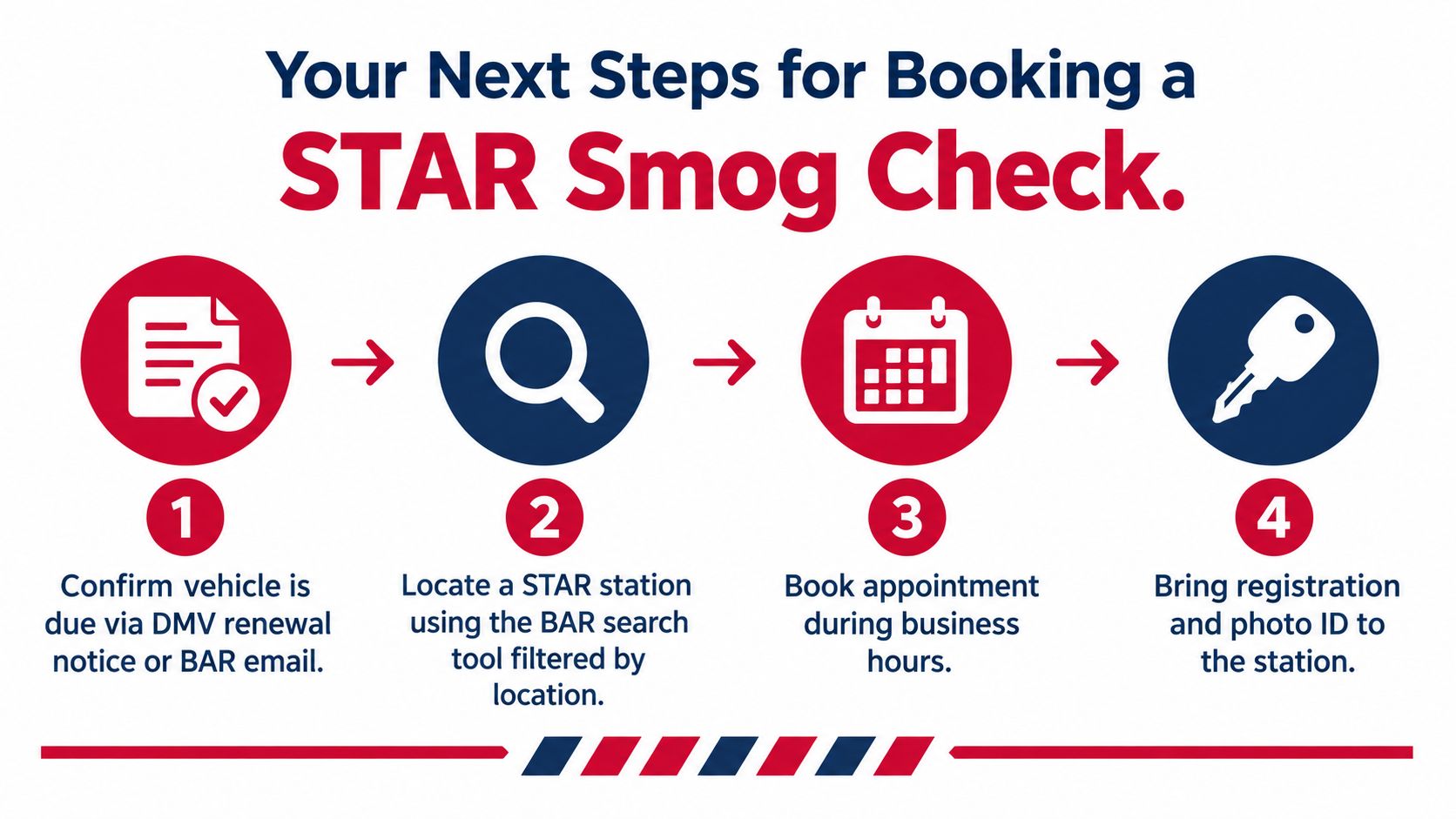
- Confirm the requirement. Check the DMV renewal notice or official BAR communication. Identify whether it says STAR station required and note the registration deadline.
- Find the correct station. Use the BAR search tool and filter the results by location and certification type. Confirm whether the business is test-only or test-and-repair.
- Call before booking. Ask the station to confirm its STAR status, current fee, accepted payment methods, appointment policy, and ability to handle your vehicle.
- Prepare your documents. Bring the DMV or BAR notice, current registration information, and a form of identification. The station may need accurate vehicle and owner details to complete the transaction.
Before arrival, drive long enough for the engine to reach normal operating temperature, unless your vehicle's condition makes that unsafe. Check that the fuel cap seals correctly, and remove aftermarket electronics that could create warning-light issues or interfere with the vehicle's normal diagnostic systems.
For more guidance on the cost of a STAR smog check, contact the station directly because pricing depends on the vehicle and service. Don't approve repairs based only on a verbal explanation. If the vehicle fails, request the complete Vehicle Inspection Report, keep every receipt and estimate, and ask whether you may qualify for California's Consumer Assistance Program if the repair burden meets the program's requirements.
A sensible planning window is 6 to 8 weeks before registration renewal. That gives you time to arrange repairs, complete a retest, resolve questions about the result, and allow the electronic certification to reach DMV without turning the renewal deadline into an emergency.
Fire House Smog provides STAR-certified test-only smog inspections and California DMV registration services at its Antioch location. Visit Fire House Smog to review the available services and contact the station before booking your STAR inspection.
You open your California DMV renewal notice and see a requirement for a STAR smog check. Your car runs normally, the check engine light is off, and you assume any nearby smog shop can handle it. That assumption is how drivers waste a trip.
The right California smog test station depends on your vehicle, the wording on your DMV notice, and the station's certification. Modern OBD rules create another trap: a vehicle can appear to run perfectly and still fail because its readiness monitors haven't completed. The practical approach is simple, verify the station requirement first, confirm the vehicle's diagnostic status, and choose a location that can complete the inspection and any related DMV task without sending you across town.
Table of Contents
- Why Your DMV Notice Might Require a STAR Station
- Understanding STAR Certification and Test-Only Rules
- What Happens During a Smog Test Visit
- How to Choose the Right Smog Station for Your Vehicle
- How Fire House Smog Solves Common Driver Frustrations
- What to Do If Your Vehicle Fails the Smog Test
- Your Pre-Visit Checklist for a Smooth Smog Test
Why Your DMV Notice Might Require a STAR Station
A STAR requirement on your renewal notice isn't a suggestion. It tells you that the state has directed your vehicle to a station participating in California's higher-performance inspection program. A regular licensed smog shop may be able to test many vehicles, but it might not be authorized to complete the inspection your DMV record requires.
California's modern STAR program began on January 1, 2013, replacing the older Gold Shield and Test Only designations. The California Bureau of Automotive Repair's STAR program guidance says STAR stations must meet higher performance standards. The program was created under Assembly Bill 2289 to improve Smog Check quality and support the state's emissions-reduction targets.
What the STAR direction means
The key distinction is between your vehicle's directed status and the general ability of a shop to perform smog inspections. If the DMV notice says STAR, select a station that clearly identifies itself as STAR certified before you arrive. Don't rely on a sign that only says “smog check.”
You can also review what STAR-certified smog testing means before booking. The important point is that STAR certification applies to the station's eligibility and performance standards. It doesn't mean every STAR station provides the same services, accepts every vehicle, or performs repairs.
California requires a Smog Check every other year for registration renewal in the situations covered by the state program. Vehicles involved in a change of ownership may also need testing at a STAR station, depending on their directed status. For lighter vehicles, the current framework generally covers gasoline, hybrid, and alternative-fuel vehicles from model year 1976 and newer, while diesel vehicles from 1998 and newer are included. Vehicles less than four model years old can pay a smog abatement fee instead of testing for the first eight years of registration, subject to the state's rules and the notice issued for that vehicle.
Avoid the wrong-shop mistake
Before leaving home, read the renewal notice closely. Look for wording that specifies STAR, a test-only station, or another inspection direction. If the notice is unclear, ask the station to verify whether it can process the vehicle before starting the test.
Practical rule: Match the station to the DMV instruction, not merely to the vehicle's age or the closest shop.
That one check prevents the most frustrating outcome, arriving at a capable shop that still can't submit the inspection required for your registration.
Understanding STAR Certification and Test-Only Rules
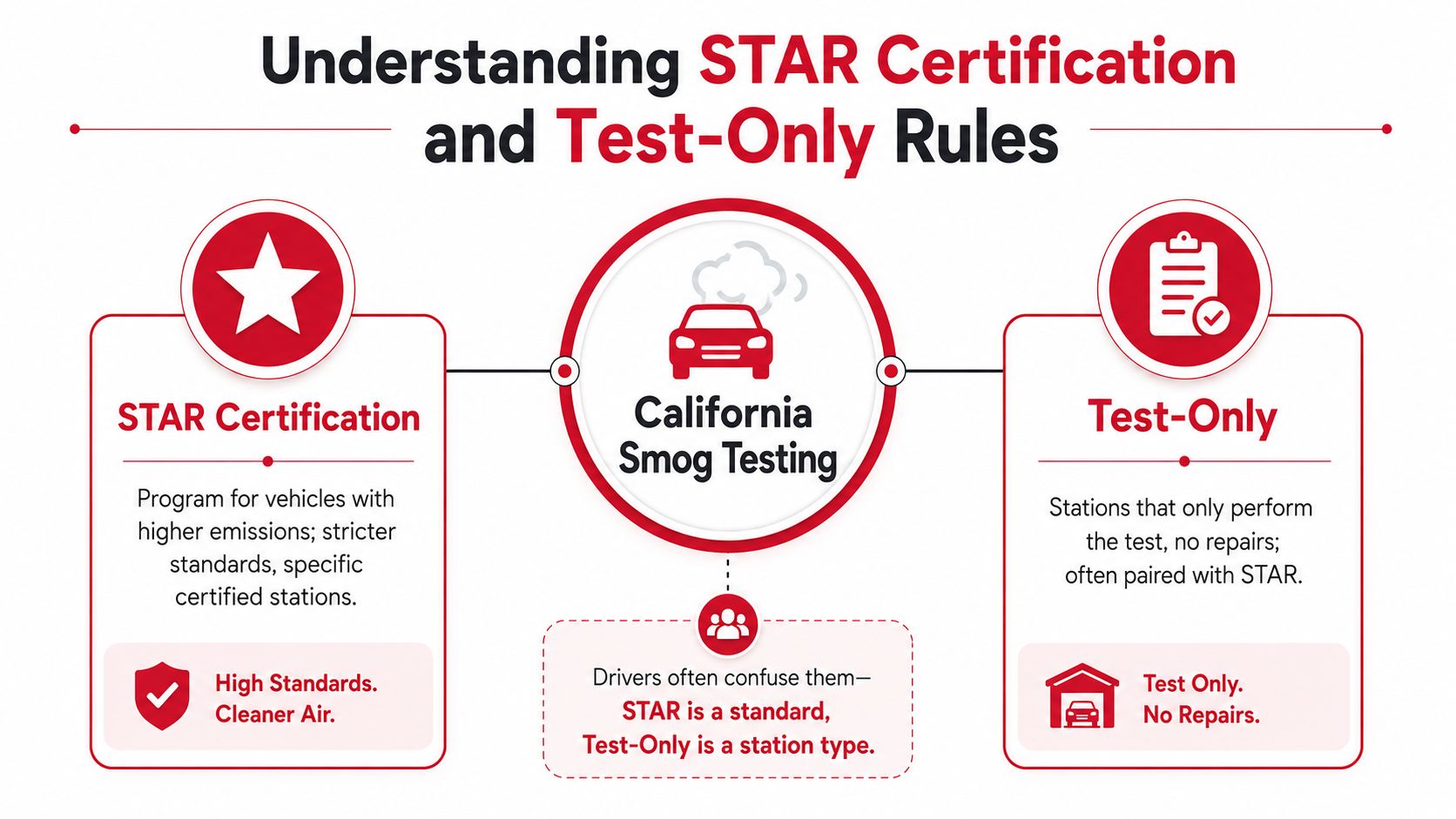
STAR certification and test-only status aren't the same thing. STAR is a state certification standard for qualifying stations. Test-only describes the station's business model and service restriction. A location can be both STAR certified and test-only, which is often the clearest choice for a driver who wants an independent inspection.
Think like an auditor
A test-only station is similar to an independent auditor. It examines the vehicle and reports the result, but it doesn't sell the emissions repair that follows. California prohibits test-only smog stations from performing emission repairs, which removes the financial incentive to fail a vehicle in order to generate repair revenue, as explained in the test-only station requirements overview.
That separation doesn't guarantee a pass. A vehicle still has to meet the applicable inspection standards. It does, however, create a cleaner relationship between the inspection and any later repair decision. If the vehicle fails, you can take the report to the repair shop you trust instead of feeling pressured to authorize work at the inspection site.
STAR certification adds another layer. A STAR station must meet higher performance standards, making it the appropriate destination when the DMV directs your vehicle there. The station still needs the right equipment, trained staff, and physical capacity for the vehicle you bring.
The readiness-monitor trap
For vehicles from 1996 and newer, the inspection centers on OBD-II compliance rather than only a tailpipe measurement. The system checks diagnostic information, fault-code behavior, and readiness monitors. Those monitors tell the inspection equipment whether the vehicle's emissions-related self-tests have completed.
A battery disconnect, computer reset, or recent emissions repair can erase monitor status. The car may start, idle, and drive normally while the computer still reports an incomplete inspection state.
As of October 1, 2025, California BAR rules require all readiness monitors to be set for a vehicle to pass a Smog Check inspection, according to the BAR explanation of the new OBD readiness-monitor regulations. That changes the preparation question. Don't ask only whether the check engine light is off. Ask whether the vehicle is fully ready for testing.
What Happens During a Smog Test Visit
A professional visit follows a predictable sequence. You provide the registration information, the technician confirms the vehicle details, and the station performs the inspection required for that model and fuel system. The technician then records the outcome through the state's approved process.
The inspection sequence
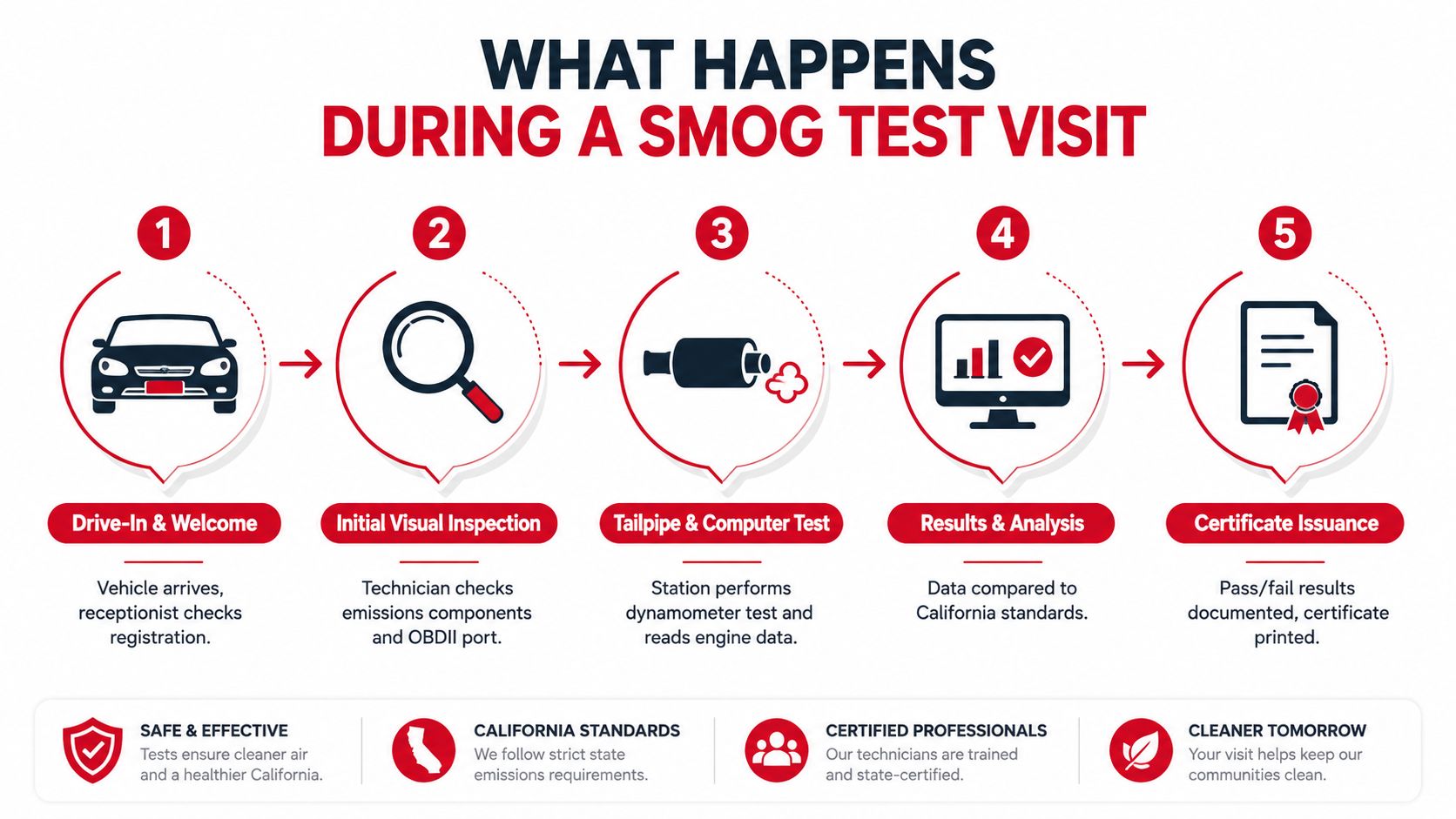
First, intake and verification. Bring your current registration renewal notice or vehicle information. The station needs accurate vehicle and registration details before it can determine the correct inspection path.
Next, the visual inspection. The technician checks relevant emissions equipment and locates the vehicle's OBD-II connection where applicable. Missing, disconnected, or visibly altered emissions components can create a problem before the computer portion is complete.
Then comes the emissions and computer evaluation. Older vehicles may use inspection methods that include tailpipe analysis. For 1996-and-newer vehicles, OBD-II data plays the central role. The equipment reviews diagnostic trouble codes and readiness status, not just how the engine sounds or feels during the drive.
Finally, the station documents the result. A passing inspection is transmitted for registration purposes, and the certificate process is completed. A failed inspection should produce information identifying the area that requires attention, so you can make a targeted repair decision rather than guessing.
You can review how long a smog check takes before scheduling, but don't treat a short appointment estimate as a promise. Vehicle condition, queue length, station layout, and diagnostic issues can change the total visit.
Why readiness causes surprise failures
A recent battery replacement is a common example. Disconnecting power can clear stored diagnostic information and leave monitors incomplete. The repair may have solved the original problem, but the vehicle still needs appropriate driving conditions before the system can verify the repair.
A station with a focused intake process and properly maintained diagnostic equipment can identify this issue quickly. A station with multiple bays can also keep vehicles moving through intake, inspection, and certificate issuance instead of making every customer wait for one bay to clear.
Don't reset codes immediately before testing. That can make the vehicle look cleaner on the dashboard while leaving the diagnostic system unready.
How to Choose the Right Smog Station for Your Vehicle
Choose the station by requirement first, convenience second. A low price or nearby location doesn't help if the facility can't perform the required STAR inspection, fit your vehicle, or handle the registration service you need.
| Station Type | Repair Services | STAR Certified | Best For |
|---|---|---|---|
| STAR test-only station | No emissions repairs | Yes | DMV-directed vehicles and drivers seeking inspection neutrality |
| STAR test-and-repair station | Testing and emissions repairs | Yes | Owners who want diagnosis and repair at the same location |
| Non-STAR shop | Depends on the business | No | Vehicles that aren't directed to STAR and fit the shop's approved service scope |
Use this decision filter
Start with the DMV notice. If it requires STAR, eliminate non-STAR locations immediately. If you want an independent result, select a STAR test-only station. If you already know the vehicle needs emissions work and prefer one provider to diagnose and repair it, a STAR test-and-repair station may be more practical.
Then check vehicle compatibility. Passenger cars, SUVs, and light-duty trucks are common, but larger trucks, RVs, and motorhomes may require specific bay dimensions or equipment. Call before driving over, especially if the vehicle is unusually long, tall, heavy, or modified.
A station that can't fit the vehicle can't solve the compliance problem, no matter how convenient its address looks.
Scheduling matters just as much. Working drivers should look for evening and weekend smog availability, while anyone combining the inspection with DMV work should confirm the separate hours for registration services. Ask whether the station offers a retest policy, whether coupons have conditions, and whether the price changes for a STAR-directed inspection.
A reliable call-ahead checklist is short:
- Confirm STAR status: Ask whether the location can process a DMV-directed STAR inspection.
- Describe the vehicle: Give the technician the model year, fuel type, vehicle class, and approximate size.
- Ask about readiness: Mention recent battery disconnection, computer resets, or emissions repairs.
- Verify DMV services: Confirm registration renewal, ownership transfer, or tag issuance if you need more than testing.
- Check timing: Ask about current wait conditions and operating hours.
How Fire House Smog Solves Common Driver Frustrations
Drivers usually want three things from a California smog test station: a valid inspection, a straightforward process, and no unnecessary repair pressure. A test-only model addresses the last concern because the station performs the inspection without selling emissions repairs. That keeps the pass or fail decision separate from the repair recommendation.
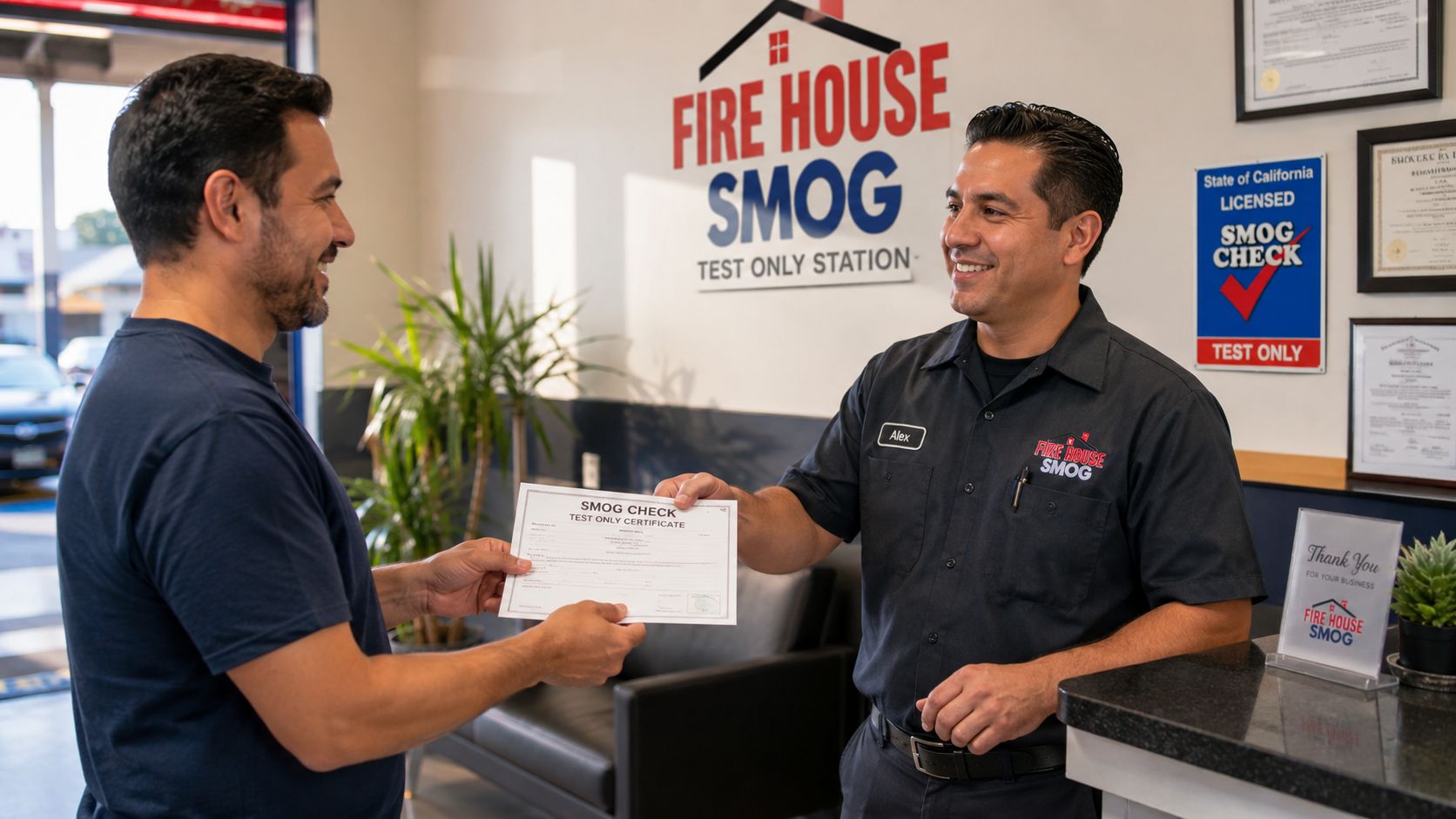
Fire House Smog is a STAR-certified test-only station at 2900 Lone Tree Way in Antioch. It handles smog inspections for cars, SUVs, and light-duty trucks, and it can accommodate some RVs and motorhomes subject to size and equipment limits. Call 925-754-1600 before bringing a larger recreational vehicle.
One visit can cover more than testing
A failed or completed smog inspection often appears alongside a registration deadline. Making a second trip to a DMV office adds friction, especially for drivers who work standard daytime hours. Fire House Smog also provides California DMV registration services, including renewal and on-site sticker printing, during its posted service hours.
Smog testing is available seven days a week, with extended evening and weekend availability. DMV services operate Monday through Saturday from 9:30 AM to 5:00 PM and Sunday from 12:00 PM to 4:00 PM, with limited services possible on weekends. Confirm the exact service you need before arriving, because smog hours and DMV hours aren't identical.
A workflow built around throughput
The location uses two service bays, which supports a more efficient flow for intake and inspections than a single-bay setup when demand is active. The station also offers a coupon policy that includes a discount on smog tests and a free retest, subject to the applicable terms.
That doesn't remove the need to prepare the vehicle. A STAR test-only station can provide a neutral inspection and process the result, but it can't make incomplete readiness monitors complete or repair a malfunctioning emissions system. The value is operational: you can obtain a clear result, understand the next step, and potentially complete your registration task in the same visit.
What to Do If Your Vehicle Fails the Smog Test
A failed smog test is a diagnosis point, not a reason to panic. First, get the result and identify whether the failure involves readiness monitors, a stored fault code, emissions equipment, or measured emissions. Don't authorize unrelated work just because the vehicle failed.
If the issue is incomplete readiness, ask whether the vehicle needs a proper drive cycle after a battery reset or repair. Driving may allow the monitors to complete, but only when the vehicle meets the conditions required by its diagnostic system. If a fault returns, the vehicle needs actual diagnosis and repair.
For a broader explanation of common causes, review California smog check fail reasons before choosing a repair strategy. Keep every emissions-related invoice and diagnostic record. Documentation matters if you later need financial assistance or a compliance extension.
Separate the available relief options
A Repair Cost Waiver isn't the same as a retest. California guidance summarized in the repair assistance and waiver information says registration may proceed after a failed test only when the owner spends at least $650 on documented emissions-related repairs and meets the applicable requirements.
An Economic Hardship Extension is narrower. It applies to low-income owners at or below 185% of the federal poverty level, requires repair-spend documentation, and can extend compliance for up to two years. Meeting one condition doesn't automatically qualify you for the other.
Retest only after the right fix
If the station or repair technician confirms that the vehicle is ready and the repair addressed the failure, schedule the retest. Fire House Smog offers a free retest under its site policy and coupon terms, so confirm the conditions before relying on it.
Do this in order: read the failure result, determine whether the issue is readiness or a malfunction, keep repair records, then retest.
A waiver won't replace a required repair record, and a retest won't fix a failed component. Treat each option as a separate tool.
Your Pre-Visit Checklist for a Smooth Smog Test
Use this checklist before driving to any California smog test station. It targets the mistakes that cause avoidable delays.
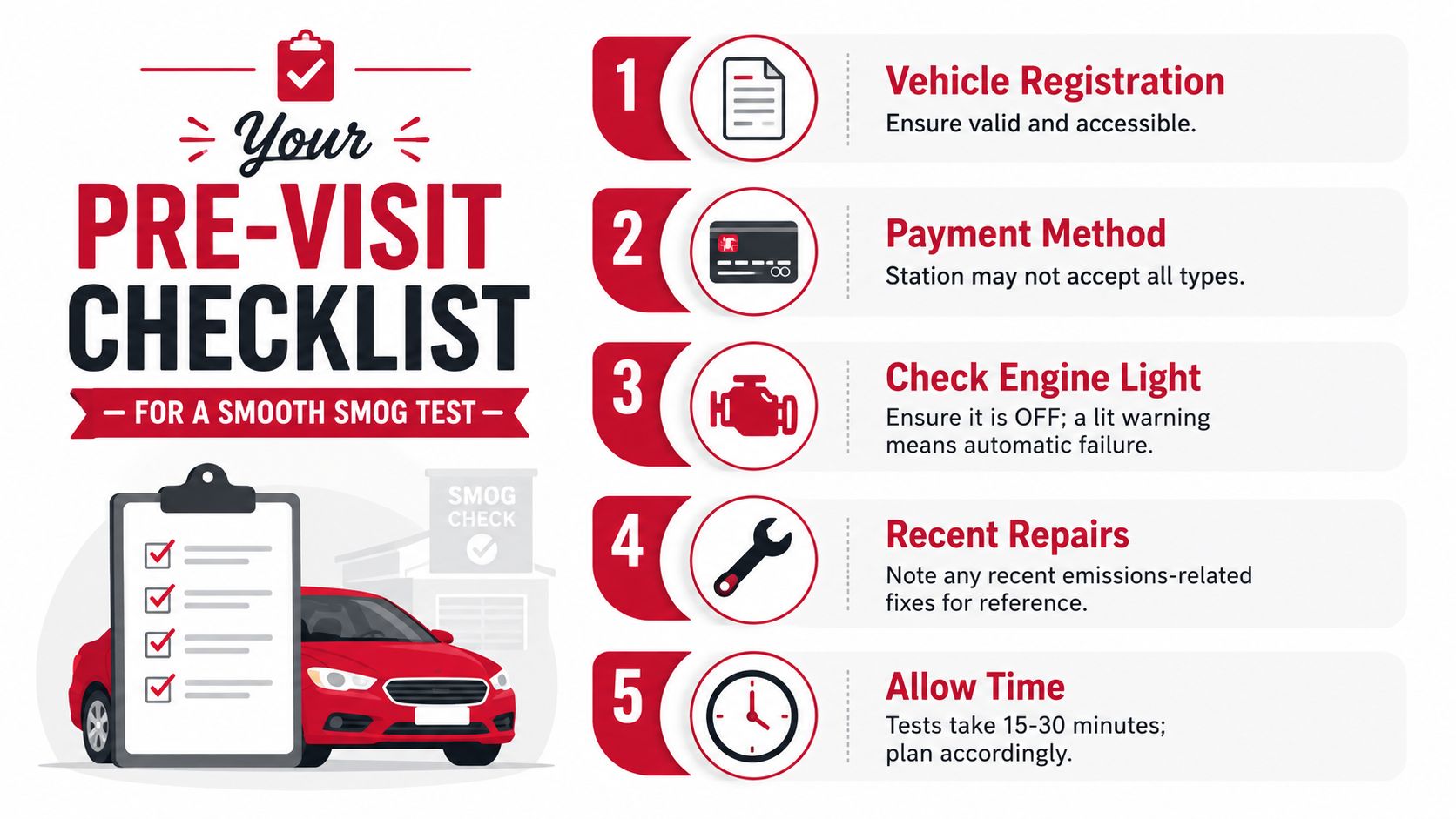
- Read the DMV notice: Confirm whether the vehicle must go to a STAR-certified station.
- Check the dashboard: The check engine light should be off. If it's illuminated, expect a diagnostic problem rather than a routine pass.
- Confirm readiness: Ask a qualified technician to check OBD-II monitor status, especially after a battery disconnect, computer reset, or recent emissions repair.
- Bring registration information: Have the renewal notice and vehicle details available for intake and DMV processing.
- Describe the vehicle accurately: Tell the station if it's a diesel, hybrid, light-duty truck, RV, or motorhome.
- Call about capacity: Larger vehicles may require advance confirmation that the bay and equipment can accommodate them.
- Ask about retests: Confirm whether a free retest applies, and check any coupon conditions.
- Plan the full visit: If you also need registration renewal or ownership-transfer services, verify those separate operating hours.
- Keep repair paperwork: Save emissions-related invoices and diagnostic documentation in case the vehicle fails or you seek assistance.
The best preparation is knowing the vehicle's readiness state, not assuming that normal driving means the inspection will pass. Bring the right notice, choose the right station, and avoid resetting the vehicle just before testing.
Fire House Smog provides STAR-certified test-only smog inspections, free retests under applicable terms, and on-site DMV registration services with sticker printing at its Antioch location. Visit Fire House Smog to confirm station requirements, check vehicle compatibility, and schedule a smog and registration visit that fits your week.