
Top Smog Check Fail Reasons and How to Pass
That “Smog Check Required” notice shows up at the worst time. Your registration renewal is coming up, your vehicle seems to run fine, and now one test stands between you and getting everything handled. If you've never failed before, it's easy to assume a smog check is just another quick errand. Sometimes it is. Sometimes it isn't.
Most failures come from a handful of repeat problems. A warning light is on. A monitor isn't ready. A converter is weak. An EVAP leak is small enough that you don't notice it, but the car's computer does. The good news is that smog check fail reasons are usually understandable once someone explains what the machine is looking for.
This guide breaks down eight of the most common smog check fail reasons, what they mean in plain English, how to spot them early, and what to do before you waste a trip to a test station. For Antioch drivers, there's one extra angle that matters. A test-only station like Fire House Smog doesn't make money selling you repairs, so the value is an unbiased result, a clear explanation of what failed, and a free retest option when policy and coupon terms apply. That changes how you should prepare before you arrive.
Table of Contents
- 1. Engine Performance Issues and Excessive Emissions
- 2. Faulty or Malfunctioning Check Engine Light and Diagnostic Issues
- 3. Catalytic Converter Damage or Degradation
- 4. Oxygen Sensor Faults and Malfunctions
- 5. Evaporative Emissions System EVAP Leaks and Failures
- 6. Exhaust System Leaks and Components
- 7. Failed Emissions Monitor Readiness
- 8. Vehicle Age and High Mileage Component Wear
- 8-Point Smog Check Failure Comparison
- Your Next Step Pass Your Smog Check with Confidence
1. Engine Performance Issues and Excessive Emissions
A lot of smog failures start before the test. The engine isn't burning fuel cleanly, and the exhaust tells on it. That can come from a weak ignition system, a fuel mixture that's too rich or too lean, a tired oxygen sensor, or a catalytic converter that isn't cleaning up the leftovers.
When combustion is off, the car may still start, idle, and drive. That's what throws people. They assume “runs okay” means “will pass.” It doesn't.
What poor combustion looks like in the real world
A common example is a car that hesitates on acceleration, smells a little rich at idle, and has fuel economy that's slipped. Another is a truck with no major drivability complaint, but it's overdue for plugs, the air filter is loaded up, and the converter has been stressed for a long time. Those are classic setups for increased emissions.
California drivers can get a feel for what their vehicle is being judged against by reviewing vehicle emissions standards in California. That won't diagnose the car, but it helps you understand why a “small” engine issue can become a test failure.
Practical rule: If the engine has been running rough, misfiring, burning oil, or smelling like raw fuel, don't make the smog station your first stop.
What helps before you test
A pre-inspection with a trusted mechanic makes sense if you already suspect a problem. That's especially true if the car has a rough idle, sluggish power, or a history of emissions repairs.
A few basics also matter:
- Stay current on ignition parts: Old spark plugs and neglected tune-up items make the engine work harder to burn fuel cleanly.
- Replace restricted filters on schedule: A dirty air filter can upset the air-fuel balance.
- Use the correct oil and fuel grade: The wrong fluids won't always trigger a warning light, but they can make a marginal engine dirtier at the tailpipe.
At a test-only station, the useful question after a failure isn't “Can you fix it?” It's “Can you explain what the results point to?” That keeps the next repair visit focused.
2. Faulty or Malfunctioning Check Engine Light and Diagnostic Issues
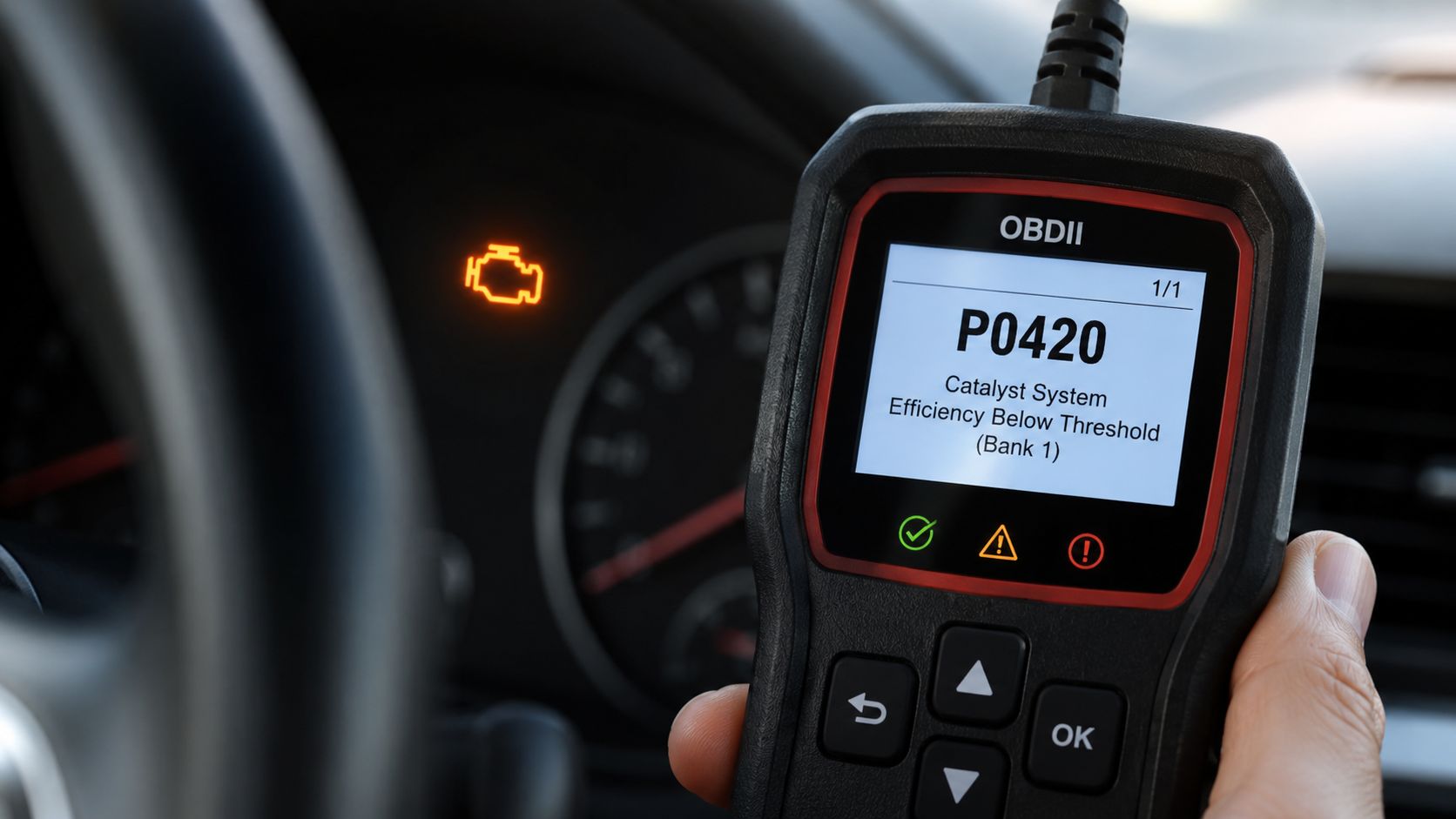
The single biggest mistake drivers make is showing up with the Check Engine Light on and hoping the car might squeak through. In California, that light usually ends the test before the conversation starts.
The most prevalent cause for California smog check failures is an illuminated Check Engine Light, and California DMV guidance treats a CEL or OBD monitor failure as automatic rejection criteria. The same source notes a statewide fleet-weighted failure rate of about 16% in the CY 2020-2021 roadside sample, with active codes playing a major role in those failures, according to this California smog failure overview.
Why the light matters even if the car drives fine
A CEL can point to a bad oxygen sensor, a vacuum leak, catalyst efficiency trouble, EVAP faults, or something else in the emissions system. Sometimes the vehicle feels completely normal. The onboard system still sees a fault, and that alone is enough to fail.
Pending codes can also trip people up after DIY repairs. They replace a part, clear the light, drive a little, and assume they're done. The car's computer may not agree yet.
If you're handling a renewal, it helps to understand the registration side too. Fire House Smog also provides California DMV registration renewal support, which is useful when you're trying to line up the test and renewal without multiple trips.
What to do before a test-only appointment
Use an OBD-II scanner first. Even a basic scan tool can tell you whether the light is on, whether codes are stored, and whether monitors are ready. That's a lot cheaper than failing for something you could have seen in your driveway.
Bring repair paperwork if the car recently had emissions work. At a test-only shop, that paperwork won't change the result, but it can help you make sense of what happened if the car still fails.
Don't clear codes right before a smog test unless the actual repair is complete and the drive cycle has been finished.
3. Catalytic Converter Damage or Degradation
If the catalytic converter is weak, dirty, damaged, or no longer efficient, the rest of the engine can be working reasonably well and you can still fail. The converter's job is to clean pollutants after combustion. Once it loses that ability, the exhaust numbers or onboard diagnostics will usually expose it.
This is one of the more expensive smog check fail reasons, which is why owners often want a second opinion before replacing anything. That's smart.
How converters fail in everyday use
Converters rarely die “for no reason.” Most of the time, something else hurts them first. Long-term rich running, repeated misfires, oil consumption, coolant contamination, or overheating can cook the catalyst inside. Physical impact can damage them too.
A common shop scenario goes like this: the car had a misfire for months, the owner fixed the ignition problem, the car runs better, but the converter never recovered. Another version is the car that rattles underneath because the substrate has broken apart internally.
A second major cause of smog failures is excessive tailpipe emissions tied to malfunctioning oxygen sensors or a dirty catalytic converter, and vehicles with tampered emissions systems can also fail automatically, as described in this California smog failure and repair discussion.
Repair trade-offs that matter
Converter replacement is one of those jobs where cutting corners often backfires. The cheapest part isn't always the part that lasts or the part that satisfies California requirements. Compatibility matters. So does fixing the root cause before installing the new converter.
What tends to work:
- Diagnose upstream problems first: If the engine is misfiring or running rich, a new converter may fail again.
- Inspect for exhaust leaks: A leak can skew readings and confuse the diagnosis.
- Use compliant parts: For emissions repairs, “close enough” is usually not good enough.
What doesn't work well is replacing the converter because a code mentioned catalyst efficiency, while ignoring the fuel-control problem that caused it.
4. Oxygen Sensor Faults and Malfunctions
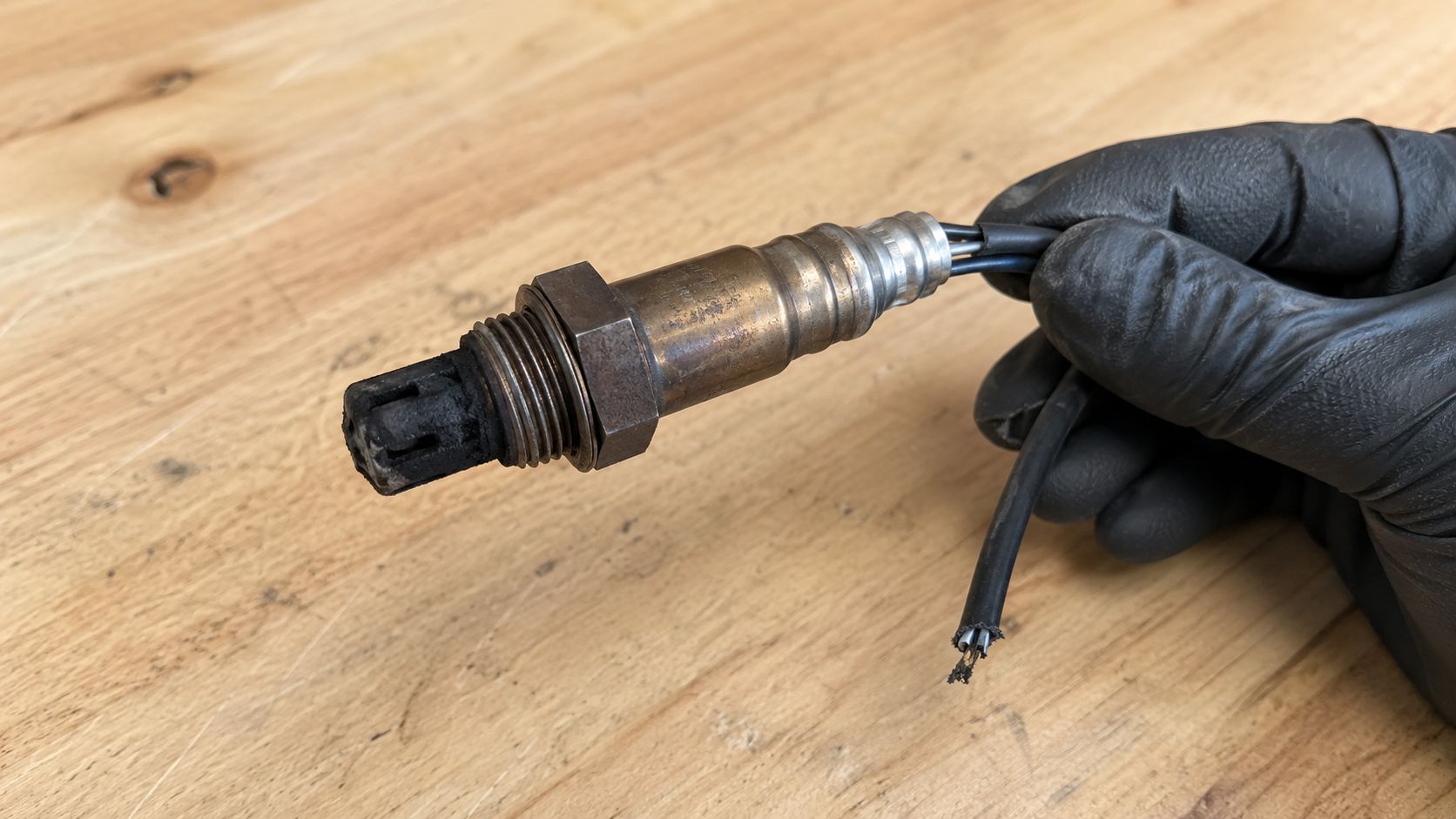
Oxygen sensors do more than trigger codes. They help the engine computer decide how much fuel to add or subtract. When the sensor lies, the engine follows bad information.
That can mean a rich condition, a lean condition, poor fuel economy, rough idle, sluggish throttle response, or a converter that's getting stressed in the background. Some drivers notice the symptoms right away. Others notice nothing until the smog test fails.
The sensor problem that snowballs
The upstream sensor usually has the biggest effect on fuel control. If it goes lazy or inaccurate, the engine may run richer than it should. That raises emissions and can eventually damage the catalytic converter. The downstream sensor mostly helps the system monitor converter performance, but a bad reading there can still create confusion and trigger emissions-related trouble.
This is why a simple sensor issue can turn into a more expensive repair if it sits too long. The car may still be drivable, but it isn't running cleanly.
What works and what doesn't
If a sensor is bad, replacing it with a quality part is the answer. Guessing isn't. Neither is swapping parts because a friend had the same code on a different car.
A better approach looks like this:
- Confirm the failure first: Scan data and basic diagnosis matter more than code definitions alone.
- Check for exhaust leaks or wiring damage: A good sensor can report bad data if outside air gets into the exhaust stream or the connector is compromised.
- Retest only after the system has relearned: Clearing the code and heading straight to the station is how people fail twice.
A practical example is the older commuter car that suddenly loses mileage and throws a lean code. Sometimes it needs a sensor. Sometimes it has a vacuum leak and the sensor is doing its job correctly. The repair path depends on diagnosis, not hunches.
5. Evaporative Emissions System EVAP Leaks and Failures
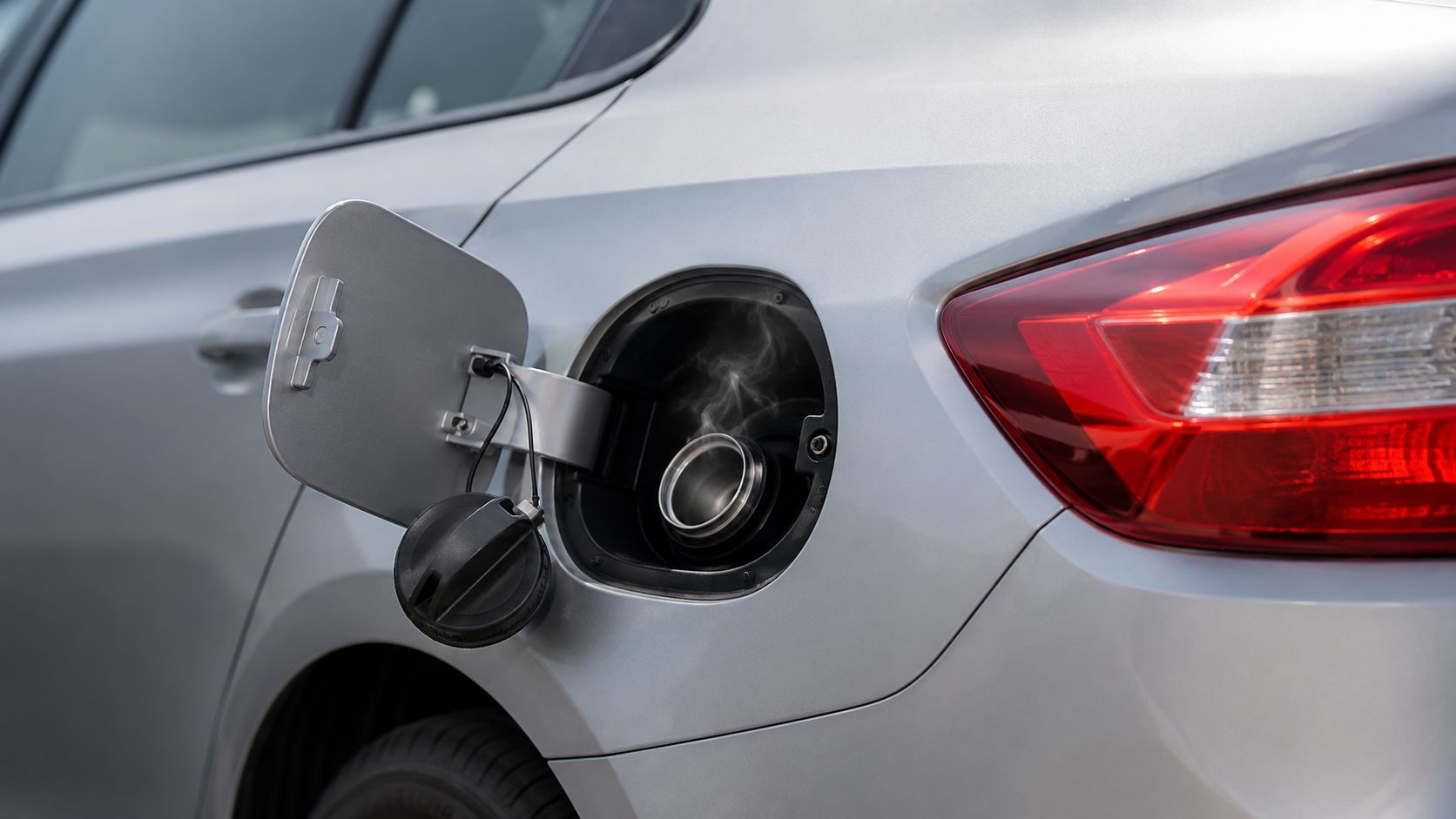
EVAP faults frustrate drivers because the car can run perfectly and still fail. The EVAP system deals with fuel vapor, not just what comes out of the tailpipe. If vapors escape through a leak, the onboard system usually sees it.
That leak might be as simple as the wrong gas cap or as annoying as a cracked hose tucked where no one can see it.
To get a feel for the area often used as a starting point, here's the fuel-fill side of the system:
The simple leak and the hidden leak
A loose, missing, or poor-quality gas cap is the easy one. It's worth checking because it costs little and does cause real problems. After that, things get more technical. Purge valves stick. Hoses crack. Canisters get contaminated. Filler neck components age out.
If you smell fuel around the car, especially near the fuel door or underneath after parking, don't ignore that. It's one of the few clues an EVAP problem may give you before the light comes on.
How to avoid a wasted retest
The best diagnostic method for many EVAP leaks is a smoke test at a repair shop. That puts visible smoke into the sealed system so the leak shows itself. Randomly replacing the gas cap, then the purge valve, then a hose, gets expensive fast.
A short explainer on EVAP diagnosis can help if you want to see the system in context before talking to a shop:
Two habits help prevent repeat problems:
- Use the correct gas cap: Some aftermarket caps fit, but don't seal correctly.
- Stop topping off the tank: Repeated overfilling can create EVAP system trouble.
A fresh gas cap can solve a simple cap problem. It won't fix a cracked hose, a stuck purge valve, or a damaged canister.
6. Exhaust System Leaks and Components
An exhaust leak changes more than noise. It can let outside air into the system, confuse sensor readings, and make the engine computer adjust fuel incorrectly. Leaks can also allow pollutants to escape before the system finishes treating them.
Older vehicles see this a lot. So do trucks that spend time on rough roads or vehicles with rusted hardware around flanges and gaskets.
Where leaks show up
The usual spots are the exhaust manifold, manifold gasket, flex pipe, converter connections, muffler seams, and tailpipe joints. A leak ahead of an oxygen sensor is usually more important than one farther back because it can directly distort what the sensor reports.
Drivers often describe a ticking sound on cold start, a hiss under load, or a deeper exhaust note that slowly got louder. Sometimes there's also a rattle from a loose heat shield or damaged internal converter material.
What to check before testing
You don't need to crawl under the car and play detective if you're not equipped for it. But you should pay attention to symptoms.
- Listen during cold start: Ticks and hisses are easier to hear before the system heats up.
- Notice new smells or cabin fumes: Exhaust entering the cabin is a safety issue, not just a smog issue.
- Ask for a full exhaust inspection during routine service: It's easier to catch a small leak before it becomes a larger repair.
At a test-only station, an exhaust problem may show up as a failed result or a reading that points toward a leak. The right next step is a repair shop that can physically inspect the system, not a guess based on sound alone.
7. Failed Emissions Monitor Readiness
This one catches a lot of careful owners by surprise. They repaired the problem. They cleared the code. The Check Engine Light is off. Then the car fails anyway because the monitors aren't ready.
A primary technical reason for smog check failure is incomplete OBD-II readiness monitors, and one source states that about 30 to 40% of initial failures in California happen because the monitors are not ready after battery disconnection or a reset. The same source explains that many vehicles need roughly 50 to 100 miles and the proper cold-to-hot operating cycles to complete self-tests, according to this guide to California smog check readiness requirements.
Why not ready is such a common surprise
Any recent battery replacement, code clearing, module reset, or some repair work can wipe out the stored self-test history. After that, the car has to prove to itself that key systems are working. That includes systems like the catalytic converter, EVAP, and oxygen sensor monitoring.
Short-trip drivers struggle here. If the car mostly goes a few miles at a time, the monitors may not see the conditions they need.
For drivers around East Contra Costa County, this matters more than most articles admit. A significant issue after some repairs isn't the bad part anymore. It's the absence of completed data in the computer. If you're scheduling local testing, smog check service near Pittsburg only helps once the vehicle is ready.
How to get monitors to complete
A proper drive cycle usually means normal mixed driving, not idling in the driveway and not a single blast down the freeway. You want cold starts, steady cruising, stop-and-go driving, and enough time at operating temperature.
What works best:
- Drive normally after repairs: Mixed city and highway use is better than one type only.
- Check monitor status with a scan tool before the test: That's the easiest way to avoid a wasted trip.
- Give it time after electrical work: If the battery was disconnected, assume the car may need more driving before it's ready.
Shop-floor reality: Clearing the light is not the same as proving the repair.
8. Vehicle Age and High Mileage Component Wear
Some vehicles fail because of one obvious fault. Others fail because age has chipped away at several systems at once. Hoses harden. Sensors slow down. Ignition parts weaken. Small vacuum leaks appear. The converter gets less efficient. None of that feels dramatic day to day, but the smog machine sees the total effect.
Older cars and work vehicles can be particularly challenging. The owner says, “It still runs fine,” and they're not wrong. It may run fine for commuting and still be marginal for emissions compliance.
Wear adds up even when the car still feels normal
High-mileage vehicles often carry a stack of small issues rather than one large one. A slightly lazy oxygen sensor, aging spark plugs, a minor exhaust leak, and a converter that's no longer at full strength can all add up to a failure.
There's also an overlooked version of this problem. Vehicles that sit for long stretches can develop emissions issues from inactivity, not just use. One source describes extended sitting as a contributor to moisture and carbon buildup that can affect EGR valves and vacuum circuits, especially on classic cars, seasonal vehicles, and fleet units, as noted in this discussion of passive decay in stored vehicles. Even if the vehicle starts and drives, dormant systems can still create smog trouble.
The practical approach for older vehicles
Older vehicles respond best to honest maintenance, not last-minute tricks. If the car is aging, plan ahead instead of trying to rescue it the week the registration is due.
A smart approach includes:
- Stay ahead on routine service: Plugs, filters, fluids, and vacuum line inspection matter more on older vehicles.
- Treat warning signs early: A rough idle or minor stumble usually gets more expensive with time.
- Keep records of emissions-related repairs: That helps the next technician avoid repeating work.
If a seasonal truck, spare car, or classic has been sitting, drive it enough to fully warm up and operate under normal conditions before assuming it's ready for testing. Stored vehicles often need more than a battery charge and a quick wash.
8-Point Smog Check Failure Comparison
| Issue | Implementation Complexity 🔄 | Resource Requirements ⚡ | Expected Outcomes 📊 | Ideal Use Cases 💡 | Key Advantages ⭐ |
|---|---|---|---|---|---|
| Engine Performance Issues and Excessive Emissions | Moderate–High: multi-cause diagnosis and engine repairs often needed 🔄 | Moderate–High: parts, labor, potential engine work and retests ⚡ | Lower NOx/CO/HC and improved drivability after repairs; smog pass if resolved 📊 | Vehicles with poor power, high emissions readings, failed dynamic tests; schedule tune-up before retest 💡 | Early detection prevents larger damage; STAR-certified, unbiased testing ⭐ |
| Faulty / Malfunctioning Check Engine Light (CEL) & Diagnostics | Low–Moderate: OBD-II scanning straightforward; intermittent faults may complicate diagnosis 🔄 | Low–Moderate: scanner, sensor/part replacement, and driving to reset monitors ⚡ | Codes cleared and monitors ready → likely pass if root cause fixed; may need 50–500 miles 📊 | Lit CEL, stored DTCs, or incomplete monitors; pre-scan before official test recommended 💡 | Often fixable with affordable parts; clear diagnostic guidance from test-only facility ⭐ |
| Catalytic Converter Damage or Degradation | Moderate: identification clear (P0420) but replacement often required 🔄 | High: converter replacement costs ($300–$1,200+), possible same-day repair but costly ⚡ | Significant reduction in HC/CO and restored converter efficiency after replacement; smog compliance likely 📊 | High-mileage vehicles or persistent P0420/P0430 codes; when converter efficiency is low 💡 | Definitive repair with long warranties; verifiable improvement post-replacement ⭐ |
| Oxygen Sensor Faults and Malfunctions | Low: codes and sensor tests identify failures quickly 🔄 | Low–Moderate: sensor parts ($150–$400) and short labor time; accessibility varies ⚡ | Faster sensor response, better fuel trim and lower emissions; monitors complete after ~30–50 miles 📊 | Vehicles with poor fuel economy, rough idle, or P0130–P0159 codes; replace upstream first if unsure 💡 | Affordable, quick fix that immediately improves economy and emissions readings ⭐ |
| EVAP Leaks and Failures | Low–Moderate: many issues are simple (gas cap) but small leaks can be tricky to locate 🔄 | Low–Moderate: inexpensive parts (caps, hoses) to expensive tank work ($500–$1,500+) ⚡ | CEL/Codes cleared and vapor containment restored; passing possible after drive cycles 📊 | P0440–P0459 codes, fuel smell, or recent fuel-system work; smoke test aids diagnosis 💡 | Many inexpensive fixes; component isolation simplifies diagnosis and repair ⭐ |
| Exhaust System Leaks and Components | Low–Moderate: visual inspection often reveals issues; some jobs require heavy labor 🔄 | Low–Moderate: muffler/tailpipe affordable; manifold or welded repairs increase cost ⚡ | Restored sealing → accurate O2 readings and reduced false emissions; smog pass likely 📊 | Rattling, hissing, visible rust, or sensor-triggered CELs; inspect underside during maintenance 💡 | Visible symptoms ease detection; standard repair procedures available ⭐ |
| Failed Emissions Monitor Readiness | Low: no mechanical repair in many cases, requires correct driving cycles 🔄 | Low: mainly time and mileage (50–500 miles); possibly pre-test scan to confirm readiness ⚡ | Monitors transition to "ready" and vehicle can be tested/passed without component repairs 📊 | After battery replacement, code clearing, or major service; drive varied routes before testing 💡 | No parts or major repairs usually required; straightforward to resolve with proper driving ⭐ |
| Vehicle Age & High-Mileage Component Wear | High: multiple, cumulative failures often present; root-cause identification can be complex 🔄 | High: several parts and labor may be required; parts for older models can be scarce ⚡ | Variable outcomes, may need staged repairs; sometimes uneconomical to fully restore emissions systems 📊 | Older or >100k–150k mile vehicles exhibiting multiple emissions symptoms; prioritize maintenance vs. replacement 💡 | Predictable wear patterns allow proactive maintenance planning; established repair methods exist ⭐ |
Your Next Step Pass Your Smog Check with Confidence
Most smog check fail reasons stop being mysterious once you know where to look. A lit Check Engine Light, a not-ready monitor, an EVAP leak, a tired oxygen sensor, a weak catalytic converter, or a simple exhaust leak all leave clues. The trouble starts when drivers ignore those clues, clear codes too soon, or assume a vehicle is ready because it feels normal on the road.
The practical move is to prepare before you arrive. Scan for codes. Confirm monitor readiness. Pay attention to fuel smell, rough idle, poor mileage, or changes in exhaust sound. If repairs were done recently, give the car enough normal driving time to complete its self-checks before you book the test. That one habit alone can save a lot of frustration.
A test-only station offers a real advantage. Fire House Smog doesn't sell repairs, so there's no built-in pressure to turn a failed inspection into a repair order. You get an objective result. If the vehicle passes, great. If it doesn't, you know the failure came from the test, not from a sales pitch built around the test.
That matters even more when the fix isn't obvious. A repair shop may be the right next step, but it helps to begin with a clean diagnosis and a clear printout. Then you can take that information to the mechanic of your choice and focus the repair on what's wrong.
The free retest policy also changes the process in a useful way. When your vehicle needs work, you don't want to feel like every return visit starts the whole ordeal over again. Knowing there may be a free retest available under site policy and coupon terms makes it easier to handle the first failure as information, not a disaster.
For Antioch drivers, there's another convenience factor. Fire House Smog also provides DMV services, including registration-related help and on-site tag issuance during posted hours. If your vehicle is ready, that can turn a stressful renewal into a much shorter stop.
If you're due for testing, don't guess. Show up prepared. If you suspect a problem, handle the diagnosis first. If you want an unbiased answer from a STAR-certified test-only station, Fire House Smog is built for exactly that kind of visit.
If you need a straightforward smog inspection in Antioch, Fire House Smog offers STAR-certified test-only service, free retest availability under policy terms, and on-site DMV help at 2900 Lone Tree Way. It's a practical choice when you want a clear result, no repair upsell, and a faster path to getting your registration handled.