What Is STAR Certified Smog? a California Driver’s Guide
A STAR-certified smog check is California's higher-standard emissions test for certain vehicles the DMV directs to special stations, and the program has been in effect since January 2013. About 60% of active smog stations have been accepted into the STAR program, but only those stations can inspect many directed vehicles and gross polluters.
You open your registration notice, scan the page, and then stop at the line that says your car needs a STAR station. Most drivers have the same reaction. What does that even mean, and did something go wrong with your car?
Usually, this notice doesn't mean you did anything wrong. It means California wants a more closely controlled inspection for your vehicle. For a worried car owner, that can feel intimidating at first. In practice, it's a quality-control system designed to produce a more trustworthy result.
What confuses people most is that “STAR” sounds like marketing language. It isn't. It's a state certification tied to station performance, equipment standards, and inspector accuracy. And if you're looking at a STAR Test-Only station, there's another layer that matters to you as a consumer. That shop can inspect your car, but it can't sell you the repair.
That difference is a big deal. It changes the test from a sales opportunity into something much closer to an audit. If you want peace of mind that the result is based on your car's actual emissions, not on a repair estimate waiting in the background, that model makes a lot of sense.
Table of Contents
- Introduction That Confusing DMV Notice
- What Is the California STAR Program
- STAR Test-Only vs STAR Test and Repair Stations
- Why Your DMV Notice Says STAR Station Required
- Passing Your STAR Smog Test A Step-by-Step Guide
- After the Test Understanding Your Results
- Get Your STAR Certified Smog Check in Antioch
Introduction That Confusing DMV Notice
If you're searching for what is STAR certified smog, you're probably dealing with a DMV renewal notice that feels more cryptic than helpful. You just want to renew your registration, and suddenly the state is telling you where your car has to be tested.
That's a common situation. A STAR-certified smog check is a higher-standard California emissions inspection required for certain vehicles, usually because the DMV wants the test done at a station with tighter oversight and stronger performance standards.
Why this catches drivers off guard
The concept of a regular smog check is well-known. The confusing part is the added STAR label. Drivers often wonder if their car has been singled out, whether it already failed somewhere behind the scenes, or whether the test will be harsher.
In plain language, the state is trying to make sure some vehicles get checked at stations that have proven they can produce reliable results. That's the main idea.
Practical rule: If your notice says STAR station required, don't shop for any smog shop. Shop specifically for a STAR-certified station, and if you want the most neutral setup, look for STAR Test-Only.
What most people really want to know
When a customer asks me about STAR, the main questions are usually these:
- Why my car? Did the DMV flag something specific?
- Is this different from a regular smog check? Yes, the station standards are different.
- Can I still pass? Absolutely, if the vehicle is in compliance.
- Should I use a test-only station? If you want a cleaner separation between inspection and repair, many drivers prefer that route.
By the end of the process, the goal is simple. You want a result you can trust, whether your car passes or needs work.
What Is the California STAR Program
A California smog check is only helpful if the result is trustworthy. The STAR program was built around that idea.
California launched STAR in January 2013 as part of a broader update to the Smog Check system. Under the program, the Bureau of Automotive Repair certifies stations that meet tighter standards for testing equipment and inspector performance, as described in the California Senate Smog Check fact sheet/index.pdf).
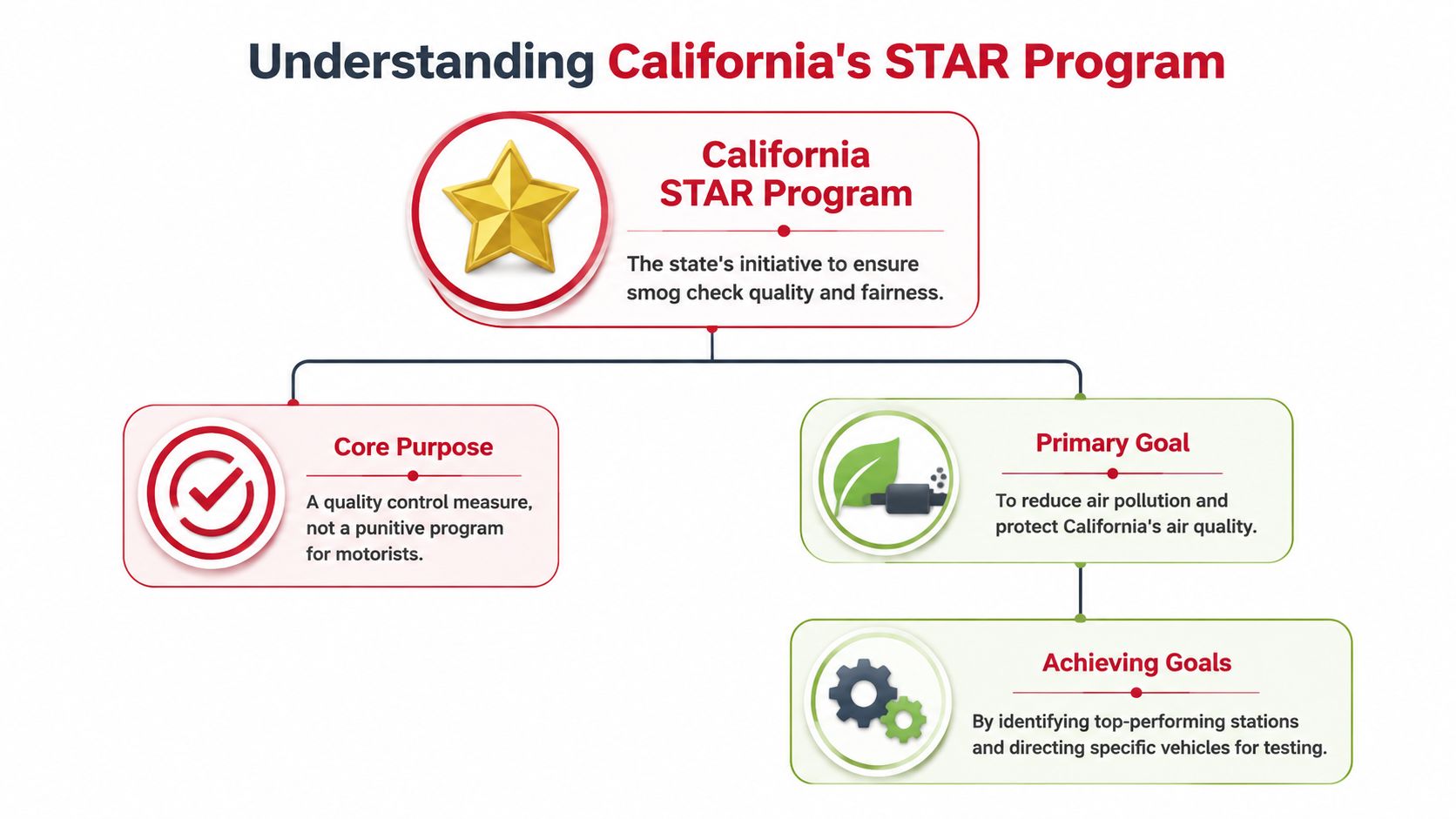
For a vehicle owner, the easiest way to understand STAR is this. It works like an extra layer of quality control. The state uses it to make sure certain vehicles are inspected at stations with stronger oversight, so the result carries more weight.
That consumer-protection angle is easy to miss. Many drivers hear "STAR" and assume it means a tougher version of the same test. In practice, it is also a way to reduce doubt about the inspection itself, especially when the state wants a cleaner, more dependable reading.
What STAR is actually designed to do
STAR helps California monitor vehicles that may need closer attention, including directed vehicles and gross polluters, according to the same fact sheet. In plain English, those are the cars the state wants checked in a more controlled setting because accuracy matters more with them.
That is why many drivers prefer the STAR Test-Only model when it is available to them. A test-only station inspects the vehicle but does not sell the emissions repair. The setup feels more like an audit than a sales appointment. For owners, that can provide real peace of mind because the station's job is to measure and report, not diagnose and fix in the same visit.
If you want more background on the rules your vehicle is being measured against, this overview of California vehicle emissions standards connects the smog check process to the state's clean-air requirements.
What STAR means in plain English
For the average owner, the STAR label means the station operates under tighter state scrutiny. A smog test is only useful if the result is dependable. A pass should mean your car met the standard. A fail should point to a real emissions problem, not a sloppy inspection or a questionable call.
Here's a simple breakdown:
| Term | Plain-English meaning |
|---|---|
| Regular smog station | Can inspect many vehicles, but not every DMV-directed one |
| STAR station | Meets higher state standards and can inspect certain directed vehicles |
| Directed vehicle | A vehicle the DMV requires to be tested at a STAR station |
| Gross polluter | A vehicle emitting far above legal limits |
The key idea is reliability. California does not just want more smog tests. It wants credible tests, especially for the vehicles most likely to create pollution problems or raise questions about the accuracy of the result.
So when someone asks, what is STAR certified smog, the best answer is broader than a definition. It is a state-run quality-control system that helps protect consumers by steering certain cars to stations held to a higher standard. And when that inspection happens at a STAR Test-Only station, many owners feel more confident that the result is unbiased.
STAR Test-Only vs STAR Test and Repair Stations
You pull into a STAR station because your DMV notice says you need one. Then you see two labels that sound almost the same: STAR Test-Only and STAR Test and Repair. That is where many owners pause, because the difference affects more than convenience. It affects how independent the inspection feels.
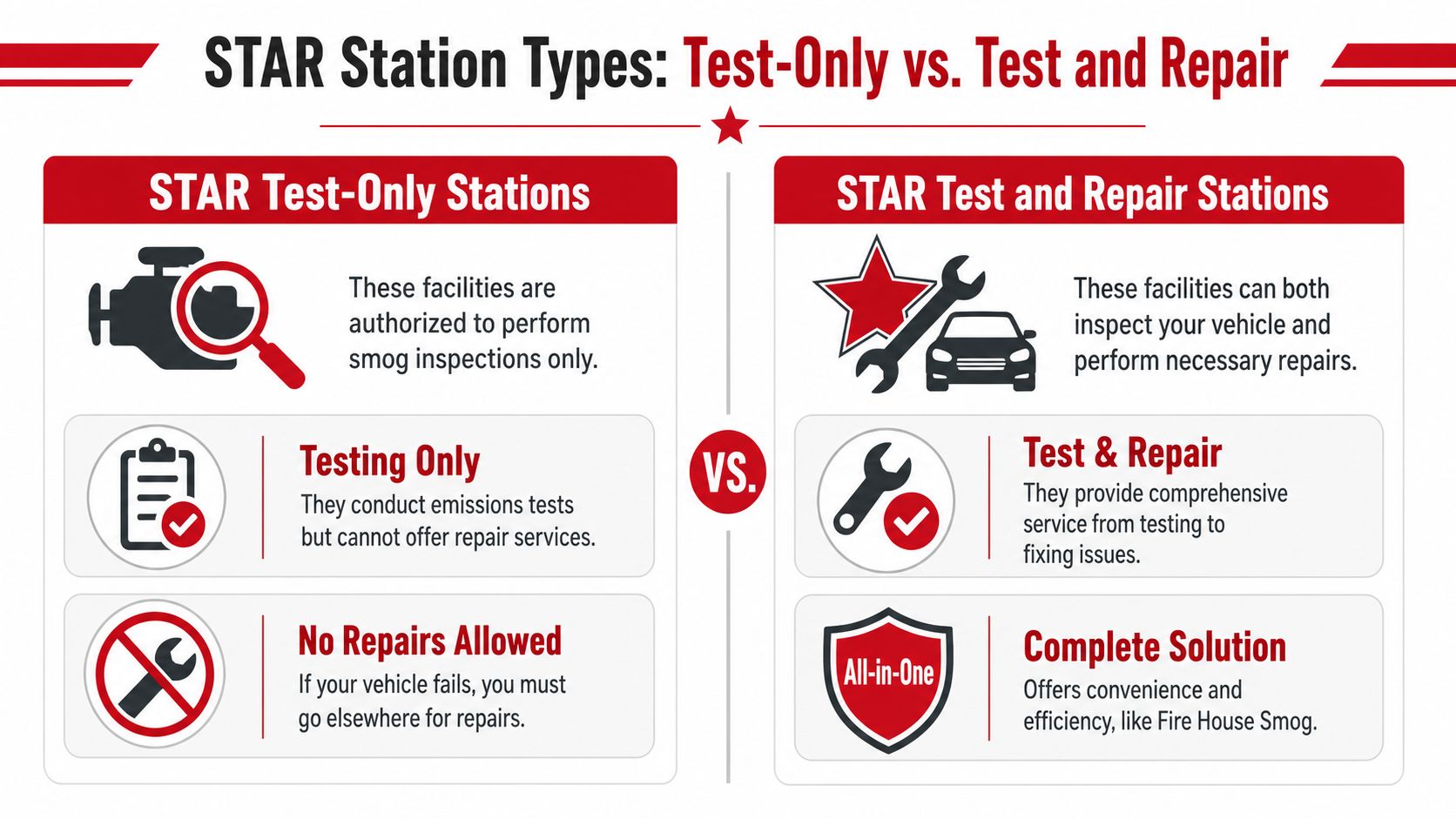
What a STAR Test-Only station does
A STAR Test-Only station inspects the vehicle and reports the result. It does not perform emissions repairs, as explained in this overview of the STAR smog check station program.
That business model matters.
If the shop cannot sell you the repair, the test works more like an audit. The technician's job is to measure what the car is doing, document it correctly, and send the result to the state. For many drivers, that removes a layer of doubt. You are not wondering whether a failed test might turn into a repair estimate five minutes later.
If you want a practical breakdown of how that setup works, this guide to STAR-certified test-only centers explains the process in plain language.
What a STAR Test and Repair station does
A STAR Test and Repair station can do both jobs. It can inspect your car, diagnose the problem if it fails, and complete the repair work.
Some owners prefer that one-stop setup. If your vehicle has an issue, you may be able to move from test to repair without visiting a second shop. That can save time.
Still, the structure is different from test-only. The same business that finds the problem can also sell the fix. Many honest shops operate this way, but some drivers are more comfortable separating those roles.
Why many owners see test-only as the cleaner model
The strongest consumer-protection benefit of the STAR system shows up here. A STAR Test-Only station gives you a result without a repair sale attached to it.
A simple comparison helps:
- Test-Only works like an independent inspection.
- Test and Repair works like an inspection plus repair option.
Both are legitimate. The question is what gives you more confidence.
If your main concern is trust, the test-only model often feels safer because the station does not profit from failing the car and then fixing it. That is why many directed vehicle owners view STAR Test-Only stations as more than a category on a sign. They see them as a safeguard built into the smog check system.
A side-by-side comparison
| Station type | Can inspect | Can repair | Main consumer question |
|---|---|---|---|
| STAR Test-Only | Yes | No | “Am I getting an independent result?” |
| STAR Test and Repair | Yes | Yes | “Do I want the test and repair in one place?” |
The same SmogTips guide notes that California uses the test-only model for many vehicles in Enhanced Smog Check Areas. That fits the larger purpose of STAR. The program is not only about identifying higher-risk vehicles. It also gives owners a way to get an audit-style emissions check that feels fair, separate, and easier to trust.
For a concerned car owner, that peace of mind is a big part of what STAR certified smog really means.
Why Your DMV Notice Says STAR Station Required
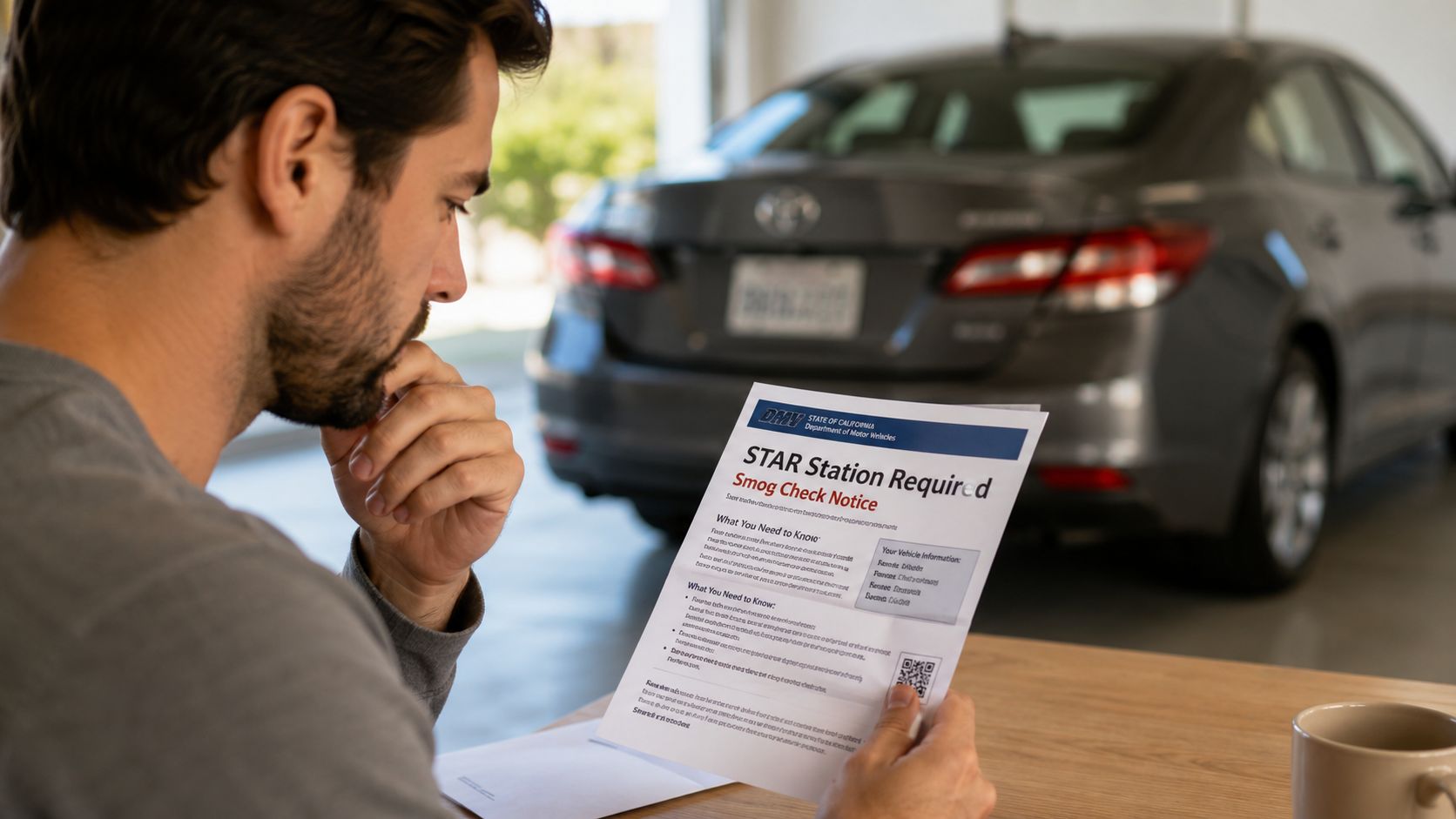
The short answer is that your vehicle has been directed to a STAR station. The DMV didn't print that by accident. It means the state wants your car inspected at a station that has shown stronger performance in identifying emissions failures.
What “directed vehicle” means in plain language
A directed vehicle is one the system routes to a STAR station instead of letting it go to any regular smog shop. That can happen because of the car's prior test history or because similar vehicles are more likely to fail.
This part is important. The state isn't necessarily saying your car is bad. It's saying your car falls into a category where the inspection should happen at a station with a stronger record for catching real emissions problems.
The hidden metric most drivers never hear about
One reason STAR certification is harder to earn is a performance standard called Similar Vehicle Failure Rate, or SVFR. To qualify for STAR certification, a station's SVFR must be at least 50% of the industry-wide failure rate for similar vehicles, according to California regulation 16 CCR 3392.2.
That sounds technical, so let's translate it.
If a certain kind of vehicle commonly has emissions problems, the BAR wants STAR stations to show they are identifying those failures at a meaningful rate. In other words, STAR stations aren't supposed to pass everything. They're supposed to catch the vehicles that should fail.
STAR stations are selected with data. The point isn't to be tougher for the sake of being tougher. The point is to be more accurate with vehicles that carry more emissions risk.
A short visual walk-through can help if you want to see how the requirement works in practice:
Why that should reassure you
Drivers often read “STAR required” as a warning. A better way to read it is this: the state wants the result to come from a station with a verified track record.
That matters whether your car passes or fails. If it passes, you can feel more confident the vehicle is fully compliant. If it fails, you have a more credible reason to investigate the problem instead of wondering whether the result was sloppy or rushed.
Passing Your STAR Smog Test A Step-by-Step Guide
You pull into a STAR station with your DMV notice on the passenger seat, and one question is usually running through your mind: what exactly are they going to do to my car?
The good news is that a STAR smog check is not a mystery inspection. It follows a set process, and at a STAR Test-Only station, that process works a lot like an audit. The station's job is to measure and verify, not to sell you a repair. For many drivers, that separation is what makes the experience feel fair.
Before you go
The easiest way to avoid surprises is to show up with the car in normal driving condition.
If your Check Engine light is on, handle that first. That light means the car has already detected a problem, and a smog inspection is likely to catch it too. Going in anyway usually wastes time and adds stress.
It also helps to arrive with the vehicle warmed up. A short drive before the test gets the engine and emissions system to normal operating temperature, which gives the car the right conditions for inspection.
A simple pre-test checklist helps:
- Drive the car first: A normal trip before the appointment helps warm the engine and emissions components.
- Look at the dashboard: Warning lights can signal a problem that needs attention before testing.
- Pay attention to how the car feels: Rough idling, hard starts, or other obvious issues are worth addressing first.
- Bring your notice or registration information: That helps the station confirm the correct inspection for your vehicle.
What happens during the test
The exact procedure depends on the vehicle's model year and system type, but the flow is usually easy to follow.
Vehicle identification
The technician confirms the VIN, license plate, and inspection requirement so the right test is performed.Visual inspection
Emissions-related parts are checked for missing, disconnected, or altered components.Electronic and system checks
For many vehicles, the technician connects to the onboard diagnostic system to see whether the car has reported emissions faults or incomplete monitors.Tailpipe or functional testing, when required
Some vehicles need additional measurement or equipment checks based on their age and configuration.
That structure matters for a reason. At a STAR Test-Only station, the technician is there to document what the vehicle is doing on that day, the same way an independent inspector checks a home before a sale. That can give you peace of mind because the result is meant to be unbiased.
Why the equipment standard matters
The inspection is only as trustworthy as the equipment being used.
STAR-certified stations use BAR-certified Emission Inspection Systems, and those systems must be calibrated regularly under California regulation 16 CCR 3392.1. That calibration rule helps keep the readings accurate, so the machine is measuring your vehicle instead of reflecting a drifting sensor or poorly maintained test equipment.
In plain terms, the machine should stay on target. That is one more reason many vehicle owners feel more comfortable with the STAR model. The station is being checked, the equipment is being checked, and your car is being checked.
How to make the day easier
A little preparation can make the visit feel routine instead of tense.
- Give yourself extra time: A rushed arrival makes the process feel harder than it is.
- Ask questions if something is unclear: A good technician should be able to explain what type of inspection your car needs and why.
- Bring recent repair records if you have them: They can help clear up questions about emissions-related work or replaced parts.
If your vehicle is running properly, a STAR test should feel straightforward. For drivers sent to a STAR Test-Only station, that is often the biggest comfort of all. You are getting a measured, audit-style answer from a station set up to inspect first and leave sales pressure out of the test.
After the Test Understanding Your Results
Once the inspection is finished, you'll get one of two outcomes. Pass or fail. The emotional reaction can be strong, but the next steps are usually simpler than people expect.
If your vehicle passes
A pass means the vehicle met the inspection requirements. In most cases, the certificate is transmitted electronically to the DMV, and you can move forward with registration.
That's the cleanest outcome, and it's why many drivers want the confidence of a well-run STAR inspection. You're not left guessing whether the result will hold up.
If your vehicle fails
A fail doesn't mean your car is finished. It means the inspection found something that needs correction before the vehicle can be certified.
The first thing to read is the Vehicle Inspection Report, often called the VIR. That report tells you where the problem showed up. Depending on the vehicle and issue, the failure may relate to emissions readings, onboard diagnostics, or emissions equipment concerns.
Use the report this way:
- Read the failure area first: Don't guess at the problem before looking at the VIR.
- Take the VIR to a licensed repair facility: The report gives the repair shop a starting point.
- Return after repairs for retesting: The car has to be checked again after the underlying issue is addressed.
Why a STAR failure is worth taking seriously
The point of the STAR system is not to trap drivers. It's to produce a more dependable inspection result. If a STAR station reports a failure, that result is generally more useful because it comes from a system built around tighter oversight.
In practical terms, a failure can save time. It tells you there's a real emissions issue to fix instead of leaving you with a vague suspicion that the car “might be okay.”
Don't treat a failed STAR test like bad luck. Treat it like a diagnostic checkpoint that found something your vehicle needs.
Some stations, including Fire House Smog, offer a free retest based on site policy and coupon terms. That can make the follow-up easier once repairs are completed.
Get Your STAR Certified Smog Check in Antioch
Your renewal notice shows up, you read “STAR station required,” and the first question is usually simple: where can I get this done without turning a test into a sales pitch?
That is why many Antioch drivers prefer a STAR Test-Only station. The setup works like an audit. The station checks whether the vehicle meets California emissions rules, but it does not have an in-house repair outcome tied to the result. For a car owner, that separation can feel a lot more reassuring. You are there for a clear answer, not a bundled diagnosis-and-repair conversation.
That consumer protection angle matters. A STAR Test-Only visit gives you a cleaner reading of where your car stands today, especially if you want confidence that the inspection result is independent.
What to look for in a local station
A good local option should make the process easier, not more confusing. If your registration deadline is close, small practical details make a real difference.
Helpful features include:
- Test-only operation: The inspection stays separate from repair recommendations
- STAR certification: Needed if your DMV notice specifically requires a STAR station
- Quick service flow: Useful if you need to fit the test into a workday
- On-site DMV support: Helpful if you want to handle registration tasks in one stop
A factual local option
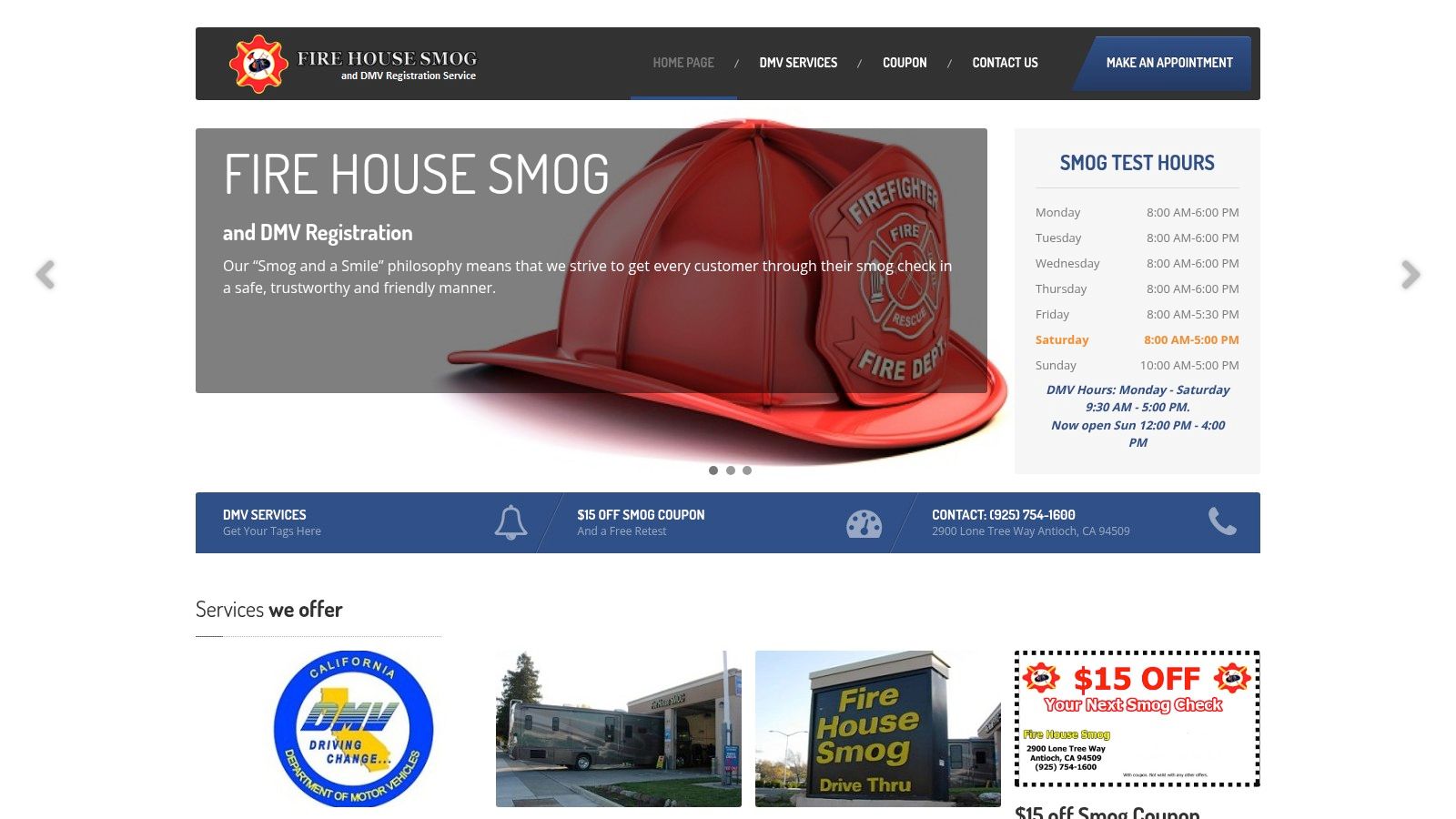
One local choice is STAR smog check service in Antioch, offered by Fire House Smog at 2900 Lone Tree Way, Antioch, CA 94509. The station operates as a STAR-certified test-only smog station, has two service bays, offers testing seven days a week, provides on-site DMV registration services with sticker printing, and can be reached at 925-754-1600 during posted hours.
For a driver trying to make sense of a DMV notice, that combination is practical. You can get the required inspection at a test-only station, keep the result separate from repair sales, and take care of some registration tasks in the same visit.
If you have been asking what STAR certified smog means in real life, this is the plain-English version. It is a tighter, more closely watched inspection process for certain vehicles. At a STAR Test-Only station, it also gives you something many drivers want most: confidence that the test result is unbiased.
Need a STAR-required inspection in Antioch? Fire House Smog provides STAR-certified test-only smog checks and on-site DMV registration services at 2900 Lone Tree Way, Antioch, CA 94509. You can call 925-754-1600 to confirm hours, ask whether your vehicle type can be accommodated, or check current retest and coupon details before you stop by.