You're probably here because one of three things happened. Your DMV renewal notice says you need a smog check, you typed car emissions testing near me because your registration deadline is getting close, or you just bought, sold, or moved a vehicle and want to avoid surprises.
That stress is normal. Most first-time drivers don't know what the test includes, what can make a car fail, or whether they need a regular station or a STAR station. The good news is that the process is much simpler when you know what the state is checking and how to prepare before you pull in.
Table of Contents
- Understanding California's Smog Check Program
- How to Prepare for Your Emissions Test
- Your Step-by-Step Guide to the Smog Test
- Why Cars Fail Smog Tests and How to Avoid It
- What Happens After Your Smog Test Results
- Fire House Smog Your All-in-One Smog and DMV Solution
- Your Smog Check Questions Answered
Understanding California's Smog Check Program
California's smog program exists for a practical reason. The state requires emissions testing for many vehicles so cars on the road stay within emissions standards tied to registration and air quality rules. According to the California Smog Check Program overview, gasoline-powered, hybrid, and alternative-fuel vehicles made in 1976 or later generally need testing every two years, while vehicles that are eight model years old or newer are exempt from testing during that early period and pay a smog abatement fee instead.
For drivers in Antioch, that matters because Contra Costa County is part of the kind of area where smog compliance is part of normal vehicle ownership. The same source notes that STAR-certified stations are used in high-pollution areas and that the program removes about 400 tons of smog-forming pollutants from California's air every day.
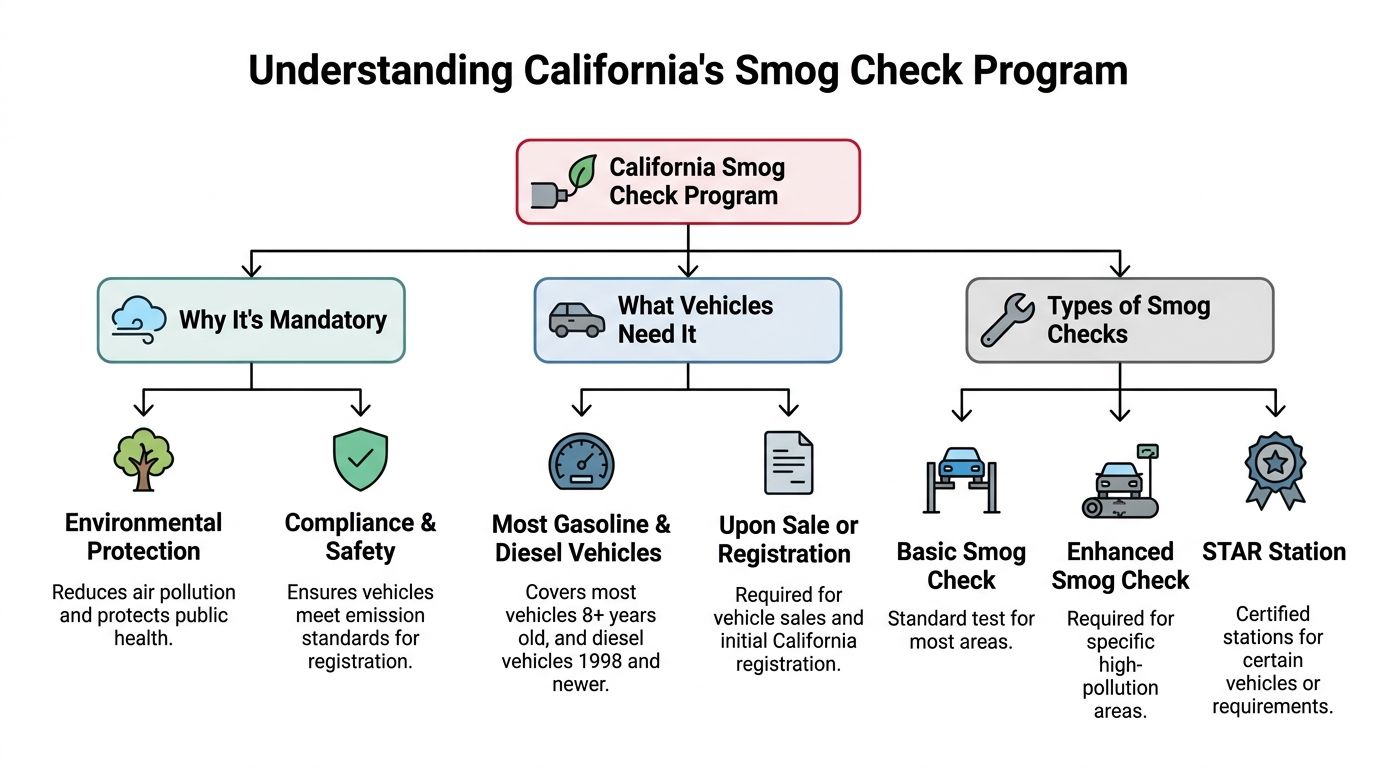
Why California requires smog checks
Think of a smog check as a compliance and maintenance checkpoint, not a punishment. The state wants to catch vehicles that are releasing more pollution than they should, especially as parts age, sensors drift, or emissions equipment stops working correctly.
Practical rule: If your registration renewal notice asks for smog, treat it like a required step for registration, not an optional tune-up suggestion.
California also separates out certain vehicles. Electric vehicles, motorcycles, trailers, and gasoline-powered vehicles from 1975 or earlier are generally excluded from the testing requirement, though owners still need to keep emissions systems intact under state rules noted in that same program overview.
Which vehicles usually need testing
Most Antioch drivers can sort themselves into one of these buckets:
- Newer gasoline vehicles: If your car is within its first eight model years, you'll typically pay the abatement fee instead of taking a biennial test.
- Older gasoline vehicles: Once the vehicle ages out of that early exemption, biennial testing usually applies.
- Hybrid vehicles: Hybrids are part of the required list under current California rules.
- Diesel vehicles: Some diesel vehicles also require testing under California's program rules.
If you're searching for local help, start with a STAR-certified smog check in Antioch so you don't waste time at the wrong kind of station.
How to Prepare for Your Emissions Test
A little prep can save you from the most frustrating kind of failure, the one caused by something simple. Most drivers don't need to be mechanics. You just need to arrive with a car that's ready to be read properly and a few basics handled before check-in.
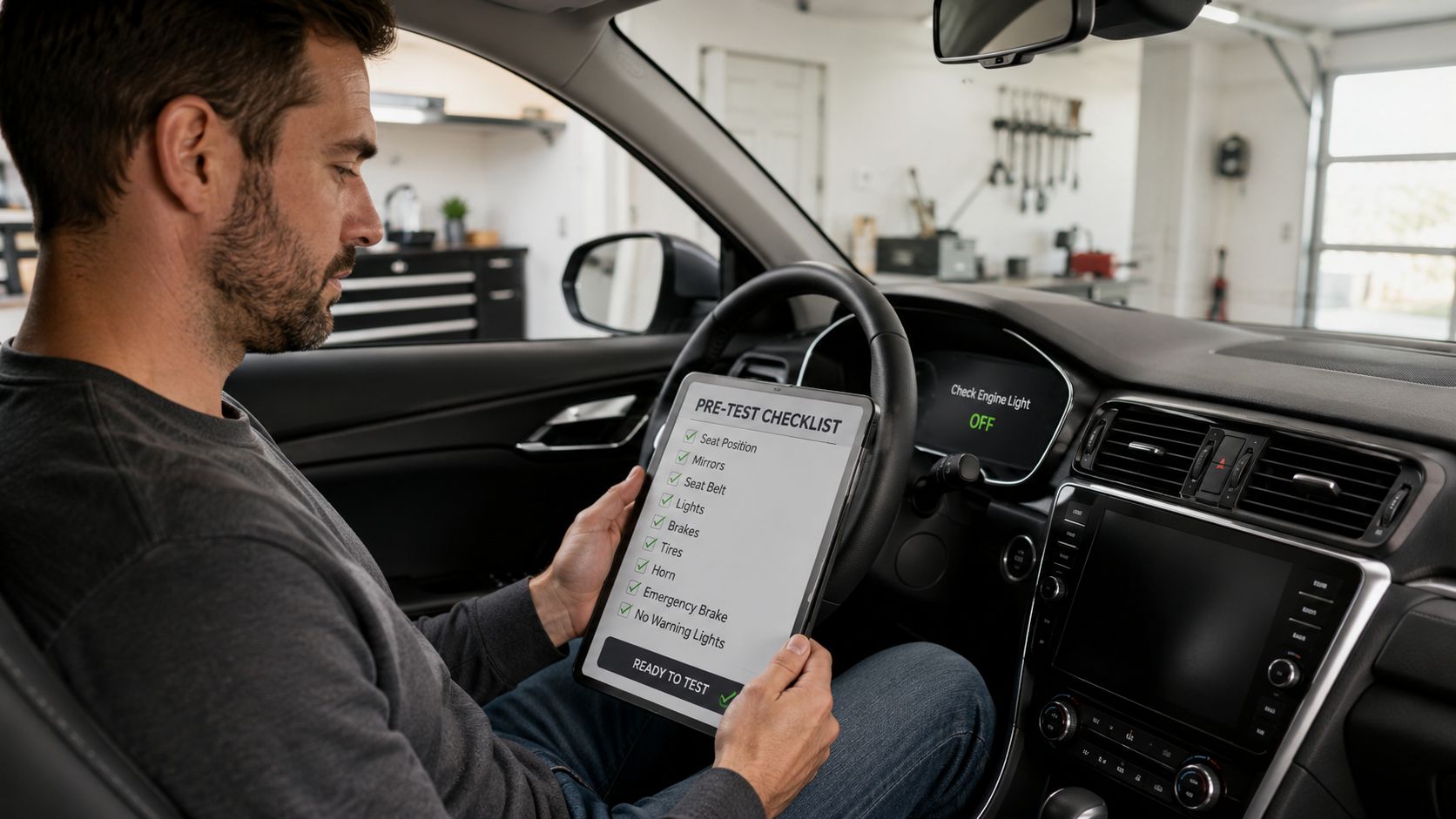
The easy checks to do before you leave home
Start with the dashboard. If your Check Engine light is on, don't ignore it and hope for the best. That light often points to the exact kind of issue that can stop an emissions inspection from passing.
Then think about recent work on the car. If the battery was disconnected, replaced, or the car recently had certain repairs, the onboard computer may not be ready yet. That becomes important during modern emissions testing.
A short prep list helps:
- Drive the car first: Don't bring it in cold if you can avoid it. A normal drive helps the car reach regular operating condition.
- Check the gas cap: Make sure it's there and tightened properly. A loose or damaged cap can create trouble.
- Look for warning lights: If the dash is lit up, get that diagnosed before testing.
- Avoid last-minute battery disconnects: Resetting the car's memory right before a test can create readiness problems.
A smog test goes smoother when the car has been driven normally and nothing has recently reset the vehicle computer.
What to bring and what to avoid
Bring the paperwork that helps the visit move quickly. Your renewal notice is helpful if you have it. Current registration details are useful too, especially if you're trying to complete your DMV requirement without guesswork.
Later in your prep, it helps to see the process in motion:
A few things drivers should avoid before they head out:
- Don't clear codes right before the test: That can wipe out readiness information the inspector needs.
- Don't assume a recent repair means the car is instantly ready: The repair may be fine, but the system may still need normal driving to complete self-checks.
- Don't wait until the final day if you can help it: If something small needs attention, extra time lowers the pressure.
Your Step-by-Step Guide to the Smog Test
Many drivers feel more comfortable knowing what the appointment entails. The process is straightforward. You arrive, check in, the technician confirms what kind of test your vehicle needs, and then the inspection starts.
What check-in looks like
When you pull in, the first few minutes are usually simple. A technician or staff member gets your basic vehicle information, confirms the service needed, and lines the car up for the inspection bay. At a busy shop, two service bays can make a real difference because they help keep cars moving instead of stacking everyone into one long line.
For a first-timer, this is the part that feels more routine than dramatic. You're not negotiating a repair estimate. You're confirming identity, vehicle details, and the type of compliance check required.
What happens during the inspection
A California smog inspection typically includes a few separate checks rather than one single “machine test.” For many drivers, the technician is looking at three broad areas.
First is the visual inspection. The technician checks whether required emissions components appear to be present and properly installed.
Second is the functional side. On many newer vehicles, that includes connecting to the vehicle computer through the OBDII system. The California smog testing overview by year notes that vehicles model year 2000 and newer include an OBDII inspection as part of the test, which reads the vehicle's computerized diagnostics data.
Third is the emissions compliance measurement that applies based on the vehicle and test type. The technician verifies whether the vehicle meets the state requirement for that inspection cycle.
Most drivers are surprised by how ordinary the visit feels. The test is usually more about verification than mystery.
When the inspection is finished, you get the result and the next step becomes clear right away.
Why Cars Fail Smog Tests and How to Avoid It
Failure usually comes from a short list of problems. Some are true emissions faults. Others are preventable readiness issues that catch drivers off guard because the car seems to run fine.
The failure points drivers run into most often
Here are the trouble spots I'd tell any first-time driver to think about before searching for Car emissions testing near me and heading out.
| Issue | What It Is | Simple Check |
|---|---|---|
| Check Engine light | The car's computer has detected a fault that affects monitored systems | Look at the dash before you leave |
| Loose or faulty gas cap | The fuel vapor system may not seal correctly | Tighten the cap and inspect for wear |
| Incomplete OBD readiness | The onboard system hasn't finished its self-checks | Avoid recent battery resets and drive normally first |
| Emissions component problem | Parts like sensors or converters may not be working correctly | If the car runs rough or has warning lights, get it diagnosed |
| Modified or missing equipment | Required emissions parts may be altered or absent | Make sure factory-style emissions equipment is still in place |
A lot of people assume a smog failure means the engine is about to die. That's often not true. Some failures come from items that don't feel dramatic while driving, like a leak in the evaporative system, a sensor issue, or computer monitors that haven't reset.
The common smog check fail reasons guide is worth reviewing if you want a local breakdown of what inspectors commonly see.
The OBD monitor issue that catches people off guard
This is one of the most misunderstood parts of modern testing. If a battery was disconnected, replaced, or certain repairs were done recently, the car's computer may erase readiness information. The vehicle might drive normally, idle fine, and still not be ready for inspection.
According to the Connecticut vehicle testing explanation of OBD readiness, a week of combined highway and city driving is often needed to reset OBD monitors after a battery disconnect or repair. That plain-language advice is useful far beyond Connecticut because the basic driver mistake is the same everywhere. People clear codes, swap a battery, or finish a repair and head directly to a smog station before the system has completed its checks.
If you recently disconnected the battery, don't assume the car is ready just because the warning light is off.
That's why a vehicle can “feel fixed” but still fail on inspection day. The solution is often patience and normal driving, not panic.
What Happens After Your Smog Test Results
Once the inspection ends, you're on one of two paths. Both are manageable.
If your car passes
If the vehicle passes, the biggest relief is that you're usually done with the emissions requirement for that cycle. The result is typically transmitted electronically, which helps complete the registration side without making you chase paper proof from office to office.
If you also need help with your registration steps, a local California DMV registration renewal service can save you from dealing with a separate trip and more waiting.
For most drivers, a pass means the test fades into the background quickly. You handle the paperwork, finish renewal, and move on.
If your car doesn't pass
A failed result feels personal, but it usually isn't. It means the car didn't meet one part of the requirement on that visit. The next step is figuring out whether the problem is a readiness issue, a simple repair item, or a larger emissions-related fault.
The important thing is trust. A test-only station doesn't profit by turning your failed inspection into an in-house repair order. That separation matters because it keeps the testing result independent from repair sales pressure.
If your vehicle needs work, get the issue diagnosed and repaired by the shop you choose. Then return for the retest under the station's policy and coupon terms if that applies. That setup makes the process feel a lot less like a dead end.
- Keep your report: It helps the repair shop understand what needs attention.
- Ask what kind of failure it was: Readiness and component failures are not the same thing.
- Don't rush back too early: If the issue involved monitor readiness, the car may need more normal driving before a retest.
Fire House Smog Your All-in-One Smog and DMV Solution
The biggest time drain in vehicle compliance usually isn't the inspection itself. It's the bouncing around afterward. One location for testing and another for registration. One set of hours for weekdays and another office that closes before you can get there.
That's where a combined smog-and-DMV setup helps Antioch drivers most.
Why the one-stop setup matters
Fire House Smog is a STAR-certified test-only station and a licensed DMV registration services provider in Antioch. That combination matters because it cuts out two common frustrations at once. You don't have repair upselling tied to the smog result, and you don't have to default to a DMV office line for every registration task.
The shop also operates with two service bays, which helps reduce bottlenecks when several drivers arrive around the same time. For people squeezing this errand into lunch, after work, or a weekend window, that practical detail matters more than flashy marketing language.
A station that only tests and also handles DMV tasks solves two separate headaches in one stop.
What Antioch drivers can handle in one visit
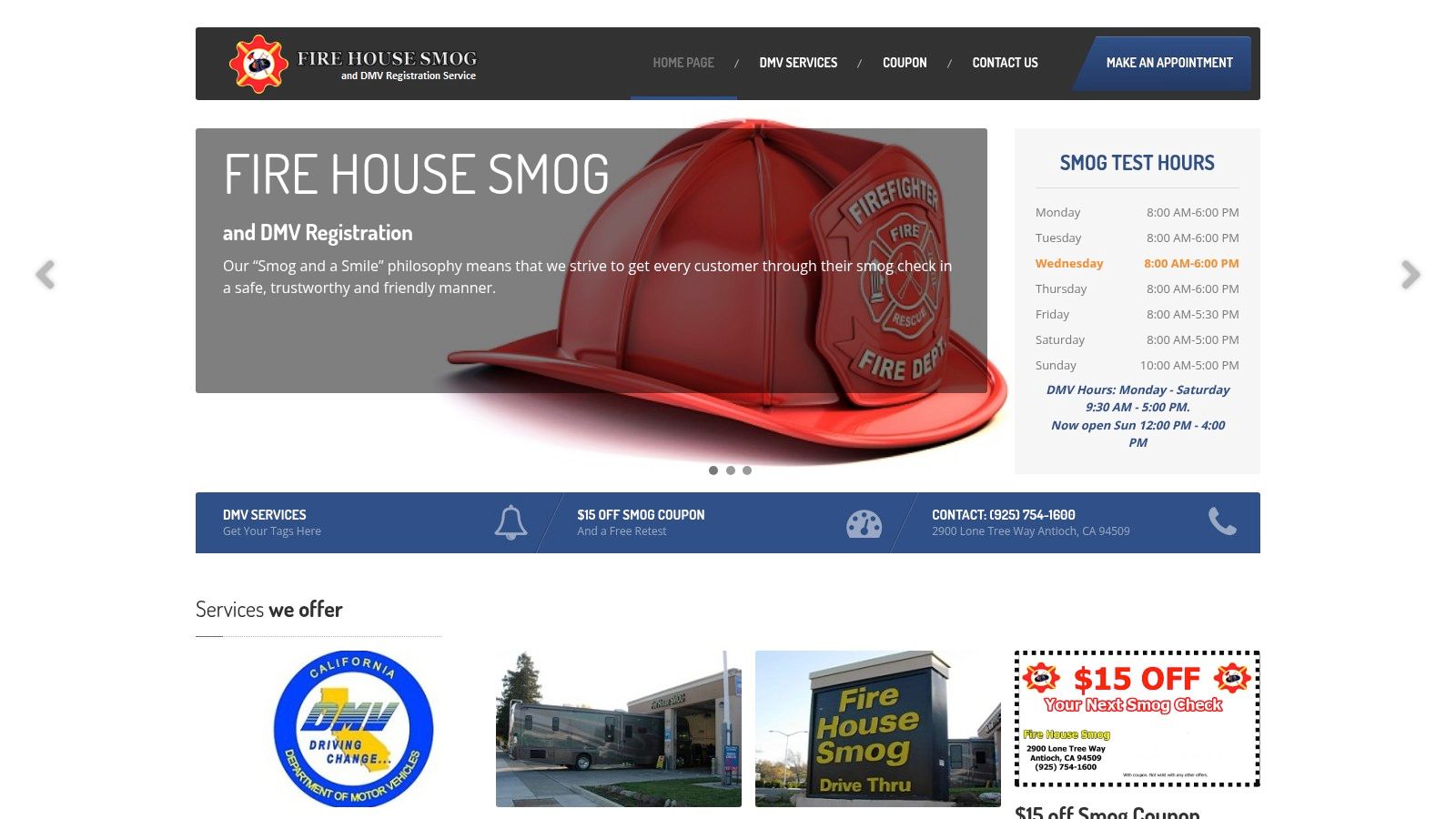
Fire House Smog can handle more than a standard passenger-car inspection. Based on the business information provided, Antioch-area drivers can use it for:
- STAR-certified smog checks: Passenger cars, SUVs, and light-duty trucks are the core fit.
- Some RV and motorhome smog checks: Because size and equipment matter, it's smart to call ahead.
- Registration renewals: On-site DMV service includes sticker printing during posted hours.
- Ownership transfers: That includes California vehicles and out-of-state vehicles.
- On-site tags and related registration help: Useful when you want to leave with more than a test receipt.
Hours are another quality-of-life advantage. Smog testing is available seven days a week with extended evening and weekend availability. DMV service hours are listed as Monday through Saturday, 9:30 AM to 5:00 PM, and Sunday, 12:00 PM to 4:00 PM, with limited services possible on weekends.
For Antioch drivers, that means fewer workday disruptions. It also means small business owners, families with packed schedules, and people handling title or registration issues don't have to build their whole day around a government office visit.
Your Smog Check Questions Answered
Do I need a smog check when selling a car
In many California vehicle sale situations, smog compliance becomes part of the transfer process. If you're selling, don't guess. Confirm the exact requirement tied to the vehicle and transfer.
What if my renewal notice says STAR station
Use a STAR-certified station. If your notice specifies STAR, going to a non-STAR location can waste a trip.
My car runs fine. Can it still fail
Yes. A car can drive normally and still fail because of a sensor issue, a gas cap problem, or incomplete OBD readiness after battery service or repairs.
How long should I drive after battery work before testing
Don't rely on one short errand. As noted earlier, normal mixed driving over about a week is often needed for readiness monitors to reset after a battery disconnect or certain repairs.
Can I handle registration at the same place
Yes, if you choose a shop that also offers licensed DMV services. That's one of the easiest ways to avoid extra lines and another trip across town.
Can larger vehicles come in too
Some RVs and motorhomes can be tested, but bay space and equipment limits matter. Calling ahead is the safest move.
If you want a smoother way to handle smog and registration in Antioch, contact Fire House Smog. It's a STAR-certified test-only station at 2900 Lone Tree Way with on-site DMV services, two service bays, seven-day smog availability, and help for renewals, transfers, and some RVs. Call first if you've got a larger vehicle or want to confirm DMV service timing.
Your registration notice shows up, and your first thought usually isn't air quality. It's time. You need the smog check done, the DMV wants the paperwork right, and you don't want to lose half a day sitting in lines or arguing with a shop that suddenly found "other issues."
That's why an In & Out Smog Test Only Center model makes sense for a lot of California drivers. If your goal is simple, get tested accurately, avoid repair-shop games, and finish your registration with the least hassle possible, this is the lane to stay in. If you also have access to on-site DMV services, you can cut out one of the most annoying parts of the whole process.
Table of Contents
- That DMV Smog Notice Just Arrived What Now
- Understanding the Test-Only Smog Center Model
- The Top 3 Benefits of Choosing a Test-Only Center
- Fire House Smog Your STAR-Certified Center in Antioch
- Skip the DMV Lines with On-Site Services
- FAQs and Tips for a Quick Smog Check
That DMV Smog Notice Just Arrived What Now
Start with the notice itself. Check whether the DMV is requiring a smog inspection or whether your paperwork specifically says you need a STAR station. That detail matters because not every shop can handle every inspection requirement.
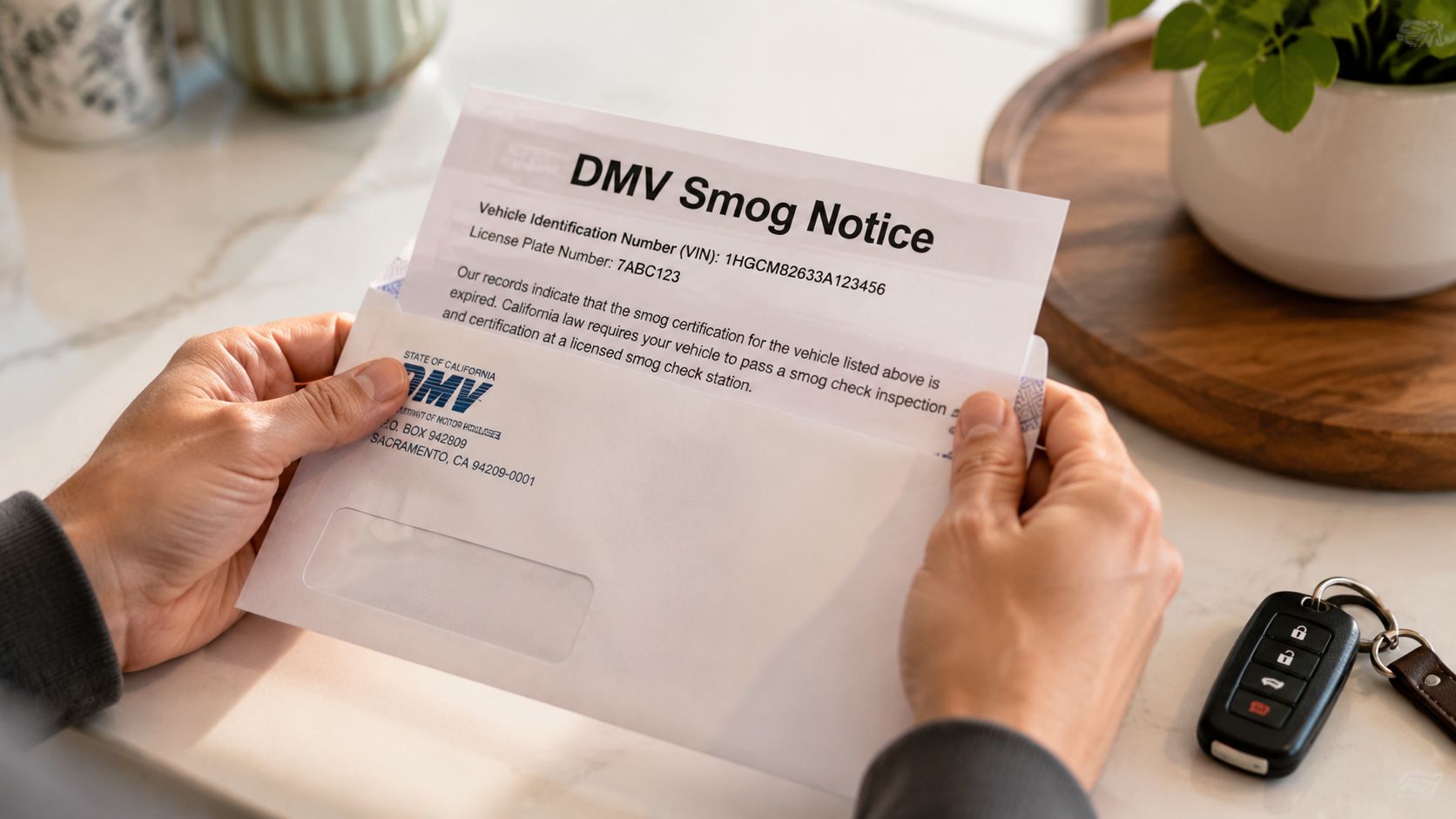
If you're also due for registration, don't split this into two errands unless you have to. A station that handles smog testing and DMV-related processing in the same visit can save you a lot of wasted motion. If you need a refresher on the paperwork side, this guide to California DMV registration renewal is a useful starting point.
First move after opening the notice
Don't overthink it. Use this order:
- Read the DMV requirement carefully. Look for STAR language, transfer language, or anything tied to renewal.
- Check your dashboard. If the Check Engine light is on, handle that before you test.
- Choose a test-only station first. It keeps the inspection separate from repair sales.
- Bring your registration-related paperwork. If the location also handles DMV tasks, you'll be ready to finish the job in one stop.
Practical rule: When the state wants a clean answer, go to the place that's only there to test.
Most drivers get tripped up because they treat the smog check like a random oil-change errand. It's not. It's a compliance step tied directly to your registration and, sometimes, your transfer paperwork. Pick the right station first, and the rest gets easier.
Understanding the Test-Only Smog Center Model
A lot of confusion comes from one basic problem. People assume every smog shop works the same way. It doesn't.
A STAR Test Only smog center is legally authorized by the California Bureau of Automotive Repair to perform both regular and STAR-directed inspections, but it can't perform smog repair services. That separation is the point. It removes the built-in conflict where the same business tests the car and then tries to sell the fix. Typical pricing for these stations is listed as $29.95 to $59.95 plus an $8.25 state certificate fee in this overview of the STAR smog check station program.
Why test-only matters
Think of a test-only center like a lab. The lab runs the test and reports the result. It doesn't try to turn the result into a repair invoice.
That matters even more if your DMV paperwork directs you to a STAR station. State rules send certain vehicles to these stations because the inspection needs to meet a higher compliance standard. If your notice says STAR, going somewhere else first just wastes time.
A test-only station gives you the answer. It doesn't try to sell you the answer.
Test-only center vs test and repair shop
| Feature | Test-Only Center | Test & Repair Shop |
|---|---|---|
| Core job | Inspects emissions compliance only | Inspects and may also sell repairs |
| Repair work | Not allowed for smog repairs | Allowed |
| Conflict of interest | Lower, because it can't profit from smog repairs | Higher, because failed tests can turn into repair work |
| STAR-directed vehicles | Can handle them if STAR-certified | Depends on station type and certification |
| Best fit | Drivers who want an unbiased pass/fail result | Drivers who want testing and repairs in one place |
Here's my view. If you want a straight answer, start with test-only. If your car fails, then decide where to repair it. That sequence protects your wallet and your time better than walking into a shop that benefits from both the diagnosis and the repair sale.
The Top 3 Benefits of Choosing a Test-Only Center
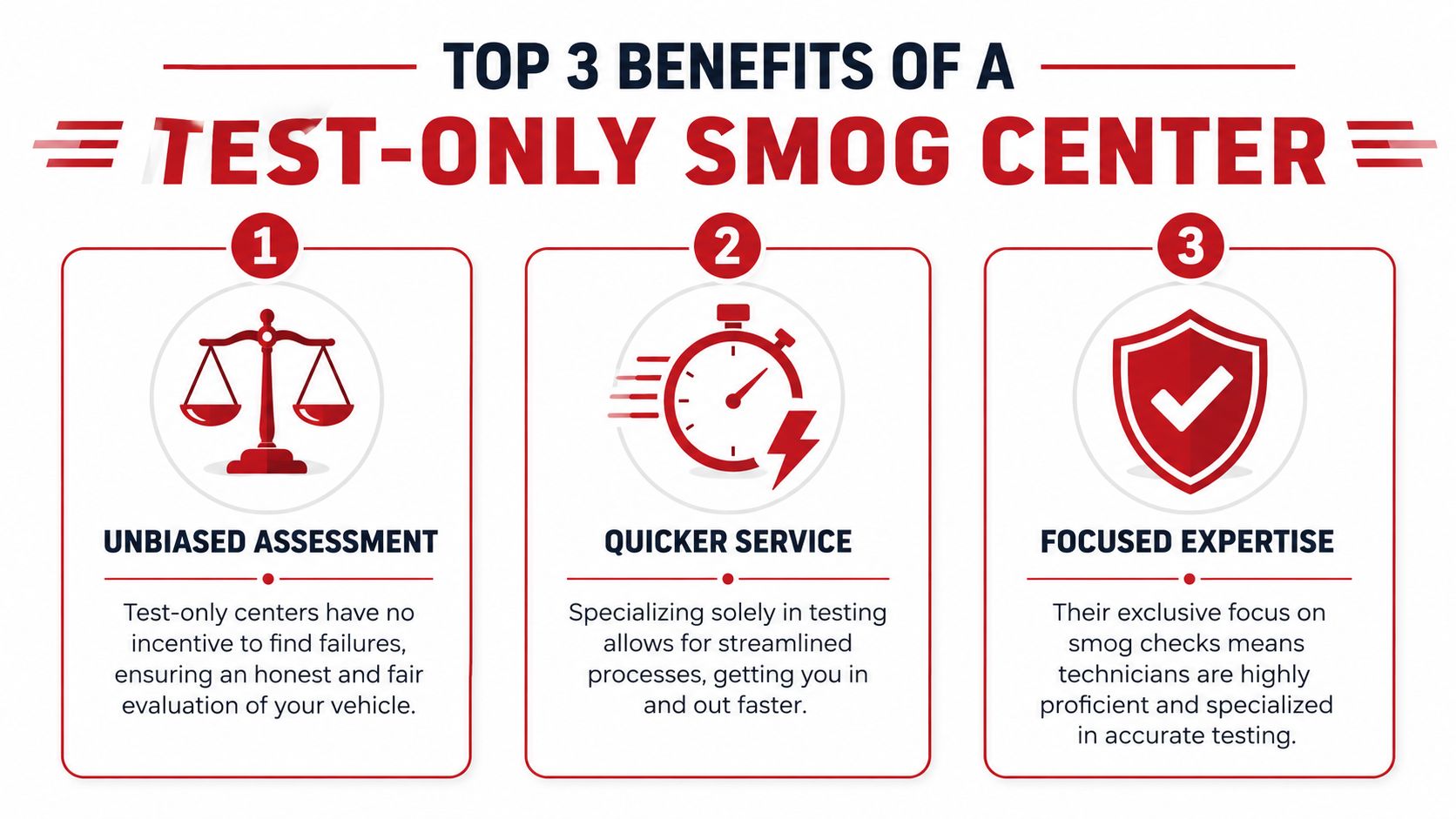
You open the DMV notice, see the smog requirement, and want it handled in one stop. Good. Start with a test-only center. It gives you a clean inspection result without the pressure of a repair upsell, and the smart shops pair that with on-site registration help so you can cut out an extra DMV errand.
Benefit one honest results
This is the main reason to choose test-only. The shop tests your car and reports the result. It does not profit from selling smog repairs after a failure.
That separation protects you.
If your vehicle passes, you can move on. If it fails, you can decide where to spend your repair money instead of making that decision under pressure at the same counter.
Benefit two faster visits
Focused shops waste less of your day. They are built to process inspections, not split attention between oil changes, engine work, phone calls about parts, and smog checks stacked in between.
That usually means a cleaner workflow, fewer delays, and less waiting around for a basic compliance visit. If you choose a local Antioch smog check service built for quick inspections, you also put yourself in a better position to finish the smog and handle registration needs in one place. That is the overlooked advantage. The test is unbiased, and the paperwork side gets easier too.
Benefit three fewer DMV surprises
DMV problems usually start with paperwork, not the tailpipe. Using the right station type helps you avoid rejected documents, repeat visits, and the headache of figuring out why a certificate did not line up with what your notice required.
This comes up with STAR-directed vehicles, registration renewals with extra scrutiny, and transfers where clean documentation saves time. Get the inspection done at the right place the first time. Then, if the shop also offers on-site DMV services, you can finish more of the process without standing in another line.
A cheap smog check is not a bargain if bad paperwork sends you back to the DMV twice.
Fire House Smog Your STAR-Certified Center in Antioch
Your renewal notice shows up, you need a STAR smog, and the last thing you need is a shop that turns a simple inspection into a half-day chore. Fire House Smog is the kind of place built to keep that from happening.
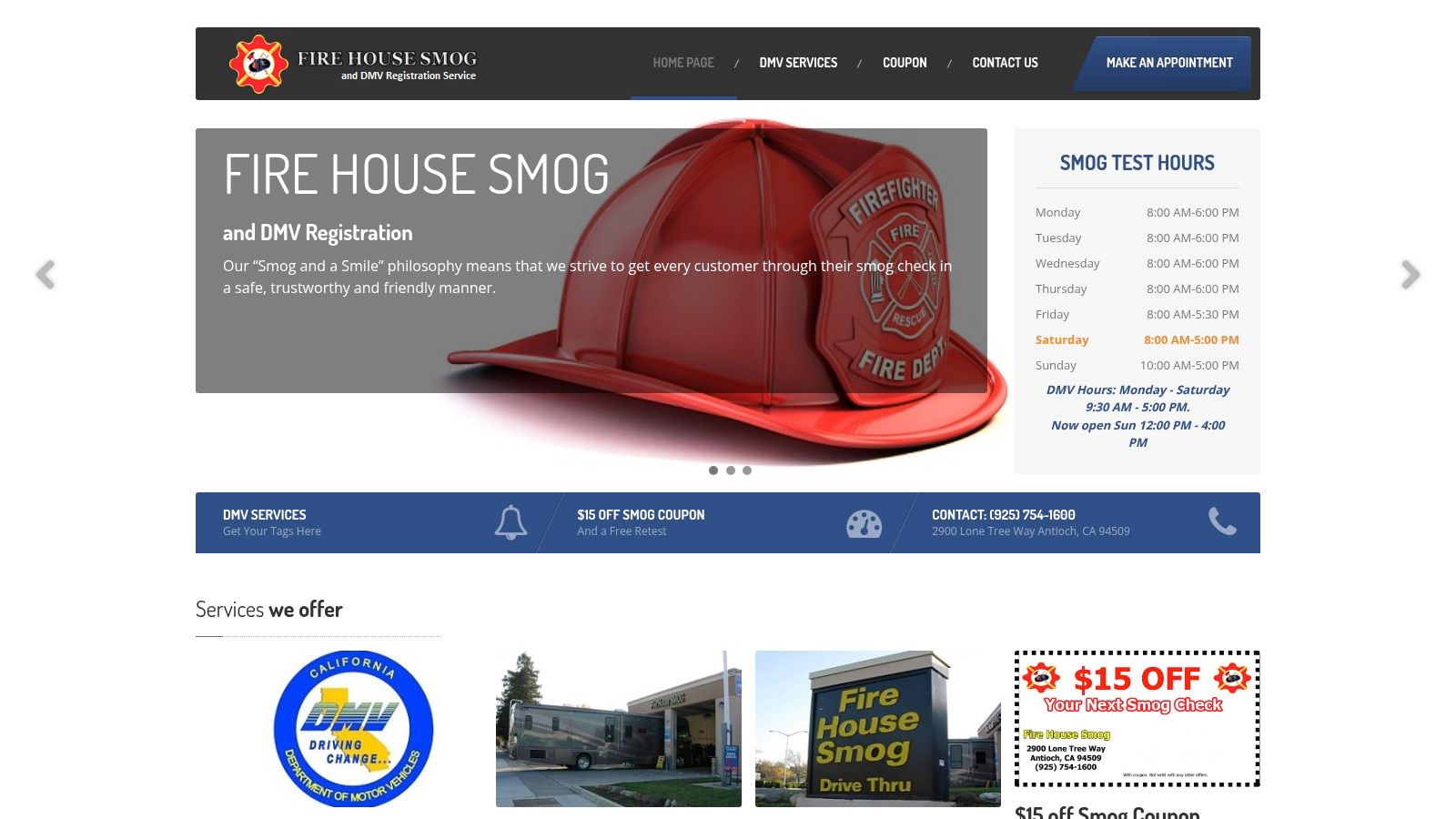
The big advantage here is simple. Fire House Smog runs as a STAR-certified test-only station, so the inspection stays separate from repair sales pressure. That matters if you want a clean answer about whether your vehicle passes, without getting pushed toward in-house fixes.
The shop also has a layout designed to keep cars moving. More than one service bay and a drive-through setup make a real difference on busy days. At cramped locations, one delay can back up the whole line. Here, the operation is set up for volume, which is exactly what local drivers want from a smog visit.
If you want to preview the shop before you go, the Antioch smog check service page gives a clear look at the station and how it handles inspections.
Why this Antioch location stands out
A lot of smog shops only solve one problem. Fire House Smog solves two. You get the unbiased test-only model, and you get a location that is set up to make the registration side easier once the inspection is done.
That is the overlooked benefit.
The station is at 2900 Lone Tree Way, Antioch, CA 94509, close to Highway 4 and easy to reach for drivers coming from Antioch, Pittsburg, Oakley, and Brentwood. Easy access matters more than people think. If the shop is hard to enter, hard to park at, or constantly jammed, the whole "quick smog check" promise falls apart.
Fire House Smog also appears in a California BAR document from 2020 that references its STAR test-only status. That supports the practical point local drivers care about. This is not a random general repair shop squeezing smog checks into the day. It is a station built around inspection work.
Here's a quick look at the station in action.
For Antioch drivers, that setup saves more hassle than a generic smog station. You can get the inspection from a shop with no repair agenda, then handle the next step faster because the business is built around compliance, not upsells. That one-two combination is what makes this location worth knowing about.
Skip the DMV Lines with On-Site Services
Your renewal notice shows up, you handle the smog check, and then you still end up stuck dealing with registration somewhere else. That is the wasted trip smart drivers should avoid.
The better move is simple. Use a test-only smog center that can also help you finish the DMV side on site. That gives you two real advantages in one stop. You get an unbiased inspection, and you cut out the second errand that usually eats up the rest of your day.
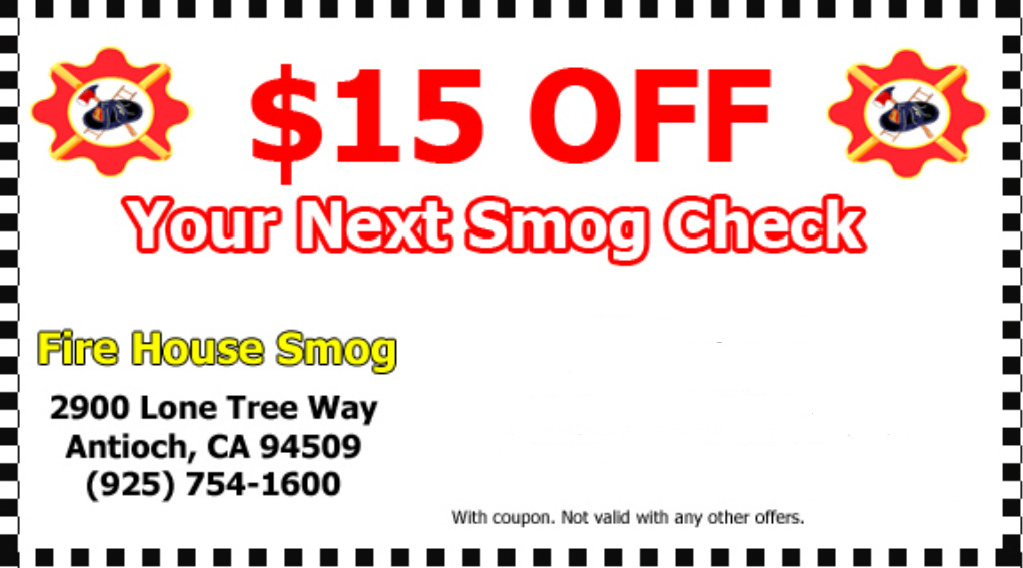
Fire House Smog offers smog testing seven days a week and on-site DMV services during business hours. It also offers a $15 discount coupon, which makes the visit easier on your budget.
How to get in and out faster
Treat the visit like a compliance errand, not just a smog appointment. Show up prepared, do the inspection first, then finish any qualifying registration task before you leave.
A simple plan works best:
- Bring your paperwork: If you need help with renewal or ownership-related paperwork, review the required vehicle registration documents before you go.
- Start with the smog check: That keeps the inspection tied directly to the registration step you need to finish.
- Ask about on-site DMV processing right away: If your transaction qualifies, handle the tags or sticker during the same visit.
- Use the weekend schedule if weekdays are packed: That matters for drivers trying to avoid missing work or rearranging family schedules.
Who benefits most from this setup
Busy commuters save the most obvious time. Parents with a packed schedule also benefit because one stop is easier to manage than bouncing between a smog shop and a DMV counter. Local business owners and small fleet operators get another benefit. Less vehicle downtime means less disruption to the workday.
That is the practical edge a lot of smog articles miss. A test-only center protects you from repair-shop pressure. On-site DMV help protects your schedule. Put those together, and the whole job gets finished with less hassle, less waiting, and fewer chances for paperwork problems.
FAQs and Tips for a Quick Smog Check
A smooth smog visit usually comes down to basic preparation. Most delays are avoidable.
What to bring and what to check first
Bring your registration paperwork and any DMV notice you received. Before you leave home, make sure the Check Engine light isn't on and the car is in normal running condition.
A short pre-visit checklist helps:
- Dashboard check: If warning lights are active, don't assume it'll be fine.
- Paperwork check: Bring the documents tied to renewal or transfer.
- Timing check: Go when you can complete both testing and any registration task without rushing.
What if your car fails
Don't treat a failed test at a test-only station as bad service. Treat it as a clean diagnosis.
Data cited in discussion around California test-only stations shows STAR-certified stations have an initial failure rate of about 12% to 15%, compared with about 8% at non-STAR stations, not because the service is worse, but because the model is more impartial and doesn't rely on quick repair-based pass decisions, as described in this review discussion of test-only station failure-rate concerns.
That lines up with what experienced drivers eventually learn. Honest testing can feel harsher in the moment, but it protects you from false confidence and paperwork headaches later. If you're using a coupon at Fire House Smog, the site policy also includes a free retest when required, which takes some sting out of an initial failure.
If you want the simplest path through smog and registration in Antioch, use Fire House Smog. It's a STAR-certified test-only station with on-site DMV services, two service bays, seven-day smog availability, and the kind of setup that saves time instead of creating another errand.

That DMV renewal notice usually lands at the wrong time. You're busy, the registration deadline is close, and now you need a smog check without turning it into a half-day project or getting pulled into a repair conversation you didn't plan for.
That's why a Smog Test Only Discount Center matters. If your goal is simple, get tested, get your certificate sent in, and move on, a test-only shop is often the cleanest path. In Antioch, that matters even more because drivers often want one stop that handles the smog check quickly and, if possible, takes care of registration needs too.
California runs one of the largest vehicle emissions programs in the country. The state's Smog Check Program requires testing for approximately 10 million vehicles annually, and the program helped reduce on-road hydrocarbon emissions by 80 to 90% and nitrogen oxides by over 70% between 1980 and 2020, according to the California Bureau of Automotive Repair Smog Check overview. For most drivers, though, the big issue isn't the statewide policy. It's getting through your own appointment with less hassle.
Table of Contents
- Your Guide to a Stress-Free Smog Check
- What Is a STAR Test-Only Center
- Fire House Smog Services in Antioch
- Using Your Discount and Free Retest
- Your Pre-Test Checklist to Pass the First Time
- Location Hours and Contact Information
Your Guide to a Stress-Free Smog Check
Drivers don't want a “smog experience.” They want a certificate sent to the DMV and one less thing on their list. The stress usually comes from three places. You're not sure whether your car will pass, you don't want to wait around, and you don't want a simple inspection to turn into a sales pitch.
A smog test only discount center solves a lot of that upfront. The job is narrow by design. The station tests the vehicle, reports the result, and submits the certificate electronically when the vehicle passes. That narrower setup is exactly what many drivers need when they're trying to renew registration quickly.
A common Antioch scenario looks like this: you check your renewal notice, realize smog is required, and start searching for a place that's open when you're off work. You also want clear pricing, not a vague “come in and we'll see.” That's where discount offers and test-only service become practical, not just marketing language.
Practical rule: If you already know you only need the inspection, a test-only station usually creates fewer detours.
Another benefit is psychological. When a shop doesn't repair cars on-site, the conversation tends to stay focused on compliance. You're there for a result, not a bundle of extra recommendations. That doesn't guarantee a pass, of course. It does make the process feel cleaner and easier to trust.
For local drivers, the most useful setup is a station that combines STAR-certified testing, a visible coupon, and on-site DMV support. That mix saves the most time because it cuts down repeat trips and reduces confusion about what to do next.
What Is a STAR Test-Only Center
A STAR test-only center handles one job: inspect your vehicle's emissions and report the result to the state. It does not repair the car. For many Antioch drivers, that separation is the main advantage because it keeps the visit focused on the inspection instead of turning into a repair estimate.
“STAR” and “test-only” mean different things.
“STAR” is a California designation for stations that meet tighter performance and oversight standards within the state smog program, as outlined by the California Bureau of Automotive Repair STAR Program. In plain terms, the station has to keep its equipment, testing process, and inspection quality in line with state requirements.
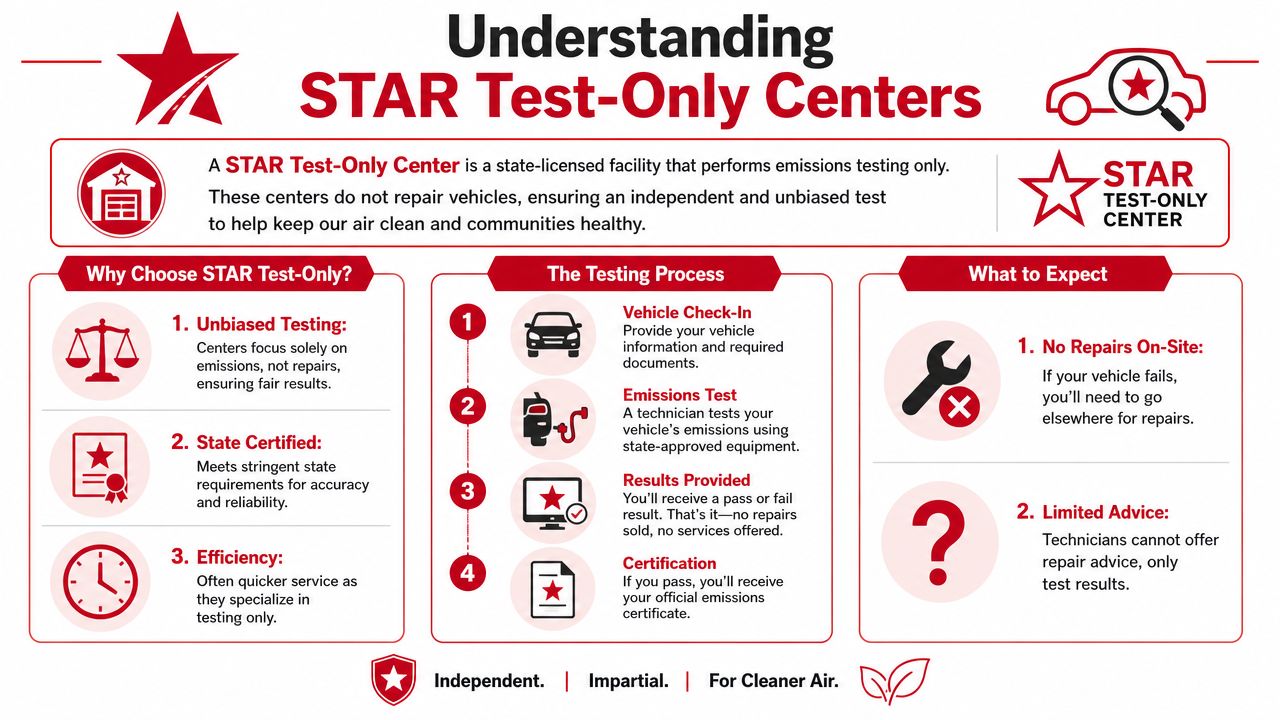
That matters for a simple reason. Drivers need a result they can trust, whether the car passes or fails.
“Test-only” matters even more from the customer side. A shop that does not perform repairs on-site has less reason to turn a failed inspection into a sales conversation. The station tests the vehicle, explains the result, and submits the certificate electronically if the car passes. If it does not pass, you can take that result to the repair shop of your choice.
California's consumer guidance on smog inspections also separates station types and explains that some stations only inspect, while others inspect and repair. That distinction is part of how drivers can choose the setup that fits their situation, as described by the California Department of Consumer Affairs smog check information.
Here is the practical trade-off. A test-and-repair shop can be convenient if you already expect repairs and want everything done in one place. A test-only station is usually the better fit when you want a neutral inspection first and do not want the inspector to have a financial stake in the repair decision.
| Feature | Test-Only Center (e.g., Fire House Smog) | Test-and-Repair Shop |
|---|---|---|
| Main job | Emissions inspection only | Inspection plus repair work |
| Repair incentive | None in-house | Present because repairs are sold on-site |
| Customer experience | Focused on the test result and compliance | May include repair recommendations and pricing |
| Best fit | Drivers who want an unbiased inspection | Drivers who want testing and repairs in one visit |
For local drivers, that model works well when it is paired with clear pricing, STAR certification, and practical help after the test. The Antioch smog check service page shows how that service is set up at Fire House Smog. The short version is simple: if you need an accurate inspection without the usual conflict of interest, a STAR test-only center is often the smarter choice.
Fire House Smog Services in Antioch
The local value isn't just “we do smog checks.” It's whether the shop handles the practical stuff that usually wastes your time. In Antioch, that means vehicle eligibility, faster throughput, and DMV-related tasks that can be handled on-site instead of sending you somewhere else.
What drivers usually need most
The common needs are straightforward:
- Passenger vehicle testing: Cars, SUVs, and light-duty trucks are the core use case for a STAR-certified test-only station.
- Diesel and larger-vehicle questions: Some stations can handle certain diesel vehicles and some recreational vehicles, but size and equipment limits matter. Calling ahead saves a wasted trip.
- DMV renewals on-site: This is one of the biggest convenience wins. If the station also handles registration renewals and sticker printing, you can avoid a separate DMV stop.
- Ownership transfers: If you bought or sold a vehicle, registration paperwork can become the bigger headache than the smog test itself.
- Fleet service: Small business owners don't need drama. They need a predictable place to move vehicles through inspections with less downtime.
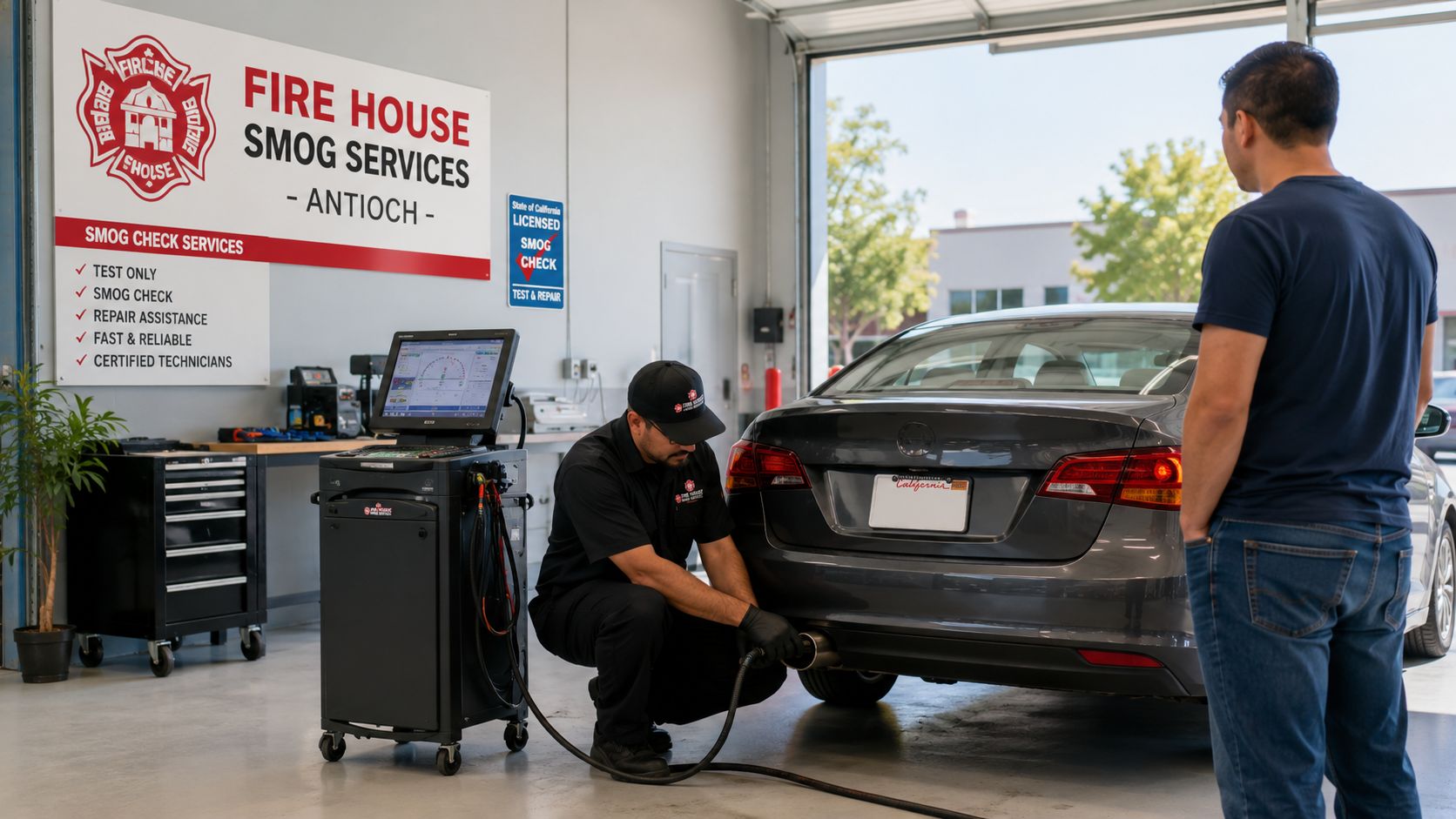
That combination is where one local shop can do more than a basic smog lane. Fire House Smog operates as a STAR-certified test-only smog check station and licensed DMV registration services provider in Antioch, handling smog inspections for cars, trucks, and some RVs, along with registration renewals, ownership transfers, and related tag or plate services on-site.
A shop that can test the car and handle the registration step cuts out the most annoying part of the process, the second errand.
Why the workflow matters
Capacity affects your day more than most drivers realize. A station can be honest, licensed, and still slow if cars pile up and the layout creates bottlenecks.
Verified operational guidance notes that stations with an optimized multi-bay workflow can process vehicles efficiently. With two service bays and a testing-focused setup, a station like this can handle roughly 12 to 16 vehicles per day, which helps reduce wait times during busy periods, according to this test-only center throughput overview.
That doesn't mean every visit is instant. It does mean the workflow is built for movement, not for juggling smog jobs around repair tickets, parts delays, or cars stuck on lifts.
Here's what tends to work best for customers:
- Call ahead for unusual vehicles: RVs, motorhomes, and oversized vehicles can have fit or equipment issues.
- Use weekday DMV service when possible: If your goal includes registration or transfer work, going during the full DMV service window usually avoids confusion.
- Choose a test-only lane when you want neutrality: If you don't need repairs, you don't gain much from standing in line at a repair shop.
For fleet owners, this matters even more. A neutral testing environment makes recordkeeping cleaner and helps separate compliance from maintenance planning.
Using Your Discount and Free Retest
Those searching for a smog test only discount center are trying to keep a required expense from getting bigger than it needs to be. That's reasonable. Smog isn't a fun purchase, so a clear coupon matters more than fancy branding.
The useful part is when the discount is easy to find and easy to redeem. If a coupon takes five clicks, has vague conditions, or isn't honored consistently, it doesn't save you time. It just adds one more thing to ask about at the counter.
How to use the coupon
The simplest approach is:
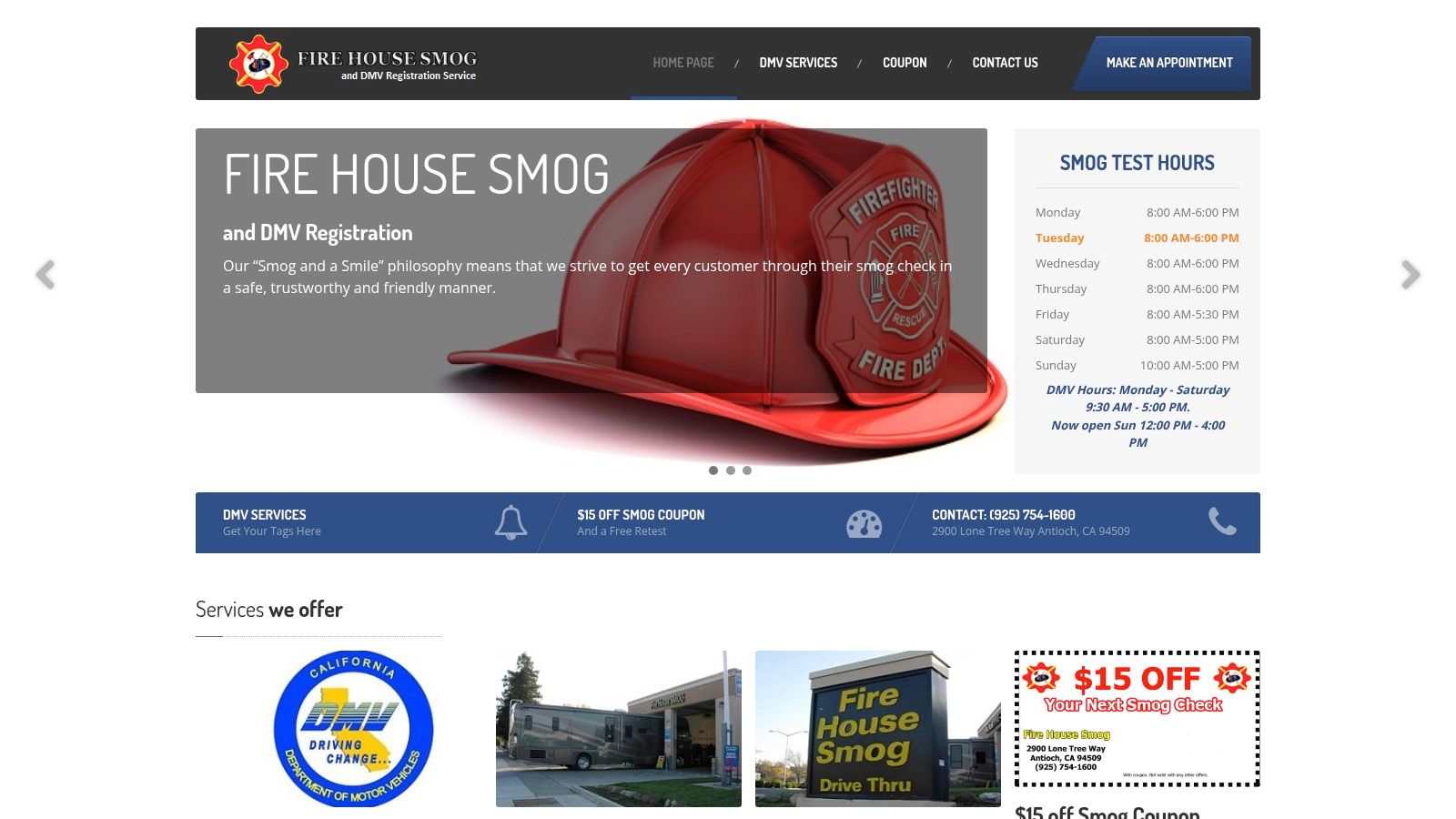
- Open the posted coupon page first. The current offer is listed on the Fire House Smog coupon page.
- Check the terms before you drive over. Look for vehicle restrictions, testing type, and any policy tied to the free retest.
- Bring the coupon with you. Digital display is usually easiest, but confirm if you prefer a printed copy.
- Mention it before the transaction is finalized. That avoids awkward backtracking after the test is already written up.
Publisher information provided for this article states that the coupon policy includes $15 off smog testing and a free retest, subject to site policy and coupon terms. That's the kind of offer that matters because it addresses both the first visit and the possibility that you may need to return after repairs elsewhere.
How to think about the free retest
A free retest is helpful, but only if you understand what it is and what it isn't.
- It lowers repeat-cost risk: If the vehicle needs outside repair and you come back under the coupon terms, the second visit may be less frustrating financially.
- It doesn't replace diagnosis: A test-only station reports the result. If the car fails, you'll still need a repair facility to address the actual issue.
- It works best when expectations are clear: Ask what qualifies, how long the retest window lasts under current policy, and whether all vehicle categories are included.
What saves the most money: Use the coupon on the first visit, and use the free retest policy as a backup, not as your main plan.
The best discount is still passing the first time. That starts before you leave home.
Your Pre-Test Checklist to Pass the First Time
You pull out of the driveway, drive across Antioch, wait your turn, and then find out the car was never ready for testing. That is the trip to avoid.
A test-only station helps by keeping the process straightforward. The station inspects and reports. It does not sell repairs, which means you get a clean result without the pressure that can come from a repair-and-test shop. Your part is showing up with the vehicle in normal running condition so the reading reflects how it performs.
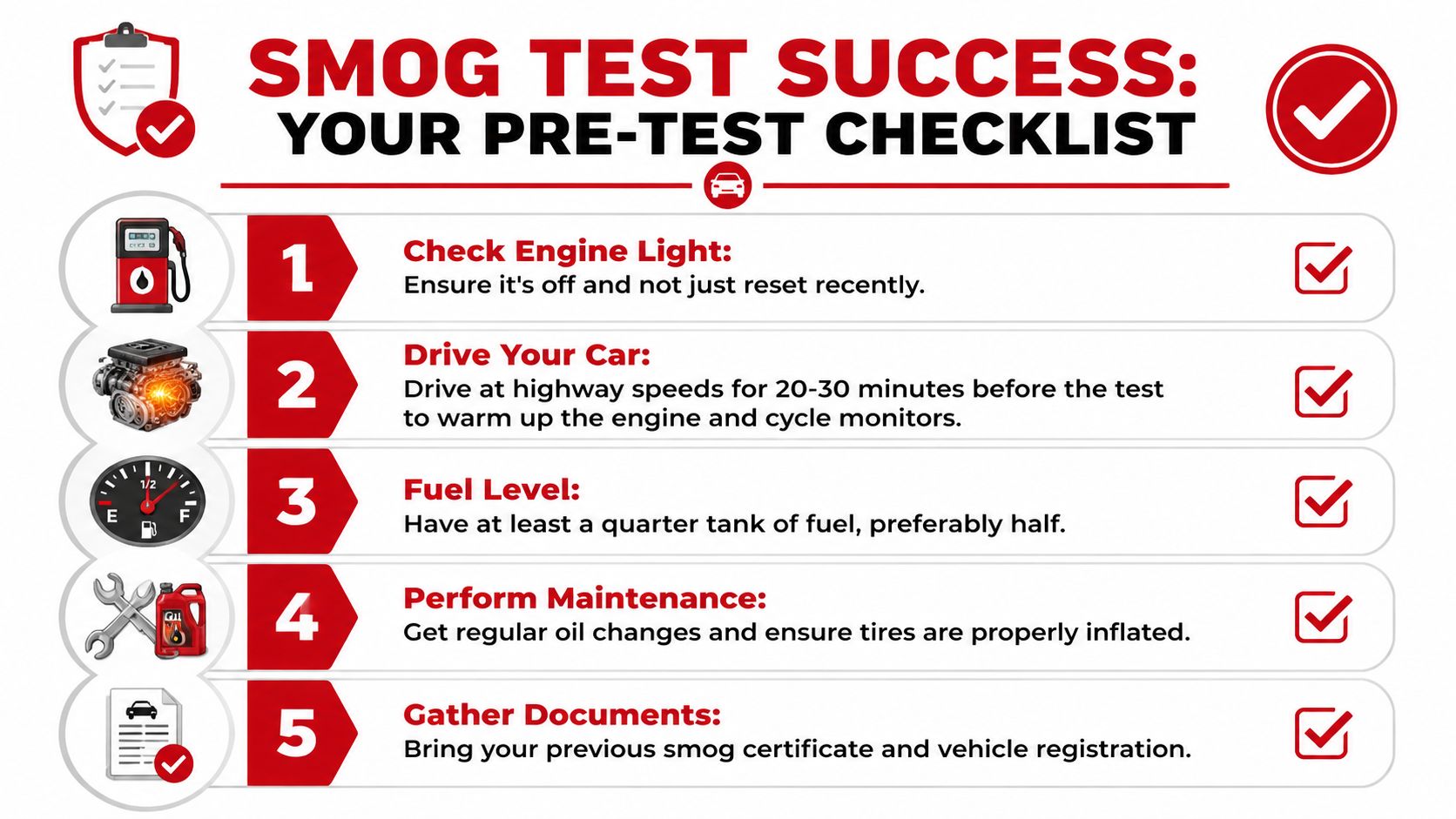
What to check before you leave home
Start with the items that cause the most preventable failures.
- Check Engine light off: If the light is on, handle that before testing. If codes were just cleared, the car may still show incomplete readiness monitors and fail for that reason alone.
- Fuel level in a normal range: Don't arrive nearly empty or packed full right after a fill-up. A moderate level is the safer bet.
- No obvious drivability problems: Rough idle, fuel smell, stalling, or visible leaks are signs to fix the problem first.
- Battery has not been disconnected recently: Many vehicles need normal driving time after a disconnect before all emissions monitors reset.
- Basic maintenance caught up: Dirty oil, overdue air filters, and neglected spark plugs can work against you on an older vehicle.
- Registration notice or paperwork ready: Keep it easy to reach so check-in takes two minutes instead of ten.
STAR-certified means the station meets California requirements for equipment, training, and inspection procedures. In plain terms, the test is standardized. That is good for drivers because the focus stays on the vehicle's condition, not on guesswork about where to test. If you want to confirm fit for your vehicle before you head over, use the Fire House Smog contact page.
What helps on test day
Bring the car in warm.
A short drive before the test usually helps more than people expect, especially on vehicles that spend most of their time on quick local trips. The catalytic converter and emissions system work better at normal operating temperature. A cold engine can make a healthy car look worse than it really is.
Use this routine:
- Drive 15 to 20 minutes first: Steady city or highway driving is better than starting the car and heading straight to the station.
- Skip the long parking-lot idle: If you warm it up, keep the visit moving.
- Pay attention on the way over: Misfire, hesitation, surging, or a new warning light means the car is telling you something.
- Do not treat the test like diagnosis: A smog inspection shows pass or fail. If there is a fault, repairs happen somewhere else.
That last point matters. The test-only model protects you from mixed incentives. You get an inspection result, not a sales pitch tied to the same visit.
If the car has been running normally for several days, the warning lights are off, and you drive it in warmed up, you have already cut down a lot of avoidable trouble.
Location Hours and Contact Information
Convenience matters most at the end of the process. Once you've decided where to go, you need the address, phone number, and service hours in one place, especially because smog hours and DMV hours aren't always the same.
Where to go
Fire House Smog is located at 2900 Lone Tree Way, Antioch, CA 94509. The phone number is 925-754-1600. For directions, service questions, or to confirm vehicle fit before arrival, use the Fire House Smog contact page.
If you're bringing an RV, motorhome, or another vehicle that might test the limits of bay space or equipment, calling first is the smart move. That quick check can save a pointless drive across town.
Hours at a glance
Smog testing is available seven days a week with extended hours. DMV-related services operate on a narrower schedule, and weekend DMV service may be limited depending on the task.
| Service | Monday-Saturday | Sunday |
|---|---|---|
| Smog testing | Extended daytime and evening hours | Available |
| DMV services | 9:30 AM to 5:00 PM | 12:00 PM to 4:00 PM |
A lot of driver frustration comes from showing up for the right place at the wrong time. Keep the two schedules separate in your mind. If you only need the smog check, you have more flexibility. If you also need registration or title-related help, plan around the DMV service window.
If you need a straightforward smog inspection and DMV help in Antioch, Fire House Smog is one local option for STAR-certified test-only service, on-site registration support, and posted coupon savings.