
You're holding a renewal notice, the car starts fine, and still you're not sure whether a smog check in Martinez, CA means a quick stop at any shop or a special trip to a STAR station. That's the part that trips up a lot of drivers, because California smog rules aren't just about whether your vehicle is old. They're about model year, fuel type, ownership status, and what the DMV says on the notice.
Martinez drivers also run into a practical problem. The nearest place isn't always the right place, and the right place isn't always the one with the easiest hours. If you know which station type you need, what the inspector will check, and what can cause an automatic fail, the whole process gets a lot less stressful.
Table of Contents
- What Martinez Drivers Actually Need to Know About Smog Checks
- How California Smog Check Rules Apply to Martinez
- Regular, Test-Only, and STAR Stations Explained
- What Happens During a Smog Check Visit
- Pricing, Coupons, and a Convenient Antioch Alternative
- On-Site DMV Registration and Tag Services
- Smart Preparation Tips Before You Test
- Recap and Next Steps for Martinez Drivers
What Martinez Drivers Actually Need to Know About Smog Checks
If you're standing in the driveway with a renewal notice in one hand and your keys in the other, the first question is simple. Which station do I need? The answer depends on whether your notice asks for a normal smog inspection, a DMV-directed STAR visit, or no visit at all because your vehicle is still within an exemption window.
That's why this guide is built around decisions, not jargon. A Martinez driver needs to know whether the vehicle is due now, whether a nearby station can legally test it, what paperwork to bring, and how to avoid a second trip. The goal is to make the state rules usable on a Tuesday afternoon, not just accurate on paper.
What to look at first
Start with the renewal notice. If the DMV specifically directs you to a STAR station, that instruction matters more than convenience. If it doesn't, you may be able to use any licensed smog shop that handles your vehicle type.
Practical rule: The notice tells you more than the shop sign does.
From there, look at the vehicle itself. A gas car, hybrid, diesel truck, or older model can each fall into a different testing lane. The rest of this guide walks through those differences in plain English so you can make one clean decision before you leave home.
How California Smog Check Rules Apply to Martinez
California's smog program is built around model year thresholds, and those thresholds decide whether you're due, exempt, or stuck with a DMV-directed visit. The California Bureau of Automotive Repair says gasoline, hybrid, and alternative-fuel vehicles model year 1976 and newer generally need Smog Check service, while diesel vehicles model year 1998 and newer also fall under the program. Those are the broad rules that affect Martinez drivers every day. You can review the state framework on the California Bureau of Automotive Repair Smog Check page.
For registration renewal, the exemption window is wider. Gasoline, hybrid, and alternative-fuel vehicles that are 8 model years old or newer are exempt. For change of ownership, the exemption window tightens to 4 model years or newer. The DMV also says that beginning January 1, 2019, vehicles less than 4 model years old may pay a smog abatement fee instead of getting a Smog Check for the first 8 years they're registered. Those are the milestones that decide whether you can renew without a test, need a test now, or can use a fee instead of a standard inspection.
The key thing to remember is that renewal and ownership transfer are different events. A car can be exempt for renewal and still need a test for a sale. That's where a lot of Martinez drivers get caught, especially when a family member gifts a car or a private seller hands over the title.
Do You Need a Smog Check in Martinez?
| Vehicle Type | Model Year | Renewal Test? | Ownership Test? |
|---|---|---|---|
| Gasoline, hybrid, alternative-fuel | 1976 and newer | Usually yes, unless within the renewal exemption window | Usually yes, unless 4 model years old or newer |
| Diesel | 1998 and newer | Usually yes, unless the DMV notice says otherwise | Usually yes, depending on the notice and vehicle status |
| Very new gasoline, hybrid, alternative-fuel vehicle | Less than 4 model years old | May qualify for the smog abatement fee noted by the DMV | Often exempt within the ownership window |
A DMV notice can override your guess. If it says STAR, treat that as the instruction that matters.
The easiest way to use these rules is to ask one question first. Is this a renewal, a sale, or a transfer? Once you answer that, the model year rules make a lot more sense.
Regular, Test-Only, and STAR Stations Explained
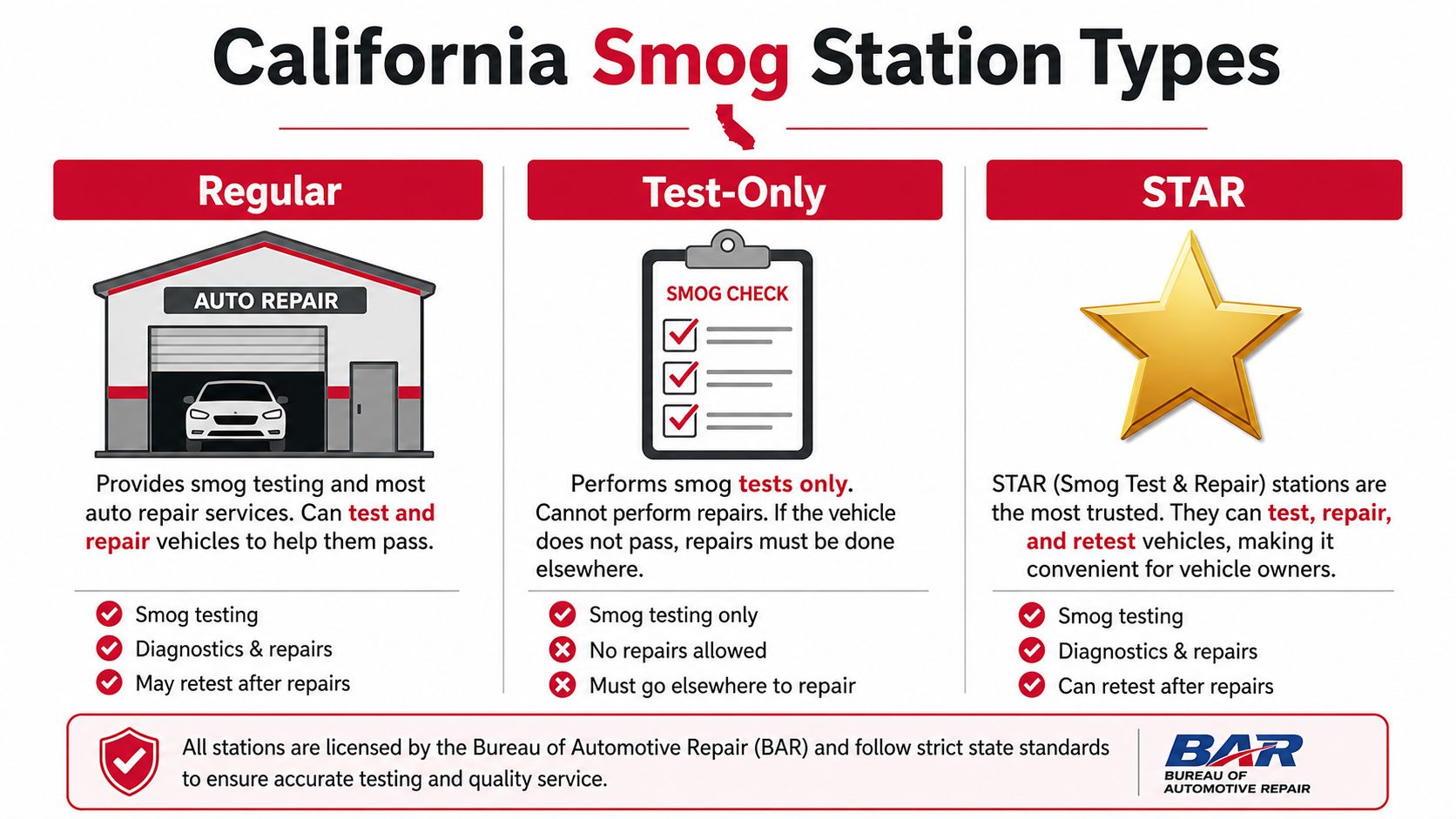
California doesn't use the words regular, test-only, and STAR interchangeably, even though drivers often do. That confusion matters, because the wrong stop can waste your time or send you back to square one. The STAR certified smog explanation is useful because it puts the station types in the right bucket.
A regular smog shop can inspect vehicles if it's licensed for that vehicle and test type. A test-only station performs the inspection but doesn't sell repairs, which removes the repair upsell from the same visit. A STAR station is part of California's STAR program and is used for DMV-directed vehicles and gross polluters, as noted in DMV guidance and BAR program language. You can see that DMV guidance on smog inspections and directed STAR visits.
How the station type affects your day
If your notice says nothing special, a licensed smog station that handles your vehicle may be enough. If the notice directs you to STAR, that's not a suggestion. It means the DMV wants that specific type of visit, and showing up at the wrong station can leave you paying for the first trip and doing it again somewhere else.
A quick comparison helps:
| Station Type | What It Does | When Martinez Drivers Use It |
|---|---|---|
| Regular | Inspects vehicles and may also offer repairs, depending on licensing | When no STAR directive appears and the vehicle fits the station's scope |
| Test-Only | Inspects only, without repair sales | When you want inspection without repair incentives |
| STAR | Handles DMV-directed vehicles and gross polluters | When the renewal notice or vehicle status requires it |
Good rule of thumb: The DMV notice decides the station type before price or distance does.
That's the part most local marketing pages skip. They talk about “cheap smog” or “STAR” like they're the same thing, but they aren't. The safest move is to match the station to the notice, then choose the one that fits your schedule.
What Happens During a Smog Check Visit
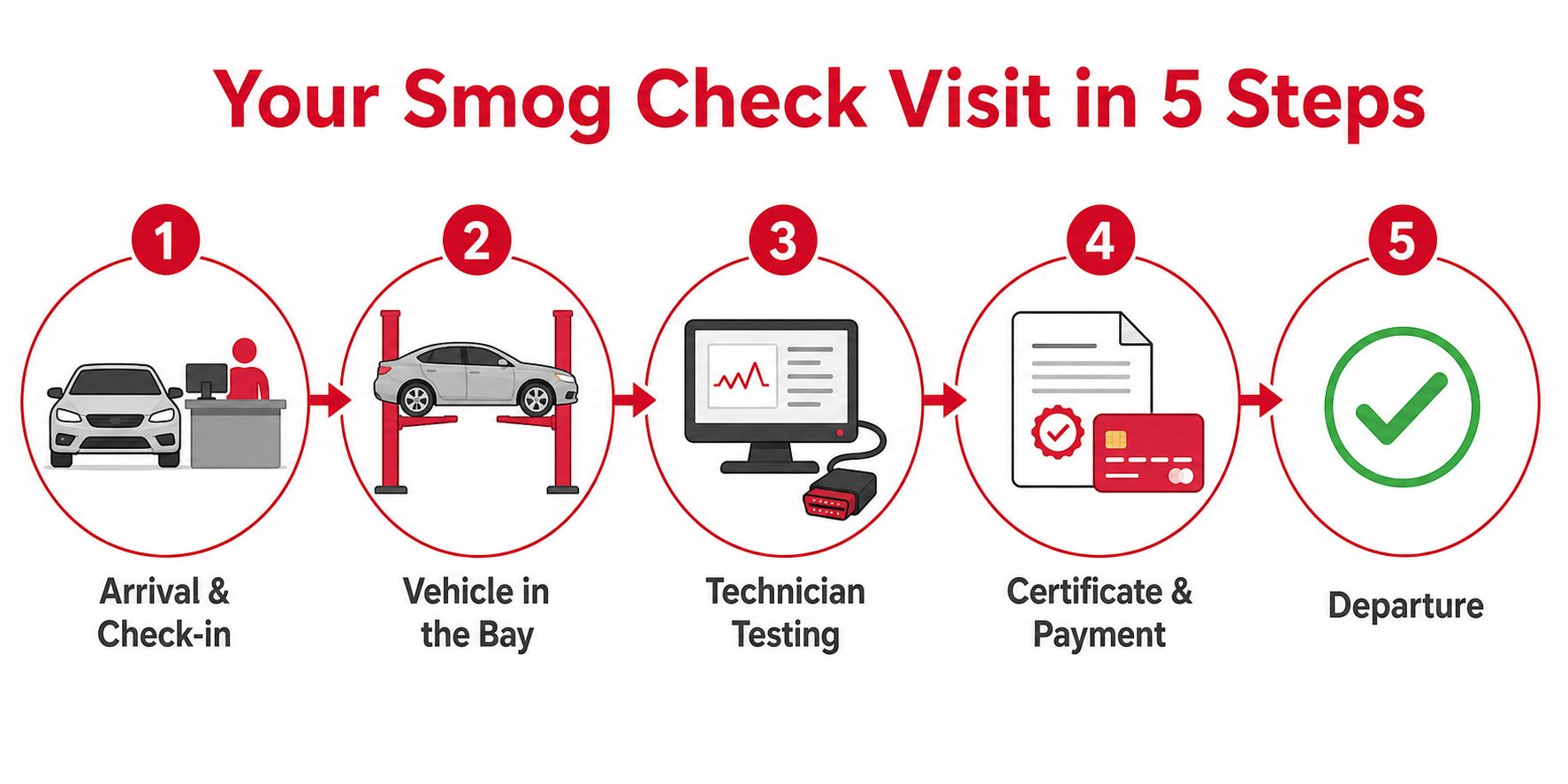
A smog visit is usually straightforward once you know the sequence. You arrive, hand over the keys and the paperwork, and the technician checks the vehicle in. On newer cars, the test centers on the OBD-II system, which looks at the vehicle's onboard emissions controls. On 1999-and-older vehicles, California's BAR procedures use BAR-97 emissions inspection equipment that can measure tailpipe emissions, which is why older cars are more sensitive to exhaust condition, engine temperature, and bay airflow.
The pre-check issues are the part that saves or sinks the visit. A lit check-engine light is an automatic fail under BAR guidance, so that dash light matters more than most drivers think. If you disconnected the battery recently, the car may need time to complete its drive cycles before the monitors are ready for testing. If you test too soon, you can fail for readiness, not because the car is broken, but because it hasn't relearned enough data yet.
What to bring and what to expect
Bring your vehicle registration or renewal notice, plus anything the station asks for when you schedule. Then expect the technician to either plug into the diagnostic port or run the older tailpipe-capable procedure, depending on the model year. The whole process is designed to verify emissions status, not to diagnose unrelated repairs.
By the time the inspection ends, you'll usually get a result and, if it passes, the certificate workflow moves forward from there. If it doesn't pass, the report tells you what kept it from clearing.
If the battery was changed last week, don't rush the test just to get it done.
The video above shows the visit from check-in to departure in a simple flow. That's the shape of it, a short station visit with a few technical checkpoints that decide whether your registration can move ahead.
Pricing, Coupons, and a Convenient Antioch Alternative
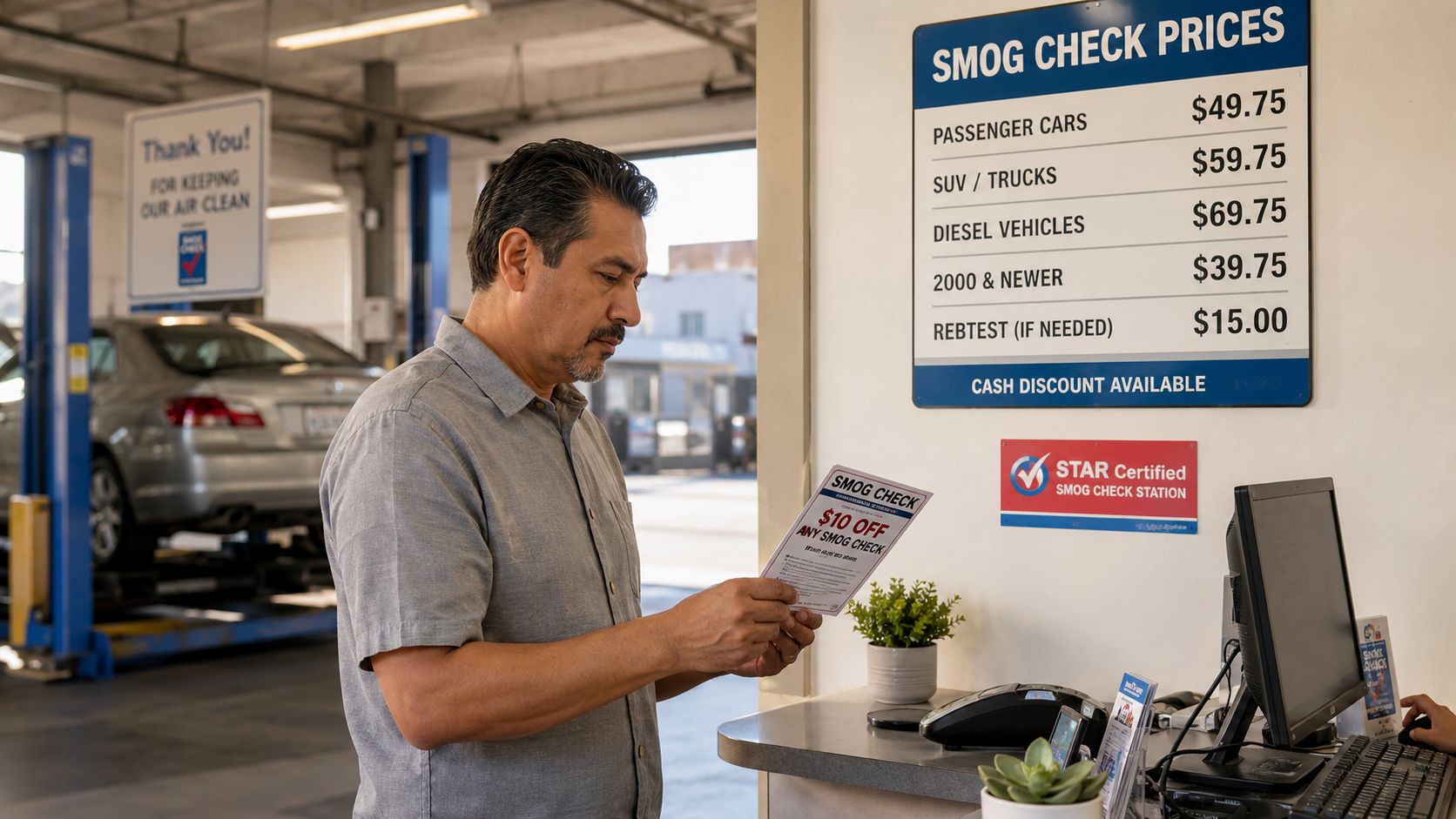
Smog pricing in the East Bay usually comes down to what the station includes, how busy it is, and whether it uses a test-only model or a repair-based model. A test-only station is easier to compare because the inspection and the repair conversation are separated. That doesn't make every coupon equal, but it does make the visit easier to understand before you commit.
For Martinez-area drivers who want a practical option with weekend access, Fire House Smog in Antioch is one of the nearby choices to look at. It's a STAR-certified test-only smog check station at 2900 Lone Tree Way in Antioch, and it offers seven-day smog testing, two service bays, and a free retest policy under its posted terms. It also says it can test cars, SUVs, light-duty trucks, and some RVs or motorhomes, although larger vehicles should be checked ahead of time because bay size and equipment limits still apply. You can review the station details on the Fire House Smog homepage and the specific local service page for California DMV registration renewal support.
The trade-off is simple. Antioch adds a bit of drive time for some Martinez residents, but it can pay off if you need weekend hours, a test-only visit, or a place where smog testing and DMV services happen at the same location. That matters if you're trying to finish the whole errand in one stop instead of splitting it between a test shop and a separate DMV office.
What that means in practice
- If you just need the test: A test-only station keeps the visit focused on emissions.
- If your schedule is tight: Seven-day availability can help when weekday hours don't.
- If you hate repeat trips: A free retest policy can make a first failure less painful.
Convenience isn't only about distance. It's also about whether the shop can finish the job you came for.
For Martinez drivers, the real question isn't “What's cheapest on the sign?” It's “Which station solves the whole errand with the fewest return visits?”
On-Site DMV Registration and Tag Services
When the registration is due, a lot of drivers think the DMV field office is the only real option. It isn't. A licensed DMV business partner can handle certain registration tasks on site, which cuts down the back-and-forth that usually comes with a renewal or transfer. That's especially useful if you're trying to finish the emissions check and the paperwork on the same trip.
For Antioch-area drivers, Fire House Smog says it provides California DMV registration renewals with sticker printing and ownership transfers for California and out-of-state vehicles. If the transaction needs plates or tags, the station says it can process those as needed during the visit. For the state's own renewal framework, the DMV partner model is a different path from standing in line at a field office, and that difference is what saves time for a lot of working drivers. The service details are outlined on the registration renewal page.
What to bring for each type of visit
A renewal is usually simpler. Bring the renewal notice and the vehicle documents the station asks for. A transfer usually needs more attention because ownership details have to match the transaction, and out-of-state paperwork can add another layer.
Here's the basic idea:
- Renewal visit: You're trying to keep the existing registration current.
- Transfer visit: You're changing ownership, so the paperwork has to follow the sale or transfer.
- Tag or plate issuance: You leave with the registration work handled if the transaction requires it.
The main benefit is obvious once you've spent time at a field office. You don't have to treat the smog station and the DMV as separate errands when a partner location can handle both pieces. For a Martinez driver with a limited window on a weekend, that can matter more than a small difference in mileage.
Smart Preparation Tips Before You Test
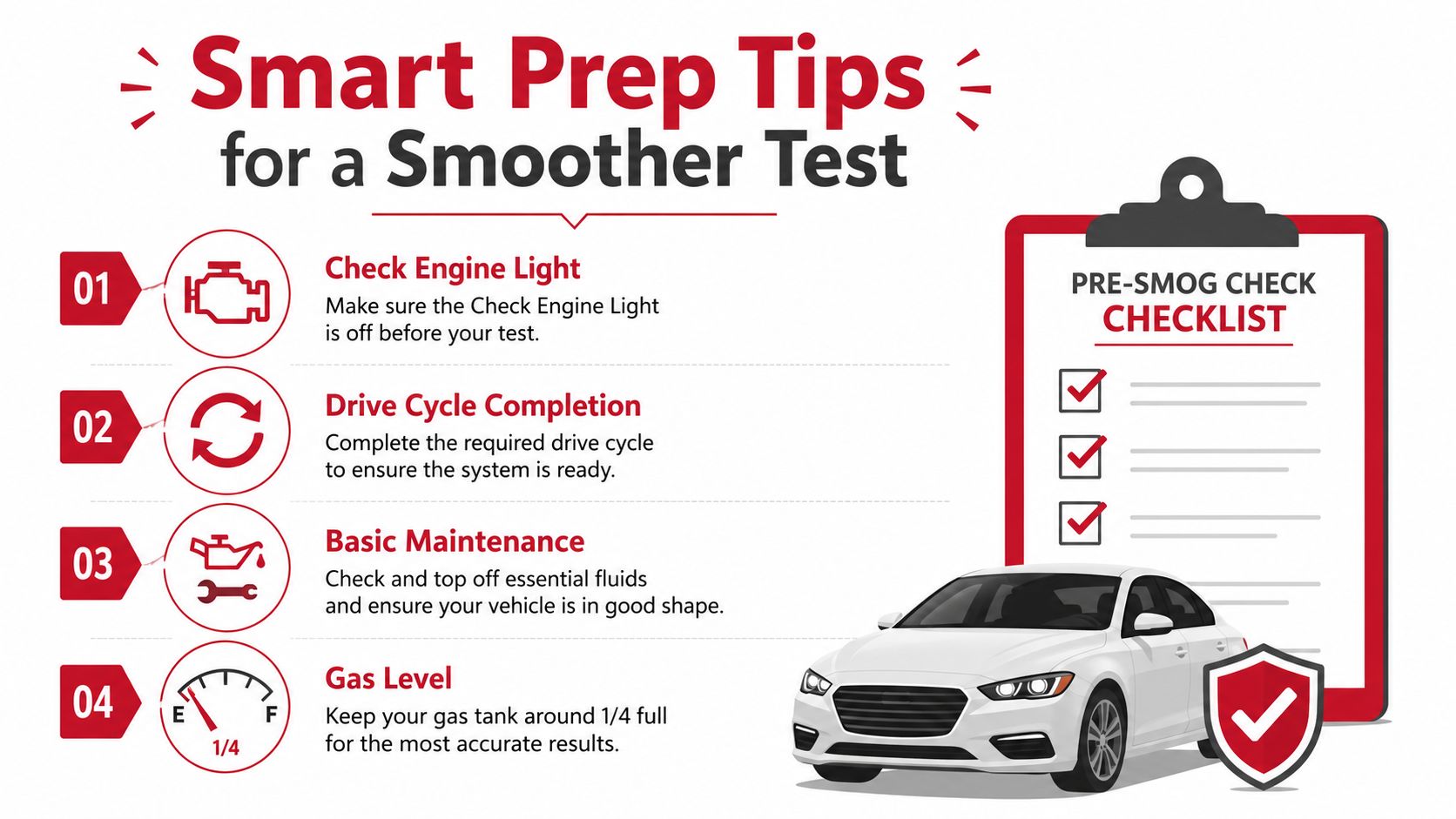
A few small checks before the appointment can save you from a wasted trip. Start with the check-engine light. If it's on, the car is not ready for a pass, so there's no point hoping the light will be ignored.
Next, think about the drive cycle. If the battery was disconnected or replaced recently, the vehicle may need a week or two of driving before the monitors settle back in. That's why a car that runs perfectly can still fail a readiness check if the computer hasn't had enough time to relearn.
The other basics are simple but worth doing. Make sure the engine is warmed up before you arrive, confirm the gas cap seals properly, and keep the fuel level reasonable so the test can proceed without avoidable delays. If you're bringing an RV, motorhome, or another larger vehicle, call ahead so the station can confirm bay and equipment fit before you drive over.
You can also review the common failure patterns on the smog check fail reasons page, which is useful if you want to understand why a car that “feels fine” still didn't clear.
A short pre-test checklist
- Check the dashboard: A lit engine warning lamp should be fixed first.
- Give the car time: After a battery reset, drive long enough for monitors to complete.
- Warm it up: Arrive with an engine that's already at operating temperature.
- Call ahead for bigger rigs: Larger vehicles can run into space or equipment limits.
A first failure doesn't end the process. It just tells you what needs attention before the retest.
That's why a free retest policy can matter. If the conditions are met and the car is repaired or ready by the time you come back, you're not starting from scratch.
Recap and Next Steps for Martinez Drivers
First, check whether the vehicle is due by age, fuel type, and whether this is a renewal or a transfer. Second, match the station to the DMV notice, because STAR is a requirement in some cases, not a marketing label. Third, choose a place with hours that fit your life, especially if you'd rather finish the test and the registration work in one trip.
If you need weekend testing or on-site DMV help, a short drive to Antioch can be worth it. For unusual vehicles, it's smart to call ahead before you go.
If you want a smog visit that stays simple, Fire House Smog handles test-only inspections, DMV registration services, and tag work in one location. For Martinez drivers who want to compare station type, hours, and paperwork in one stop, visit Fire House Smog and plan your trip before the renewal deadline sneaks up.