
In California, a passed smog certificate is generally valid for 90 days from the inspection date, with a two-year exception for dealer-issued certificates. If you miss that clock, the DMV can make you test again, and that's where people lose time, money, and patience.
You see it every day in Antioch. A driver shows up with a renewal notice, swears last year's pass should still count, and then finds out the certificate died before the paperwork moved. The rule isn't hard, but the way it hits real DMV transactions is where people get burned.
Table of Contents
- What Smog Test Validity Actually Means in California
- How the 90-Day Window Works for a Registration Renewal
- Validity Rules for Ownership Transfers and Dealer Sales
- Why STAR-Certified Test-Only Stations Matter for Validity
- A Real Antioch Scenario Where the 90-Day Clock Reshapes the Outcome
- Common Misconceptions That Cost Drivers a Second Trip
- How Fire House Smog Handles Retests and Documentation
What Smog Test Validity Actually Means in California
A California smog certificate is not a permanent label on the car. It's a time-limited compliance document tied to the test date, and under California Health and Safety Code Section 44015, that window is 90 days. If the certificate sits around while you wait to renew, transfer, or finish dealer paperwork, it can expire before anyone at DMV accepts it. California Health and Safety Code Section 44015
The clock starts at the test, not the due date
That detail is what trips people up. The clock doesn't care when your renewal notice arrived, when the title changed hands, or when you finally got a free Saturday. It starts when the inspection is completed, and the DMV uses the certificate date as the practical cutoff for acceptance.
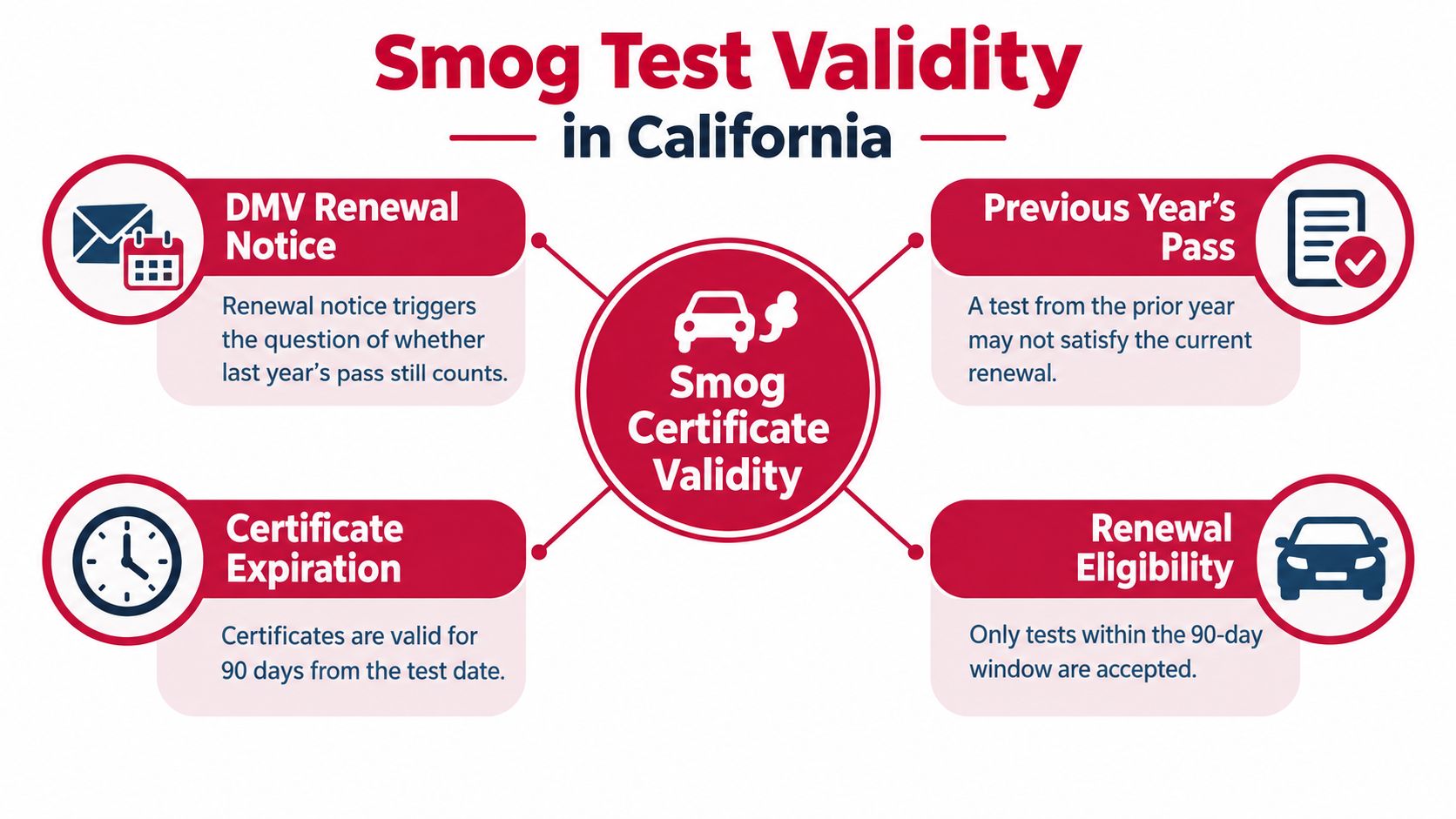
That's why I tell drivers to stop calling it a “valid pass” like it sits on the car forever. It doesn't. It's a moving deadline, and if you test too early, you're just building a second trip into your week.
Practical rule: schedule the inspection only when you're ready to finish the DMV transaction.
The station you choose matters too. You need a place that can issue the certificate the DMV will accept, which means a proper licensed smog station, and in some cases a STAR-certified one. Fire House Smog's certificate page explains the certificate side of the process clearly enough to keep you from treating the test like a permanent badge. vehicle emission test certificate
California's smog system also isn't uniform across every vehicle and every era. The rules changed over time, and the station type, vehicle model year, and transaction type all affect whether the certificate will solve your DMV problem or just buy you a short-lived receipt. The dealer exception and transfer rules are where that becomes obvious.
How the 90-Day Window Works for a Registration Renewal
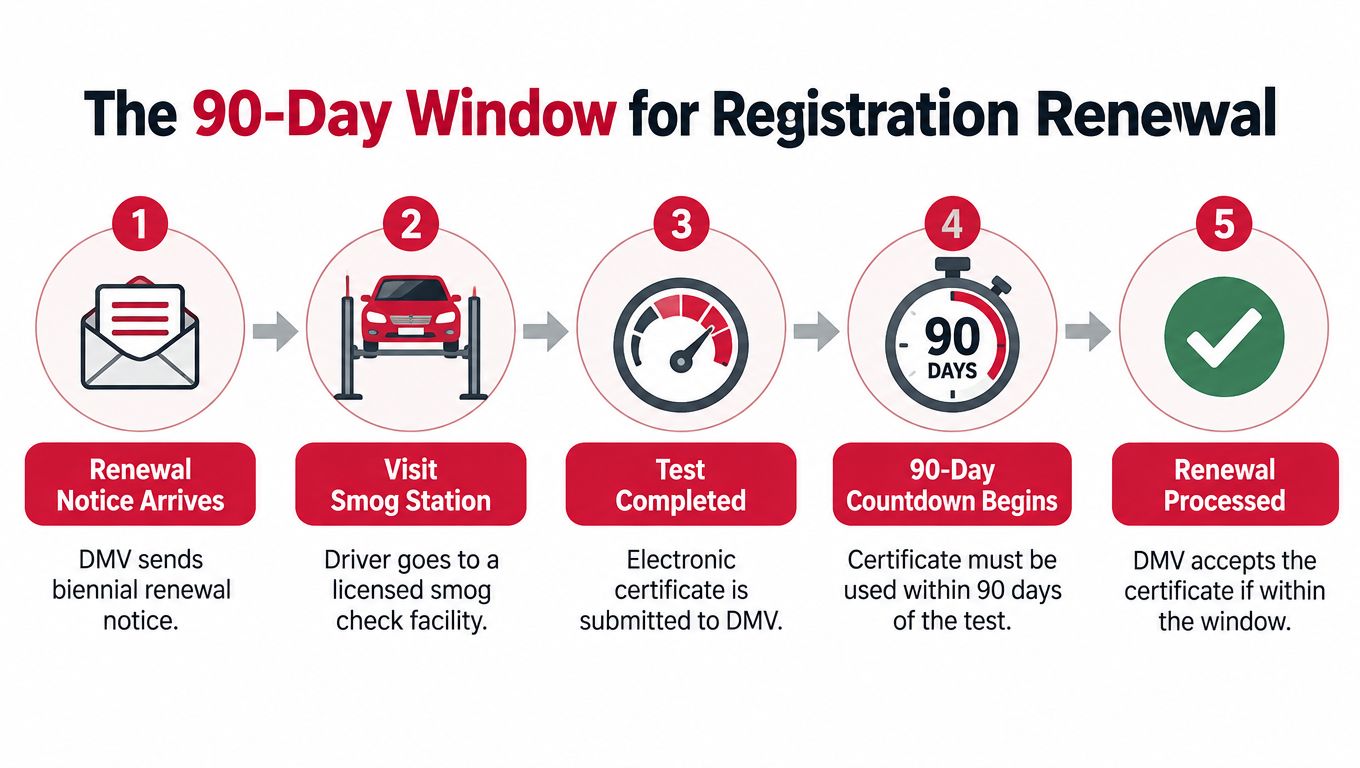
A renewal notice is the piece of paper that makes drivers guess wrong. They have the car, the notice, and an old certificate, then they want to know whether that earlier pass still counts. For a renewal, the rule is plain, the DMV wants an electronic smog certificate that falls within the 90-day window.
Use the renewal date as your finish line
Plan backward from the renewal filing, not forward from the test date. If the certificate is older than 90 days when the DMV processes the renewal, it no longer helps, and you are paying for another inspection.
Before you book the test, review the California DMV registration renewal process so you know exactly which paperwork the certificate has to support.
A simple example makes the timing clear. A driver gets a renewal notice on March 1, tests on May 20, and the certificate expires on August 18. If the renewal is still sitting unfinished after that, the driver needs another inspection. That is what happens when people test too early.
Do the test when you are ready to file the renewal.
The DMV's smog guidance says the inspection can be done within the 90 days before the requirement is due. That is the point that matters, the certificate has to still be valid when the renewal goes through. California DMV smog check guidance
That timing is why stations fill up near renewal deadlines. Drivers wait until they are close enough to the due date that the certificate will still be alive when they submit the paperwork. That is the right instinct, as long as they do not cut it so close that a repair or paperwork snag forces a return trip.
Start with the renewal paperwork, then do the smog test, then submit the DMV filing. If you reverse that order, you invite a second visit and more waiting.
Validity Rules for Ownership Transfers and Dealer Sales
Transfers are where drivers lose time, because renewal rules and sale rules are not the same. California ties transfer smog requirements to vehicle age, fuel type, gross weight, and transaction purpose, so a certificate that works for one transaction can fail for another. Before you hand over the title, walk through the California title transfer paperwork checklist and match the smog rule to the sale, then check the DMV's ownership-transfer guidance on the same page. California DMV title transfer rules
Private sales follow age and fuel rules
For a gas-powered vehicle that is more than four model years old, the seller generally has to provide a smog certificate at transfer, unless the vehicle was certified within the previous 90 days. A gas vehicle that is four model years old or newer is handled differently. It is exempt from the transfer inspection and instead gets a smog-transfer fee. The DMV also carves out electric vehicles, certain older gasoline or diesel vehicles, and heavy diesel vehicles above 14,000 pounds GVW.
That is why sellers should not guess. A car can be fine for one purpose and not for another. A current renewal certificate does not automatically solve a transfer, and a transfer exemption does not mean the car is free from later registration duties.
Dealer-issued certificates get a longer runway
Dealer sales are different. A certificate issued to a licensed motor-vehicle dealer can stay valid for two years, or until the vehicle is sold and registered to a retail buyer, whichever happens first. Dealers get that exception because they need room to move inventory without retesting the same vehicle every time the calendar turns.
A vehicle more than four years old bought from a dealer still generally needs a smog certification unless it was certified within the previous 90 days. That is the part private buyers miss. They hear “dealer car” and assume the paperwork is already handled forever. It is not.
| Transaction Type | What Usually Controls It | What the Driver Should Check |
|---|---|---|
| Registration renewal | 90-day certificate window | Test date, renewal date |
| Private ownership transfer | Age, fuel type, GVW, and 90-day rule | Whether the seller's certificate is still current |
| Dealer sale | Dealer-issued certificate exception | Whether the certificate was issued to a licensed dealer |
If you are buying, selling, or moving a vehicle through a dealership, check the transaction type first, then the test date. That order keeps you from assuming a “last year” certificate still applies when California has already put the vehicle under a different rule set.
Why STAR-Certified Test-Only Stations Matter for Validity
A lot of drivers think STAR is just a badge. It isn't. It's the category that matters when California directs a vehicle to a more tightly controlled station type, and that affects where you can go and what certificate gets accepted. By December 2018, California had 8,213 licensed Smog Check stations, including 4,225 STAR-certified stations, which were 51 percent of all stations, and 3,420 non-STAR stations, or 42 percent. BAR Smog Check Reference Guide
STAR and test-only solve different problems
The STAR side is about oversight and vehicle routing. The test-only side is about removing the repair incentive, because the shop that tests your car isn't also trying to sell you a repair job in the same moment. That separation matters when drivers are worried about pressure, upsells, or a shop that benefits from a failed test.
Here's the simple decision logic.
| Situation | Eligible Station | Why |
|---|---|---|
| Vehicle is directed to STAR | STAR-certified station | The vehicle has to be tested where California allows it |
| Vehicle can be tested anywhere licensed | Any licensed smog station | The driver has more choice on location |
| Driver wants testing without repair sales | Test-only station | The shop is not pushing in-house repairs |
| Driver needs Antioch convenience | Fire House Smog | It's a STAR-certified test-only station in Antioch |
A station like Fire House Smog fits the cases where the driver wants the test done without repair pressure and wants the result routed into the DMV process. That doesn't change the law, but it does change how fast you get from inspection to paperwork.
Practical rule: if your vehicle is STAR-directed, don't waste time calling a general repair shop first.
The validity clock doesn't care how convenient the shop is. It only cares whether the certificate is the right one for the transaction and whether it's still alive when DMV needs it. STAR changes the station choice, not the 90-day math.
A Real Antioch Scenario Where the 90-Day Clock Reshapes the Outcome
A driver in Antioch is moving, changing work shifts, and trying to handle a used truck they bought from out of state. The old car still needs a renewal, the truck needs a California transfer, and the calendar is already crowded. That's the kind of week where a bad smog plan turns into two lost afternoons.
One stop can beat three separate errands
If the renewal car gets tested too early, the certificate can age out before the DMV filing is done. If the truck's title transfer is handled without checking the transfer rule first, the buyer can show up with the wrong expectation about whether a new smog is needed. If the vehicle also needs DMV paperwork, the driver can burn another trip just to print tags later.
A better move is to combine the workflow at a station that handles both smog and DMV services. That way, the test, the electronic submission, and the registration follow-through happen in one run instead of being split across separate offices. For drivers juggling shifts, that's the difference between a clean week and a pileup of avoidable errands.
The mistake I see most is timing the test around convenience instead of the transaction itself. People test when they've got a free morning, not when they're ready to finish the renewal or transfer. Then they act surprised when the certificate window closes before the paperwork does.
A smog certificate is useful only when it's attached to the right transaction at the right time.
In the Antioch area, that often means choosing a shop that can handle a real DMV handoff, not just a printout. If you're trying to do a renewal, a title transfer, and maybe an out-of-state vehicle all in the same week, the right station choice turns the 90-day clock from a problem into a non-event.
Common Misconceptions That Cost Drivers a Second Trip
The same three myths keep sending drivers back across town.
Myths that sound reasonable and still fail
“Any recent certificate is fine.” Not true. The DMV cares about the certificate's age and the transaction type, so a test that looked recent can still be outside the usable window. The move is to check the test date against the specific DMV filing date, not against your memory of when it felt recent.
“I can reuse last year's test.” Not if the certificate has expired or the transaction changed. A renewal certificate doesn't stay alive forever, and a transfer may need a fresh certificate even when the vehicle passed not long ago. The move is to match the certificate to the exact job you're doing today.
“Four years old means exempt everywhere.” Wrong. That age rule is tied to ownership transfers, not a blanket pass for every DMV task. The move is to ask first whether you're renewing, transferring, or selling through a dealer, then apply the correct rule.
The safest checklist is short. Confirm the transaction type, confirm the vehicle's model year and fuel type, then confirm the certificate date. That order keeps you from building a plan around a rule that doesn't apply to your situation.
How Fire House Smog Handles Retests and Documentation
Fire House Smog runs a test-only operation, so you're not walking into a repair upsell just because a vehicle needs another pass. It offers on-site California DMV registration renewals with sticker printing, transfer-of-ownership services for California and out-of-state vehicles, and a free retest when required per site policy and coupon terms. It also keeps DMV service hours Monday through Saturday from 9:30 AM to 5:00 PM and Sunday from 12:00 PM to 4:00 PM, with smog testing available seven days a week.
What to bring and what to expect
Bring the renewal notice or title, make sure the certificate window is still open, and be ready for the electronic result to be used right away. If you're there for a retest, the point is to get back into compliance without wasting another trip on paperwork that could've been handled at the same counter.
The workflow is straightforward, if you show up prepared. The station checks the vehicle, submits the result, and can handle the DMV side so you leave with the right documentation in hand instead of another item on your to-do list.
For drivers who hate bouncing between offices, that matters more than people admit. The fewer handoffs between test, renewal, and tag issuance, the less likely the 90-day clock is to catch you out.
If you're trying to renew, transfer, or clear a dealer sale in Antioch, stop guessing and get the certificate handled inside the right window. Visit Fire House Smog to line up the smog test, DMV paperwork, and sticker issuance in one place so you don't end up doing the same trip twice.
You're due for a California registration renewal, and the check engine light came on yesterday. The car still starts, idles, and drives normally, so it's tempting to book a smog test and hope the warning disappears. Don't. At the bay, a lit malfunction indicator lamp can stop the inspection before the technician gets any farther, and switching the light off by clearing codes can leave the vehicle unable to pass for a different reason.
The practical question isn't, “Can I pass smog with the check engine light on?” In California, the answer is no. The useful question is, “What failed, and is the car ready to prove the repair?” The workflow below separates an active emissions fault from a car with an off light but incomplete monitors, so you can diagnose the problem before spending money on parts or a wasted test.
Table of Contents
- Why the Check Engine Light Matters for Smog
- How California Tests the Light
- Reading the Codes Before You Pay for Repairs
- Driving the Right Cycle to Set Readiness Monitors
- What to Do the Day Before and Day of the Test
- Retests Exemptions and When a Light Can Be Legal
- Local Logistics at Fire House Smog in Antioch
Why the Check Engine Light Matters for Smog
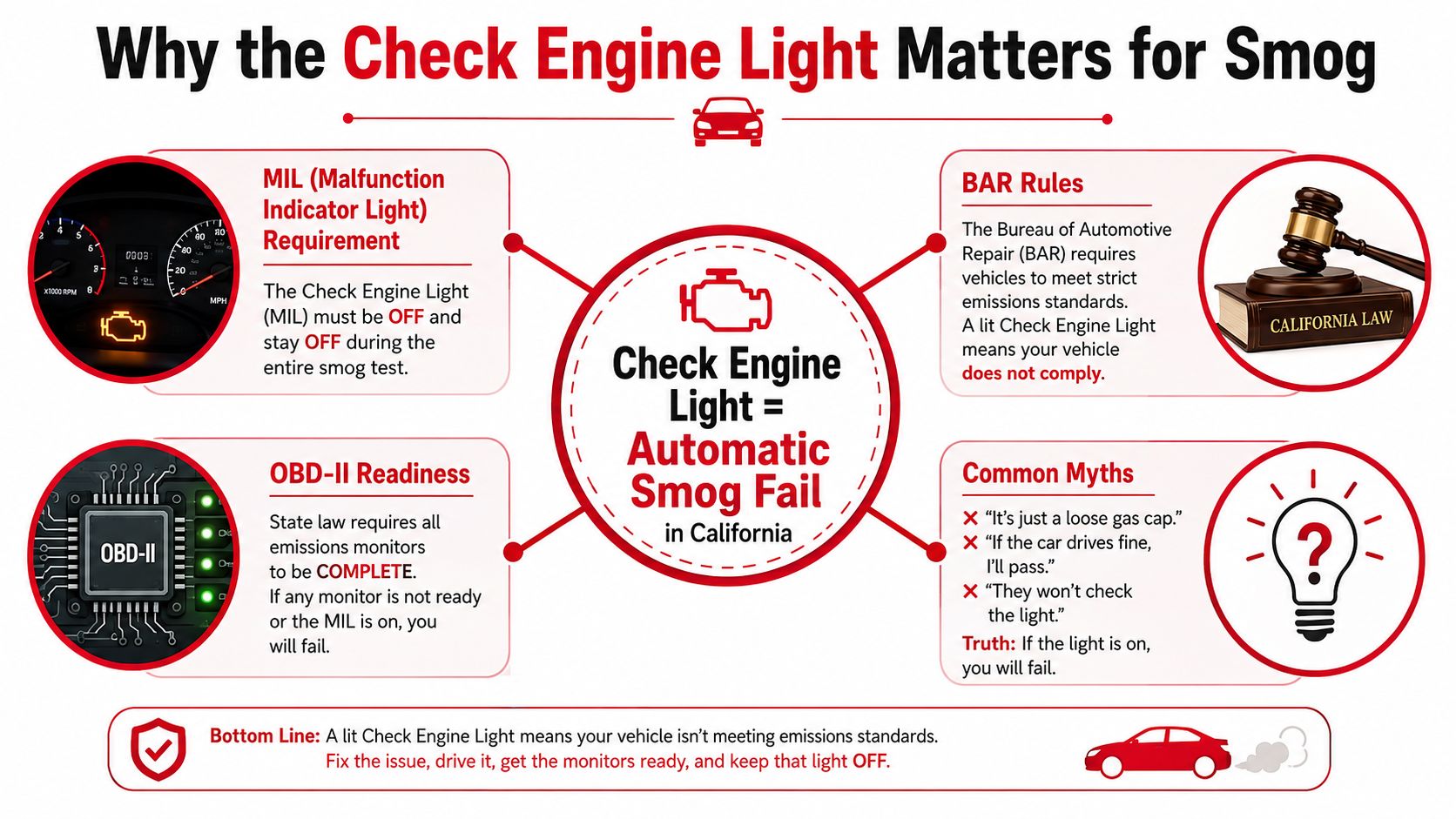
A car can start, idle, and drive normally while its malfunction indicator lamp, or MIL, signals an emissions problem. California treats that lamp as part of the OBD inspection. The California Bureau of Automotive Repair Smog Check manual requires it to illuminate with the key on and engine off, then turn off after the engine starts. A failed sequence can fail the OBD inspection.
The warning light is not a suggestion for the technician. It is evidence that the vehicle computer has stored a fault affecting emissions controls. Problems with fuel control, sensors, or related systems may not yet change acceleration, idle quality, or fuel economy enough for the driver to notice.
Three situations that look similar
A hard fault is a detected malfunction that keeps the MIL on while the engine runs. Treat that as an immediate smog problem. A pending code means the computer has noticed a possible fault but has not confirmed it through its testing. The lamp may remain off, but the code still gives the technician a useful diagnostic lead.
A recent code clear creates a separate problem. Clearing codes, disconnecting the battery, or completing some repairs can switch off the lamp while leaving emissions monitors incomplete. California's updated rule, effective October 1, 2025, requires all readiness monitors to be set for a vehicle to pass Smog Check. An off light does not override a “not ready” result.
Practical rule: Diagnose the fault, repair its cause, confirm the MIL sequence, and check monitor readiness before paying for the test. Clearing codes only hides the warning temporarily and can leave the vehicle unready.
For a broader review of common outcomes, read Fire House Smog's guide to smog check fail reasons. The money-saving workflow is straightforward: scan first, repair the actual cause, complete the required drive checks, and test only when the computer is ready.
How California Tests the Light
At the inspection bay, the technician follows a set sequence rather than judging whether the engine sounds healthy. California's OBD requirements control the process. The BAR OBD test reference outlines the order: first confirm the malfunction indicator lamp, then review diagnostic information and monitor status.
With the ignition on and the engine off, the check engine light should illuminate for the bulb check. After the engine starts, it should go out. A missing lamp, a lamp that never lights, or one that stays on can fail the vehicle before readiness status is reviewed.
What the connector reveals
The technician plugs inspection equipment into the vehicle's OBD-II diagnostic port. The scan checks emissions-related diagnostic trouble codes, confirms whether the MIL is reporting a fault, and reads readiness monitors. These monitors are the vehicle's self-tests for systems including fuel control, oxygen sensors, catalyst performance, and evaporative emissions.
California's inspection method depends on the vehicle's model year. For 2000 and newer gasoline vehicles, Smog Checks rely primarily on OBD-II diagnostics instead of tailpipe testing. Gasoline vehicles from 1996 through 1999 receive both an OBD inspection and tailpipe testing.
| Check Item | 1996-1999 Vehicles | 2000 and Newer Vehicles |
|---|---|---|
| MIL bulb and operation | Checked during OBD inspection | Checked during OBD inspection |
| Diagnostic codes | Read through OBD system | Read through OBD-II system |
| Readiness monitors | Must support inspection eligibility | All required monitors must be complete under the October 2025 rule |
| Tailpipe measurement | Included for gasoline vehicles | Smog checks are primarily OBD-based for gasoline vehicles |
| Visual inspection | Emissions equipment and tampering checked | Emissions equipment and tampering checked |
The October 2025 rule changes the practical pre-test decision. A light that turns off after a code clear does not prove the vehicle is ready. The scan must show completed monitors before the test, or the car can fail inspection eligibility even without an illuminated MIL.
Why the visual check still matters
The computer scan is only part of the appointment. The technician also checks for obvious emissions tampering and missing components. A vehicle can show no current warning light and still have a problem if required emissions hardware has been altered or removed.
Older vehicles outside the applicable OBD inspection framework may undergo other procedures, including tailpipe testing where required. The test mode depends on model year, fuel type, equipment, and California inspection rules. Use the scanner result as one part of the diagnosis, not as the entire eligibility decision.
Reading the Codes Before You Pay for Repairs
A diagnostic trouble code identifies a system or condition. It doesn't automatically identify the failed part. Replacing the first sensor mentioned by a scan tool is how customers turn a modest diagnosis into a parts-shopping spree.
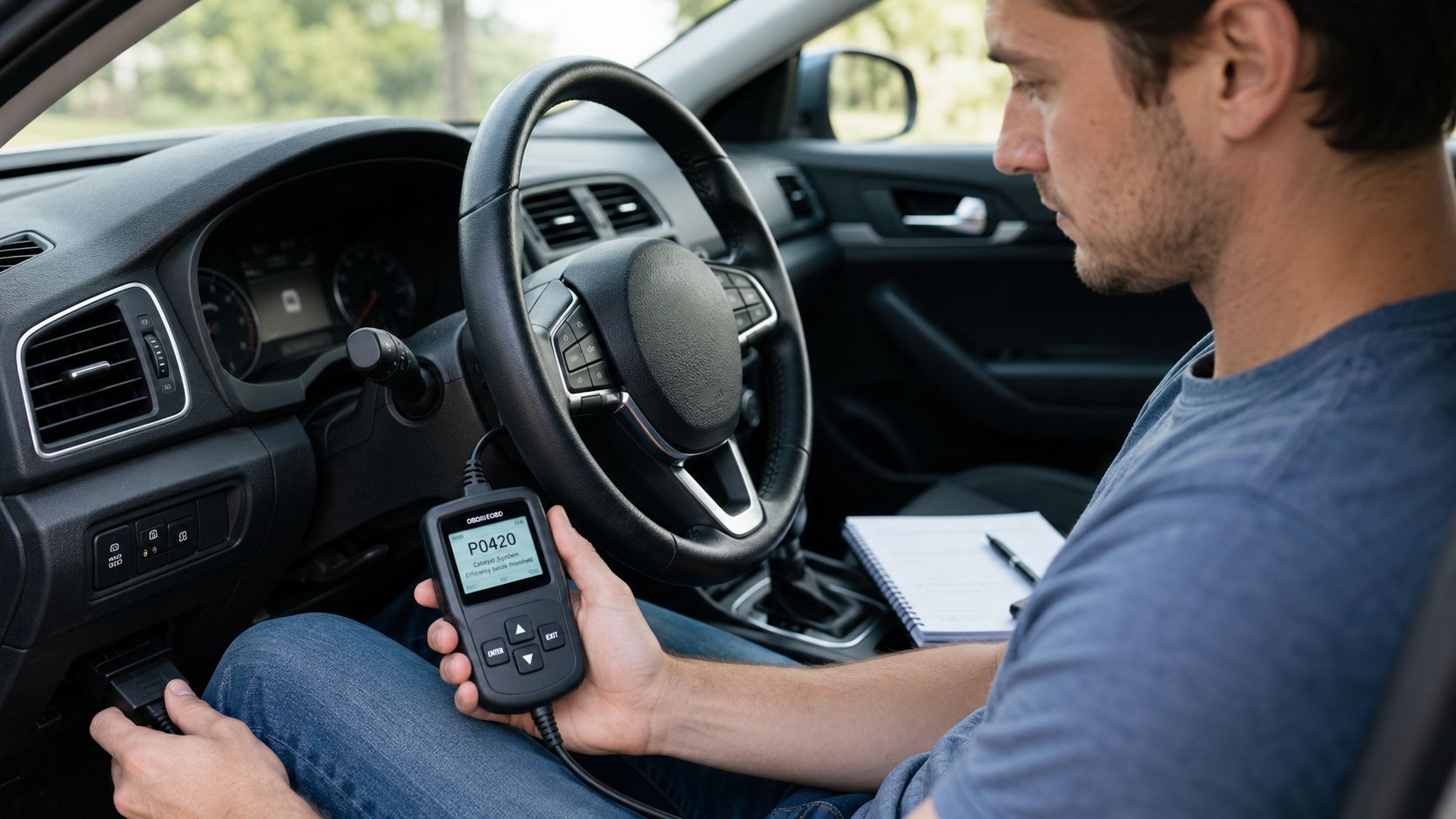
Start with an OBD-II scanner. You can use a personal scanner, borrow one, or ask an auto parts store whether it offers a scan service. Fire House Smog also provides a relevant option for customers who need auto diagnostic and repair guidance in Antioch. The important point is to capture the codes and monitor status before anyone clears the memory.
Read the scan in the right order
Look for confirmed codes, pending codes, freeze-frame information, and readiness status. A confirmed code has met the computer's criteria for storing a fault. A pending code may be an early or intermittent detection, but it can point directly toward a developing issue.
Generic P0 codes follow standardized definitions. Manufacturer-specific P1 codes require the vehicle's service information for accurate interpretation. Freeze-frame data shows the operating conditions when the computer logged the fault, such as engine load, temperature, and speed. That context can distinguish a fault that occurs during freeway operation from one that appears during cold starts or idling.
Use the code as a starting point:
- P0420 catalyst efficiency: Don't immediately buy a catalytic converter. Check for exhaust leaks, misfires, fuel-control problems, and oxygen-sensor data first. A converter can be the victim of another problem, not the original cause.
- P0171 or P0174 lean condition: Inspect vacuum hoses, intake ducting, and the mass-airflow sensor. A dirty MAF sensor or an air leak can mislead fuel-trim diagnosis, but cleaning must follow the sensor maker's instructions.
- P0300 random misfire: Treat this as a priority. Check ignition components, fuel delivery, intake leaks, and engine condition. Misfires can raise emissions and damage the catalyst.
- P0442 small EVAP leak: Start with the gas cap and inspect the seal. If the cap is sound, the system may need a smoke test.
- P0455 large EVAP leak: Look for a missing or poorly sealed cap, disconnected vapor hose, or damaged EVAP component before authorizing expensive work.
Never clear codes right before a smog test. Code clearing resets readiness monitors, so the light may be off while the vehicle reports incomplete checks.
The sensible sequence is scan, document, inspect, repair, and drive. If the light returns, rescan before replacing anything else.
Driving the Right Cycle to Set Readiness Monitors
A repaired car still needs to complete its self-tests before it is ready for inspection. Clearing codes erases stored readiness history, so the vehicle must encounter the temperatures, speeds, loads, and other conditions each monitor requires.
California's October 2025 rule makes this step more important. All readiness monitors must be set for the vehicle to pass. An illuminated dashboard light is not the only issue, and an extinguished light does not prove the checks are complete.
Build a mixed-driving routine
Manufacturers use different enable criteria, so no universal drive cycle works for every model. Start with a cold engine. Let it idle for two to three minutes, then accelerate gently toward 45 to 55 mph on a freeway on-ramp when traffic permits. Hold a steady speed for five to seven minutes, then coast down without braking when safe, giving the fuel-cutoff conditions a chance to occur.
Follow the freeway portion with ordinary surface-street driving. Use gentle acceleration, steady cruising, and complete stops. Repeat the mixed pattern instead of circling one block. Different monitors may require different engine temperatures, vehicle speeds, loads, and coast-down events.
Common checks include:
- Misfire and fuel-trim checks.
- Oxygen-sensor and oxygen-sensor-heater checks.
- Catalyst evaluation.
- EVAP testing.
- EGR and secondary-air checks where equipped.
- Diesel-specific emissions monitors where applicable.
The order varies by vehicle. A monitor can remain incomplete if the fuel level, coolant temperature, ambient conditions, or recent driving pattern did not meet its enable criteria.
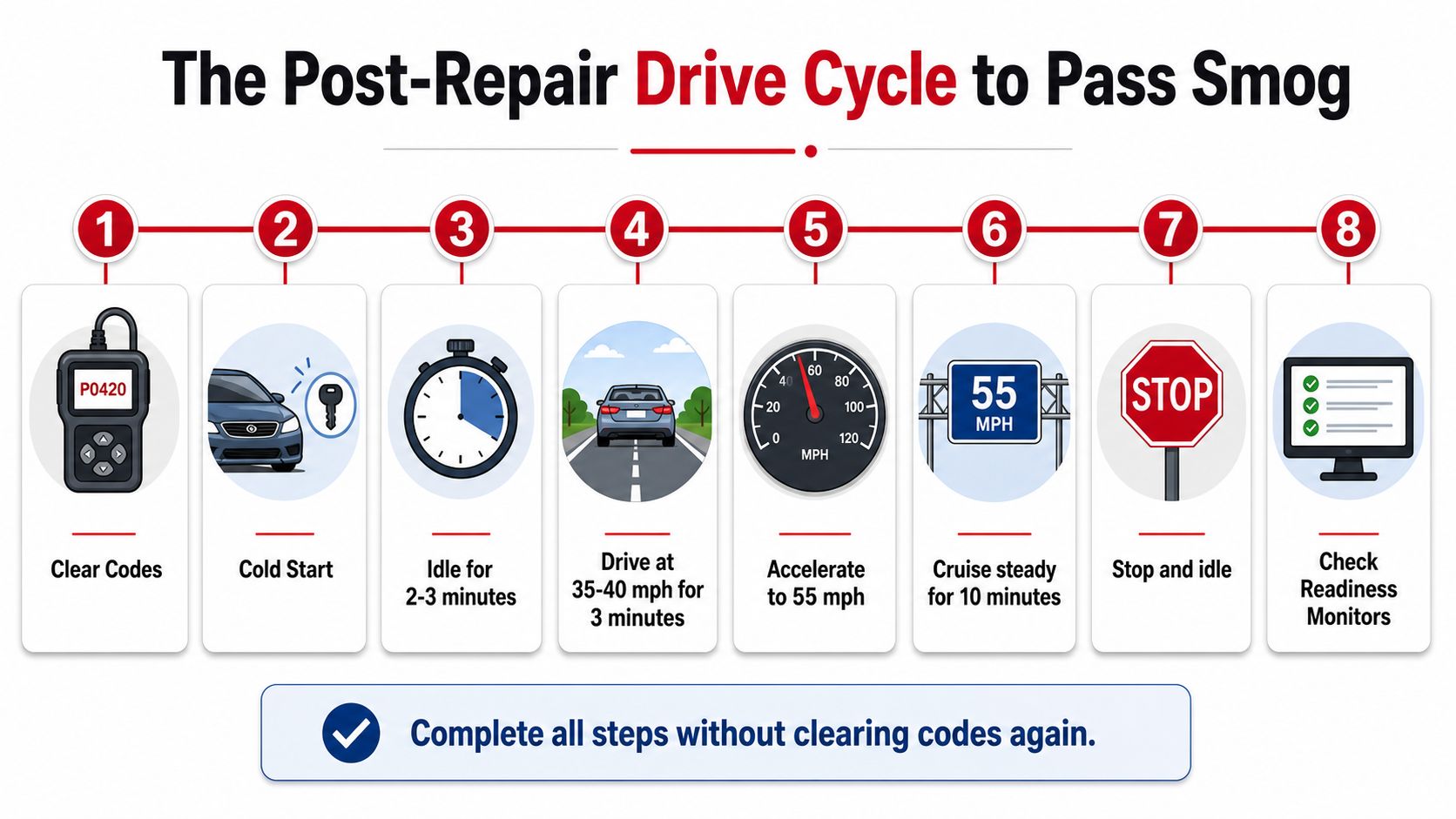
Use a scanner to check readiness instead of judging by mileage. A car that has made many short trips may still need sustained freeway operation for a stubborn monitor. RVs and heavy trucks can require longer warm-up periods and steadier grades because their weight and operating load affect test conditions.
A successful cycle generally takes 50 to 100 miles over two to three days, based on the practical guidance in this drive-cycle preparation guide. Leave the codes alone during that period. If the light returns, stop driving for readiness and diagnose the new result before scheduling the test.
What to Do the Day Before and Day of the Test
The day before the appointment is for verification, not experiments. Cycle the ignition and confirm the check engine light illuminates during the bulb check, then turns off after the engine starts. Scan the car and confirm every required readiness monitor shows complete before you leave home.
Fuel level matters to EVAP testing. Keep the tank around three-quarters full, not completely full and not close to empty. Check that the gas cap seals correctly and clicks into place. If the cap seal is cracked or the cap won't tighten, replace it before testing.
A short pre-test checklist
- Check the scan data: Confirm there are no active emissions codes and that monitors are ready.
- Inspect the gas cap: Make sure it seals and locks as designed.
- Avoid battery disconnection: Removing battery power can erase readiness information and may create anti-theft complications.
- Check tire pressure: Keep the tires evenly inflated, especially if the inspection procedure requires dynamometer operation.
- Bring paperwork: Have the vehicle registration and any recent repair documentation available.
Arrive with the engine warmed through ordinary driving, not by revving the car in the parking lot. Tell the technician about recent battery replacement, code clearing, repairs, or an intermittent light. That information helps the station choose the right pre-check and prevents confusion when the scan shows incomplete data.
The cheapest test is the one you don't take before the car is ready.
Ask for a pre-scan before the formal inspection begins. Fire House Smog's standard quick pre-check is intended to catch failed monitors before the inspection proceeds, which can save a retest trip. If the scanner says “not ready,” leave and finish the drive cycle rather than paying to document a predictable failure.
Retests Exemptions and When a Light Can Be Legal
A failed inspection needs a diagnosis based on the failure type. A hard fail means the MIL is on or the vehicle has a qualifying diagnostic fault. The repair path starts with code interpretation and physical testing. A not-ready fail means the lamp may be off and no active fault may be visible, but the computer hasn't completed its required self-tests. That path usually calls for more correct driving and another readiness scan, not immediate parts replacement.
California's Smog Check information from the Bureau of Automotive Repair confirms the central rule: a vehicle won't pass with the check engine light on. The lamp must also operate correctly during the ignition and running checks. An illuminated light isn't made legal by the fact that the car drives smoothly.
Use the failure result as a decision tool
| Scenario | What It Means | Next Action |
|---|---|---|
| Light remains on with the engine running | The computer has identified an active emissions-related fault | Diagnose and repair before testing again |
| Light doesn't illuminate during the bulb check | The MIL circuit or lamp operation has a defect | Repair the instrumentation problem |
| Light is off but monitors are incomplete | The vehicle isn't ready for certification | Follow the correct drive cycle and rescan |
| Light is off and all monitors are complete | The vehicle has cleared the basic OBD readiness gates | Proceed with the Smog Check |
| Visual emissions equipment problem | Required equipment may be missing, altered, or tampered with | Correct the equipment issue before retest |
Some vehicles follow different inspection rules because of age, fuel type, weight, or vehicle classification. Those categories should be confirmed with the station or BAR rather than assumed from the dashboard light. An exemption from one portion of testing doesn't turn an active MIL into a pass.
Repair assistance may be available through California's Consumer Assistance Program when a qualifying vehicle meets the program's requirements. A cost-based waiver is a separate state process with its own eligibility rules, documentation, and repair requirements. Ask the Bureau of Automotive Repair or a participating station for the current pathway before authorizing work.
The decision tree is straightforward. Light on means repair first. Light off but not ready means drive and rescan. No light and ready means test now. That sequence protects you from both unnecessary repairs and premature retests.
Local Logistics at Fire House Smog in Antioch
Antioch drivers should verify the appointment details before heading to a station, especially when the vehicle isn't a standard passenger car. Fire House Smog operates at 2900 Lone Tree Way in Antioch, and its test-only operation focuses on emissions inspections rather than selling repair work. Confirm the current address, posted hours, vehicle acceptance, and coupon terms before you go.
Bring the vehicle registration, the last smog receipt if you're returning after a failure, and repair paperwork if you're pursuing a directed repair or waiver. Keep the invoice. Retest eligibility depends on the station's policy and coupon terms, and the site's published information describes a free retest when applicable.
Call before bringing unusual vehicles
Call ahead for diesel trucks, RVs, and motorhomes. A diesel vehicle may require a different test procedure, while a larger motorhome may need confirmation that the bay and equipment can accommodate it. Out-of-state vehicles may also need VIN verification or a registration-related service that should be discussed before arrival.
Fire House Smog offers STAR-certified test-only inspections for passenger vehicles, SUVs, light-duty trucks, and some recreational vehicles. It also provides California DMV registration services, including renewal and related registration tasks, subject to posted service hours. Payment methods, current wait times, and vehicle-specific eligibility can change, so ask the station directly rather than relying on an old listing.
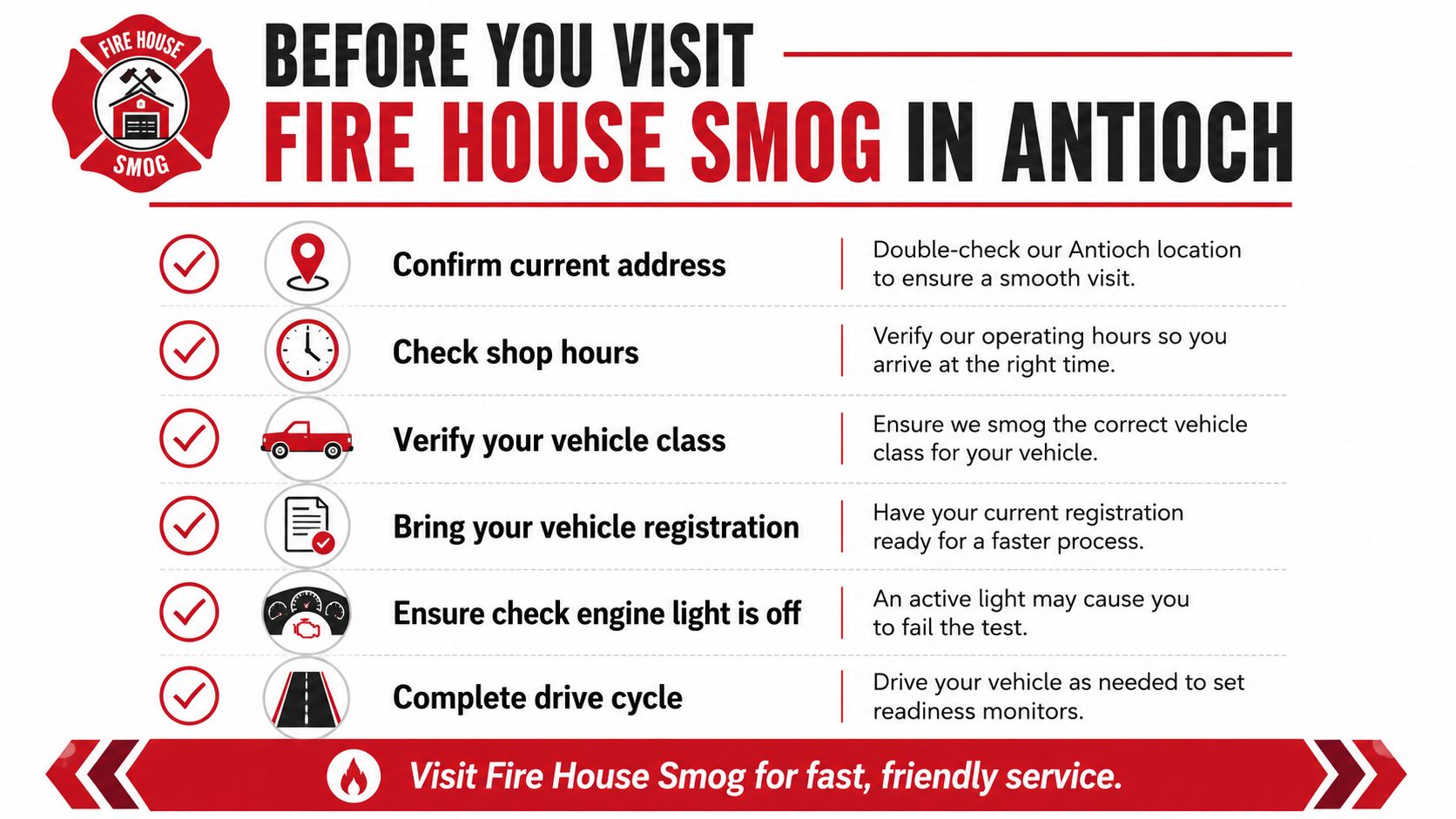
A practical visit checklist:
- Confirm the location: Verify the Lone Tree Way address before leaving.
- Check operating hours: Ask about Sunday, evening, and DMV service availability.
- Verify the vehicle class: Mention diesel trucks, RVs, motorhomes, or unusual equipment.
- Bring documents: Carry registration, prior test paperwork, and repair records.
- Check the light: The MIL must operate correctly and turn off with the engine running.
- Verify readiness: Don't arrive with incomplete monitors, even if the dashboard is dark.
- Plan the timing: An early Saturday appointment can help reduce waiting, but call first for special vehicle classes.
If the phone line is tied up during lunch, leave a voicemail with your vehicle type and reason for calling. The station's listed telephone number is 925-754-1600. A quick confirmation before driving over is better than discovering that an RV, diesel truck, or not-ready vehicle can't enter the test lane.
Fire House Smog offers STAR-certified test-only smog inspections, readiness pre-checks, retest support, and California DMV registration services in Antioch. Check your check engine light and readiness monitors before you go, then visit Fire House Smog or call 925-754-1600 to confirm the right test procedure for your vehicle.