
In California, a passed smog certificate is generally valid for 90 days from the inspection date, with a two-year exception for dealer-issued certificates. If you miss that clock, the DMV can make you test again, and that's where people lose time, money, and patience.
You see it every day in Antioch. A driver shows up with a renewal notice, swears last year's pass should still count, and then finds out the certificate died before the paperwork moved. The rule isn't hard, but the way it hits real DMV transactions is where people get burned.
Table of Contents
- What Smog Test Validity Actually Means in California
- How the 90-Day Window Works for a Registration Renewal
- Validity Rules for Ownership Transfers and Dealer Sales
- Why STAR-Certified Test-Only Stations Matter for Validity
- A Real Antioch Scenario Where the 90-Day Clock Reshapes the Outcome
- Common Misconceptions That Cost Drivers a Second Trip
- How Fire House Smog Handles Retests and Documentation
What Smog Test Validity Actually Means in California
A California smog certificate is not a permanent label on the car. It's a time-limited compliance document tied to the test date, and under California Health and Safety Code Section 44015, that window is 90 days. If the certificate sits around while you wait to renew, transfer, or finish dealer paperwork, it can expire before anyone at DMV accepts it. California Health and Safety Code Section 44015
The clock starts at the test, not the due date
That detail is what trips people up. The clock doesn't care when your renewal notice arrived, when the title changed hands, or when you finally got a free Saturday. It starts when the inspection is completed, and the DMV uses the certificate date as the practical cutoff for acceptance.
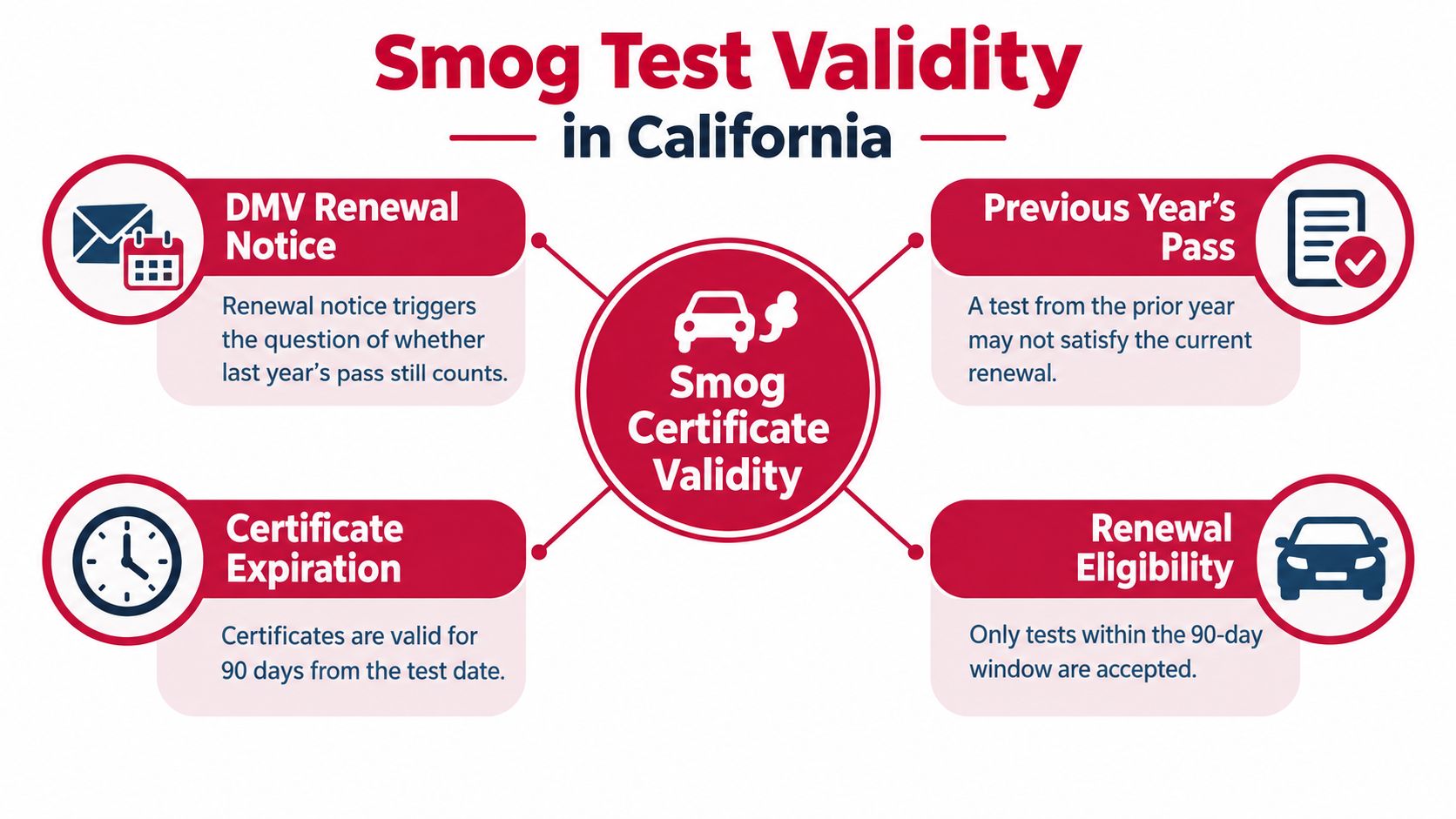
That's why I tell drivers to stop calling it a “valid pass” like it sits on the car forever. It doesn't. It's a moving deadline, and if you test too early, you're just building a second trip into your week.
Practical rule: schedule the inspection only when you're ready to finish the DMV transaction.
The station you choose matters too. You need a place that can issue the certificate the DMV will accept, which means a proper licensed smog station, and in some cases a STAR-certified one. Fire House Smog's certificate page explains the certificate side of the process clearly enough to keep you from treating the test like a permanent badge. vehicle emission test certificate
California's smog system also isn't uniform across every vehicle and every era. The rules changed over time, and the station type, vehicle model year, and transaction type all affect whether the certificate will solve your DMV problem or just buy you a short-lived receipt. The dealer exception and transfer rules are where that becomes obvious.
How the 90-Day Window Works for a Registration Renewal
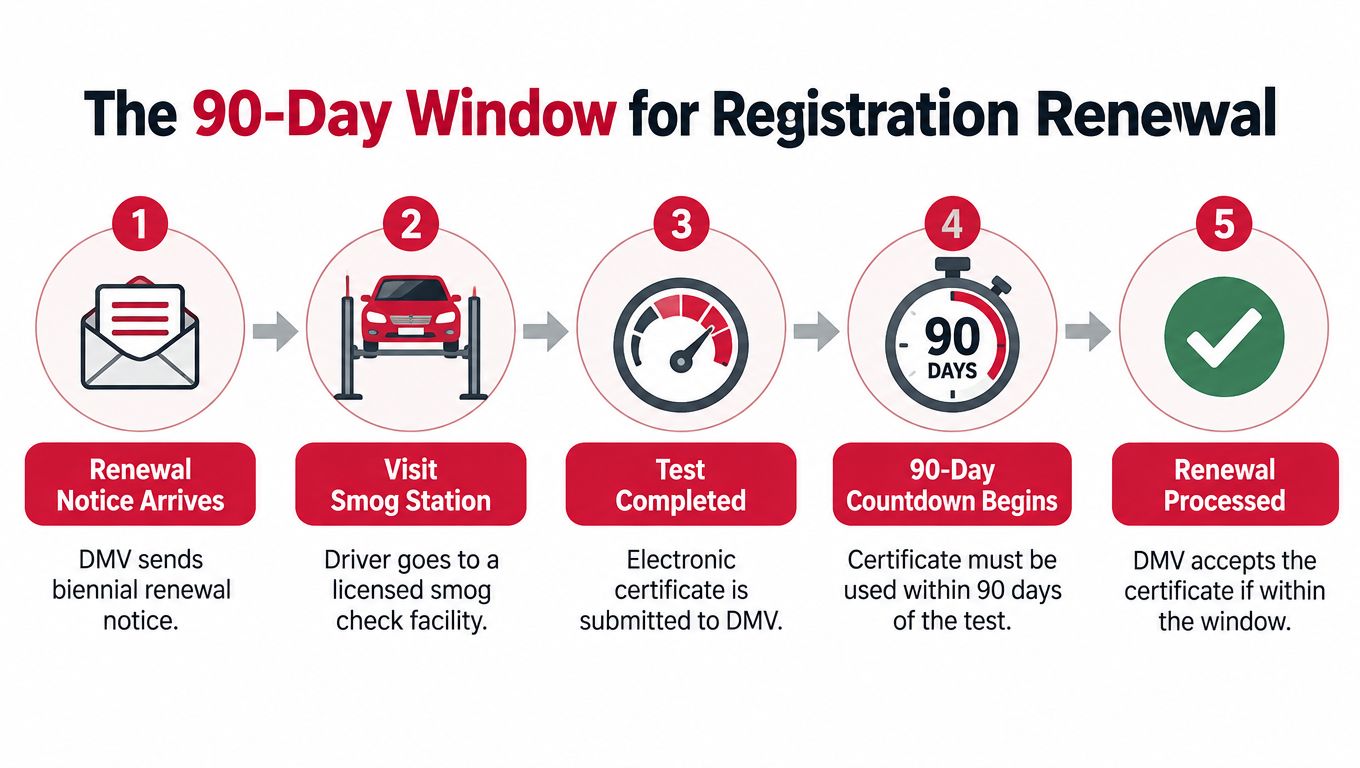
A renewal notice is the piece of paper that makes drivers guess wrong. They have the car, the notice, and an old certificate, then they want to know whether that earlier pass still counts. For a renewal, the rule is plain, the DMV wants an electronic smog certificate that falls within the 90-day window.
Use the renewal date as your finish line
Plan backward from the renewal filing, not forward from the test date. If the certificate is older than 90 days when the DMV processes the renewal, it no longer helps, and you are paying for another inspection.
Before you book the test, review the California DMV registration renewal process so you know exactly which paperwork the certificate has to support.
A simple example makes the timing clear. A driver gets a renewal notice on March 1, tests on May 20, and the certificate expires on August 18. If the renewal is still sitting unfinished after that, the driver needs another inspection. That is what happens when people test too early.
Do the test when you are ready to file the renewal.
The DMV's smog guidance says the inspection can be done within the 90 days before the requirement is due. That is the point that matters, the certificate has to still be valid when the renewal goes through. California DMV smog check guidance
That timing is why stations fill up near renewal deadlines. Drivers wait until they are close enough to the due date that the certificate will still be alive when they submit the paperwork. That is the right instinct, as long as they do not cut it so close that a repair or paperwork snag forces a return trip.
Start with the renewal paperwork, then do the smog test, then submit the DMV filing. If you reverse that order, you invite a second visit and more waiting.
Validity Rules for Ownership Transfers and Dealer Sales
Transfers are where drivers lose time, because renewal rules and sale rules are not the same. California ties transfer smog requirements to vehicle age, fuel type, gross weight, and transaction purpose, so a certificate that works for one transaction can fail for another. Before you hand over the title, walk through the California title transfer paperwork checklist and match the smog rule to the sale, then check the DMV's ownership-transfer guidance on the same page. California DMV title transfer rules
Private sales follow age and fuel rules
For a gas-powered vehicle that is more than four model years old, the seller generally has to provide a smog certificate at transfer, unless the vehicle was certified within the previous 90 days. A gas vehicle that is four model years old or newer is handled differently. It is exempt from the transfer inspection and instead gets a smog-transfer fee. The DMV also carves out electric vehicles, certain older gasoline or diesel vehicles, and heavy diesel vehicles above 14,000 pounds GVW.
That is why sellers should not guess. A car can be fine for one purpose and not for another. A current renewal certificate does not automatically solve a transfer, and a transfer exemption does not mean the car is free from later registration duties.
Dealer-issued certificates get a longer runway
Dealer sales are different. A certificate issued to a licensed motor-vehicle dealer can stay valid for two years, or until the vehicle is sold and registered to a retail buyer, whichever happens first. Dealers get that exception because they need room to move inventory without retesting the same vehicle every time the calendar turns.
A vehicle more than four years old bought from a dealer still generally needs a smog certification unless it was certified within the previous 90 days. That is the part private buyers miss. They hear “dealer car” and assume the paperwork is already handled forever. It is not.
| Transaction Type | What Usually Controls It | What the Driver Should Check |
|---|---|---|
| Registration renewal | 90-day certificate window | Test date, renewal date |
| Private ownership transfer | Age, fuel type, GVW, and 90-day rule | Whether the seller's certificate is still current |
| Dealer sale | Dealer-issued certificate exception | Whether the certificate was issued to a licensed dealer |
If you are buying, selling, or moving a vehicle through a dealership, check the transaction type first, then the test date. That order keeps you from assuming a “last year” certificate still applies when California has already put the vehicle under a different rule set.
Why STAR-Certified Test-Only Stations Matter for Validity
A lot of drivers think STAR is just a badge. It isn't. It's the category that matters when California directs a vehicle to a more tightly controlled station type, and that affects where you can go and what certificate gets accepted. By December 2018, California had 8,213 licensed Smog Check stations, including 4,225 STAR-certified stations, which were 51 percent of all stations, and 3,420 non-STAR stations, or 42 percent. BAR Smog Check Reference Guide
STAR and test-only solve different problems
The STAR side is about oversight and vehicle routing. The test-only side is about removing the repair incentive, because the shop that tests your car isn't also trying to sell you a repair job in the same moment. That separation matters when drivers are worried about pressure, upsells, or a shop that benefits from a failed test.
Here's the simple decision logic.
| Situation | Eligible Station | Why |
|---|---|---|
| Vehicle is directed to STAR | STAR-certified station | The vehicle has to be tested where California allows it |
| Vehicle can be tested anywhere licensed | Any licensed smog station | The driver has more choice on location |
| Driver wants testing without repair sales | Test-only station | The shop is not pushing in-house repairs |
| Driver needs Antioch convenience | Fire House Smog | It's a STAR-certified test-only station in Antioch |
A station like Fire House Smog fits the cases where the driver wants the test done without repair pressure and wants the result routed into the DMV process. That doesn't change the law, but it does change how fast you get from inspection to paperwork.
Practical rule: if your vehicle is STAR-directed, don't waste time calling a general repair shop first.
The validity clock doesn't care how convenient the shop is. It only cares whether the certificate is the right one for the transaction and whether it's still alive when DMV needs it. STAR changes the station choice, not the 90-day math.
A Real Antioch Scenario Where the 90-Day Clock Reshapes the Outcome
A driver in Antioch is moving, changing work shifts, and trying to handle a used truck they bought from out of state. The old car still needs a renewal, the truck needs a California transfer, and the calendar is already crowded. That's the kind of week where a bad smog plan turns into two lost afternoons.
One stop can beat three separate errands
If the renewal car gets tested too early, the certificate can age out before the DMV filing is done. If the truck's title transfer is handled without checking the transfer rule first, the buyer can show up with the wrong expectation about whether a new smog is needed. If the vehicle also needs DMV paperwork, the driver can burn another trip just to print tags later.
A better move is to combine the workflow at a station that handles both smog and DMV services. That way, the test, the electronic submission, and the registration follow-through happen in one run instead of being split across separate offices. For drivers juggling shifts, that's the difference between a clean week and a pileup of avoidable errands.
The mistake I see most is timing the test around convenience instead of the transaction itself. People test when they've got a free morning, not when they're ready to finish the renewal or transfer. Then they act surprised when the certificate window closes before the paperwork does.
A smog certificate is useful only when it's attached to the right transaction at the right time.
In the Antioch area, that often means choosing a shop that can handle a real DMV handoff, not just a printout. If you're trying to do a renewal, a title transfer, and maybe an out-of-state vehicle all in the same week, the right station choice turns the 90-day clock from a problem into a non-event.
Common Misconceptions That Cost Drivers a Second Trip
The same three myths keep sending drivers back across town.
Myths that sound reasonable and still fail
“Any recent certificate is fine.” Not true. The DMV cares about the certificate's age and the transaction type, so a test that looked recent can still be outside the usable window. The move is to check the test date against the specific DMV filing date, not against your memory of when it felt recent.
“I can reuse last year's test.” Not if the certificate has expired or the transaction changed. A renewal certificate doesn't stay alive forever, and a transfer may need a fresh certificate even when the vehicle passed not long ago. The move is to match the certificate to the exact job you're doing today.
“Four years old means exempt everywhere.” Wrong. That age rule is tied to ownership transfers, not a blanket pass for every DMV task. The move is to ask first whether you're renewing, transferring, or selling through a dealer, then apply the correct rule.
The safest checklist is short. Confirm the transaction type, confirm the vehicle's model year and fuel type, then confirm the certificate date. That order keeps you from building a plan around a rule that doesn't apply to your situation.
How Fire House Smog Handles Retests and Documentation
Fire House Smog runs a test-only operation, so you're not walking into a repair upsell just because a vehicle needs another pass. It offers on-site California DMV registration renewals with sticker printing, transfer-of-ownership services for California and out-of-state vehicles, and a free retest when required per site policy and coupon terms. It also keeps DMV service hours Monday through Saturday from 9:30 AM to 5:00 PM and Sunday from 12:00 PM to 4:00 PM, with smog testing available seven days a week.
What to bring and what to expect
Bring the renewal notice or title, make sure the certificate window is still open, and be ready for the electronic result to be used right away. If you're there for a retest, the point is to get back into compliance without wasting another trip on paperwork that could've been handled at the same counter.
The workflow is straightforward, if you show up prepared. The station checks the vehicle, submits the result, and can handle the DMV side so you leave with the right documentation in hand instead of another item on your to-do list.
For drivers who hate bouncing between offices, that matters more than people admit. The fewer handoffs between test, renewal, and tag issuance, the less likely the 90-day clock is to catch you out.
If you're trying to renew, transfer, or clear a dealer sale in Antioch, stop guessing and get the certificate handled inside the right window. Visit Fire House Smog to line up the smog test, DMV paperwork, and sticker issuance in one place so you don't end up doing the same trip twice.