
You bought a used car from a private seller in Antioch, signed the paperwork, and drove home with the keys. Then you realize the title, registration, smog certificate, plates, and DMV deadlines are all separate pieces of the same transaction. The question isn't whether you need a title transfer or registration. In many California purchase situations, you need both, and each one solves a different problem.
Title transfer changes the legal owner. Registration updates the vehicle's California record and supports lawful road use. The signed title sitting in your glove box doesn't complete the job by itself. California DMV rules require the seller to submit a Notice of Transfer and Release of Liability within 5 calendar days, while the buyer must complete the ownership transfer and pay the required fees. DMV also frames ownership-change record updates as due within 10 days of the sale or transfer. California DMV explains the Notice of Transfer and Release of Liability requirements.
| Question | Title transfer | Vehicle registration |
|---|---|---|
| Main purpose | Records who legally owns the vehicle | Keeps the vehicle's California record current for road use |
| Trigger | Sale, gift, inheritance, or another ownership change | Purchase, move to California, renewal, replacement, or record update |
| Core paperwork | California Certificate of Title and required signatures | Registration application, title or ownership documents, fees, and possible smog paperwork |
| Common supporting items | Odometer disclosure, lien release, replacement-title paperwork if needed | Smog certification, fees, use tax, registration card, and applicable forms |
| Result | Ownership record moves to the new owner | Updated registration record, card, sticker, or plates as applicable |
Table of Contents
- Two Different DMV Moments Most Drivers Mix Up
- What Title Transfer and Registration Actually Mean
- California Rules, Documents, and Fees for Each
- Side-by-Side Comparison at a Glance
- Real Antioch Scenarios That Show Which One You Need
- How Fire House Smog Handles Both on Site
- Practical Recommendations and Common Questions
Two Different DMV Moments Most Drivers Mix Up
The Antioch buyer who leaves a private sale with a signed title often focuses on the registration sticker. That's understandable, but it misses the legal step underneath it. The title transfer puts the vehicle in the buyer's name. Registration documents the vehicle's current California status and road-use authorization.
Those tasks may happen during the same DMV transaction, but they aren't interchangeable. If the title transfer isn't completed, the DMV may not be able to finish the ownership record or related registration work. If registration isn't current, owning the vehicle doesn't automatically make it compliant for driving on public roads.
Start with the event that caused the paperwork
A private sale, inheritance, gift, or move from another state changes the paperwork path. A routine renewal usually doesn't change ownership, so it generally calls for registration service rather than a new title transfer. A dealer may submit much of the paperwork for you, but the transaction still involves ownership documentation, registration, taxes, and fees.
California gives the seller a short reporting deadline. The seller must notify the DMV within 5 calendar days by filing a Notice of Transfer and Release of Liability, while the buyer must complete the transfer requirements and pay applicable fees. DMV guidance also identifies 10 days as the ownership-change record-update window. The DMV's title-transfer guidance distinguishes the seller's notice from the buyer's transfer responsibility.
Practical rule: If the vehicle changed owners, handle the title paperwork first and bundle registration into the same visit whenever possible.
A STAR-certified smog check can be part of the transaction when California requires emissions certification. Don't assume the smog question is separate from the purchase. Before you schedule a visit, identify whether you're dealing with a private sale, out-of-state vehicle, inheritance, or renewal.
For a plain-language look at the ongoing registration side, review vehicle registration renewal guidance.
What Title Transfer and Registration Actually Mean
A title transfer is the legal ownership update. The California Certificate of Title identifies the vehicle's ownership record, and the buyer and seller generally complete the required title information before the buyer submits the transfer to the DMV. Required odometer disclosure can also be part of the package, particularly for qualifying privately sold vehicles.
Registration answers a different question. It connects the vehicle to a California DMV record, registration card, and current proof that required registration obligations have been addressed. Registration can involve fees, use tax, emissions documentation, and, where applicable, a planned nonoperation status.
Ownership and road status are connected, not identical
After an Antioch private-party purchase, the buyer commonly handles both ownership transfer and registration together. The signed title supports the ownership change, while the registration portion records the vehicle in California and applies the required fees and compliance checks.
A renewal is different. If you still own the same vehicle and only the tags are expiring, you generally need to renew registration rather than transfer the title again. Moving from another state, receiving a vehicle through inheritance, or accepting a vehicle as a gift can require both ownership paperwork and California registration.
The paperwork reflects that distinction:
- Title documents: The signed California Certificate of Title is central to a normal transfer. If the title is missing, replacement-or-transfer paperwork is required.
- Registration documents: The buyer may need the signed title, smog certification, fees, and use tax when registering a privately purchased vehicle.
- Ownership corrections: A lienholder or registered-owner change requires the DMV record to be updated and the title transferred to the new owner.
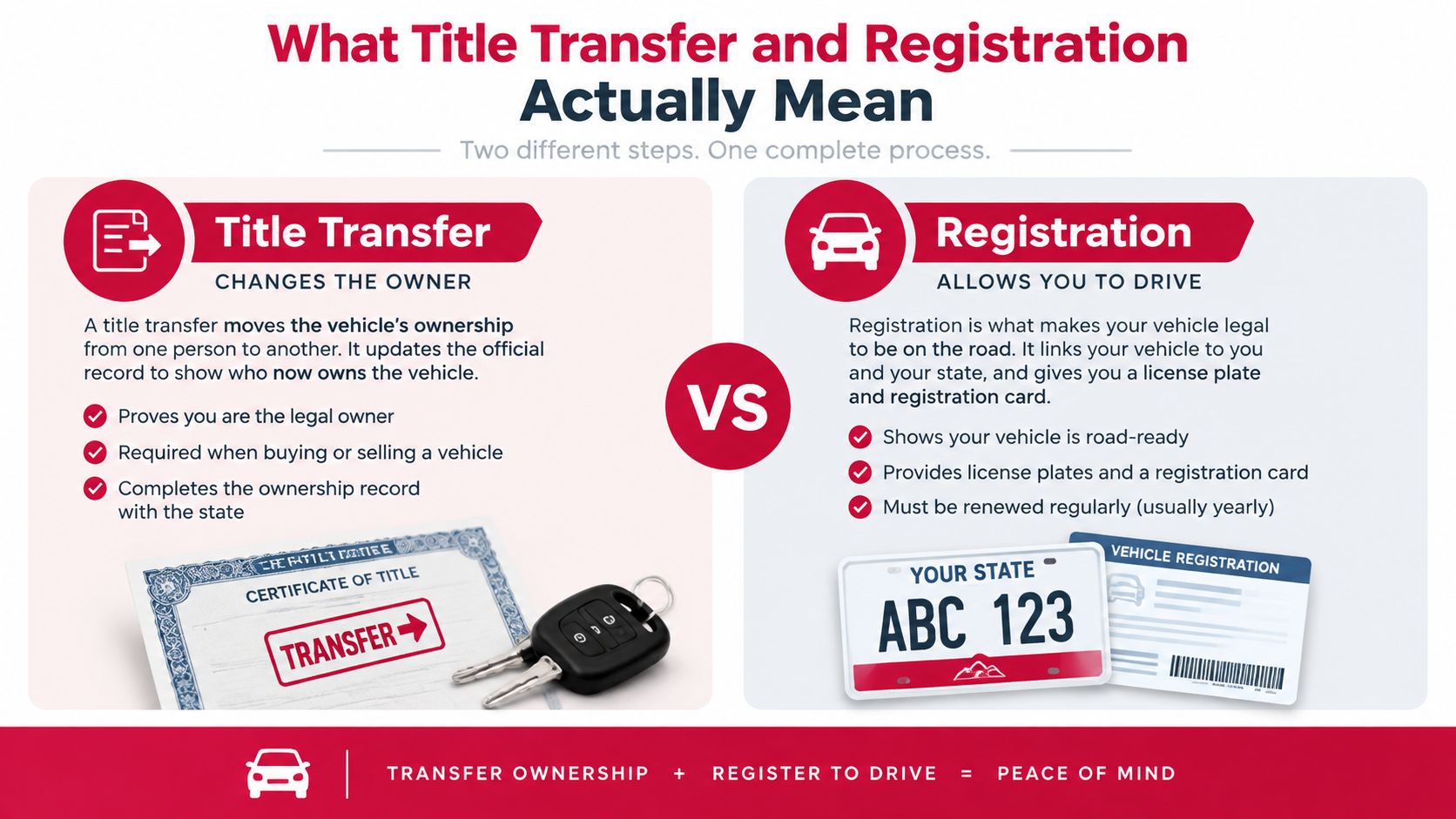
The title answers, “Who owns this vehicle?” Registration answers, “Is this vehicle properly documented and current for California road use?” Keep those questions separate and the process becomes much easier to organize.
California Rules, Documents, and Fees for Each
An Antioch private-party purchase can require more paperwork than a routine tag renewal. After a sale or transfer, the seller must submit the Notice of Transfer and Release of Liability within 5 calendar days. The buyer must complete the ownership and registration steps, with DMV materials identifying an ownership-change record update within 10 days. California DMV's private-party registration instructions outline how the signed title, smog certification, odometer disclosure, fees, and use tax may fit into the package.
What belongs in the title file
For a standard California transfer, bring the California Certificate of Title with the required buyer and seller signatures. A lost, damaged, or unavailable title requires replacement-or-transfer paperwork before DMV can complete the ownership change. REG 227 applies to missing or replacement title situations.
The transaction may also require supporting documents:
| Requirement | Title Transfer | Vehicle Registration |
|---|---|---|
| Ownership proof | Signed California title, or replacement-title paperwork when the title is missing | Signed title or another acceptable ownership document |
| Emissions paperwork | May be required as part of the related transfer and registration transaction | Smog certification may be required for applicable private-party or out-of-state transactions |
| Financial obligations | Transfer fee and other applicable charges | Registration fees, use tax, vehicle-related charges, and applicable county or district amounts |
| Supporting forms | Odometer disclosure, lien documents, and forms for special circumstances | Application forms, weight declarations, REG 256, REG 139, or other applicable documents |
| Submission | DMV field office or mail, depending on the transaction | DMV field office, mail, online renewal, or an authorized registration service |
For a privately sold vehicle, check whether odometer disclosure applies to a vehicle under 10 years old. Bring the smog certification, applicable fees, and use tax when required. Confirm the current document package before leaving for DMV, especially if the vehicle came from another state or the title has a lien.
Don't treat fees as one flat charge
A single transaction can combine a title-transfer fee, registration fees, use tax, and other charges based on the vehicle and the circumstances. A dealer purchase may call for the certificate of title or an out-of-state title for a used vehicle, title-transfer fees or use tax, and forms such as REG 256, REG 139, or weight declarations when applicable.
Gather the paperwork first, then get a current DMV estimate. Old online posts often show amounts that no longer apply. For an Antioch-area document checklist, use Fire House Smog's vehicle registration documents guide. Bring only the forms that match your transaction, and skip transfer paperwork for a simple renewal when ownership has not changed.
Side-by-Side Comparison at a Glance
| Criterion | Title transfer | Vehicle registration |
|---|---|---|
| Purpose | Establishes the new legal owner | Keeps the vehicle documented and authorized for California road use |
| When required | Sale, gift, inheritance, lien change, or another ownership change | Purchase, move to California, renewal, replacement, or registration update |
| Primary form used | REG 262 may support odometer or transfer details when required | REG 343 may support an application, or an online renewal may be used when eligible |
| Typical documents | Signed title, required odometer disclosure, lien release, and replacement-title paperwork if needed | Title or ownership proof, smog certification when required, fees, use tax, and registration information |
| DMV fees involved | Transfer fee plus other applicable transaction charges | Registration fees, use tax, and other applicable charges |
| What you receive | Updated California title showing the new owner | Updated registration card and sticker, with plates or other proof when applicable |
Purpose and timing
The title transfer follows an ownership event. California DMV guidance identifies the buyer's transfer deadline as 10 calendar days after the sale or transfer, while the seller's Notice of Transfer and Release of Liability is due within 5 calendar days. Registration follows the vehicle's operating status, so renewal can occur without a new ownership change.
Forms and documents
REG 262 may be relevant when odometer or transfer information is required. REG 343 can support an Application for Title or Registration, while online renewal may be available for an eligible unchanged ownership record. Don't sign a form just because a seller or buyer hands it to you. Check that every required field matches the transaction.
Smog, tax, and plates
Smog certification isn't the same thing as the title-transfer fee or registration fee. It can be required for a transfer or California registration, while a renewal may require emissions compliance based on the vehicle's renewal circumstances. Use tax can apply to a transfer, and the exact amount depends on the transaction rather than a universal flat rule.
Plate handling also matters. A private seller should follow DMV directions for the sale and handle the plates as required. The buyer shouldn't assume the plates, title, and registration all move together automatically.
The short version: Title transfer proves ownership. Registration proves current California road status.
Real Antioch Scenarios That Show Which One You Need
Antioch and East County drivers usually don't ask for a definition first. They ask, “What do I bring for my situation?” Match the event to the service before you make the trip.
You bought from a private seller in Antioch
Bring the signed California title and review whether an odometer disclosure, smog certification, use tax, and other fees apply. You need the ownership transfer and the registration portion of the transaction, not just a sticker renewal. The buyer's transfer window is 10 calendar days, and the seller has 5 calendar days to file the Notice of Transfer and Release of Liability.
Useful service line: On-site DMV processing, with smog certification if the transaction requires it.
You moved from Texas to Antioch
An out-of-state vehicle can require California title and registration paperwork, VIN verification, and smog certification. Bring the out-of-state title or other ownership documents, identification, and any lien information. Don't skip VIN verification just because the vehicle is already titled elsewhere.
Useful service line: VIN verification paired with California registration and title processing.
You inherited a vehicle from a relative in Brentwood
Inheritance changes ownership, so renewal alone isn't enough. The transaction may require estate or transfer documentation, the appropriate DMV form, and registration fees. Because inherited-vehicle paperwork depends on the facts of the estate and the ownership record, bring the death certificate or estate documents if the DMV directs you to provide them.
Useful service line: On-site DMV ownership transfer, with registration handling.
Your tags expired months ago
This is a registration problem if ownership hasn't changed. Check whether a smog certification is required and expect the DMV to calculate applicable renewal charges and penalties based on the record. Don't start a title transfer unless the vehicle changed owners.
Useful service line: Registration renewal and smog certification.
You bought through a Contra Costa dealership
The dealer commonly handles much of the title and registration submission, but the buyer still needs to understand the use tax and other charges included in the transaction. Keep copies of the purchase and title documents until the California record is complete.
Useful service line: Smog certification when required, plus on-site DMV help if the dealer leaves an unresolved registration or title issue.
How Fire House Smog Handles Both on Site
Antioch drivers often lose time by separating paperwork that can be handled during one planned visit. A licensed DMV registration service can process eligible renewals and ownership transactions, while a STAR-certified station can handle the emissions inspection when California requires one.
Fire House Smog is a STAR-certified test-only smog station and licensed DMV registration services provider. Its service lines include on-site registration renewals, ownership transfers for California and out-of-state vehicles, VIN-related support, and smog inspections for eligible cars, trucks, and some recreational vehicles. Confirm vehicle-size or transaction-specific requirements before arriving.
Bring the complete file
For an ownership change, bring the title and all documents connected to the transaction. Depending on the facts, that can include replacement-title paperwork, odometer information, lien documents, identification, smog certification, and forms such as REG 262, REG 343, REG 5, or REG 256.
The station's DMV service location is 2720 Hillcrest Avenue in Antioch, and the publisher's service information identifies weekend availability and bilingual staff. Call before you go if you're combining smog, VIN verification, and title work, especially for an out-of-state vehicle or RV.
A combined visit works best when you identify every trigger first, ownership change, California registration, emissions certification, VIN verification, or renewal.
The same DMV fees still apply. A service fee may be added for handling the transaction. For location details and service information, see Fire House Smog in Antioch.
Practical Recommendations and Common Questions
Use one decision rule at the counter. If ownership changed, start with title transfer and add registration. If ownership didn't change, handle registration renewal or replacement only. That keeps you from paying for the wrong service and prevents a routine renewal from turning into an unnecessary ownership transaction.
Before leaving home, check the three problems that cause the most avoidable delays:
- Missing smog certification: Confirm whether the transaction or renewal requires a smog check.
- Incomplete odometer or transfer paperwork: Review REG 262 and the title for signatures and required information.
- Out-of-state vehicle: Plan for VIN verification and bring the out-of-state ownership documents.
Questions Antioch drivers ask
How long does a title transfer take in person versus by mail? Processing time depends on the transaction and whether the paperwork is complete. In-person submission lets staff identify missing items immediately, while mail requires you to send the complete package and wait for DMV processing.
Is the transfer fee separate from registration fees? Yes, treat title-transfer charges and registration charges as separate categories. The final amount depends on the transaction and vehicle record, so request a current estimate.
What if the title is lost? Use replacement-or-transfer paperwork, including REG 227 when applicable. The DMV must have acceptable ownership documentation before it can complete the transfer.
Do I need a smog check before transferring the vehicle? Sometimes. California DMV may require smog certification for the related transfer or registration, depending on the vehicle and situation. Confirm before arriving.
How do I handle a lien release? Bring the lien-release documentation and any title information showing the lien status. The DMV may need to update both the ownership and lienholder records.
Can a spouse sign for a deceased co-owner? Don't assume a spouse can sign automatically. The DMV may require estate, survivorship, or other supporting documentation, so confirm the correct process before signing.
Fire House Smog offers STAR-certified smog checks, VIN verification support, and on-site DMV services for eligible title transfers and registration renewals in Antioch. Bring your ownership documents and call ahead if your transaction combines several requirements, then visit Fire House Smog to handle the paperwork and emissions step in one stop.
That DMV envelope tends to sit on the counter longer than it should. You know it needs attention, but you also know one missing form, one expired smog certificate, or one title mistake can turn a simple errand into multiple trips and a lot of waiting.
Most registration problems aren't hard. They're incomplete. People usually get stuck because they start the process before they've matched their paperwork to their exact situation. With vehicle registration documents, that distinction matters. A renewal, a private-party title transfer, and an out-of-state vehicle don't move through the same lane, even when they look similar on the surface.
Table of Contents
- Conquering Your DMV To-Do List Starts Here
- The California Smog Check What to Know in 2026
- Solving Document Disasters Lost Titles and Missing Paperwork
- The Fast Lane Skip the DMV with On-Site Services
- Vehicle Registration FAQs
- Can I renew registration if I lost my notice?
- Can I register a car if I just bought it and the seller made a mistake on the title?
- Do I always need a smog check for registration?
- What should I do before bringing in an out-of-state vehicle?
- I lost my registration card. Is that the same as losing my title?
- What's the most common mistake people make?
Conquering Your DMV To-Do List Starts Here
A lot of drivers open a notice, glance at the due date, then start digging through the glove box. They find an old registration card, maybe an insurance card, maybe a smog paper from months ago, and hope that's enough. Sometimes it is. Often it isn't.
That's not surprising when you look at the scale. The United States is projected to reach 290.9 million motor vehicle registrations in 2026, according to IBISWorld's U.S. motor vehicle registrations estimate. That number helps explain why registration systems are so document-driven. Every car has to tie back to a clear administrative record.
Practical rule: Registration goes faster when you stop treating it like one task and start treating it like a document match.
In day-to-day service work, the same pattern comes up again and again. Someone has the right vehicle but the wrong paper. Or the right paper but an outdated one. A buyer brings a signed title but forgets the smog step. A family member tries to renew registration using a notice that doesn't reflect a recent address change. None of those situations are unusual.
The fix is simple. Start with the scenario, not the line at the DMV. If you know whether you're renewing, transferring ownership, bringing in an out-of-state car, or replacing missing paperwork, the checklist gets much shorter and much clearer.
Renewal paperwork
For a standard renewal, gather the documents that prove the vehicle, the current registration status, and any required inspection compliance. The renewal notice helps, but it shouldn't be the only thing you rely on. Bring the current registration card if you have it, your plate number, and identification that matches the record.
If your notice says a smog check is required, treat that as a time-sensitive item. Don't assume an old certificate will still work. Inspection paperwork has its own validity window, and that catches people who try to piece everything together late.
California title transfer after a private sale
A private-party purchase usually needs more than buyers expect. The signed title is the center of the file, but it isn't the whole file. You also need supporting ownership details that match the vehicle exactly, including VIN, seller information, buyer information, and any disclosures required by the transaction.
For California cases, keep these together before you start:
- Signed title: Make sure buyer, seller, and vehicle details are complete and legible.
- Odometer disclosure if applicable: Check that mileage information is present when required.
- Smog compliance if required: Don't leave this for the end if the transfer depends on it.
- Registration application paperwork: California commonly uses Application for Title or Registration (REG 343) in registration workflows.
- Insurance and ID: Bring current proof that matches the owner information you're submitting.
Many files face difficulties. In California, 15 to 20% of registration applications face initial rejection because of mismatched VINs or unreported modifications, and missing smog check documentation is the leading cause of refusal, affecting about 35% of new registrations for vehicles over six years old, based on the California registration process discussion at Cobra Dreams.
Small errors matter more than people think. A single digit off in the VIN can stop the whole transaction.
Out-of-state vehicle transfer
An out-of-state transfer is the scenario where people most often underestimate the paperwork. They assume the current out-of-state registration proves everything. It helps, but California usually needs the vehicle itself to match the documents on record. That can mean VIN verification and closer review if the vehicle has modifications or unusual history.
Bring a tighter file for this situation:
- Out-of-state title or current registration: Bring both if you have them.
- Proof of identity: Use ID that matches the buyer or registrant.
- Insurance: Current California-compliant proof helps avoid follow-up delays.
- VIN-ready vehicle: The vehicle may need physical verification, so it must be accessible.
- Technical or build-related paperwork if modified: Engine swaps, frame changes, or specialty builds need clearer support than stock vehicles.
- Smog-related paperwork if required: Don't assume another state's process replaces California requirements.
If you want the basic renewal side of the process laid out cleanly, Fire House Smog keeps a practical overview of California DMV registration renewal steps.
Quick comparison table
| Document | Renewal | CA Title Transfer | Out-of-State Transfer |
|---|---|---|---|
| Current registration notice/card | Usually helpful | Sometimes | Helpful |
| Signed title | No | Yes | Usually yes |
| Application for Title or Registration (REG 343) | Sometimes | Often needed | Often needed |
| Proof of insurance | Often needed | Often needed | Often needed |
| VIN verification | Usually no | Sometimes | Often relevant |
| Smog documentation if required | Sometimes | Often relevant | Often relevant |
| Odometer disclosure if applicable | No | May apply | May apply |
The California Smog Check What to Know in 2026
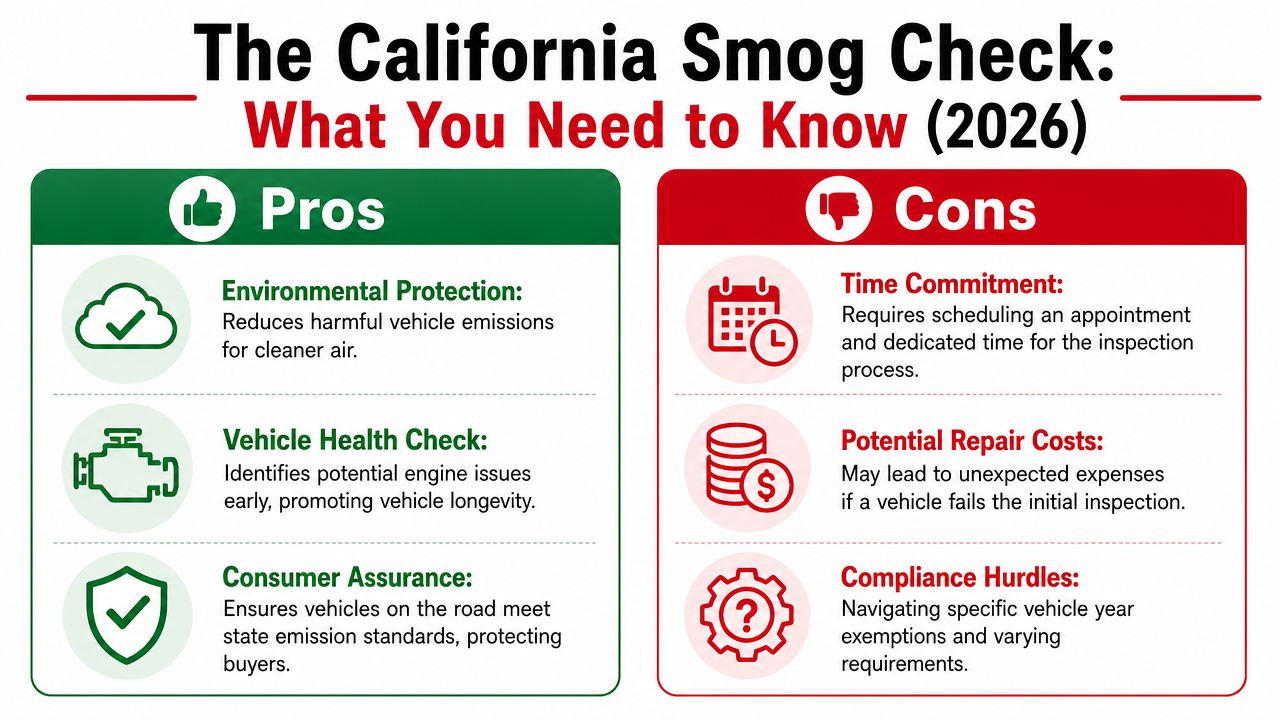
Smog is where registration timing often falls apart. Drivers handle the ownership paper, the insurance, the signatures, then realize the emissions step is what holds the file up. In California, that's a common reason a simple registration turns into a second round of paperwork.
Where drivers lose time
The biggest issue isn't always failing the test. It's getting the test done, then waiting too long to finish the registration. The validity of an emission control inspection is limited to 90 days in most states, including California, and missing that window often leads to another round of delay. The same source notes that failure to complete the registration within that window often results in a 40% rejection rate for renewal applications, which means owners may need another smog check, as described in this technical data sheet and inspection timing discussion.
That's why the right sequence matters. Handle the smog inspection close enough to your registration date that the certificate is still valid when the DMV side is processed. Waiting until the last minute is risky. Doing it too early can also backfire.
Why STAR and test-only matter
Not every station plays the same role in the process. A STAR-certified station meets a higher performance standard set by the state, and some vehicles are specifically directed to a STAR station. If your notice calls for STAR, that isn't optional.
A test-only station matters for a different reason. The inspection is the service. There's no repair sale attached to the result. For many drivers, that makes the process clearer because the shop is focused on accurate testing and reporting, not selling repair work in the same transaction.
If you need a local STAR inspection, the Antioch smog check service page shows what that process looks like in practice.
A good smog visit saves time when it lines up with the registration clock. A badly timed one creates repeat work.
For drivers dealing with multiple deadlines, the cleanest approach is to keep three items together: the registration notice, current insurance, and any emissions requirement tied to the vehicle. Once those are aligned, the rest of the file is usually much easier to finish.
Solving Document Disasters Lost Titles and Missing Paperwork
Losing paperwork feels bigger than it is. Most document problems are fixable. Significant damage results from freezing up, guessing, or submitting partial information that creates a second problem on top of the first.

If the title is missing after a sale
This one causes a lot of panic. A buyer pays for the vehicle, gets possession, and then the title is lost, incomplete, or never properly transferred. Most general guides act like the process stops there. It doesn't, but it does become more state-specific.
One overlooked point is that some states allow alternate paths. As noted in this private-sale title guidance discussing Illinois and title alternatives, states such as Missouri may allow registration with a Manufacturer's Statement of Origin (MSO) or a notarized lien release, and Illinois has a 20-day window that can matter in private-sale timing. The important takeaway isn't that California follows those exact rules. It's that missing-title situations aren't always dead ends, even though many consumer guides treat them that way.
For a practical response, do this first:
- Contact the seller immediately: Don't wait and hope the title turns up.
- Confirm what was signed: A title signed incorrectly can be as troublesome as a lost one.
- Ask whether a duplicate title request is possible: In many cases, that's the cleanest correction.
- Keep your bill of sale and payment record together: Those help establish the timeline of the transaction.
- Don't alter documents yourself: Cross-outs and handwritten fixes often create new rejection issues.
If your paperwork doesn't match the vehicle
This usually shows up around the VIN, odometer information, or modifications. The paperwork says one thing. The car says another. That's where verification steps become important, especially for out-of-state vehicles, reconstructed units, or cars with changes that weren't documented cleanly.
A VIN check is often the fastest way to identify whether the mismatch is minor clerical error or a larger file problem. If you need that step, Fire House Smog provides VIN verification support in Antioch.
Here's a useful overview before you make calls or stand in line:
Bring every ownership-related paper you have, even if you think one of them is outdated. The missing clue is often on the document people leave at home.
How to keep this from happening again
Drivers with one vehicle can usually manage registration papers with a simple folder. Families with several cars and small business fleets need more discipline than that. The best working method is boring, but it works: keep originals in one secure place, carry only what needs to be in the vehicle, and review expiration-sensitive documents before you need them.
For modified vehicles, keep build and compliance paperwork attached to the title file, not in a separate stack. For private sales, make copies before either party leaves. For out-of-state transfers, bring more than you think you'll need. Overpreparing is cheaper than a second trip.
The Fast Lane Skip the DMV with On-Site Services
The traditional route is familiar. Gather what you think you need, drive to the DMV, wait for your number, reach the counter, then learn the file is missing one item you could have brought if someone had told you sooner. The trip wasn't wasted, but it wasn't finished either.
The alternative works better because it compresses the steps. Instead of separating smog, paperwork review, and registration processing into different stops, a licensed service partner can often line them up in one visit.
Two ways this usually goes
One driver shows up with a vague stack of papers and hopes the clerk can sort it out. Another shows up with the right scenario matched to the right documents. The second driver usually finishes faster because the transaction is built correctly before it enters the system.
That's the true shortcut. It isn't luck. It's sequence.
A local licensed DMV business partner can handle common transactions such as renewals, ownership transfers, and related registration work without sending you into a full DMV office line. If the vehicle also needs emissions testing, doing both tasks in one place reduces the chance that the smog side and the document side drift apart.
What a licensed partner changes
On-site processing offers its greatest help:
- Immediate document review: Missing items get caught before the submission goes sideways.
- Smog and registration alignment: If both are needed, they can be coordinated in the same visit.
- Tag and sticker handling: For eligible transactions, official registration output can be printed on-site.
- Less rework: You're less likely to discover a preventable problem after waiting in line.
Fire House Smog is one local option that combines STAR-certified test-only smog inspections with licensed California DMV registration services, including on-site renewals and ownership transfer support at its Antioch location.
This model is especially useful for working drivers, families juggling multiple vehicles, and fleet managers who can't afford to lose half a day every time a registration file needs attention. The trade-off is simple. You still need the right paperwork. You just don't have to do the sorting, testing, and processing in separate places if your transaction qualifies.
Vehicle Registration FAQs
Can I renew registration if I lost my notice?
Usually, yes. The notice helps, but it isn't the registration itself. What matters is matching the vehicle and owner record correctly. Bring the registration card if you have it, plus plate information, ID, insurance, and any required inspection paperwork.
Can I register a car if I just bought it and the seller made a mistake on the title?
Sometimes, but don't guess. Title errors can be fixable, yet handwritten corrections often make things worse. Get the seller involved quickly and find out whether the title needs to be re-signed, replaced, or supported with additional ownership documents.
Do I always need a smog check for registration?
Not always. It depends on the transaction and the vehicle. Renewals, sales, and out-of-state transfers can trigger different requirements, so check the notice and the vehicle record before assuming you're exempt or required.
What should I do before bringing in an out-of-state vehicle?
Bring the title or current registration, proof of insurance, identification, and any paperwork tied to modifications or unusual vehicle history. Make sure the vehicle itself is available if verification is needed. Out-of-state transfers go smoother when the car and the paperwork can be checked together.
I lost my registration card. Is that the same as losing my title?
No. They're different documents and create different problems. A lost registration card is usually a simpler replacement issue. A lost title affects ownership proof, transfers, and some registration scenarios much more directly.
What's the most common mistake people make?
Starting too early with the wrong paperwork, or too late with time-sensitive paperwork. Vehicle registration documents aren't hard to collect once you know your scenario. The trouble starts when drivers mix renewal documents with transfer documents, or bring inspection paperwork that no longer fits the registration timeline.
If you want to avoid the usual back-and-forth, bring your paperwork to Fire House Smog. The shop handles smog inspections and qualifying DMV registration services from one Antioch location, which makes it easier to match the right documents to the right transaction and finish the job without a separate DMV office stop.