
What Is Vehicle Registration Renewal? Your 2026 Guide
Vehicle registration renewal is the mandatory annual process of updating your vehicle's legal status with the state, proving you have insurance and have met requirements like a smog check, which allows you to legally drive on public roads. In California, that process can't be completed online unless your electronic smog certification is already on file with the DMV, so the order you do things in matters.
If you're reading this because you found a DMV renewal notice on the counter, remembered your tags are about to expire, or realized you still haven't handled your smog check, you're in the same spot as a lot of busy California drivers. The process feels simple until one missing step blocks the whole thing.
That's where most confusion starts. People think renewal just means paying a bill. It doesn't. It means the state verifies that your vehicle is still properly registered, properly insured, and, when required, properly emissions-tested.
If you want to understand what vehicle registration renewal is, what California checks, and how to avoid wasted trips and long lines, this guide will walk you through it in plain language.
Table of Contents
- That DMV Notice in Your Mailbox
- Why You Must Renew Your Vehicle Registration Annually
- Your California Renewal Checklist Documents and Deadlines
- How to Renew Your Registration in California From Online to On-Site
- Understanding Renewal Costs and Late Penalties
- The Easiest Way to Renew Your Registration in Antioch
That DMV Notice in Your Mailbox
That envelope usually creates the same reaction. You glance at it, set it down, and tell yourself you'll deal with it later. Then later turns into “Do I need a smog check first?” or “Can I just pay online tonight?”
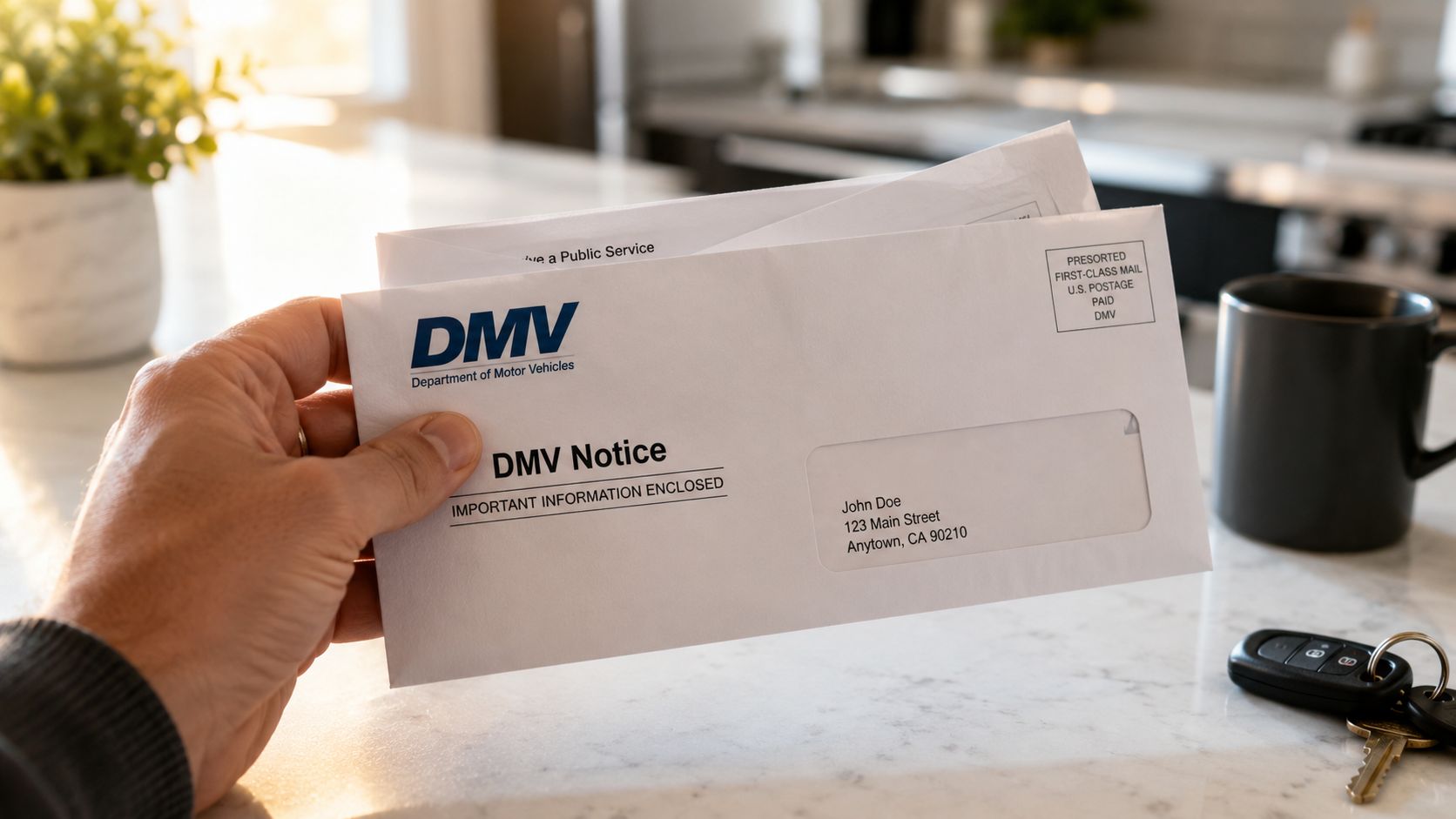
Vehicle registration renewal means renewing the state's permission for your vehicle to stay legally registered for road use. It's not the same as renewing your driver's license, and it's not just replacing a sticker.
A helpful way to think about it is this. Your license says you can drive. Your registration says this vehicle can be on public roads.
Practical rule: If your registration isn't current, paying attention to insurance alone won't fix it. The vehicle itself must be renewed with the state.
The DMV notice is really a prompt to verify three things:
- Your vehicle record is current. The state wants the registration tied to the right owner and the right vehicle details.
- Your compliance items are cleared. That can include insurance and, for many vehicles, emissions compliance.
- Your payment is submitted on time. Renewal only goes smoothly when the prerequisites are already lined up.
That's why renewal feels annoying when you're rushed. It's a chain of steps, and one missing link can stop the whole process.
Many California drivers get tripped up because they start at the payment screen. The better approach is to start with readiness. Do you have your notice or plate information? Is your insurance active? If your vehicle needs smog, has that result been sent in electronically?
Once those pieces are in place, renewal becomes routine instead of frustrating.
Why You Must Renew Your Vehicle Registration Annually
Driving on public roads comes with ongoing obligations. Registration renewal is one of them.
California doesn't treat registration as a one-time purchase that lasts forever. It works more like a recurring authorization. Each year, the state confirms that the vehicle remains properly documented and eligible to operate on shared roads.
The legal reason
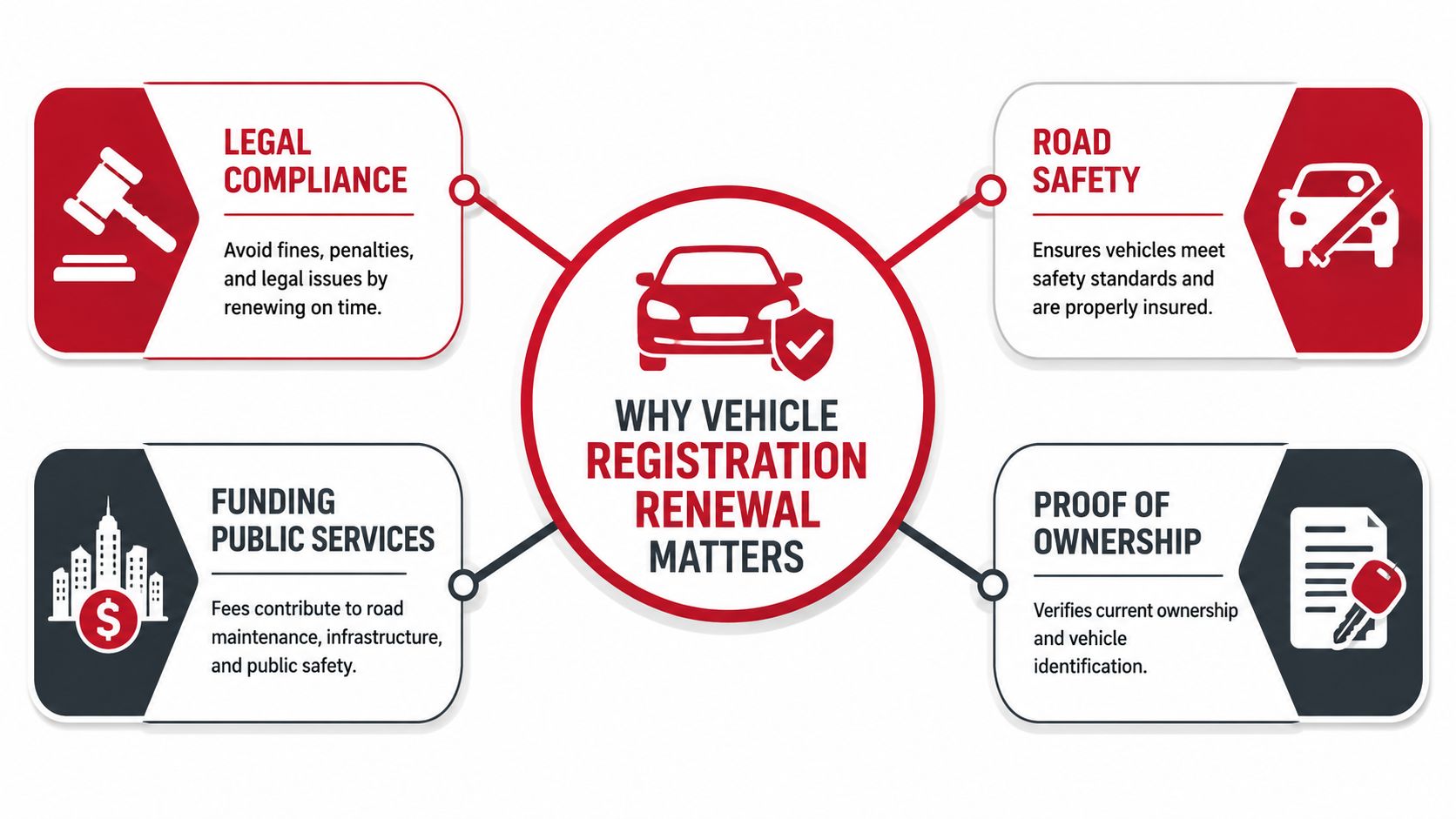
In the United States, renewal is an annual legal requirement. California's DMV says renewal can be denied even if fees are paid when a vehicle doesn't have valid smog certification on file or has outstanding parking tickets, and the DMV also states that electronic smog certification must already be on file before online renewal can proceed through the California vehicle registration renewal process.
That's the part many people don't expect. Payment alone doesn't solve everything. The DMV checks for compliance issues before it finishes the renewal.
The public-interest reason
Registration is also part of how the state manages safe and lawful road use. Think of it as a public-road operating agreement. You use state roads, and in return the state requires current records, valid insurance, and compliance with emissions rules where applicable.
That matters because renewal connects your vehicle to systems other agencies use too. Insurance isn't just something you keep in the glovebox. States increasingly verify it electronically, and the renewal process depends on those records matching.
Renewal isn't just paperwork. It's a state check that your vehicle still meets the conditions for legal use.
The California pain point most people hit
For many California drivers, the hardest part isn't understanding the law. It's handling the smog requirement at the right time.
Here's where people lose time:
- They try to renew online first. Then they discover the DMV has no smog result on file yet.
- They assume a paid fee guarantees completion. It doesn't if another hold is still active.
- They wait until the last minute. Then every extra errand feels urgent.
If you treat renewal like a short checklist instead of a single payment task, it gets much easier. The next step is knowing exactly what to gather before you start.
Your California Renewal Checklist Documents and Deadlines
Most renewal problems come from missing one item, not from the process being complicated. If you pull together what you need first, you can usually avoid repeat trips and stalled transactions.
What to gather before you start
Start with the basics:
- Your renewal notice, if you have it. This usually gives you the fastest path because it ties directly to your vehicle record.
- Your plate number or VIN. If the notice is missing, these details help locate the registration record.
- Current insurance information. California expects active coverage that can be matched to your vehicle record.
- Payment method. Different renewal channels may accept different forms of payment.
- Smog compliance, if required. This is often the item that decides whether you can finish today or not.
A lot of drivers ask about timing. Renewal systems around the world often use strict windows. One cited example outside California is India's 60-day pre-expiry application window for a standardized 5-year renewal duration, while some U.S. jurisdictions still rely on mailed forms and checks, such as New York's MV-3 process through a centralized center in Utica, described in this registration procedure reference. The lesson for California drivers is simple: don't assume every state handles timing and paperwork the same way.
If you want a practical list of paperwork situations, including common registration scenarios, this vehicle registration documents guide is a useful local reference.
When smog becomes the sticking point
Readers usually get confused at this point, so keep the sequence clear.
If your vehicle needs a smog check for renewal, the test must be completed first. In California, the electronic result has to reach DMV records before an online renewal can go through, as noted earlier.
That leads to a common misunderstanding: drivers often think the smog certificate is a paper they submit themselves. In practice, what matters is that the certification is transmitted and visible in the system.
If your renewal won't complete online, check the smog status before assuming the DMV website is the problem.
A few questions help you sort it out quickly:
- Does your renewal notice mention smog? If yes, handle that before trying to pay.
- Were you directed to a STAR station? If so, use the station type required by your notice.
- Did you just buy the vehicle or move to California? Ownership transfers and first-time California registration can involve separate emissions and document requirements.
- Do you have an unusual vehicle type? Some trucks, diesels, and RV-related cases can require extra verification.
Here's a simple comparison to keep straight:
| Requirement | Standard Annual Renewal | Ownership Transfer |
|---|---|---|
| Registration notice or vehicle record lookup | Usually enough to start | Transfer documents are typically needed |
| Insurance verification | Required | Required |
| Smog compliance | Often required based on DMV record | May be required depending on transaction details |
| Main goal | Extend current registration | Update legal ownership and registration record |
The takeaway is practical. Annual renewal is usually easier than a transfer, but both can stop cold if the emissions or insurance piece isn't ready.
How to Renew Your Registration in California From Online to On-Site
California gives you more than one way to renew. The right option depends on what's already done and how much time you want to spend solving problems.
The common renewal paths
Online renewal is the cleanest route when your record is already ready. It works well if your insurance is current, your smog requirement is cleared, and there are no holds that block issuance.
Mail renewal can still work for some drivers, but it's slower and less forgiving when something is missing. If you're close to expiration, mail can feel uncertain because you're waiting on processing instead of resolving issues in real time.
DMV field office service gives you face-to-face help, which is useful when the case is messy. It's also the option many people dread because it can take longer and usually requires more time carved out of your day.
Here's a quick comparison:
- Online
- Best for: Clean records and completed smog compliance
- Main drawback: You may only discover a hold after starting
- Mail
- Best for: Drivers who plan early and don't need immediate resolution
- Main drawback: Harder to correct issues quickly
- In person at a DMV office
- Best for: Complicated cases that need review
- Main drawback: More waiting and more schedule disruption
When one-stop service makes sense
For a lot of Antioch-area drivers, the biggest delay isn't the payment itself. It's having to do the smog check in one place and then solve the registration somewhere else.
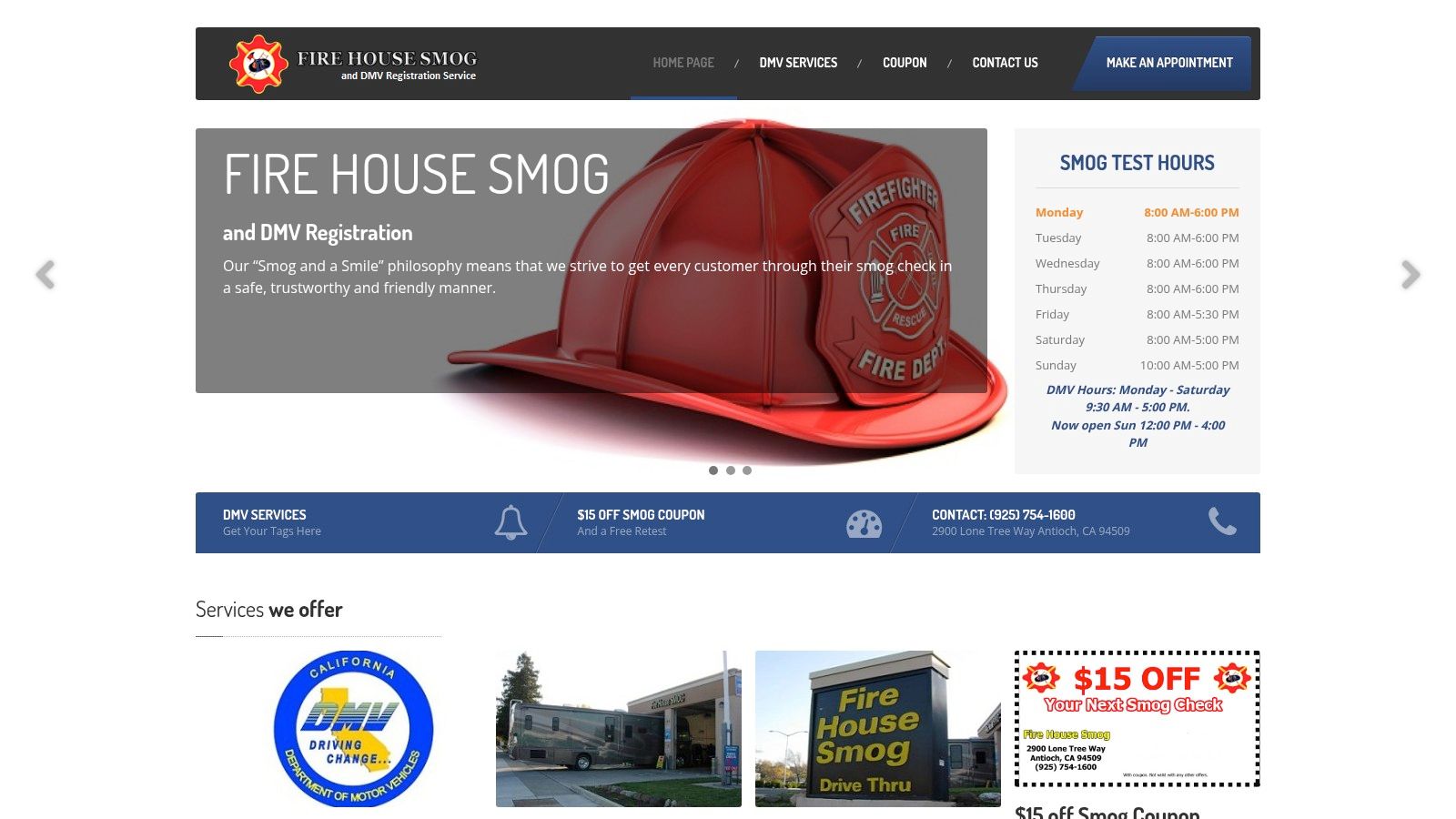
That's why some people use a licensed DMV business partner that can handle both. One local option is DMV registration services near Antioch, where Fire House Smog provides STAR-certified test-only smog checks and on-site California DMV renewal services during posted service hours.
The practical benefit is straightforward. If your renewal depends on smog, combining those tasks can reduce extra stops and cut down on back-and-forth.
A short look at the process helps:
- Bring your renewal information.
- Complete the smog check if your notice requires it.
- Confirm the record is ready for DMV processing.
- Finish the registration transaction on site if eligible.
- Leave with updated documentation and tag issuance when available.
If you want to see how that service setup looks before visiting, this short video gives context:
For busy drivers, the main advantage is not having to guess which step comes first.
Understanding Renewal Costs and Late Penalties
Registration notices often look more complicated than they really are. You'll usually see several line items rather than one simple total.
What you're paying for
The exact amount on your notice can vary, but the structure usually reflects the state's registration-related charges and other required fees tied to that vehicle record. What matters most for most drivers is not memorizing every line item. It's understanding that the notice total is the amount tied to your vehicle's current renewal status.
If anything on the record is unresolved, the transaction may not process cleanly even when you're ready to pay.
For drivers trying to understand the line items before they head out, this registration renewal fee explainer can help decode what you're seeing on the notice.
Why waiting gets expensive fast
Late renewal matters because penalties don't stay theoretical. Other jurisdictions show the same pattern clearly. In the Dominican Republic, over 360,000 vehicles missed the registration sticker renewal deadline, and surcharges ranged from RD$2,000 for a single-year lapse to RD$3,100 for multi-year non-renewals, according to this report on missed vehicle renewals and surcharges.
California has its own penalty structure, and the practical lesson is the same. Once a registration goes late, the problem usually gets more expensive and more annoying, not less.
Paying attention before expiration is almost always easier than sorting out penalties, missing paperwork, and blocked records after the fact.
The most expensive delay is often the one caused by procrastination mixed with confusion. A driver waits because they think renewal is just a payment. Then they learn a required smog test or another hold still has to be cleared first.
The Easiest Way to Renew Your Registration in Antioch
If your goal is simple, get legal, avoid lines, and move on with your day, the easiest path is usually the one that removes extra stops.
Who this helps most
This works especially well for:
- Commuters with tight schedules. You don't want to spend a workday chasing separate errands.
- Families with more than one vehicle. Repeating the process across multiple cars gets old fast.
- Drivers who need smog and renewal together. That combination is where most time gets lost.
- Owners of cars, light trucks, and some RVs. A station that handles more than one vehicle type can simplify planning.
Fire House Smog is a STAR-certified test-only smog station and licensed DMV registration services provider at 2900 Lone Tree Way, Antioch, CA 94509. It offers smog testing seven days a week, has two service bays, and provides DMV service hours Monday through Saturday 9:30 AM to 5:00 PM and Sunday 12:00 PM to 4:00 PM, with 925-754-1600 for questions.
Local details you can use
The test-only model matters for some drivers because the station isn't selling repairs. That can make the visit feel more straightforward when all you need is emissions testing and registration help.
On-site DMV renewal service also matters because it addresses the most common Antioch-area pain point: people don't want one trip for smog and another for registration if both are part of the same task.
If you call ahead, you can also ask whether your vehicle type, especially if it's larger or RV-related, fits the service setup for that day. That small step can save you a wasted drive.
The core idea is simple. What is vehicle registration renewal? It's an annual legal requirement. But in practice, it goes fastest when the insurance, smog, and registration pieces are handled in the right order and, if possible, in one place.
If you want a faster local option for smog checks and California DMV renewals, Fire House Smog in Antioch handles STAR-certified smog testing and on-site registration services during posted hours, so you can clear the requirements and finish the process with fewer stops.