
In California, the DMV title transfer fee is $15 per transfer, and that charge is separate from the $28 title fee and any registration, use tax, or other transaction-specific charges that can raise what you pay at the counter. That's why a buyer can hear “the transfer fee is $15” and still end up with a noticeably higher total when the paperwork is processed.
You've probably run into this at the exact wrong moment. You buy a used car, the seller signs the title, and you assume the ownership change will be one small DMV charge. Then the estimate includes more than one line item, and suddenly the phrase “title transfer fee” doesn't seem so simple.
That confusion is normal. A lot of first-time buyers use dmv title transfer fee as shorthand for the whole transaction, when California treats it more like a bundle of separate tasks. One fee pays for the ownership change itself. Another can apply to the title document. Other amounts may apply if registration is due, if tax is owed, or if the vehicle's history creates extra processing steps.
The easiest way to think about it is this: changing ownership and making the car fully current are related, but they aren't the same thing. If you mix them together, the final amount feels random. If you separate them, the receipt starts to make sense.
Table of Contents
- Introduction to DMV Title Transfer Fees in California
- What a Title Transfer Fee Actually Covers
- Common Line Items That Make Up Your Total
- How Fees Vary for In State Out of State and Family Transfers
- How to Estimate and Pay Your Fee During an On Site Transfer
- Smog Timing Paperwork and Other Factors That Affect Cost
- Completing Your California Title Transfer With Confidence
Introduction to DMV Title Transfer Fees in California
A first-time buyer in Antioch often has the same experience. The sale feels finished once the keys are in hand and the seller has signed the title. Then the DMV clerk starts entering the transfer, and the amount due is higher than the one fee the buyer expected.
That surprise usually comes from treating "dmv title transfer fee" as if it were one all-in price. In California, it works more like a grocery receipt with separate line items. One charge covers the legal change of ownership. Other charges can appear at the same counter visit because the car may also need a new title record, tax handling, or registration work.
California does publish a specific transfer charge. The DMV's title transfers and changes page explains the transfer process and shows that ownership changes are handled as a distinct transaction. But the amount you pay at the window can still change based on what else the vehicle needs that day.
Why buyers get confused
The phrase itself causes part of the problem. Buyers often use "title transfer fee" to mean the whole ownership-change visit, while the DMV breaks that visit into separate tasks.
A simple way to see it is to split the transaction into buckets:
- Transfer charge: the statutory fee for changing ownership in the DMV record
- Title-related charge: the cost tied to the title document or title record
- Registration-related charges: amounts that may apply if tags, renewal, or other registration items need attention
- Tax and fact-specific charges: amounts that depend on the sale price, exemption status, vehicle history, or paperwork gaps
This is why two buyers can both say, "I paid a title transfer fee," and still leave with very different totals.
Why the total changes from one car to another
The number at the counter depends on more than the sale itself. A clean in-state private sale with current registration is one version of the job. An out-of-state vehicle, a missing title, unpaid registration, or a break in the chain of ownership creates a different version.
Chain of ownership matters because the DMV has to be able to follow the car from the last recorded owner to you, step by step. If one signature, release, or supporting document is missing, the transaction can require extra correction before the transfer can be completed. Out-of-state status matters for a similar reason. The DMV may need to verify more information before California can place the vehicle fully into its own records.
Who usually pays
In a private-party sale, the buyer is usually the person who submits the transfer and pays the charges tied to putting the vehicle into the buyer's name. The seller's role is usually to sign the title correctly and provide the documents the buyer needs.
The practical takeaway is simple. The "$15 transfer fee" is real, but it is only one piece of the receipt. Once you separate that statutory charge from title, use tax, registration, and any chain-of-ownership or out-of-state issues, the total stops looking random and starts making sense.
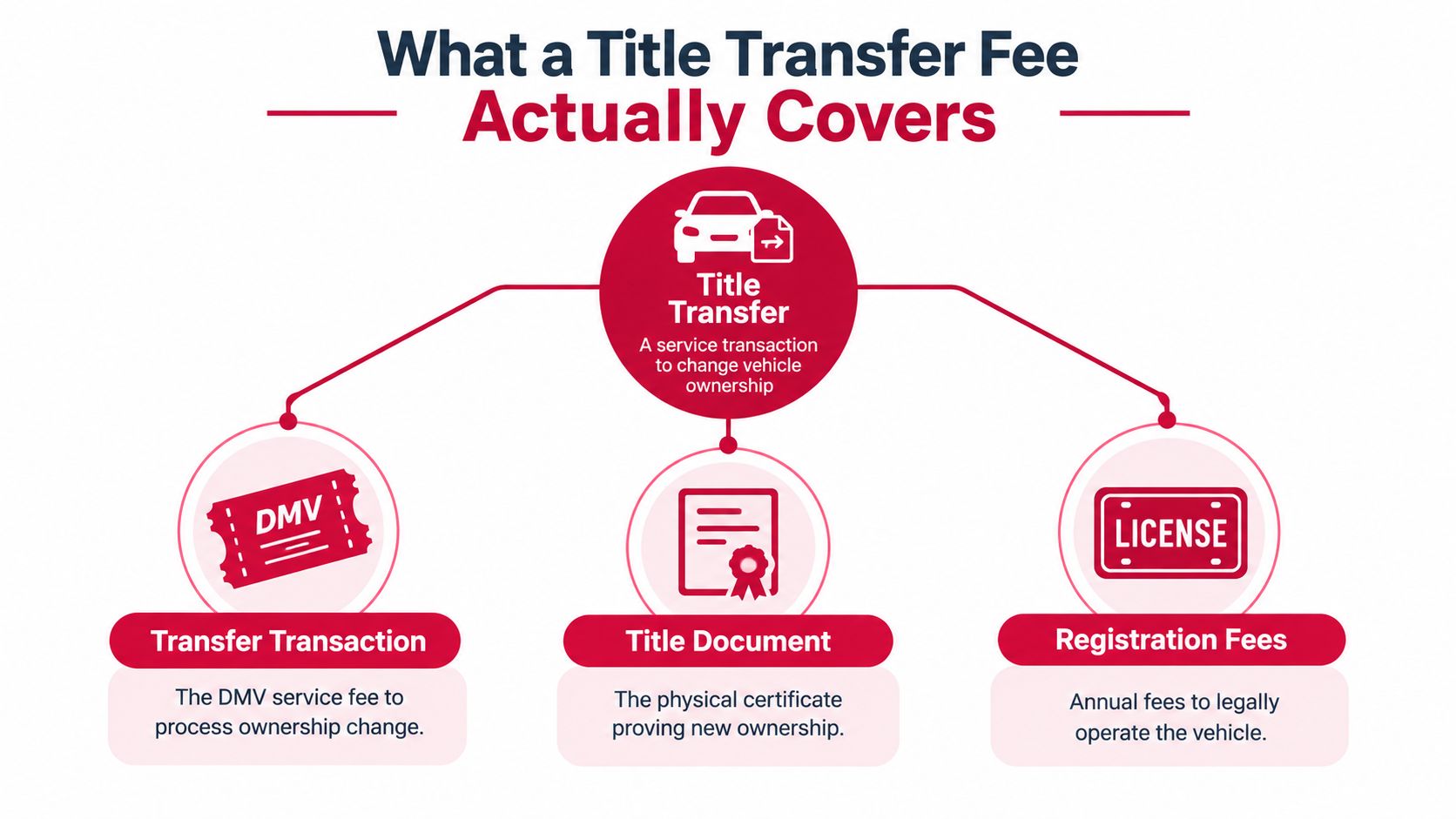
What a Title Transfer Fee Actually Covers
You are at the counter with a signed title in hand, and the clerk gives you a total that includes more than one line. That surprises a lot of first-time buyers because the phrase "title transfer fee" sounds like one all-in price. In practice, it is more like a grocery receipt. One line pays for the ownership change itself, while other lines can cover the title record, taxes, or registration work handled in the same visit.
The useful distinction is between the transfer action and the other items attached to that action.
The transfer fee pays for the ownership change process
A transfer fee covers the DMV's work of moving the vehicle from one owner's record to another owner's record. It is the processing step. The clerk checks the signed title, confirms the seller and buyer information, and updates the state's ownership file so the chain of ownership continues correctly.
That matters because ownership in DMV records works like a baton pass in a relay race. Each handoff has to be clear. If the handoff from the seller to you is complete, the transfer process is usually straightforward. If an intervening buyer signed but never titled the vehicle, or a release is missing, the transfer still starts with the same basic ownership-change function, but the overall transaction can grow because the record has to be cleaned up.
Other charges often ride on the same visit
Many buyers use "title transfer" as shorthand for the whole counter total. That is where confusion starts.
The transfer portion is only one bucket. Separate buckets may be added at the same time:
- Title document charges for producing or correcting the ownership record
- Registration charges if the vehicle's registration needs attention
- Use tax if the transaction requires tax collection
- Extra transfer-related processing when the ownership chain has gaps or intermediate buyers
A simple way to read the receipt is this:
Transfer means changing the owner in DMV records. Title means the ownership document and record tied to that change. Registration means the vehicle's road-use status.
Those buckets can appear together without being duplicates. They are different parts of the same errand.
Why the total changes from one transfer to another
Two buyers can both say they paid a title transfer fee and still see different totals because they did not buy the same kind of transaction.
A clean in-state sale with current registration is one version. An out-of-state vehicle is another because California may need to add the car into its records before the ownership side is fully settled. A family transfer can also look different if a tax or fee exemption applies. A broken chain of ownership changes things again because the clerk has to connect the paperwork step by step before the transfer can be completed.
If you keep those buckets separate in your head, the counter total stops feeling random. You are not paying one mysterious "DMV title transfer fee." You are paying for a transfer action, plus any title, tax, registration, or ownership-chain items that come with your specific vehicle and paperwork.
Common Line Items That Make Up Your Total
The easiest way to avoid sticker shock is to read the estimate as a list of components instead of one mystery number. In California, the total often combines administrative charges with vehicle-specific charges.
The most common fee lines
Below is the basic framework many buyers see.
| Fee Item | Amount or Basis | When It Applies |
|---|---|---|
| Transfer fee | $15 | Applies to the transfer transaction itself in California, per DMV fee guidance |
| Title fee | $28 | Applies when the title-related charge is part of the transaction |
| Paper title or replacement-title charge | $28 | Applies when a paper title or replacement title is requested or needed |
| Registration fees | Varies by vehicle and status | Applies if registration is due or must be updated with the transfer |
| Use tax | Based on the transaction | Applies when the transaction triggers tax collection |
| Added transfer fee for intervening buyers | Another $15 per buyer in the chain | Applies when ownership passed through intermediate buyers before reaching you |
That table is the reason a “$15 transfer” can still become a larger amount in real life.
Why chain of ownership matters
One of the most overlooked details in California is the ownership chain. The DMV notes that its calculator estimates one transfer at a time, and it instructs users to add one transfer fee for each buyer between the current buyer and the registered owner shown on the title in the DMV's fee appendix for transfer transactions.
In plain language, if the vehicle changed hands on paper before it got to you, the transfer part can multiply.
Check the title chain early: If the name on the title doesn't match the person selling you the car, stop and sort that out before you estimate the total.
A buyer who misses this can walk in expecting one transfer charge and learn that the DMV sees more than one ownership step that still has to be accounted for.
Other items that commonly appear
Some charges aren't fixed statewide in the same simple way, but they still affect your final total. These usually include:
- Registration-related charges: If the vehicle's registration side isn't current, those fees may be collected at the same time.
- Use tax: This is separate from the transfer fee and often explains why the total feels much higher than expected.
- Paperwork-related title charges: A missing title or a request tied to a paper title can trigger a separate title-document fee.
If you want a broader look at what can show up alongside a transfer, this overview of vehicle registration cost basics helps put the non-transfer items in context.
A good estimate starts with the headline fee, then asks what else is being processed in the same visit.
How Fees Vary for In State Out of State and Family Transfers
Not every title transfer follows the same path. The vehicle may already be in California, it may be arriving from another state, or it may be moving through a family-related transfer category. Those differences matter because “transfer fee” is only one piece of a larger policy picture.
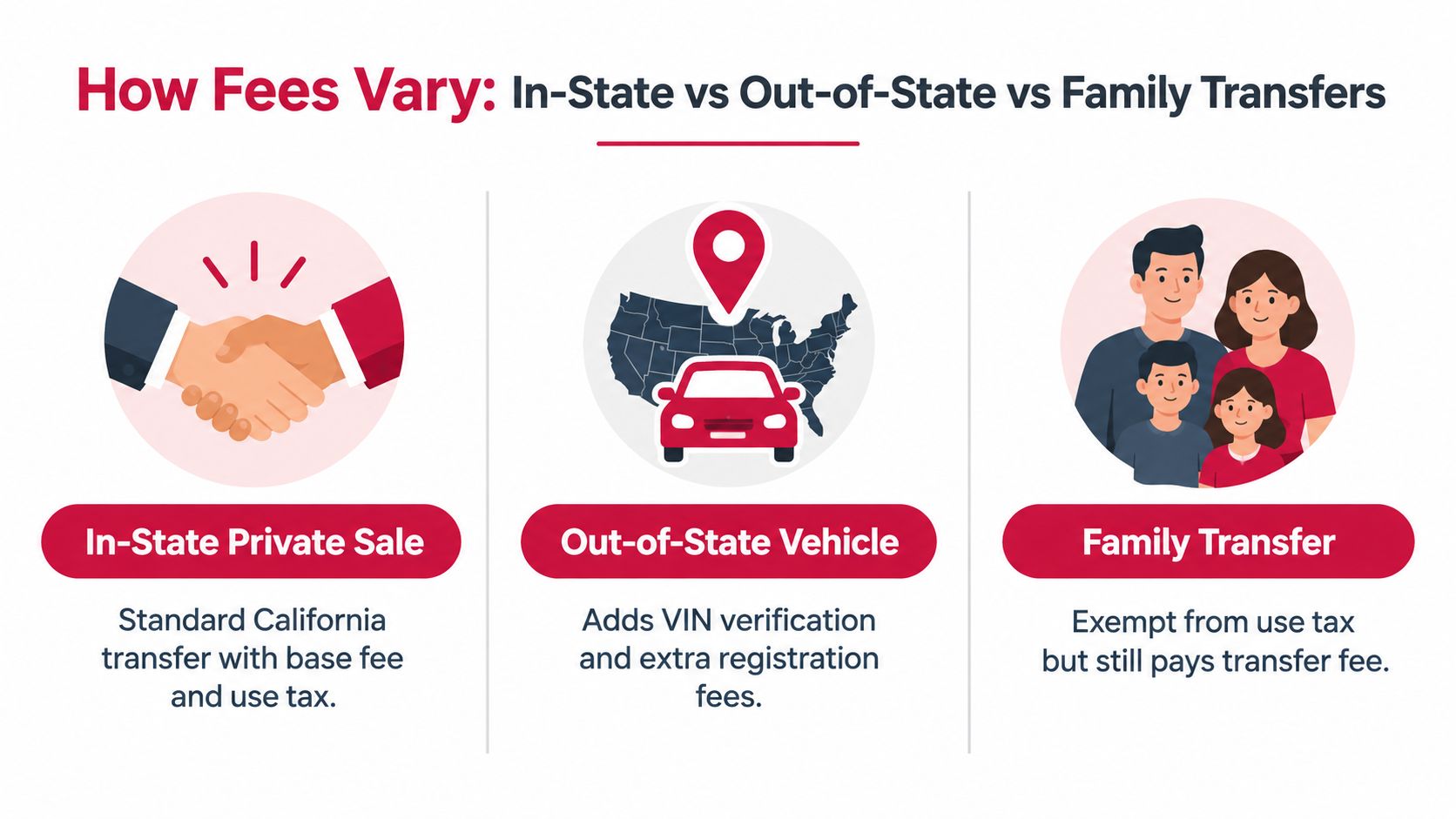
In-state private sale
In a standard California private-party transfer, the process is usually the most familiar. The vehicle is already in the state system, so the core job is updating ownership and handling any related title, registration, or tax items tied to that sale.
This is the category many picture when they search for the DMV title transfer fee. It's also the category where buyers most often assume there's one flat all-in amount.
Out-of-state vehicle
An out-of-state transfer usually involves more moving parts. The vehicle is being brought into California's system, so buyers often run into extra administrative steps beyond a routine ownership change.
That's why the final amount for an out-of-state vehicle often feels different from a local private-party purchase, even before you get into the details of registration status or tax treatment. If your situation falls into that category, this guide to an out-of-state title transfer is a useful next read.
Family and special transfers
Family-related transfers are where national comparisons become especially useful. The idea of a single nationwide “title transfer fee” falls apart quickly once you compare state rules and special categories.
Independent fee roundups report a broad U.S. range from $4 in Arizona to $214.50 in Wisconsin, and Wisconsin's DMV also states that some transfers to a surviving spouse, registered domestic partner, or qualifying family member cost $0. The same roundup notes that Wisconsin's standard title-transfer fee rises to $214.50 effective Oct. 1, 2025, making it the highest flat title fee in the U.S., according to this state-by-state transfer fee roundup.
That doesn't mean California works the same way. It does show why the better question isn't “What's the title transfer fee?” but “What kind of transfer is this?”
A routine retail sale, an out-of-state transfer, and a qualifying family transfer can produce very different totals, even when all three are called “title transfers” in everyday conversation.
The best decision cue
Before you estimate anything, identify your transfer type first:
- Standard in-state sale
- Out-of-state vehicle entering California
- Family or special-category transfer
That one step clears up most of the confusion. It tells you whether you're dealing with a straightforward ownership change or a transaction that carries extra rules.
How to Estimate and Pay Your Fee During an On Site Transfer
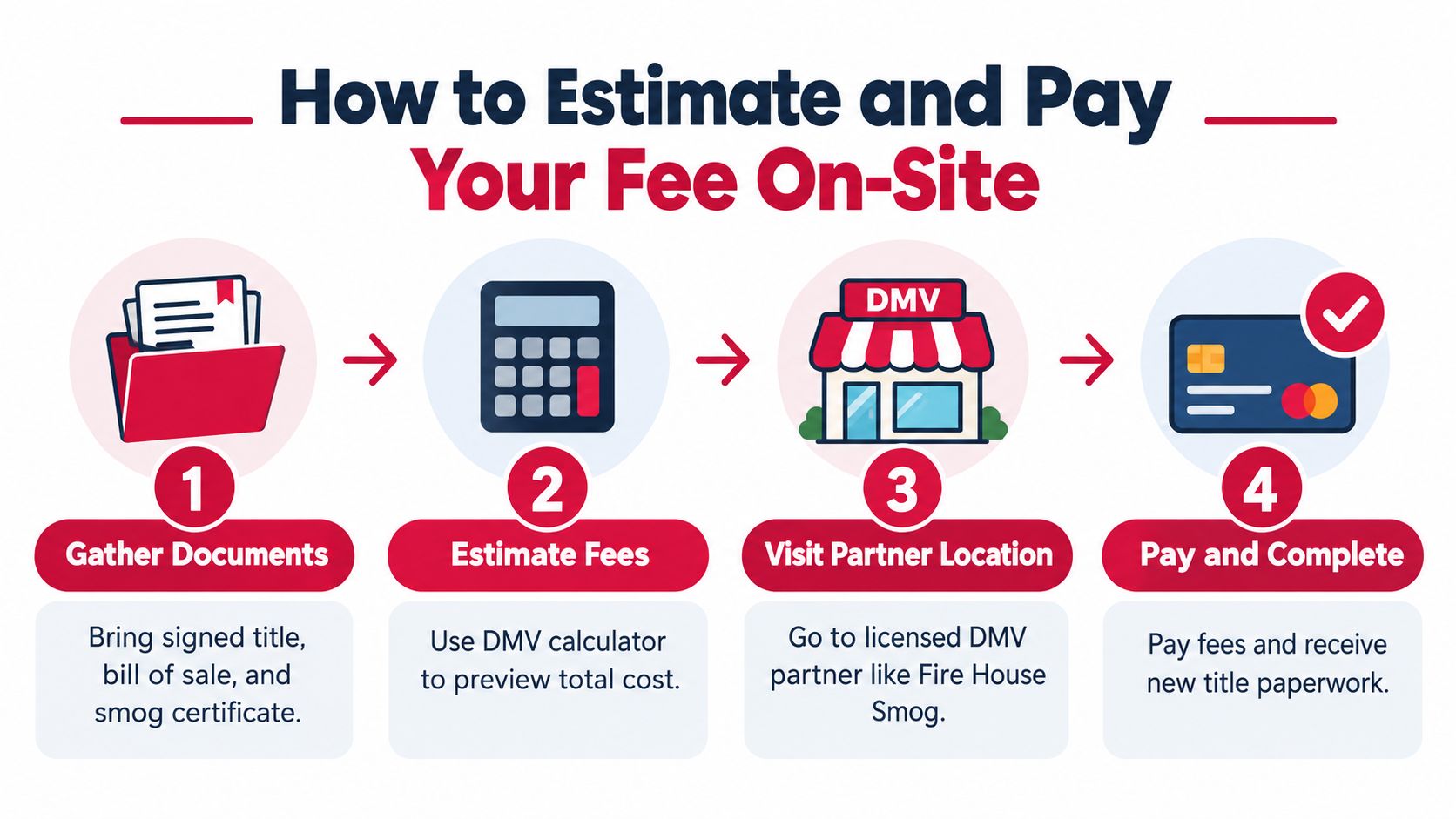
Once you know what kind of transfer you have, the next job is practical. Gather the paperwork, get an estimate, and submit everything in one visit if possible.
A licensed DMV partner can usually process the same categories of charges you'd expect at a DMV counter, provided your paperwork is complete. Fire House Smog is one example in Antioch. It handles California registration services, ownership transfers, and some out-of-state vehicle transactions, with on-site tag issuance during posted DMV service hours.
For a quick visual, this process flow shows the basic rhythm of an on-site transfer:
Bring the paperwork that drives the estimate
The estimate is only as good as the documents in front of the clerk. In a typical ownership transfer, people commonly bring:
- Signed title: This is the starting point for proving ownership is being released and accepted.
- Bill of sale: Helpful when the transaction details need to be confirmed.
- Smog certificate if required: Missing smog paperwork can delay completion.
- Identification and payment method: The transaction can't be finished without both.
If any part of that packet is missing or inconsistent, the estimate may change or the transaction may have to pause.
How the estimate is built
At the counter, staff typically work through the file in layers. They don't start with a mystery number. They start with the transaction type and then add the applicable buckets.
That usually means they review:
- the ownership transfer itself
- title-related document charges, if applicable
- registration items tied to the vehicle
- use tax or other transaction-based charges
The result is a total that reflects the facts of your case, not just the headline transfer fee.
After you've seen the fee structure once, this short video makes the in-person process easier to picture:
What helps the visit go smoothly
A smooth transfer usually comes down to preparation, not luck.
- Review the title before you leave the seller: Make sure names and signatures line up clearly.
- Match your transfer category to your documents: Out-of-state vehicles and unusual ownership histories often need more review.
- Ask for a full estimate, not just the transfer charge: That prevents confusion when registration or tax items appear.
- Go during posted service hours: DMV partner locations may have separate hours for registration work and smog testing.
Bring the whole story of the vehicle, not just the title. The more complete the file, the more accurate the estimate.
The payment step is usually the easy part once the paperwork is clean. Most delays happen earlier, when buyers arrive with an incomplete title chain, missing supporting documents, or a misunderstanding about what the transfer fee does and doesn't include.
Smog Timing Paperwork and Other Factors That Affect Cost
A title transfer total doesn't rise only because of fees on a chart. It also rises when the transaction stalls. Smog timing, missing paperwork, and delays can turn a simple transfer into a second trip.
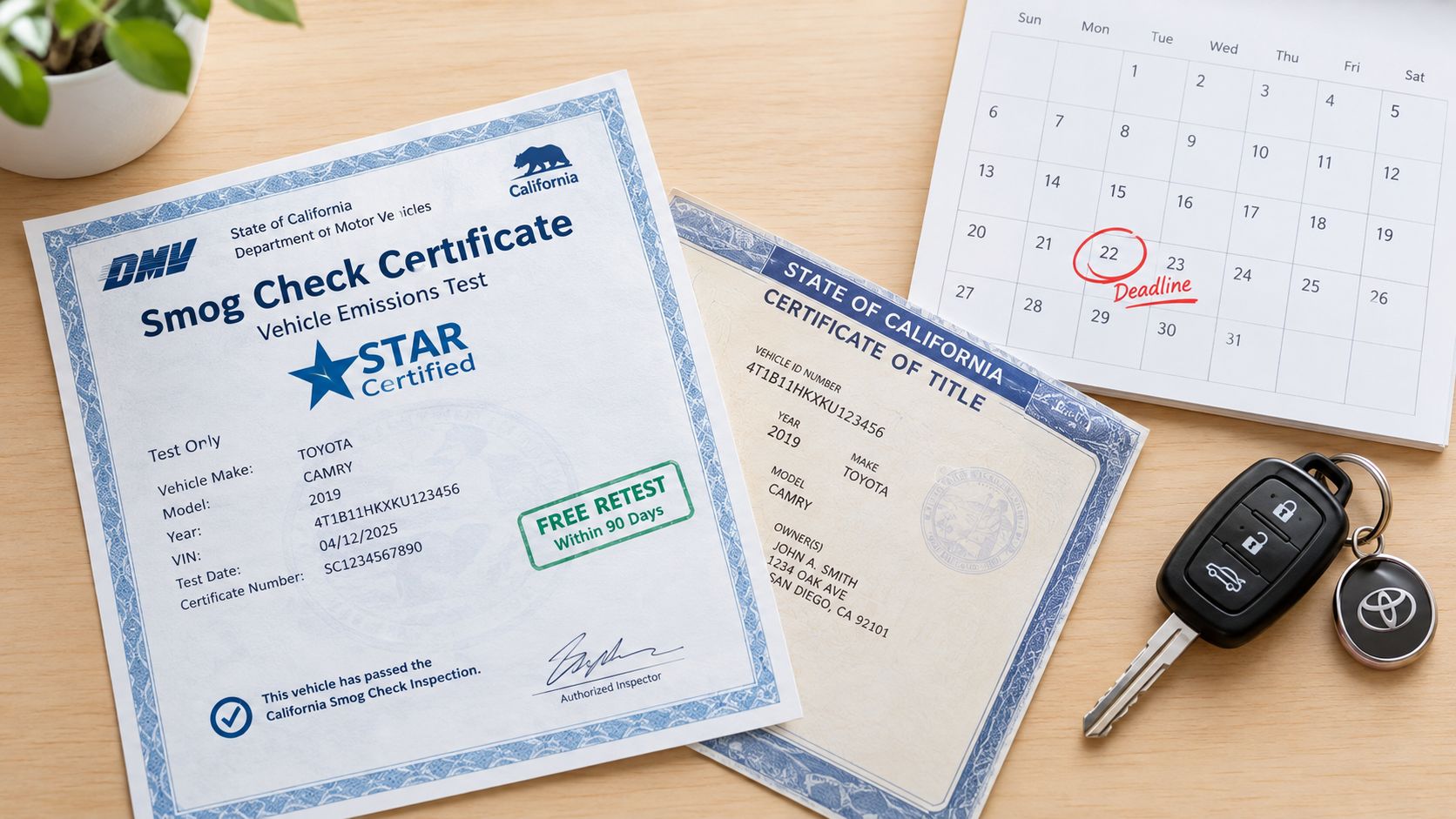
Smog and transfer timing work together
For many California vehicle transfers, smog is part of the practical checklist even though it isn't the same thing as the transfer fee. Buyers sometimes treat it as a separate errand to handle later. That's where cost surprises begin.
If the transfer can't be completed because required smog paperwork is missing, you may need another visit, more time, and extra coordination with the seller. A test-only station can be useful here because its role is limited to inspection rather than repair sales.
Other mistakes that change the final cost
A few patterns cause the most trouble:
- Arriving with incomplete title paperwork: A missing signature or unclear ownership trail can stop the transfer from moving forward.
- Waiting too long to submit: Delays can trigger additional amounts or create complications with registration timing.
- Confusing tax with the transfer fee: Buyers sometimes think the transfer fee should match the total, when tax is often a separate and larger part of the bill.
- Treating out-of-state paperwork like a local sale: Those files often need extra attention.
Convenience can reduce friction
This isn't about adding fancy steps. It's about removing repeat visits.
Two service bays, weekend availability, and on-site DMV processing can make a practical difference for working drivers because they reduce the odds that one missed document turns into a week of rescheduling. A free retest policy, where offered under site policy or coupon terms, can also help when the transfer depends on current smog compliance.
The best money-saving move is usually simple: arrive once with the right papers, the right transfer category, and the smog side already understood.
Completing Your California Title Transfer With Confidence
A California title transfer gets much easier once you stop treating it like one flat fee. The $15 transfer charge is the base administrative cost for the ownership change, while other charges can be layered on depending on the title work, registration status, tax treatment, and the path the vehicle took to reach you.
That's the part many first-time buyers need to hear. If the estimate is higher than the transfer charge, it doesn't mean the process is broken. It usually means your transaction includes more than one type of DMV action.
A short checklist before you go
Use this checklist to keep the visit predictable:
- Confirm the transfer type: Is it an in-state sale, an out-of-state vehicle, or a special family transfer?
- Inspect the title carefully: Names, signatures, and ownership sequence should make sense before you submit anything.
- Bring supporting documents: Include the items needed to support the transaction, not just the signed title.
- Plan for more than the headline fee: The transfer charge is only one part of the possible total.
- Review the paperwork requirements in advance: This guide to California title transfer paperwork helps you verify what belongs in your file.
Why confidence matters here
Most DMV frustration comes from uncertainty, not complexity. People can handle a process when they know what each charge is for and why the total looks the way it does.
If you identify your transfer category early, bring complete paperwork, and ask for a full estimate rather than just the transfer fee, the process becomes much more predictable. That's true whether you use a DMV office or a licensed business partner.
You don't need to memorize every possible line item. You just need to understand the structure. Ownership transfer, title work, registration, and tax are related, but they aren't interchangeable. Once you see that, the receipt reads like a checklist instead of a surprise.
If you need to handle a California ownership change in Antioch, Fire House Smog offers licensed DMV registration services that include title transfers, out-of-state transfer support, and on-site tag issuance during posted hours. If you're also sorting out smog timing for the same vehicle, their STAR-certified test-only station can help you line up the inspection side and the DMV paperwork in one stop.
You bought a used car from a private seller in Antioch, signed the paperwork, and drove home with the keys. Then you realize the title, registration, smog certificate, plates, and DMV deadlines are all separate pieces of the same transaction. The question isn't whether you need a title transfer or registration. In many California purchase situations, you need both, and each one solves a different problem.
Title transfer changes the legal owner. Registration updates the vehicle's California record and supports lawful road use. The signed title sitting in your glove box doesn't complete the job by itself. California DMV rules require the seller to submit a Notice of Transfer and Release of Liability within 5 calendar days, while the buyer must complete the ownership transfer and pay the required fees. DMV also frames ownership-change record updates as due within 10 days of the sale or transfer. California DMV explains the Notice of Transfer and Release of Liability requirements.
| Question | Title transfer | Vehicle registration |
|---|---|---|
| Main purpose | Records who legally owns the vehicle | Keeps the vehicle's California record current for road use |
| Trigger | Sale, gift, inheritance, or another ownership change | Purchase, move to California, renewal, replacement, or record update |
| Core paperwork | California Certificate of Title and required signatures | Registration application, title or ownership documents, fees, and possible smog paperwork |
| Common supporting items | Odometer disclosure, lien release, replacement-title paperwork if needed | Smog certification, fees, use tax, registration card, and applicable forms |
| Result | Ownership record moves to the new owner | Updated registration record, card, sticker, or plates as applicable |
Table of Contents
- Two Different DMV Moments Most Drivers Mix Up
- What Title Transfer and Registration Actually Mean
- California Rules, Documents, and Fees for Each
- Side-by-Side Comparison at a Glance
- Real Antioch Scenarios That Show Which One You Need
- How Fire House Smog Handles Both on Site
- Practical Recommendations and Common Questions
Two Different DMV Moments Most Drivers Mix Up
The Antioch buyer who leaves a private sale with a signed title often focuses on the registration sticker. That's understandable, but it misses the legal step underneath it. The title transfer puts the vehicle in the buyer's name. Registration documents the vehicle's current California status and road-use authorization.
Those tasks may happen during the same DMV transaction, but they aren't interchangeable. If the title transfer isn't completed, the DMV may not be able to finish the ownership record or related registration work. If registration isn't current, owning the vehicle doesn't automatically make it compliant for driving on public roads.
Start with the event that caused the paperwork
A private sale, inheritance, gift, or move from another state changes the paperwork path. A routine renewal usually doesn't change ownership, so it generally calls for registration service rather than a new title transfer. A dealer may submit much of the paperwork for you, but the transaction still involves ownership documentation, registration, taxes, and fees.
California gives the seller a short reporting deadline. The seller must notify the DMV within 5 calendar days by filing a Notice of Transfer and Release of Liability, while the buyer must complete the transfer requirements and pay applicable fees. DMV guidance also identifies 10 days as the ownership-change record-update window. The DMV's title-transfer guidance distinguishes the seller's notice from the buyer's transfer responsibility.
Practical rule: If the vehicle changed owners, handle the title paperwork first and bundle registration into the same visit whenever possible.
A STAR-certified smog check can be part of the transaction when California requires emissions certification. Don't assume the smog question is separate from the purchase. Before you schedule a visit, identify whether you're dealing with a private sale, out-of-state vehicle, inheritance, or renewal.
For a plain-language look at the ongoing registration side, review vehicle registration renewal guidance.
What Title Transfer and Registration Actually Mean
A title transfer is the legal ownership update. The California Certificate of Title identifies the vehicle's ownership record, and the buyer and seller generally complete the required title information before the buyer submits the transfer to the DMV. Required odometer disclosure can also be part of the package, particularly for qualifying privately sold vehicles.
Registration answers a different question. It connects the vehicle to a California DMV record, registration card, and current proof that required registration obligations have been addressed. Registration can involve fees, use tax, emissions documentation, and, where applicable, a planned nonoperation status.
Ownership and road status are connected, not identical
After an Antioch private-party purchase, the buyer commonly handles both ownership transfer and registration together. The signed title supports the ownership change, while the registration portion records the vehicle in California and applies the required fees and compliance checks.
A renewal is different. If you still own the same vehicle and only the tags are expiring, you generally need to renew registration rather than transfer the title again. Moving from another state, receiving a vehicle through inheritance, or accepting a vehicle as a gift can require both ownership paperwork and California registration.
The paperwork reflects that distinction:
- Title documents: The signed California Certificate of Title is central to a normal transfer. If the title is missing, replacement-or-transfer paperwork is required.
- Registration documents: The buyer may need the signed title, smog certification, fees, and use tax when registering a privately purchased vehicle.
- Ownership corrections: A lienholder or registered-owner change requires the DMV record to be updated and the title transferred to the new owner.
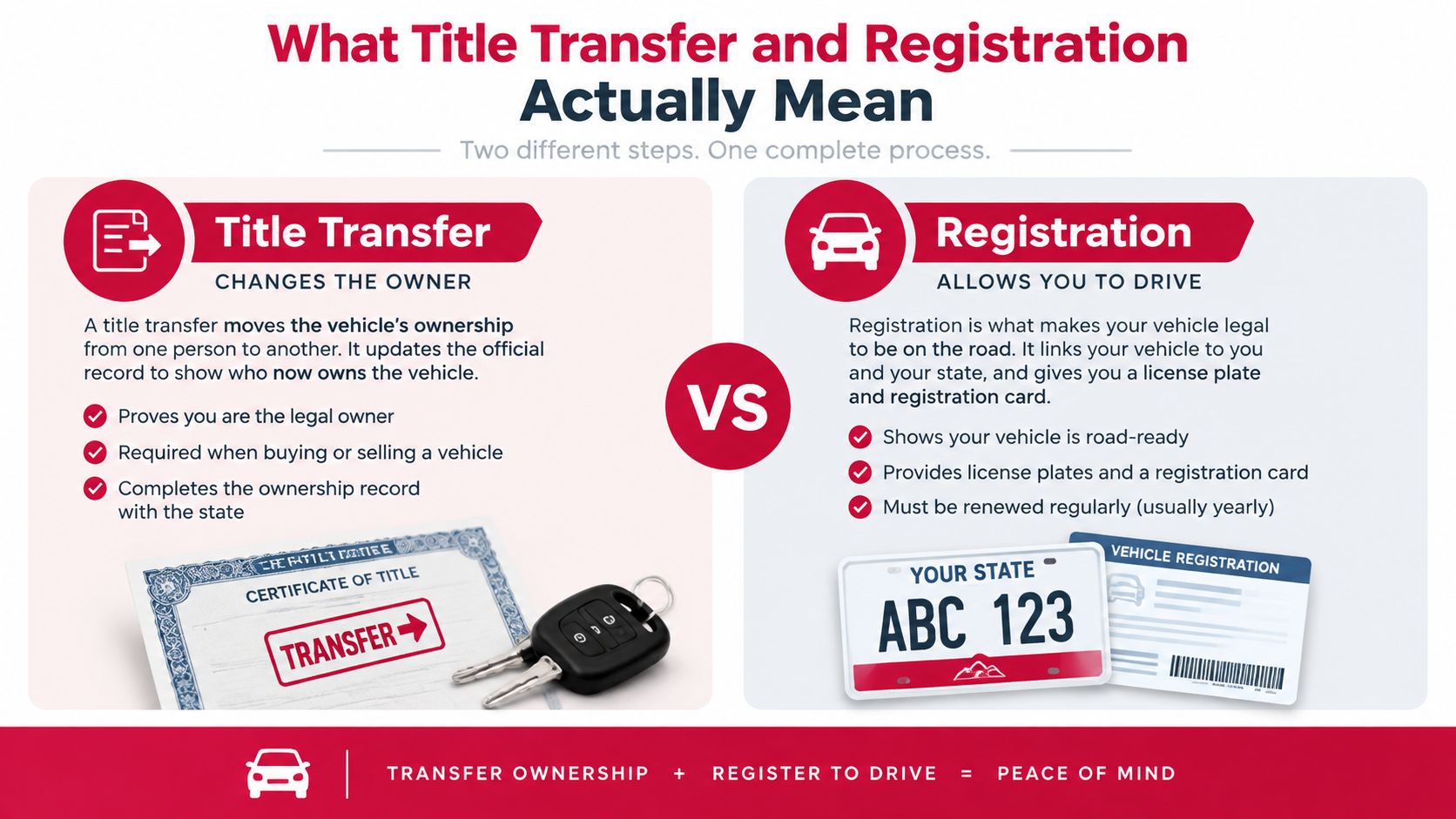
The title answers, “Who owns this vehicle?” Registration answers, “Is this vehicle properly documented and current for California road use?” Keep those questions separate and the process becomes much easier to organize.
California Rules, Documents, and Fees for Each
An Antioch private-party purchase can require more paperwork than a routine tag renewal. After a sale or transfer, the seller must submit the Notice of Transfer and Release of Liability within 5 calendar days. The buyer must complete the ownership and registration steps, with DMV materials identifying an ownership-change record update within 10 days. California DMV's private-party registration instructions outline how the signed title, smog certification, odometer disclosure, fees, and use tax may fit into the package.
What belongs in the title file
For a standard California transfer, bring the California Certificate of Title with the required buyer and seller signatures. A lost, damaged, or unavailable title requires replacement-or-transfer paperwork before DMV can complete the ownership change. REG 227 applies to missing or replacement title situations.
The transaction may also require supporting documents:
| Requirement | Title Transfer | Vehicle Registration |
|---|---|---|
| Ownership proof | Signed California title, or replacement-title paperwork when the title is missing | Signed title or another acceptable ownership document |
| Emissions paperwork | May be required as part of the related transfer and registration transaction | Smog certification may be required for applicable private-party or out-of-state transactions |
| Financial obligations | Transfer fee and other applicable charges | Registration fees, use tax, vehicle-related charges, and applicable county or district amounts |
| Supporting forms | Odometer disclosure, lien documents, and forms for special circumstances | Application forms, weight declarations, REG 256, REG 139, or other applicable documents |
| Submission | DMV field office or mail, depending on the transaction | DMV field office, mail, online renewal, or an authorized registration service |
For a privately sold vehicle, check whether odometer disclosure applies to a vehicle under 10 years old. Bring the smog certification, applicable fees, and use tax when required. Confirm the current document package before leaving for DMV, especially if the vehicle came from another state or the title has a lien.
Don't treat fees as one flat charge
A single transaction can combine a title-transfer fee, registration fees, use tax, and other charges based on the vehicle and the circumstances. A dealer purchase may call for the certificate of title or an out-of-state title for a used vehicle, title-transfer fees or use tax, and forms such as REG 256, REG 139, or weight declarations when applicable.
Gather the paperwork first, then get a current DMV estimate. Old online posts often show amounts that no longer apply. For an Antioch-area document checklist, use Fire House Smog's vehicle registration documents guide. Bring only the forms that match your transaction, and skip transfer paperwork for a simple renewal when ownership has not changed.
Side-by-Side Comparison at a Glance
| Criterion | Title transfer | Vehicle registration |
|---|---|---|
| Purpose | Establishes the new legal owner | Keeps the vehicle documented and authorized for California road use |
| When required | Sale, gift, inheritance, lien change, or another ownership change | Purchase, move to California, renewal, replacement, or registration update |
| Primary form used | REG 262 may support odometer or transfer details when required | REG 343 may support an application, or an online renewal may be used when eligible |
| Typical documents | Signed title, required odometer disclosure, lien release, and replacement-title paperwork if needed | Title or ownership proof, smog certification when required, fees, use tax, and registration information |
| DMV fees involved | Transfer fee plus other applicable transaction charges | Registration fees, use tax, and other applicable charges |
| What you receive | Updated California title showing the new owner | Updated registration card and sticker, with plates or other proof when applicable |
Purpose and timing
The title transfer follows an ownership event. California DMV guidance identifies the buyer's transfer deadline as 10 calendar days after the sale or transfer, while the seller's Notice of Transfer and Release of Liability is due within 5 calendar days. Registration follows the vehicle's operating status, so renewal can occur without a new ownership change.
Forms and documents
REG 262 may be relevant when odometer or transfer information is required. REG 343 can support an Application for Title or Registration, while online renewal may be available for an eligible unchanged ownership record. Don't sign a form just because a seller or buyer hands it to you. Check that every required field matches the transaction.
Smog, tax, and plates
Smog certification isn't the same thing as the title-transfer fee or registration fee. It can be required for a transfer or California registration, while a renewal may require emissions compliance based on the vehicle's renewal circumstances. Use tax can apply to a transfer, and the exact amount depends on the transaction rather than a universal flat rule.
Plate handling also matters. A private seller should follow DMV directions for the sale and handle the plates as required. The buyer shouldn't assume the plates, title, and registration all move together automatically.
The short version: Title transfer proves ownership. Registration proves current California road status.
Real Antioch Scenarios That Show Which One You Need
Antioch and East County drivers usually don't ask for a definition first. They ask, “What do I bring for my situation?” Match the event to the service before you make the trip.
You bought from a private seller in Antioch
Bring the signed California title and review whether an odometer disclosure, smog certification, use tax, and other fees apply. You need the ownership transfer and the registration portion of the transaction, not just a sticker renewal. The buyer's transfer window is 10 calendar days, and the seller has 5 calendar days to file the Notice of Transfer and Release of Liability.
Useful service line: On-site DMV processing, with smog certification if the transaction requires it.
You moved from Texas to Antioch
An out-of-state vehicle can require California title and registration paperwork, VIN verification, and smog certification. Bring the out-of-state title or other ownership documents, identification, and any lien information. Don't skip VIN verification just because the vehicle is already titled elsewhere.
Useful service line: VIN verification paired with California registration and title processing.
You inherited a vehicle from a relative in Brentwood
Inheritance changes ownership, so renewal alone isn't enough. The transaction may require estate or transfer documentation, the appropriate DMV form, and registration fees. Because inherited-vehicle paperwork depends on the facts of the estate and the ownership record, bring the death certificate or estate documents if the DMV directs you to provide them.
Useful service line: On-site DMV ownership transfer, with registration handling.
Your tags expired months ago
This is a registration problem if ownership hasn't changed. Check whether a smog certification is required and expect the DMV to calculate applicable renewal charges and penalties based on the record. Don't start a title transfer unless the vehicle changed owners.
Useful service line: Registration renewal and smog certification.
You bought through a Contra Costa dealership
The dealer commonly handles much of the title and registration submission, but the buyer still needs to understand the use tax and other charges included in the transaction. Keep copies of the purchase and title documents until the California record is complete.
Useful service line: Smog certification when required, plus on-site DMV help if the dealer leaves an unresolved registration or title issue.
How Fire House Smog Handles Both on Site
Antioch drivers often lose time by separating paperwork that can be handled during one planned visit. A licensed DMV registration service can process eligible renewals and ownership transactions, while a STAR-certified station can handle the emissions inspection when California requires one.
Fire House Smog is a STAR-certified test-only smog station and licensed DMV registration services provider. Its service lines include on-site registration renewals, ownership transfers for California and out-of-state vehicles, VIN-related support, and smog inspections for eligible cars, trucks, and some recreational vehicles. Confirm vehicle-size or transaction-specific requirements before arriving.
Bring the complete file
For an ownership change, bring the title and all documents connected to the transaction. Depending on the facts, that can include replacement-title paperwork, odometer information, lien documents, identification, smog certification, and forms such as REG 262, REG 343, REG 5, or REG 256.
The station's DMV service location is 2720 Hillcrest Avenue in Antioch, and the publisher's service information identifies weekend availability and bilingual staff. Call before you go if you're combining smog, VIN verification, and title work, especially for an out-of-state vehicle or RV.
A combined visit works best when you identify every trigger first, ownership change, California registration, emissions certification, VIN verification, or renewal.
The same DMV fees still apply. A service fee may be added for handling the transaction. For location details and service information, see Fire House Smog in Antioch.
Practical Recommendations and Common Questions
Use one decision rule at the counter. If ownership changed, start with title transfer and add registration. If ownership didn't change, handle registration renewal or replacement only. That keeps you from paying for the wrong service and prevents a routine renewal from turning into an unnecessary ownership transaction.
Before leaving home, check the three problems that cause the most avoidable delays:
- Missing smog certification: Confirm whether the transaction or renewal requires a smog check.
- Incomplete odometer or transfer paperwork: Review REG 262 and the title for signatures and required information.
- Out-of-state vehicle: Plan for VIN verification and bring the out-of-state ownership documents.
Questions Antioch drivers ask
How long does a title transfer take in person versus by mail? Processing time depends on the transaction and whether the paperwork is complete. In-person submission lets staff identify missing items immediately, while mail requires you to send the complete package and wait for DMV processing.
Is the transfer fee separate from registration fees? Yes, treat title-transfer charges and registration charges as separate categories. The final amount depends on the transaction and vehicle record, so request a current estimate.
What if the title is lost? Use replacement-or-transfer paperwork, including REG 227 when applicable. The DMV must have acceptable ownership documentation before it can complete the transfer.
Do I need a smog check before transferring the vehicle? Sometimes. California DMV may require smog certification for the related transfer or registration, depending on the vehicle and situation. Confirm before arriving.
How do I handle a lien release? Bring the lien-release documentation and any title information showing the lien status. The DMV may need to update both the ownership and lienholder records.
Can a spouse sign for a deceased co-owner? Don't assume a spouse can sign automatically. The DMV may require estate, survivorship, or other supporting documentation, so confirm the correct process before signing.
Fire House Smog offers STAR-certified smog checks, VIN verification support, and on-site DMV services for eligible title transfers and registration renewals in Antioch. Bring your ownership documents and call ahead if your transaction combines several requirements, then visit Fire House Smog to handle the paperwork and emissions step in one stop.