
You've got a registration problem, but you don't necessarily have a DMV problem. In California, the right move is often choosing the right channel, because some renewals are simple enough for a kiosk or online system, while other cases fall apart without document review, smog timing, or title help.
That's why DMV registration services California shoppers usually care about one thing first, even if they don't say it that way, which option gets the job done fastest without forcing a second trip. The answer depends on the transaction, the paperwork you already have, and whether your case can be finished without inspection, verification, or in-person issue resolution.
Table of Contents
- Choosing the Right Registration Channel for Your Situation
- Document Requirements by Transaction Type
- Smog Check Requirements and Registration Timing
- Handling Complex Registration Scenarios
- When Third-Party Services Save Time and Money
- Your Registration Action Plan
Choosing the Right Registration Channel for Your Situation
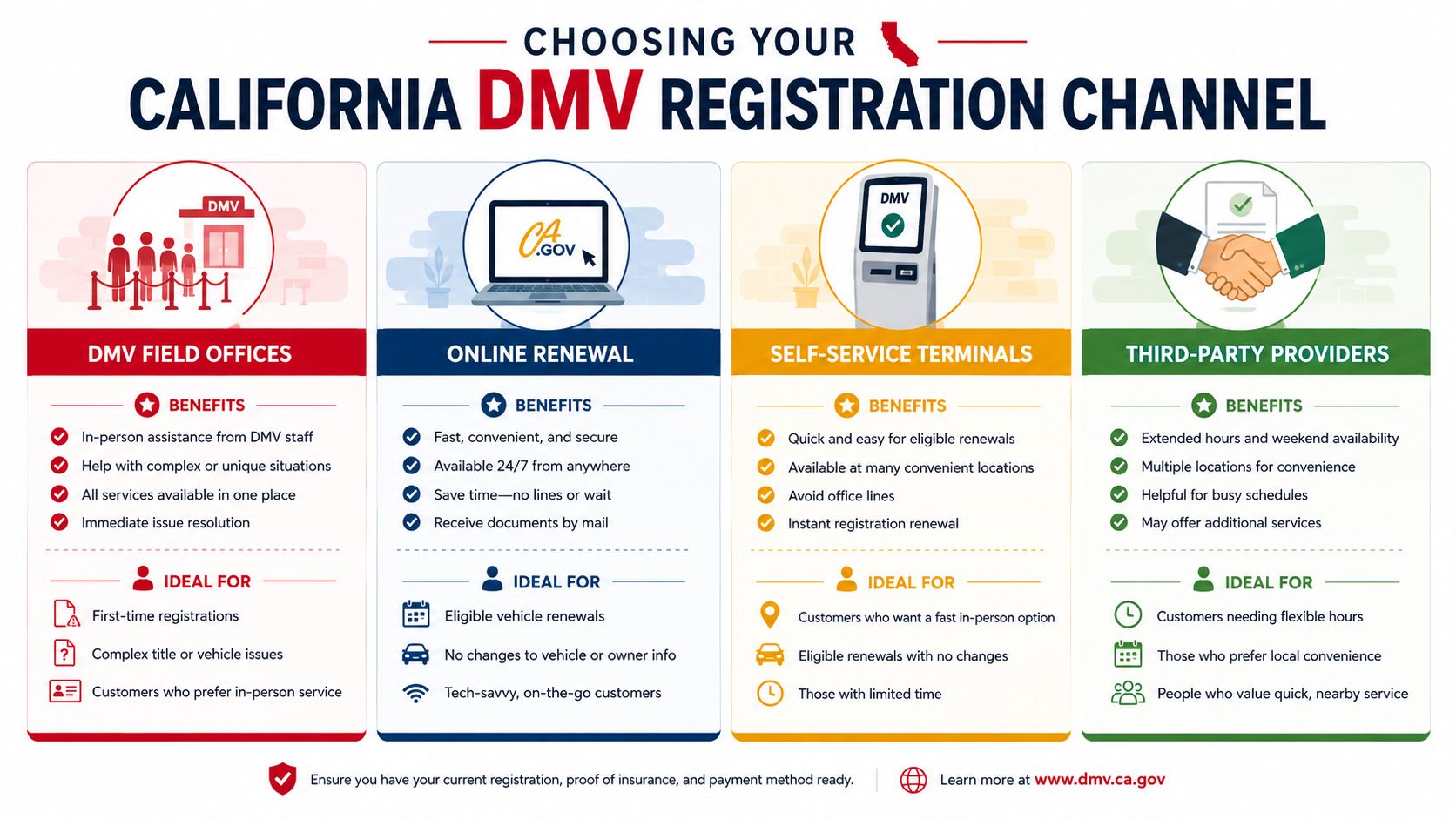
The most common mistake I see is treating every registration as a line-at-the-branch problem. California's own renewal data shows why that mindset wastes time. In fiscal year 2021–2022, DMV field offices served 3,411,951 renewal customers, while 12,014,480 renewals were completed online, 5,945,011 by mail, and 2,897,420 at self-service kiosks, out of 30,883,634 total renewal customers across all channels. Field offices handled only about 11.0% of renewal customers, while internet renewals accounted for about 38.9% of the total, which tells you the system is built around multiple access points, not one front desk. That same DMV reporting also noted that in 2019–20, the department processed 68.3 million transactions overall, and vehicle registration renewals were the single largest category, nearly half of all DMV transactions.
How to choose fast
A routine renewal usually belongs online, by mail, or at a kiosk if your record is clean and your notice doesn't flag a problem. A simple in-person office visit still makes sense when your transaction needs review, but the numbers above show that most renewals don't have to start there.
A licensed third-party provider is most useful when the case is still straightforward enough to finish quickly, but inconvenient enough that your time matters. Think document-heavy renewals, ownership transfers, or situations where you want someone who can look at the paperwork before you burn a half day on a failed visit.
Practical rule: if the transaction can be completed without title questions, VIN issues, or smog-related delays, a low-friction channel usually beats a branch visit.
California's DMV also says many tasks can be handled online, by phone, or at kiosk locations, and it lists authorized private registration-service partners as part of the state's channel mix. That means the central question usually isn't “DMV or local service,” it's “which channel fits this specific file with the fewest steps?”
Document Requirements by Transaction Type
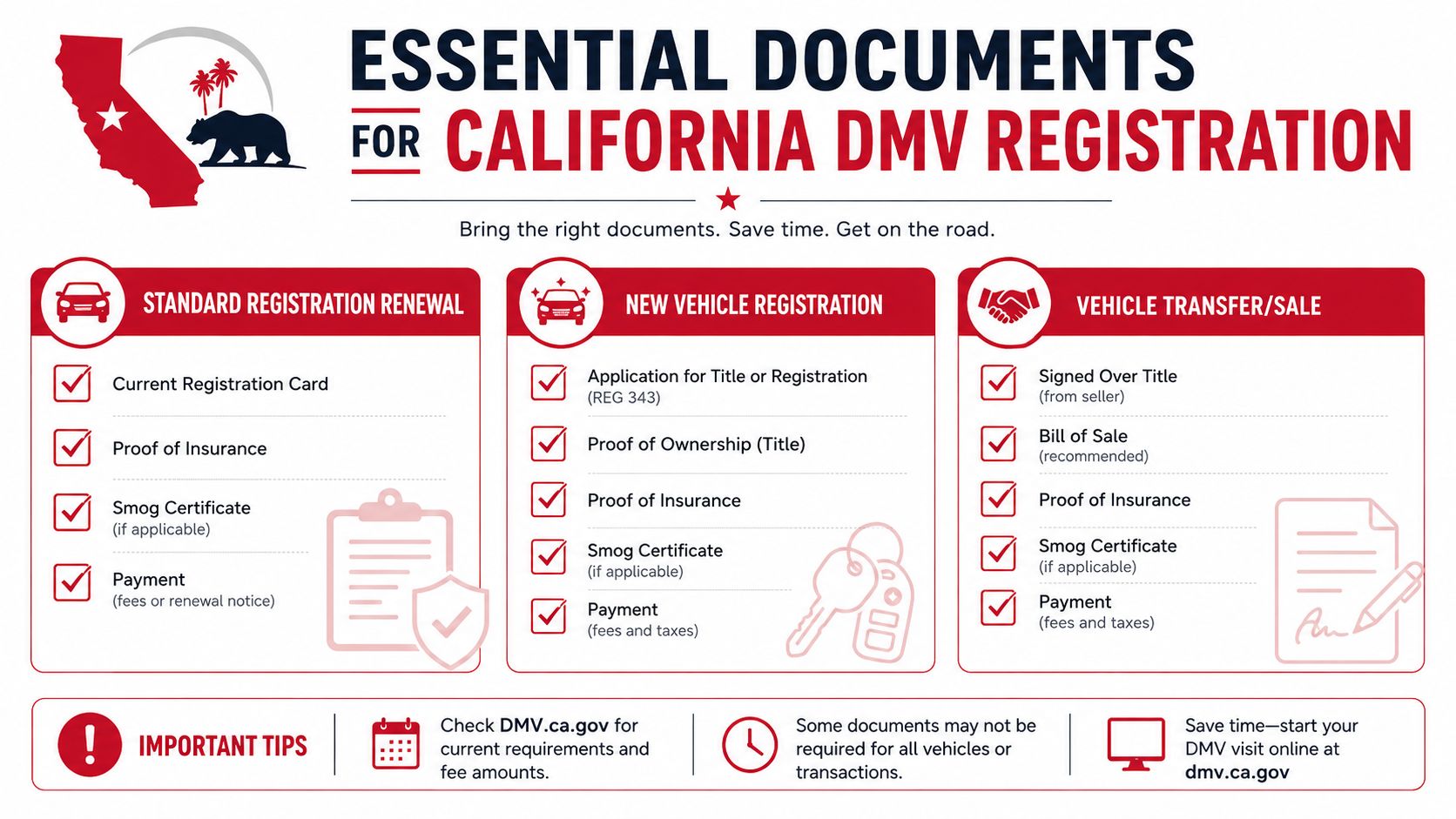
Paperwork problems are where good intentions go to die. A lot of people show up thinking the registration is just a formality, then discover the file is missing a title signature, lienholder release, or proof tied to the transaction type. California DMV guidance for vehicle registration is document-driven, and the required pieces change depending on whether you're renewing, buying, transferring, or bringing a vehicle into the state.
Renewal files are the simplest, until they aren't
For a standard renewal, the key is to confirm that the account is eligible before you leave home. If the DMV system flags a smog issue, address issue, or fee mismatch, the trip stops being simple very quickly.
For ownership transfers, the title is the center of the file. California DMV says applicants generally need the title or out-of-state title, signatures from the seller and lienholder if applicable, and may also need smog certification, VIN-related forms, and use tax or fees before the transaction can be completed in person at a field office. That's why a transfer that looks routine on paper can stall if one signature is missing.
Missing a title line is worse than missing a receipt. Receipts can often be replaced, but a title problem can pause the whole transaction.
For new residents and out-of-state vehicles, the DMV's new-resident guidance makes the in-person document set even more important. Expect to deal with title, proof of insurance, smog certificate, and VIN verification when required, because those are the points that most often trigger repeat visits if they're incomplete. Industry guidance also flags missing odometer disclosures for vehicles under 10 model years, missing title documents, and missing smog certificates as common delay points.
If you want a practical document checklist to compare against your own file, use the guide at vehicle registration documents before you book anything. The safest habit is simple, match the transaction to the document set first, then choose the channel.
Smog Check Requirements and Registration Timing
Smog and registration are tied together, but they don't always move on the same schedule. That mismatch is where a lot of people lose time, because they try to renew first and test later, or they assume the registration can be finished while emissions paperwork is still pending.
California DMV says registration often requires smog certification in many cases, and the state's registration workflow is built around that compliance step. If the vehicle needs testing, don't treat the smog station as an afterthought. It's part of the registration file, not a separate errand.
Timing matters more than the test itself
The cleanest approach is to get the vehicle ready for inspection before you start the registration process. That matters most when the car has been sitting, the battery was disconnected, or the readiness monitors may not cooperate with the first test cycle.
If the vehicle fails, the registration file stops there until the issue is fixed. That's why a test-only station is valuable for drivers who want a straight answer first, since there's no repair upsell attached to the inspection. A service center that also sells repairs can make the process feel more complicated, especially when the primary need is just to know whether the car passed.
California also maintains a STAR-certified testing framework, and that's relevant when a vehicle needs a test that meets state requirements for the transaction. If you're unsure how that works, the overview at what STAR-certified smog means is a useful starting point before you schedule.
For registration timing, the smart sequence is:
- Confirm whether smog is required.
- Get the vehicle tested before the renewal deadline.
- Fix any failure before trying to finish the DMV transaction.
- Keep the test result with the rest of your registration documents.
A lot of registration headaches disappear when smog is treated as a gate, not a follow-up. That's especially true for drivers who are already close to the deadline, because a failed test creates a delay exactly when you can least afford one.
Handling Complex Registration Scenarios
Some registration files are too messy for online self-service, and that's where in-person expertise starts to matter. Out-of-state vehicles, seller absences, salvage history, rebuilt titles, and specialty vehicles all create friction because the system needs proof, verification, or inspection before it can move forward.
California DMV says out-of-state vehicles must be registered after you become a resident, and the new-resident process emphasizes in-person completion with title, insurance, smog certificate, and VIN verification when required. That combination is the reason these cases don't behave like a routine renewal. They're document and identity checks, not just payment events.
Where the process usually breaks
If the seller is unavailable, the missing signature or missing title action often becomes the bottleneck. If the vehicle has a title issue, the DMV can't just ignore it because the registration is due. The file needs a clean ownership path.
Specialty vehicles create a different kind of problem. RVs, commercial trucks, and vehicles with unusual equipment may fit the registration rules, but they don't always fit the easy assumptions behind online systems. That's why some licensed registration providers and partner offices exist in the first place, to handle transactions that need more than a self-service screen.
Here's the practical pattern I've seen work:
- Bring every ownership document together first. Title, bill of sale, lienholder paperwork, and any release forms should be sorted before you ask a provider to process the file.
- Assume VIN verification may be required. If the car is new to California or the title status is unusual, plan for inspection-related steps.
- Expect smog-related delays on edge cases. If the vehicle can't be tested yet, the registration won't be finished cleanly.
- Use a provider when the first visit is unlikely to finish the job. A second trip costs more than a paid review in many cases.
California's DMV business-partner program exists because some transactions are handled through authorized private industry partners rather than only through online self-service. In practice, that can be the difference between one organized appointment and several failed attempts.
When Third-Party Services Save Time and Money
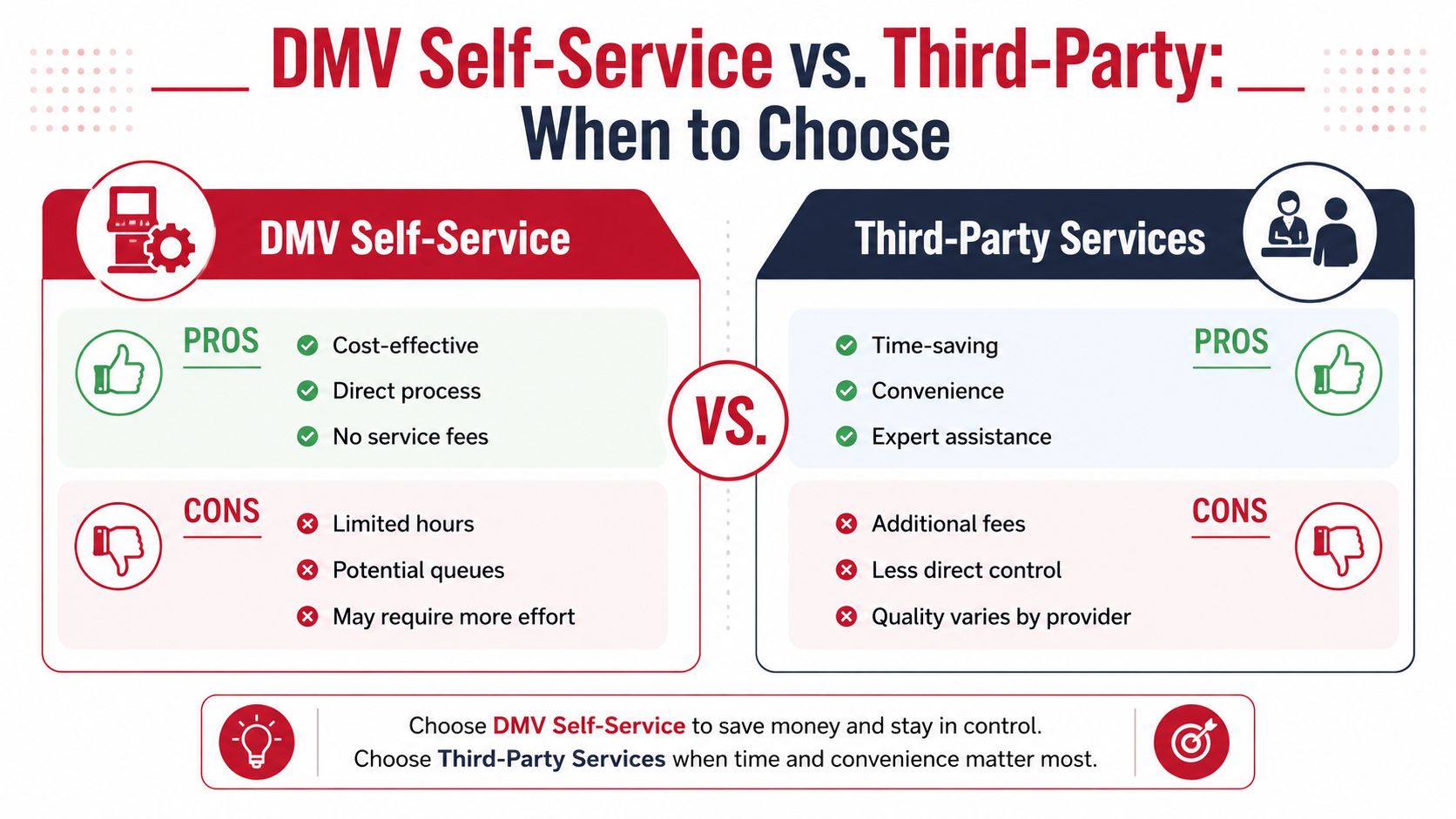
The extra fee for a third-party registration provider only makes sense when it saves you more than money. That usually means it saves time, avoids a penalty, or prevents a failed trip that would cost you even more in hassle.
California's late-payment penalties are a real example of why timing matters. For renewals 31 days to one year late, the penalty includes 60% of the VLF and weight fee due, plus a $30 registration late fee and a $30 CHP late fee, according to the DMV's published registration statistics. Once a file is drifting late, the value of getting help quickly rises fast.
What is worth paying for
Third-party help makes the most sense when the transaction is:
- Time-sensitive, because a deadline is close.
- Paperwork-heavy, because the file needs review before submission.
- Complex, because the case involves transfer, out-of-state paperwork, or verification.
- Operationally awkward, because you can't take time off for a branch visit.
DMV self-service is still the right answer for many routine renewals. It's usually the cheaper choice, and for clean files it's efficient. But if your case is likely to bounce, the apparent savings disappear quickly.
If you already know your file has a title issue, smog issue, or residency issue, the cheapest option on paper isn't always the cheapest outcome.
A local example is DMV registration services near me, which can matter for drivers who want smog testing and registration support in one place rather than splitting the trip between two stops. That kind of setup doesn't replace DMV channels, it just reduces the number of loose ends that can stall the file.
Your Registration Action Plan
Start with the transaction type, not the location. Renewal, transfer, out-of-state registration, and complex title cases all need different paperwork, and the wrong channel can turn a simple task into a repeat visit.
Use this quick filter:
- If the file is clean, try online, mail, or a kiosk first.
- If documents are incomplete or the title is messy, use an in-person provider or DMV office.
- If smog is involved, get that handled before you commit to the registration visit.
- If the deadline is close, choose the fastest channel that can finish the whole file, not just part of it.
- If the vehicle is new to California, expect verification and inspection steps.
The DMV's own service mix shows that California drivers already rely on multiple channels, so there's no prize for forcing every case through the same route. The right move is the one that gets the registration completed once, cleanly, with no follow-up trip.
Fire House Smog handles STAR-certified smog checks and California DMV registration services in Antioch, including renewals, ownership transfers, and related tag-issuance work. If your file involves smog timing, an out-of-state vehicle, or a registration issue that needs an in-person look, visit Fire House Smog to review service options and current hours before you drive over.
That DMV envelope tends to sit on the counter longer than it should. You know it needs attention, but you also know one missing form, one expired smog certificate, or one title mistake can turn a simple errand into multiple trips and a lot of waiting.
Most registration problems aren't hard. They're incomplete. People usually get stuck because they start the process before they've matched their paperwork to their exact situation. With vehicle registration documents, that distinction matters. A renewal, a private-party title transfer, and an out-of-state vehicle don't move through the same lane, even when they look similar on the surface.
Table of Contents
- Conquering Your DMV To-Do List Starts Here
- The California Smog Check What to Know in 2026
- Solving Document Disasters Lost Titles and Missing Paperwork
- The Fast Lane Skip the DMV with On-Site Services
- Vehicle Registration FAQs
- Can I renew registration if I lost my notice?
- Can I register a car if I just bought it and the seller made a mistake on the title?
- Do I always need a smog check for registration?
- What should I do before bringing in an out-of-state vehicle?
- I lost my registration card. Is that the same as losing my title?
- What's the most common mistake people make?
Conquering Your DMV To-Do List Starts Here
A lot of drivers open a notice, glance at the due date, then start digging through the glove box. They find an old registration card, maybe an insurance card, maybe a smog paper from months ago, and hope that's enough. Sometimes it is. Often it isn't.
That's not surprising when you look at the scale. The United States is projected to reach 290.9 million motor vehicle registrations in 2026, according to IBISWorld's U.S. motor vehicle registrations estimate. That number helps explain why registration systems are so document-driven. Every car has to tie back to a clear administrative record.
Practical rule: Registration goes faster when you stop treating it like one task and start treating it like a document match.
In day-to-day service work, the same pattern comes up again and again. Someone has the right vehicle but the wrong paper. Or the right paper but an outdated one. A buyer brings a signed title but forgets the smog step. A family member tries to renew registration using a notice that doesn't reflect a recent address change. None of those situations are unusual.
The fix is simple. Start with the scenario, not the line at the DMV. If you know whether you're renewing, transferring ownership, bringing in an out-of-state car, or replacing missing paperwork, the checklist gets much shorter and much clearer.
Renewal paperwork
For a standard renewal, gather the documents that prove the vehicle, the current registration status, and any required inspection compliance. The renewal notice helps, but it shouldn't be the only thing you rely on. Bring the current registration card if you have it, your plate number, and identification that matches the record.
If your notice says a smog check is required, treat that as a time-sensitive item. Don't assume an old certificate will still work. Inspection paperwork has its own validity window, and that catches people who try to piece everything together late.
California title transfer after a private sale
A private-party purchase usually needs more than buyers expect. The signed title is the center of the file, but it isn't the whole file. You also need supporting ownership details that match the vehicle exactly, including VIN, seller information, buyer information, and any disclosures required by the transaction.
For California cases, keep these together before you start:
- Signed title: Make sure buyer, seller, and vehicle details are complete and legible.
- Odometer disclosure if applicable: Check that mileage information is present when required.
- Smog compliance if required: Don't leave this for the end if the transfer depends on it.
- Registration application paperwork: California commonly uses Application for Title or Registration (REG 343) in registration workflows.
- Insurance and ID: Bring current proof that matches the owner information you're submitting.
Many files face difficulties. In California, 15 to 20% of registration applications face initial rejection because of mismatched VINs or unreported modifications, and missing smog check documentation is the leading cause of refusal, affecting about 35% of new registrations for vehicles over six years old, based on the California registration process discussion at Cobra Dreams.
Small errors matter more than people think. A single digit off in the VIN can stop the whole transaction.
Out-of-state vehicle transfer
An out-of-state transfer is the scenario where people most often underestimate the paperwork. They assume the current out-of-state registration proves everything. It helps, but California usually needs the vehicle itself to match the documents on record. That can mean VIN verification and closer review if the vehicle has modifications or unusual history.
Bring a tighter file for this situation:
- Out-of-state title or current registration: Bring both if you have them.
- Proof of identity: Use ID that matches the buyer or registrant.
- Insurance: Current California-compliant proof helps avoid follow-up delays.
- VIN-ready vehicle: The vehicle may need physical verification, so it must be accessible.
- Technical or build-related paperwork if modified: Engine swaps, frame changes, or specialty builds need clearer support than stock vehicles.
- Smog-related paperwork if required: Don't assume another state's process replaces California requirements.
If you want the basic renewal side of the process laid out cleanly, Fire House Smog keeps a practical overview of California DMV registration renewal steps.
Quick comparison table
| Document | Renewal | CA Title Transfer | Out-of-State Transfer |
|---|---|---|---|
| Current registration notice/card | Usually helpful | Sometimes | Helpful |
| Signed title | No | Yes | Usually yes |
| Application for Title or Registration (REG 343) | Sometimes | Often needed | Often needed |
| Proof of insurance | Often needed | Often needed | Often needed |
| VIN verification | Usually no | Sometimes | Often relevant |
| Smog documentation if required | Sometimes | Often relevant | Often relevant |
| Odometer disclosure if applicable | No | May apply | May apply |
The California Smog Check What to Know in 2026
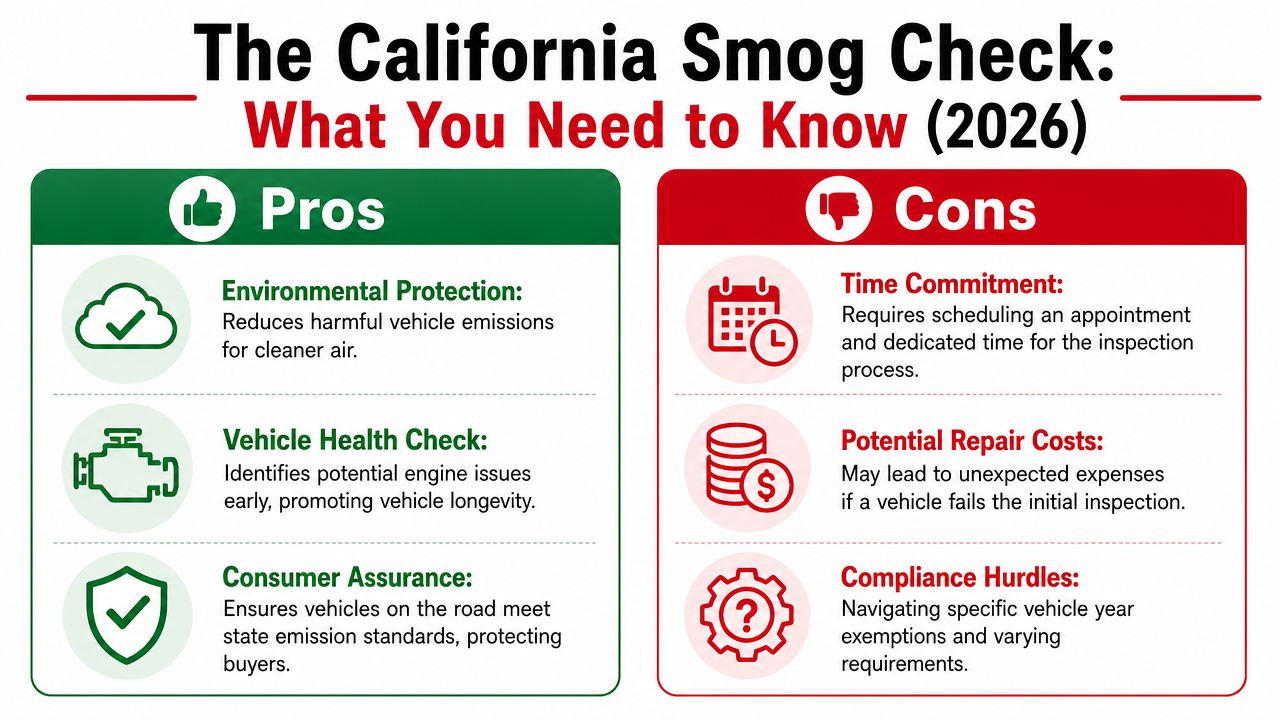
Smog is where registration timing often falls apart. Drivers handle the ownership paper, the insurance, the signatures, then realize the emissions step is what holds the file up. In California, that's a common reason a simple registration turns into a second round of paperwork.
Where drivers lose time
The biggest issue isn't always failing the test. It's getting the test done, then waiting too long to finish the registration. The validity of an emission control inspection is limited to 90 days in most states, including California, and missing that window often leads to another round of delay. The same source notes that failure to complete the registration within that window often results in a 40% rejection rate for renewal applications, which means owners may need another smog check, as described in this technical data sheet and inspection timing discussion.
That's why the right sequence matters. Handle the smog inspection close enough to your registration date that the certificate is still valid when the DMV side is processed. Waiting until the last minute is risky. Doing it too early can also backfire.
Why STAR and test-only matter
Not every station plays the same role in the process. A STAR-certified station meets a higher performance standard set by the state, and some vehicles are specifically directed to a STAR station. If your notice calls for STAR, that isn't optional.
A test-only station matters for a different reason. The inspection is the service. There's no repair sale attached to the result. For many drivers, that makes the process clearer because the shop is focused on accurate testing and reporting, not selling repair work in the same transaction.
If you need a local STAR inspection, the Antioch smog check service page shows what that process looks like in practice.
A good smog visit saves time when it lines up with the registration clock. A badly timed one creates repeat work.
For drivers dealing with multiple deadlines, the cleanest approach is to keep three items together: the registration notice, current insurance, and any emissions requirement tied to the vehicle. Once those are aligned, the rest of the file is usually much easier to finish.
Solving Document Disasters Lost Titles and Missing Paperwork
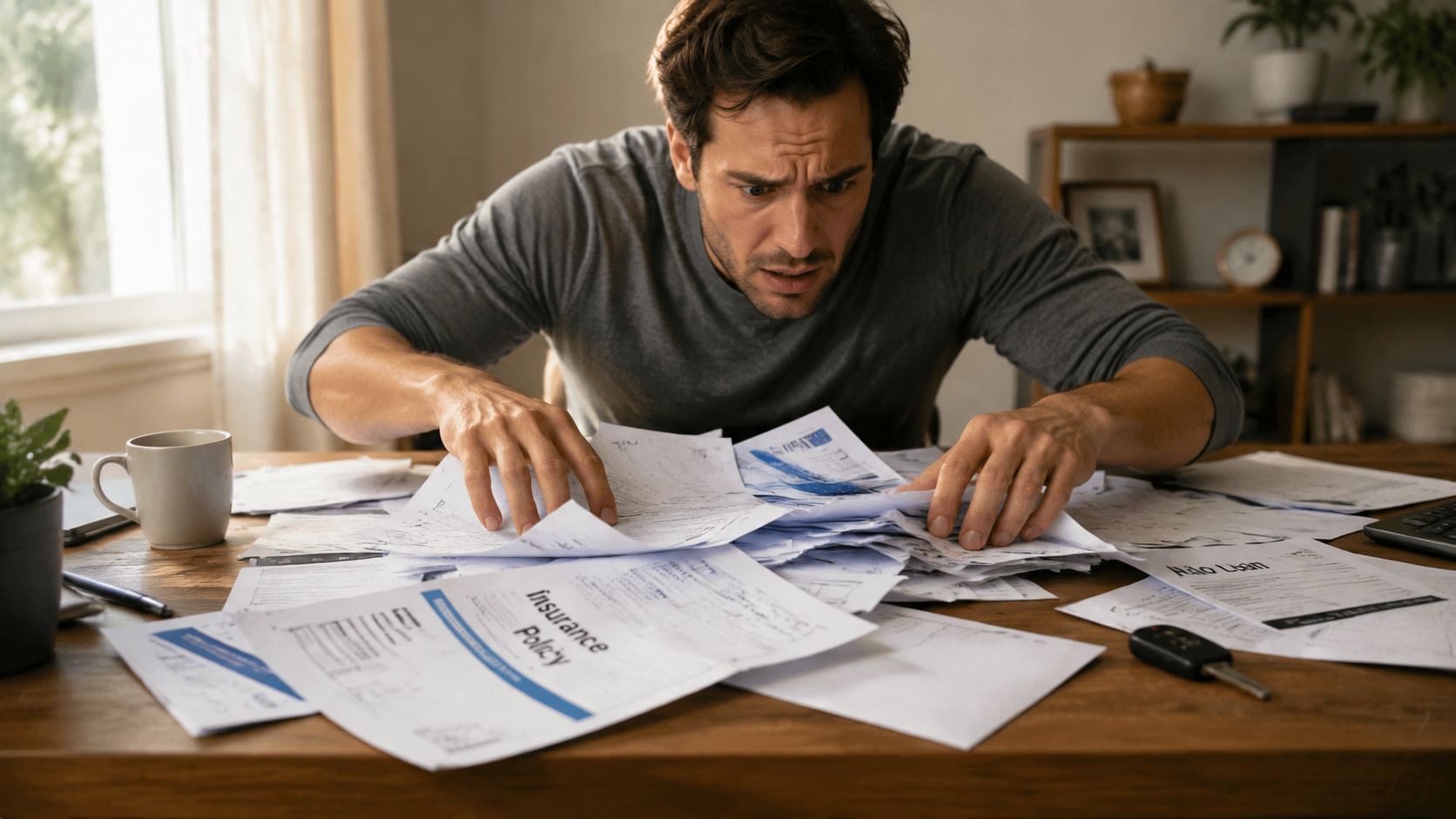
Losing paperwork feels bigger than it is. Most document problems are fixable. Significant damage results from freezing up, guessing, or submitting partial information that creates a second problem on top of the first.
If the title is missing after a sale
This one causes a lot of panic. A buyer pays for the vehicle, gets possession, and then the title is lost, incomplete, or never properly transferred. Most general guides act like the process stops there. It doesn't, but it does become more state-specific.
One overlooked point is that some states allow alternate paths. As noted in this private-sale title guidance discussing Illinois and title alternatives, states such as Missouri may allow registration with a Manufacturer's Statement of Origin (MSO) or a notarized lien release, and Illinois has a 20-day window that can matter in private-sale timing. The important takeaway isn't that California follows those exact rules. It's that missing-title situations aren't always dead ends, even though many consumer guides treat them that way.
For a practical response, do this first:
- Contact the seller immediately: Don't wait and hope the title turns up.
- Confirm what was signed: A title signed incorrectly can be as troublesome as a lost one.
- Ask whether a duplicate title request is possible: In many cases, that's the cleanest correction.
- Keep your bill of sale and payment record together: Those help establish the timeline of the transaction.
- Don't alter documents yourself: Cross-outs and handwritten fixes often create new rejection issues.
If your paperwork doesn't match the vehicle
This usually shows up around the VIN, odometer information, or modifications. The paperwork says one thing. The car says another. That's where verification steps become important, especially for out-of-state vehicles, reconstructed units, or cars with changes that weren't documented cleanly.
A VIN check is often the fastest way to identify whether the mismatch is minor clerical error or a larger file problem. If you need that step, Fire House Smog provides VIN verification support in Antioch.
Here's a useful overview before you make calls or stand in line:
Bring every ownership-related paper you have, even if you think one of them is outdated. The missing clue is often on the document people leave at home.
How to keep this from happening again
Drivers with one vehicle can usually manage registration papers with a simple folder. Families with several cars and small business fleets need more discipline than that. The best working method is boring, but it works: keep originals in one secure place, carry only what needs to be in the vehicle, and review expiration-sensitive documents before you need them.
For modified vehicles, keep build and compliance paperwork attached to the title file, not in a separate stack. For private sales, make copies before either party leaves. For out-of-state transfers, bring more than you think you'll need. Overpreparing is cheaper than a second trip.
The Fast Lane Skip the DMV with On-Site Services
The traditional route is familiar. Gather what you think you need, drive to the DMV, wait for your number, reach the counter, then learn the file is missing one item you could have brought if someone had told you sooner. The trip wasn't wasted, but it wasn't finished either.
The alternative works better because it compresses the steps. Instead of separating smog, paperwork review, and registration processing into different stops, a licensed service partner can often line them up in one visit.
Two ways this usually goes
One driver shows up with a vague stack of papers and hopes the clerk can sort it out. Another shows up with the right scenario matched to the right documents. The second driver usually finishes faster because the transaction is built correctly before it enters the system.
That's the true shortcut. It isn't luck. It's sequence.
A local licensed DMV business partner can handle common transactions such as renewals, ownership transfers, and related registration work without sending you into a full DMV office line. If the vehicle also needs emissions testing, doing both tasks in one place reduces the chance that the smog side and the document side drift apart.
What a licensed partner changes
On-site processing offers its greatest help:
- Immediate document review: Missing items get caught before the submission goes sideways.
- Smog and registration alignment: If both are needed, they can be coordinated in the same visit.
- Tag and sticker handling: For eligible transactions, official registration output can be printed on-site.
- Less rework: You're less likely to discover a preventable problem after waiting in line.
Fire House Smog is one local option that combines STAR-certified test-only smog inspections with licensed California DMV registration services, including on-site renewals and ownership transfer support at its Antioch location.
This model is especially useful for working drivers, families juggling multiple vehicles, and fleet managers who can't afford to lose half a day every time a registration file needs attention. The trade-off is simple. You still need the right paperwork. You just don't have to do the sorting, testing, and processing in separate places if your transaction qualifies.
Vehicle Registration FAQs
Can I renew registration if I lost my notice?
Usually, yes. The notice helps, but it isn't the registration itself. What matters is matching the vehicle and owner record correctly. Bring the registration card if you have it, plus plate information, ID, insurance, and any required inspection paperwork.
Can I register a car if I just bought it and the seller made a mistake on the title?
Sometimes, but don't guess. Title errors can be fixable, yet handwritten corrections often make things worse. Get the seller involved quickly and find out whether the title needs to be re-signed, replaced, or supported with additional ownership documents.
Do I always need a smog check for registration?
Not always. It depends on the transaction and the vehicle. Renewals, sales, and out-of-state transfers can trigger different requirements, so check the notice and the vehicle record before assuming you're exempt or required.
What should I do before bringing in an out-of-state vehicle?
Bring the title or current registration, proof of insurance, identification, and any paperwork tied to modifications or unusual vehicle history. Make sure the vehicle itself is available if verification is needed. Out-of-state transfers go smoother when the car and the paperwork can be checked together.
I lost my registration card. Is that the same as losing my title?
No. They're different documents and create different problems. A lost registration card is usually a simpler replacement issue. A lost title affects ownership proof, transfers, and some registration scenarios much more directly.
What's the most common mistake people make?
Starting too early with the wrong paperwork, or too late with time-sensitive paperwork. Vehicle registration documents aren't hard to collect once you know your scenario. The trouble starts when drivers mix renewal documents with transfer documents, or bring inspection paperwork that no longer fits the registration timeline.
If you want to avoid the usual back-and-forth, bring your paperwork to Fire House Smog. The shop handles smog inspections and qualifying DMV registration services from one Antioch location, which makes it easier to match the right documents to the right transaction and finish the job without a separate DMV office stop.
The renewal notice lands on the counter and the mood drops instantly. You see the DMV return address, think about smog, fees, website errors, and whether your sticker will show up on time. That reaction makes sense. California's system is big, layered, and not built for clarity.
It's also manageable once you stop treating it like one simple payment and start treating it like a short checklist with a few known traps. The big one is timing. The other big one is using the wrong website or trying to renew before the DMV has the right data on file.
California handles a huge volume of vehicle paperwork. The DMV says it manages over 36.19 million registered vehicles and processed over 15.05 million total vehicle registrations in its most recent full reporting year, according to the California DMV at a glance. That scale is exactly why you need a cleaner plan than “I'll just do it online later.”
Table of Contents
- That DMV Envelope Has Arrived What Now
- Your Pre-Renewal Checklist Get These Four Things Ready
- Decoding the Bill Understanding Your Registration Fees
- Choose Your Path Four Ways to Renew Your Registration
- Troubleshooting Common Registration Renewal Problems
- California Registration Renewal FAQ
That DMV Envelope Has Arrived What Now
Most drivers do the same thing first. They open the envelope, scan for the due date, look at the amount, and immediately wonder if there's some hidden catch. Usually there is, but it's not mysterious. It's one of a handful of routine issues: smog status, address mismatch, unpaid holds, or using a renewal path that sounds official but costs far more than it should.
The smart move is to slow down for five minutes before you pay anything. Read the notice. Check whether the vehicle is flagged for smog. Confirm the address the DMV has on file still matches where you receive mail. If any of those pieces are wrong, the renewal itself isn't the first task. Fixing the record is.
The Real Problem Usually Isnt The Payment
People assume California DMV registration renewal is hard because the DMV wants to make it hard. That's not really it. The process breaks when the system is missing one required data point. The payment part is easy. The record-matching part is where people get burned.
Practical rule: Don't submit payment first and troubleshoot later. In California DMV registration renewal, bad sequencing creates most of the headaches.
There's another reason people get tripped up. They treat every renewal option as interchangeable. They aren't. Online can be fast. Mail can be fine if nothing is urgent. A field office can solve stubborn problems, but it costs you time. A licensed partner can be the cleanest route when you need a smog check and renewal handled in one stop.
Your Goal Is A First-Try Approval
You don't need to know every DMV rule. You need to know which few rules block issuance of the sticker and registration card. That means going in with the right details, using the official path or a legitimate licensed provider, and avoiding last-minute guesses.
Handle the renewal like a transaction, not a chore. Gather what the system needs. Confirm what can stop it. Then choose the path that fits your situation instead of defaulting to whatever search result shows up first.
Your Pre-Renewal Checklist Get These Four Things Ready
If you want a smooth renewal, do the prep before you touch the payment page. That preparation often determines whether individuals save themselves a wasted trip or create one.
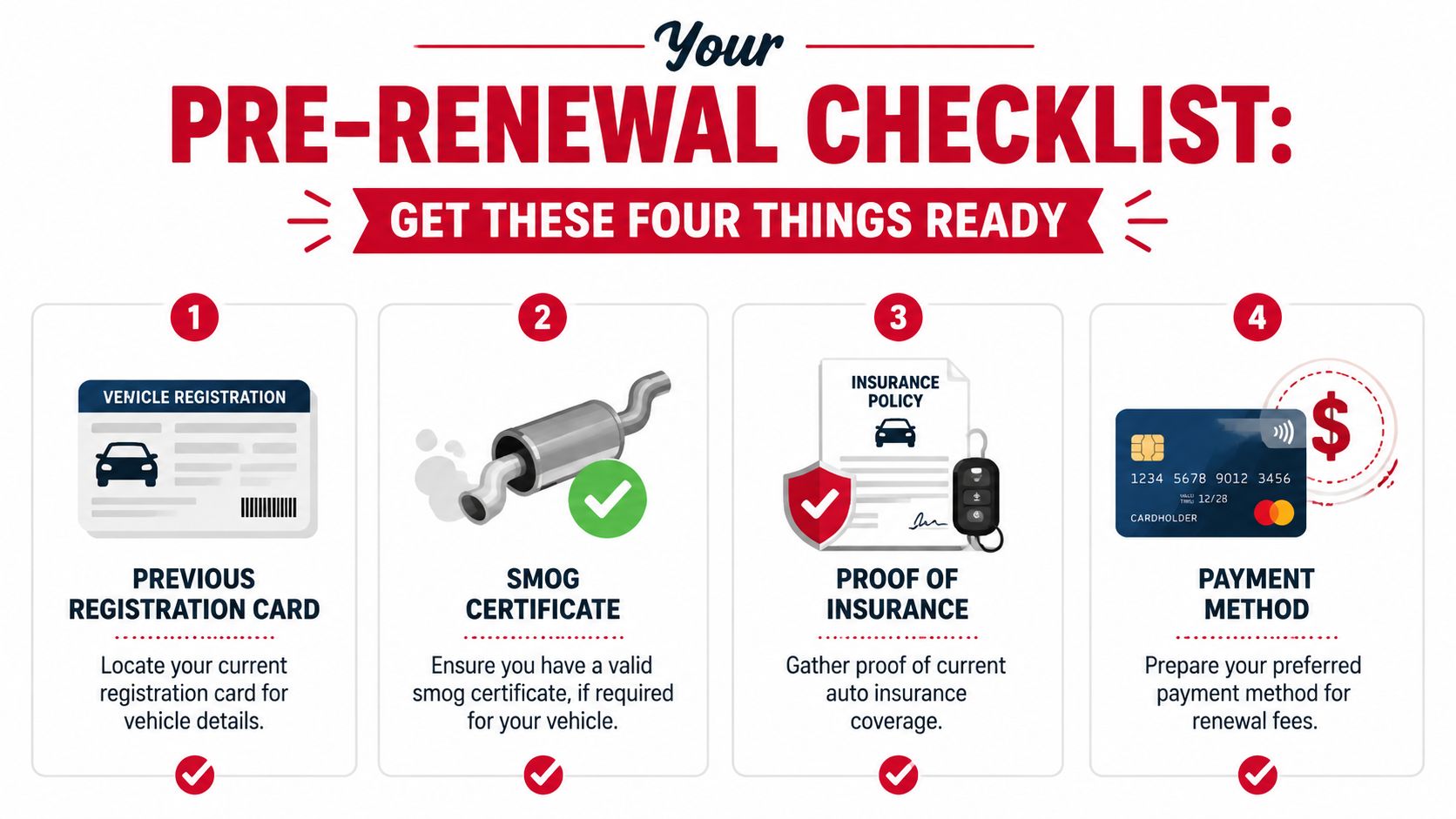
Start With The Notice And Your Vehicle Details
Pull out the renewal notice if you have it. If you don't, use your registration card and vehicle information. You want the plate number exactly as shown, with no added spaces, and you want the vehicle details to match what the DMV expects.
Keep these four items ready:
- Registration paperwork: Your current registration card or renewal notice gives you the vehicle identifiers the system expects.
- VIN access: Have the vehicle nearby if possible so you can confirm the VIN when needed.
- Insurance proof: Make sure your auto insurance is current and tied to the right vehicle.
- Payment method: Don't wait until the last screen to find your card or account information.
If you're handling smog first, use a STAR-certified smog test station near you so you're not guessing about whether the inspection path will satisfy DMV requirements.
Smog Is The Gatekeeper
When a vehicle requires smog, the DMV's system won't approve renewal unless it has a passing electronic record on file. The DMV notes that its renewal system rejects transactions when a required smog certificate isn't electronically available, and approximately 12% of online renewal failures are tied to this data lag, according to the California DMV smog inspections page.
That means the paper receipt from the smog station doesn't do the job by itself. The DMV system wants the electronic handoff.
If your car needs smog, assume the electronic transfer matters more than your payment confirmation.
Two more checks belong on your list before you renew:
- Address accuracy: If your mailing address is outdated, fix that first. Otherwise your registration can go to the wrong place.
- Outstanding holds: Parking tickets or similar holds can stop the renewal cold.
What To Verify Before You Click Pay
Use this short mental test:
- Do I have the right vehicle details?
- If smog is required, has the electronic result reached DMV?
- Is my address current?
- Is anything on the vehicle likely to block issuance?
Do those four things and the rest gets much easier. Skip them and you'll waste time blaming the website for a problem that started before you logged in.
Decoding the Bill Understanding Your Registration Fees
The fee notice confuses people because it looks like one charge when it's really a stack of charges. That's why two drivers with similar cars can end up with different totals.
Why Your Total Never Looks Simple
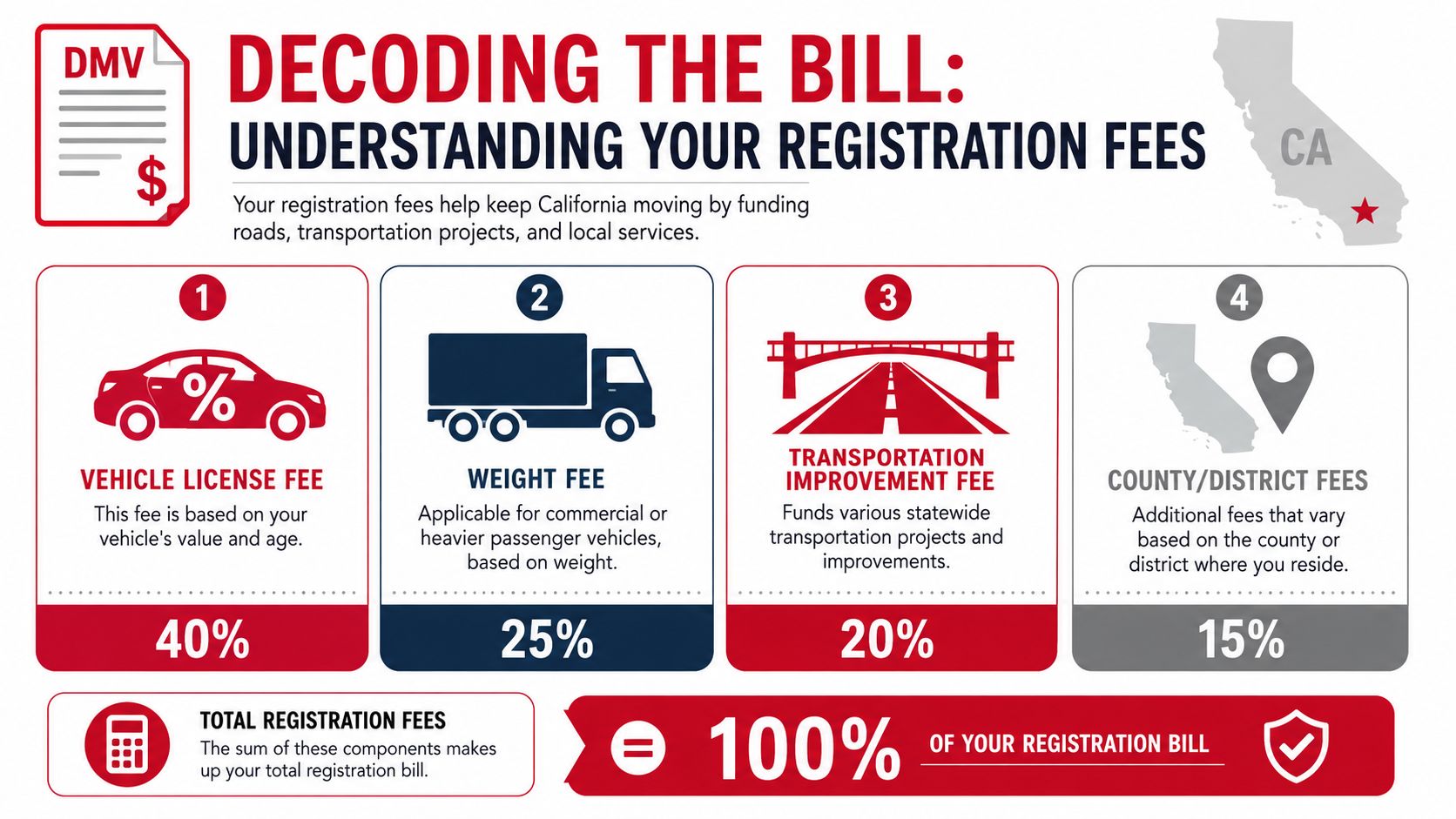
California doesn't bill registration as a single flat renewal fee. The biggest factor for many passenger vehicles is the Vehicle License Fee, or VLF, which is tied to the vehicle's assessed value. The fixed renewal fee is only one piece of the total. Other charges can also apply depending on the vehicle and location.
Here's the important mindset shift. When your renewal feels high, don't ask, “Why is the DMV charging so much for registration?” Ask, “Which parts of this bill are fixed, and which parts change based on value or location?”
That question gets you to the answer faster.
A Real Example Of The Value-Based Fee
The DMV says the VLF is calculated at exactly 0.65% of the vehicle's current assessed value, and for a $40,000 vehicle that fee alone is $260, on top of the fixed base registration or renewal fee of $76, according to the California DMV registration fees page.
That one example explains most of the confusion people have. The renewal isn't just “the sticker fee.” A newer or higher-value vehicle can push the total up fast because the value-based piece moves with the car.
A short explainer helps:
| Fee Component | What it means |
|---|---|
| Base renewal fee | Fixed statewide starting point |
| Vehicle License Fee | Value-based charge tied to assessed vehicle value |
| Smog-related charges | Applies when required by vehicle status |
| Local or regional additions | Varies by where the vehicle is registered |
If you want a quick visual walkthrough before you stare at your notice again, this overview is useful:
Don't compare your total to your neighbor's and assume something is wrong. Compare the components.
Choose Your Path Four Ways to Renew Your Registration
People either save time or hand money to the wrong middleman. All four common renewal methods work. They just don't work equally well for every situation.
The Official Online Route
If your record is clean, online renewal through the official DMV portal is usually the first option to try. It's convenient, and you avoid a trip. But convenience only counts if the DMV already has the data it needs.
Online is a bad choice when you just changed your address, recently handled a smog issue, or suspect there's a hold attached to the vehicle. In those cases, the website often just becomes a rejection screen with no useful explanation.
Mail And Field Office Options
Mail works if you're early, your address is correct, and nothing about the vehicle is unusual. It's not a rescue tool. It's a routine tool.
A field office is the opposite. It's what you use when the record needs human intervention or you need a more direct answer. The trade-off is obvious. You spend time getting there, waiting, and handling it in person.
Here's the clean comparison.
| Method | Speed | Convenience | Get Sticker |
|---|---|---|---|
| Official DMV online | Fast when the record is clean | High | Not on the spot |
| Slower | Moderate | Not on the spot | |
| DMV field office | Variable | Low | Often handled in person |
| Licensed business partner | Fast for many common transactions | High | Often on the spot |
Licensed Partners And The Third-Party Fee Trap
This is the part a lot of drivers learn the hard way. Not every website that looks like DMV is the DMV. ABC7 reported that the DMV tells people to go directly to its website, while authorized third-party vendors can legally add fees that turn a simple $90 renewal into a $300+ expense, according to ABC7's report on California renewal fees and vendor markups.
That's why I tell people to stop trusting search results during urgent renewals.
Use this filter before you pay anywhere online:
- Check the site identity: If you intended to use DMV, make sure you are on the official DMV website.
- Read the fee screen carefully: If service charges feel inflated or vague, back out.
- Know the difference between licensed and lookalike: A licensed business partner is legitimate. A confusing search result with stacked service fees can still cost you far more than expected.
For drivers in East Contra Costa County, one practical option is smog check and DMV registration service in Antioch, where a licensed provider can handle common renewals and issue tags on site during service hours. That route makes the most sense when you want the transaction handled in person without going to a DMV office.
The best renewal method isn't the one with the fewest clicks. It's the one least likely to fail for your exact record.
My blunt advice is simple. Use the official DMV website for clean, straightforward renewals. Use mail only when time isn't tight. Use a field office for messy records. Use a licensed partner when you want in-person handling without the DMV-office experience. And never pay a suspicious markup because a search ad got to you first.
Troubleshooting Common Registration Renewal Problems
Most renewal problems aren't complicated. They just feel complicated because the DMV system gives blunt error messages and very little context.
When The Smog Record Hasnt Landed Yet
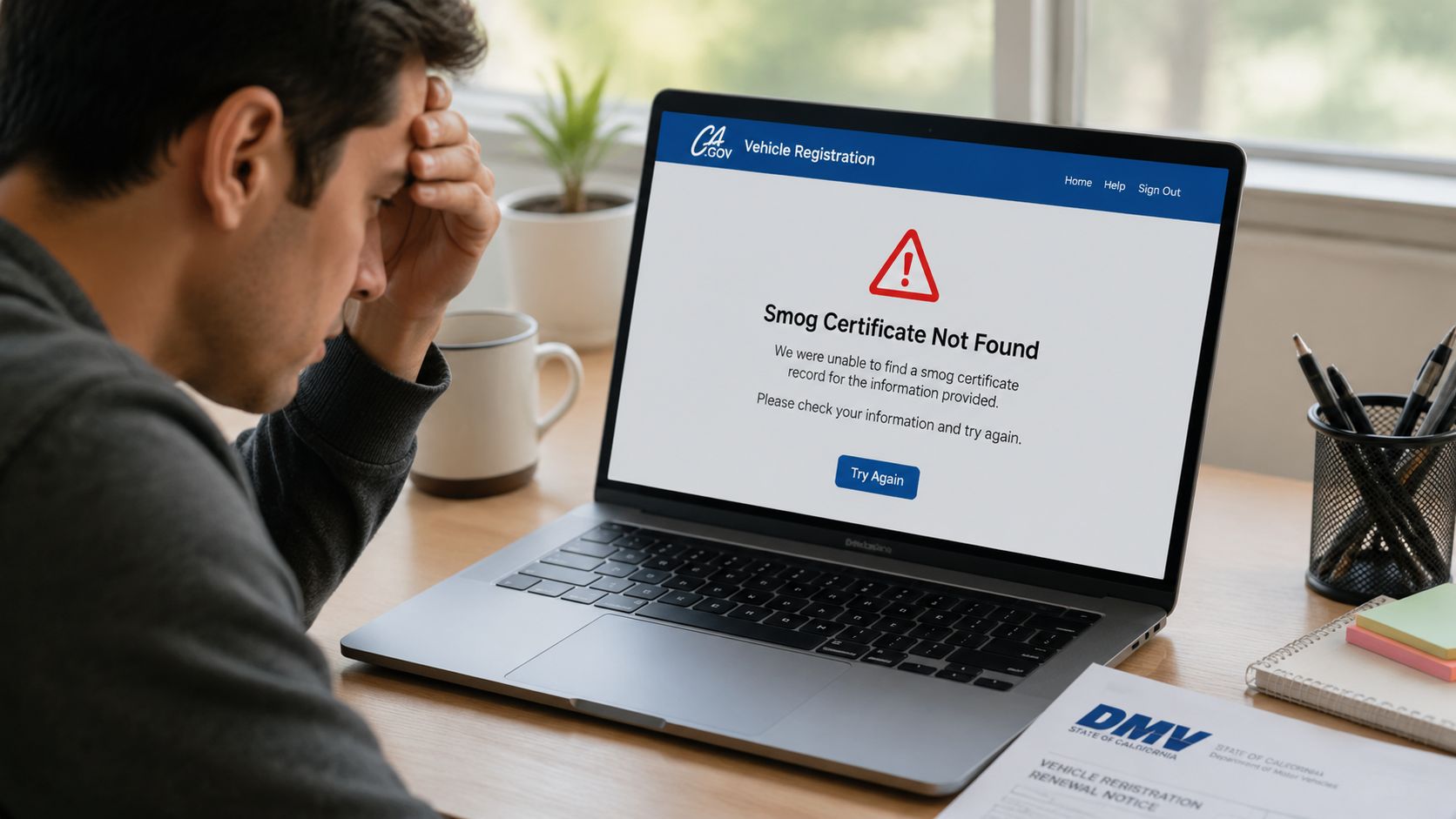
You pass smog, go online, try to renew, and the system still acts like you never did the inspection. That happens. Independent reporting notes that smog certificate transfer is often quick, but processing delays can extend up to 3 business days before the DMV system updates, according to Reviver's overview of California smog check requirements.
Don't keep submitting the same renewal attempt over and over. That doesn't fix a missing electronic record.
Do this instead:
- Wait before retrying: If the smog was just completed or you just passed a retest, give the system time to update.
- Confirm the vehicle identifiers: A mismatch in plate or VIN details can create a false dead end.
- Use a real person when needed: If the record still won't clear, in-person help is often faster than guessing.
When Youre Missing Information Or Hit A Hard Stop
Another common issue is not having the vehicle details the system wants. That becomes a bigger problem when the notice is missing or the VIN information isn't easy to verify. If your record has identity or documentation issues tied to the vehicle, VIN verification help can be the right next step before you keep pushing the renewal itself.
If you hit a stop screen, don't panic. Work backwards.
- Check whether the vehicle needs smog and whether the record has updated.
- Make sure your identifying information matches exactly.
- Look for anything tied to the vehicle that could block issuance.
- Switch renewal methods if the system clearly needs human review.
A rejected online renewal doesn't always mean your registration is impossible. It usually means one required record hasn't lined up yet.
The worst move is doing nothing because the error message was vague. California DMV registration renewal is usually recoverable once you identify which record is blocking the sticker.
California Registration Renewal FAQ
What If My Car Fails Smog
You can't complete renewal until the smog requirement is satisfied when your vehicle is subject to inspection. Fix the underlying emissions issue, complete the required retest, and wait for the passing result to make it through the DMV system before trying again. If timing is tight, don't rely on same-minute online renewal after the retest.
Can I Renew While Im Out Of State
Yes, many drivers handle California DMV registration renewal remotely if the record is otherwise clean. The catch is practical, not theoretical. If the vehicle needs smog or the mailing address is wrong, distance makes the process slower and more fragile. Get your documents and address squared away before you submit anything.
Do Newer Cars Need Smog Right Away
Not always. California has exemptions for some vehicles, including certain newer vehicles and categories such as electric vehicles, motorcycles, trailers, and vehicles manufactured before 1975, under the state's smog rules. Don't assume your car is exempt just because it's newer. Check what your notice says.
How Fast Do I Get My Sticker And Registration
That depends on the method. Online and mail are convenient, but they depend on processing and delivery. In-person service, whether at a DMV location or a licensed provider that can issue tags on site, is the better choice when you want the sticker in hand rather than waiting on the mail.
If you lost the renewal notice, you can still usually move forward as long as you have the correct vehicle details. The notice helps, but it isn't the only path.
The short version is this: if your record is simple, keep it simple. If anything looks off, stop forcing the online route and switch to a method that can resolve the issue directly.
If you want to avoid DMV-office lines and handle your renewal in person, Fire House Smog in Antioch offers STAR-certified smog testing and licensed DMV registration services, including on-site tag issuance during posted service hours. It's a practical option when you need the smog check and registration side handled in one stop.