
You're staring at a DMV renewal notice, the car runs fine, and you still have that annoying question, do I need a smog check in San Leandro, or am I about to waste an afternoon? That's the right question to ask first. The expensive mistake isn't showing up a few minutes late, it's bringing the wrong vehicle, the wrong paperwork, or a car that isn't ready to pass.
San Leandro drivers don't need guesswork. California's rules decide whether your car is in scope, and the DMV and BAR rules are clear enough if you read them instead of trusting forum noise. The smart move is to treat a smog check San Leandro appointment as a readiness check, then match your vehicle and your renewal notice to the right station type before you ever leave home.
Table of Contents
- What a San Leandro Smog Check Actually Covers
- How to Prep Your Car Before the Test
- Standard, STAR, and Test-Only Stations Explained
- What Happens During a San Leandro Smog Visit
- Failing the Test and Getting a Free Retest
- Hours, Wait Times, and Smart Timing Around San Leandro
- Putting It All Together Before Your Next Renewal
What a San Leandro Smog Check Actually Covers
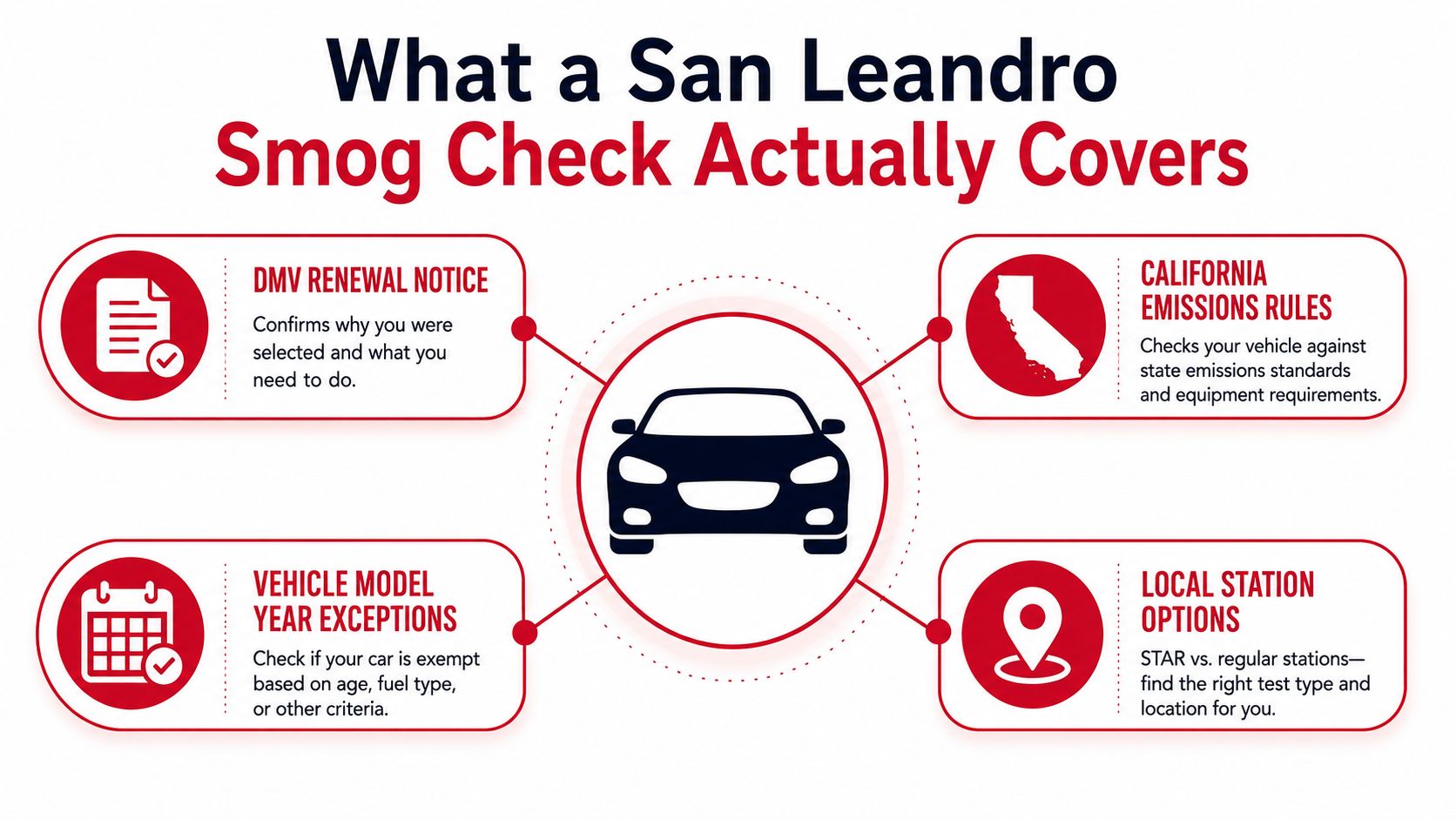
A San Leandro driver can have the renewal notice in hand and still be unsure whether the car is even subject to testing. Start with the DMV rule, not the rumor mill. California requires smog inspections for most vehicles when they're being registered or when registration is renewed, with exemptions for gasoline vehicles 1975 or older, diesel vehicles 1997 or older or over 14,000 pounds GVWR, electric vehicles, and gasoline vehicles under eight model years old. The state also says some newer vehicles can pay a smog abatement fee instead of testing for the first 8 registration years. For out-of-state vehicles, California's BAR summary says all 1976 model-year and newer vehicles need a smog check before first registration in the state, which matters a lot in a Bay Area city where people move and buy cars across state lines. Read the DMV's own inspection rules before you book anything, then use California's vehicle emissions standards overview as a plain-language reference point.
The first filter is eligibility
If your vehicle falls into one of the exemption buckets, don't book a test just because a renewal notice arrived. The notice tells you what the DMV expects administratively, but the vehicle class decides whether a smog inspection is required. That's the part too many drivers skip, and then they show up with a car that never needed to be on the bay in the first place.
Out-of-state transfers are the other common trap. If the vehicle is 1976 model year or newer and it's coming into California for the first time, the smog check comes before first registration. That's not a suggestion, and it's not something a shop can waive because the car looks clean.
Read the notice, then match the vehicle
The cleanest way to think about it is simple, the DMV notice points to paperwork, the vehicle class points to the test. If the car is clearly exempt, stop there. If it's not exempt, move straight to preparation and station selection.
Practical rule: don't book based on anxiety. Book only after you've checked the model year, fuel type, and whether the car is entering California for the first time.
How to Prep Your Car Before the Test
Most failed smog appointments don't start with a bad catalytic converter. They start with a car that wasn't ready to be tested. California-focused guidance says the right prep starts with the check-engine light, then the battery history, then the OBD-II readiness monitors that have to complete before the car can be fairly evaluated. If you clear a code or disconnect the battery right before you go, the monitors may not have reset yet, and that can set you up for a refusal or a retest even if the engine itself is fine. Read the warning-light and readiness guidance in common smog fail reasons before you roll out.
What to do in your driveway
Start with the dashboard. If the check-engine light is on, don't pretend the station will magically ignore it. Then check the gas cap, because a loose seal is the kind of small issue that creates a big headache later.
A simple pre-visit checklist works better than guesswork:
- Check the dashboard first. If the warning light is on, fix the cause before you test.
- Avoid a fresh battery disconnect. A recent reset can leave readiness monitors incomplete.
- Drive the car long enough to re-learn. Mixed driving gives the onboard system time to complete its checks.
- Don't clear codes right before the appointment. That often creates a readiness problem instead of solving one.
- Confirm the gas cap is tight. It's basic, but it still matters.
Give the car time, not just a quick lap
A short errand loop isn't enough if the monitors were just cleared. Many California drivers need a real drive cycle before the car is ready, and the practical guidance for that is usually a 50 to 100 miles of mixed driving. I'd treat that as a planning window, not a promise. If you want fewer surprises, stop chasing a same-day miracle and give the car time to complete its own checks.
The fastest appointment in the world doesn't help if the car arrives half asleep. A proper prep run beats a rushed test every time.
A clean bill of health starts before the bay door opens. If the light's on or the battery was just swapped, fix readiness first and test second.
Standard, STAR, and Test-Only Stations Explained
San Leandro search results throw three labels at drivers, and each one changes the job the station is allowed to do. A standard smog station can inspect many vehicles. A STAR-certified station handles DMV-directed vehicles and works under tighter oversight. A test-only station performs inspections without selling repairs, so the technician has no repair revenue tied to the outcome. If you want the cleanest split between testing and fixing, test-only is the smarter choice.
The question is not which shop has the shortest line. It is whether your vehicle belongs in that bay at all. If DMV directed your car to STAR, book a STAR-certified station and stop there. If you already failed once, test-only often makes more sense because the station is there to verify the result, not to steer you into parts you did not ask for. For a closer look at the certification framework, see what STAR-certified smog means.
What each station type does
A standard station handles routine inspections for many drivers, but it does not fit every directed case. A STAR station has the certification level DMV uses for vehicles that need closer oversight. A test-only station is the cleanest option when you want the inspection result without the repair pitch attached.
Use the notice first. Use the station label second.
| Station type | Best use case | What to expect |
|---|---|---|
| Standard station | Routine vehicles that aren't directed elsewhere | Regular inspection service |
| STAR-certified station | DMV-directed vehicles | Stricter certification framework |
| Test-only station | Drivers who want testing without repair sales | Inspection only, no repair upsell |
Don't overthink the label
The renewal notice matters more than the search result. If the notice calls for STAR, book STAR. If the notice does not require it and you just need a valid inspection, a regular station may be enough. If you want to avoid a conflict of interest and keep the transaction clean, test-only is the more disciplined choice.
That is why I tell neighbors to read the notice before they read the reviews. The right station type saves more time than any polished marketing page ever will.
What Happens During a San Leandro Smog Visit
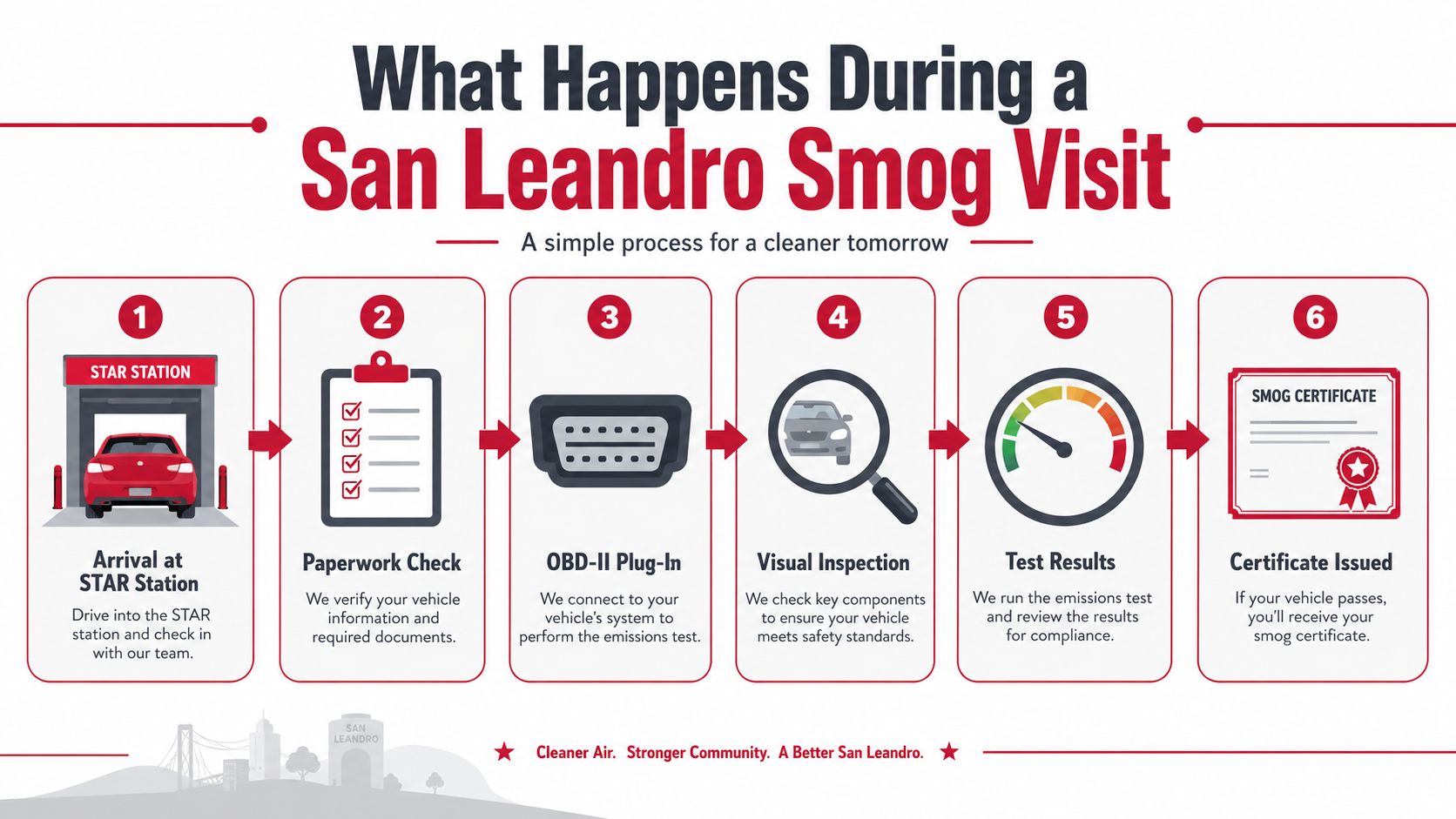
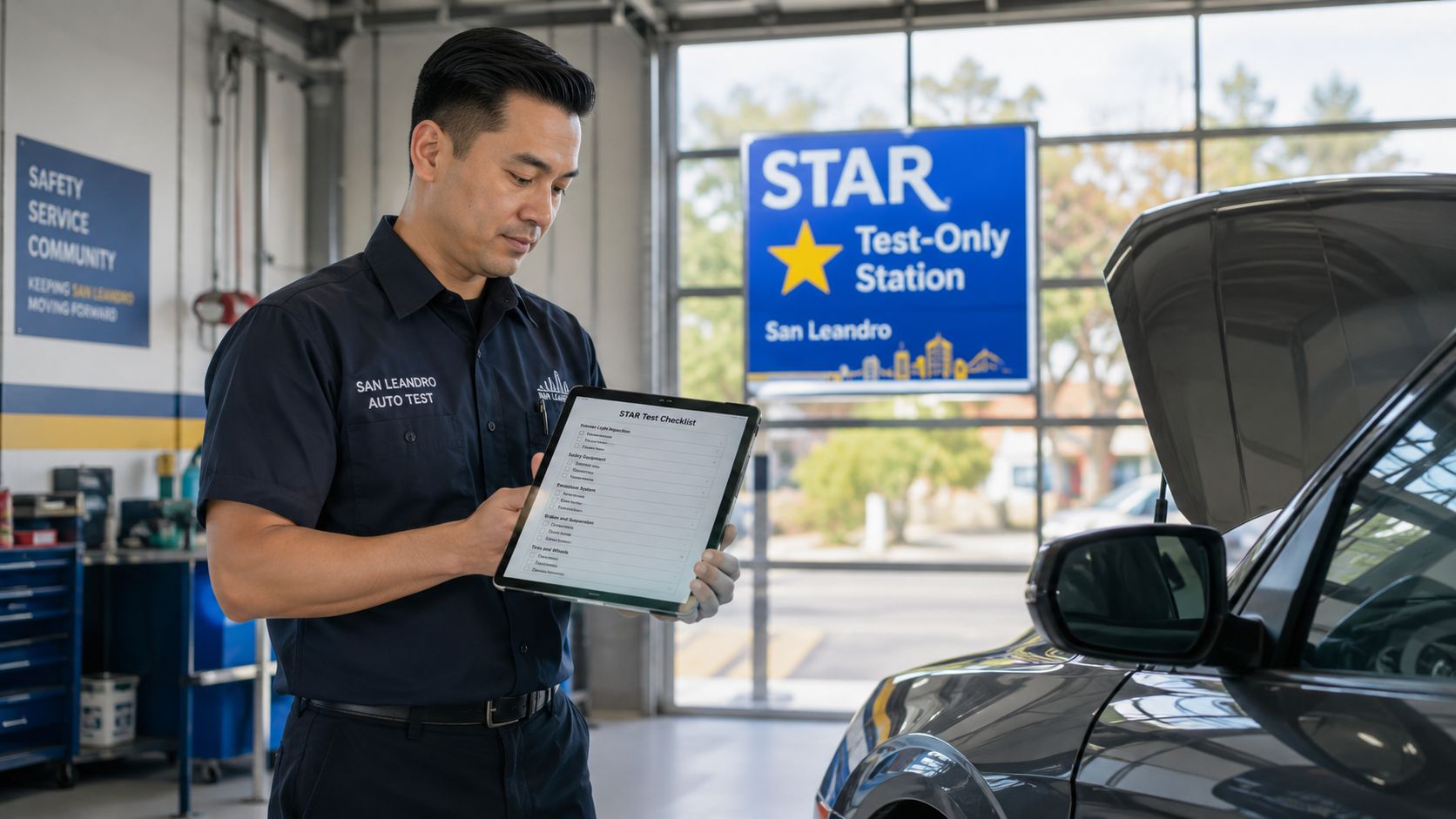
A good San Leandro visit should feel boring in the best way. You pull in, hand over the vehicle info, and the technician starts by confirming the paperwork and the car's eligibility for the specific inspection path. At a STAR test-only station, that usually means the technician is focused on the inspection itself, not on steering you into repairs you didn't ask for.
The inspection path
The car gets the OBD-II plug-in first if that applies to the vehicle class. Then comes the visual check, where the technician looks for obvious tampering or missing components, followed by the emissions portion that fits the vehicle's age and setup. Some cars are evaluated through onboard diagnostics, while others can involve additional test steps depending on class and equipment.
A compliant, well-prepped car can move through the visit in about 10 to 15 minutes, according to the San Leandro guide linked earlier. That short on-paper visit is exactly why readiness matters so much. The test can be quick, but the car still has to be ready to answer the computer when it's plugged in.
What the tech is actually watching for
This isn't a mystery scan with random failure points. The technician is looking for the signals that the car's emissions controls are working the way they should, and that the onboard system isn't hiding a recent reset. If the car is ready, the result tends to be straightforward. If it isn't, the visit turns into a wait for a retest instead of a clean pass.
A fast station doesn't rescue an unready car. The delay usually comes from the vehicle, not the bay.
When the inspection passes, the certificate gets uploaded to DMV and the driver moves on. That's the whole point of a well-run visit, a clean result with no drama and no surprise detour.
Failing the Test and Getting a Free Retest
A fail report isn't the end of the process, but it does tell you exactly where to stop guessing. Read the Vehicle Inspection Report first. If the issue is readiness, a warning light, or a straightforward emissions problem, the next move is different in each case. Don't rush back to the same lane with the same unresolved issue and hope the answer changes.
Fix the right problem
If the report points to readiness, the car probably needs more driving before it will pass. If the check-engine light is still on, the repair comes first. If the failure is a true emissions issue, a separate repair shop should diagnose the cause before you return for another test.
That's where test-only stations make sense again. Since they don't sell repairs, they aren't benefiting from telling you to replace parts on the spot. You can take the report to a repair shop, get the issue addressed, then come back for the recheck.
Bring the right paperwork back
When you return, bring the same vehicle and the report that proves what failed. If the station offers a free retest under its policy, use it instead of paying twice for the same problem. The free retest is most useful when the original failure was real, the fix was targeted, and the car is ready this time.
If you're dealing with a waiver or hardship extension, handle that through the DMV side, not by arguing it at the lane. The station's job is to test the vehicle and document the result. DMV handles the registration outcome.
Don't pay for repeat inspections because you skipped diagnosis. Fix the failure once, then use the retest path the right way.
Hours, Wait Times, and Smart Timing Around San Leandro
San Leandro has a more active testing corridor than a lot of drivers realize. Local station listings show published hours such as 8:00 AM to 3:30 PM, 8:30 AM to 5:30 PM, 8:30 AM to 5:00 PM, and 9:00 AM to 6:00 PM, which tells you the market isn't limited to one narrow weekday window. Some locations also test on weekends, so the best time to go depends less on your schedule and more on how crowded the lane will be.
Pick the quietest window
If you want the shortest wait, I'd aim for early in the week and early in the day. Monday and Tuesday mornings tend to be easier than Friday afternoons because drivers who waited on their renewal notice often rush in near the end of the week. The point isn't mystical traffic prediction, it's simple crowd behavior.
The DMV cycle creates its own bottlenecks. People wait until the deadline is close, then every local station gets hit at once. If your renewal month is approaching, don't join the late surge unless you enjoy sitting in a line behind three people who all had the same idea.
Use flexibility to your advantage
San Leandro's station spread gives you options, so use them. If your preferred site looks packed, move a few blocks or try another open window instead of forcing the same lane. A nearby alternative is often faster than sitting still because you fell in love with one address.
The same logic applies to your car. A flexible schedule helps, but only if the vehicle is prepared. If the readiness monitors aren't set, a short wait at the right station still beats a short wait at the wrong one.
Putting It All Together Before Your Next Renewal
A San Leandro smog appointment should run on a simple routine, not panic. First, confirm whether the car is exempt under California's rules. Second, check the dashboard and make sure readiness isn't broken by a fresh battery disconnect or a code clear. Third, book the right station type, especially if DMV points you toward STAR or you want a test-only result with no repair sales attached.
A 30-day playbook that actually works
Use the month before renewal like this:
- Check exemption status early. Don't wait until the due date to find out the car never needed testing.
- Watch the warning lights. A lit check-engine light means you're not ready.
- Give the car real drive time. Readiness needs miles, not wishful thinking.
- Choose the correct station type. Standard, STAR, and test-only are not interchangeable.
- Plan for the retest path. Keep the report and use it if the first visit doesn't pass.
That routine beats improvising on the last day of the month. It also keeps you from paying for a problem that should have been caught in your driveway.
Fire House Smog is one option for drivers who want a STAR-certified test-only smog check and DMV-related registration help in one stop, but the bigger lesson is the same no matter where you go. Treat the appointment like a readiness checkpoint, not a race. If you want a cleaner renewal cycle next time, start with the car, pick the right lane, and show up only when the vehicle is ready.