You're in Antioch, staring at a DMV renewal notice while your registration deadline gets closer. You want a quick smog check coupon, but the cheapest-looking offer may not produce the lowest out-of-pocket cost. The inspection discount is only one part of the bill. The state certificate fee, your vehicle's readiness status, and the possibility of a retest all matter.
A smart visit starts before you pull into a station. Confirm whether your renewal notice requires a STAR inspection, make sure the vehicle is ready for an OBD-II test, and check whether the coupon covers a retest. That approach saves more than chasing the biggest headline discount.
Table of Contents
- Why a Quick Smog Check Coupon Matters More Than You Think
- How to Find and Redeem Your Smog Check Coupon
- What a California Smog Check Actually Costs
- Preparing Your Vehicle for the Fastest Possible Test
- Comparing Total Cost Scenarios With and Without a Coupon
- Your Action Plan for a Fast and Affordable Smog Check
Why a Quick Smog Check Coupon Matters More Than You Think
A coupon can turn a routine compliance task into a manageable expense, but it won't fix a poor station choice. California's Smog Check program began with legislation approved in 1982, according to a California Air Resources Board staff report, and the modern system now includes test-only and STAR-certified stations. That distinction matters when your DMV notice directs you to STAR.
A test-only station keeps the visit focused on inspection results. The station performs the test but doesn't sell repair work, so you get a clearer pass-or-fail evaluation without an in-house repair estimate attached to the outcome. Fire House Smog is one Antioch option with STAR-certified test-only inspections, two service bays, and smog testing seven days a week with extended evening and weekend hours.
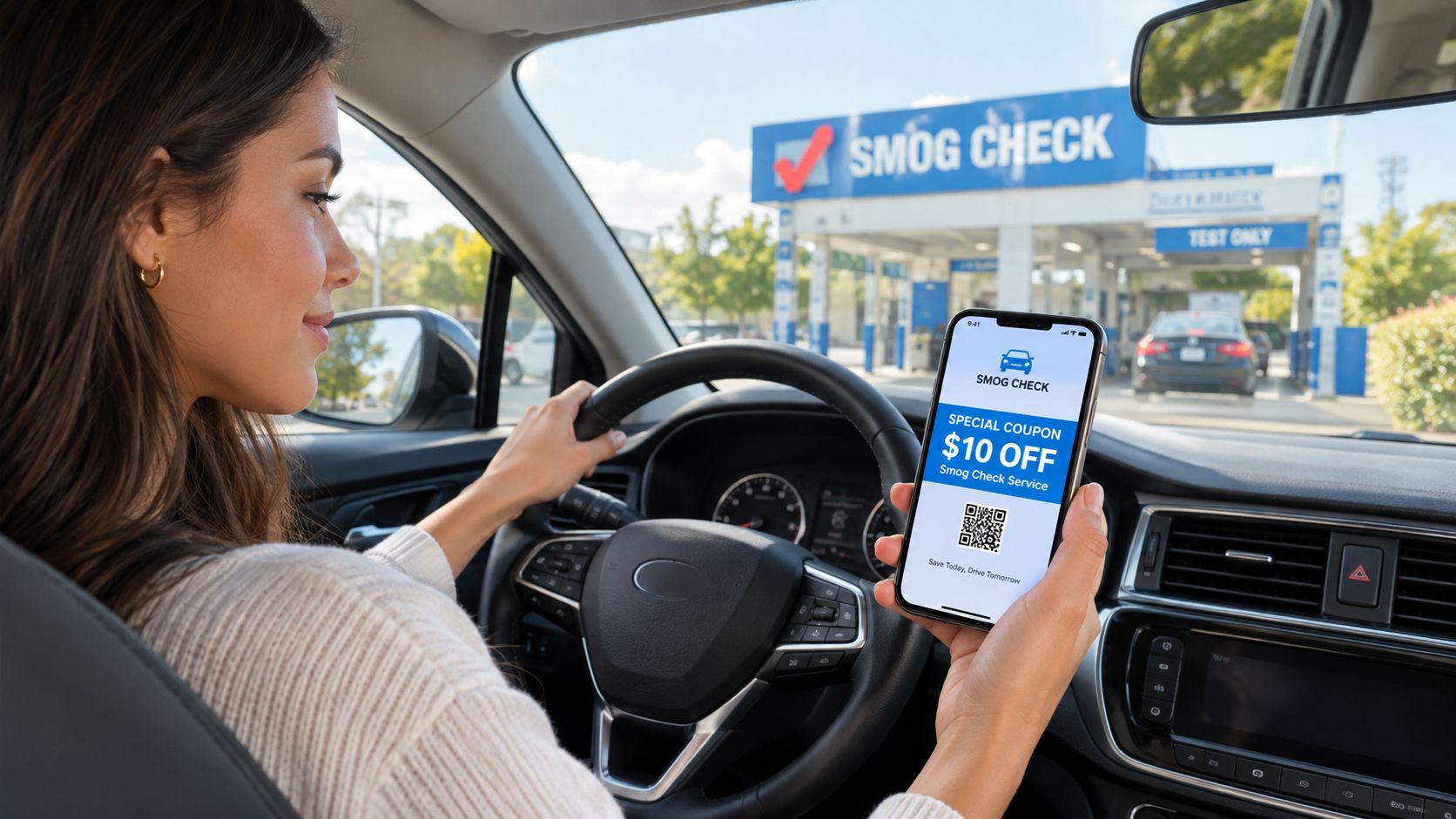
Check the notice before checking the price
The DMV renewal notice tells you whether a STAR-certified location is required. The California Bureau of Automotive Repair STAR guidance explains that some vehicles are directed to STAR stations, and STAR test-only stations are licensed to perform inspections without repairs. Arriving at a station that can't satisfy the notice can cost you another trip, even if its coupon looks attractive.
Practical rule: A coupon saves money only when the station can legally complete the inspection your renewal requires.
For an Antioch driver, the practical win is combining the correct certification with a short, organized visit. If you also need registration processing, an on-site DMV service can reduce a separate office trip. The coupon helps with the inspection charge, but the station's workflow determines whether you save time.
How to Find and Redeem Your Smog Check Coupon
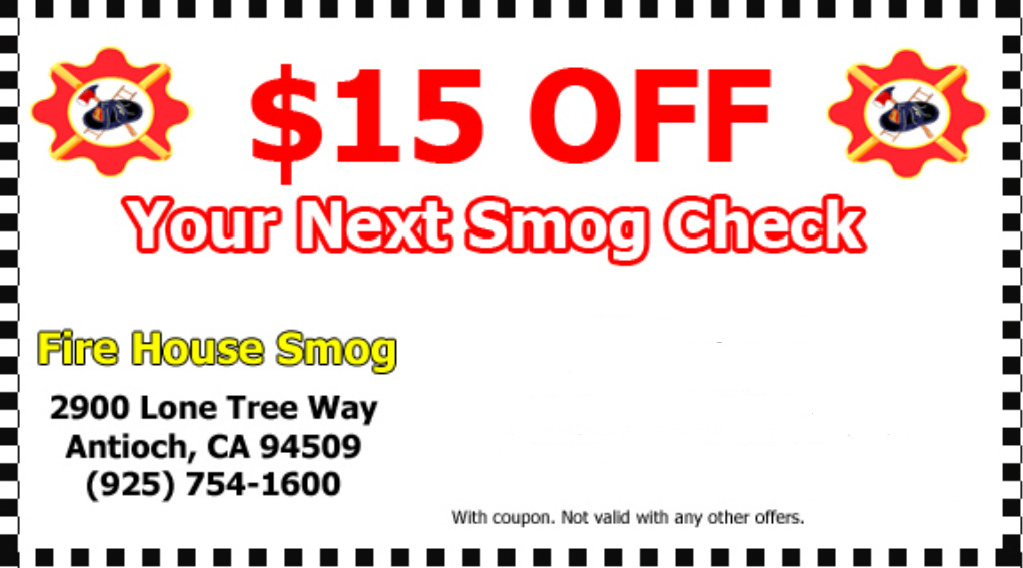
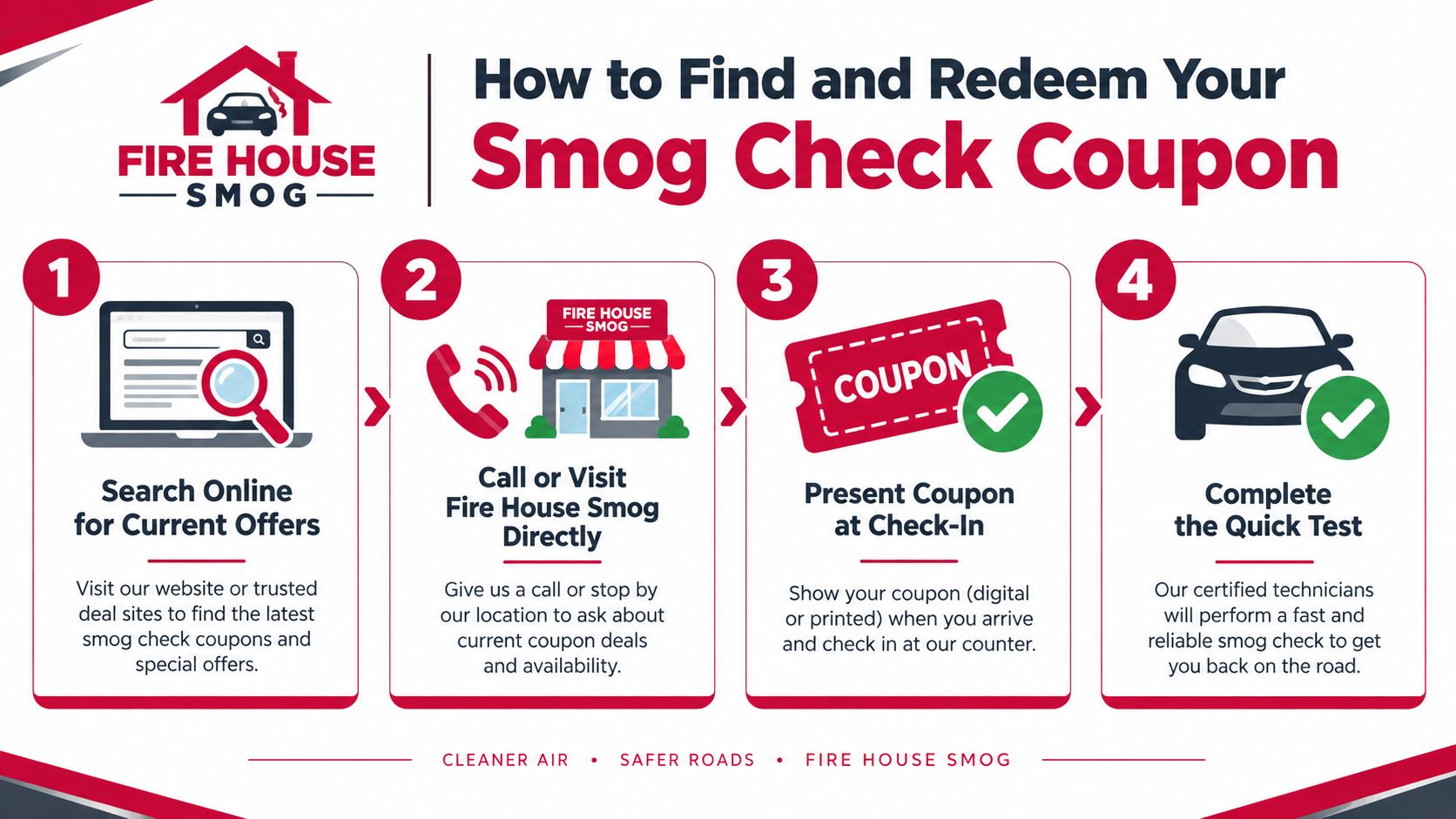
Treat a coupon like a service offer, not a blank check. Before leaving home, find the current offer on the Fire House Smog coupon page and read every condition displayed with it. Look for the expiration date, vehicle eligibility, STAR requirements, whether the discount applies only to the inspection, and whether a free retest is included under the station's policy.
Follow these steps
Save the current offer. Keep the coupon on your phone or print it if that's easier. A screenshot can help if the online page changes before you arrive, but the station still controls acceptance under its posted terms.
Verify the vehicle category. Passenger cars, SUVs, and light-duty trucks are generally the straightforward fit for a standard test-only visit. RVs, motorhomes, unusual vehicles, and vehicles with equipment constraints may require a call ahead.
Confirm the total before testing. Ask whether the offer discounts the inspection fee only. California requires an $8.25 Smog Check certificate fee when a vehicle passes, and the Bureau of Automotive Repair certificate-fee guidance identifies that fee as separate from the inspection charge. A coupon normally doesn't remove that state fee.
Ask about the retest condition. A free retest can matter more than a larger initial discount if the vehicle doesn't pass. Confirm whether the retest must occur at the same station, whether repairs must be completed elsewhere, and how long the offer remains valid.
Present the coupon at check-in. Show the phone screen or printed offer before the technician begins the inspection. Mention any STAR requirement and provide the renewal notice so the station can confirm the correct test type.
Keep the paperwork. Save the receipt, inspection result, and any retest terms until the registration issue is complete.
Don't assume the advertised discount includes every charge. The certificate fee is a fixed state component, while the station sets the inspection price and coupon terms.
What a California Smog Check Actually Costs
The coupon headline is only one part of your out-of-pocket cost. California stations set their inspection prices, while the state certificate fee is fixed. A California smog check cost guide reported an average total of $74.22, including a $65.97 base inspection fee and the $8.25 state certificate fee.
Judge the coupon against the inspection charge, not the full receipt. A $10 to $20 discount can reduce the base price meaningfully, but it does not remove the certificate fee. The same guide reported a statewide average inspection cost of $68.56, confirming that station pricing varies.
| Cost Component | Average Amount | Coupon Discountable |
|---|---|---|
| Base inspection fee | $65.97 | Usually yes |
| State certificate fee | $8.25 | No |
| Retest or follow-up service | Depends on station policy and result | Only if the offer says so |
Read the offer as a total-cost document
Retest terms can determine whether a coupon saves money. California BAR monthly reports for 2025 recorded initial failure rates ranging from 4.28% to 7.81%, as summarized in the 2025 BAR Smog Check Executive Summary. Those figures do not predict your vehicle's result, but they justify checking the retest policy before booking.
Ask whether the retest is free, whether it must happen at the same station, and whether the offer requires repairs elsewhere. A larger first-visit discount is less useful if one failed test creates a second full charge.
For STAR requirements and pricing details, review Fire House Smog's STAR smog check cost information. A test-only station can also keep the transaction straightforward because inspection and repair sales remain separate. Get the complete pass-price and failure-price scenarios before authorizing the test.
Ask, “What will I pay if I pass, and what will I pay if I don't?” That answer matters more than the coupon's largest number.
Preparing Your Vehicle for the Fastest Possible Test
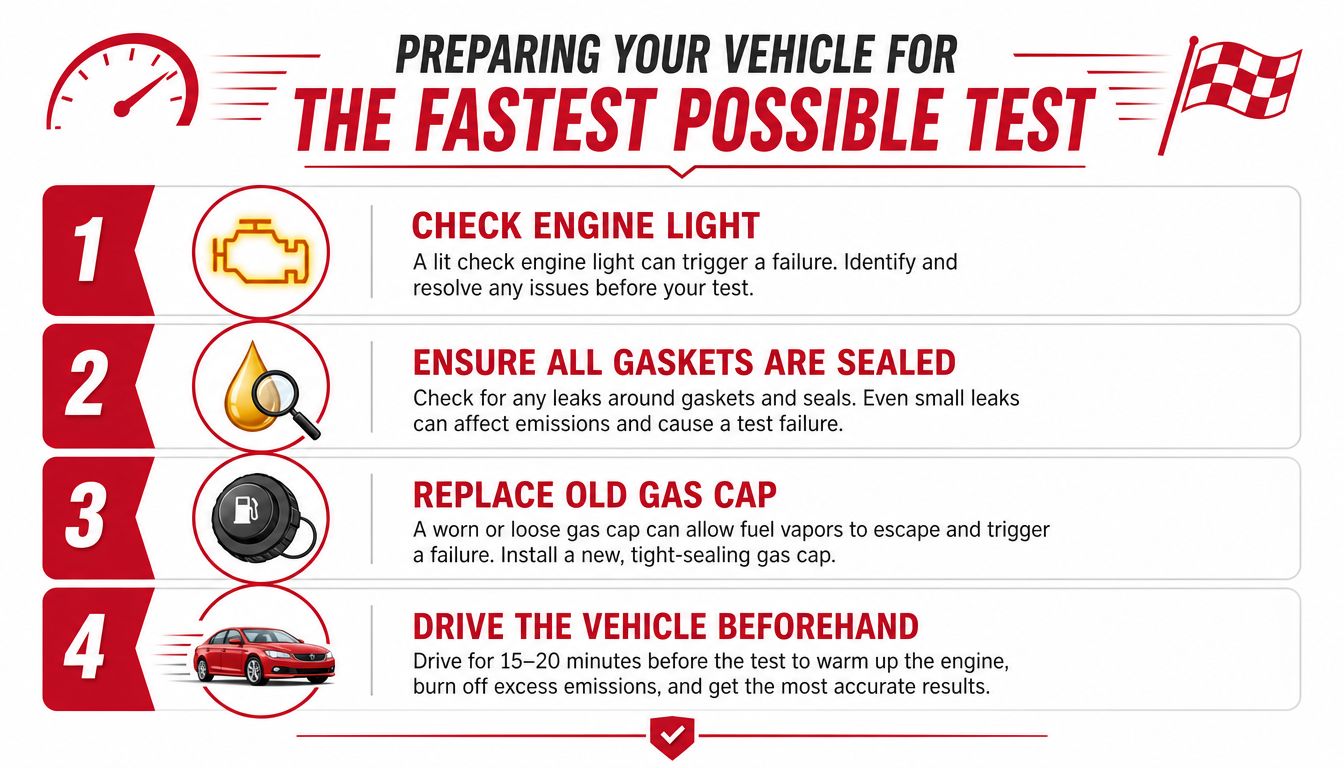
Most avoidable delays begin before the vehicle reaches the bay. Modern California inspections rely heavily on the vehicle's OBD-II system, so a car can look clean and run normally while still failing because its monitors aren't ready.
The California-focused failure guidance from Firehouse Smog identifies readiness monitors and check-engine-light status as dominant failure issues. It estimates that 30% to 40% of initial failures can come from monitors not being ready after a battery disconnect or reset, and reports that OBD-II failures account for 9.33% of initial BAR-97 tests.
Use this pre-visit checklist
- Check the warning lights: Don't arrive with the check-engine light illuminated. If it came on recently, diagnose the cause rather than clearing the code.
- Avoid a last-minute battery reset: Disconnecting the battery can erase monitor data. If a reset has already happened, the vehicle may need mixed driving to complete its drive cycle.
- Leave time after repairs: Clearing diagnostic trouble codes immediately before testing can create a not-ready condition. Give the vehicle time to complete the required monitoring.
- Inspect the gas cap: A loose or damaged cap can trigger an evaporative-emissions fault. Make sure it seals properly before you leave.
- Bring the renewal notice: The notice helps the station verify the required inspection type and registration timing.
- Check the tires: Some inspection equipment uses a dynamometer. Proper inflation supports a smoother, safer test.
- Call about large vehicles: RVs and motorhomes may fit only when size and equipment conditions allow. Confirm before driving over.
Choose the visit time carefully
A coupon doesn't help if you spend the morning waiting. Early visits, extended evening hours, and weekend availability can make scheduling easier, while two-bay operations may keep vehicles moving more consistently. Bring your registration information, renewal notice, coupon, and payment method together so check-in doesn't stall.
If the check-engine light has been reset, don't gamble on a rushed appointment. Complete the vehicle's drive cycle first, or ask a qualified technician whether the monitors are ready. The OBD readiness monitor guide explains the issue in practical terms and helps you avoid an unnecessary failed visit.
Comparing Total Cost Scenarios With and Without a Coupon
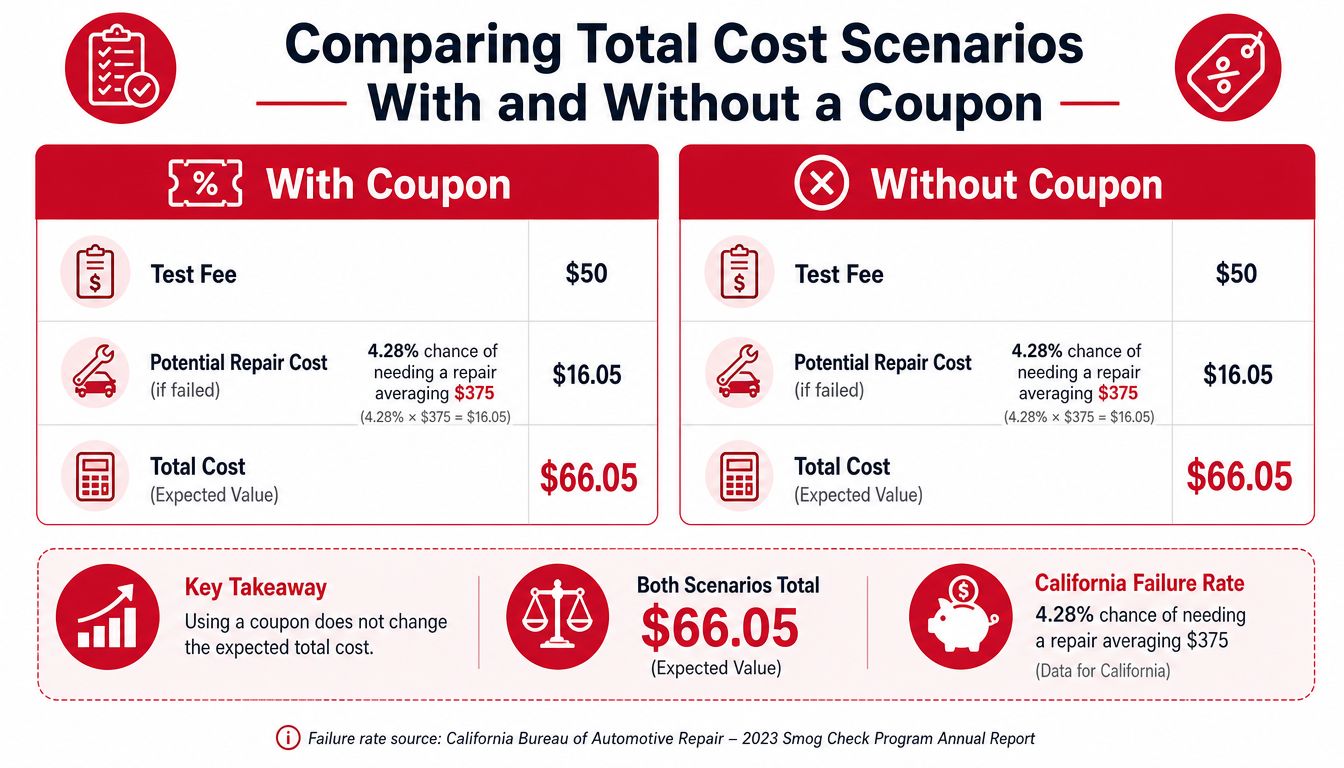
A coupon only lowers the inspection portion of the bill. For a first-visit pass, calculate the inspection charge, add the required certificate fee, then subtract the valid discount. That figure is your immediate out-of-pocket cost, not necessarily the full cost of compliance.
A failed test changes the calculation quickly. Repairs, diagnostics, a second inspection, and lost work time can outweigh a larger headline discount. Choose a coupon with retest coverage when the terms are clear. A smaller discount with a covered retest can cost less overall than a bigger discount that applies only once.
Compare the offers this way
| Situation | With a coupon | Without a coupon |
|---|---|---|
| Pass on the first test | Inspection fee minus the valid discount, plus the certificate fee | Full inspection fee plus the certificate fee |
| Fail the first test | Possible repair expense, with retest coverage only if stated in the offer | Possible repair expense and a separate retest charge unless the station provides coverage |
| Registration task remains | Look for a station that also handles eligible DMV services | You may need a separate DMV visit |
Retest risk is real, even though no general failure range predicts your vehicle's result. Compare the offer's retest terms, certificate-fee exclusion, expiration date, and vehicle restrictions before booking. The coupon should reduce the final bill, not merely advertise a lower inspection price.
Time also belongs in the total. A qualifying station that handles DMV registration services on site can eliminate another trip. A test-only workflow keeps emissions compliance separate from repair sales, which may help you control the visit's scope and cost.
For an Antioch driver near a renewal deadline, pick the offer with the lowest realistic out-the-door cost: discount, certificate fee, possible retest, repairs, and travel time. That is the comparison that saves money.
Your Action Plan for a Fast and Affordable Smog Check
Start with the renewal notice, not the coupon. Check whether it requires STAR, then inspect the vehicle for warning lights, recent battery work, and obvious gas-cap problems. If you reset the battery or cleared codes, wait until the monitors are ready before booking the test.
Use this short checklist:
- Confirm eligibility: Read the DMV notice and identify the required station type.
- Review the offer: Check the expiration, vehicle restrictions, certificate-fee exclusion, and retest terms.
- Prepare documents: Bring the renewal notice, registration information, identification, and coupon.
- Call for edge cases: Ask about RVs, motorhomes, diesel vehicles, unusual dimensions, or unclear coupon language.
- Pick a practical time: Use seven-day smog testing and extended hours to avoid the busiest part of your day.
- Finish registration promptly: If you need eligible DMV services, ask about on-site renewal and sticker issuance.
Fire House Smog is located at 2900 Lone Tree Way, Antioch, CA 94509, and can be reached at 925-754-1600. Its posted schedule lists smog testing seven days a week, DMV services Monday through Saturday from 9:30 AM to 5:00 PM, and Sunday DMV services from 12:00 PM to 4:00 PM. Call first for larger vehicles or any question about coupon eligibility.
The test-only model keeps the visit centered on emissions compliance rather than repair sales. That makes the cost easier to evaluate, especially when you compare the initial discount with the certificate fee and retest risk.
Visit Fire House Smog at 2900 Lone Tree Way in Antioch with your renewal notice and coupon ready. Call 925-754-1600 first if you have an RV, unusual vehicle, STAR question, or need to confirm retest terms, then schedule a focused test-only visit that keeps your total cost and time under control.
A typical California smog test commonly includes a station-set inspection charge plus an $8.25 state certificate fee, so the all-in vehicle emissions test cost varies by provider and should be confirmed before testing. In Antioch, the right question isn't just “What's your test price?” but “What will I pay if the vehicle passes, fails, or needs a retest?”
Your DMV renewal notice may arrive when you're busy, your registration is close to expiring, and you need a smog check quickly. A low advertised price can look appealing, but it may exclude the certificate fee, apply only to certain vehicles, or provide no protection if the vehicle fails and must return.
California's system is easier to manage once you separate the bill into its parts. The station controls the inspection charge, while the state certificate fee is fixed. Your vehicle's fuel type, size, model year, testing designation, and retest terms can change the final amount.
Table of Contents
- What Antioch Drivers Should Expect to Pay
- Why California Smog Costs Have Two Parts
- How STAR Testing Changes the Process
- How Vehicle Type Affects Test Eligibility and Cost
- What Happens During a Test-Only Smog Visit
- Fire House Smog Pricing Features Compared
- Ways to Save and Plan Your Local Visit
- Your Final Cost Planning Checklist
What Antioch Drivers Should Expect to Pay
An Antioch driver who needs a smog check before registration renewal should plan for the full compliance cost, not just the largest discount in an advertisement. The bill usually combines the station's inspection charge with California's $8.25 smog certificate fee. The California smog-check guidance from the Bureau of Automotive Repair explains that the certificate fee is fixed, while the station sets its inspection price.
For ordinary vehicles, published California fee guides and BAR materials commonly show base inspection prices around $29.95 to $69.95, with the $8.25 certificate fee added after a passing test. That puts a typical passing visit at roughly $38.20 to $78.20 before coupons, vehicle-specific charges, STAR requirements, or retest costs. Ask the station to state the complete passing price before you arrive, rather than assuming the advertised test rate includes every charge.
Confirm the price before you drive over
Call with the vehicle's year, make, model, fuel type, and body style. Ask:
- Total passing price: Does the quote include the $8.25 certificate fee?
- Vehicle eligibility: Can the station test your diesel, van, lifted truck, or recreational vehicle?
- Testing designation: Does your renewal notice require a regular inspection or a STAR-certified location?
- Retest terms: Is a retest included, discounted, or charged separately?
- Payment details: Which payment methods and coupons does the station accept?
A station may need the vehicle identification number and registration details to confirm the correct inspection path. Bring your renewal notice, current registration information, and an accepted payment method.
Practical rule: Compare the all-in passing price and the retest policy. A lower advertised rate can cost more if it excludes the certificate fee or offers no reasonable retest option.
Some newer vehicles follow a different compliance route. Vehicles less than 4 model years old can pay a smog abatement fee instead of receiving an inspection for the first 8 years they are registered, under the California DMV smog inspection rules. Those owners may not need to compare inspection prices during that period.
STAR requirements can change which stations are eligible to perform the inspection and may affect the station's price. Review this Antioch STAR smog check cost guide before booking, especially if your renewal notice specifies STAR testing. If you also need DMV service, ask whether the station offers a combined option and what it includes. The certificate fee remains regulated, while local inspection pricing, vehicle eligibility, and retest terms determine much of the final bill.
Why California Smog Costs Have Two Parts
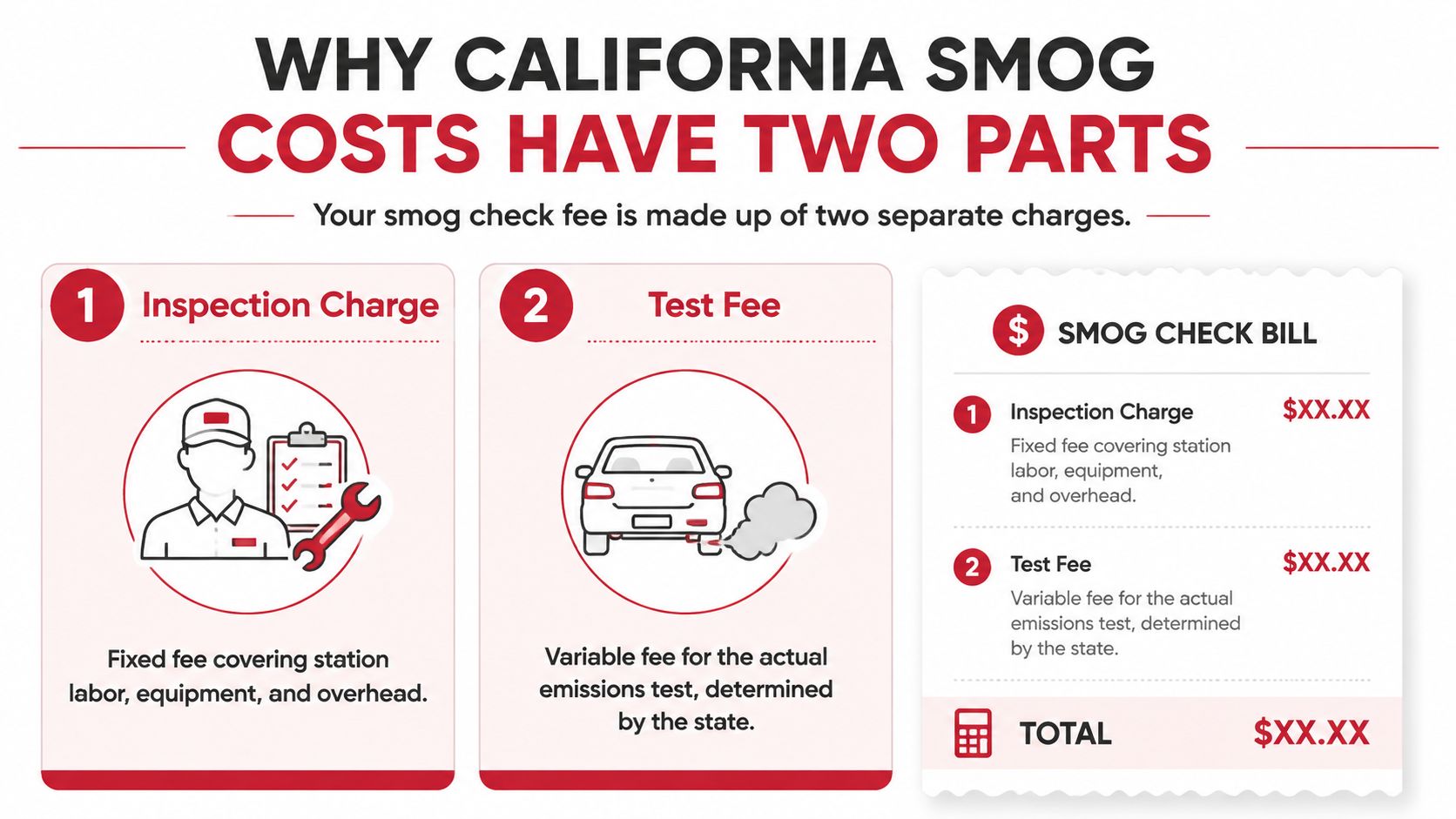
A California smog bill works much like a utility invoice. One line covers the service performed by the provider, and another line represents a required state charge. Treating both lines as one mysterious price makes it harder to compare stations accurately.
The first component is the inspection charge. Each licensed station sets that amount based on its operating costs, equipment, staffing, location, and business model. A test-only facility and a repair shop may structure their pricing differently, even when both perform a valid inspection.
The second component is the $8.25 California smog certificate fee. The Bureau of Automotive Repair states that a station must charge this fee, and the California DMV fee guidance identifies the same regulated certificate charge. The certificate is issued when the vehicle passes, so a passing visit normally includes both the inspection charge and the certificate fee.
What a quote should show
Ask the station to identify each component separately. A clear quote might describe the station's test charge, then identify the state certificate fee as a separate amount. If a coupon reduces the inspection charge, ask whether it also changes any certificate charge. State fees generally aren't treated like promotional labor discounts.
A failed test creates a different billing question. If no certificate is issued, the certificate component doesn't operate like a passing certificate charge. You may still owe the station's inspection charge, and any later diagnostic work or retest may be priced separately under the station's policy.
| Bill component | Who controls it | When to ask about it |
|---|---|---|
| Station inspection charge | The testing station | Before scheduling |
| California certificate fee | The state, collected by the station | Ask whether it's included in the quote |
| Retest charge | The station's policy and promotion terms | Before authorizing the first test |
| DMV renewal or registration charges | The DMV and transaction type | Keep separate from the smog bill |
That separation matters because vehicle emissions test cost isn't the same as your total registration expense. If you also renew your registration at the station, the DMV transaction creates a separate charge. Review California vehicle registration cost information so you don't mistake a combined service receipt for a single smog price.
How STAR Testing Changes the Process
STAR testing isn't just a premium version of an ordinary smog check. California uses STAR-certified stations for vehicles that require a more specific testing channel, including vehicles directed to STAR testing or associated with certain previous inspection outcomes.
Check your renewal notice before choosing a station. If it identifies a STAR requirement, a regular non-STAR location may not be able to complete the transaction correctly. Booking the cheapest nearby appointment first can create an avoidable second trip if the station can't accept the vehicle under its assigned testing requirement.
Regular testing and STAR testing serve different purposes
A regular inspection is appropriate when the renewal notice and vehicle records allow ordinary testing. STAR certification identifies stations that meet additional state program requirements and can handle vehicles directed into that channel.
| Situation | What to confirm |
|---|---|
| Ordinary renewal | Whether the station accepts the vehicle for standard testing |
| STAR or directed notice | Whether the facility is currently STAR-certified |
| Previous failed inspection | Whether the next test must occur at a STAR site |
| Unusual vehicle configuration | Whether the station's equipment can accommodate it |
STAR stations may charge differently because their operating requirements, equipment, and oversight differ from those of other stations. Don't assume that a STAR label automatically means every vehicle needs STAR testing, and don't assume a standard station can substitute for a required STAR location.
Read the renewal notice first. The designation determines where you can test, while the station determines its inspection price.
For Antioch drivers, a regular renewal notice may allow more flexibility, but the notice remains the controlling document. Call before visiting if the vehicle has a prior failure, a directed-test instruction, or unusual registration circumstances.
Use this guide to understand what STAR-certified smog means before paying for an appointment. The practical recommendation is firm: verify the required test type before comparing prices. A lower quote isn't a saving if the facility can't submit the required inspection.
How Vehicle Type Affects Test Eligibility and Cost
The vehicle itself often determines whether a station can perform the test, how long the visit may take, and whether the quoted price applies. A gasoline passenger car usually follows the station's standard process, but a diesel truck, oversized van, motorhome, or modified vehicle may need advance confirmation.
Start with the vehicle class. Gasoline cars and many light-duty trucks are commonly handled by stations equipped for ordinary passenger vehicles. Larger trucks, vans, and recreational vehicles can present clearance, weight, wheelbase, or equipment limitations. A station may accept one RV configuration but decline another because the testing bay or dynamometer setup isn't suitable.
Fuel and model year matter
Diesel and gasoline vehicles don't use identical emissions-testing procedures. Diesel testing can involve different equipment and facility requirements, so don't rely on a gasoline-car price when calling about a diesel truck.
Older vehicles may follow different inspection rules than newer vehicles, and some hybrids or pre-1996 vehicles may have exemptions or partial requirements depending on the applicable California rule. Don't assume an exemption based only on the vehicle's appearance or fuel label. Confirm the exact requirement through the DMV notice or a licensed station.
The station may also need to know whether the vehicle has been modified. Lift kits, unusual tire sizes, aftermarket exhaust parts, and nonstandard engine configurations can affect whether the vehicle fits the equipment or passes visual and emissions checks.
Call before booking unusual vehicles
Give the station precise information:
- Vehicle dimensions: Mention a motorhome, extended van, lifted truck, or unusually long wheelbase.
- Fuel type: State whether it runs on gasoline, diesel, or another approved fuel.
- Model year: The year can affect inspection eligibility and procedure.
- Registration location: County and registration details can affect the required compliance process.
- Prior results: Tell the station if the vehicle failed previously or received a directed-test notice.
A refusal at the bay can still cost you time, fuel, and a missed registration deadline. A short call protects against that outcome and helps the station give a vehicle-specific quote instead of a generic passenger-car price.
The right expectation is not that every vehicle costs more. It's that the station must confirm the vehicle before promising a price.
What Happens During a Test-Only Smog Visit
You arrive with the vehicle and registration information, and the technician begins by confirming the VIN, license information, and testing requirement. At a test-only station, the visit focuses on inspection and reporting rather than repair sales.
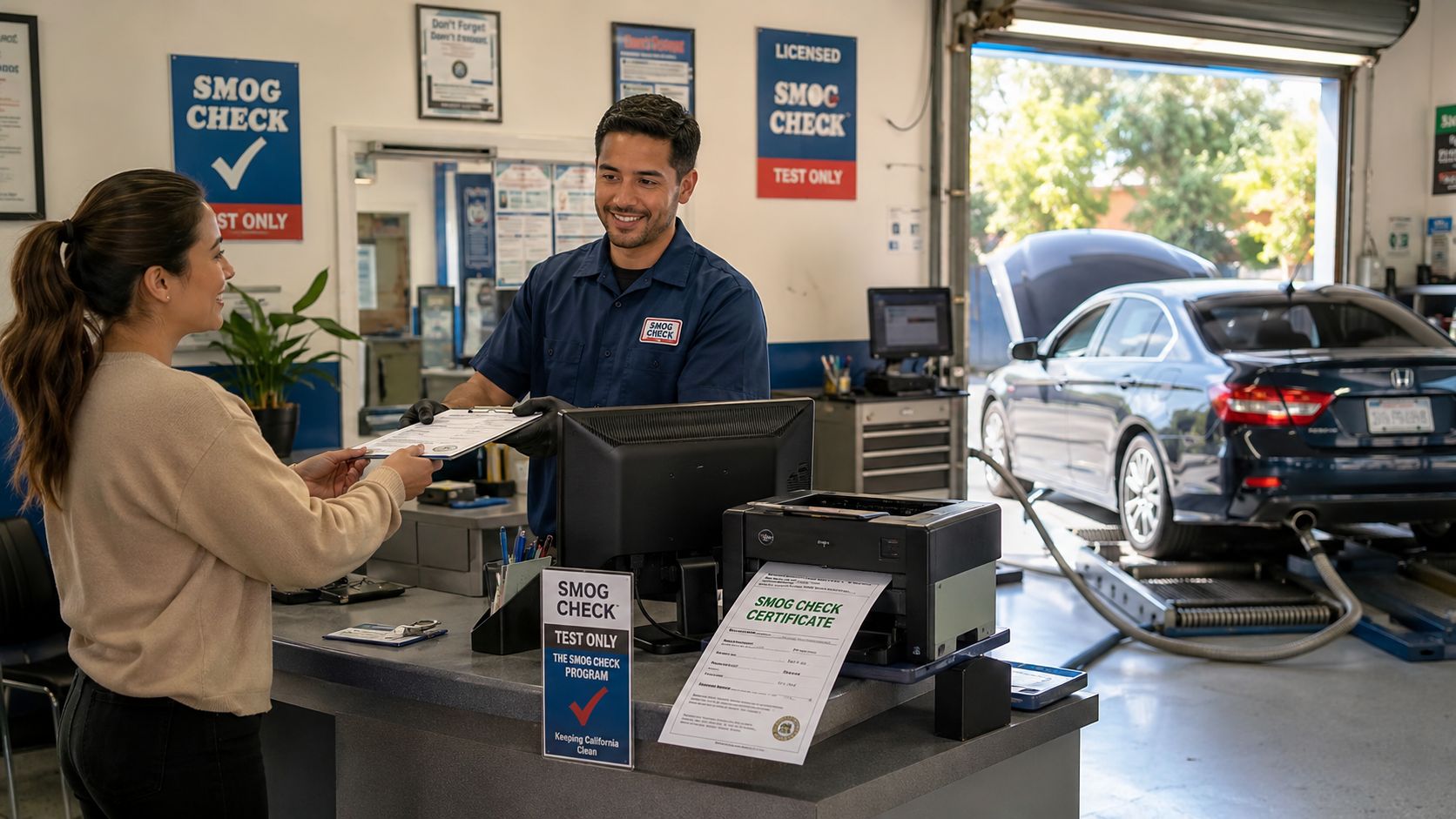
The technician may connect an OBD-II scanner to a compatible vehicle, inspect emissions-related equipment, and use a tailpipe probe or dynamometer when the vehicle and procedure require it. You generally wait while the station records the results and submits the inspection electronically through the California emissions-testing system.
A test-only model can make the financial conversation cleaner. The station doesn't sell the repairs needed after a failure, so the technician's role is to document the test result and explain what the result means. If the vehicle fails, ask for the printed failure information and take it to a repair provider you trust.
The result determines the next cost
A passing result leads to electronic certification and the applicable state certificate charge. A failed result means you may need diagnosis, repairs, and another inspection. The original station's retest policy becomes important at that point, especially if the promotion requires repairs within a specific window or applies only to certain vehicle types.
Two service bays can help a station keep vehicles moving, but capacity still varies by time of day. Ask whether an appointment is needed and whether the station accepts walk-ins.
The inspection doesn't automatically complete every DMV transaction. If you need registration renewal, ownership transfer, or another DMV service, confirm whether the station provides it and whether that transaction carries separate charges.
For a visual overview of the inspection experience, watch the following facility demonstration:
Before leaving, confirm that the result was transmitted and ask what document, receipt, or confirmation you should keep. That final check prevents uncertainty when you complete registration.
Fire House Smog Pricing Features Compared
A station's promotional features matter only when they reduce the all-in cost of compliance. A coupon may lower the initial inspection charge, but it doesn't necessarily eliminate the state certificate fee. A free retest may have more practical value than a larger first-visit discount if the vehicle fails.
Fire House Smog operates as a STAR-certified test-only station in Antioch and offers coupon-based pricing, a free retest under its site policy and coupon terms, and DMV registration services. Treat those features as items to verify, not as assumptions. Other local stations may offer a lower advertised inspection charge, different retest conditions, or a different vehicle eligibility list.
Compare the offer behind the headline
| Feature | Why it can affect total cost | Question to ask |
|---|---|---|
| Coupon discount | Reduces the station-set inspection charge when valid | Does it apply to this vehicle and date? |
| Free retest | Limits the cost of returning after a failed test | What time, mileage, repair, or coupon conditions apply? |
| Test-only operation | Separates inspection from repair sales | Will the station provide failure information without requiring repairs there? |
| STAR certification | Supports vehicles assigned to STAR testing | Does this facility meet the requirement on my notice? |
| DMV services | May combine registration work with the visit | Which DMV charges are separate from the smog bill? |
The retest language deserves special attention. “Free retest” doesn't mean every follow-up visit is automatically free. Ask whether you must repair the vehicle elsewhere, return within a stated period, show the original receipt, or meet vehicle-specific conditions.
A discount protects the first visit. A clear retest policy protects the entire transaction.
Don't choose a station solely because it advertises the lowest number. Ask for the passing total, the certificate treatment, the retest rules, and the eligibility limits in one conversation. That comparison gives you a better measure of vehicle emissions test cost than a coupon headline alone.
Ways to Save and Plan Your Local Visit
The easiest savings usually come from preventing a second trip. Before you leave home, check the renewal notice, gather the registration information, and call the station with the exact vehicle details. That preparation helps identify STAR requirements, size restrictions, and retest terms before money changes hands.
Use this Antioch checklist:
- Bring the coupon first: Present a current coupon before service begins. Ask whether it applies to the station's inspection charge and whether any vehicle exclusions apply.
- Clarify the retest window: Ask whether a free or reduced retest has time, mileage, repair, receipt, or coupon conditions.
- Choose practical hours: Confirm weekend and evening availability if weekday work makes a daytime appointment difficult.
- Combine services carefully: If you plan to renew registration at the same location, ask which DMV services are available that day and which charges are separate.
- Call about large vehicles: Motorhomes, lifted trucks, and oversized vans need bay-clearance and equipment confirmation before arrival.
- Prepare payment: Confirm accepted payment methods so a completed inspection isn't delayed at checkout.
Prevent avoidable retests
A check-engine light, incomplete emissions monitors, or a recently disconnected battery can create problems during testing. A station can explain the inspection result, but it can't promise a pass before examining the vehicle. If the vehicle has a known warning light or recent emissions repair, address that issue before scheduling rather than paying for a predictable failure.
A test-only station can also reduce pressure to approve repairs on the spot. If the vehicle fails, get the results in writing, compare repair options, and confirm the retest terms before returning.
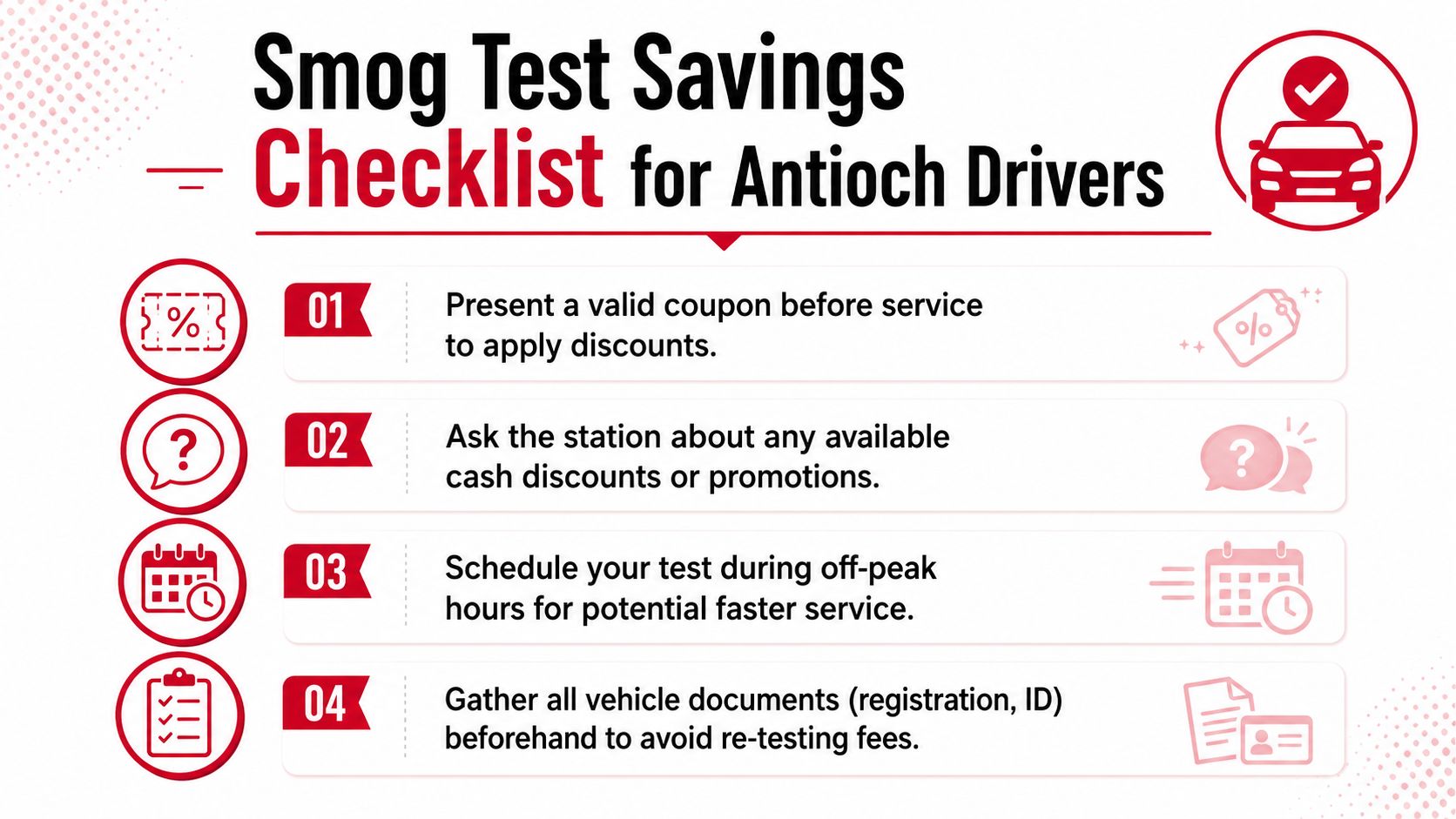
When calling, ask one final question: “What is the total I should expect if the vehicle passes, and what would I pay if it needs a retest?” That question forces the station to explain the bill instead of quoting an incomplete starting price.
Your Final Cost Planning Checklist
Before booking an Antioch smog check, separate the costs into three groups.
First, identify the station-set inspection charge. This is the labor and equipment price the provider controls. Next, identify the $8.25 California certificate fee, which is the regulated state component charged after a passing test. Finally, keep retest charges, repairs, DMV renewal fees, and registration costs separate from the initial inspection quote.
Answer these questions before you schedule:
- What test does the DMV notice require? Regular, STAR, or a directed inspection?
- Can this station test the vehicle? Confirm fuel type, size, model year, and modifications.
- What is the complete passing price? Ask whether the certificate fee is already included.
- Is a coupon active? Verify the expiration date and vehicle restrictions before service.
- What happens after a failure? Get the retest price and conditions in writing.
- Can the station handle my schedule? Confirm appointments, weekend hours, and any DMV service availability.
- Will the result be transmitted electronically? Ask what receipt or confirmation you'll receive.
Newer vehicles may qualify for California's smog abatement route rather than an inspection, as described earlier. Every other driver should compare the complete transaction, not just the first number in an advertisement.
A quick phone call is the most reliable way to produce a predictable vehicle emissions test cost. Confirm eligibility, separate the certificate fee from station pricing, and understand the retest policy before you drive to the bay.
Fire House Smog provides STAR-certified test-only inspections in Antioch, with coupon options, retest terms subject to site policy, and DMV registration services available for eligible transactions. Visit Fire House Smog to confirm your vehicle's testing requirements, current pricing, hours, and appointment options before you arrive.