
A hybrid smog check in California is usually an OBD-II diagnostic inspection rather than a dynamometer tailpipe test. Whether your hybrid must be tested depends on its model year and the registration event, such as renewal, first California registration, or a change of ownership.
You may be standing at a smog station wondering whether your car will be treated like a gasoline vehicle, an electric vehicle, or something in between. The answer affects more than the equipment in the service bay. It determines whether you need a test at all, what the inspection computer will evaluate, and whether a warning about the hybrid battery has anything to do with registration.
Most hybrid owners arrive with two worries: “Will my car pass?” and “Will this turn into an expensive battery repair?” Those concerns are understandable, but they often point in the wrong direction. A hybrid can fail because an emissions monitor hasn't completed after a 12-volt battery replacement, even when the car drives normally. A traction battery can lose electric-only range without being the reason a smog certification fails.
Table of Contents
- The Hybrid Owner at the Smog Counter
- When a Hybrid Has to Be Tested
- What the Inspection Computer Looks At on an OBD II Hybrid
- A Pre-Test Checklist That Helps
- Why Hybrids Fail and What It Means
- Choosing a STAR Test Only Station for Your Hybrid
- Your Hybrid Smog Game Plan
The Hybrid Owner at the Smog Counter
A driver pulls into a California smog station with a familiar question: “Do you put hybrids on the rollers?”
For most newer hybrids, the answer is no. California's program shifted inspections for 2000 model-year and newer vehicles toward an OBD-II-focused process through Assembly Bill 2289, signed in 2010. The inspector connects diagnostic equipment to the vehicle, checks the emissions-control data, and confirms that the required electronic tests have completed. The process is usually closer to a software and readiness review than to a traditional tailpipe measurement. California's Smog Check history describes that transition and the state's treatment of hybrid vehicles.
That distinction matters because a hybrid's gasoline engine doesn't run continuously. The engine may shut off while the vehicle is moving on electric power, then restart for acceleration, battery charging, cabin heat, or other operating needs. Watching a continuously running engine on a dynamometer isn't the normal way to judge a newer hybrid's emissions compliance. The vehicle's control modules record whether its emissions systems have performed their self-checks and whether they found faults.
The classification question
California formally brought hybrids into Smog Check requirements in April 2015, ending the assumption that electric-assist vehicles were categorically exempt. A hybrid still has an internal-combustion engine, catalytic converter, oxygen sensors, evaporative-emissions equipment, and other emissions controls. The relevant question is not just whether the car has a battery. It is whether the vehicle falls within the state's covered categories and whether the current registration event requires certification.
If you want to understand how station classifications and certifications affect the testing process, this guide to what a STAR-certified smog station is provides useful background.
Counter advice: A hybrid isn't “basically electric” for California emissions rules. Treat it as an emissions-controlled vehicle with a different operating strategy.
The good news is that the inspection is often less invasive than owners expect. Most newer passenger hybrids don't need a conventional dynamometer tailpipe test. The bigger practical risk is an incomplete monitor, stored emissions code, or malfunction indicator lamp problem that the vehicle owner can't see from normal driving.
When a Hybrid Has to Be Tested
You are at the DMV counter or renewing online, and the confusing part is not whether your hybrid has a battery. It is which registration event is in front of you. A hybrid can skip an inspection in one situation, then need a passing smog certificate in another. That catches owners off guard because the trigger is administrative first, technical second.
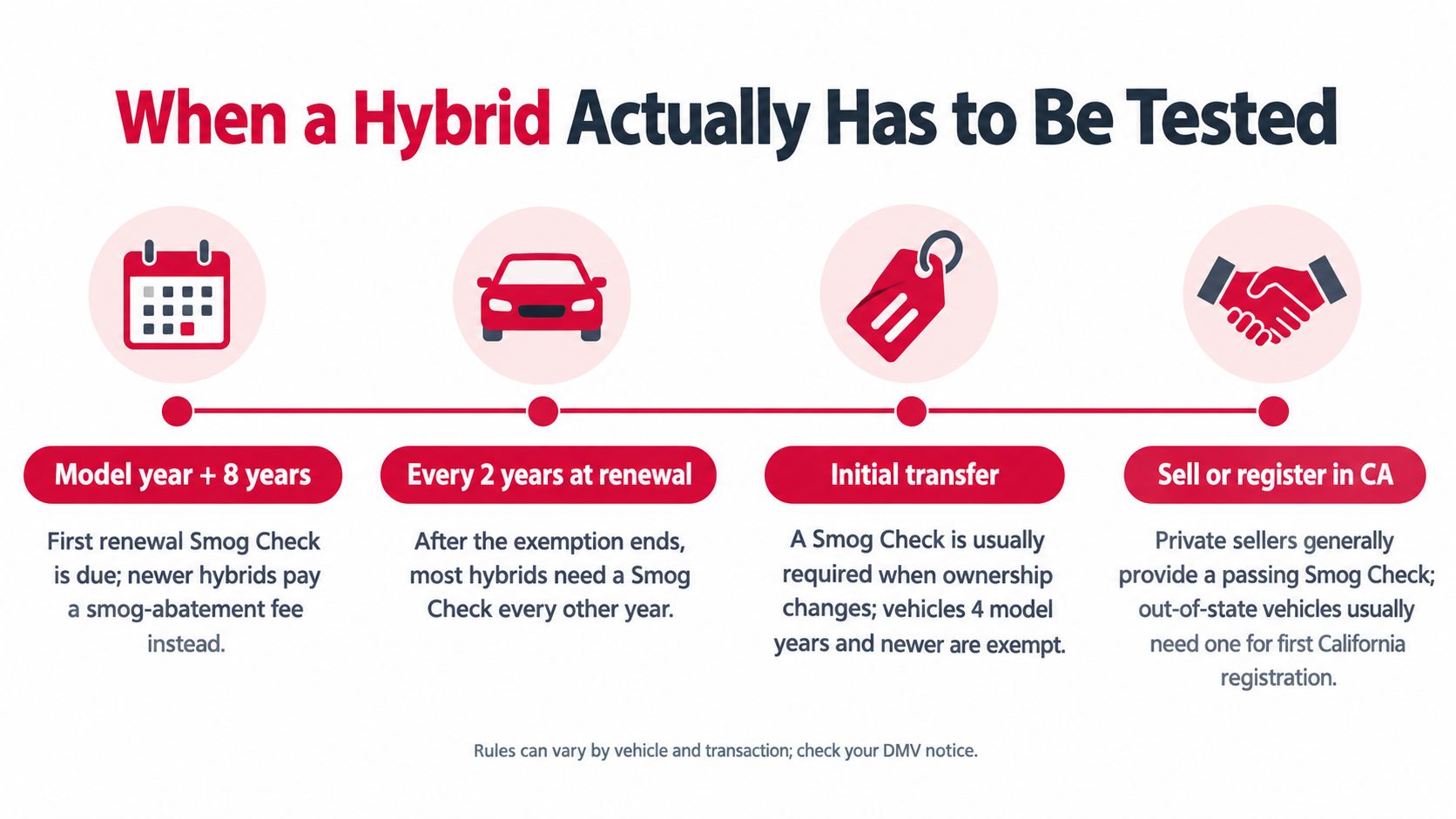
For renewal, California generally gives gasoline, hybrid, and alternative-fuel vehicles that are eight model years old or newer a different path. Instead of the inspection, the owner pays a smog-abatement fee with registration. The state explains the timing by model year. Add eight to the vehicle's model year. A 2020 hybrid generally reaches its first renewal-related Smog Check in 2028, assuming no separate inspection event applies.
That is a delay, not a lifetime pass. Once the vehicle ages beyond that window, a normal renewal can require a passing certification.
Use the model year and the event together
A change of ownership follows a different age rule. Vehicles four model years old or newer generally avoid the inspection during a qualifying transfer and pay a smog-transfer fee instead. After that point, the transfer may require certification, depending on the transaction and registration details.
The easiest way to sort it out is to check two things together, the model year and the event. The model year tells you which age window might apply. The event tells you which rulebook the state is using. Renewal, first California registration, and ownership transfer do not always lead to the same answer.
Use this sequence:
- Identify the model year. Use the model year, not the date you bought the vehicle.
- Identify the event. Ask whether this is a renewal, first registration in California, or ownership transfer.
- Apply the relevant window. For renewal, add eight to the model year. For a qualifying ownership transfer, consider the four-model-year rule.
- Check for a separate trigger. A vehicle may fall within a fee window for renewal but still need an inspection for first California registration or another event.
Here is where hybrid owners sometimes spend money they did not need to spend. If a registration deadline is coming up, people may assume any problem with the hybrid system, especially the high-voltage battery, will block the smog check. In many cases, that is the wrong connection. The inspection requirement is tied first to the registration event, and the pass-or-fail decision for a newer hybrid is usually about emissions software status, stored fault information, and monitor completion, not whether the traction battery feels weaker than it used to.
For example, a 2020 hybrid may still be inside the renewal fee window before 2028. If that same car is being brought into California for initial registration, the renewal timing does not settle the question. The event changes the requirement.
Across the statewide program, fleet-adjusted roadside failures declined from 19% in 2018 to 14% in 2025, a five-percentage-point reduction, according to The Bureau's Smog Check performance report. Those figures are not hybrid-specific, but they help frame the broader Smog Check system owners are dealing with.
What the Inspection Computer Looks At on an OBD II Hybrid
For a qualifying newer hybrid, the inspector is primarily checking whether the vehicle's emissions-control computer can demonstrate that its required systems are operating correctly. The inspection isn't based on whether the hybrid feels smooth, whether its electric range seems strong, or whether its fuel economy looks normal.
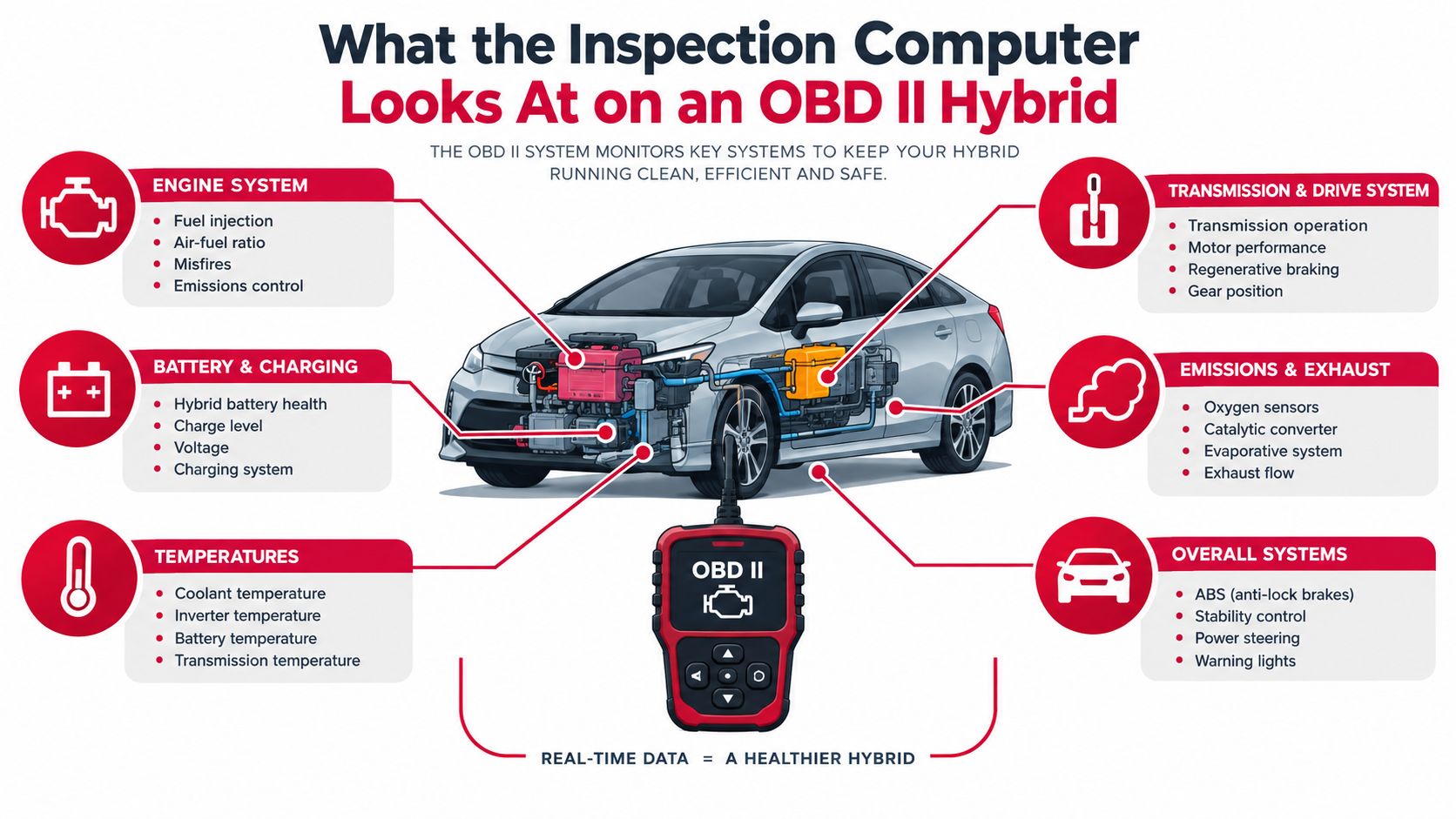
The OBD-II process centers on three questions:
- Does the malfunction indicator lamp work correctly?
- Are emissions-related diagnostic trouble codes stored?
- Have the required readiness monitors completed?
The malfunction indicator lamp, commonly called the check-engine light, must illuminate when the ignition is switched on and then turn off after the engine starts when no active condition requires it to stay lit. The inspector also checks the diagnostic information and monitor status. California's BAR Smog Check reference guide describes the visual and functional emissions checks and the OBD process used for most 2000-and-newer vehicles.
Why readiness matters more in a hybrid
A readiness monitor is a self-test performed by the vehicle under the right conditions. Depending on the system, the vehicle may need particular temperatures, speeds, loads, fuel levels, or periods of engine operation before the monitor can report complete. Short trips and frequent electric-only operation can make it harder for some tests to run naturally.
That creates a common counter experience. The owner says, “The light is off and the car drives fine.” The inspection computer says one or more required monitors are incomplete. Both statements can be true, but the vehicle still may not be ready for certification.
Practical rule: An extinguished check-engine light is helpful, but it isn't proof that the OBD inspection will pass.
A hybrid can also return normal fuel economy and still fail if the catalyst, oxygen sensor, evaporative-emissions system, or engine-control system has stored an emissions-related fault. Hybrid operation lowers or changes engine usage, but it doesn't remove the emissions systems that monitor gasoline-engine operation.
You can learn more about how these self-tests work in this explanation of OBD readiness monitors. The important point is simple: the computer needs completed evidence, not just a symptom-free drive.
A Pre-Test Checklist That Helps
A hybrid smog check usually goes sideways before the car reaches the bay. The trouble is often software readiness, not a dramatic mechanical failure. If the inspection computer has incomplete monitor data, the car can be turned away even when it starts, drives, and shows no warning light.
Start with the dash because it gives you the first clue about what the car and the inspection computer are going to see. Turn the ignition on without starting the vehicle and confirm that the malfunction indicator lamp comes on during the bulb check. Then start the car. If the light stays on, flashes, or never came on in the first place, stop there and diagnose the problem before paying for a certification test.
The same-week preparation list
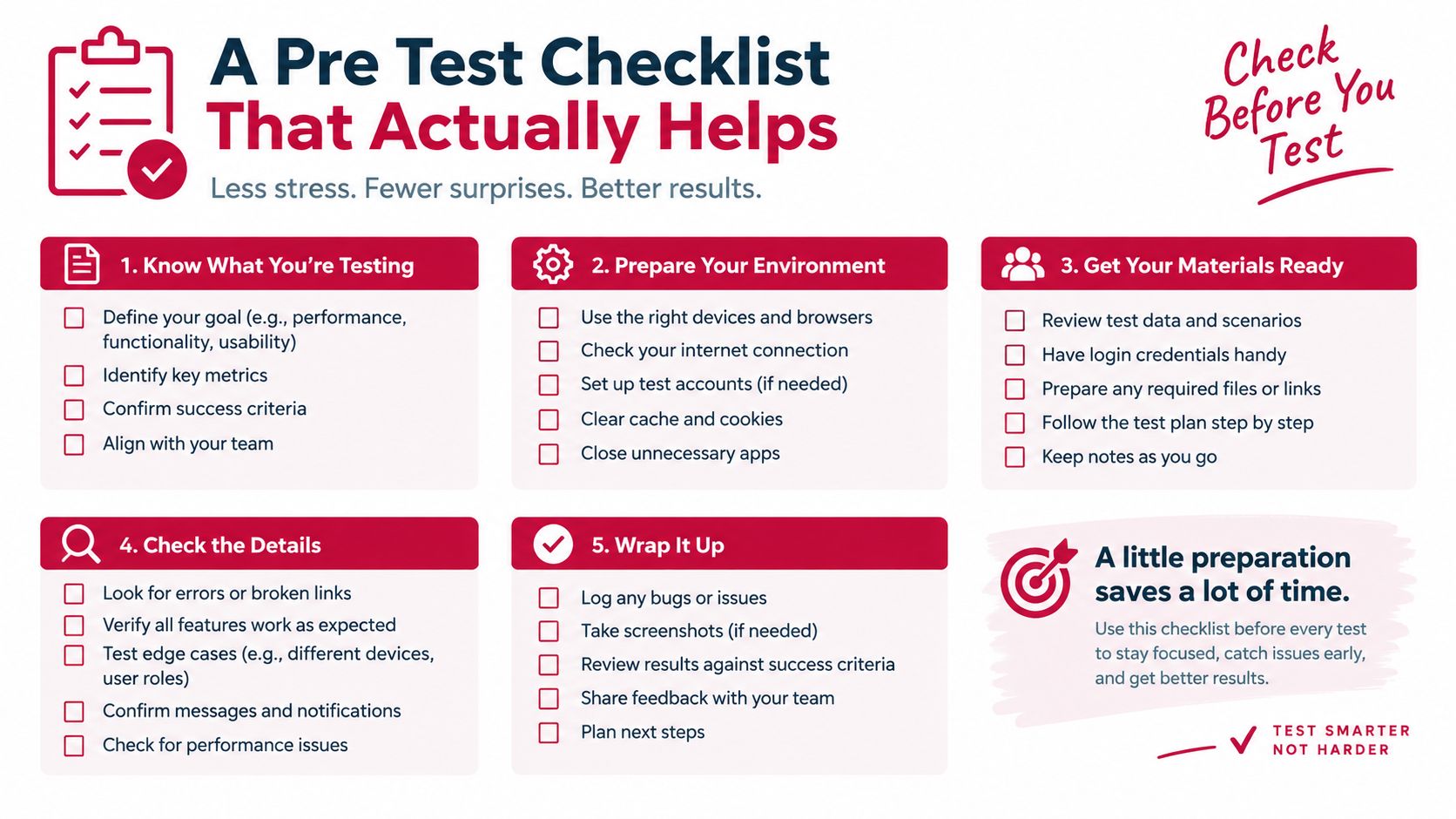
- Scan before scheduling: Use a qualified OBD-II scan tool, or have a technician check for stored emissions codes and readiness status.
- Don't erase codes casually: Clearing codes wipes out the computer's recent test history and can send monitors back to incomplete.
- Treat a 12-volt battery replacement as a reset event: Battery disconnection can erase readiness information even when the repair had nothing to do with emissions.
- Follow the manufacturer's drive cycle: After power loss, code clearing, or emissions repairs, use the vehicle maker's procedure so the monitors have a chance to run.
- Check the fuel cap: A loose, damaged, or poorly seated cap can contribute to an evaporative-emissions fault.
- Look for altered emissions equipment: Missing, disconnected, or modified components can create an inspection problem before any deeper diagnosis begins.
- Avoid last-minute testing after repairs: Give the car time to finish its self-checks instead of going straight from a reset to the station.
That last point matters more on hybrids than many owners expect. Because the gasoline engine may shut off often, some monitors do not complete as quickly as they would on a conventional car. The car can feel normal and still be unready. That does not point straight to a failing high-voltage battery. It usually means the emissions computer has not finished its homework.
Drive-cycle instructions are also vehicle-specific. A Prius, Escape Hybrid, and Accord Hybrid may each need different temperatures, speeds, fuel levels, or engine-running time before every required monitor reports complete. Generic internet advice can miss those details. If a scan says the check-engine light is off but some monitors are incomplete, read that as a readiness problem, not a clean bill of health.
Before you pay for the test, ask one question: “Are the required monitors complete?”
For fleet managers, the same habit prevents wasted trips. A quick pre-screening scan separates vehicles that are ready from vehicles that still need a drive cycle or diagnosis. It also helps you tell the difference between a real emissions fault and a recent 12-volt battery reset, which is a useful distinction when registration timing is tight.
Why Hybrids Fail and What It Means
You pull up for a smog check, the hybrid has been driving fine, and the result still comes back as a fail. At that point, many owners jump straight to the expensive fear: the high-voltage battery. The inspection usually works more like a software check than an old-style tailpipe event, so the first job is to identify which system the computer rejected.
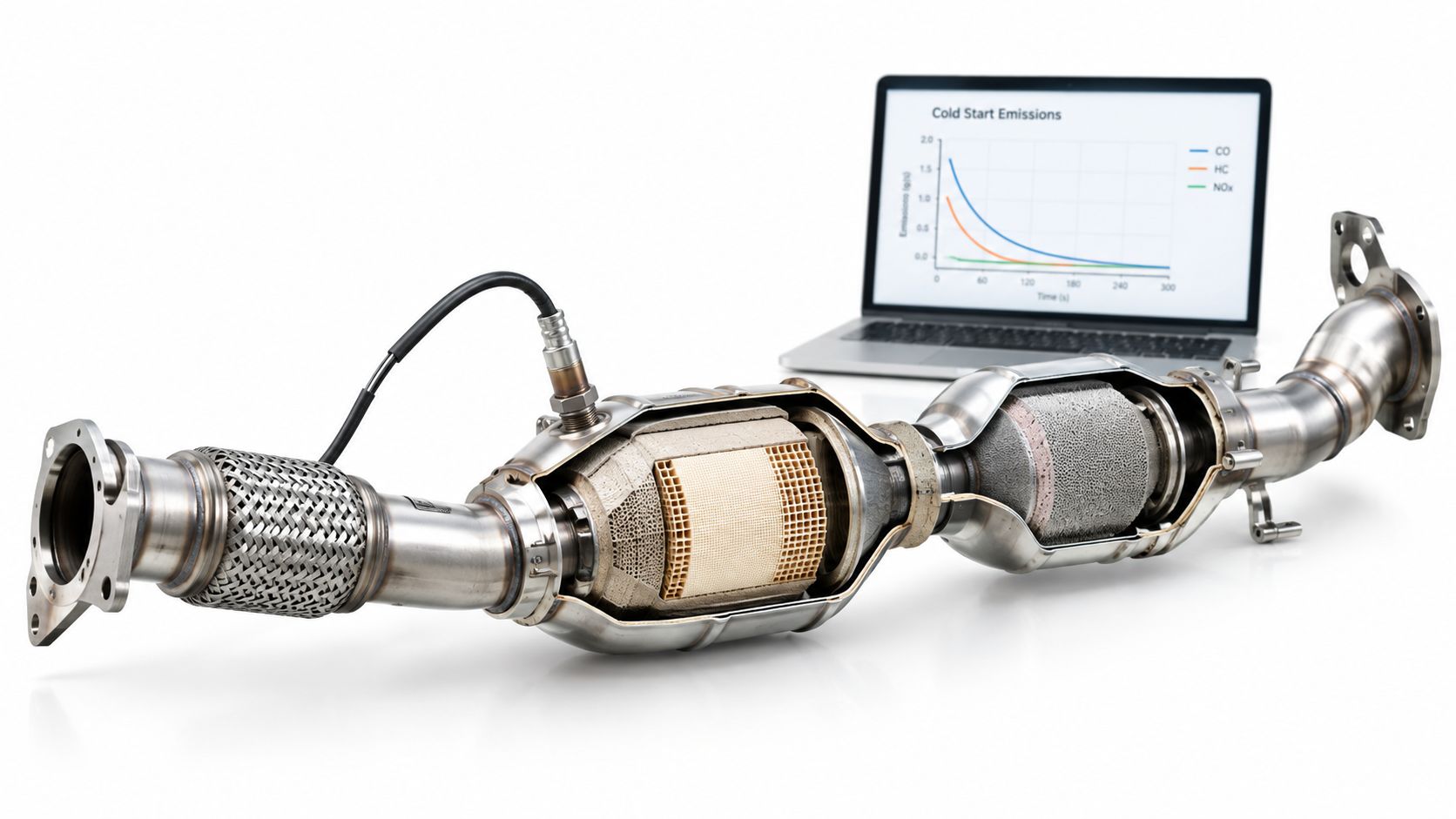
A catalyst or oxygen-sensor code points to the emissions-control side of the car. On a hybrid, the gasoline engine does not run continuously, so catalyst temperature can drop during electric operation or longer engine-off periods. Cold start matters too, because the converter begins below its working temperature and needs time and the right conditions to clean up exhaust efficiently. SAE technical material on cold start explains how startup strategy, engine load, and catalyst temperature affect emissions behavior.
Sort the warning by system
Start with the code family, because each one means something different.
Catalyst and oxygen-sensor faults can set emissions codes even if the car feels normal on the road. The control module may see poor oxygen storage in the catalyst, or a sensor signal that does not behave the way it expects.
EVAP faults involve fuel-vapor control, not the hybrid battery. A loose gas cap, a purge issue, or a small leak can store a code without changing how the car drives.
Readiness failures are different again. They often show up after codes were cleared, after the 12-volt battery was disconnected, or after driving that did not let all self-checks finish. In that case, the car may be rejected because the inspection computer sees incomplete monitors, not because it confirmed a fresh emissions part failure.
High-voltage battery degradation belongs in its own lane. Weak battery performance, reduced electric operation, or a hybrid warning light may need diagnosis, but those symptoms do not automatically decide the smog result. California's Smog Check requirements focus on the emissions inspection and OBD status rather than traction-battery capacity by itself.
12-volt battery problems can muddy the picture. The small battery can wipe readiness data when it is replaced or disconnected, while the registration problem still has nothing to do with the traction battery.
That distinction saves money. A traction-battery replacement will not complete an incomplete monitor. Better EV range will not erase a stored catalyst code. If you want a broader diagnostic map, review these common reasons a vehicle fails a smog check. The better counter question is simple: “Which OBD-II condition blocked certification?”
Choosing a STAR Test Only Station for Your Hybrid
A STAR-certified test-only station can be a practical choice when you want the inspection result separated from repair sales. The station performs the required emissions test but doesn't sell repairs connected to that result. That structure can make it easier to receive the diagnosis first and decide separately how, where, and whether to repair the vehicle.
For a typical passenger hybrid, the main concerns are certification, equipment, vehicle size, and scheduling. Most passenger cars, SUVs, and light-duty trucks fit standard testing arrangements, while some recreational vehicles and motorhomes may exceed a station's bay or equipment limits. Call ahead if your vehicle is unusually large or has special access requirements.
Compare the station to your situation
| Your concern | What to verify |
|---|---|
| You want an independent test result | Confirm that the station is STAR-certified and test-only |
| You drive a larger hybrid or RV | Ask whether the bay and equipment can accommodate it |
| You need registration handled promptly | Check whether the station provides licensed DMV services |
| You may need another inspection after repairs | Review the site's retest policy before testing |
| Your schedule is tight | Confirm current weekday, evening, or weekend availability |
Fire House Smog is one local option that provides STAR-certified test-only inspections, California DMV registration services, on-site sticker printing, and testing for eligible vehicles within its equipment limits. It also states that some RVs and motorhomes require a call ahead, which is sensible for larger vehicles.
A test-only station can't repair the catalyst, replace an oxygen sensor, restore a damaged EVAP line, or rebuild a hybrid battery. That limitation is useful when you want the inspection to answer one narrow question: Did the vehicle meet the emissions requirements at the time of testing?
Your Hybrid Smog Game Plan
Check the registration event first. A renewal, initial California registration, and ownership transfer can follow different requirements, so don't assume your hybrid is due just because a notice arrived.
Next, check readiness. The malfunction indicator lamp should behave correctly, stored emissions codes should be addressed, and required monitors should show complete. Don't clear codes or disconnect the 12-volt battery right before testing, and don't treat reduced electric range as automatic proof of an emissions failure.
Finally, choose a station that matches your vehicle's size and your practical needs. Confirm STAR test-only status, ask about larger vehicles, and verify retest and DMV-service policies before you arrive. Keep the smog-certification conversation focused on OBD-II codes, monitors, and emissions controls, then discuss traction-battery health separately with a hybrid specialist.
If your hybrid needs a clear, test-only emissions inspection or California registration assistance, visit Fire House Smog to review its available services and current hours. Bring up any recent battery replacement, code clearing, or repair history so the technician can help distinguish readiness issues from genuine emissions faults.