If you just got a DMV renewal notice, there's a good chance your real question isn't “where's a smog shop?” It's “do I need a STAR-certified station, or can I use any place that does inspections?” In Concord and the rest of Contra Costa County, that's the decision that saves you from wasted time, repeat visits, and the usual DMV headache.
Bayside Smog Concord CA sits in the category that matters most for drivers who need a clean, fast answer. It's a long-running Concord inspection station, and the right way to think about it is simple, it handles the compliance side of the process, not repair sales, so you're not walking into a shop that's trying to turn your test into a bigger invoice.
Table of Contents
- What Bayside Smog Offers and Who Needs Their Services
- Understanding STAR Certification and Enhanced Smog Requirements
- Step-by-Step Smog Check Process and What to Bring
- Comparing Bayside Smog to Typical Smog Stations
- Common Smog Test Failures and How to Prepare Your Vehicle
- Why Smog Compliance Matters for East Bay Air Quality
What Bayside Smog Offers and Who Needs Their Services
If your DMV notice is sitting on the counter and you just need the right station the first time, Bayside Smog is set up for the inspection side of that problem. Its posted services cover registration renewal, ownership transfer, and out-of-state processing at a fixed Concord location, 2849 Willow Pass Rd, Suite B, Concord, CA 94519. For drivers who want the paperwork handled with the test, that is the point of using a station like this (Bayside Smog).
What the station does
Bayside Smog operates as a test-only station, and that matters more than people give it credit for. A test-only station performs the smog check without steering you into repair work, so the result stays focused on DMV compliance instead of a repair quote. If your goal is to get the inspection done, get the paperwork moving, and leave without extra back-and-forth, this is the kind of setup that saves time.
Practical rule: If your main job is to satisfy DMV requirements, choose a station that stays focused on testing and registration processing, not one that mixes testing with repair recommendations.
The station's service range covers the vehicles most drivers bring in, including passenger cars, SUVs, light-duty trucks, and some RVs, with limits based on vehicle size and equipment. Unusual vehicles need a quick call before you go. That avoids showing up with something that does not fit the bay or does not match the inspection type.
Hours and throughput matter
Bayside Smog's posted schedule shows weekday service from 9:00 a.m. to 5:30 p.m. and Saturday service from 9:00 a.m. to 5:00 p.m., with Sunday closed. That gives working drivers a real window to get in without burning a full day off (Bayside Smog). The station also presents itself as a same-day option with a two-bay setup, which is exactly what helps when you want to avoid a line that drags into the morning.
If you are choosing between a basic smog shop and a station like this, use the paperwork as the deciding factor. A regular station is fine for a simple test with no extra DMV issues. Once renewal, ownership transfer, or STAR direction enters the picture, a station built around testing and processing is the safer choice.
Understanding STAR Certification and Enhanced Smog Requirements
STAR certification trips up drivers because they assume any smog shop can handle any DMV requirement. That assumption causes wasted appointments. In Contra Costa County, the rules are tighter because the county sits in an enhanced smog check area, and California uses the STAR program to steer certain vehicles to STAR stations. For a plain-language overview of the system, see What is STAR Certified Smog.
What STAR really means
A STAR-certified station is a station that operates under California's formal oversight system. It is the kind of place the state expects you to use when your vehicle's status calls for extra scrutiny. The point is simple, STAR is not a marketing label, it is a routing system for the vehicles that need closer handling.
You should use STAR when the DMV or the vehicle's compliance status requires it. If your renewal notice says STAR, use a STAR station. If it does not, confirm whether your vehicle can use a regular smog station before you book. That check saves time, and it keeps you from showing up at the wrong shop.
Which vehicles usually trigger the STAR question
The answer turns on model year, vehicle type, and the exact language on your DMV notice. Some vehicles can go to a regular smog shop. Others are directed to a STAR station, and the notice is what settles the question.
If the notice in your hand names STAR, treat that as the deciding factor. Don't try to outthink the DMV.
Contra Costa County adds another layer because enhanced-area rules can affect how the vehicle is evaluated and what the DMV expects next. Read the notice first, then match the station type to the vehicle category before you leave home. If you want a quick refresher on the term itself, the STAR overview above explains the setup without the DMV jargon.
Step-by-Step Smog Check Process and What to Bring
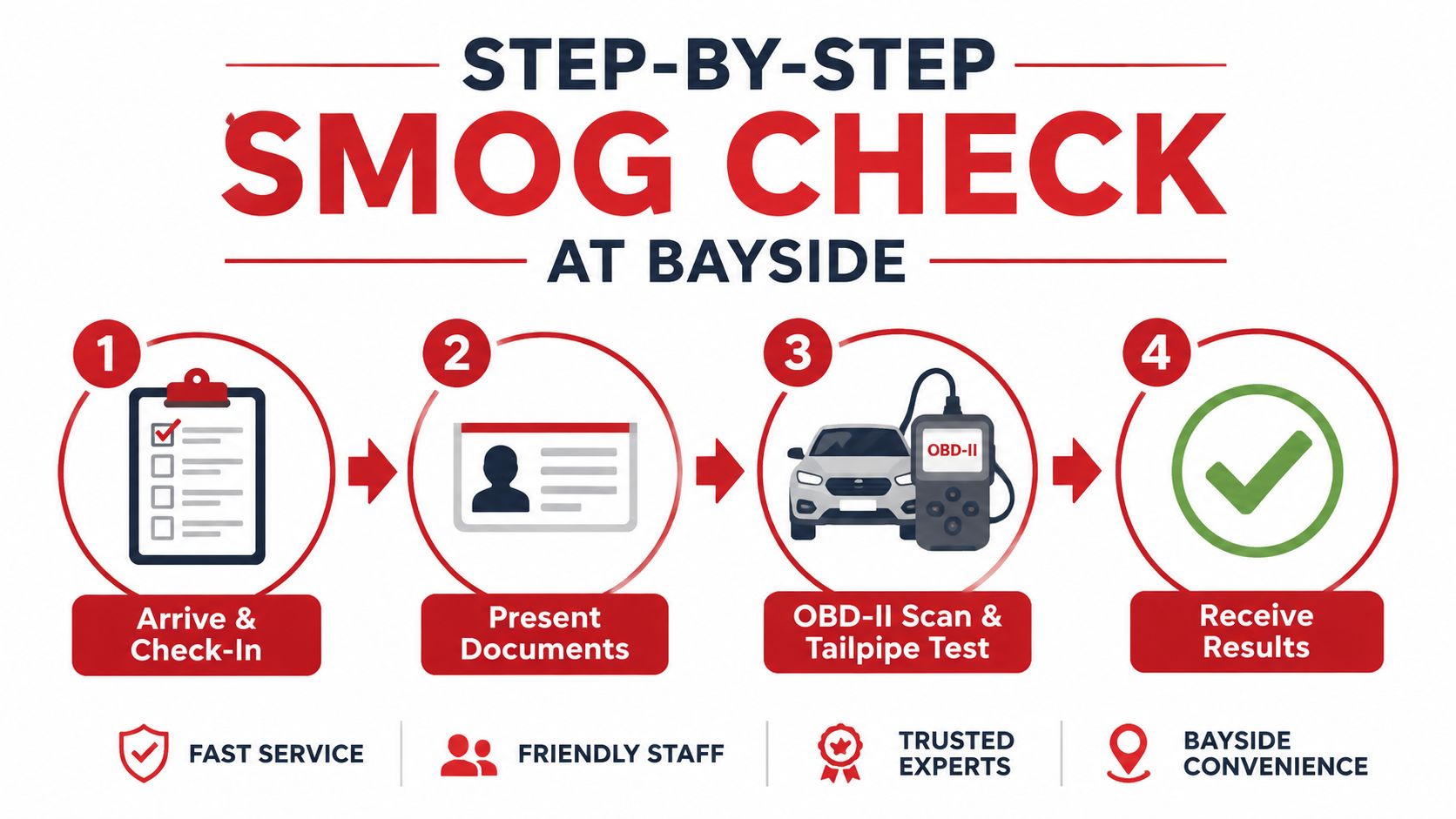
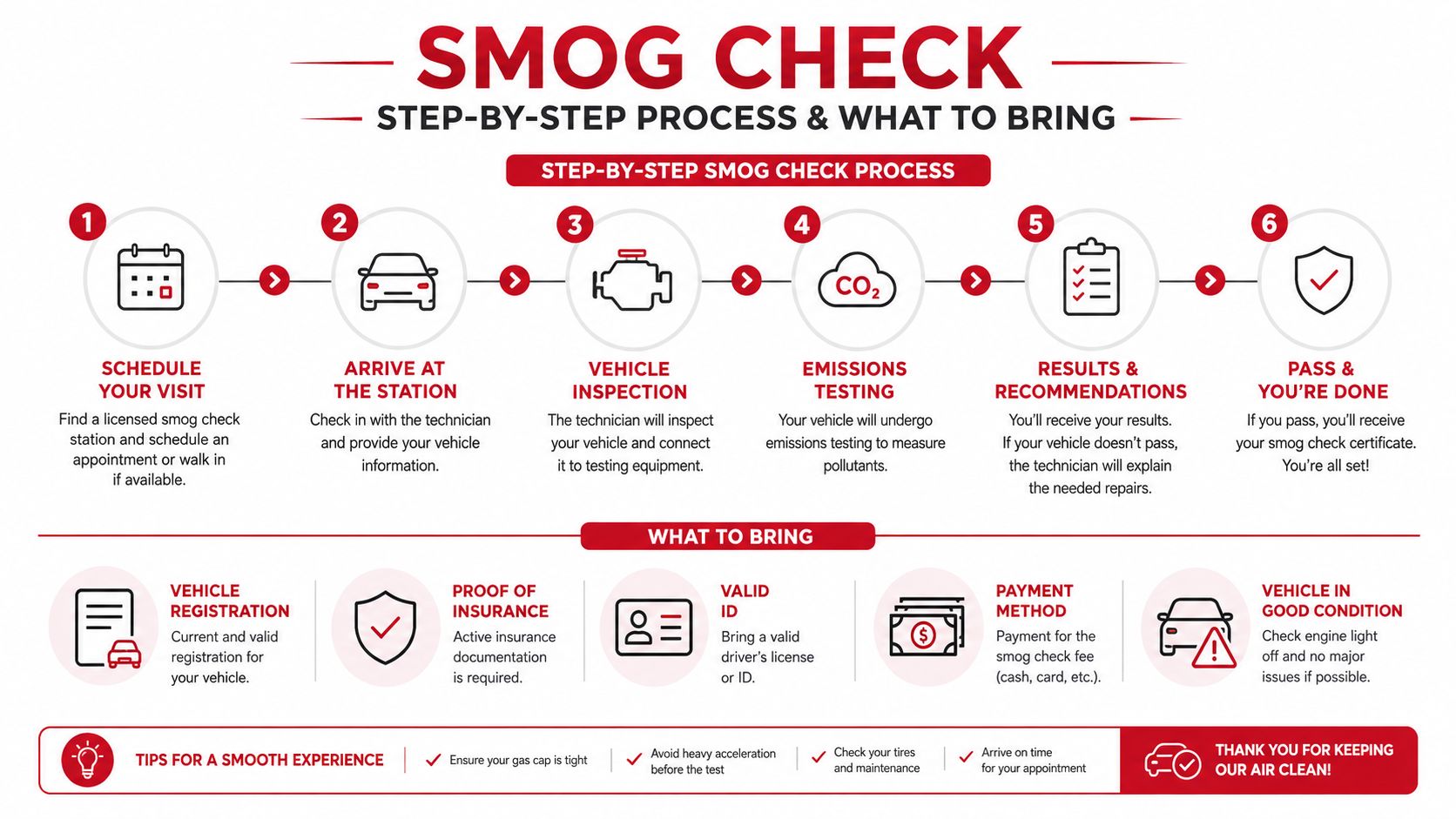
The cleanest smog visit starts before you arrive. Bring the paperwork that proves who you are and what the vehicle is doing in the DMV system, because missing documents slow everything down and can turn a simple visit into a second trip. At minimum, have your registration, renewal notice, and ID ready when you pull up.
What the visit usually looks like
At a test-only station, the workflow is straightforward. You check in, hand over the documents, and the technician runs the inspection that matches your vehicle's requirements. That usually means OBD testing for many newer vehicles, plus whatever visual or functional checks apply to the car's configuration.
The point of a test-only model is speed and clarity. The station inspects the vehicle, reports the result, and leaves repair decisions to you and your mechanic if the vehicle doesn't pass. That keeps the inspection lane from turning into a sales counter.
For a quick refresher on which documents matter most, the DMV-style checklist in this guide to vehicle registration documents is the right mental model. Bring the paperwork first, then worry about the result.
What to expect if the vehicle passes or fails
If the vehicle passes, you're done with the inspection side and can move straight into the renewal or transfer process if that's what you came for. If it fails, don't argue with the lane. Get the printed result, find the actual failure reason, and fix that issue before you come back.
A two-bay setup helps here because it reduces the bottleneck that happens at smaller stations. Bayside Smog also has a drive-through style layout and on-site parking, which makes arrival and exit less awkward than the cramped strip-mall setup many drivers hate.
Best move: Don't show up assuming the station will “figure it out” for you. Know your paperwork, know your notice, and know whether you're there for testing only or for DMV processing too.
Comparing Bayside Smog to Typical Smog Stations
A lot of drivers get stuck on the wrong question. They ask whether they need "a smog shop," when the real issue is whether their car needs a regular test lane, a STAR-certified station, or help with DMV paperwork after the inspection. For that decision, the useful comparison is simple: what each station can do for your situation, and what it cannot.
The practical differences that save time
Here is the cleanest way to compare a place like Bayside Smog with a typical local station:
| Factor | Bayside Smog | Typical smog station |
|---|---|---|
| Testing model | Test-only | Test-only or repair-capable |
| Repair work | No repair upsell from the same lane | May also sell repairs |
| DMV help | Handles registration renewals and tag-related processing on site during posted hours | Often sends you elsewhere for DMV steps |
| Hours | More workable for people who cannot leave during a standard weekday block | Often limited to basic weekday availability |
| Vehicle types | Notes support for some RVs and motorhomes | Many shops stick to standard passenger vehicles |
That table is the part most drivers need to see. If your main headache is paperwork, on-site DMV processing saves a second trip. If your priority is keeping the inspection separate from repair advice, a test-only lane is the cleaner setup.
What the test-only setup means for you
A repair-capable shop can be convenient after a failure, but it also blurs the line between an inspection and a sales pitch. A test-only station keeps that line clear. You bring the vehicle in for the result, then you decide who fixes it if it fails.
That matters even more in Contra Costa County, where drivers often do not know whether they are dealing with a normal smog station requirement or a stricter STAR-related situation. If your vehicle only needs a standard inspection, a regular test lane is enough. If your registration notice or vehicle profile points you toward a STAR-certified station, choose that first and skip the guesswork.
Bayside Smog also notes support for some RVs and motorhomes, which separates it from many places that only want compact daily drivers. That makes it more useful for vehicles that do not fit the usual inspection mold, or for owners who want one stop for the test and the DMV side of the transaction.
If you compare it with a different local compliance-focused option like Fire House Smog, the main difference is location and the way each shop fits into your errand plan. The decision should still come back to the same question, does your vehicle need a regular test lane, a STAR-certified station, or a place that can handle the paperwork without sending you across town afterward.
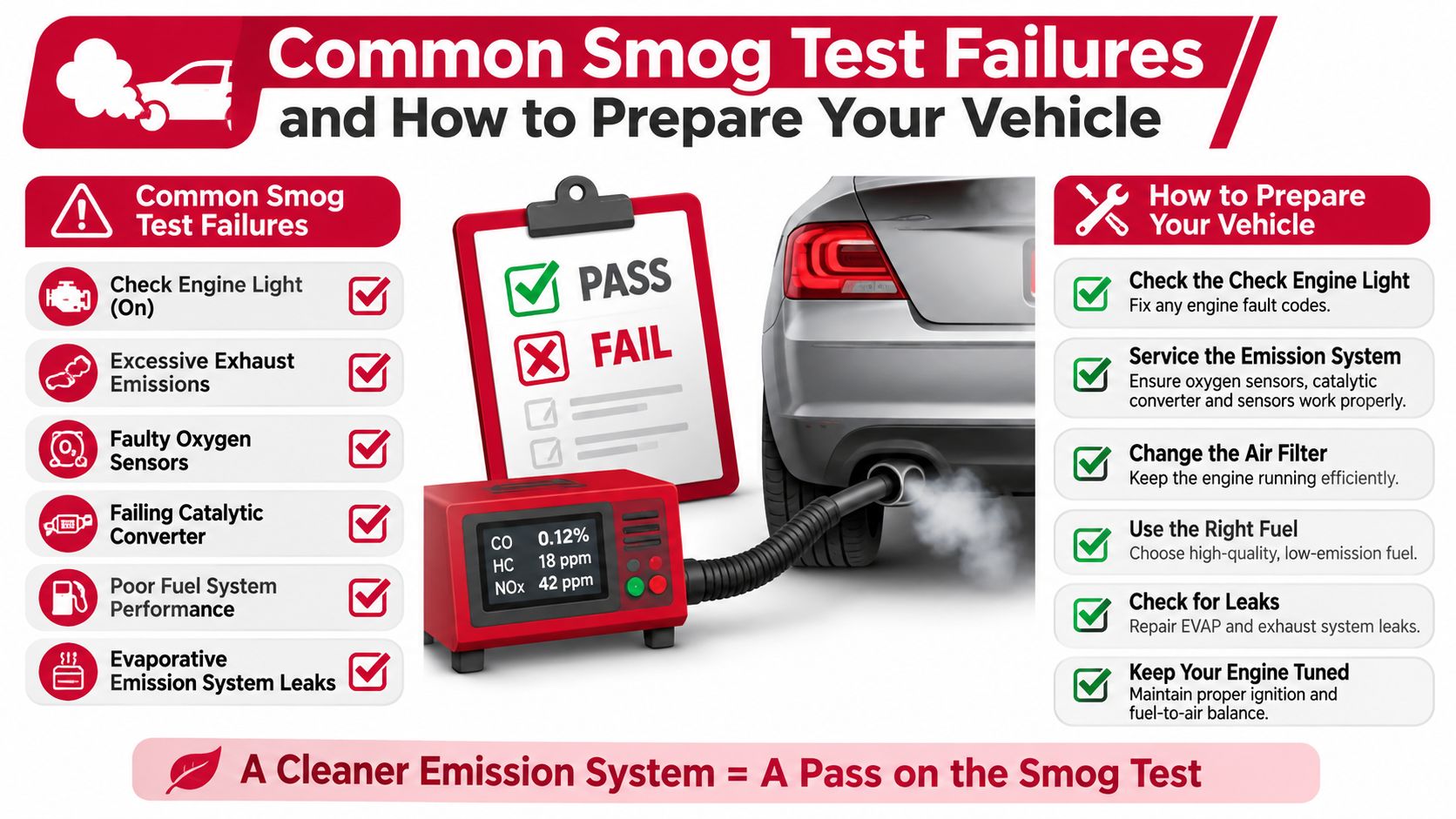
Common Smog Test Failures and How to Prepare Your Vehicle
Most failed smog checks are not mysteries. They're predictable, and drivers ignore the warning signs until the day of the appointment. The common pattern is simple, a check engine light, a recent battery disconnect, an incomplete drive cycle, or maintenance that's been postponed too long.
What to fix before you show up
If the check engine light is on, don't gamble on the inspection. Read the code, repair the actual issue, and only then test. If the battery was recently disconnected, the vehicle may not have completed the drive cycle needed for the onboard diagnostics to report correctly, which can trigger a failed or incomplete result.
Oil changes, air filter condition, and a secure gas cap matter too, not because they're magic, but because neglected maintenance shows up in emissions systems. A test-only station like Bayside Smog can't repair the vehicle for you, so showing up with obvious maintenance gaps just burns your time.
For a plain-English breakdown of failure causes, this guide on smog check fail reasons is the right next read before you book anything.
How to prepare without overcomplicating it
Do these things before your appointment:
- Clear warning lights first. A lit check engine lamp is a stop sign, not a suggestion.
- Finish a proper drive cycle. If the battery was disconnected or repairs were made, give the vehicle enough normal driving time to reset.
- Check the basics. Make sure the gas cap is tight, the air filter is secure, and obvious maintenance is current.
- Schedule the test after repairs, not before. Testing first just gives you a failure sheet you already could have predicted.
Direct advice: If you already know the car has a warning light, get it repaired first. Testing a broken system is the fastest way to waste a morning.
Why Smog Compliance Matters for East Bay Air Quality
A smog check looks like a DMV checkbox until you put it in the context of East Bay air quality. The Bay Area Air District was founded in 1955, adopted its first anti-smog regulation in 1957, and has tracked major changes in air quality over time (Bay Area Air District history). The same source reports that from 1990 to 2011, the Bay Area economy grew 77%, population grew 23%, miles driven rose 30%, and emissions of criteria pollutants including ozone and particulate matter fell 60% over that period. It also reported that the Bay Area's three-year annual average particulate matter concentration dropped from 12.3 micrograms per cubic meter to 7.8 micrograms per cubic meter over 15 years.
That matters in Concord and across the East Bay because vehicles are part of the region's air-management system. Clean-air progress does not remove the compliance requirement, it makes it more important that cars stay in good shape and stay legal. If you run a fleet, put on a lot of miles, or keep an older car going, treat the smog check as a routine maintenance step, not a last-minute DMV errand.
Contra Costa County sits inside that same system, so the right station choice depends on the notice you received and the vehicle you drive. Some cars need a STAR-certified station because the DMV or registration notice calls for enhanced testing. Others can go to a regular smog shop and still meet the requirement without paying for service they do not need.
Local pollution hot spots in nearby East Contra Costa communities make that maintenance decision more than a personal inconvenience. They also make it a practical health and cost decision. A vehicle that is consistently hard to pass should get looked at early, because repeated failures waste time and money. A vehicle that is due for enhanced smog testing still needs the right station first, and the clean-air goal does not change that basic rule.
If you want a clean, no-drama smog visit, use a station that stays focused on testing, paperwork, and DMV compliance. Fire House Smog handles STAR-certified test-only smog checks and DMV registration services in Antioch, so it is a straightforward option when your notice points you to that type of station. Visit Fire House Smog to check your options, confirm what your vehicle needs, and get the paperwork side handled without extra trips.