You're staring at a failed Vehicle Inspection Report, your registration deadline is approaching, and the repair shop is already suggesting an expensive emissions part. Don't authorize repairs based on a guess. A failed California smog check identifies a testing problem, not automatically a ruined engine or a mandatory catalytic-converter replacement.
The fastest way forward is disciplined: read the failure category, preserve the diagnostic evidence, confirm readiness status, repair the actual cause, and retest at a station that doesn't sell repairs. California's official data shows why this approach matters. In the Bureau of Automotive Repair's December 2025 summary, 60,830 of 807,043 initial tests failed, a 7.54% statewide failure rate (BAR December 2025 executive summary). Your result deserves a precise diagnosis, not a parts cannon.
Table of Contents
- Understanding Your California Smog Check Failure
- The Correct Diagnostic Sequence Before Repairs
- Why a Test-Only Station Protects Your Wallet
- Navigating DMV Deadlines and Registration Rules
- Streamlining Your Retest at Fire House Smog
- Your Complete Smog Check Recovery Checklist
Understanding Your California Smog Check Failure
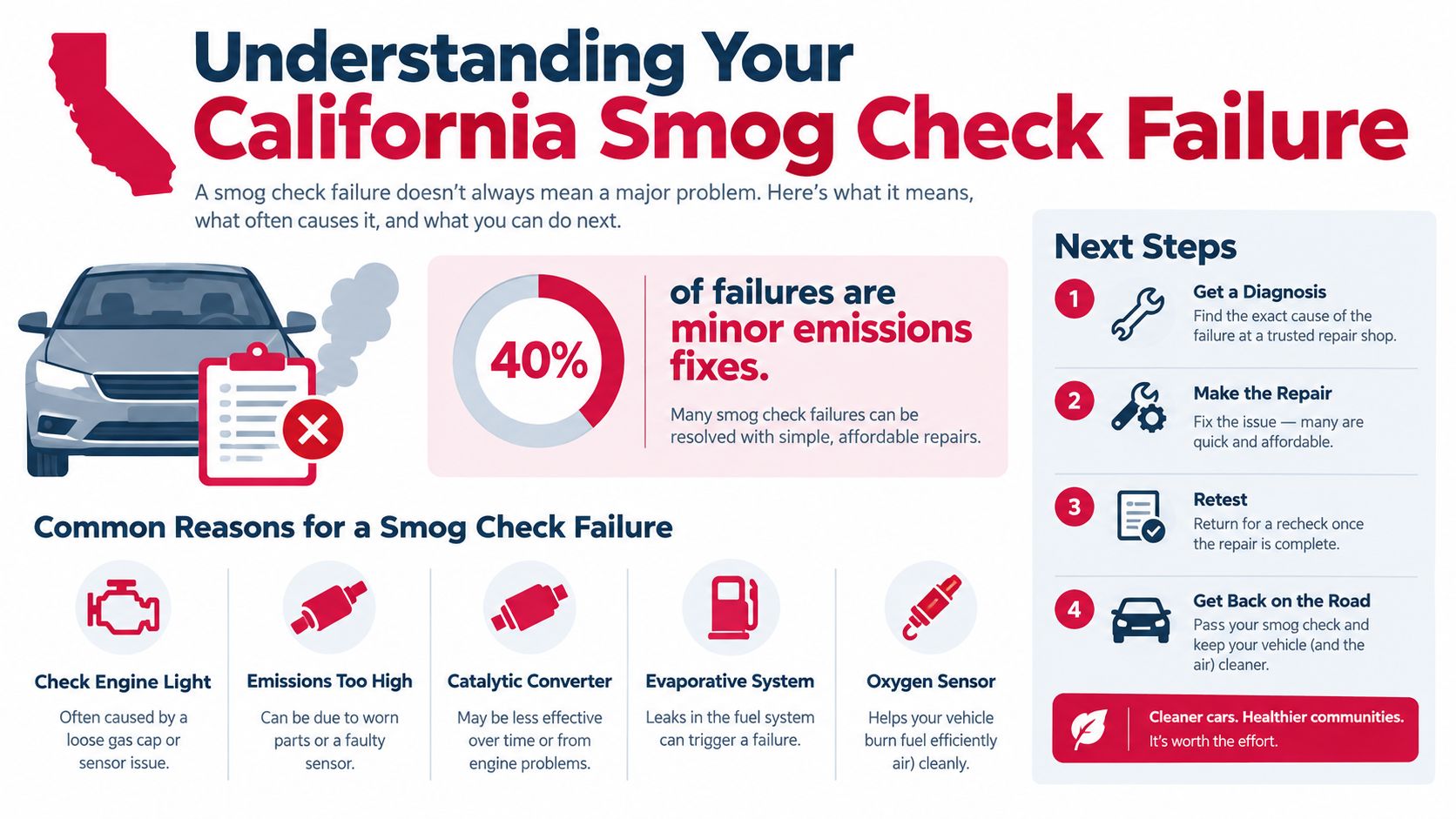
You fail the test, the registration clock keeps running, and the first shop you call starts naming parts. Stop there. Your Vehicle Inspection Report, or VIR, tells you what failed: OBD-II, a functional test, a visual inspection, or tailpipe emissions output. Each category points to a different next action, so reading the VIR before authorizing work is the fastest way to avoid unnecessary parts and labor.
The category matters because California failures do not cluster in just one place. In the Bureau of Automotive Repair's December 2025 executive summary, functional failures represented 6.72% of tests, OBD-II failures 6.64%, OBD-II readiness failures 3.99%, visual failures 1.21%, and smoke or liquid-leak failures 0.14% (BAR December 2025 executive summary). That pattern points owners toward diagnostics, monitor completion, and emissions-system operation far more often than an obvious under-hood defect.
Read the category before authorizing work
An OBD-II failure usually means the car's computer has a problem it can document: a stored fault, a malfunction-indicator-lamp issue, an incomplete monitor, or a communication failure. A functional failure points to a component or system that did not operate as required during the inspection. A visual failure means something emissions-related appears missing, modified, disconnected, or installed incorrectly.
Older vehicles can follow a different inspection path, and that changes how you should interpret the result. The contrast is clear in BAR's reported test outcomes: BAR-97 tests failed at 18.58%, compared with 7.90% for OBD-II inspections (BAR April 2024 report). Vehicle age and test method affect the odds. A failure still does not prove the engine is worn out or the catalytic converter is automatically the culprit.
Use the VIR as your starting document. If a shop cannot tie its recommendation to the failed category, codes, monitor status, or measured results, do not approve the repair yet.
If you want a plain-English breakdown before you call a technician, review these California smog check failure reasons. The right read on the report usually turns a stressful fail into a targeted repair plan.
The Correct Diagnostic Sequence Before Repairs
You fail the test, the check engine light is on, and someone offers the fastest fix in the parking lot. Stop there. Clearing codes before you capture the evidence is how owners waste money twice. It wipes out fault history and resets readiness monitors, which can cause another smog failure even after the original problem is repaired.
Follow the order below and you keep control of the diagnosis.
Start with the report and a complete scan
First, save the VIR. Read the failed category, monitor status, warning-lamp result, and any tailpipe readings listed. Take a photo of the report so you can compare the first failure with the retest and catch any shop recommendation that does not match the actual failure.
Second, scan the car before anyone clears anything. Use a professional scan tool or a good OBD-II scanner and record stored codes, pending codes, and permanent codes if your vehicle reports them. Pending codes matter. They often show the fault the computer is watching before it becomes a hard failure.
Third, check the malfunction indicator lamp operation. The light should come on during the key-on bulb check, then go out after startup if no active fault is present. If it stays on, never comes on, or returns right after a reset, diagnose the cause. Do not try to hide it.
Inspect the hardware and confirm readiness
Now verify the basics under the hood and under the car. Compare the vehicle to its original emissions setup. Check the catalytic converter, oxygen sensors, EVAP and vacuum lines, exhaust joints, intake tubing, and electrical connectors for anything missing, loose, damaged, or modified. A catalyst-efficiency code does not automatically mean the converter is bad. Misfire, fuel-trim problems, sensor faults, or an exhaust leak can trigger the same result.
Then look at readiness. BAR states that for 2001 and newer gasoline vehicles, all supported readiness monitors must be complete for an OBD inspection pass. For 1996 through 2000 gasoline vehicles, one incomplete monitor is allowed. More than that is a failure, as summarized in the BAR 2025 executive summary. That is why disconnecting the battery or clearing codes right before a retest is such a costly mistake.
Use this OBD readiness monitor guide to match your scanner status to what the station will see. After the repair, run the manufacturer's drive cycle from OEM service information, not a random quick drive. Many vehicles need a cold start, steady cruising, deceleration, idle time, and mixed operating conditions before the monitors set.
Record codes first. Repair the actual cause. Complete the proper drive cycle. Scan again before you return for the retest.
Why a Test-Only Station Protects Your Wallet
A repair shop earns money by selling repairs. A test-only station earns money by conducting the inspection, not by recommending a catalytic converter, oxygen sensor, purge valve, or other part. That distinction gives you a cleaner decision.
A STAR-certified test-only station can perform the regulated inspection and provide the result without tying the diagnosis to an in-house repair sale. If the vehicle fails, you can take the VIR and scan results to the repair provider you trust, compare estimates, and authorize only work supported by evidence.
This is particularly important when a code sounds more expensive than the diagnosis really is. An oxygen-sensor code may involve wiring or an exhaust leak. An EVAP code may require leak testing rather than a random purge-valve replacement. A catalyst-efficiency code may reflect an engine problem that damaged the converter, so replacing the converter first can lead to another failure.
Compare the two models
| Test-only station | Test-and-repair shop |
|---|---|
| Performs the inspection without selling the repair | Can inspect and sell the repair |
| Gives you a documented pass or failure result | May offer immediate repair recommendations |
| Lets you shop the VIR and diagnosis around | Keeps testing and repair in one transaction |
| Separates compliance testing from repair authorization | Combines both decisions at one business |
This doesn't mean every repair shop gives bad advice. It means separating the test from the repair reduces pressure and preserves your options. Fire House Smog's test-only smog check service is one local example of that model. Ask about the station's current retest and coupon terms before booking.
Navigating DMV Deadlines and Registration Rules
A failed smog check doesn't instantly cancel your existing registration. The immediate problem is renewal. California DMV says you must obtain the required smog certification before registration can be finalized, but you should still pay the renewal fees by the due date when certification isn't yet available (California DMV registration renewal guidance).
That distinction is the administrative point many owners miss. Paying the renewal fees doesn't replace the smog certificate, but delaying payment while you repair can create avoidable registration complications. Pay on time, retain the receipt, and complete the inspection requirement as soon as the vehicle is ready.
Follow this order
- Keep the renewal notice. Match the vehicle identification details and expiration date to the vehicle and registration record.
- Pay the renewal fees by the deadline. Do this even if the failed test prevents final completion of the renewal.
- Repair according to the VIR. Keep diagnostic records, invoices, and any scan results.
- Complete the required drive cycle. Confirm that the vehicle's readiness pattern is valid for its model year and fuel type.
- Retest at the appropriate station. Some vehicles must use a STAR station, so check the renewal notice and station requirements before you schedule.
- Confirm transmission to DMV. After passing, verify that the certification has been transmitted and that any remaining registration task is complete.
A failed result doesn't automatically mean the vehicle is permanently unregistrable. It means the required certification hasn't been obtained yet. BAR's 2025 data separates failures into emissions, functional, visual, and OBD-II categories, reinforcing why the printed result should control your next decision rather than a general assumption about the vehicle (BAR July 2025 executive summary).
Streamlining Your Retest at Fire House Smog
Once the repair is complete and the monitors are ready, scheduling becomes the practical bottleneck. A station with limited hours can force you to take time off work, wait through a crowded queue, and make another trip if the vehicle isn't ready. A station designed around testing can make the final step more predictable.
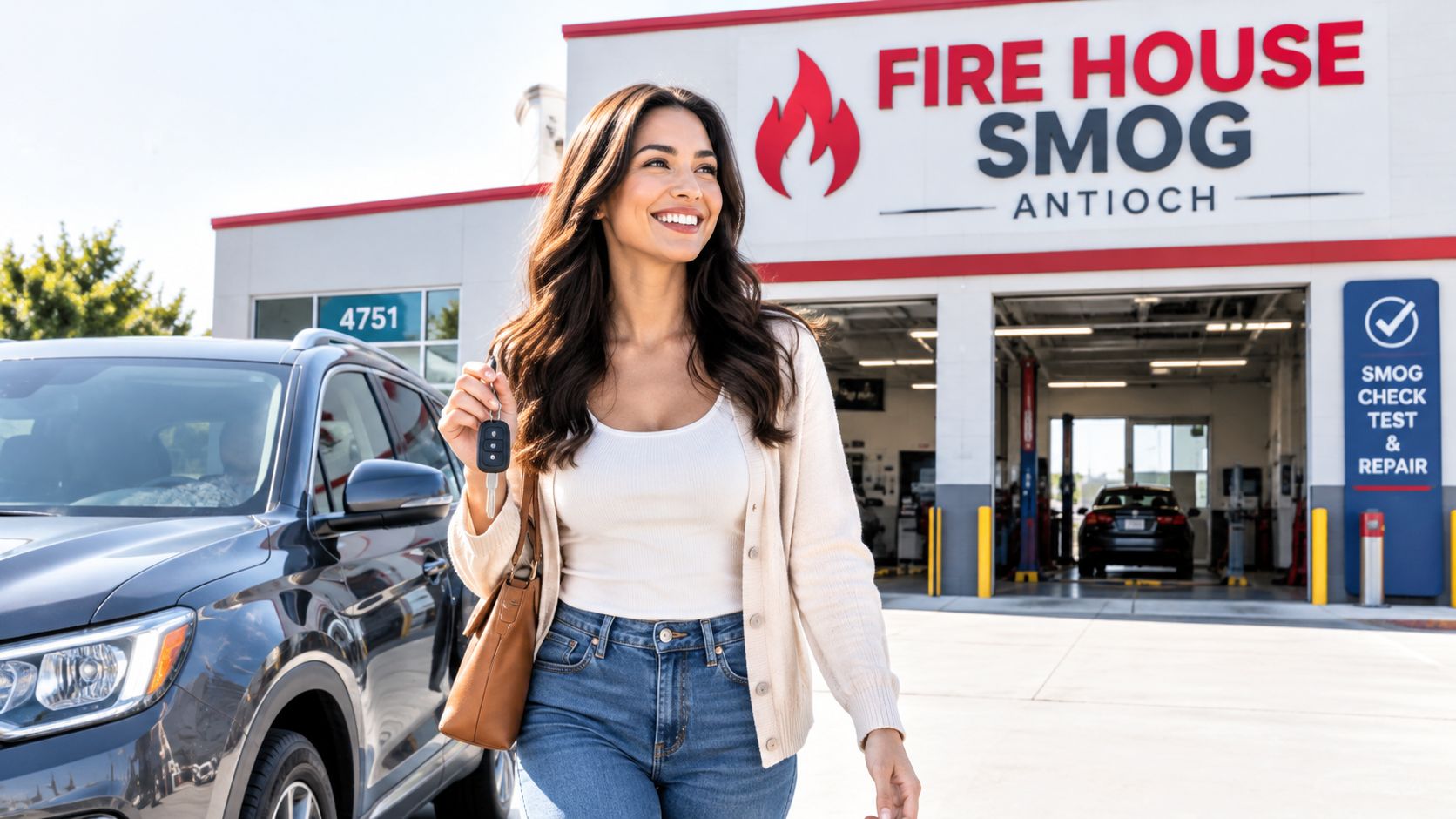
Fire House Smog in Antioch operates as a STAR-certified, test-only station with two service bays. Its stated operating model includes smog testing seven days a week, extended evening availability, and weekend access, which can help working drivers schedule a retest without rearranging an entire weekday.
The station's coupon policy includes a free retest when the applicable conditions are met. Read the current coupon terms before visiting, because eligibility and purchase requirements control whether the retest is free. That policy can reduce the cost of returning after a qualifying failure, while the test-only setup lets you complete repairs elsewhere.
Compare the typical retest with a coordinated visit
A conventional process may require a failed test, a separate repair appointment, a separate readiness check, a second smog appointment, and then a DMV visit. Each handoff creates another opportunity for a delay or an incomplete task.
Fire House Smog also provides California DMV registration services as a licensed DMV business partner. When the vehicle passes and the transaction qualifies, on-site renewal processing and tag printing can remove the need to stand in a DMV office line. Registration service hours differ from smog testing hours, so confirm availability before you arrive.
The location is 2900 Lone Tree Way in Antioch, and the listed phone number is 925-754-1600. Call ahead for unusual vehicle sizes, motorhomes, or questions about whether your vehicle requires a STAR inspection.
Here's a short look at the station's process and setting:
Don't book the retest until your scanner confirms the vehicle is ready and the warning light remains off. The convenience of extended hours helps only after the technical work is complete.
Your Complete Smog Check Recovery Checklist
You fail the test, the registration deadline is close, and every extra visit costs more money. Handle the next steps in the right order and you can stop the usual chain of bad decisions, random parts replacement, and a second failed inspection.
Treat this as two jobs at once. The technical track gets the car ready to pass. The administrative track keeps your registration from turning into a bigger DMV problem while repairs are being sorted out.
Use this checklist in order:
Preserve the evidence
- Save the VIR: Keep the original failure report and photograph it.
- Identify the category: Mark whether the result is OBD-II, functional, visual, or emissions-related.
- Record diagnostic data: Scan stored and pending codes, monitor status, and warning-lamp behavior before clearing anything.
- Inspect before buying parts: Verify emissions hardware, wiring, exhaust connections, EVAP components, and aftermarket modifications.
Repair the cause, not the biggest ticket item
Give the repair shop the VIR and your scan results. Ask for a written diagnosis that ties the recommended repair to the actual failure. If someone jumps straight to a catalytic converter, slow the process down. Ask what test confirmed converter failure, and whether a misfire, fuel-trim problem, or exhaust leak was ruled out first.
After the repair, follow the manufacturer drive cycle and confirm readiness with a scan tool before you pay for another inspection. A car can run fine and still fail because the monitors are not set. That is the detail owners miss most often, and it is also the easiest way to waste money on a retest.
Finish the compliance process
- Pay renewal fees on time: Do not wait for the passing certificate before handling the payment deadline.
- Choose the right station: Confirm whether your vehicle or renewal notice requires STAR testing.
- Use a test-only station for the retest: An independent retest keeps the inspection separate from the repair sale. If the station offers a free retest under qualifying coupon terms, confirm the rules before you arrive and bring the prior report.
- Verify the pass: Make sure the certification reaches DMV.
- Complete registration: Use the available DMV channel and keep the confirmation.
- Check the vehicle afterward: Save the repair invoice and passing report with your records.
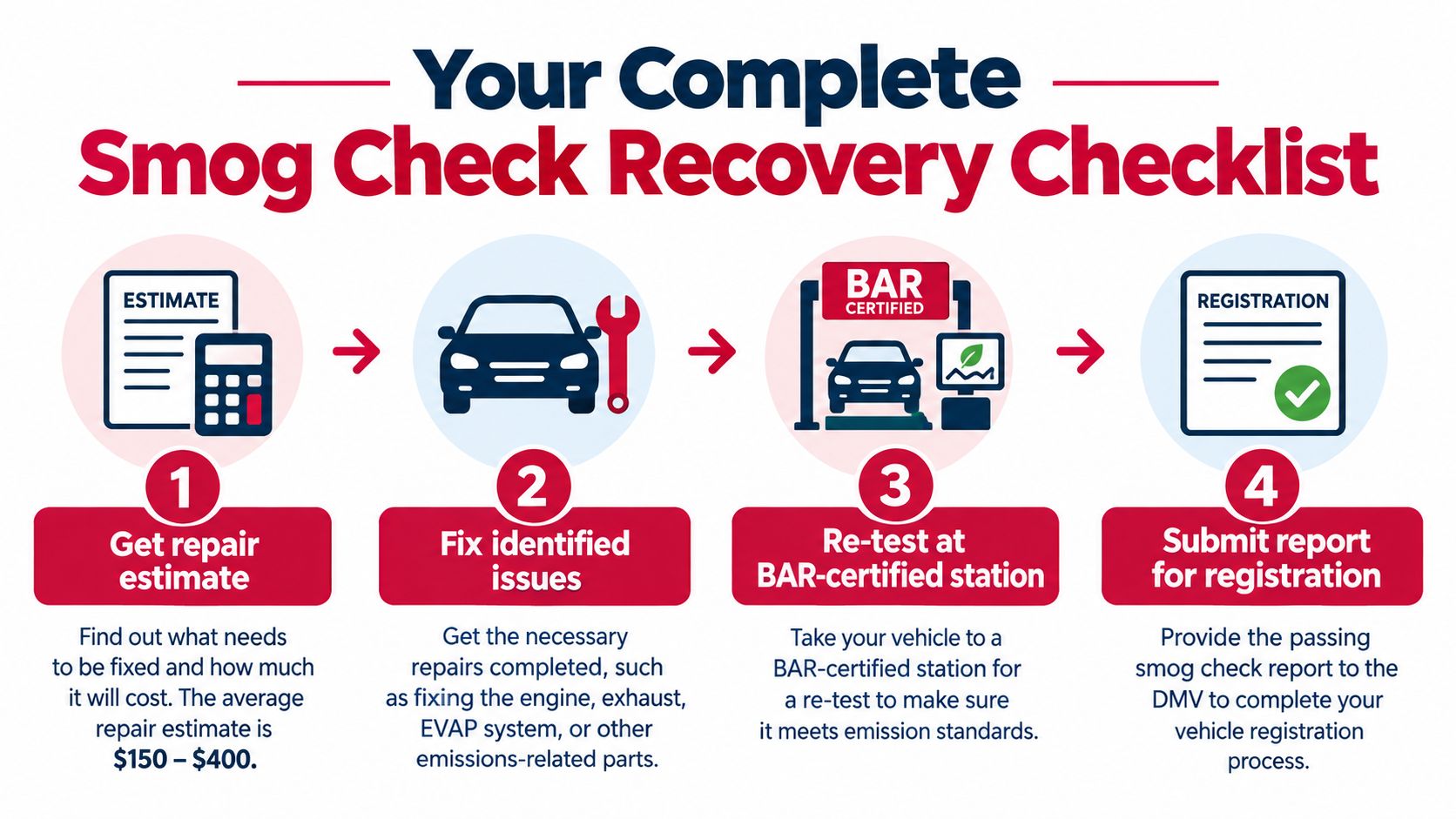
The fastest recovery is methodical. Keep the paperwork. Diagnose before clearing codes. Complete the drive cycle. Verify readiness. Then use a test-only STAR station so you are paying for a clean answer, not another guess.
Visit Fire House Smog in Antioch for a STAR-certified test-only inspection, readiness verification, retesting under applicable coupon terms, and available DMV registration processing with on-site tag issuance. Call 925-754-1600 before you arrive to confirm current hours, vehicle eligibility, and retest requirements.