
California requires you to complete vehicle ownership-transfer paperwork within 10 days of the sale, and license plates can't be transferred separately from the vehicle's title and registration record. The plate number, VIN, registered owner, and vehicle record must move together through the California DMV process.
You may be standing beside a newly purchased car with the signed title in your hand, wondering whether you can remove your old plates and bolt them onto the replacement vehicle. That assumption causes many avoidable delays. California treats a plate transfer as an ownership and registration transaction, not a physical handoff of metal plates.
The straightforward path is manageable when you identify the plate type, confirm the smog requirement, prepare the correct forms, and submit everything on time. Special-interest, personalized, historical, exempt, missing, damaged, and out-of-state situations follow different rules, so the details matter.
Table of Contents
- Understanding California License Plate Transfers
- Documents and Forms You'll Need
- The Step-by-Step Transfer Process
- Smart Tips for a Smooth Transfer
- Special Plates Out-of-State and Dealer Transfers
- Getting Your Plates Transferred Without the Hassle
Understanding California License Plate Transfers
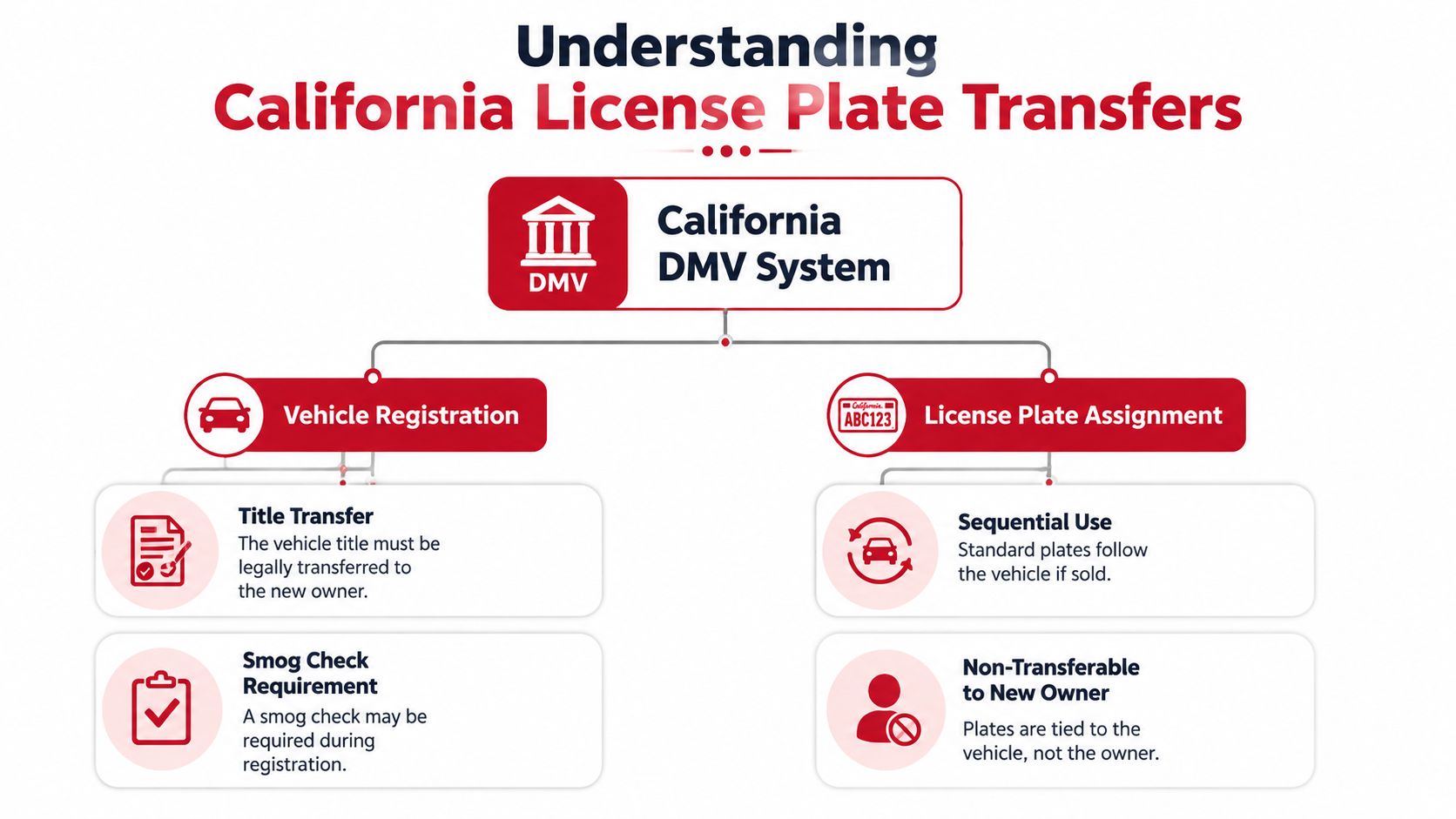
A buyer may leave the DMV with the right paperwork but still have the wrong expectation about the plates. California treats a plate transfer as part of the vehicle's ownership and registration record, not as a separate exchange of metal plates.
Ownership-transfer paperwork must be started within 10 days of the sale, and the DMV record must be updated within that same 10-day window when the registered owner or lienholder changes. The California DMV ownership-transfer rule ties the deadline to the vehicle record. Removing a plate and attaching it to another vehicle does not complete the transaction.
California connects the plate with the vehicle identification number, title chain, registration record, and registered owner. Those records establish which vehicle carries the plate and when responsibility changed. This is why a plate transfer can stall even when the physical plate is available.
Why the release of liability matters
The seller's Notice of Transfer and Release of Liability records the sale and helps prevent responsibility for the vehicle from remaining with the seller. The notice requires the new owner's name and address, plate number, last five digits of the VIN, odometer reading at the time of sale, and date of sale, as described in the California DMV transfer guidance.
Enter each field directly from the transaction documents. A wrong plate number, missing VIN digit, or buyer address that conflicts with the paperwork can trigger follow-up questions and delay completion.
Practical rule: Handle the plate as one part of the complete ownership update. Do not attach it first and plan to correct the title record later.
Standard plates versus eligible special plates
Ordinary sequential plates generally stay assigned to the vehicle. Only certain personalized environmental, special recognition, and special-interest plates may be reassigned. The California DMV's license plate guidance identifies the plate class as the first factor in deciding whether reassignment is available.
The answer therefore depends on the plate and the record behind it. Registration status, renewal fees, ownership names, and the required form can change the result. Special plates may follow a separate reassignment process, so confirm eligibility before removing anything from the vehicle.
Documents and Forms You'll Need
A plate transfer can fail even when the plate is physically correct. California ties the plate to the vehicle record, ownership information, and registration status, so assemble the ownership paperwork before addressing the plate itself.
The signed California title is the main document when it is available. If the title is missing, complete the REG 227 application for a replacement or transfer title. Buyer and seller signatures must appear where required, and the applicable transfer fee must accompany the filing. A bill of sale can document the transaction, but it does not replace the DMV's title and registration requirements.
Core paperwork at a glance
| Document | When Required | Key Information Needed |
|---|---|---|
| Signed California title | Standard ownership transfer when the title is available | Buyer and seller signatures, vehicle and ownership details |
| REG 227 application | When the title is missing | Replacement or transfer title information and required signatures |
| Notice of Transfer and Release of Liability | Seller reports the completed sale | New owner's name and address, plate number, last five VIN digits, odometer reading, and sale date |
| Smog certification or smog transfer fee | Depends on the vehicle's model year and transfer circumstances | Current certification when required, or the applicable fee for newer vehicles |
| REG 17 | Eligible special-interest plate reassignment or interchange | Current plate ownership, requested reassignment, and required signatures |
| Related special-plate forms | Certain specialty or owner-issued plate situations | Ownership proof, registration status, plate details, and fees when applicable |
Use this vehicle registration documents checklist to organize the packet before visiting a DMV office or licensed registration provider. Keep originals together, then make copies or clear scans for your records.
Match every name and address
Check the title, registration record, buyer and seller details, and submitted forms line by line. A changed name, an active lienholder, or an address that differs from DMV records can stop the transaction until the discrepancy is resolved.
The Notice of Transfer and Release of Liability requires accurate vehicle and sale information, including the plate number, identifying details, buyer information, and sale date. Submit complete information rather than expecting the DMV to correct missing fields. Enter the last five VIN digits and odometer reading directly from the transaction documents.
Special plates require their own review. Ordinary sequential plates generally remain assigned to the vehicle, while eligible personalized environmental, special recognition, and special-interest plates may be reassigned or interchanged through the appropriate process. Confirm the plate class, ownership, registration status, and required form before removing the plate. A plate transfer and an ownership transfer are related filings, but they are not always the same transaction.
The Step-by-Step Transfer Process
A plate transfer can stall even after the buyer and seller sign the paperwork. California ties the plate to the vehicle record, ownership filing, and registration status, so complete each step in order and keep proof of what was submitted.
Start with the smog decision
California DMV and the Bureau of Automotive Repair state that most vehicles over four model years old need a current smog certification for a change of ownership, while vehicles four model years old or newer do not need the inspection and instead require a smog transfer fee, according to the California Smog Check guidance.
Do not rely on an older inspection because it appears in the vehicle history. For a private-party sale, confirm that the certificate is valid for the ownership change and recent enough for the transaction. Exempt vehicles and special transfer situations follow different rules, so verify the applicable exception before arranging the inspection.
Gather the signed title and supporting forms
Confirm that the title contains the required buyer and seller signatures. If the title is missing, complete the replacement-or-transfer title application before submitting the ownership change. Prepare the Notice of Transfer and Release of Liability information, the smog documentation or applicable fee, and any special-plate form required for plates other than ordinary sequential stock.
Use this California title transfer paperwork guide to check the paperwork sequence before leaving home. A missing signature or incomplete field is easier to fix before the DMV visit than at the counter.
File within the statutory window
Submit the ownership transfer to the DMV or an authorized registration service within the 10-day period. Use the actual sale date and make sure the filing matches the vehicle identifiers, plate number, and ownership information. Pay the transfer and registration charges required for the transaction.
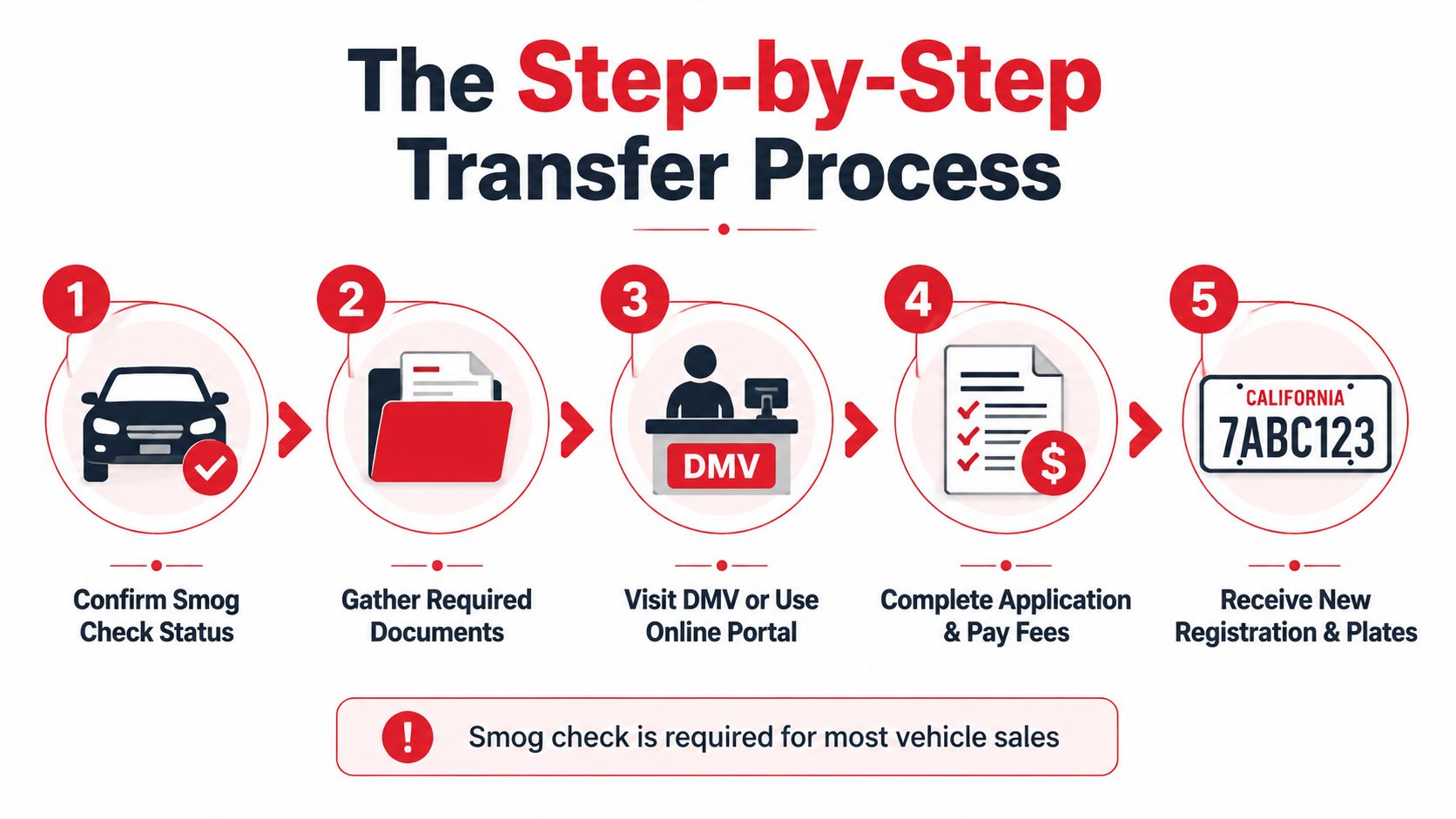
Before leaving, obtain a receipt, confirmation, or other evidence that the DMV or service provider accepted the filing. Keep it with the title records until the updated registration arrives. On-site registration services may reduce repeat visits when the packet is complete, but they still must follow the same record and plate requirements.
The following video offers a visual overview of the ownership and registration workflow:
If the DMV requests more information, respond with the same names, addresses, plate number, VIN details, and sale date used in the original filing. Consistent information helps prevent a correction from becoming a second transfer problem.
Smart Tips for a Smooth Transfer
Most stalled transfers don't fail because the owner misunderstood the fee. They stall because a document is incomplete, a plate condition doesn't match the record, or the applicant's address conflicts with the DMV file.
California's replacement-plate guidance explains that replacing plates can require surrendering the remaining plates and providing proof of identity. In some cases, a CHP vehicle verification may be required when the plates were issued within the last 90 days, and mail-in replacement requests require the registered owner to have the same address as the DMV record, according to the California DMV replacement-plate instructions.
Inspect the plates before filing
Look at both plates before you submit the transfer. If one is missing, stolen, badly damaged, or unreadable, tell the DMV or registration provider immediately instead of presenting the transaction as a normal plate movement.
Replacement and transfer are different tasks. A transfer changes the vehicle or ownership record. A replacement addresses the physical plate problem. Combining both without the required identity, surrender, or verification documents can stop the entire packet.
Treat address mismatches as a real issue
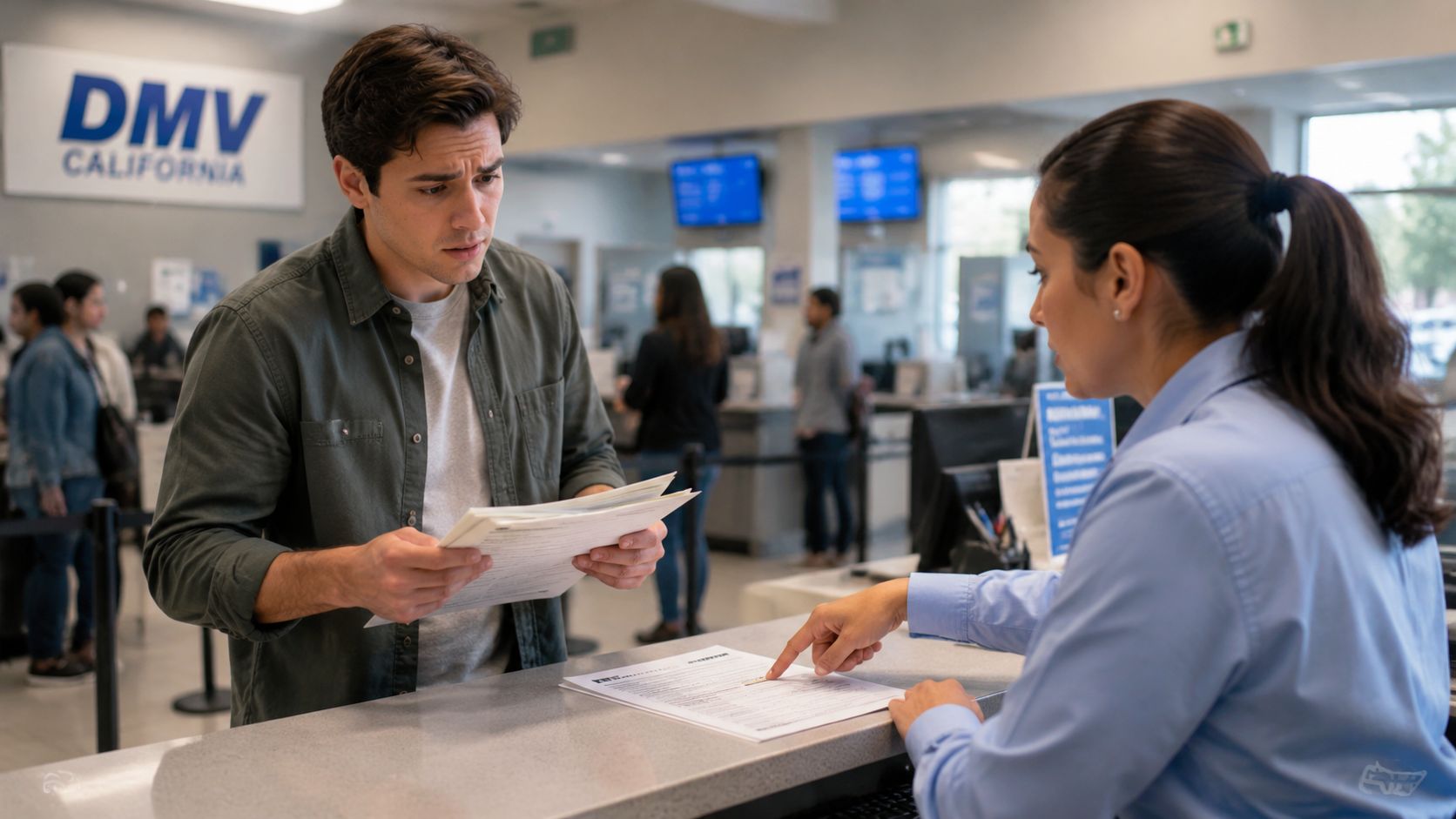
An address mismatch can affect more than where the registration card is mailed. It can prevent a mail-in replacement request, trigger a request for identity or residency information, and create confusion when the buyer's address on the Notice of Transfer differs from other documents.
Before submitting:
- Compare the address: Check the address on the title, registration record, replacement request, and release-of-liability filing.
- Confirm identity details: Use the legal names that belong to the vehicle record and transaction.
- Record the plate carefully: Recheck every character against the physical plate.
- Verify the VIN digits: The Notice of Transfer requires the last five VIN digits, not a guess based on another document.
- Separate damaged-plate work: Ask whether replacement or surrender paperwork must accompany the ownership transfer.
The fastest filing is the one that doesn't need a correction.
A licensed service provider can be useful when the transaction combines a missing title, smog requirement, replacement plate, address change, or out-of-state record. The provider can identify the form conflict before submission, but you're still responsible for supplying accurate ownership information and signing where required.
Special Plates Out-of-State and Dealer Transfers
Special plates don't follow the same path as ordinary sequential plates. California's DMV procedures distinguish special-interest plate transfers, owner-issued special plates, historical plates, and exempt-vehicle plates, and each category can impose different eligibility and surrender requirements.
For special-interest plates, both the current plate owner and the new owner generally submit REG 17. The current owner releases plate priority, while the new owner requests the plate. The California DMV special-plate transfer procedures also state that owner-issued special-plate interchange requires both vehicles to be currently registered, with renewal fees paid, and both plates eligible for reassignment.
Compare the common scenarios
| Situation | Main rule | Common extra requirement |
|---|---|---|
| Standard sequential plate | Usually remains tied to the vehicle during the ownership record update | Signed title, transfer filing, and required smog documentation |
| Special-interest or personalized plate | May be reassigned when the plate qualifies | REG 17 from the current and new owner |
| Owner-issued special plate interchange | Allowed only when both vehicles meet registration conditions | Both vehicles currently registered and renewal fees paid |
| DP, DV, CMOH, or POW plate | Ownership names may require additional proof | Statement of Facts showing the registered owner's connection to the plate |
| Historical plate on a collector vehicle | Can't be affixed before DMV approval | Surrender of prior plates if approval is granted |
| Exempt agency vehicle | Exempt plates generally must be surrendered when the vehicle leaves the exempt agency | Retention may be allowed only when moving to another exempt agency |
| Vehicle coming from another state | Requires a California registration and vehicle-record process | Plate surrender and inspection requirements depend on the transaction |
The DMV's special-plate interchange procedures also explain that eligible special plates can be reassigned or interchanged only when the vehicles are currently registered and renewal fees are paid. Some reassignment procedures state that a substitute license plate fee isn't due, although current registration fees still must be paid.
Out-of-state and dealer transactions
An out-of-state vehicle isn't a simple California plate swap. The vehicle must enter California's registration system, and the existing out-of-state plates may need to be surrendered to the California DMV. The exact inspection, title, and verification requirements depend on the vehicle and transaction, so don't assume that an out-of-state plate can be retained under California rules.
Dealer purchases often feel easier because the dealer submits much of the registration paperwork. That convenience doesn't change the underlying plate rules. Tell the dealer early that you want to retain an eligible special plate, and confirm whether the plate is being transferred, replaced, or left with the vehicle.
For a private sale, the buyer and seller usually have to coordinate signatures and disclosures themselves. A dealer may coordinate the packet, but you should still review the plate number, ownership names, address, and odometer information before signing.
Getting Your Plates Transferred Without the Hassle
A smooth transaction depends on decisions made before anyone reaches the counter. Identify the plate type first. Then verify whether the vehicle needs a current smog certification, locate the signed title or REG 227, prepare the Notice of Transfer and Release of Liability information, and check every address and VIN character.
Use this working checklist:
- Confirm the sale date: Count the filing window from the completed sale and aim to submit within the 10-day period.
- Classify the plate: Standard sequential, special-interest, personalized, historical, exempt, damaged, missing, or stolen plates don't all use the same process.
- Resolve the title: Bring the signed title, or complete the replacement-or-transfer title application if it's missing.
- Check smog status: Determine whether the vehicle falls within the smog-certification requirement or the newer-vehicle fee path.
- Prepare the liability notice: Have the buyer's name and address, plate number, last five VIN digits, odometer reading, and sale date ready.
- Submit and retain proof: Keep the receipt or confirmation until the DMV record and registration documents reflect the transaction.
A licensed DMV service provider can reduce the practical burden when you need ownership-transfer processing, registration work, smog certification, or on-site sticker and plate issuance. Fire House Smog in Antioch provides licensed DMV registration services and STAR-certified test-only smog inspections, with service hours listed as Monday through Saturday from 9:30 AM to 5:00 PM and Sunday from 12:00 PM to 4:00 PM. Availability for specific transactions can vary, so confirm the required documents before visiting.
You can skip the DMV line by using an authorized service option, but preparation still matters. No provider can correct an unsigned title, an inaccurate VIN, or an ownership detail that doesn't match the record without the proper supporting documents.
Visit Fire House Smog in Antioch for California ownership-transfer and registration assistance, including smog testing and applicable sticker or plate processing. Bring your signed title, identification, sale details, and any special-plate or replacement documents so the staff can review the transaction before submission.