
Your registration renewal notice is on the kitchen table, and it says a smog check is required. Your neighbor's older truck is exempt, while a coworker was directed to a particular station. It's easy to assume the rules are inconsistent, but California bases them on a few practical details: model year, fuel type, vehicle weight, registration status, and the wording of the DMV notice.
For drivers in Antioch, Pittsburg, Brentwood, Oakley, and the rest of East Contra Costa County, the process is usually straightforward once you know which category your vehicle falls into. The important change many older guides miss is California's OBD-readiness requirement effective October 1, 2025. A vehicle may look and drive normally, yet still fail if its emissions monitors haven't completed their checks.
Table of Contents
- Why Smog Testing Matters for California Drivers
- Which Vehicles Need a Smog Check
- STAR, Test-Only, and Test-and-Repair Explained
- How Often You Need to Test and When to Do It
- How to Prepare Your Car Before the Test
- What Happens During the Inspection
- Pairing Your Smog Check with DMV Renewal
- Retests, Failures, and Edge-Case Vehicles
Why Smog Testing Matters for California Drivers
California uses Smog Check as part of its vehicle-registration system and broader emissions-control program. The practical result is simple: when the DMV tells you a certificate is required, you generally need a passing result before completing the related registration task. The California DMV smog-inspection guidance explains which vehicles enter the program and which categories are exempt.
That's why a renewal notice matters more than a neighbor's experience. Two vehicles parked on the same Antioch street can follow different rules because they use different fuels, have different model years, or carry different weight ratings. A gasoline sedan may need testing, while an electric vehicle or qualifying heavy diesel vehicle doesn't.
The practical reason to take the test seriously
A smog inspection isn't a substitute for regular maintenance, but it can uncover emissions problems that aren't obvious during an ordinary commute. A malfunctioning oxygen sensor, evaporative-emissions leak, or other emissions-system fault can trigger a failure even when the vehicle starts, idles, and drives acceptably.
The inspection also creates a clean compliance record for common ownership tasks. That matters when you're renewing registration, transferring a vehicle, or bringing an out-of-state vehicle into California. If the DMV requires a certificate and you wait until the registration deadline, a failed test can leave little time for diagnosis and repair.
Practical rule: Start with the DMV notice and the vehicle's identification details, not with a generic online checklist.
For local drivers, planning ahead also reduces disruption. You can schedule the inspection before the renewal deadline, ask whether the station handles directed vehicles, and find out whether electronic submission or on-site DMV services are available. A calm check-in is much easier than trying to solve eligibility, testing, repairs, and registration on the same rushed afternoon.
Which Vehicles Need a Smog Check
Use a simple decision process. First identify the vehicle's fuel type. Then check its model year and, for diesel or natural-gas vehicles, its gross vehicle weight. Finally, read the DMV notice because a vehicle can be directed to a specific kind of station.
The California DMV's official rules state that gasoline-powered vehicles from 1975 model year or older are exempt. Gasoline vehicles that are less than eight model-years old can generally pay a smog abatement fee instead of entering the standard inspection pathway during their first eight years of registration.
| Vehicle Type | Model Years | Smog Required? | Notes |
|---|---|---|---|
| Gasoline-powered vehicle | 1975 or older | No | Exempt under the DMV's age-based rule |
| Gasoline-powered vehicle | Newer than eight model-years old | Usually no standard inspection | A smog abatement fee may apply during the first eight years of registration |
| Gasoline-powered vehicle | Within the regular inspection population | Usually yes | Check the DMV renewal or transfer notice |
| Diesel-powered vehicle | 1997 or older | Exempt under the DMV rule | Confirm the vehicle's fuel and registration details |
| Diesel-powered vehicle | Any model year, over 14,000 pounds GVW | Exempt from this standard pathway | Weight classification is decisive |
| Natural-gas vehicle | Over 14,000 pounds GVW | Exempt | Lighter vehicles may follow different rules |
| Electric vehicle | Any model year | No standard Smog Check | It has no tailpipe emissions system to inspect |
Applying the decision tree locally
A 2017 gasoline Honda Civic in Pittsburg may fall within the inspection population if the registration notice calls for a test. A 2003 diesel pickup needs a closer look at its weight rating and the applicable diesel rule, rather than an automatic assumption that every diesel is exempt. A 2024 plug-in hybrid should be checked against the newer-vehicle exemption and the DMV notice, while a fully electric vehicle is exempt from the standard Smog Check.
RVs, motorhomes, collector cars, and government vehicles shouldn't be classified by appearance alone. The Bureau of Automotive Repair's Smog Check overview specifically identifies qualifying RVs, motorhomes, collector cars, and government vehicles as categories that may still need a Smog Check.
STAR, Test-Only, and Test-and-Repair Explained
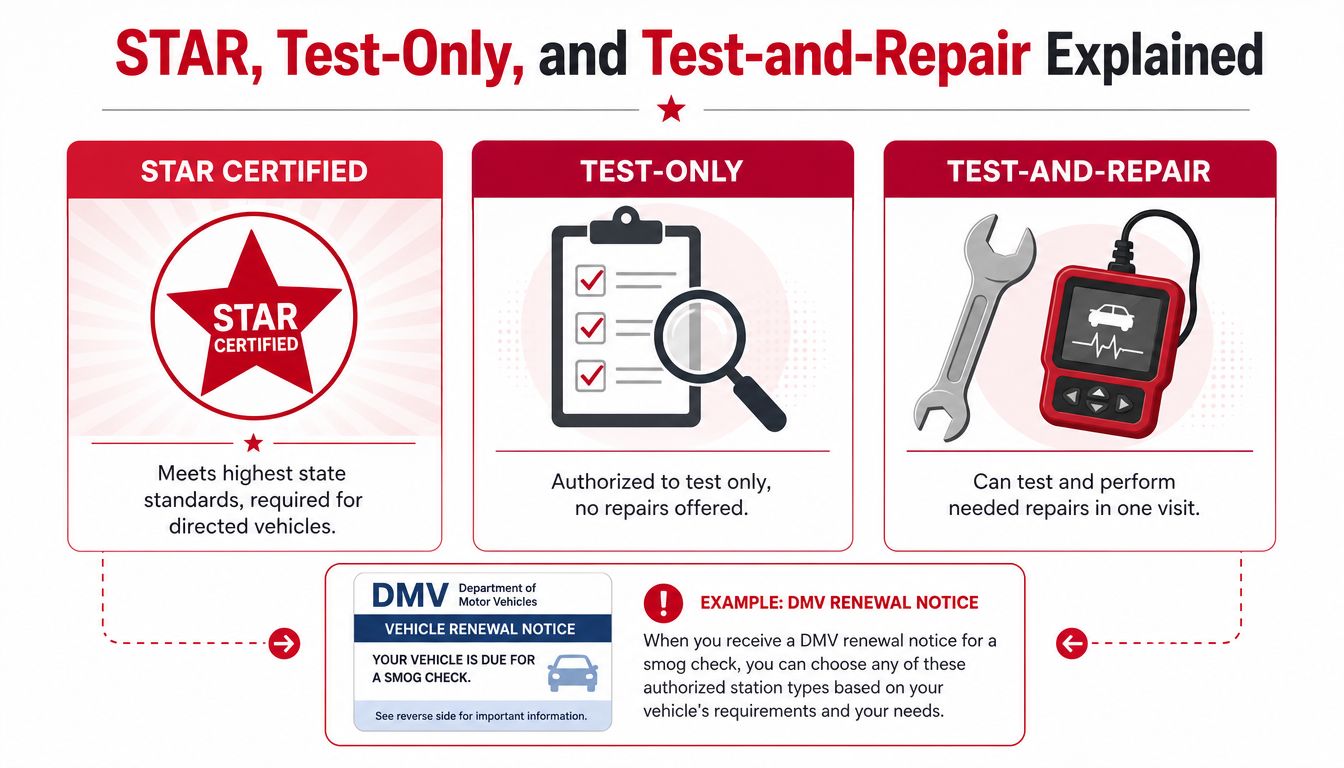
The station type controls what the business is allowed to do and, in some cases, where your vehicle may be tested. STAR certification is a quality-control layer, not a separate emissions standard. The Bureau of Automotive Repair STAR FAQ says STAR stations must meet licensing, equipment, recordkeeping, inspector, and performance requirements. BAR also describes performance measures that include a Similar Vehicle Failure Rate of at least 50% of the industry-wide failure rate for comparable vehicles and a gear-shift-incident limit of no more than 2% of certified vehicles.
A test-only station performs inspections but doesn't repair vehicles. A test-and-repair station can diagnose and repair a vehicle after testing it. A STAR-certified station has met the state's additional certification requirements and can test vehicles that the DMV directs to STAR facilities.
What a DMV notice changes
Suppose your Antioch renewal notice says “STAR station required.” You can't treat that as a suggestion. BAR explains that certain vehicles are directed to STAR stations through DMV registration notices, so station selection becomes part of the compliance process.
A notice that doesn't require STAR may allow more choice, but the station still needs the correct license for the service you need. Before booking, confirm whether the business is STAR-certified, test-only, or test-and-repair. If you want a neutral inspection without repair sales at the same location, a test-only station may suit you. If you want one business to test and repair the vehicle, test-and-repair may be more convenient.
For a clearer explanation of the certification distinction, review what STAR-certified smog testing means. In East Contra Costa County, a STAR test-only station can be useful when the DMV has directed your vehicle there. The technician tests the vehicle under the applicable state process, and the station's test-only license means it doesn't profit from selling repairs.
How Often You Need to Test and When to Do It
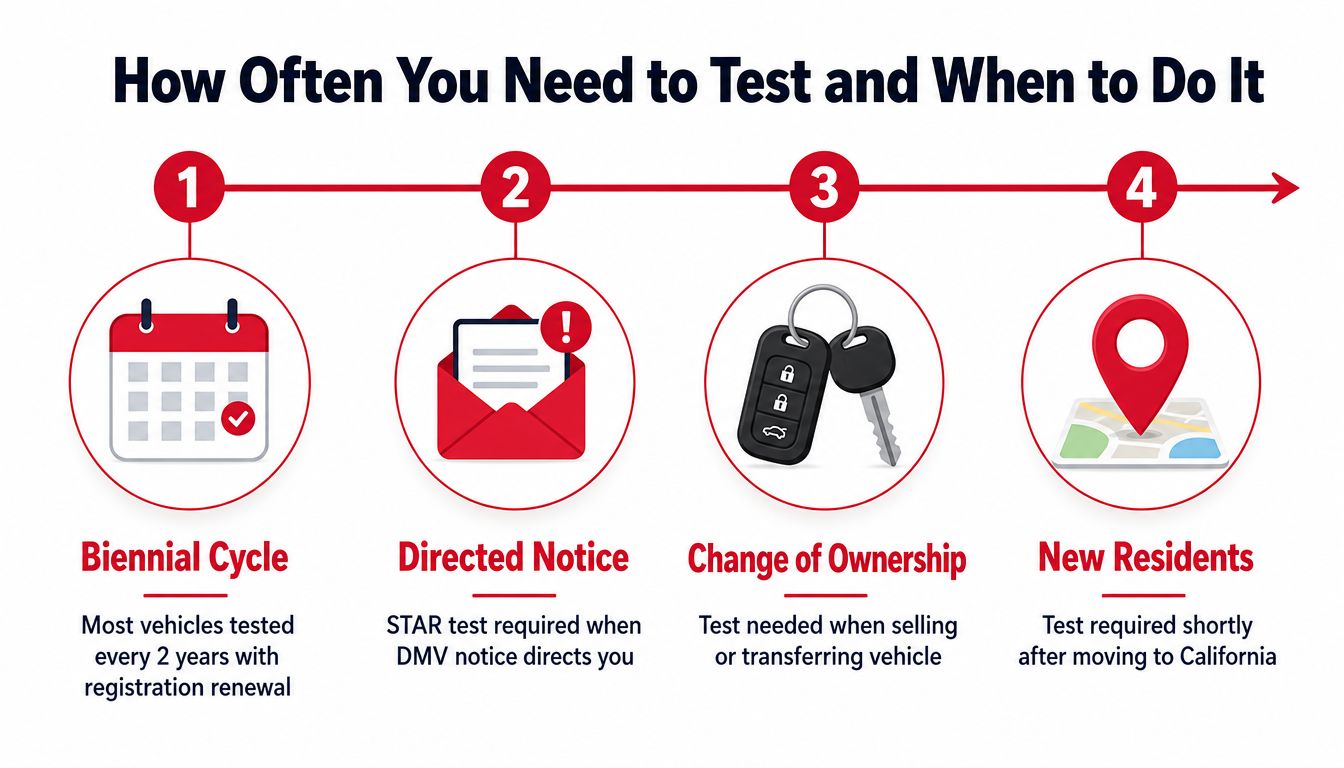
Most eligible vehicles follow a biennial registration-related cycle, but the DMV notice controls the immediate deadline. A vehicle can also need a test for a change of ownership, an out-of-state registration event, or a directed inspection. Don't assume that passing once makes the vehicle permanently clear.
Start with these four situations:
- Registration renewal: Read the notice for the smog requirement and any station direction.
- Directed testing: If the notice names STAR, use a STAR-certified location.
- Ownership transfer: Ask whether a current certificate is needed for the transaction.
- California entry: An out-of-state vehicle may need inspection before California registration is completed.
Read the notice before booking
The renewal notice usually tells you whether the DMV expects a smog certificate and whether a particular station type is required. If the vehicle is newer and falls within the applicable exemption period, the notice may direct you toward the abatement-fee route instead of a standard inspection.
Older or directed vehicles can require more attention. A notice may lead you to test annually or may change the next testing instruction after a successful inspection. Follow the document in front of you rather than relying on a general rule remembered from a previous renewal.
In East County, Saturday mornings can be busy because working drivers choose the same convenient window. A mid-week appointment or drop-off often makes the visit easier. If you're pairing the test with DMV service, verify both schedules first, since the inspection and registration counters may keep different hours.
How to Prepare Your Car Before the Test
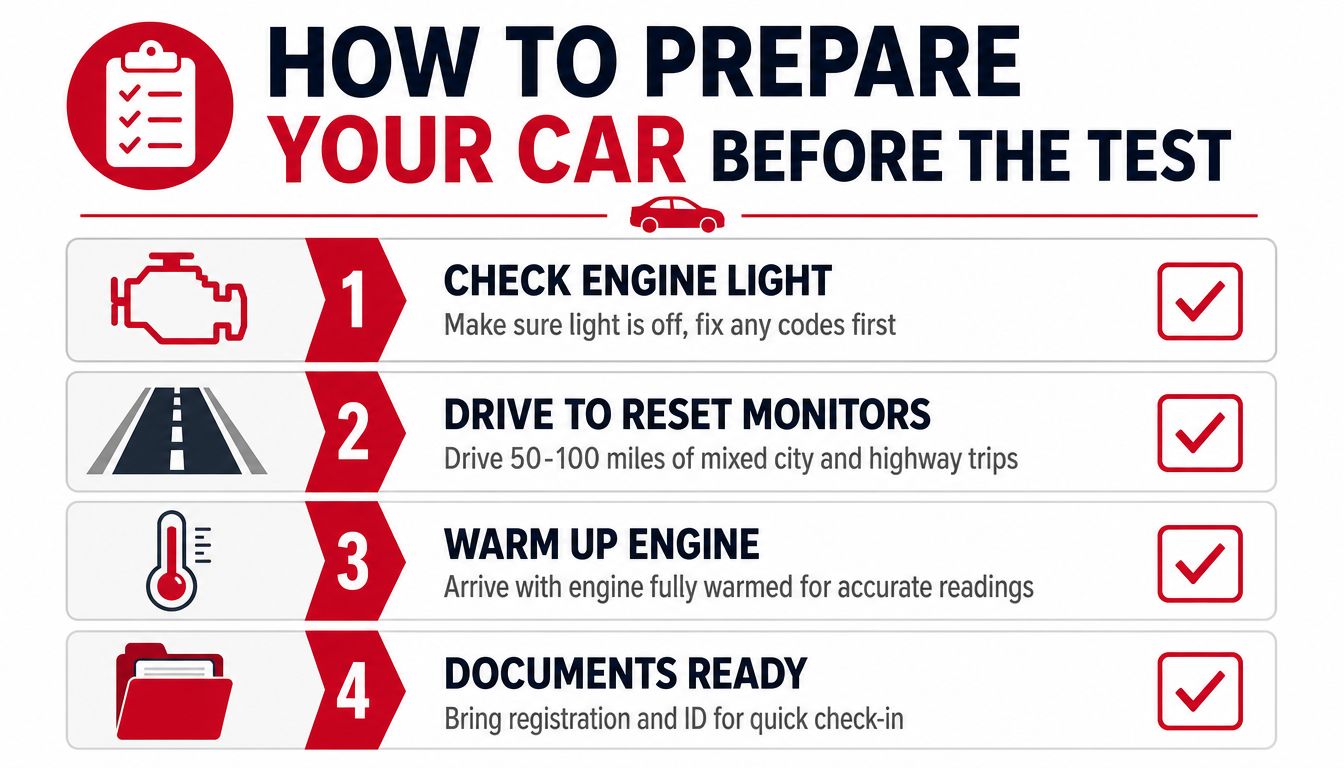
A few checks before you leave home can prevent a wasted visit. Start with the Check Engine Light. If it's illuminated, don't erase the code just to make the dashboard look normal. The technician's equipment can still identify trouble codes, and clearing the code may leave the readiness monitors incomplete.
The biggest recent change is the OBD-readiness rule. BAR states that effective October 1, 2025, all readiness monitors must be set for a vehicle to pass a Smog Check. That means disconnecting the battery or clearing codes shortly before the appointment can create a failure even if the light is off. Read the BAR explanation of the new OBD-readiness monitor regulations before scheduling a recently repaired vehicle.
A practical pre-test checklist
- Check the warning light: Diagnose emissions codes before the appointment instead of masking them.
- Drive normally after repairs: Use a mix of city and highway driving so the vehicle can complete its self-checks. The exact drive pattern varies by vehicle.
- Inspect the gas cap: A loose or damaged cap can contribute to an evaporative-emissions problem.
- Bring the paperwork: Have the registration or renewal notice available, along with identification if you're handling a DMV transaction.
If the car has just had its battery disconnected, ask a repair professional whether the monitors have completed before paying for an inspection. Some monitors take longer than others, and a generic short drive may not be enough for every vehicle.
On test morning, a normal drive that brings the engine to operating temperature can help the inspection begin with the vehicle warmed up. Don't treat a long highway run as a guarantee of passage. It won't repair a defective component or replace the manufacturer-specific conditions needed for monitor completion.
What Happens During the Inspection
You'll usually begin by showing the technician the registration paperwork or DMV notice and explaining what you need, especially if the notice directs you to STAR. At a test-only station, the technician records the vehicle information, checks the required equipment, and begins the inspection without offering repair work.
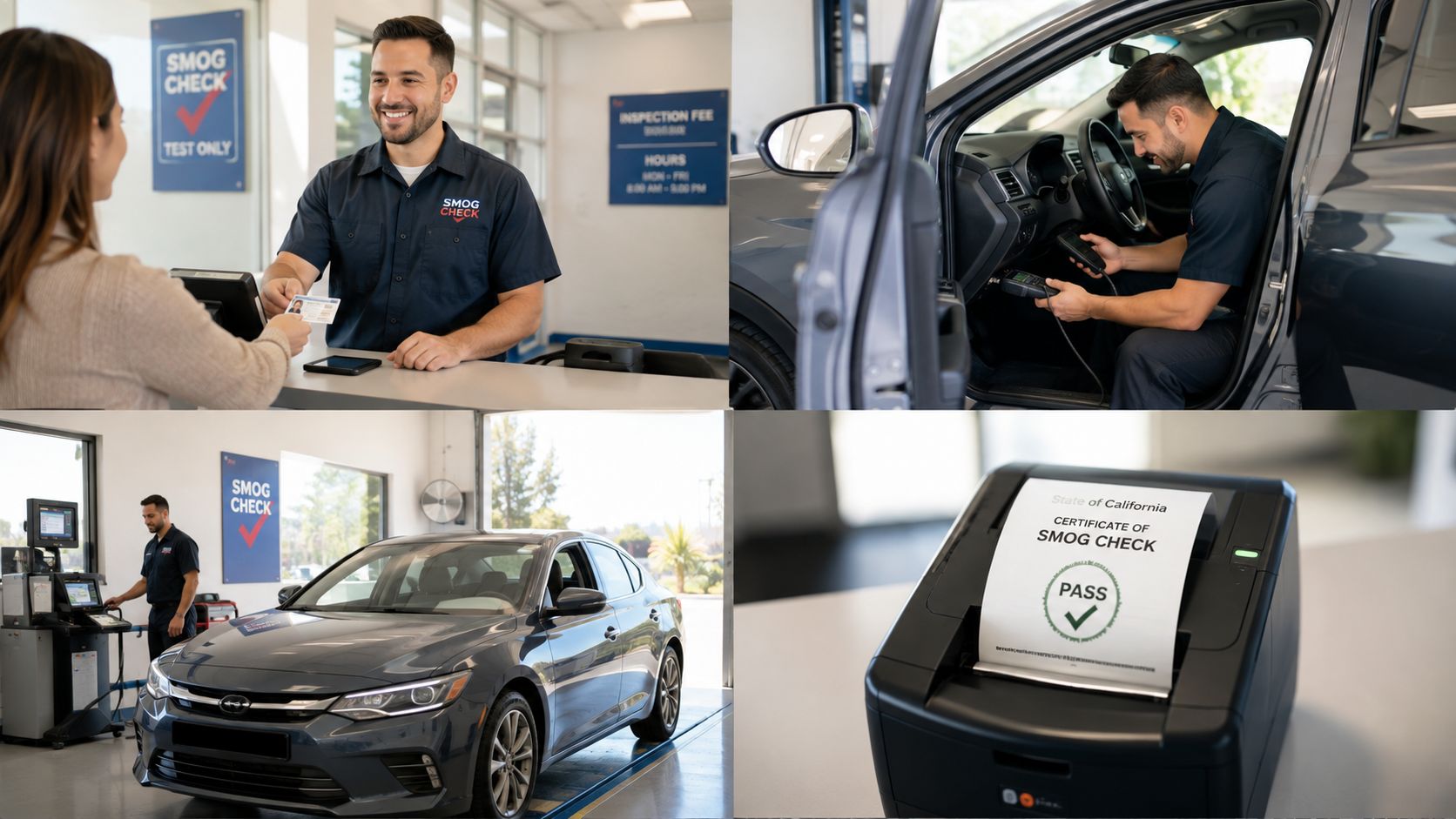
For an OBD-equipped vehicle, the technician connects a scanner to the diagnostic port. The system reads emissions-related trouble information and monitor status. The technician also performs the required visual checks, looking for emissions equipment that's missing, disconnected, or altered.
What older vehicles may require
The exact inspection depends on the vehicle. Older gasoline vehicles and certain diesel vehicles may require a tailpipe measurement, while other vehicles use an OBD-based procedure. Some vehicles are placed on test equipment that checks performance under controlled conditions.
The technician may also inspect items such as the gas cap, emissions labels, and visible components under the hood or beneath the vehicle. You don't need to memorize the equipment list. You do need to tell the technician about recent battery work, warning lights, or repairs that could affect monitor status.
A passing vehicle generates the required electronic result for the DMV, and the technician provides the inspection paperwork. If it fails, the Vehicle Inspection Report identifies the area that needs attention. Ask the technician to explain whether the issue is a monitor, trouble code, visual item, or measured emissions result.
For a visual walkthrough of the process, watch the California smog inspection video after reviewing the written report from your own vehicle.
Pairing Your Smog Check with DMV Renewal
A combined visit can save a separate trip, but treat it as two related services. The smog station performs the inspection. A DMV service counter or licensed registration provider handles the renewal transaction, fees, and sticker issuance under its own operating schedule.
Bring the renewal notice or current registration, a valid California identification document when required, and a payment method accepted by the businesses involved. Keep the inspection paperwork even when the result is transmitted electronically. It gives you a record if the DMV system needs time to update or you need to discuss the transaction later.
A smoother one-stop visit
Call before driving over and ask four questions:
- Station eligibility: Does the location perform the exact test type named on the DMV notice?
- Vehicle fit: Can it accommodate your car, truck, RV, or motorhome?
- DMV hours: Is the registration counter open when the inspection bay is operating?
- Retest policy: What documentation or coupon terms apply if the vehicle needs a retest?
Electronic submission can make the DMV portion quicker, but it doesn't eliminate the need to confirm the registration balance and required documents. If the inspector recommends repairs, ask for a written explanation and estimate before deciding whether to finish the registration transaction that day.
For a detailed overview of the registration side, see California DMV registration renewal services. A station may advertise evening or weekend smog testing while its DMV partner keeps shorter hours, so check both calendars rather than assuming they match.
Retests, Failures, and Edge-Case Vehicles
A failed inspection gives you information, not a final verdict on the vehicle. The report should identify the reason for failure, whether it involves an emissions code, an incomplete monitor, a visual problem, or a measured result. A test-only station can explain the report, but it generally won't perform the repair, so you may need a qualified repair shop before returning.
Ask about the station's retest terms before leaving. Some locations offer a free retest within 90 days under their policy and coupon conditions, but the details can depend on returning with the same vehicle and meeting the station's requirements. Keep the failed report, repair invoices, and any coupon together.
Vehicles that don't fit the ordinary pattern
| Vehicle or Situation | Smog Requirement | Key Notes |
|---|---|---|
| RV or motorhome | May require a Smog Check | BAR says qualifying RVs and motorhomes need testing; call ahead about size and equipment |
| Collector vehicle | Rules can depend on the vehicle and current program treatment | BAR says California is considering an abbreviated inspection for collector motor vehicles 35 model years and older |
| Diesel vehicle | Depends on model year and weight | DMV exemptions include diesel vehicles from 1997 or older and diesel vehicles over 14,000 pounds GVW |
| Natural-gas vehicle | Depends on weight | Natural-gas vehicles over 14,000 pounds are exempt under the DMV rule |
| Electric vehicle | No standard Smog Check | DMV lists electric vehicles among exempt vehicles |
| Government vehicle | May require a Smog Check | BAR identifies qualifying government vehicles as needing inspection |
The California smog exemption guidance can help you organize the initial questions, but unusual vehicles still deserve direct confirmation. An RV built on a truck chassis, a collector vehicle with specialized registration, or a heavy diesel vehicle shouldn't be classified from a casual description alone.
Keep the registration, vehicle identification information, prior inspection paperwork, and any DMV notice available. Those documents help the technician determine which procedure applies and reduce classification mistakes.
Your next steps are practical: confirm eligibility from the DMV notice, prepare the vehicle without clearing its diagnostic information, book the correct STAR or licensed station, and keep every report until the registration update and sticker are complete.
Fire House Smog provides STAR-certified test-only inspections, DMV registration services, and retest assistance at 2900 Lone Tree Way in Antioch, with service availability for many cars, light trucks, and some recreational vehicles. Visit Fire House Smog to check the current hours, vehicle eligibility, and documents to bring before your appointment.