

You're holding a DMV renewal notice, the car runs fine, and you still have to get through a smog check before the sticker shows up. That's the Daly City routine in one sentence. If you treat the inspection as a random errand, you waste time. If you treat it as part of a compliance workflow, you can finish the test and the registration without making a second trip across town.
Table of Contents
- Why a Daly City Smog Check Is Part of a Bigger Workflow
- Choosing the Right Type of Smog Station in Daly City
- Preparing Your Vehicle the Day Before the Test
- What Actually Happens During the Inspection
- Smog Check Fees, Retest Rules, and Exemptions
- Finishing Your DMV Registration in One Trip
- What to Do If Your Vehicle Fails the Smog Test
Why a Daly City Smog Check Is Part of a Bigger Workflow
A Daly City driver usually does not need “a smog check” as a standalone errand. What you need is the certificate that moves the paperwork forward, whether that means a renewal, a title change, or an out-of-state registration. Treat the job as three linked steps, prep, station, DMV submission, and you avoid doing the same work twice.
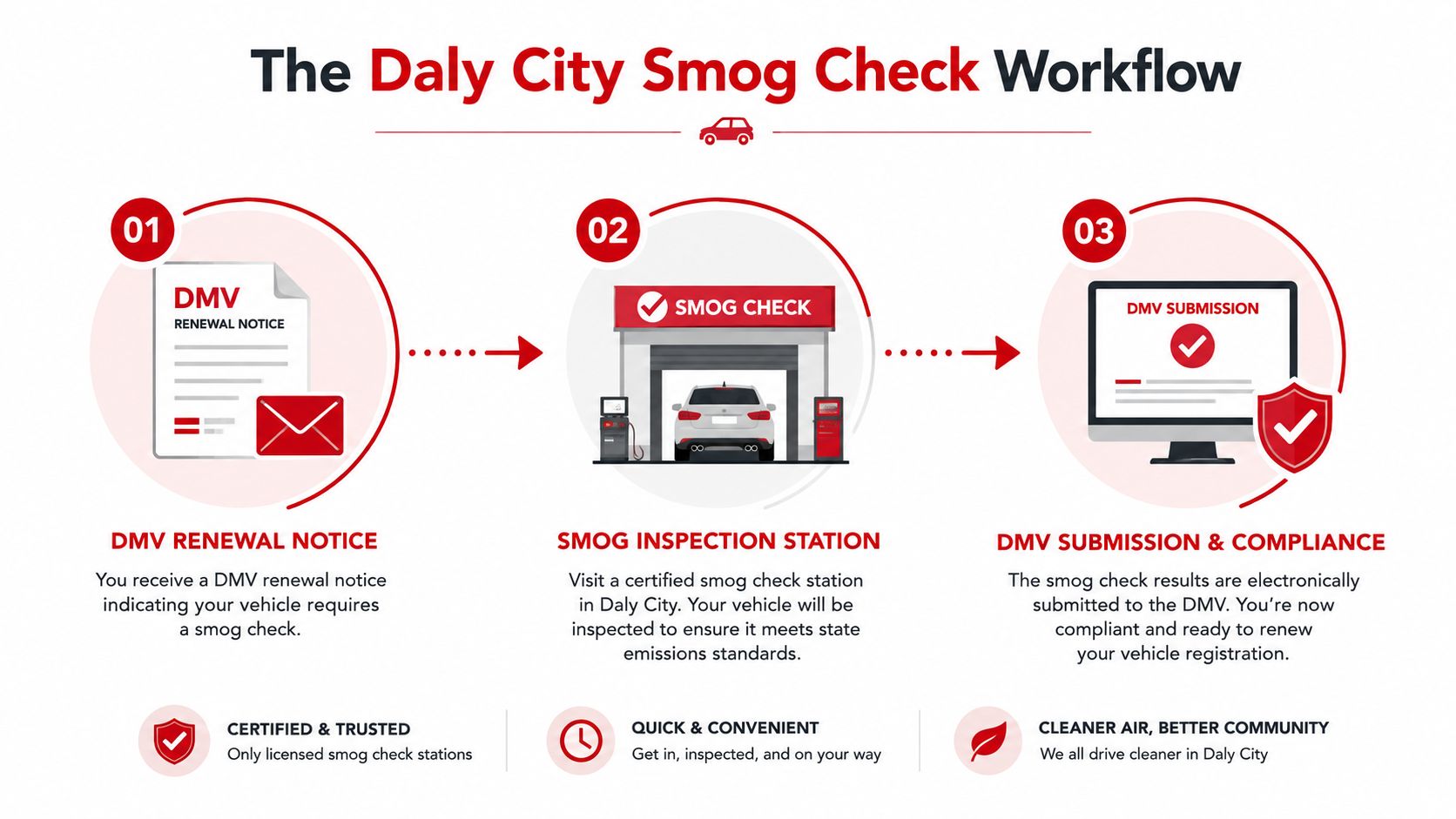
California's program runs statewide in designated counties, and the state's official BAR report for January 2026 logged 989,080 initial tests and 1,065,033 all tests, with an 8.35% initial-test failure rate and an 8.81% overall failure rate (BAR January 2026 executive summary). That failure rate matters because a failed certificate stops the workflow cold. The car can run fine and still leave you unable to finish registration on time.
The rules are not optional and they are not vague. In California, many gasoline, hybrid, flex-fuel, propane, and natural-gas vehicles generally need a smog check starting in the fifth model year through the eighth model year window, and out-of-state first registrations can trigger testing too. For many gasoline-powered vehicles, the first inspection effectively arrives when the vehicle is four model years old because of how the state calculates the model-year threshold, as noted in the same BAR report and the Daly City DMV field office guidance.
Practical rule: do not book the inspection until you know whether your DMV notice calls for a normal certificate, a STAR certificate, or a renewal workflow that needs both the test and the registration handled the same day.
Daly City sits inside the Bay Area's regulated inspection network, so the station is part of the compliance chain, not a convenience stop. If you want the cleanest path, bring the renewal notice, get the test done, and make sure the certificate gets transmitted into the DMV process without delay. That is how you turn one appointment into a completed renewal, not just another receipt in your glovebox. If you need a quick refresher on station types, review how a STAR-certified smog station works before you book.
Choosing the Right Type of Smog Station in Daly City
Pick the wrong station and you burn a morning for nothing. That's the part most drivers get wrong. A station is not just a place that “does smog.” It's a specific type of licensed operation, and your DMV notice may narrow the choice before you ever pull in.
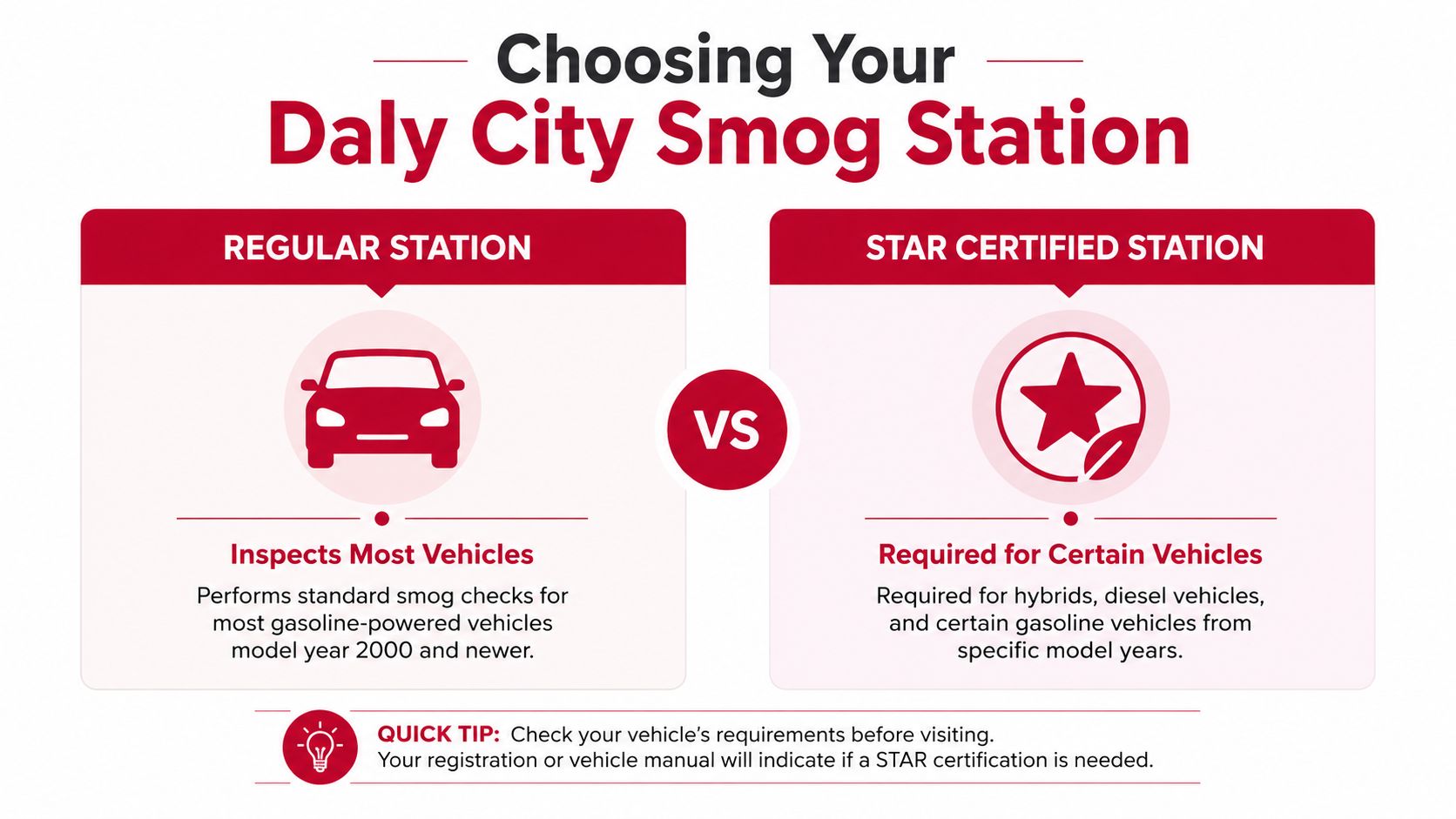
A regular licensed station can inspect many vehicles, but that doesn't mean it can inspect yours. A STAR-certified station meets higher performance standards and can inspect high-polluting vehicles, which is why some DMV notices direct drivers there (BAR smog check guidance). If your renewal notice says STAR, stop shopping around. Go straight to a STAR station.
The cleanest way to think about station choice is by function:
- Test-only station: this is the no-repair lane. The inspector tests the car, issues the result, and doesn't sell you a repair job. That matters when you want a clean compliance decision instead of a sales pitch.
- STAR-certified station: this is for directed vehicles and higher-standard testing paths. If the DMV notice requires it, there's no workaround.
- Regular station: this works for many drivers, but only if your vehicle and notice allow it.
A station can look convenient and still be the wrong fit. The Daly City DMV field office is a local registration hub, and nearby stations publish broad weekday hours, including some that run 9:00 AM–6:00 PM six days a week and others that offer 8:30 AM–6:00 PM weekday service (Daly City DMV field office guidance). Convenient hours don't matter if the station type doesn't match the notice.
Before you leave home, verify the station's license status and the exact service type. If you want a station that handles the test and then pairs the result with DMV renewal service, Fire House Smog is one option that combines smog testing with DMV registration work, including renewals and transfers, at the same location: California DMV registration renewal service.
Preparing Your Vehicle the Day Before the Test
Most Daly City failures start in the driveway. The car looked fine yesterday, the driver skipped a few basics, and the vehicle shows up with a check-engine light or an unreadiness problem that could have been avoided. If you want one clean visit, prep the car the day before and treat the smog check as part of the renewal workflow, not a separate errand.
Warm the car before you show up
Bring the engine up to normal operating temperature before you head to the station. A smog inspection goes faster and cleaner when the car is already warmed up, and a cold start in the parking lot is a bad way to begin. Drive long enough to fully heat the engine, then leave the accessories off when you arrive.
A recently disconnected battery is another easy way to waste a trip. BAR says to allow one to two weeks of driving after a battery disconnect so readiness monitors can reset before the OBD inspection (BAR smog guidance). If the battery was recently replaced, stop guessing and let the drive cycle do its work.
A lit check-engine light is a stop sign, not a suggestion. Fix it before the test, because the inspection checks emissions-system status, not your optimism.
Bring the right things and strip out the noise
Take the DMV renewal notice with you. BAR recommends it, and that single piece of paper keeps the station from fumbling the workflow. Clear out loose items, turn off distracting aftermarket accessories, and don't make the technician work around clutter.
Use the cabin like a workbench, not a storage unit:
- Remove loose gear: backpacks, tools, and cargo that can slide around during the inspection.
- Check warning lights: if the check-engine light is on, stop there and repair the issue first.
- Leave the car mechanically calm: rough idle, overheating, fluid leaks, or loud engine noise can get the vehicle rejected before the formal test starts.
- Keep the battery situation stable: if it was recently disconnected, give the monitors time to reset.
If the vehicle needs service before the test, get that done first. A car that is warmed up, free of warning lights, and ready for inspection gives you the best shot at leaving with the certificate and moving straight on to renewal without another trip.
What Actually Happens During the Inspection
A smog inspection stops looking mysterious the moment you see the sequence. The vehicle rolls in, the technician checks the emissions-related basics, and the station runs the test that fits your car. If you came prepared, the whole thing feels like part of the renewal process, not a separate errand.
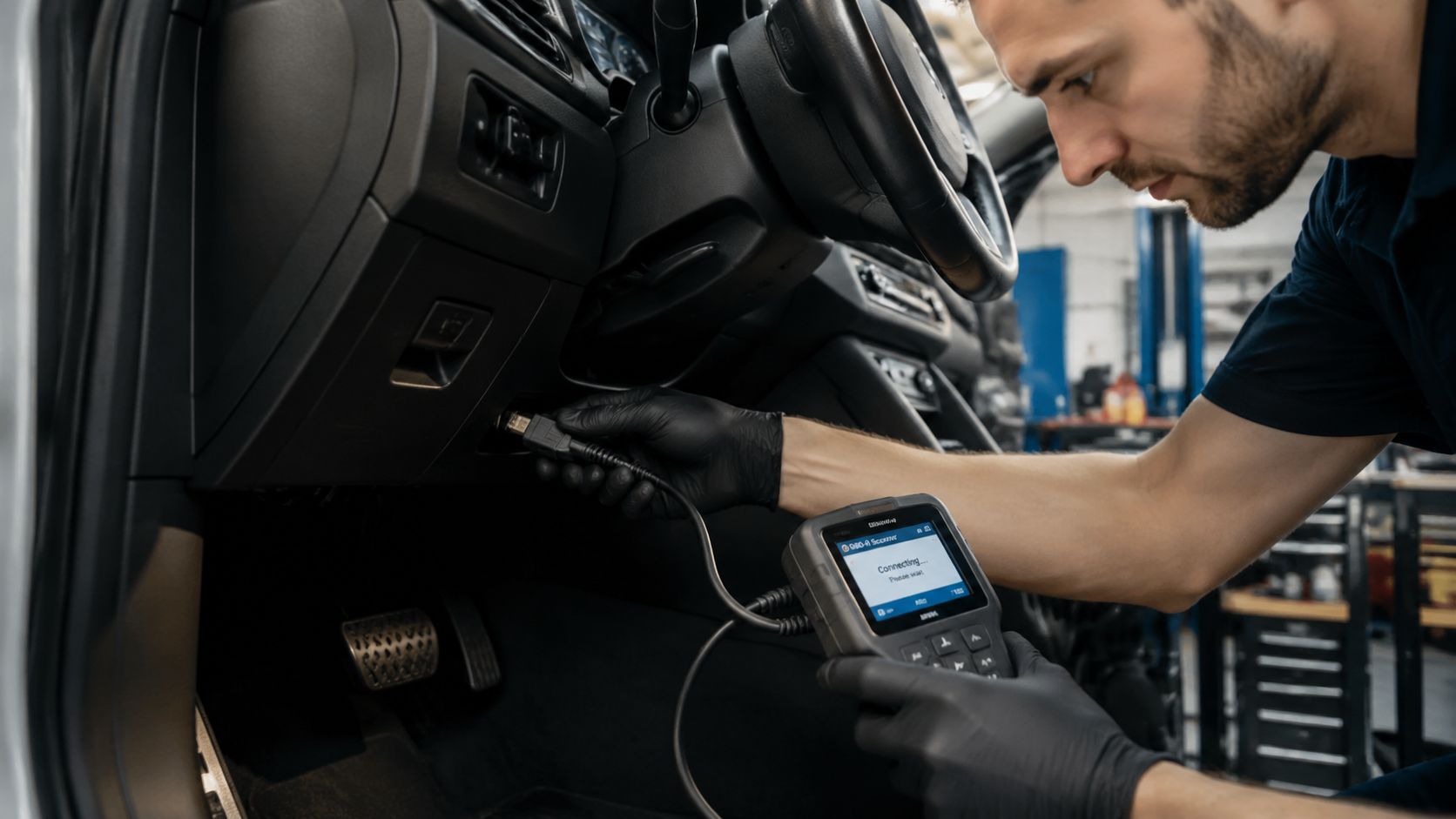
First comes the visual and functional check
California's standard inspection workflow starts with a visual inspection of emission-control parts and a functional inspection of the system (BAR smog guidance). Missing hardware, tampering, or modified software can fail the car even when it drives fine. The technician is checking whether the emissions system is complete and intact, not just whether the engine starts.
For gasoline vehicles, the station also runs a visible-smoke procedure. Inspectors check the crankcase and tailpipe, then perform three BAR Snap Tests with the engine brought to 2,000–3,000 RPM and stabilized between pulls (BAR smog check guidance). If the engine is rough, overheating, or leaking fluids, the car can get turned away before the formal test even begins.
Then the machine depends on your model year
For 2000 and newer vehicles, the BAR On-Board Diagnostic Inspection System is used. For 1999 and older vehicles, the BAR-97 Emissions Inspection System measures tailpipe emissions, and older vehicles can go through a loaded-mode test using a chassis dynamometer or a two-speed idle test (BAR smog guidance). In the loaded-mode test, the station measures hydrocarbon, carbon monoxide, carbon dioxide, and oxides of nitrogen, and the car passes only if the emissions stay within the applicable standards.
That's the part Daly City drivers miss when they show up half-ready. A car can sound normal and still fail because the OBD system is not ready, a required component is missing, or the emissions numbers are off. After the test, the certificate goes electronically into the DMV system, which is what lets you finish the registration step without another trip.
Smog Check Fees, Retest Rules, and Exemptions
Don't pay for a test you don't need, and don't assume every failure means you've got to pay twice. Daly City drivers lose money when they guess wrong about three things, whether the car is exempt, what the station charges, and whether a retest is included.
What you can skip
California's smog program doesn't apply the same way to every vehicle. The rules depend on model year, fuel type, and registration situation. Many newer vehicles are outside the testing window, and certain diesel models fall under separate treatment. If your registration notice doesn't call for a certificate, don't invent one by booking a test out of habit.
What you actually pay for
The state sets the inspection framework, but stations can set their own labor charge. That's why one shop can feel straightforward and another can feel padded. The useful question is not “What does smog cost?” It's “What exactly is included, and does a retest come with it?”
| Vehicle Type | Typical Price Range | Retest Eligible |
|---|---|---|
| Passenger car | Qualitative, station-set | Sometimes, depending on station policy |
| Light truck | Qualitative, station-set | Sometimes, depending on station policy |
| SUV | Qualitative, station-set | Sometimes, depending on station policy |
| RV or motorhome meeting criteria | Qualitative, station-set | Sometimes, depending on station policy |
California BAR says RVs and motorhomes meeting the criteria can require smog checks too (Daly City DMV field office guidance). That's an easy detail to miss if you only think in terms of sedans and pickups. If your vehicle is unusual, call ahead instead of assuming the standard passenger-car process applies.
A strong shop will tell you whether the retest policy is part of the deal before you hand over the keys. That matters because a failed vehicle often needs a second visit after repair, and the smartest owners use a station with a clear retest path rather than paying twice for the same paperwork.
Finishing Your DMV Registration in One Trip
The smog certificate is not the finish line. It's the handoff. If you still need to renew registration, transfer ownership, or get a new sticker issued, the right move is to tie the certificate directly into the DMV workflow the same day.
What the DMV counter needs
Bring the renewal notice, your proof of insurance if required by the transaction, payment method, and any ownership paperwork tied to a sale or transfer. That list gets longer when the vehicle came from out of state or the title changed hands recently. The point is simple, the station should not be your only stop.
The Daly City DMV field office exists as a local registration hub, but long lines are the reason many drivers want a licensed business partner handling the renewal instead (Daly City DMV field office guidance). If you can complete the inspection and submit the renewal without crossing town again, you save the part of the day that usually gets lost to waiting.
A passing certificate can also support transfer-of-ownership work, including California and out-of-state vehicles when the transaction requires it. That workflow is exactly where a combined smog-and-DMV site helps, because the certificate doesn't sit in your inbox waiting for another errand.
For drivers who want that combined path, California DMV registration renewal service is the relevant service page to check. Use it when your goal is completion, not just inspection.
Keep the sequence tight
Don't leave the smog station until you know the certificate is handled and the next step is clear. The clean sequence is inspection, transmission of the result, DMV payment or renewal, then sticker or registration follow-through. That's one trip done right.
What to Do If Your Vehicle Fails the Smog Test
A failed test is frustrating, but it's not automatically a repair emergency. Daly City drivers get trapped by one bad assumption, that every failure means a huge bill. That's wrong. Some failures are paperwork and readiness problems, and some are real emissions faults that need repair.
Start by reading the failure type
A failure can come from readiness issues, a lit check-engine light, missing emission-control parts, or a genuine emissions exceedance. BAR's process checks more than tailpipe output, which is why a car can fail even if it still drives clean enough to feel normal (BAR smog guidance). If the failure is a readiness problem, the fix may be driving cycles and monitor reset, not major parts replacement.
The best move is to sort the failure before authorizing work. Test-only stations are useful here because they remove the incentive to push repairs. That doesn't mean every repair estimate is wrong. It means you should know the failure reason before anyone starts upselling parts you don't need.
Use the fail reason to decide the next move
- Readiness fault: drive the vehicle properly after a battery disconnect or repair, then retest once monitors are ready.
- Check-engine light: repair the cause before returning, because a light that stays on usually means the car isn't ready for a pass.
- Missing or tampered components: restore the original emissions equipment and retest.
- Tailpipe or OBD failure: fix the issue that caused the readings to miss standard, then complete the retest.
The article on smog check fail reasons is worth reading if you want the common failure patterns laid out plainly. Use it as a filter before you approve work. The goal is a passing retest that flows straight back into the DMV renewal, not a repair shop detour that drags the process out for days.
Get the workflow right the first time. If you want a clean smog check plus DMV follow-through without extra running around, use a station that handles both sides of the process and asks the right questions before you arrive. Fire House Smog can help with inspection and registration tasks in one place, so you can leave with the certificate handled and the renewal moving. Visit Fire House Smog and book the visit that gets the job finished, not just started.