Smog Check for Trucks: Your 2026 California Guide
Your registration notice shows up. You open it, see that your truck needs a smog check, and the questions start right away.
Does my truck even fall under the regular program? Is this the same thing as Clean Truck Check? If it's diesel, does the weight rating change the rule? If I pass, can I finish my DMV renewal the same day, or am I headed into another line somewhere else?
Those questions are common because California doesn't treat every truck the same. Fuel type matters. Model year matters. Gross Vehicle Weight Rating (GVWR) matters. And for heavier diesel trucks, the rules often shift into a different compliance system entirely. If you own a pickup, work truck, fleet unit, or a truck you're trying to sell or register, getting the category right is the first step that saves time.
Table of Contents
- Your DMV Notice Arrived, Now What?
- Which Trucks Require a California Smog Check
- Exemptions and Special Cases for Trucks
- The Smog Test Process From Start to Finish
- Practical Tips to Pass Your Truck's Smog Check
- Your One-Stop Solution in Antioch: Fire House Smog
Your DMV Notice Arrived, Now What?
Most truck owners do the same thing first. They look at the notice, then at the truck, then back at the notice, trying to figure out whether this is a routine registration step or the start of a compliance headache.
A common example is the owner of a diesel pickup who assumes diesel means exempt. Sometimes that's wrong. Another example is the owner of a heavier commercial truck who books a standard smog check appointment, only to learn the truck belongs under a different emissions program. The problem usually isn't the inspection itself. It's identifying the right rule before you lose time.
Read the notice, then check the truck's basics
Before you schedule anything, confirm these details from your registration or door-jamb label:
- Fuel type: Gasoline, diesel, hybrid, or another alternative fuel.
- Model year: Newer trucks often follow a different path than older ones.
- GVWR: This is the dividing line that changes the rule for many diesel trucks.
- Renewal or ownership change: A sale can trigger a different smog requirement than a routine renewal.
If you're also trying to finish registration, it helps to handle the smog requirement alongside the paperwork. Fire House Smog also offers California DMV registration renewal services, which is useful when the goal is to leave with both the inspection and renewal handled in one stop.
Practical rule: Don't ask, “Does my truck need smog?” Ask, “Which California program applies to my truck?”
What usually slows people down
The biggest delays come from assumptions:
- “It's a truck, so it must work like my car.” Not always.
- “It's diesel, so I'm exempt.” Sometimes true, sometimes false.
- “If it's heavy-duty, I don't need to think about smog at all.” That can create the worst surprise of all.
If your notice arrived and your registration deadline is coming up, the fastest move is to classify the truck correctly first. Once that part is clear, the next steps become straightforward.
Which Trucks Require a California Smog Check
A customer with a diesel pickup and a customer with a diesel box truck can walk in on the same day and leave with two different answers. That usually surprises people. In California, truck smog requirements turn on three facts: fuel type, model year, and gross vehicle weight rating (GVWR).
Get those three right first, and the rest gets much easier.
For gasoline, hybrid, and many alternative-fuel trucks, the standard Smog Check program usually applies if the truck is 1976 or newer and old enough to be out of the newer-vehicle exemption period. The California Bureau of Automotive Repair explains that vehicles in the first several model years pay a smog abatement fee instead of getting a biennial inspection under the regular program, then move into the testing cycle later on, as outlined on the BAR Smog Check program page.
Diesel trucks follow a different cutoff that causes a lot of confusion. Under California rules, diesel-powered vehicles with a model year of 1998 or newer and a GVWR of 14,000 pounds or less fall into the standard biennial Smog Check requirement. The California DMV lists that light-duty diesel rule in its Smog Inspections page.
The dividing line is the part many truck owners miss. A diesel truck can be newer and still not belong in the ordinary station-based smog program if its GVWR is too high.
California Truck Smog Check Requirements 2026
| Truck Type | Smog Check Required? | Key Conditions |
|---|---|---|
| Gasoline truck | Yes, in many cases | Applies on a biennial cycle for 1976 or newer trucks once they are past the newer-vehicle exemption period |
| Hybrid truck | Yes, in many cases | Usually follows the same standard Smog Check timing as other eligible light-duty vehicles |
| Alternative-fuel truck | Yes, in many cases | Requirement depends on fuel type, age, and registration event |
| Diesel truck, 1998 or newer, 14,000 lbs GVWR or less | Yes | Must complete a biennial smog check under the standard program |
| Diesel truck over 14,000 lbs GVWR | No, not under the standard program | Usually handled outside the regular station-based Smog Check system |
| Newer eligible truck still within the exemption window | No physical test yet | Smog abatement applies instead of a physical inspection during that period |
| Truck being sold | Sometimes | Ownership transfer rules can trigger a smog requirement depending on age and fuel type |
Heavy-duty trucks are where the article title can mislead people. Some trucks do need a standard smog check at a station like Fire House Smog. Others fall under Clean Truck Check, which is a separate compliance program aimed at heavier diesel vehicles, not the regular biennial inspection most pickup owners are used to.
That distinction matters before you book an appointment. If the truck is a light-duty gasoline, hybrid, alternative-fuel, or qualifying diesel truck, a STAR-certified test-only station is the right path. If the truck is over the light-duty diesel weight threshold, the question shifts from "Do I need a smog test today?" to "Am I in the standard Smog Check program or in Clean Truck Check?"
One practical tip from the shop side: check the GVWR on the door label, not what the truck weighs today and not what you use it for. California uses the vehicle's rated classification, and that single number often decides whether you need a regular smog inspection or a different compliance route entirely.
Exemptions and Special Cases for Trucks
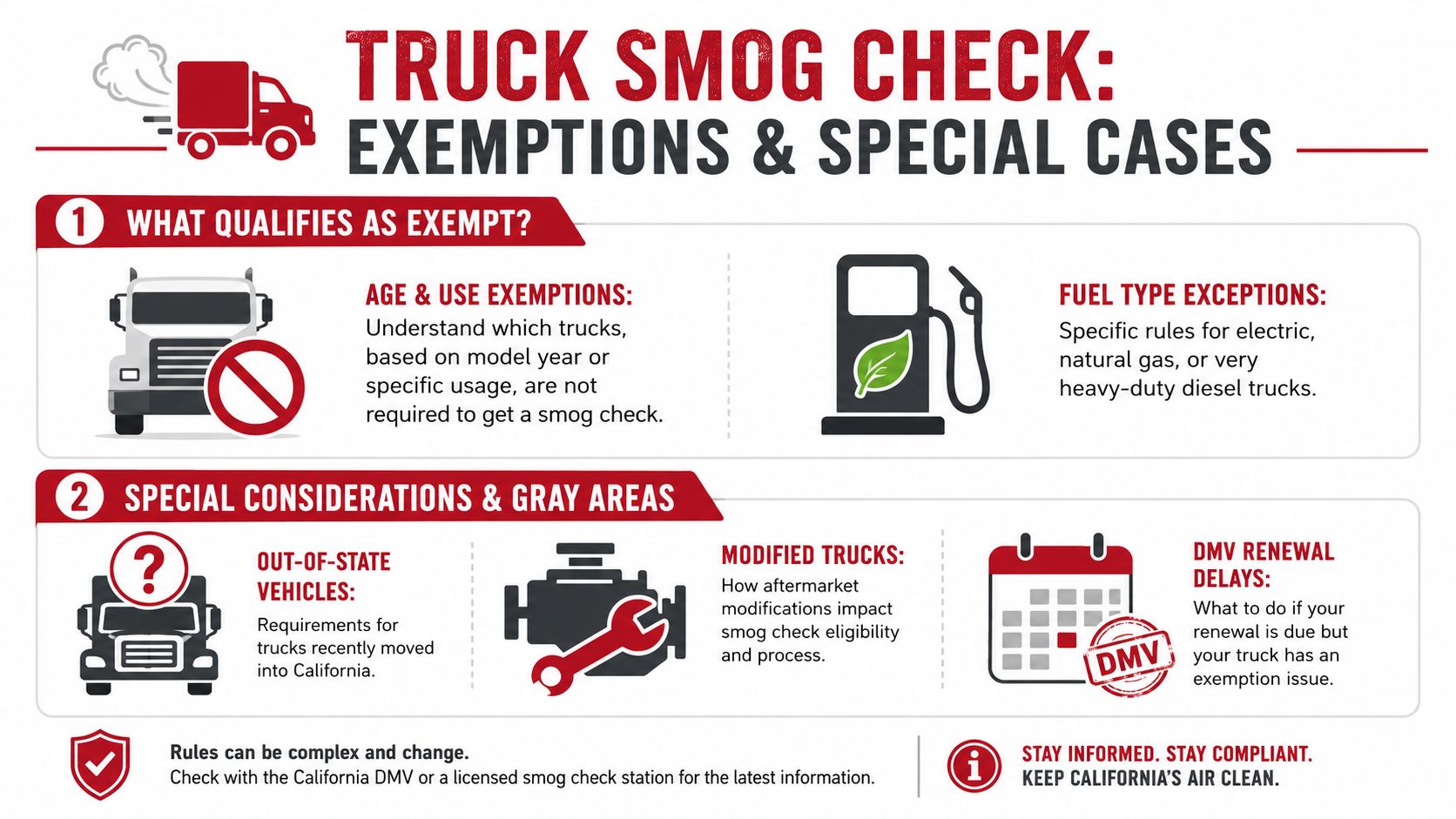
Truck owners usually get tripped up here after they already know their weight class. The next question is whether an apparent exemption means "no test at a station" or "different compliance program entirely."
The biggest mistake truck owners make
The most common mistake is assuming a heavy truck is exempt from everything because it does not go through the standard Smog Check lane.
For trucks with a GVWR over 14,000 lbs, the regular station-based smog inspection usually is not the controlling program. As Geotab's California truck smog guide explains, heavier diesel vehicles can fall under Clean Truck Check instead, including recurring OBD compliance requirements for certain model years. That is a different process, a different schedule, and a different problem to solve than the biennial inspection a light-duty pickup owner handles at a STAR station.
From the shop side, this is the practical consequence. A customer with a half-ton or three-quarter-ton truck may only need the normal inspection path. A customer with a heavier diesel may need to verify Clean Truck Check status before booking a station visit at all. Getting that wrong wastes time and can delay registration.
Exempt from the standard smog test does not mean exempt from California emissions compliance.
Other gray areas that cause delays
Newer trucks can also confuse the schedule. Some vehicles are still in the exemption window, so the owner pays a smog abatement fee instead of doing a physical inspection. Then a DMV notice arrives later, and it looks inconsistent. Usually it is just the truck aging into the regular requirement.
Out-of-state trucks are another frequent problem. California may require separate emissions compliance steps for trucks brought in from outside the state, especially for diesel and other non-gasoline vehicles. The rule is handled through the state program, not by relying on whatever testing the previous state required, according to the California Air Resources Board Clean Truck Check program information.
A few special cases are worth checking before you head to the station:
- RVs and motorhomes: Test eligibility is only part of the issue. Physical bay clearance matters too.
- Modified trucks: Aftermarket parts, deleted equipment, or missing emissions labels can stop the inspection quickly.
- Ownership transfers: A truck that is not due for normal renewal smog can still need certification for a sale.
- Diesel work trucks near the cutoff: A small difference in GVWR can put one truck in the regular Smog Check system and another in Clean Truck Check.
This is the part many owners want clarified in plain English. Light-duty trucks usually need the familiar station process. Heavy-duty diesel trucks often follow Clean Truck Check instead. If the paperwork is unclear, a STAR-certified test-only station like Fire House Smog can tell you whether you are booking the right type of appointment before you lose a day chasing the wrong requirement.
The Smog Test Process From Start to Finish
You pull in with a DMV notice on the seat and one question in mind. Is this a quick check, or is this going to turn into a problem? For most light-duty trucks in the regular California Smog Check program, the visit is straightforward if the truck is ready and you brought the right paperwork. For heavier diesel trucks that fall under Clean Truck Check, the process is different, which is why confirming the program before the appointment saves time.
What to bring and what the technician checks
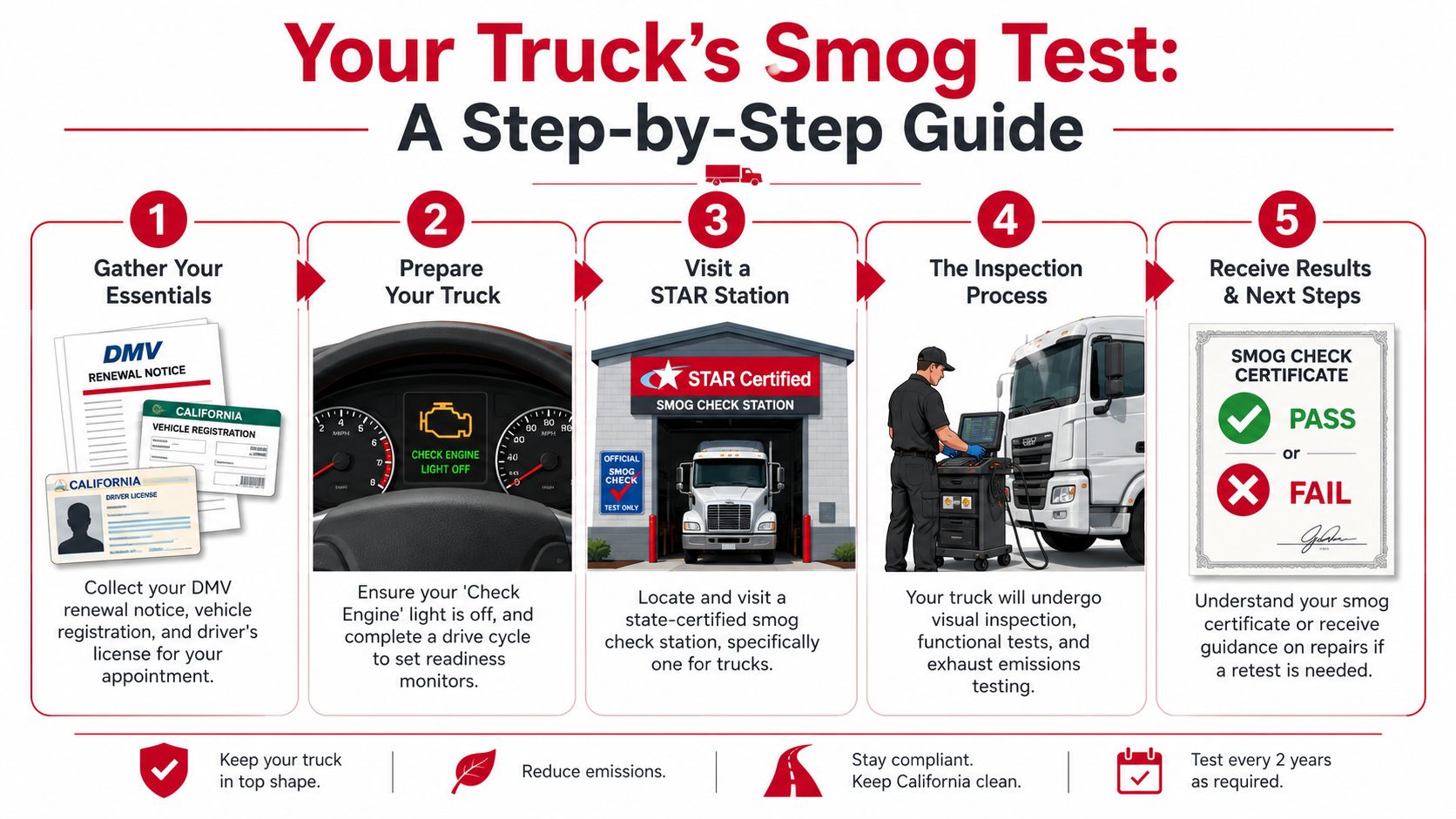
Bring your registration and the DMV notice if you received one. If you want to handle registration-related tasks at the same stop, keep your driver's license ready too. At a station like Fire House Smog, that matters because on-site DMV services can save you a second errand after the test is done.
Once the truck is checked in, the technician verifies the vehicle information, confirms the test type, and starts the inspection. For many gasoline trucks and newer light-duty models, the process centers on the emissions system status reported through the vehicle computer. Some older vehicles can still require a tailpipe portion, and every applicable vehicle gets a visual check for emissions components that are supposed to be there.
The inspection usually comes down to three parts:
Vehicle and equipment verification
The technician confirms the VIN, checks the emissions label when needed, and looks for missing, disconnected, or obviously tampered emissions parts.OBD-II and functional checks
The system is scanned for fault codes, monitor readiness, and command status related to emissions performance.Tailpipe testing when required
Older applicable trucks may still get an exhaust measurement based on the test standard for that vehicle.
If you want a clearer picture of what commonly causes a failed inspection, review these truck smog check fail reasons before you book.
A short explainer helps here:
What happens after the inspection
If the truck passes, the result is sent electronically to the state. In most cases, that clears the smog requirement tied to your registration. If the truck fails, you receive a report showing where the problem showed up, such as an active trouble code, incomplete readiness monitors, or a visual equipment issue.
That distinction matters at a test-only station. A STAR-certified test-only shop inspects the vehicle and reports the result. It does not turn the failed test into a repair sale.
Fire House Smog is a STAR-certified test-only station with two service bays, and that setup helps in a practical way. Owners can get the correct inspection for a qualifying light-duty truck, confirm whether they are dealing with standard Smog Check or a different heavy-duty requirement, and handle DMV-related tasks on site instead of piecing the process together at multiple stops.
The best appointment is the one where the truck is ready to test. Warning lights, recent battery disconnects, and visible emissions tampering still stop plenty of trucks before the paperwork is even the hard part.
Practical Tips to Pass Your Truck's Smog Check
Most smog failures are not surprises to the truck. They're surprises to the owner.
What helps before you arrive
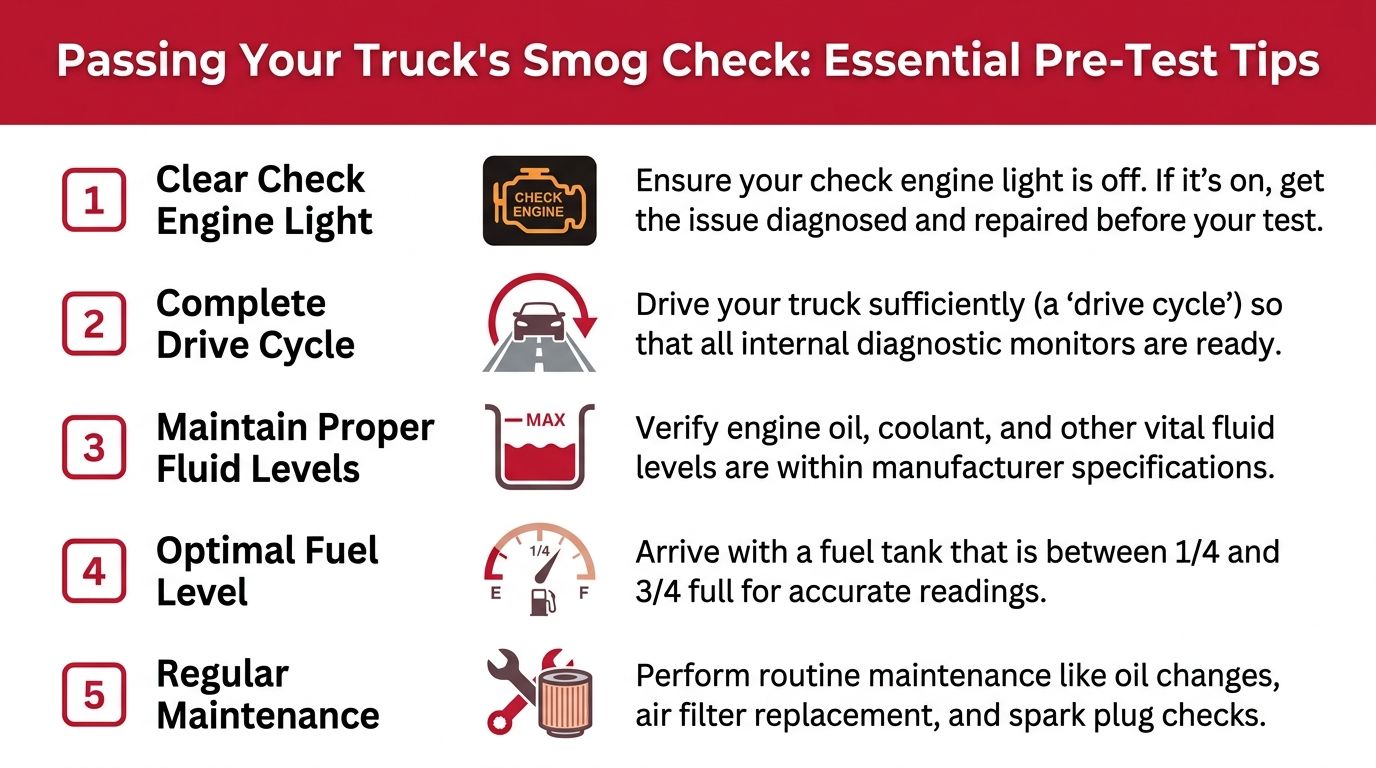
The first thing I tell customers is simple. If the Check Engine light is on, don't book the test expecting luck to save you. A lit check engine light causes an automatic failure regardless of tailpipe readings, as explained in Lytx's truck smog check guide.
That one rule changes how you should prepare.
- Handle warning lights first: A glowing MIL is a stop sign, not a maybe.
- Drive the truck before the test: A normal drive before the appointment helps the truck arrive warmed up and operating normally.
- Don't disconnect the battery right before testing: That can create readiness issues and turn a repair into a failed inspection.
- Look for obvious equipment problems: Missing caps, disconnected hoses, or visible tampering waste everyone's time.
- Stay current on routine maintenance: Dirty filters, neglected tune-up items, and unresolved drivability problems don't help.
For many owners, the most useful prep is not mechanical expertise. It's honesty. If the truck runs rough, stalls, smells rich, or has had a warning light recently cleared, it probably isn't ready.
“If you just cleared a code this morning, wait. A rushed test is usually more expensive than a delayed one.”
If you want a quick reference on common reasons vehicles fail, Fire House Smog has a page on smog check fail reasons that lines up with what technicians see every day.
If your truck fails
A fail result doesn't mean the truck is done for. It means the problem has to be corrected before certification.
What works after a failure is targeted repair. Read the failure report carefully, repair the actual issue, and then return for a retest. What doesn't work is replacing random parts and hoping one of them fixes it.
A test-only station is useful here because the inspection result stands on its own. There's no built-in incentive to turn a failed test into a repair ticket. That separation is one reason many truck owners prefer the test-only route when they want a straightforward answer.
Your One-Stop Solution in Antioch: Fire House Smog
When truck owners get frustrated, it's usually not because the inspection itself is impossible. It's because the process gets split into too many errands. One place for testing. Another for DMV work. Another call to verify whether the station can handle a truck or RV size.
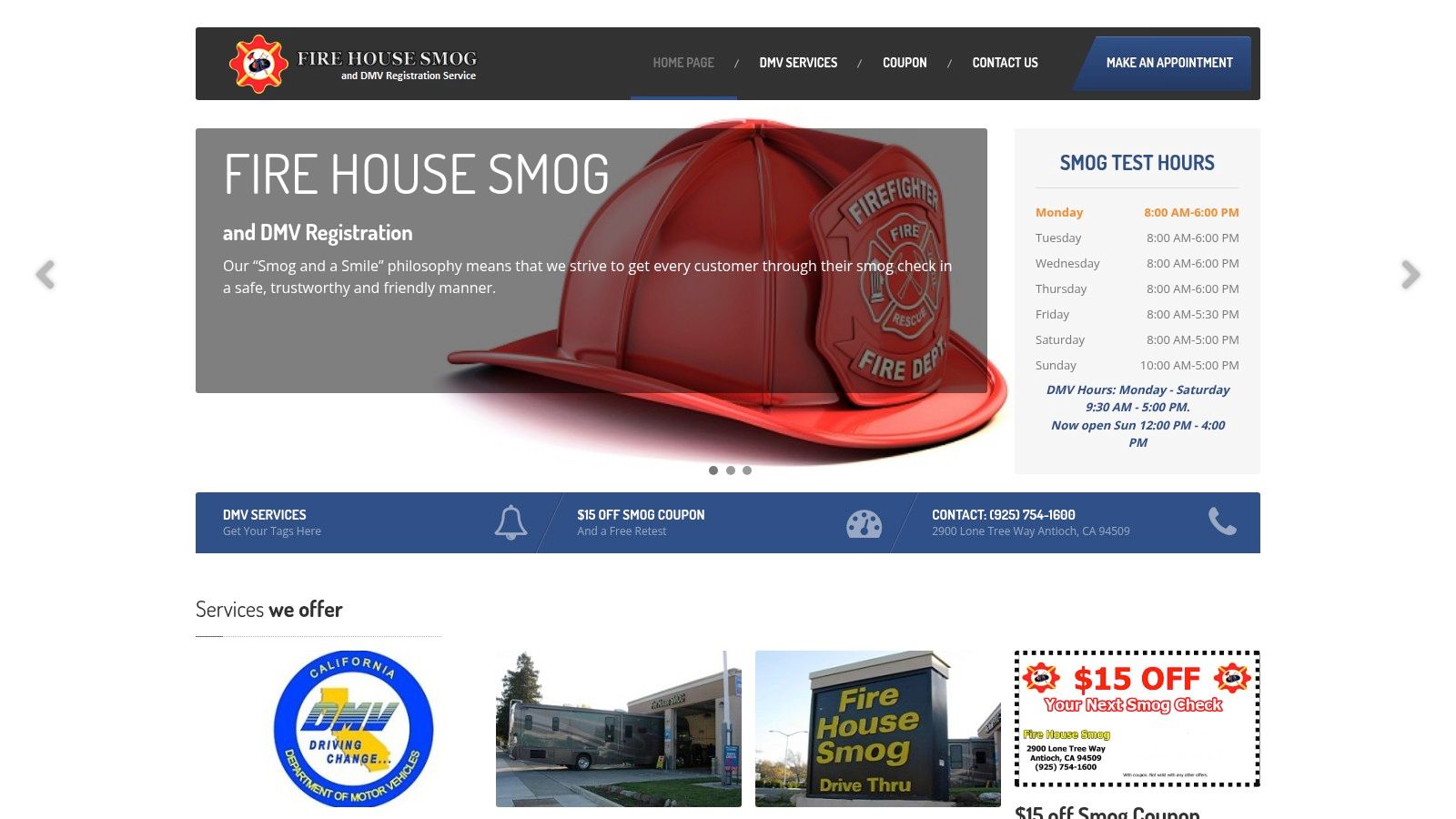
That's where a local station setup matters. Fire House Smog in Antioch is a STAR-certified test-only smog station and a licensed DMV registration services provider located on Lone Tree Way. It handles smog inspections for cars, trucks, and some RVs, subject to size and equipment limits, and it processes California registration renewals, ownership transfers, and related DMV transactions with on-site tag issuance during posted hours.
For truck owners, the practical advantages are straightforward:
- Test-only model: You get the inspection without repair sales pressure.
- Two service bays: That helps move vehicles through more efficiently.
- Seven-day smog availability: Easier for working drivers and small business owners.
- On-site DMV services: Useful when your goal is to finish the compliance step and the registration step together.
- Truck-focused service mix: You can review their local Antioch smog check services before you go.
If you have a light-duty truck that needs a standard inspection, or you're sorting out a renewal and want fewer moving parts, that kind of setup can save a lot of unnecessary back-and-forth. If you have a large RV or a vehicle with unusual fitment, call first and confirm the station can accommodate it.
If your truck needs a smog check and you want to handle the inspection and DMV paperwork with less friction, contact Fire House Smog. They provide STAR-certified test-only inspections, on-site DMV services, and practical help for Antioch and East Contra Costa County drivers trying to get registration done without extra stops.