
You notice it while fueling up. The California vehicle registration sticker on your rear plate looks faded, torn, or older than you expected. Maybe you renewed online months ago, but the replacement never arrived. Or perhaps you paid the renewal and assumed the sticker would take care of itself.
That assumption causes avoidable trouble. California treats the sticker as part of the vehicle's current registration display, and the correct solution depends on what happened. A lost year tab, an unreadable month tab, and a sticker that the DMV never mailed are different problems with different remedies.
Table of Contents
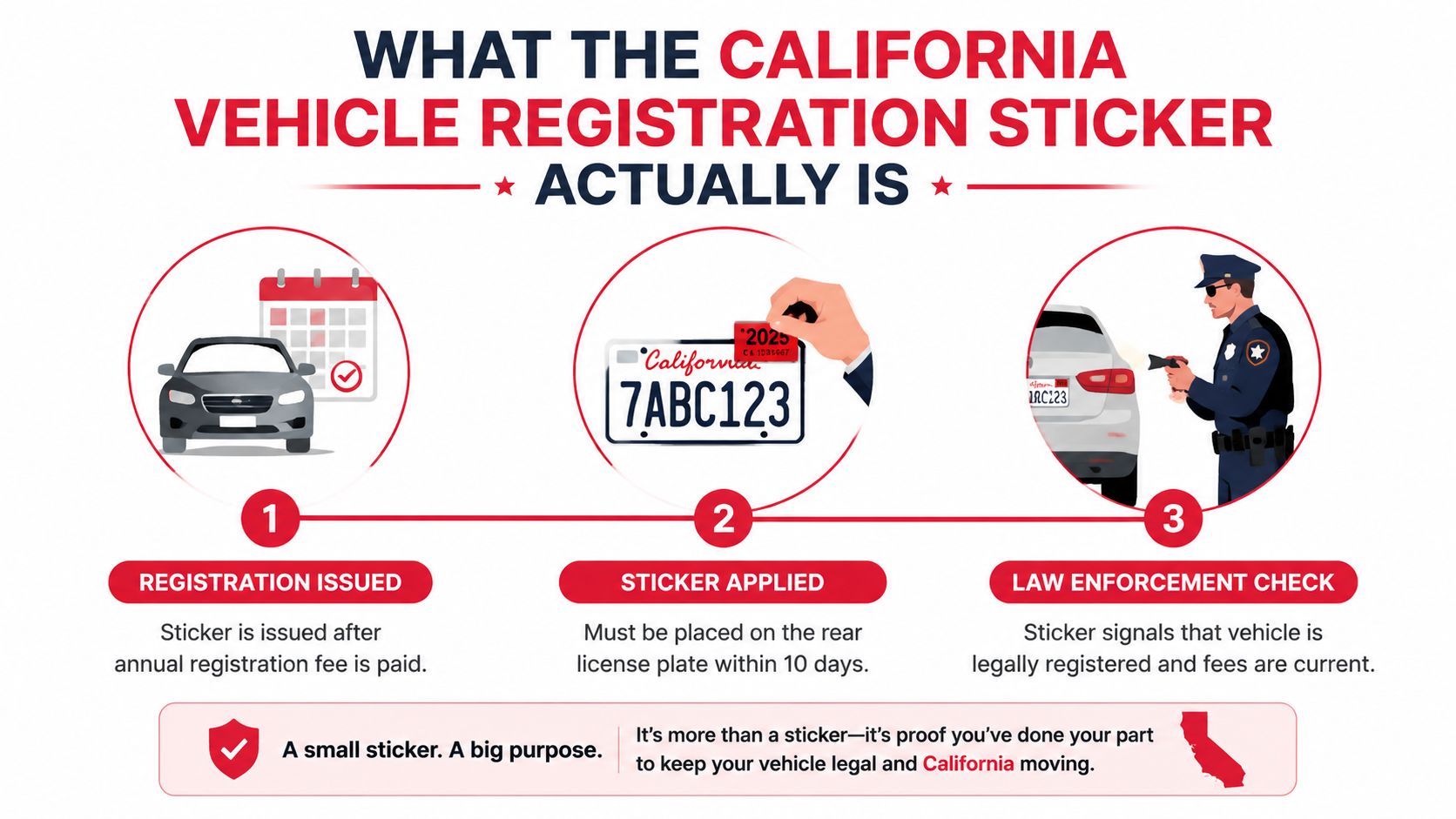
- What the California Vehicle Registration Sticker Actually Is
- Legal Requirements and Correct Display Rules
- How to Renew Your California Registration Sticker
- Replacing a Lost, Stolen, or Undelivered Sticker
- Where to Get Your Sticker Without the DMV Wait
- Documents Checklist and Practical Tips
- Penalties, Deadlines, and Frequently Asked Questions
What the California Vehicle Registration Sticker Actually Is
A California vehicle registration sticker, commonly called a tab, is the validation device placed on the vehicle's license plate after registration renewal. California requires vehicle owners to renew registration every year, and the DMV sends new registration stickers after renewal. The owner must affix those stickers to the license plate to keep the registration display valid. The California DMV license plate guidance confirms that replacement month stickers may be issued at no cost when the owner is eligible.
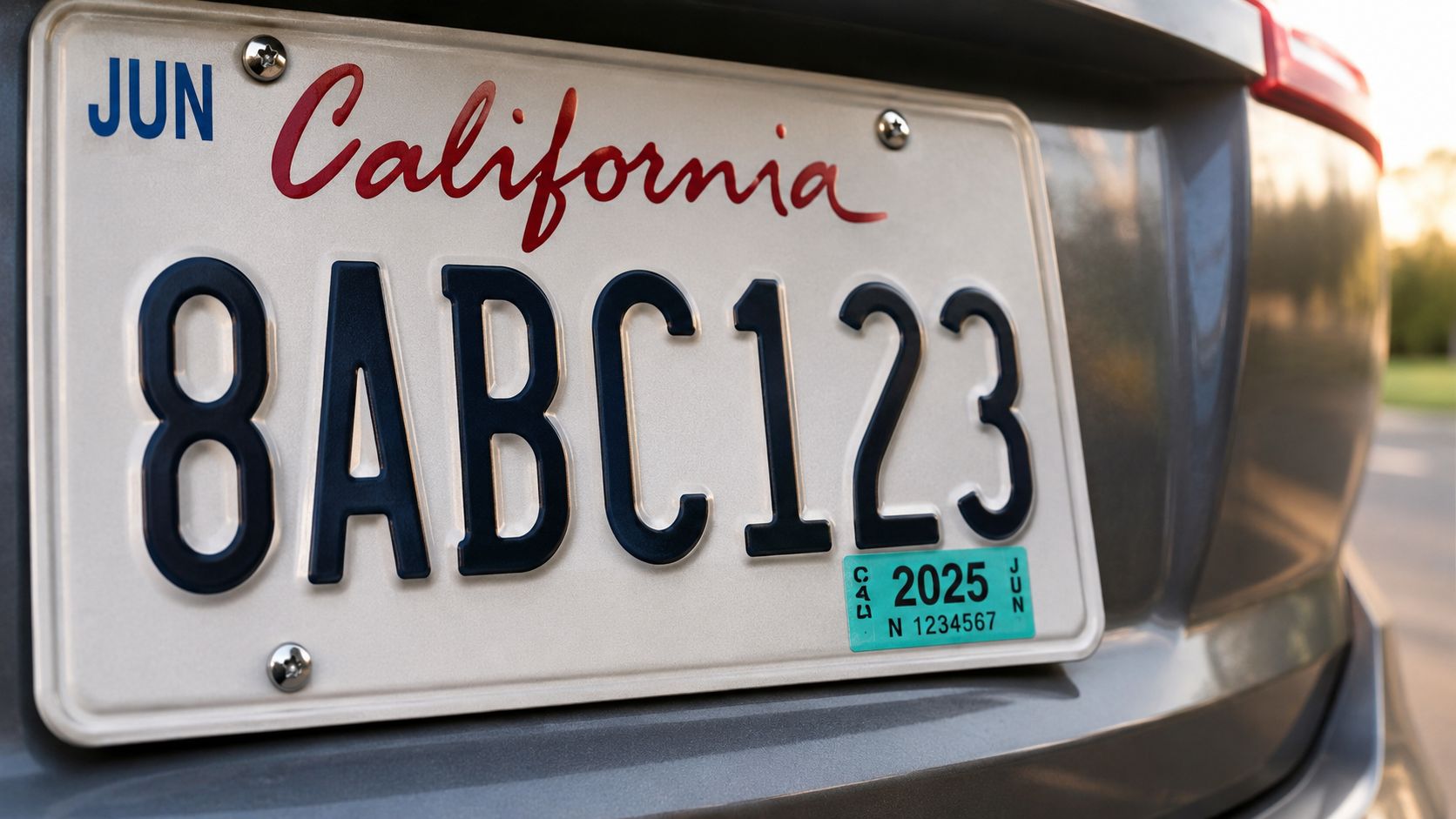
The plate normally carries two important tabs. The year sticker identifies the registration year, while the month sticker identifies the month in which the registration expires. Together, they give a quick visual indication that the vehicle's registration should be current. Officers can also verify the vehicle record through DMV systems, so the physical sticker and the electronic record work together.
Practical rule: Treat the plate sticker as a required part of the vehicle's registration display, not as optional decoration.
California's system developed over time. The state first required vehicle registration in 1905, began issuing permanent license plates in 1914, introduced unique registration tags in 1916, and adopted annual registration stickers in 1976 to show that registration was current, as documented in the history of California vehicle registration plates. The DMV still uses stickers as part of the annual renewal process, even though registration information is also maintained electronically.
Look at the rear plate before you drive. If the year tab is missing, peeled away, or impossible to read, request the correct replacement rather than placing a random sticker over the problem. If the month tab is the issue, the DMV may treat it differently from a year-tab replacement.
The key question is simple: does your DMV record show current registration, and does your plate display the correct tabs? If the record is current but the sticker is missing, you need a replacement. If the record isn't current, ordering another sticker won't fix the underlying registration problem.
Legal Requirements and Correct Display Rules
The rear license plate is the required display location for California registration tabs. Apply each tab to the designated validation area, where it must stay visible and legible. Do not place it on the plate frame, vehicle body, or a removable cover. A frame that blocks the tab can make a current registration difficult to verify.
Before applying a replacement, clean away loose residue and let the plate dry. Press the tab down firmly. Follow the DMV's instructions for the specific replacement, especially before placing a new year tab over an older one. Layered or damaged tabs are harder to inspect and may peel away.
Check these common display mistakes
- Wrong plate: Ordinary vehicles generally display registration tabs on the rear plate. Do not attach one to a front plate or temporary paper document.
- Wrong location: A tab outside the designated area may be difficult to verify and may fail the display requirement.
- Blocked visibility: Oversized frames, tinted covers, dirt, and peeling edges can hide registration information.
- Unreadable condition: Replace a faded, damaged, or illegible tab.
- Out-of-date information: After receiving an issued replacement, remove the old tab and display the current one.
Year-tab and month-tab problems are not interchangeable. The DMV replacement process identifies the year sticker as lost, stolen, damaged, or illegible and requires vehicle and applicant information for the request. Use the DMV replacement sticker instructions to select the correct request. If the year tab never arrives by mail, verify the registration record and request a replacement instead of applying an unrelated tab. A missing month tab also needs attention, but do not assume the year-tab procedure automatically covers it.
A current electronic registration record does not make an obscured or unreadable plate display acceptable. Stand behind the vehicle and check both tabs before driving. Confirm that the year and month are present, readable, and uncovered. Fix any problem promptly, before it becomes an avoidable roadside issue.
How to Renew Your California Registration Sticker
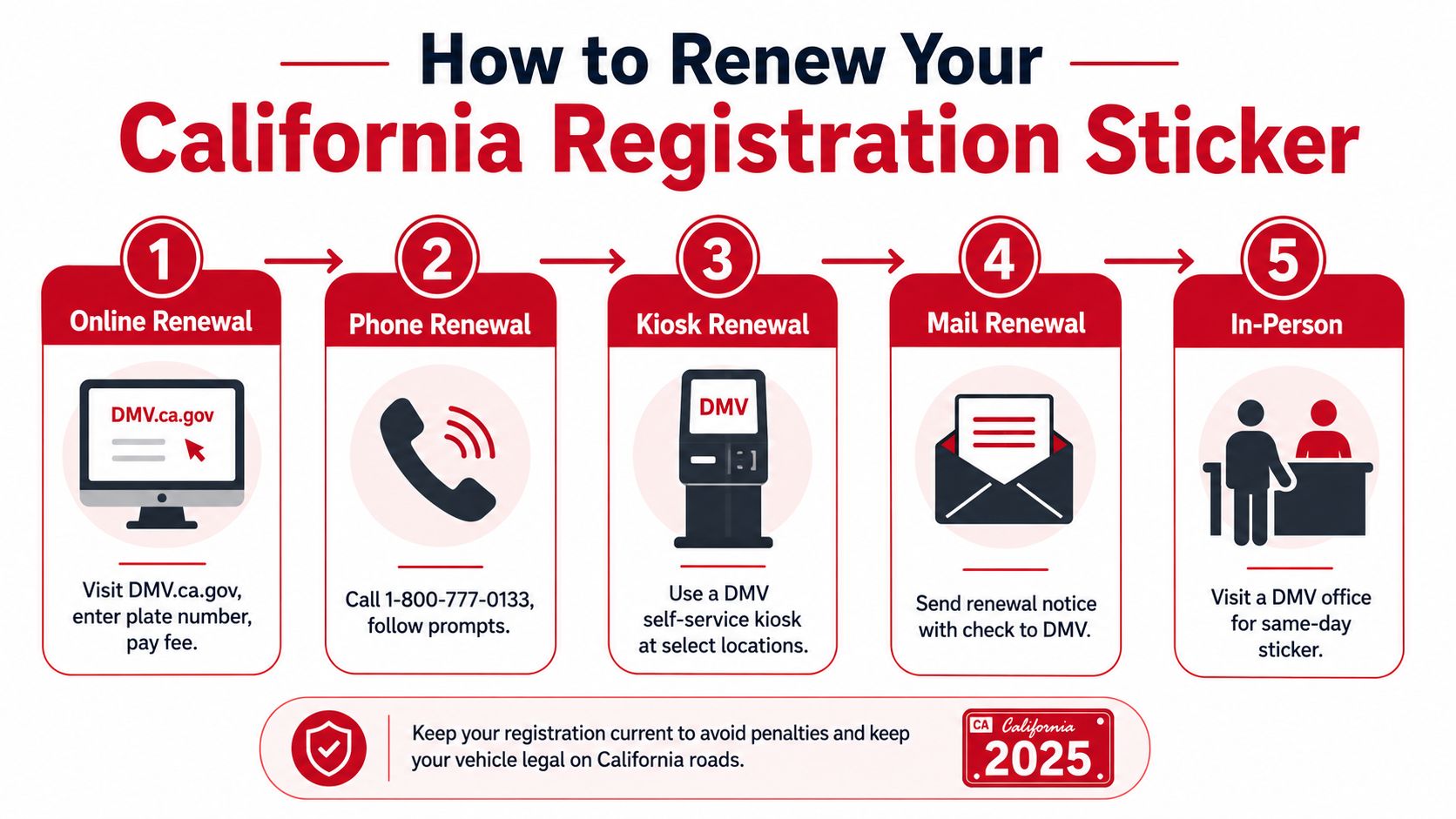
California gives drivers several renewal channels. The right choice depends on whether your record is straightforward, whether a smog certification is needed, and whether you need the physical sticker immediately.
Start with the renewal notice if you received one. It usually identifies the vehicle and the amount due, but the notice isn't the only way to renew. The DMV confirms that registration renewal can be completed online or by phone through its renewal service, and renewal stickers are mailed after processing.
Choose the channel that matches your situation
Online renewal works well when the vehicle is eligible and the DMV already has the required information. Use the official DMV website, enter the requested vehicle details, complete any smog requirement, and submit payment. Keep the confirmation for your records, but remember that confirmation and the physical sticker are separate things.
Phone renewal is useful when you prefer a guided process and your transaction qualifies. Have the renewal information and payment method available before calling. If the system identifies a missing requirement, resolve that issue instead of repeatedly submitting the same payment.
A DMV self-service kiosk can be the fastest choice when the vehicle meets the kiosk's requirements. DMV kiosks can also print registration card or sticker replacements using the plate number and the last five digits of the VIN, according to the DMV's replacement information.
Mail renewal suits drivers who prefer paper processing. Send the required renewal materials and payment to the address listed by the DMV. Mailing is slower and gives you less immediate visibility into the transaction, so confirm your address first.
A licensed DMV partner can make sense when you need a smog check and registration service together. The provider can tell you whether the vehicle qualifies for same-visit processing and whether a sticker can be issued on-site.
Don't confuse payment with completion
A payment alone doesn't prove that every renewal requirement has cleared. Smog certification, vehicle information, insurance records, or administrative holds can affect whether the DMV completes the renewal. Check the transaction status and follow the DMV's instructions if the record remains incomplete.
If fees have been paid but plates or stickers haven't been issued, the DMV may issue a temporary operating permit in situations where its requirements are met. That permit isn't a substitute for ignoring the missing sticker. Confirm what document applies to your vehicle and keep it with the registration paperwork while the DMV resolves issuance.
Renew early enough to account for mailing and unresolved requirements. If the sticker doesn't arrive, don't pay for a second renewal. Verify the original transaction first, then follow the replacement process that matches the problem.
Replacing a Lost, Stolen, or Undelivered Sticker
Start by identifying what happened. A sticker that vanished after installation requires a different request from one the DMV issued but never mailed. Damage, illegibility, and missing tabs also follow different rules. Check the year sticker and month sticker separately before submitting anything.
Year-tab replacements
For a lost, stolen, damaged, or unreadable year sticker, the DMV matches the replacement request to the vehicle record. You will need the plate number, registration information, and the last five digits of the VIN. The DMV's online replacement process explains the request and notes that a substitute-sticker fee applies in most cases.
Use the online process when the vehicle qualifies. A kiosk may be the faster choice when it offers replacement printing and you need a physical sticker promptly. Special or exempt vehicles may not qualify for the standard online route. In those cases, complete Form REG 156 and submit it by mail or at a DMV office.
Month-tab corrections
The month sticker follows a separate path. Eligible replacement month stickers may be issued without a fee, while replacing a year tab generally uses the substitute-sticker process. Selecting the wrong tab can send you through an unnecessary payment step or delay the request.
Check the tabs before applying. If the year remains visible but the month is missing or damaged, report the month-tab problem accurately and use the remedy assigned to that tab.
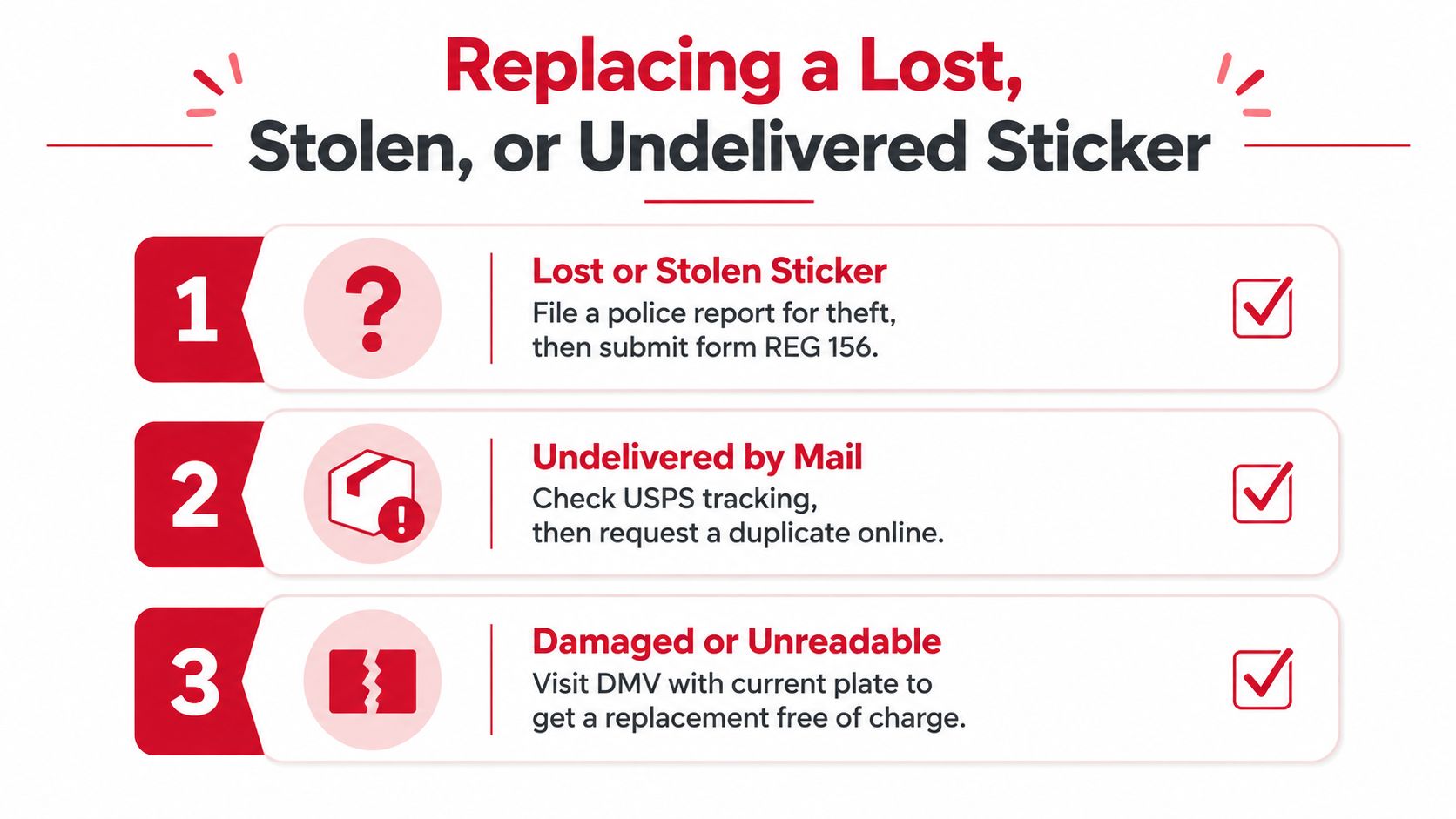
When the sticker never arrived
A sticker that never arrives requires a record check before a replacement request. Confirm that the renewal completed, then verify the mailing address on the vehicle record. The DMV mails stickers after renewal, but payment alone does not prove that issuance is complete.
Do not submit a second renewal or cancel the original payment because the envelope is late. Check the transaction status, confirm the address, and contact the DMV or use its replacement process if the record shows that the sticker was issued but not received.
Keep the renewal confirmation and related correspondence. Those records help establish nonreceipt rather than loss, theft, or damage, and they reduce the risk of paying twice for a completed transaction. If you need same-visit help, a licensed DMV partner such as Fire House Smog can handle eligible registration services without the standard DMV office wait.
Where to Get Your Sticker Without the DMV Wait
A DMV office is only one option, and it isn't always the most efficient one. Online renewal avoids the line but sends the sticker by mail. A kiosk can handle qualifying transactions quickly, while a licensed DMV business partner may combine emissions testing and registration work in one visit.
| Channel | Sticker in Hand | Typical Wait | Weekend Availability | Smog + Renewal Combo |
|---|---|---|---|---|
| DMV office | Depends on the transaction | Office queue and processing time | Limited | Not the usual format |
| DMV website | Usually mailed | Online processing plus delivery | Online access | No |
| DMV kiosk | Often available for qualifying replacements or transactions | Self-service transaction time | Depends on location | No |
| Licensed DMV partner | May be issued on-site | Appointment or walk-in workflow varies | Depends on provider | May be available |
For drivers who need only a routine renewal and aren't in a hurry, online processing is practical. For someone with a missing sticker, a kiosk can be preferable because eligible kiosks can print certain replacement documents without an office appointment. Check the specific kiosk's services before driving there.
A licensed provider can be more useful when the renewal depends on a smog inspection. Fire House Smog's DMV registration services include California registration renewals with on-site sticker printing during posted service hours. The location is 2900 Lone Tree Way in Antioch, and DMV service hours are Monday through Saturday from 9:30 AM to 5:00 PM and Sunday from 12:00 PM to 4:00 PM, based on the publisher's provided service information.
That combination can eliminate the back-and-forth between a smog station and a DMV office. Call ahead if the vehicle is a special category, a larger recreational vehicle, or has an unresolved registration hold. A licensed partner can process only what the vehicle record and applicable DMV rules allow.
Documents Checklist and Practical Tips
Prepare the information before you start. Most delays come from missing vehicle data, an unresolved smog requirement, or an address problem that nobody checked until after the sticker was mailed.
Renewal checklist
- Renewal notice: Bring it if you have it, but don't assume it's required for every renewal channel.
- License plate number: Use the plate number exactly as it appears on the vehicle.
- Vehicle identification information: The DMV replacement flow asks for the last five digits of the VIN.
- Smog information: Complete the required inspection before renewal when the vehicle record calls for it.
- Payment method: Use an accepted payment method for the selected channel and keep the confirmation.
- Address record: Verify that the DMV has the correct mailing address before submitting the renewal.
- Supporting documents: Bring any permit, ownership, exemption, or special-category paperwork that applies to the vehicle.
For a replacement, identify the failure clearly. Select a year-tab replacement when the year sticker was lost, stolen, damaged, or made illegible. Ask about a month-tab correction when only the month sticker is affected. Special-category and exempt vehicles may require REG 156 instead of the standard online flow.
Use the DMV's vehicle registration document checklist before visiting a service provider. It's better to discover a missing document at home than after you've already driven across town.
Keep a digital or printed copy of the renewal confirmation. It doesn't replace the plate sticker, but it gives you a record of the transaction while you resolve delivery or issuance. If the DMV record shows an unresolved requirement, address that item directly instead of submitting another payment.
Finally, check the plate after installation. Confirm that the sticker is on the rear plate, readable, firmly attached, and not blocked by a frame or cover. That quick inspection prevents a completed renewal from turning into a display problem.
Penalties, Deadlines, and Frequently Asked Questions
Registration problems become more expensive and harder to untangle when drivers ignore them. Late renewal can involve penalties, and an expired or missing tab can trigger a correction issue even when the underlying record needs a different fix. If you receive a citation, follow the court instructions and don't assume renewal alone closes the matter.
Use the DMV record as your starting point. A current record with a missing sticker calls for replacement. An expired record calls for renewal and resolution of whatever prevented completion, such as a missing requirement or administrative hold.
Can I drive while waiting for a mailed sticker?
Possibly, but don't rely on an envelope alone. If you submitted the proper registration application and the transaction is still being processed, keep your existing registration materials and any temporary operating permit issued by the DMV. Verify your status rather than assuming payment automatically completed the renewal.
What if my renewal notice never arrived?
A missing notice doesn't cancel the renewal obligation. Use the DMV's available renewal services, check the vehicle record, and confirm the mailing address. If the system shows a problem, resolve that problem before requesting a sticker.
Do out-of-state vehicles need California stickers?
The answer depends on the vehicle's registration status and where it is legally registered. A vehicle registered in another state follows that jurisdiction's plate and validation rules while it remains properly registered there. If you establish California registration, follow California's display requirements.
How does an ownership transfer affect the sticker?
An ownership transfer can change the registration record and may require new registration documents, plates, or stickers. Don't assume the previous owner's sticker remains appropriate after the DMV processes the transfer. Use the DMV transfer instructions or a licensed registration provider to identify the documents required for that vehicle.
For East Contra Costa County drivers who need help with renewal fees, review the California registration renewal fee service. Fire House Smog is located at 2900 Lone Tree Way, Antioch, California 94509, and can be reached at 925-754-1600.
Fire House Smog provides STAR-certified test-only smog checks and licensed California DMV registration services, including renewals with on-site sticker issuance during posted hours. Visit Fire House Smog to combine eligible smog and registration work in one stop, and call 925-754-1600 before visiting if your vehicle has a special category or unresolved DMV requirement.