
You bought a used car, shook hands, took the keys, and drove home feeling good about the deal. Then the paperwork reality hit. A California vehicle registration transfer can go smoothly, or it can turn into a mess of missing signatures, failed smog issues, late penalties, and a wasted afternoon in a DMV line.
Most transfer problems aren't complicated. They're preventable. People sign in the wrong place, forget the odometer disclosure, assume the title alone is enough, or wait too long to start the transfer. Then they find out the DMV won't process anything until every missing piece is fixed.
The fastest path is simple. Get the title right. Confirm the smog requirement before money changes hands. Bring the correct backup forms if the title is missing or full. Use a licensed DMV service partner when you want to avoid the office entirely. That's how you keep this from dragging out.
Table of Contents
- Your Guide to a Painless California Vehicle Transfer
- The Core Paperwork You Cannot Ignore
- Smog Checks STAR Stations and Exemptions
- Calculating Fees and Understanding Timelines
- Special Transfer Scenarios Gifts Inheritance and Out-of-State
- Skip the DMV The Licensed Partner Advantage
- FAQ Common Vehicle Transfer Problems
Your Guide to a Painless California Vehicle Transfer
A clean vehicle registration transfer in California comes down to one thing. Control the handoff before the buyer and seller part ways. Once someone leaves with the car and the other person leaves with the money, fixing mistakes gets harder fast.
If you're the buyer, don't trust promises like “I'll send you the missing form later.” Get everything while the seller is standing in front of you. If you're the seller, don't hand over the vehicle until the title is filled out correctly and your release steps are clear. That one decision saves more headaches than anything else.
The fastest way to handle it
A traditional DMV office visit is often assumed to be necessary. Usually, it isn't. For many transfers, the quicker route is to gather the title, smog compliance, identification details, and any backup forms first, then use a licensed registration service provider to submit the transfer, collect fees, and issue registration items if the transaction qualifies.
Practical rule: Don't start with the DMV line. Start with your document check. If the paperwork is wrong, the office visit won't help.
There are only a few moving parts, but every one matters:
- Ownership proof: Usually the California title, properly signed.
- Buyer and seller information: Names must match what the transfer documents require.
- Smog compliance: Often a stumbling block for many private party deals.
- Fees and timing: Waiting is how simple transfers become expensive transfers.
- Special exceptions: Gifts, inheritances, and out-of-state vehicles follow different rules.
Where people lose time
The usual delays come from avoidable mistakes:
- Wrong signatures: A signed title with names in the wrong field can stop the transfer.
- Missing forms: Lost title, crowded title, or family transfer issues often need extra paperwork.
- Bad timing: People wait until they need tags, then discover penalties or missing steps.
- Smog confusion: Buyers often assume they must solve it, when the seller usually should have handled it.
You don't need luck. You need a checklist, a realistic plan, and the discipline to not skip steps because the seller “seems trustworthy.” Trust doesn't process paperwork. Correct documents do.
The Core Paperwork You Cannot Ignore
If the paperwork is wrong, nothing else matters. Not the payment, not the bill of sale story, not the handshake. The transfer rises or falls on documents the DMV or a licensed partner can process.
Start with the title
The California Certificate of Title, often called the pink slip, is the main ownership document. In a standard transfer, the seller signs to release ownership and the buyer signs to accept it. Sounds simple. It is, until someone signs the wrong line, scratches something out, or leaves a required field blank.
Check every field before anyone writes on it. Make sure the vehicle information matches the car, the legal owner information is clear, and there's no unresolved lien issue. If there's a lien listed and no proper release, stop right there. You don't have a clean transfer yet.
Write the odometer reading carefully and exactly. An odometer mistake is one of the easiest ways to turn a routine transfer into a correction project.
Don't let the seller “pre-sign” sections and hand you the title later. Complete it together. If a correction is needed after the fact, you may end up needing additional forms or signatures you can't easily get back.
Know the backup forms before you need them
The title is the first choice. It isn't the only path.
If the title is missing, damaged, or unavailable, the common fix is Application for Replacement or Transfer of Title (REG 227). This form is what keeps a lost-title situation from killing the sale. But it has to be completed correctly, and it doesn't erase other requirements like lien release or smog compliance.
If the title has no room left for additional transfers, or multiple reassignments are involved, you may need Vehicle/Vessel Transfer and Reassignment Form (REG 262). This comes up more often with dealer-style chains, title history issues, or transactions where ownership changed but the paperwork wasn't neatly wrapped up.
A few hard rules make this easier:
- Match names exactly: The seller's name should match the ownership record.
- Check for lien release: If a lender is still attached on paper, clear that first.
- Use the right fallback form: Don't guess between REG 227 and REG 262.
- Review before leaving: Once buyer and seller separate, missing signatures become a chase.
For a practical form-by-form prep list, use this California vehicle registration documents guide before you submit anything.
Vehicle transfer document checklist
| Document | Who Provides/Signs It? | Key Action |
|---|---|---|
| California Certificate of Title | Seller and buyer | Seller releases ownership, buyer accepts ownership, key fields completed accurately |
| REG 227 | Buyer and seller, depending on title situation | Used when the title is lost, missing, or needs replacement for transfer |
| REG 262 | Parties involved in reassignment | Used when extra reassignment documentation is required |
| Lien release evidence | Lienholder or seller with proper release | Confirms the vehicle can be transferred free of recorded lien issues |
| Odometer disclosure | Usually seller, acknowledged as required in transfer paperwork | Records mileage accurately and legibly |
The signature check that saves deals
Before you call the transfer “done,” stop and ask four questions:
- Is the title complete, with no skipped signature area that applies?
- Is the odometer reading entered clearly?
- Is there any lien showing that still needs release?
- Does this situation require REG 227 or REG 262?
People rush this step because they want the deal finished. That's backwards. The deal isn't finished until the paperwork is processable.
Smog Checks STAR Stations and Exemptions
The smog check is where a lot of private-party transfers fall apart. Not because it's mysterious, but because buyers and sellers often assume the other person is handling it. In California, that's a mistake you should clear up before the sale closes.
Who handles the smog check
In a typical private-party sale, the seller should provide a valid smog certificate for the transfer, unless the vehicle falls into an exemption category. Buyers often discover too late that the car won't transfer cleanly without it. Don't make that your surprise after payment.
If you're buying, ask about smog before money changes hands. If you're selling, get it done first. That keeps the transaction clean and avoids the ugly argument where each side insists the other should fix it.
If the seller says, “It should pass,” that's not the same as providing the required smog documentation.
The good news is the reporting process is usually straightforward. Once the vehicle passes at an authorized station, the result is typically transmitted electronically, which means you don't have to babysit paper certificates the way people used to.
What a STAR station means
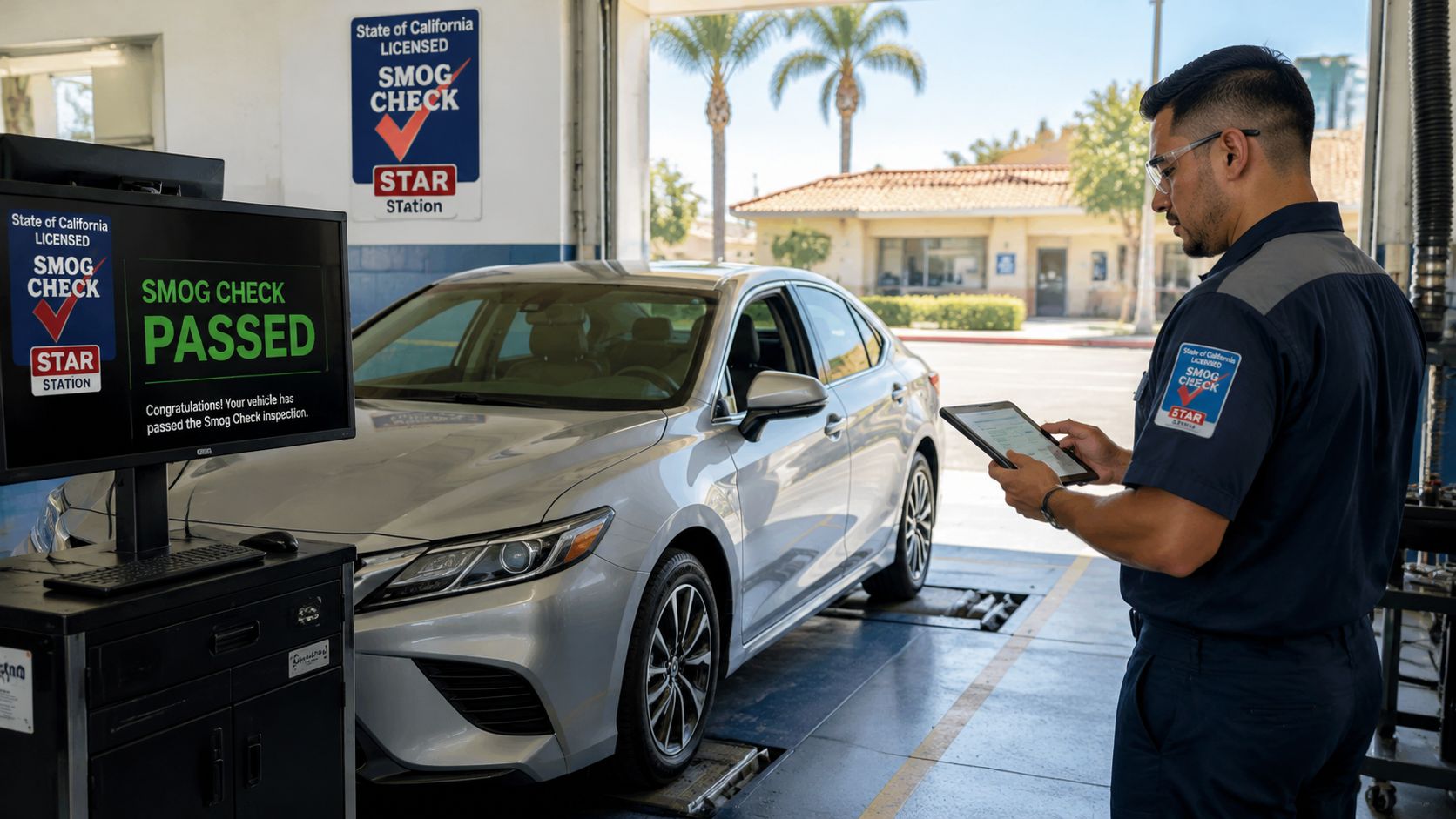
A STAR-certified station is a station approved to perform smog inspections for vehicles that require that level of inspection. Some vehicles are directed to a STAR station because of DMV requirements tied to that vehicle's record or testing category. If your notice or transaction points you there, don't argue with it. Just use a STAR station and keep moving.
A test-only station has one big advantage. It has no repair sale attached to the inspection. That matters because you want a clean answer about whether the car passes, not a sales pitch.
If you need a STAR location for the transfer requirement, this STAR-certified smog test service is one local option for Antioch drivers.
Common exemptions that change the process
Not every transfer needs a smog certificate. Some vehicles are exempt, and that changes the handoff.
Common situations that may be exempt include:
- Newer gasoline vehicles: Some late-model vehicles may not need transfer smog in the same way older vehicles do.
- Electric vehicles: Fully electric vehicles generally aren't going through a smog inspection process.
- Other exempt categories: Certain transfer types or vehicle classes can follow different rules.
Because exemption details can vary by vehicle type and situation, the smart move is to verify the category before the transaction. Don't assume your vehicle is exempt because someone told you “it's pretty new” or “it's not a regular car.”
The shortest route through smog
Handle smog before you start arguing over forms or fees. If the vehicle needs it and doesn't have it, you don't have a ready-to-finish transfer. You have a pending problem.
That's why experienced buyers ask for proof early, and experienced sellers schedule the inspection before listing the vehicle. It removes uncertainty, keeps the timeline tight, and prevents a failed transfer from wrecking the sale.
Calculating Fees and Understanding Timelines
People obsess over the purchase price and ignore the transfer costs. That's shortsighted. A vehicle registration transfer doesn't end when you pay the seller. It ends when the state record matches reality and the registration side is brought current.
What you usually pay for
The total usually includes several pieces, not one flat charge. Expect the transfer to involve:
- Transfer-related fees: These are tied to changing ownership on the record.
- Use tax: This is often based on the transaction and whether the transfer qualifies for an exception.
- Registration-related charges: If annual registration is due, that can become part of the transaction.
- Late penalties: These are the charges people create for themselves by waiting.
The exact total depends on the vehicle and the facts of the transfer. That's why rough guesses from the seller are useless. The seller usually doesn't know, and if they do know, they still aren't the one processing your paperwork.
Deadlines that matter
The timeline is where simple transfers become expensive. The seller should promptly file a Notice of Transfer and Release of Liability, and the buyer should move quickly to begin the transfer process. Waiting doesn't help either side.
If you're the seller, filing your release protects you from future trouble tied to the car after the sale. If you're the buyer, delaying the transfer is how you end up dealing with fees, registration confusion, and headaches when you try to drive, insure, or sell the vehicle later.
For related registration needs and timing issues, this California DMV registration renewal page covers the kind of paperwork delays that often overlap with transfer problems.
Watch this closely: Late penalties don't feel urgent on the day you buy the car. They feel urgent when you finally process the transfer and learn waiting cost you more.
How penalties sneak up on people
Here's the usual pattern. A buyer gets the car, plans to “handle the DMV stuff next week,” drives it for a while, then discovers the title work isn't finished, the registration timing wasn't handled, or the smog issue still wasn't resolved. By then, the delay has turned a routine transfer into a more expensive one.
The answer is not complicated. Start immediately. Even if one piece is still pending, get moving on the process while the deal is fresh and the seller is easy to reach.
A clean transfer should happen while documents, signatures, and contact information are still easy to gather. If you wait, every missing piece becomes harder to fix. That's why I tell buyers the same thing every time. Treat the transfer like part of the sale, not a chore for later.
Special Transfer Scenarios Gifts Inheritance and Out-of-State
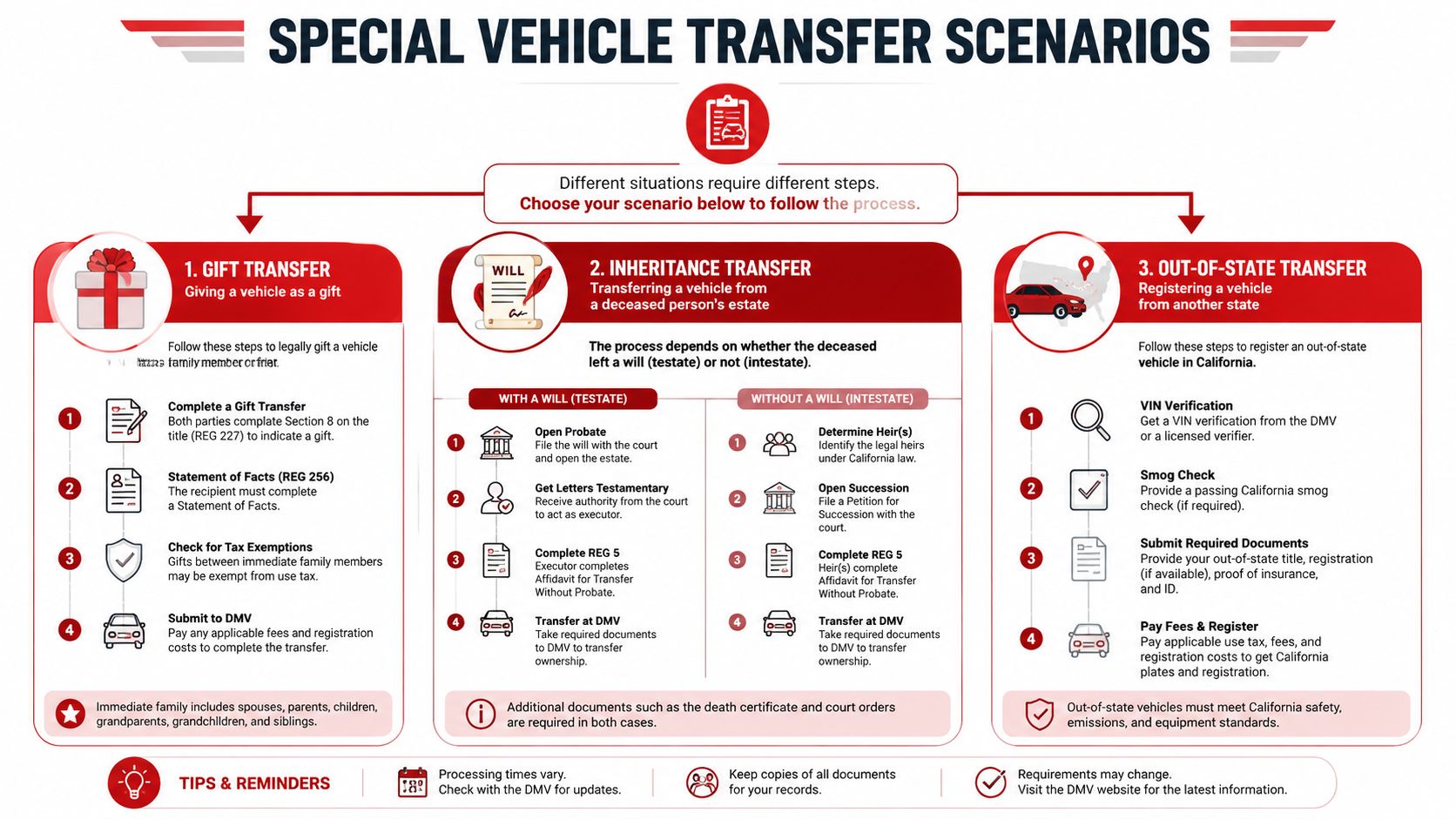
Not every vehicle registration transfer is a normal private sale. Some are family handoffs, some follow a death in the family, and some involve a car coming into California from another state. These cases are manageable, but only if you stop treating them like standard title sign-overs.
Gift transfers
A parent gives a car to an adult child. A grandparent hands down an older sedan. A sibling transfers a truck to another sibling for no payment. People call these “easy family transfers” and then make them harder by documenting them like a sale.
In a true gift situation, the paperwork often includes a Statement of Facts (REG 256) to support the nature of the transfer and address use tax treatment where an exemption applies. If you're claiming the transfer is a gift, make sure the documents tell the same story. Don't write one thing on the title, another on a bill of sale, and then expect the record to process cleanly.
Use common sense here:
- Keep the transaction description consistent
- Use REG 256 when the facts require it
- Don't casually mix “gift” language with sale language
If money changed hands in a way that looks like a sale, document it accurately. The shortcut is accuracy, not creativity.
Inheritance transfers
These usually happen when a family member is trying to settle a vehicle after someone dies. The biggest mistake is assuming possession equals ownership. It doesn't. The person holding the keys isn't automatically the person who can transfer the vehicle.
A common tool in qualifying situations is the Affidavit for Transfer Without Probate (REG 5). That form can help move the title without opening a full probate path when the situation fits the rule. But this is exactly the kind of transfer where names, capacity, and supporting documents must line up cleanly.
Don't sign inheritance paperwork casually. If you sign in the wrong role or leave out a supporting document, you create delays that are much harder to untangle later.
Keep the file organized. Death-related transfers often involve emotionally drained families, and that's when papers get lost, signatures get rushed, and avoidable errors pile up.
Out-of-state transfers
This one catches people off guard. They bought a car elsewhere, moved to California with their vehicle, or inherited one from a relative in another state. Then they learn California wants more than the old title and a handshake.
For an out-of-state transfer, the vehicle may need VIN verification using REG 31, along with California registration processing and, where applicable, smog compliance. That VIN step matters because California needs to confirm the vehicle identity against the record being created or updated.
Typical out-of-state issues include:
- Mismatched paperwork: The title, registration, and vehicle information don't line up neatly.
- Missing inspection step: People forget that VIN verification may be required.
- Smog assumptions: They think an out-of-state emissions history replaces California requirements. It often doesn't.
- Plate confusion: They assume old plates settle the registration side. They don't.
The smart way to handle special cases
Don't improvise. Special transfers move faster when you identify the category first, then build the paperwork around it. Ask one question up front: Is this a sale, a gift, an inheritance, or an out-of-state registration issue?
Once you answer that truthfully, the right form usually becomes obvious. Most delays in these cases come from people choosing the wrong story first and the wrong paperwork second.
Skip the DMV The Licensed Partner Advantage
The standard DMV office route is rarely the fastest route. You wait, take a number, reach the window, and then learn you're missing one signature, one form, or one supporting detail. Then you leave and start over. That's not efficient. It's preventable.
What a licensed partner actually does
A licensed DMV service partner can handle much of the work people think requires an office visit. That can include processing transfer paperwork, collecting state fees, and issuing registration items when the transaction qualifies. The practical benefit is obvious. You avoid the office line and deal with a business that focuses on transaction throughput, document review, and same-visit completion when possible.
That matters even more when the transfer also needs a smog check. Combining those steps cuts down the back-and-forth that usually burns time.
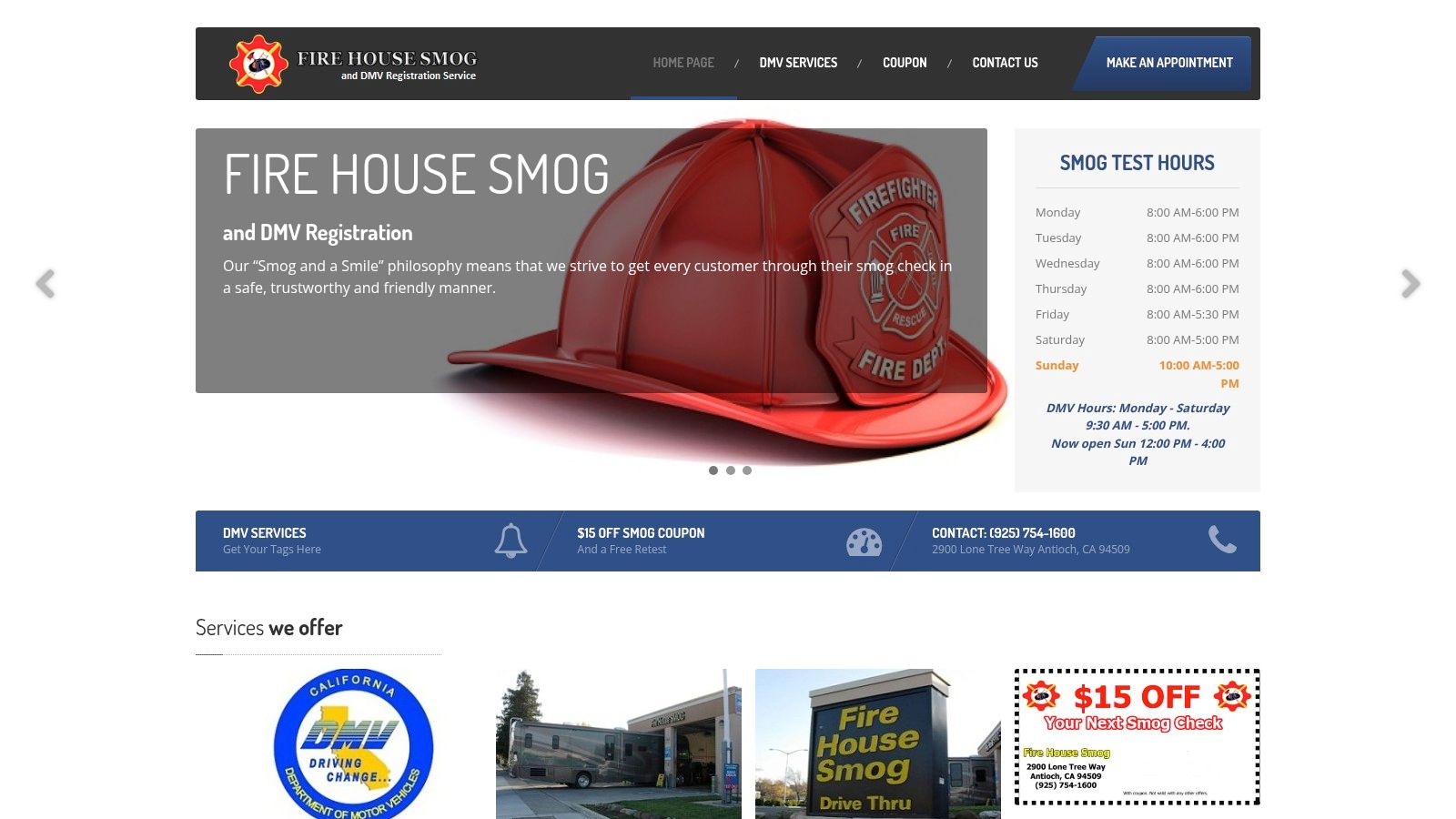
One Antioch option is Fire House Smog, a licensed DMV registration services provider and STAR-certified test-only smog station that handles ownership transfers for California and out-of-state vehicles and can issue registration items on site during posted hours.
A quick look at how this kind of service works can help if you've only dealt with traditional DMV counters before.
When this route makes the most sense
Use a licensed partner when speed matters, when your schedule is tight, or when you already know the transfer includes moving parts. That includes situations like:
- You need smog and transfer help together
- You bought from a private seller and want document review before submission
- You'd rather get registration items issued on site than wait on mail
- You can't spend half a day on a weekday at a DMV office
There's also a practical trust benefit with test-only operations. A shop that doesn't sell repairs has less reason to turn an inspection into a sales conversation. For many drivers, that makes the process cleaner and easier to understand.
If your paperwork is straightforward, a licensed partner is usually the smartest path. If the case is unusually tangled, they can often tell you that quickly too, which still saves time compared with discovering the problem after waiting in line.
FAQ Common Vehicle Transfer Problems
What if the seller lost the title
Use REG 227 if the transaction qualifies for a replacement or transfer of title situation. Don't rely on a bill of sale alone and assume the ownership record will sort itself out. It won't.
What happens if I wait too long to start the transfer
Delays can trigger added costs and extra complications. Critically, the longer you wait, the harder it becomes to track down missing signatures, fix title errors, or resolve smog and registration issues tied to the sale.
What if the vehicle fails smog
That usually sends you back to the seller-side responsibility issue in a private-party transaction. The transfer can stall until the smog requirement is properly satisfied, unless the vehicle falls under an exemption. If you're using a station with a retest policy, ask about that before leaving so you understand your next step.
Can I transfer a vehicle with a lien still on it
Not cleanly, not unless the lien issue is properly resolved. If a lienholder is still shown on the title record, you need the appropriate release before ownership can move the way you want it to.
Do I need to go to the DMV in person
Often, no. Many people can complete the transfer through a licensed registration service provider instead of a DMV office, provided they bring the right documents and the transaction qualifies.
Is a family transfer automatically simple
No. Family transfers are easier only when the paperwork matches the facts. If it's a gift, document it as a gift. If it's an inheritance, use the forms that fit that situation. “It's staying in the family” doesn't replace required paperwork.
If you want the fastest path through a California vehicle registration transfer, skip the guesswork and bring your paperwork to Fire House Smog. They handle smog inspections, ownership transfers, California and out-of-state registration work, and on-site tag issuance during posted service hours at their Antioch location.