
You've just bought a used car from a friend, signed what you thought was the right paperwork, and driven home with the keys. Then you discover the title has a missing signature, the smog certificate isn't available, or the seller hasn't filed the release of liability. The car is in your driveway, but the ownership record still belongs to someone else.
Learning how to transfer ownership of a car in California means treating the transaction as a compliance process, not a simple exchange. The buyer, seller, lienholder, and California Department of Motor Vehicles each have specific responsibilities. A small paperwork error can delay the title, leave the seller connected to the vehicle, or force both parties to make another DMV visit.
Table of Contents
- Why the Transfer Process Trips People Up
- Gathering the Required Documents Before You Start
- Completing the Ownership Transfer Step by Step
- Handling Special Cases and Complicated Transfers
- Using a Licensed DMV Registration Service Instead of the DMV Office
- Key Deadlines and Mistakes to Avoid During Your Transfer
Why the Transfer Process Trips People Up
Most private-party sales begin informally. The buyer and seller agree on a price, exchange payment, and sign the certificate of title. That part feels finished. The administrative transfer, however, still requires correctly completed documents, the right supporting records, and prompt filing with the DMV.
California gives the buyer a short window to start the transfer. The buyer must begin the process with the DMV within 10 days of the sale, while the seller's Notice of Transfer and Release of Liability filing is due within 5 days. The California DMV title-transfer guidance explains these deadlines and the consequences of leaving the record unchanged.
The seller's risk doesn't end at the handoff
A seller who hands over the keys but doesn't file the release of liability can remain exposed to vehicle-related issues until the DMV records the transfer. That exposure can become especially frustrating when the buyer delays registration, submits an incomplete title, or discovers a lien that wasn't cleared.
The buyer faces a different problem. Driving a vehicle that hasn't been properly transferred can create registration, insurance, and enforcement complications. The purchase agreement may prove that money changed hands, but it doesn't replace the state's ownership record.
Practical rule: Don't leave the transaction assuming the signed title is the finish line. It's the starting document for the DMV workflow.
Small errors create large delays
Common trouble spots include:
- Wrong signatures: The registered owner must release interest on the title. A lienholder or legal owner may also need to sign.
- Unclear mileage information: The odometer disclosure must be completed where required, using the appropriate transfer documentation.
- Missing title: A buyer can't substitute a handwritten note for a lost certificate of title. California uses specific replacement and transfer forms.
- Unresolved lien: The lienholder's interest must be released before the ownership record can be cleanly updated.
- Out-of-state history: A vehicle coming into California may require additional verification rather than the same process used for a California-titled car.
The safest approach is to identify the vehicle's exact transfer scenario before anyone signs. A standard California private sale is one path. A missing title, estate transfer, or interstate vehicle can change the paperwork and the way the DMV accepts the application.
Gathering the Required Documents Before You Start
Prepare the paperwork before making an appointment, visiting a registration service, or submitting anything online. California transfers are easier when every name, vehicle identification number, date, and signature matches across the documents.
Start with the title and identity documents
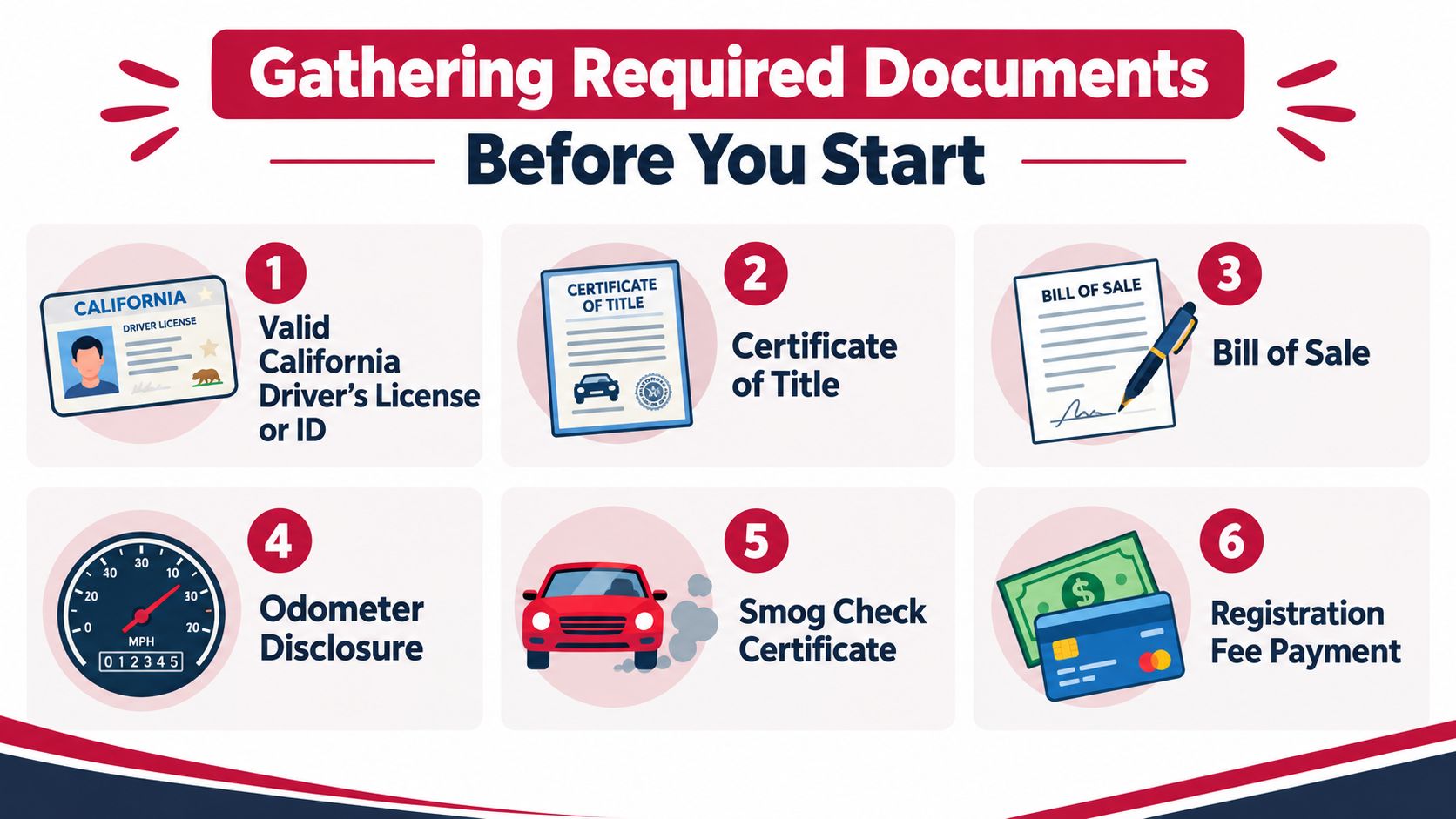
The certificate of title is the central ownership document. The seller should review the assignment area carefully, sign exactly as the name appears on the title, and provide the buyer with the completed original. Never guess where a signature belongs. If a legal owner or lienholder appears on the record, that party's release may also be necessary.
The buyer should bring valid identification and verify the vehicle identification number against the car itself, the title, and the registration record. A single character mismatch can cause the DMV or a registration provider to stop the transfer for clarification.
A bill of sale can document the transaction details, even when it isn't the primary ownership instrument. Keep a copy showing the vehicle, buyer, seller, sale date, and transaction terms.
Check mileage, smog, and payment requirements
Odometer information needs careful attention. California uses REG 262, the Vehicle/Vessel Transfer and Reassignment Form, to document odometer mileage in situations where the form is required. Don't erase, overwrite, or casually correct mileage entries. Ask the DMV or a licensed provider how to handle a damaged form instead.
Smog certification is another frequent source of delay. Whether a smog check is required depends on the vehicle and transaction circumstances, so confirm the requirement before submitting the transfer. If certification is needed, complete it before the paperwork is presented.
The buyer also needs to be ready for the applicable transfer fees and taxes. The exact amount depends on the transaction and vehicle record, so use the DMV's fee calculation process or have a licensed registration provider review it.
For a practical document checklist, keep the California vehicle registration documents guide available while assembling your file.
Know what changes when the title is missing
A missing title requires a different route. California uses REG 227 for an Application for Replacement or Transfer of Title when the original title is unavailable, subject to the facts of the case and the signatures required.
A replacement-title transfer can also involve notarization. California DMV procedures state that, for vehicles three model years or older, the legal owner or lienholder signature on certain replacement-title transfers must be notarized. The California DMV basic transfer requirements also describe the registered owner's release, lienholder requirements, and odometer documentation.
Before submission, compare your file against this short checklist:
- Original title or REG 227: Confirm which document applies.
- REG 262 when required: Complete mileage information without alterations.
- Smog documentation: Verify whether the vehicle and transaction require certification.
- Lien release: Obtain the legal owner's release when a lien remains on record.
- Identification and payment: Bring acceptable identification and funds for the calculated charges.
- Copies: Photograph or copy every signed page before handing over originals.
Completing the Ownership Transfer Step by Step
The cleanest transfer follows the transaction order. Handle the seller's signatures first, confirm the vehicle information, then let the buyer submit the ownership application without waiting for paperwork to drift between households.
1. The seller completes the assignment
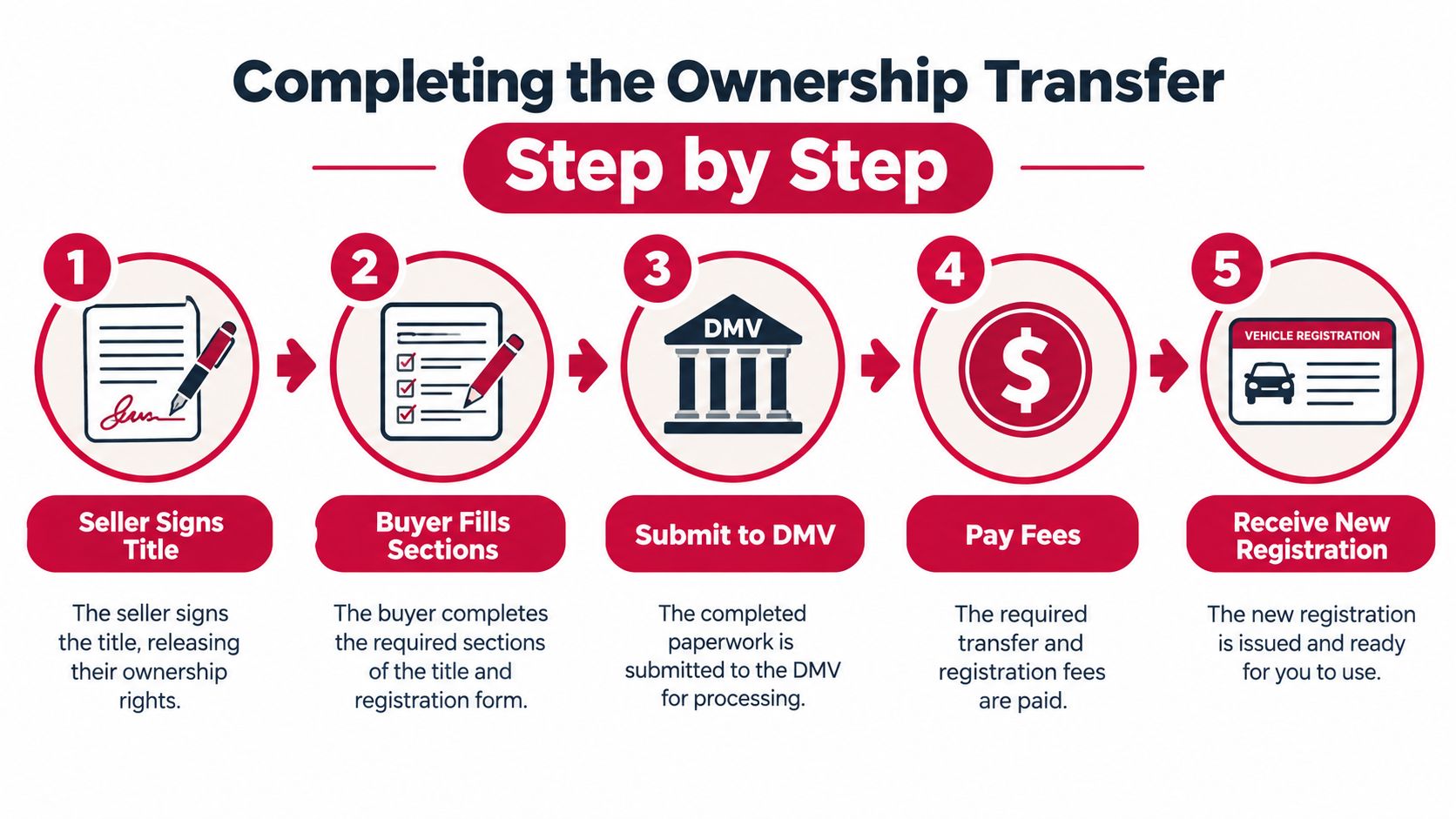
The seller signs the certificate of title in the correct seller section and completes any required sale details. The seller should check the name spelling, vehicle identification number, and sale date before giving the document to the buyer.
If the title includes a lienholder or legal owner, don't assume the buyer can resolve it later. Obtain the required release or confirm the lienholder's role before the transaction is treated as complete.
2. The buyer verifies the application
The buyer checks that the title, bill of sale, odometer disclosure, and supporting forms all identify the same vehicle. Review the VIN on the dashboard or door label, not just the paperwork. If the vehicle information differs, stop and resolve the discrepancy before filing.
The buyer also confirms whether a smog certification is required and whether the vehicle's registration record has unresolved issues. Submitting an incomplete packet can create a request for more documents and delay issuance of the new title.
3. The seller files the release of liability
The seller files the Notice of Transfer and Release of Liability promptly. This filing tells the DMV that the vehicle has changed hands and helps separate the seller from future responsibility while the buyer completes the title transfer.
The release of liability doesn't transfer ownership by itself. It protects the seller's position, while the buyer's title and registration application updates the official ownership record.
4. The buyer submits and pays
The buyer submits the transfer documents through the available DMV channel or through a licensed registration service that handles the transaction. Pay the calculated transfer fees, registration charges, and applicable taxes through the accepted payment method.
At a DMV office, bring the complete original packet and be prepared for the clerk to review each document. A registration service can review the file before submission, which is useful when the title is old, the transaction includes a lien release, or the vehicle's history isn't straightforward.
Keep copies of the signed title, forms, receipts, and release filings. These records give both parties a paper trail if the DMV later requests clarification.
A visual walkthrough can help first-time buyers understand the sequence:
5. The buyer confirms the result
The transfer isn't finished merely because documents were accepted at a counter. Confirm that the buyer receives the updated registration record, stickers, plates, or other issued items applicable to the vehicle.
If the DMV or service provider gives a receipt or temporary evidence of submission, store it with the transaction file. Follow up if the title or registration doesn't arrive as expected, and respond quickly to any request for a corrected form.
Handling Special Cases and Complicated Transfers
A generic private-sale checklist breaks down when the vehicle comes from another state, the owner has died, or the original title is unavailable. These situations require a decision based on the record, not a guess based on what worked for a friend's car.
Out-of-state vehicles
An out-of-state vehicle may need more than a signed title. California can require additional registration, identification, inspection, emissions, or ownership documentation depending on the vehicle's history and the state that issued the title.
Start by collecting the out-of-state title, current registration information, sale records, lien release, and identification. Don't wait until the California counter visit to discover that the seller's signature format or lien status requires another document.
For a focused review of the interstate process, see this guide to out-of-state title transfers.
Inherited and deceased-owner vehicles
An inherited vehicle isn't handled like an ordinary buyer-seller sale. The person authorized to act for the estate may need to provide death documentation, probate or estate paperwork, a properly assigned title, and forms that establish authority to transfer the vehicle.
Government guidance for ownership transfers, including New Jersey's deceased-owner and estate transfer procedures, illustrates the broader point: estate cases carry extra rules, document requirements, and appointment or notarization issues. California applicants should confirm the current California requirements for the specific estate status instead of relying on a standard bill of sale.
The practical decision tree is straightforward:
- Named transfer authority exists: Use the title and estate documents that establish the authorized person's role.
- Probate is open: Confirm what the executor or administrator may sign and whether court documentation is required.
- No clear authority exists: Don't sign as the owner. Resolve the estate authority before presenting the transfer.
- Title is missing: Ask which replacement-title and estate forms must be filed together.
Family transfers and missing titles
A family relationship doesn't automatically remove title requirements. Gift, inheritance, and family transactions can have different tax treatment and documentation rules, so describe the transaction accurately and confirm the applicable forms.
A missing or damaged title should trigger a document review before submission. Use the applicable replacement or transfer form, identify any lienholder, and make sure every required signature is completed in the proper place.
Digital transfer systems can reduce routine paperwork, but online convenience stops when the record contains unresolved fines, insurance issues, lien questions, identity mismatches, deceased-owner status, or interstate registration changes. India's official ownership-transfer information shows how requirements can vary by transaction and jurisdiction, while Singapore and Ireland demonstrate that some markets support online ownership changes with exceptions. The lesson for California owners is practical: use digital tools for eligible routine cases, but switch to a direct DMV or licensed-provider review when the record is complicated.
Using a Licensed DMV Registration Service Instead of the DMV Office
A California DMV office remains the direct government channel, but eligible registration transactions can also go through a licensed provider. A provider may review the documents, calculate charges, submit the transfer, and issue available registration items under its authorized services. For owners comparing licensed DMV registration services in California, the main question is whether the case needs a government decision or careful administrative handling.
The trade-off comes down to who needs to make the decision. The DMV is the right route for disputed ownership, unclear estate authority, unusual legal questions, or record issues that only the agency can resolve. A licensed provider may save time on routine transfers, missing-document guidance, California and out-of-state vehicle paperwork, and transactions handled by owners who cannot spend hours waiting at a branch.
Compare the two routes
| DMV office | Licensed registration service |
|---|---|
| Direct government counter for complex record issues | Local document review before submission |
| Appropriate when the DMV must resolve a legal or record question | Useful for eligible ownership transfers and registration tasks |
| May require planning around office access and availability | May offer broader local hours and on-site issuance |
| Government fees still apply | Service charges may apply in addition to government fees |
A provider does not remove a required lien release, estate document, smog inspection, or corrected signature. It cannot approve a transfer that California law or the vehicle record does not permit. Its practical value is different: an experienced reviewer can catch preventable errors and handle eligible paperwork without requiring a branch visit for every routine task.
When local processing makes sense
Fire House Smog is a licensed California DMV registration services provider in Antioch. Its listed services include ownership transfers for California and out-of-state vehicles, registration renewals, and on-site sticker and plate issuance when applicable. It also operates a STAR-certified test-only smog station, allowing owners who need emissions certification to address that requirement at the same location, subject to the vehicle and service details.
Fire House Smog lists DMV service hours from Monday through Saturday, with Sunday service available for limited transactions. Smog testing is available throughout the week. Confirm current hours, required documents, and whether the specific transfer can be completed before visiting.
Use the DMV directly when ownership is contested or legally unclear. Choose a licensed provider when the transfer is eligible, the documents are ready for review, and reducing administrative time matters more than completing every step personally.
Key Deadlines and Mistakes to Avoid During Your Transfer
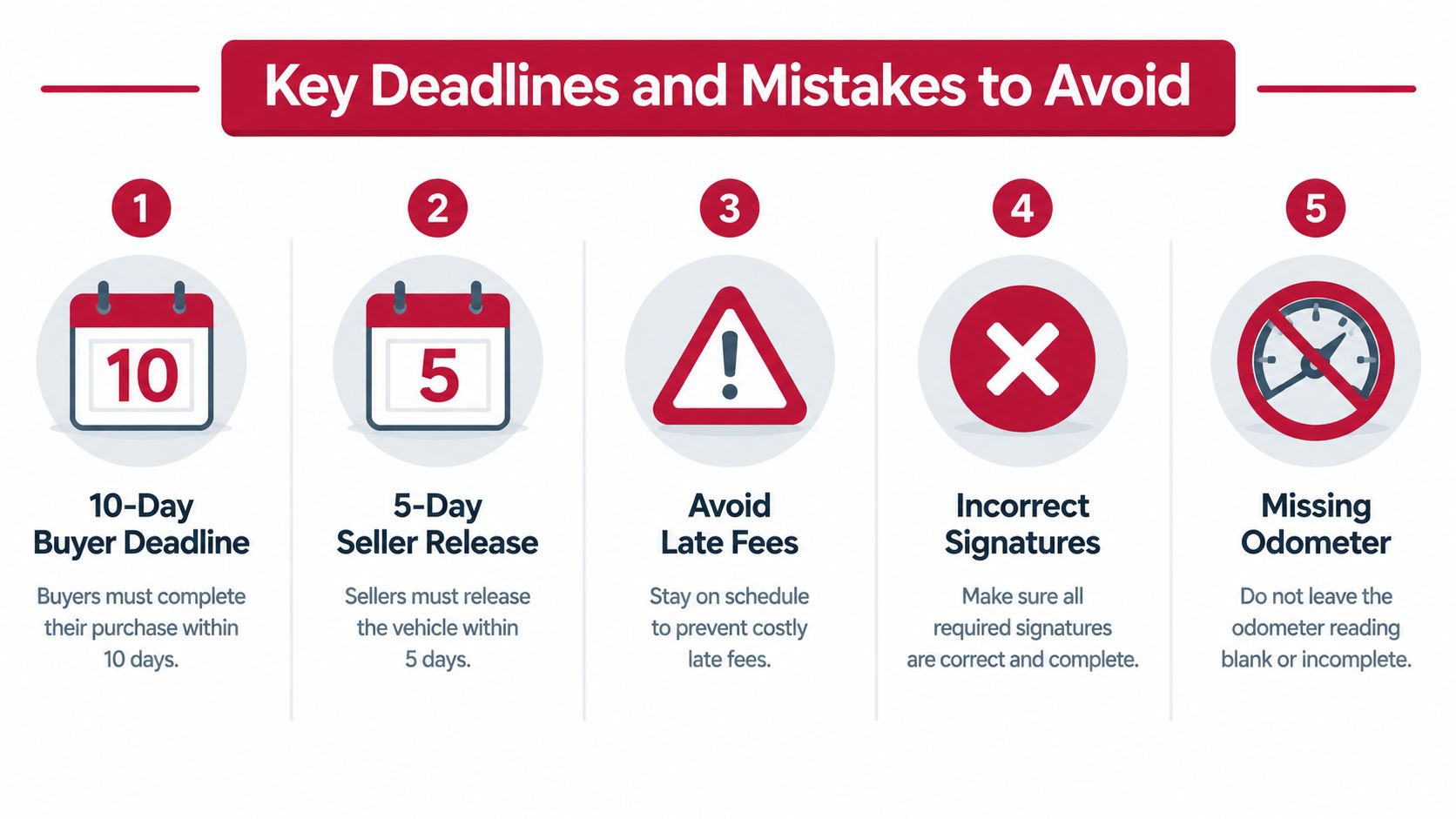
The deadlines are the part to write down immediately. The buyer must start the California transfer with the DMV within 10 days of the sale, and the seller must file the release of liability within 5 days, as stated in California DMV title-transfer guidance.
Use this final check before submitting:
- Buyer deadline: Start the transfer promptly and keep the receipt.
- Seller protection: File the release of liability within the required window.
- Title signatures: Match names and sign only in the correct fields.
- Odometer record: Complete the required mileage disclosure without alterations.
- Special cases: Stop and get document guidance for liens, estates, missing titles, and out-of-state vehicles.
A licensed registration service can help review eligible paperwork, but it can't replace missing legal authority or an unresolved lien.
If your California ownership transfer involves a missing title, an out-of-state vehicle, smog certification, or registration issuance, visit Fire House Smog in Antioch for licensed DMV registration services and STAR-certified smog testing. Bring your title and supporting documents so the staff can identify missing requirements before submission.