You open your registration notice, scan for the due date, and then spot the line that throws you off: STAR Smog Check Required.
That wording makes a lot of drivers think something is wrong with the car. It can also sound like the test will be tougher, more expensive, or more likely to fail your vehicle. Usually, it means something much simpler. The DMV wants your car inspected at a station that meets a higher standard for testing quality.
If you're trying to figure out what a STAR test-only station is, why your notice mentions it, and what you're supposed to do next in Antioch, this guide breaks it down in plain English.
Table of Contents
- What 'STAR Smog Check Required' on Your DMV Notice Means
- What Makes a Smog Station 'STAR Certified'?
- Choosing Between a Test-Only vs a Test-and-Repair Station
- How to Prepare Your Vehicle for a Smog Check
- What to Expect During the Smog Test Process
- Your Local STAR Test-Only Solution in Antioch Fire House Smog
What 'STAR Smog Check Required' on Your DMV Notice Means
You open your registration notice expecting the usual renewal steps, then one line changes the mood: STAR Smog Check Required. Many Antioch drivers read that and assume the DMV found a problem with their car.
In most cases, that line is about the type of station you must visit, not a verdict on your vehicle's condition.
A simple way to read it is this: the DMV is giving you a lane to use, like being directed to a specific checkout line. Your car is still getting a smog inspection, but the inspection has to be done at a station approved for STAR work. If you need a local STAR smog check station in Antioch, the goal is to choose a shop that can issue the certificate your renewal requires.
What that means for you
Your next step is practical. Go straight to a STAR-certified station.
If you stop at a non-STAR shop first, that shop may not be able to complete the certification tied to your DMV notice. That can turn one errand into two.
Practical rule: If the notice says STAR is required, choose a STAR-certified station from the start.
What it does not mean
Drivers often worry that a STAR test is somehow harder on the car. That is a common myth.
The better way to understand it is this: STAR refers to the station's approval and oversight. Test-only adds another layer of confidence because the shop is focused on inspection, not selling repairs during the same visit. For many vehicle owners, that combination means a more impartial result and fewer doubts about whether the recommendation was influenced by repair work.
So if your notice says STAR, don't read it as a warning label on your car. Read it as an instruction about where to go. That small shift clears up most of the stress before the appointment even starts.
What Makes a Smog Station 'STAR Certified'?
You open your registration notice, see the word STAR, and it can feel like your car just got placed in a tougher category. That reaction is common. The reassuring part is that STAR describes the shop's approval status, not a harsher version of the smog test.
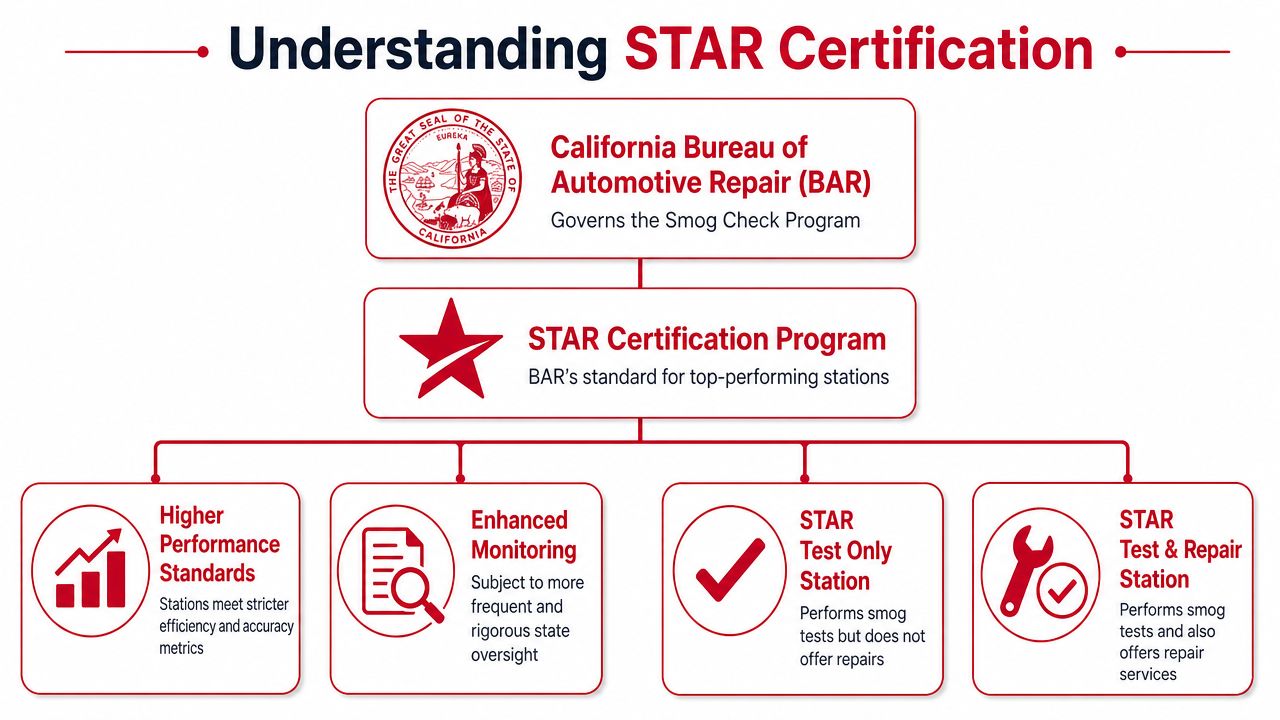
A STAR station is a smog station that the California Bureau of Automotive Repair recognizes for meeting stricter performance and oversight standards. The focus is on how the station performs inspections, tracks accuracy, and follows state requirements over time.
STAR refers to the station, not your car
This is the part that clears up the most confusion.
Drivers often hear “STAR” and assume the vehicle will be tested more aggressively. What changes is the level of accountability on the shop. BAR expects STAR stations to maintain stronger inspection performance, which helps the state rely on those results with more confidence.
A school testing room works as a useful comparison. The exam is the same, but one room may be supervised more closely to make sure procedures are followed correctly. The student is not facing a harder test. The supervision is tighter on the testing process.
That is why STAR and test-only make sense together for many drivers. STAR points to higher oversight. Test-only means the station is focused on inspection rather than repair sales. Put together, that can give you a more neutral, dependable result, which is exactly what many car owners want from a required inspection.
When seeking a local STAR smog check station in Antioch, the practical question is whether the station is approved to complete the inspection your DMV notice calls for.
Why some vehicles are sent to STAR stations
California uses STAR stations as part of its quality-control system in certain cases. That is why some drivers are directed to a STAR location while others can choose from a wider group of smog stations.
The easiest way to read that requirement is as a routing decision by the state. Your vehicle is being sent to a shop that meets a specific approval standard. It is not being singled out for a tougher technical exam.
That distinction matters. Once you understand that STAR is about station certification and oversight, the process feels much less intimidating.
Choosing Between a Test-Only vs a Test-and-Repair Station
Once you understand STAR, the next phrase that matters is test-only.
A lot of drivers assume all smog shops work the same way. They don't. Some inspect and repair. Others only inspect. That difference changes the customer experience in a big way.
The biggest difference is repairs
A STAR test-only station can perform Regular and STAR smog inspections, but it is legally prohibited from performing emission repairs, which helps create a non-bias outcome without repair revenue incentives, according to SmogTips' explanation of the STAR station program.
That legal limit is the whole point.
If a station can't sell you the repair, it has less room for the kind of suspicion many drivers already have. You don't have to wonder whether a failed test will immediately turn into a repair estimate from the same counter.
For some people, a test-and-repair station is convenient because one place can handle both steps. For others, especially drivers who want a neutral reading first, test-only feels more comfortable. An in-and-out smog test-only center is built around that inspection-first model.
Side-by-side comparison
| Feature | STAR Test-Only Station (e.g., Fire House Smog) | Test & Repair Station |
|---|---|---|
| Main role | Performs inspections | Performs inspections and repairs |
| Repair work on emissions issues | Not allowed | Allowed |
| STAR inspections | Yes, if certified | Yes, if certified |
| Regular smog inspections | Yes | Yes |
| Conflict-of-interest concern | Lower, because the shop can't sell repairs from a failed test | Higher potential concern, because the shop may also recommend and perform repairs |
| Best fit for | Drivers who want an inspection without in-house repair sales | Drivers who want testing and possible repairs in one location |
Which option fits your situation
Choose test-only if you want a clean yes-or-no answer first.
Choose test-and-repair if your priority is handling a likely failure and repair process under one roof. That can save trips, but it's a different kind of relationship with the shop.
If your DMV notice specifically requires STAR, make sure the station is STAR-certified first. After that, decide whether you prefer the neutrality of test-only or the convenience of test-and-repair.
For anxious drivers, the strongest benefit of a STAR test-only station is peace of mind. The station's job is to inspect, not to build a repair ticket.
How to Prepare Your Vehicle for a Smog Check
The easiest smog checks are usually the ones where the driver did a few simple things beforehand.
A little prep won't fix a real emissions problem, but it can prevent avoidable issues and help the appointment go more smoothly.
A short pre-test checklist
Start with the basics:
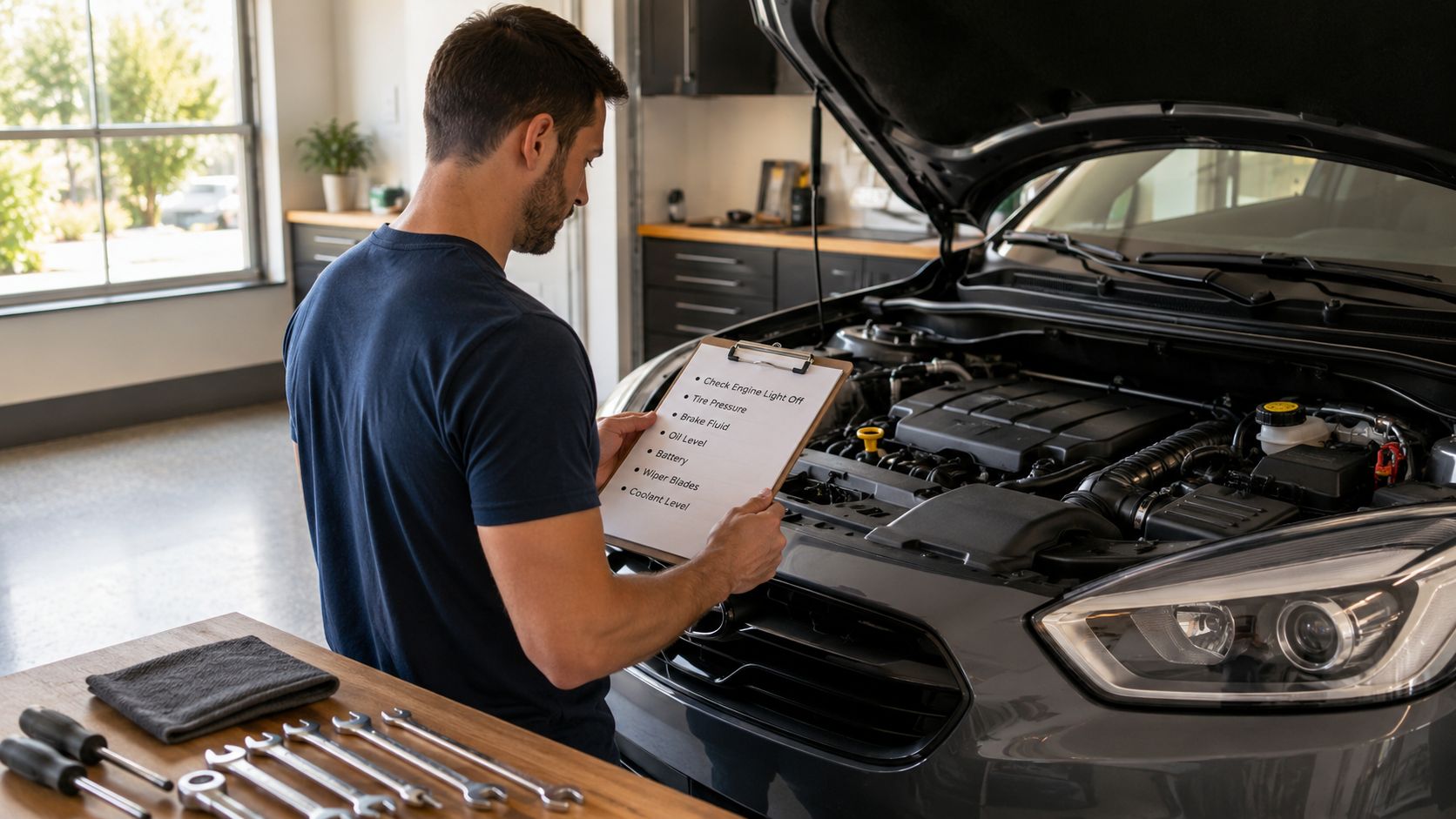
- Drive the car first: A short drive before the appointment helps warm the vehicle up. Cars that have been sitting a long time can be more finicky during inspection.
- Check the dashboard: If the Check Engine light is on, that's a strong sign you should diagnose the issue before testing.
- Look for obvious problems: Loose gas caps, visible smoke, or recent battery disconnects can create headaches.
- Make sure the car is usable for testing: If the tires are low or the battery is weak, take care of that before you go.
- Review common failure causes: This guide on why vehicles fail a smog check can help you spot issues before the visit.
What to bring with you
Keep your paperwork simple and easy to reach.
Bring:
- Your DMV renewal notice
- Current registration
- Proof of insurance
- Payment method
If you're unsure how the visit works from the driver's side, this short walkthrough gives a helpful visual overview:
A calm approach works best
Drivers sometimes rush in right before closing, with a cold engine, missing paperwork, and no idea whether the car has an active warning light. That creates stress before the technician even starts.
Give yourself a little margin. A prepared visit feels faster, cleaner, and a lot less frustrating.
What to Expect During the Smog Test Process
When you arrive, the process is usually more routine than people expect. You hand over the vehicle information, the technician confirms what kind of inspection is required, and then the car goes through the required checks.
The visit itself typically takes about 20 to 30 minutes, and for passing vehicles there is a mandatory $8.25 State Certificate fee, as described in All Star Smog Testing's summary of the California STAR program.
What the technician checks
The inspection involves visual and functional testing. The shop is looking at whether required emissions-related components are present and whether key systems respond as expected.
For vehicles that use OBDII, the inspection also includes reading the car's onboard data. That helps confirm the vehicle's reported information and emissions-related status.
What many drivers notice is how ordinary this looks in real life. The tech isn't inventing a custom test because your notice says STAR. The station is following the standard procedure it is authorized to perform.
How the visit usually ends
There are two basic outcomes.
If the vehicle passes, the certification is handled for your registration requirement. If it doesn't pass, the technician will tell you the result and give you the paperwork you need for the next step.
That failed result can still be useful. It tells you the car needs attention before registration can move forward, and it gives you a clear starting point for repairs elsewhere if you used a test-only station.
A failed smog test is frustrating, but it's still information you can act on. The report tells you where to focus, instead of leaving you guessing.
The main takeaway is that the process is structured, familiar, and usually quick. Most of the stress comes from the unknown before the appointment, not from the appointment itself.
Your Local STAR Test-Only Solution in Antioch Fire House Smog
You open your DMV notice, see that STAR is required, and the first question is usually simple: where do I go that checks the right box without turning this into a bigger project than it needs to be?
For Antioch drivers, the practical answer is a station that is both STAR-certified and test-only. Those two labels work well together. STAR means the shop is approved to perform the inspection your DMV notice calls for. Test-only means the station inspects the vehicle but does not use the visit to sell repairs. For many drivers, that combination feels more straightforward because the result is the result.
That pairing also clears up a common misunderstanding. A STAR test is not a tougher version of the smog check for your car. It is the same type of inspection performed at a station that meets stricter state performance standards. A good comparison is using a certified scale instead of a random one. The item being weighed has not changed. The standard for the equipment and process has.
Why this setup fits busy Antioch drivers
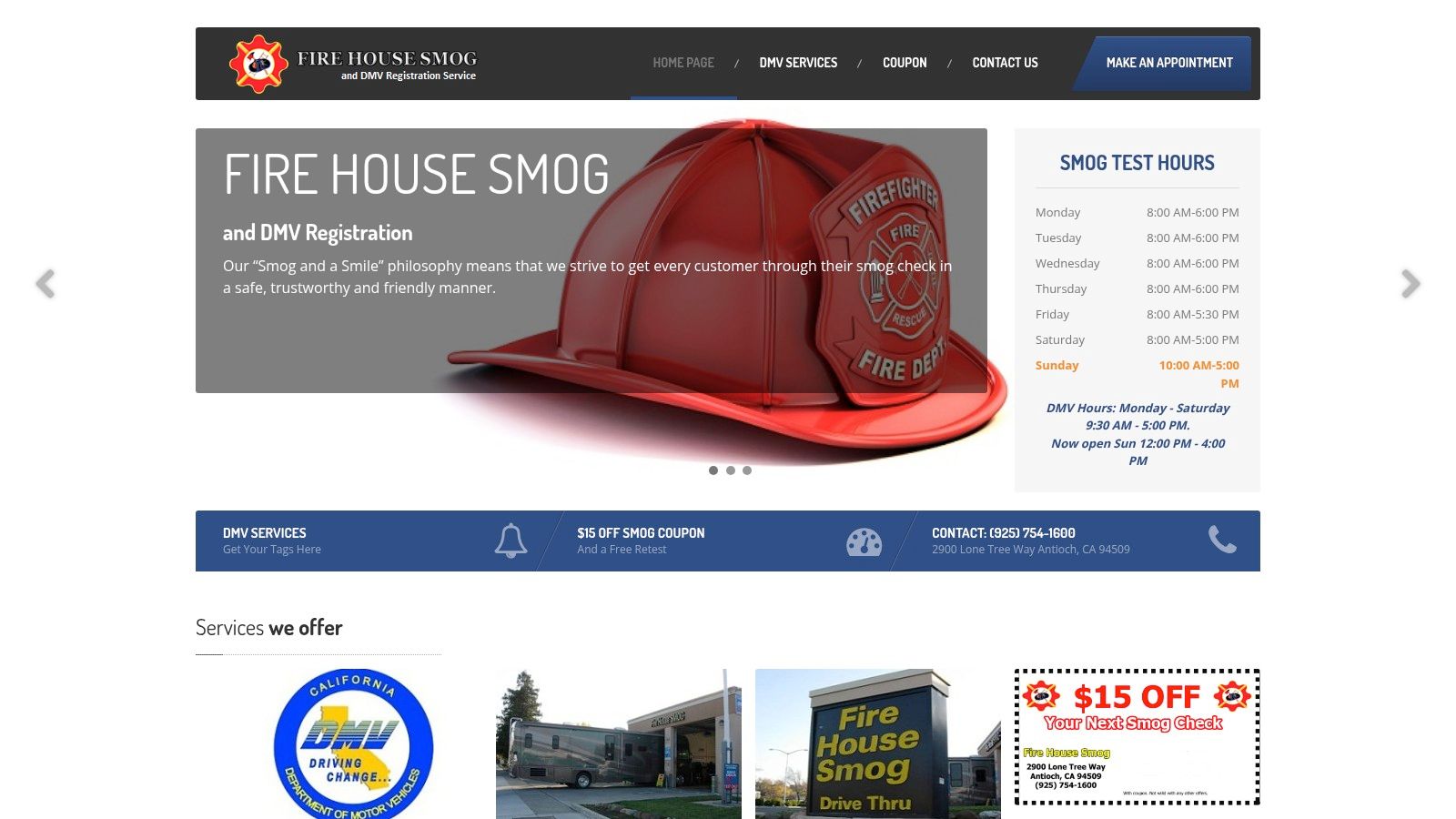
Fire House Smog is a STAR-certified test-only smog station and licensed DMV registration services provider in Antioch. That matters for local drivers who want one place that can handle the inspection and, in many cases, the registration steps that follow.
The business information provided for Fire House Smog highlights a few details that can make the errand easier:
- Seven-day smog availability: useful if work or family schedules limit weekday options
- Two service bays: helpful for keeping cars moving through the shop
- On-site DMV renewal services with sticker printing: can save a second stop for eligible registration needs
- Free retest policy: available per site policy and coupon terms
- Service for cars, SUVs, light-duty trucks, and some RVs: with a call-ahead recommendation for larger vehicles
A key benefit is clarity. If your notice says STAR, you need a shop authorized for STAR inspections. If you also prefer a station that focuses only on testing, a STAR test-only location matches both needs at once.
Location and service details
If that is the kind of station you want in Antioch, the published business details for Fire House Smog are:
- Address: 2900 Lone Tree Way, Antioch, CA 94509
- Phone: 925-754-1600
- DMV service hours: Monday through Saturday 9:30 AM to 5:00 PM, and Sunday 12:00 PM to 4:00 PM
- DMV services offered: renewals, ownership transfers, and related registration support with on-site tag issuance during posted hours
For a driver trying to get registration handled before a deadline, that setup can remove a lot of friction. You know the station can perform a STAR-required inspection. You know the test-only model keeps the visit focused on inspection results. And if your paperwork lines up, you may be able to take care of registration tasks in the same stop.
If you need a STAR-certified test-only inspection in Antioch, or want to handle a smog check and DMV registration task in one stop, Fire House Smog offers local service for passenger vehicles, light-duty trucks, and qualifying registration needs.