
Your registration notice shows up. You glance at the line about smog certification, then start searching for a smog check in Concord, CA and immediately run into a mess of coupons, STAR listings, test-only stations, and repair shops that all sound the same.
They aren't the same.
The biggest mistake local drivers make isn't showing up with a problem car. It's choosing a station without understanding what that station can do if the car fails. In Concord and Antioch, that distinction matters a lot. A test-only station can inspect your vehicle, but it can't repair it. A test-and-repair shop can inspect and fix, but some drivers prefer test-only because there's no repair upsell tied to the result. If you know that going in, the whole process is easier.
Table of Contents
- Your DMV Smog Notice Arrived What Now
- How to Prepare Your Vehicle for a First-Time Pass
- The Smog Check Process from Start to Finish
- Passed or Failed What Are Your Next Steps
- Smart Tips to Save Time and Money in Antioch
- Frequently Asked Questions for Local Drivers
Your DMV Smog Notice Arrived What Now
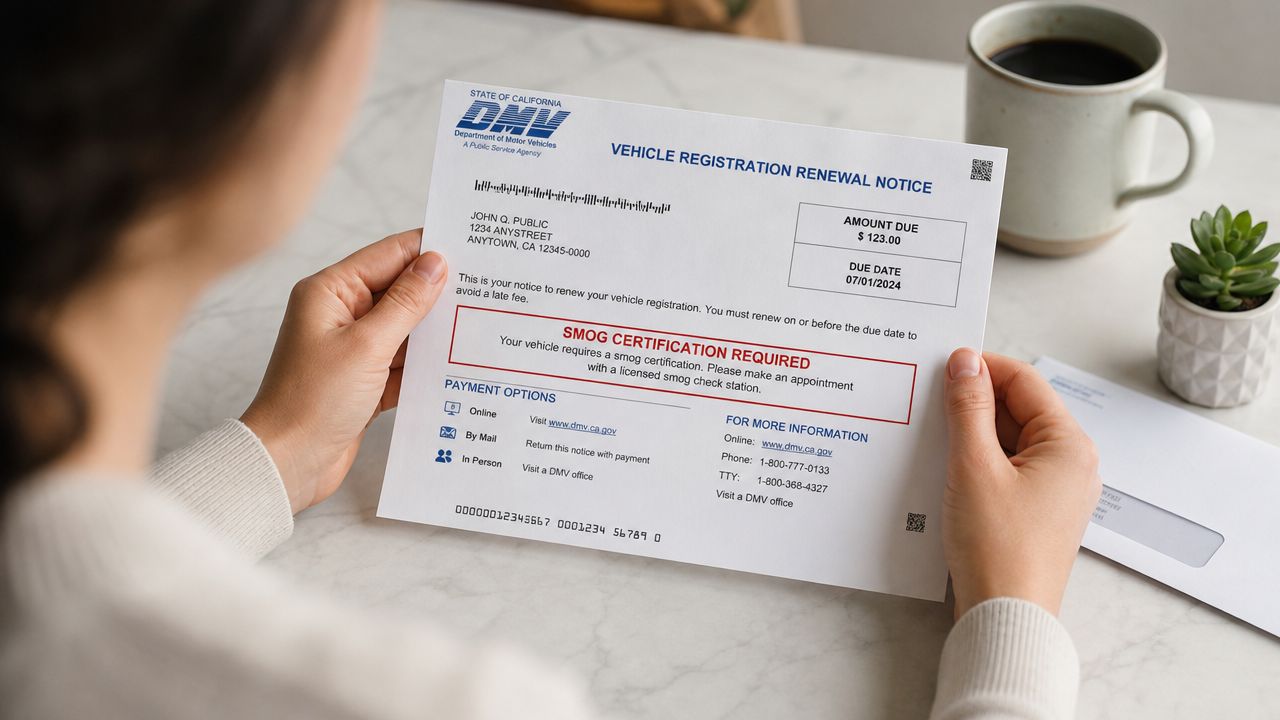
You open the DMV renewal notice, see “smog certification required,” and the first question is usually the wrong one. It is not “Where's the closest shop?” It is “Do I need a test-only station or a test-and-repair station?”
That choice decides whether this is a quick stop or a two-trip problem.
California requires smog certification for many registration renewals in areas like Concord and Antioch. As outlined in AAA's California Smog Check overview, the program generally applies to many gasoline, hybrid, and alternative-fuel vehicles (1976 or newer) and diesel vehicles (1998 or newer), with some exemptions for newer gasoline models.
The shop type matters more than drivers expect
A test-only station inspects the vehicle and reports the result. Its function is limited to inspection.
A test-and-repair station can run the inspection, diagnose the reason for a failure, and perform the repair work.
That sounds simple, but it causes plenty of confusion locally. A driver goes to a test-only center because it is nearby or because the price looks good, then finds out too late that a failed car cannot be fixed there. At a place like a STAR test-only shop, including stations such as Fire House Smog when operating in that role, the process stops at the failed certificate. You still need another shop for repairs.
The two-step process after a failed test-only inspection
This is the part many drivers miss.
If you fail at a test-only station, the next move is not to wait around for a repair quote. You have to follow two separate steps:
- Take the failed vehicle to a test-and-repair shop or repair facility for diagnosis and emissions-related repairs.
- Return for the required retest after the repair is complete, based on the station rules and your paperwork.
That extra handoff is why test-only works well for some cars and wastes time for others. If the vehicle has been running fine, no warning lights, no recent battery disconnect, and no known drivability issues, a neutral test-only inspection can make sense. If the car has a check engine light history, runs rough, or has already failed before, going straight to a test-and-repair shop often saves a trip.
SmogTips explains how Concord test-only stations handle failed vehicles, and it matches what local drivers run into every week.
If you are also trying to finish registration on the same timeline, review the California DMV registration renewal process and paperwork steps before you go. That helps you line up the inspection, any needed repairs, and your DMV deadline without unnecessary delays.
How to Prepare Your Vehicle for a First-Time Pass
A lot of first-time failures are avoidable. The pattern I see in Concord and Antioch is usually the same. The car drives in looking fine, but the check engine light is on, the battery was disconnected last weekend, or the owner comes straight from topping off the tank.
That matters even more if you plan to test at a test-only station. If the car fails there, you are starting a two-step cleanup process instead of wrapping everything up in one place. Good prep cuts down the odds of that extra trip.
What to do before you leave home
Start with the items that cause the most preventable failures.
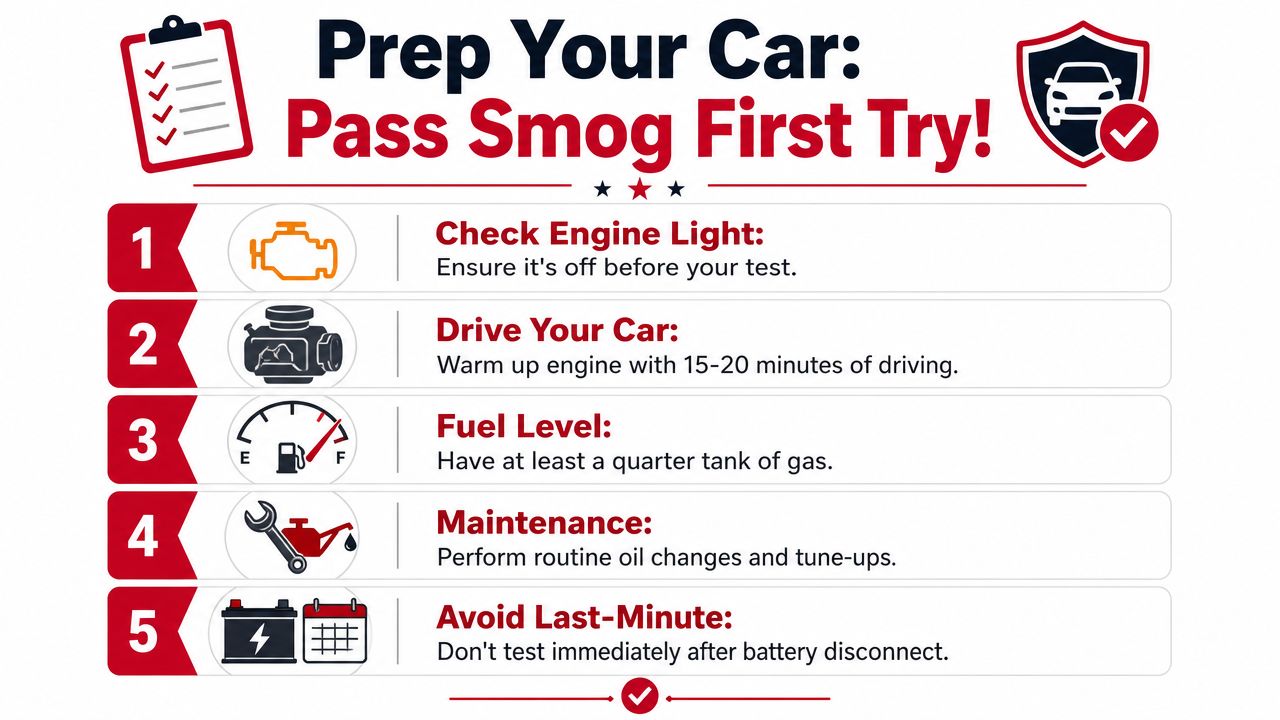
- Make sure the Check Engine light is off: If the light is on, wait until the problem is diagnosed and repaired before testing.
- Drive the car long enough to get fully warm: A cold engine is not ideal for inspection. Normal driving before the appointment gives the emissions system time to operate the way it should.
- Hold off after battery disconnects or code clearing: If power was recently disconnected, or someone cleared codes, the readiness monitors may not be complete yet.
- Bring your paperwork: Your renewal notice and current registration help speed up check-in.
- Check for obvious issues: A loose gas cap, overdue maintenance, rough idle, or strong fuel smell can all point to trouble you should address first.
Readiness monitors trip up more people than they expect
Modern vehicles run self-checks in the background. The smog machine looks for those monitors to show a completed status. If they are not ready, the car can fail even if it seems to run well on the road.
I tell drivers the same thing every week. Clearing codes the night before a smog appointment usually turns one problem into two. The original fault may still be there, and now the monitors are incomplete too.
If you recently repaired the car, replaced the battery, or disconnected power, give it normal driving time before your appointment. A car that feels fixed is not always a car that is ready for inspection.
Drivers who look up common smog check fail reasons in California often focus on parts like oxygen sensors or catalytic converters. That research helps, but monitor status is just as important. A repaired car still needs enough normal driving to prove those systems are working.
Fuel level matters too
This catches people off guard.
Your tank should not be near empty, and it should not be filled to the brim right before the test. On some vehicles, the EVAP monitor will stay incomplete if the fuel level is outside the range the system wants to see.
A good middle-ground tank level makes life easier. If you are planning to test at a test-only shop, that small detail can save you from failing for a preventable reason and having to leave for repairs, then come back later for the next step.
The Smog Check Process from Start to Finish
You pull into a Concord smog shop on your lunch break, expecting a quick yes or no. The part that catches drivers off guard is that the process depends on what kind of station you chose. At a test-only shop, the technician can inspect and report. If the car fails, that shop does not do the repair, so your next step is separate.
For most passenger vehicles, the visit itself is fairly quick if the car is ready and the paperwork lines up. The usual flow is check-in, vehicle identification, equipment hookup, inspection, and results.
What the technician checks
California smog inspections generally include three parts, as explained in Geotab's California smog check guide: a visual inspection, an OBD system check, and the required emissions test for that vehicle.
| Part of test | What happens |
|---|---|
| Visual inspection | The tech checks that required emissions parts are present and appear correct for the vehicle, including items like the catalytic converter and other related equipment where required. |
| OBD check | The inspection machine communicates with the car's computer to look for stored trouble codes, a check engine light command, and monitor readiness status. |
| Emissions measurement | Depending on the vehicle, the station performs the appropriate tailpipe or diesel smoke procedure required by the state program. |
In the bay, the order is pretty simple. The technician verifies the VIN and plate information, connects the testing equipment, and confirms the car matches the record the state expects to see. After that, the machine walks the tech through the required test steps for that model year and fuel type.
The test-only detail many drivers miss
This matters more than people expect in Concord and Antioch.
A test-only station can tell you whether the vehicle passed. It can also show you why it failed. It cannot switch over and fix the issue if the shop is licensed only for testing. That is the point many drivers miss, and it is why a failed visit at a place like Fire House Smog can turn into a two-step process instead of a one-stop errand.
The first step is the inspection and failure report. The second step is taking that report to a licensed repair shop, fixing the cause, then returning for a retest at the appropriate station. If you want to see how a local in-and-out test-only smog center operates, that overview helps set expectations before you arrive.
Where delays usually happen
The slowdowns are usually not dramatic mechanical problems. They are often process problems.
A car may fail because the computer shows a fault code, the monitors are not ready, or an emissions component is missing or modified. I see plenty of vehicles that drive fine but still stop the test because the OBD side is not lined up with state requirements. That is especially frustrating at a test-only station, because the answer is immediate but the fix has to happen somewhere else.
One common example is an incomplete EVAP monitor. The driver leaves with a failed test, books a repair shop, then learns the issue may be monitor status rather than a bad part. That is why reading the failure printout closely saves time. It tells you whether you are chasing a hardware problem, a readiness problem, or both.
After the paperwork and initial setup, this short video gives a good visual feel for the inspection environment:
Most modern cars pass or fail based on a short list of things. The emissions equipment has to be present, the computer has to be ready, and the system cannot be reporting an active fault.
Passed or Failed What Are Your Next Steps
You pull into a test-only station, the car runs fine, and then the printer hands you a fail sheet. That is the moment a lot of Concord and Antioch drivers lose time, not because the problem is huge, but because they are unclear on what happens next.
The next step depends on one thing. Did you test at a test-only station, or at a test-and-repair shop? That distinction matters more than people expect.
If your car passes
A pass is simple. The station files the certificate electronically with the DMV, and the certificate fee is added to the inspection price.
You usually do not need to carry proof around for registration purposes. Still, keep your paperwork. If there is ever a DMV timing issue or a question about a recent repair, that printout saves a phone call and sometimes a second trip.
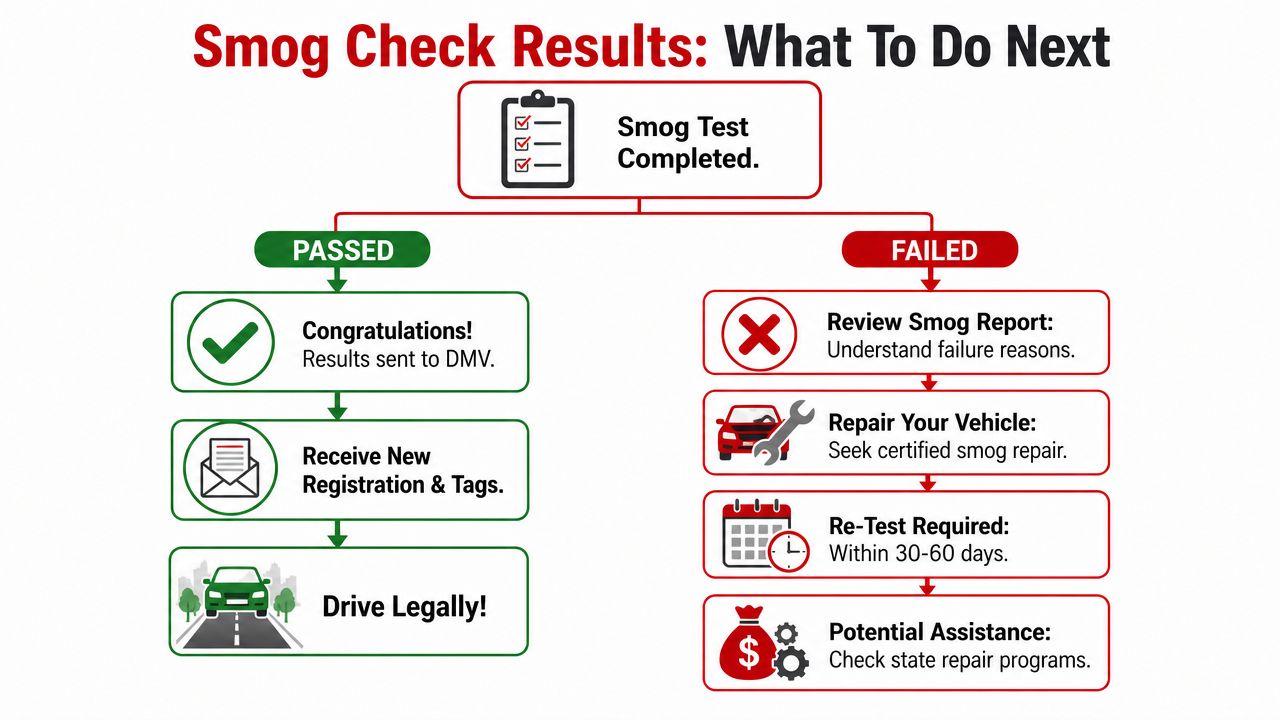
After a passing test, do these three things:
- Finish your registration: Once the DMV has the pass on file, you can complete renewal.
- Keep the inspection receipt: Store it with your registration papers.
- Make a note for next time: Smog checks usually come back on a two-year cycle for vehicles that require them.
If your car fails at a test-only station
This is where station type really matters.
A test-only station can inspect the car and give you the failure report. It cannot fix the car. A test-and-repair shop can diagnose the issue, repair it, and then handle the retest. If you fail at a place like Fire House Smog, you are starting a two-step process, not a one-stop visit.
Here is the exact sequence to follow after a fail at a test-only center:
- Take the failure report with you. Do not rely on memory or a verbal summary.
- Bring the car to a licensed repair shop that handles smog-related diagnosis and repair.
- Have the shop repair the failed item or items listed on the report.
- Ask whether the repair reset any readiness monitors. If it did, the car may need a drive cycle before it can pass.
- Return for the retest once the repair shop says the vehicle is ready.
That fourth step is the one drivers miss all the time. The car may be fixed but still not ready to test if the onboard monitors have not completed. That creates the frustrating “repaired but still not passable today” situation.
A free retest usually means the station waives the second inspection fee under its policy. It does not cover diagnosis or repair work done somewhere else.
What a failure usually means
A failed smog check does not automatically mean an expensive repair. In my experience, the causes range from minor to costly, and the paperwork usually points you in the right direction if you read it closely.
Common reasons include:
- Stored trouble codes
- Readiness monitors not set
- EVAP system problems
- Faulty oxygen sensors
- Catalytic converter problems
- Missing or modified emissions equipment
- Simple issues such as a loose or incorrect gas cap
Older vehicles usually have a narrower margin for passing, especially if they have high mileage or overdue maintenance. Newer cars more often fail because of check engine light history, monitor status, or recent battery disconnects.
What to ask the repair shop before you leave the keys
A good repair visit starts with the right questions. Hand the shop the fail report and be direct.
Ask:
- What exact line on the report caused the failure?
- Are you repairing a bad part, or are we dealing with monitor readiness?
- Will this repair clear codes and reset monitors?
- How much driving is needed before I come back for a retest?
- Do you see anything else likely to stop the next test?
That last question can save you a second repair bill. A careful shop will often spot a weak battery, aftermarket part, or pending fault that has not turned into a full failure yet.
The short version is simple. If you pass, finish registration. If you fail at a test-only station, repair first, then retest. Once drivers understand that split between test-only and test-and-repair, the whole process gets a lot less confusing.
Smart Tips to Save Time and Money in Antioch
The cheapest smog check isn't always the least expensive day. A low advertised price doesn't help if you make multiple trips, miss work, or sit in a DMV line afterward.
For a typical 2000+ gasoline vehicle in Concord, the inspection usually runs $49.75 to $59.75 plus the $8.25 state certificate fee, and the visit is commonly finished in 20 to 30 minutes at a STAR-certified station, based on Concord-area smog pricing and turnaround details. That gives you a realistic baseline when you compare offers.
Where drivers waste time
A few habits create most of the hassle:
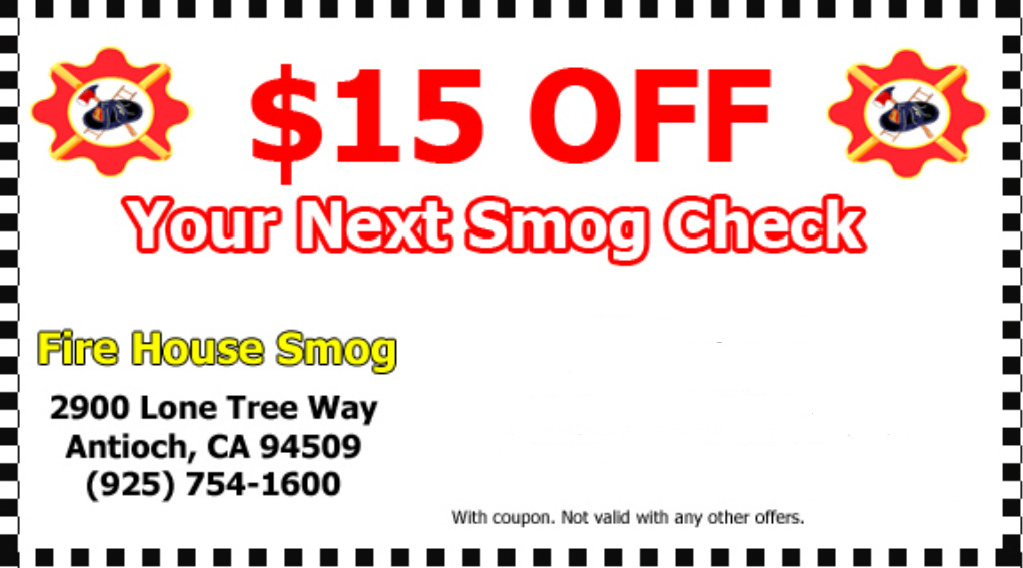
- Chasing the lowest coupon without checking station type: If you choose test-only without realizing what happens after a fail, the cheap coupon can turn into extra driving and delay.
- Going at the wrong time of day: If your schedule is tight, look for extended evening or weekend availability.
- Separating smog and DMV errands: Two stops means more waiting, more parking, and more chances something slips.
What works better
I'd prioritize convenience over headline price when the difference is small.
Look for a location that can handle the smog inspection and, if you pass, process your registration renewal on-site. That's a significant time saver for East Contra Costa drivers. You avoid a second trip and skip the usual DMV-office routine.
A practical shopping checklist looks like this:
| What to compare | Why it matters |
|---|---|
| Station type | Determines whether repairs can happen on-site after a fail. |
| Hours | Evening and weekend access helps working drivers. |
| Vehicle fit | Important if you have a truck, van, or RV. |
| DMV services | Lets you wrap up registration in one stop after a pass. |
The smoothest smog visit is the one that doesn't turn into three separate errands.
Frequently Asked Questions for Local Drivers
Do out-of-state vehicles need a California smog inspection
If you're bringing in an out-of-state vehicle for California registration, check the registration requirements before you show up. The smog requirement depends on the vehicle and registration situation, and the cleanest path is to confirm the paperwork first so you don't make an unnecessary trip.
I have a heavy diesel truck. Is that a regular smog check
Not always. A recent regulatory change affects diesel vehicles over 14,000 GVWR, model year 2014 and newer. Those vehicles fall under Clean Truck Check, which is a separate compliance requirement and not the same as a standard smog test, according to this Clean Truck Check summary for local diesel owners.
Are all diesel appointments the same
No. This is a common pitfall for fleet owners. A shop advertising diesel testing may still not be the right provider for a heavy-duty vehicle that needs Clean Truck Check compliance instead of a standard passenger-vehicle style inspection.
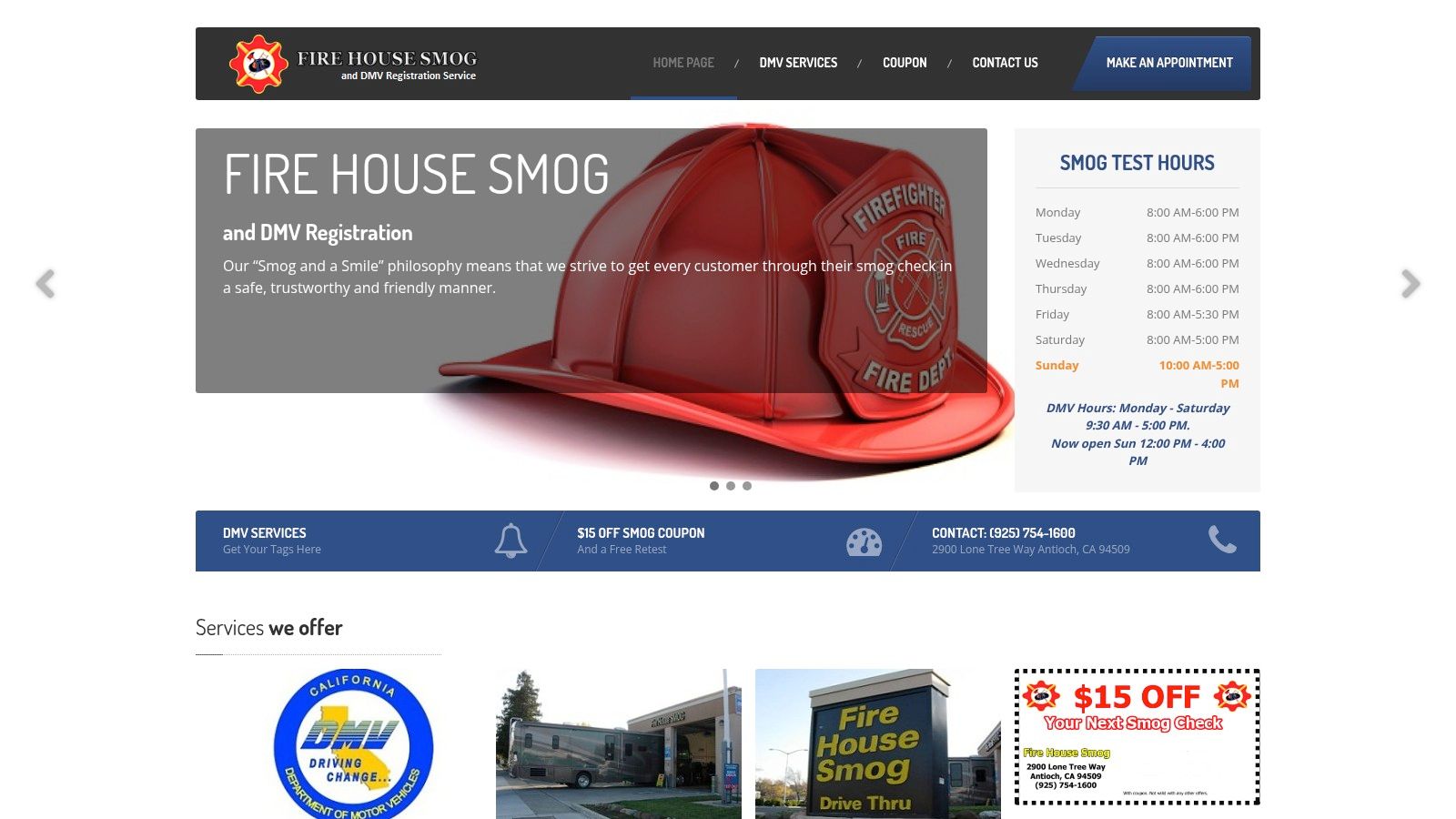
If you want a straightforward option for East Contra Costa drivers, Fire House Smog is a STAR-certified test-only station in Antioch that also offers on-site DMV registration services. It's a good fit if you want an unbiased inspection, quick turnaround, and the ability to handle registration in the same stop after a passing result.