

The actual smog test usually takes 15 to 30 minutes, but the total visit can run longer depending on your vehicle, the line, and whether your paperwork is ready. If you're staring at a renewal notice and trying to fit it between work, errands, and school pickup, the difference between test time and door-to-door time is the part that matters most.
Table of Contents
- Your Smog Check Time Budget
- The Test vs The Wait What Really Takes Time
- Key Factors That Influence Your Smog Check Duration
- Your Checklist for a Faster Smog Check
- The Fire House Smog Advantage in Antioch
- Frequently Asked Smog Check Questions
Your Smog Check Time Budget
A smog notice usually lands at the worst possible moment, right when your week is already full. The first question is simple, though, how long smog check visits take, and the honest answer is that the inspection itself is often quick while the full stop can stretch out.
For most drivers, the actual test is the short part. California STAR station guidance commonly puts newer vehicles around 15 minutes for 2000 and newer, mid-1990s vehicles around 25 minutes for 1996 to 1999, and 35 minutes or more for 1995 and older because the testing method changes with the vehicle's age and diagnostic setup (California STAR station guidance).
That's why a clean, efficient station matters. A driver might spend a short time on the bay, then another chunk of time checking in, waiting, or sorting out paperwork before the car even gets tested.
Practical rule: plan for the inspection time, then add extra room for the visit itself. If you only budget for the test, you'll feel rushed even when the station is working normally.
California's program is also recurring, not occasional. For gasoline, hybrid, and alternative-fuel vehicles model year 1976 and newer, plus diesel vehicles model year 1998 and newer, a Smog Check is generally required when registering or renewing registration, and for most covered vehicles that happens every 2 years (California BAR). That's why it helps to treat this as a routine appointment, not a surprise errand.
The Test vs The Wait What Really Takes Time
A smog visit works a lot like a doctor's appointment. There's the check-in, the waiting room, and the exam itself, and most of the frustration comes from pretending those are all the same thing.
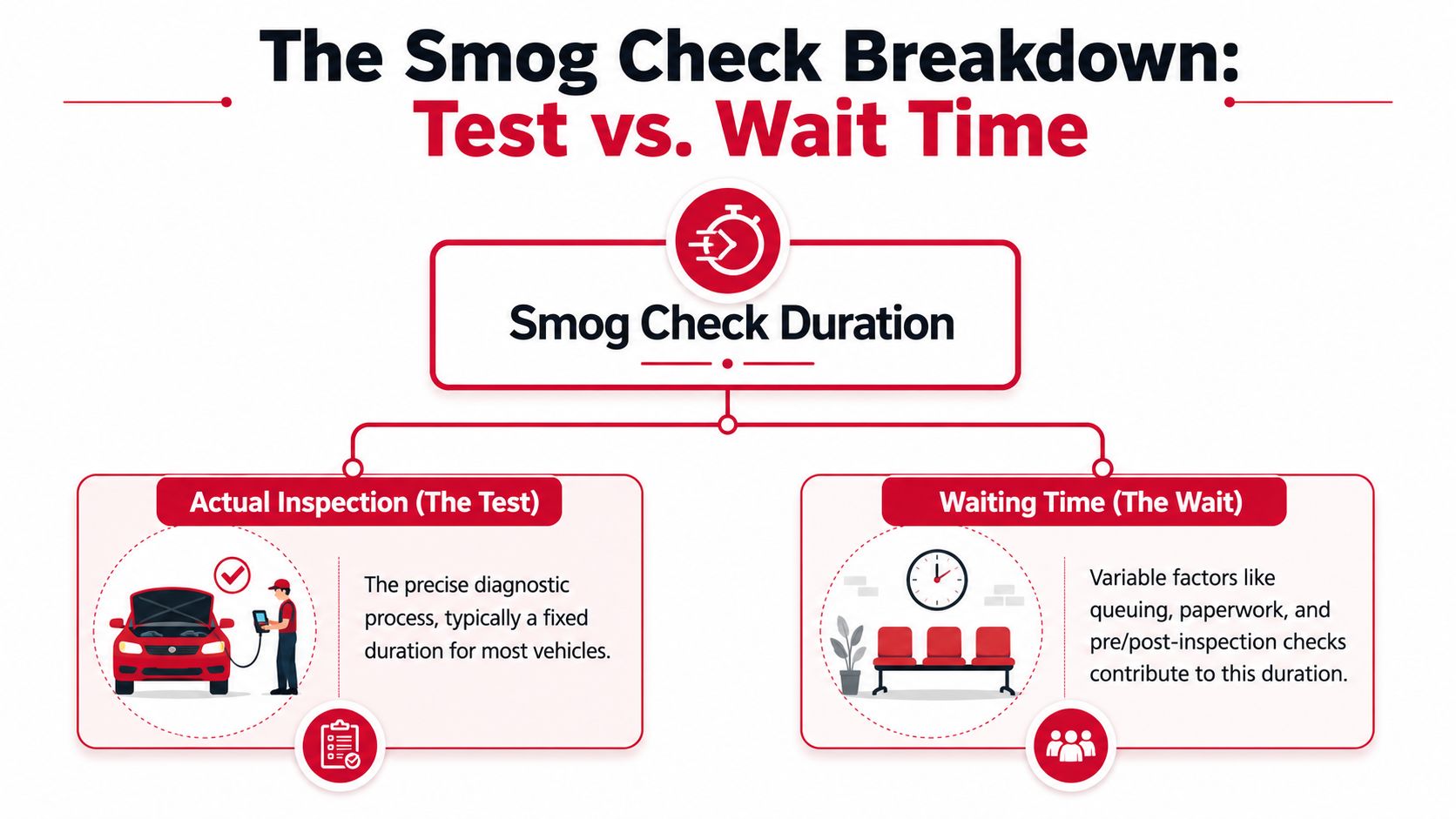
The actual inspection is the fixed part. Consumer guidance commonly describes the test itself as about 15 to 30 minutes, but that figure usually leaves out queueing, paperwork, failed readiness monitors, and the possibility of a retest (consumer timing guidance). That's the gap most drivers feel on site.
What belongs to test time
The test time is the technician working on your car. On a newer vehicle, that often means plugging into onboard diagnostics and checking what the computer reports. On an older car, the process can take longer because the station may need additional procedures beyond the simple plug-in readout.
What belongs to total visit time
The total visit includes everything else, and that's typically where the main delay occurs. Waiting for a bay, filling out forms, verifying whether the station type matches your DMV notice, and dealing with a car that isn't ready for inspection all extend the stop. If you're headed to a station that also offers a focused test-only flow, the process is usually easier to predict, which is why some drivers choose an in-out smog test only center like this option.
The key distinction is simple. Test time is the inspection. Total time is the whole visit. If you plan around only the inspection, you'll underestimate the errand.
Key Factors That Influence Your Smog Check Duration
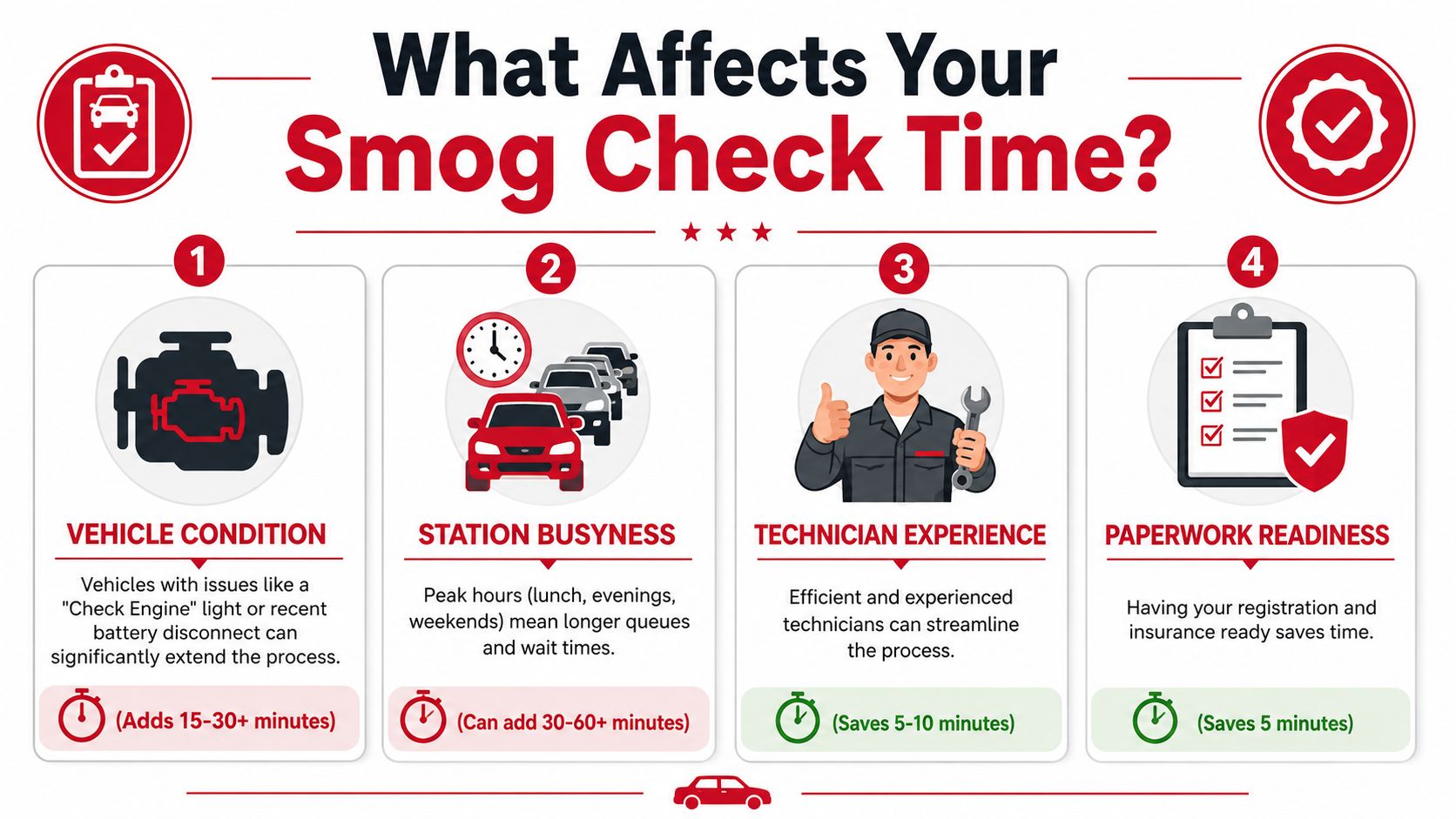
The car in front of you might finish quickly while yours takes longer for reasons that have nothing to do with luck. The main variables are the vehicle itself, the test method, and how busy the station is when you arrive.
Vehicle age changes the process
Newer vehicles are usually faster because the test can rely more heavily on onboard diagnostics, while older cars may need extra steps. California STAR station guidance commonly lists about 15 minutes for 2000 and newer, 25 minutes for 1996 to 1999, and 35 minutes or more for 1995 and older (California STAR station guidance). That's a real operational difference, not a minor variation.
Older cars aren't “harder to pass” just because they're older. They're often slower to inspect because the station has to use a different procedure.
Readiness matters before the car rolls in
If a vehicle's computer isn't ready, the station may have to stop, explain the issue, or send the driver back after more driving. That's one reason a quick visit can turn into a longer one even when the bay itself is moving well. A check engine light or recent battery reset can create that kind of delay.
Station flow changes the clock
A busy shop adds time even when the inspection itself stays the same. A station with better workflow, cleaner check-in, and enough equipment to keep cars moving cuts down the dead time between arrival and departure. One reason drivers look for a STAR-certified test-only station is that the setup can be better aligned with a pure inspection visit, especially when a DMV notice requires a specific station type (STAR station FAQ).
Paperwork still slows people down
Drivers who show up without registration details or a clear idea of what their DMV notice asks for often lose time before the hood even opens. That's why the total visit can be much longer than the test. If you want to reduce the friction, use a station that keeps the process focused, and check whether you're facing a STAR requirement before you leave home.
Your Checklist for a Faster Smog Check
A fast visit starts before you turn into the lot. The easiest way to shorten the total stop is to remove the things that force the station to pause, verify, or ask you to come back later.
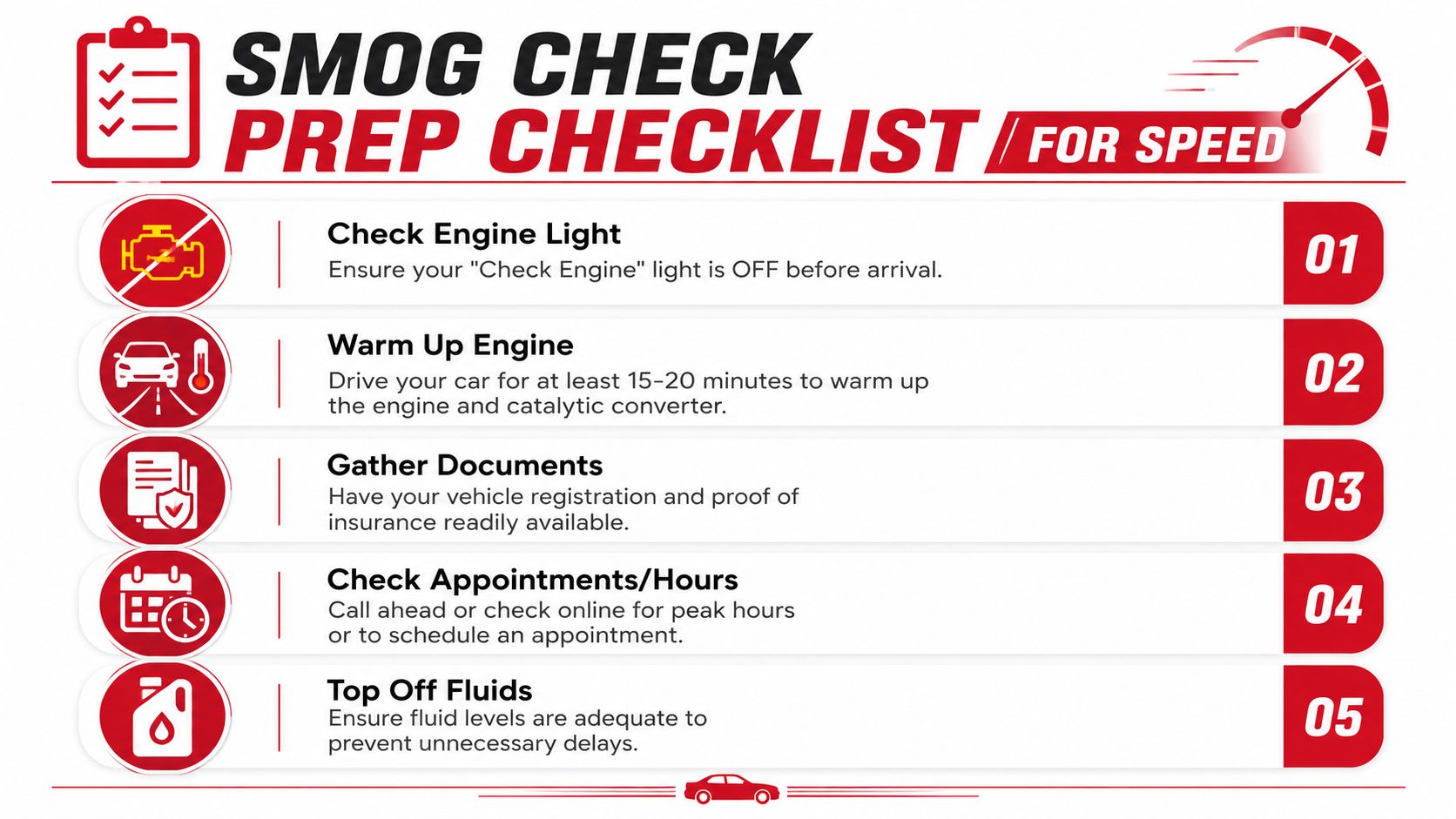
Get the car ready
- Drive the car first: A short drive helps the vehicle settle into normal operating conditions before inspection.
- Make sure the dash is clean: If the check engine light is on, don't expect a quick handoff.
- Keep your documents together: Registration and insurance are the basics, and hunting for them in the parking lot wastes time.
- Call before you leave: If you can verify hours or ask about the flow, you're less likely to land in the middle of a rush.
- Avoid last-minute surprises: If something about the car has changed recently, give yourself time to handle it before the visit.
Choose the right time
Mornings and calmer weekdays usually feel smoother than peak arrival windows, especially when other drivers are trying to beat the same deadline. A station that handles testing seven days a week with extended evening and weekend hours makes that easier to work around, because you're not forced into one narrow window.
Don't confuse preparation with guarantees
Good prep doesn't guarantee a pass, but it does reduce wasted trips. That matters more than people think because a failed first visit can turn a short stop into a second appointment. If you want a practical reference point for common failure causes, review these smog fail reasons before you go.
The Fire House Smog Advantage in Antioch
For Antioch drivers who care more about speed than browsing options, the station layout matters. Two service bays, a test-only model, and on-site DMV registration services all cut down on the extra steps that usually make a smog errand drag on.
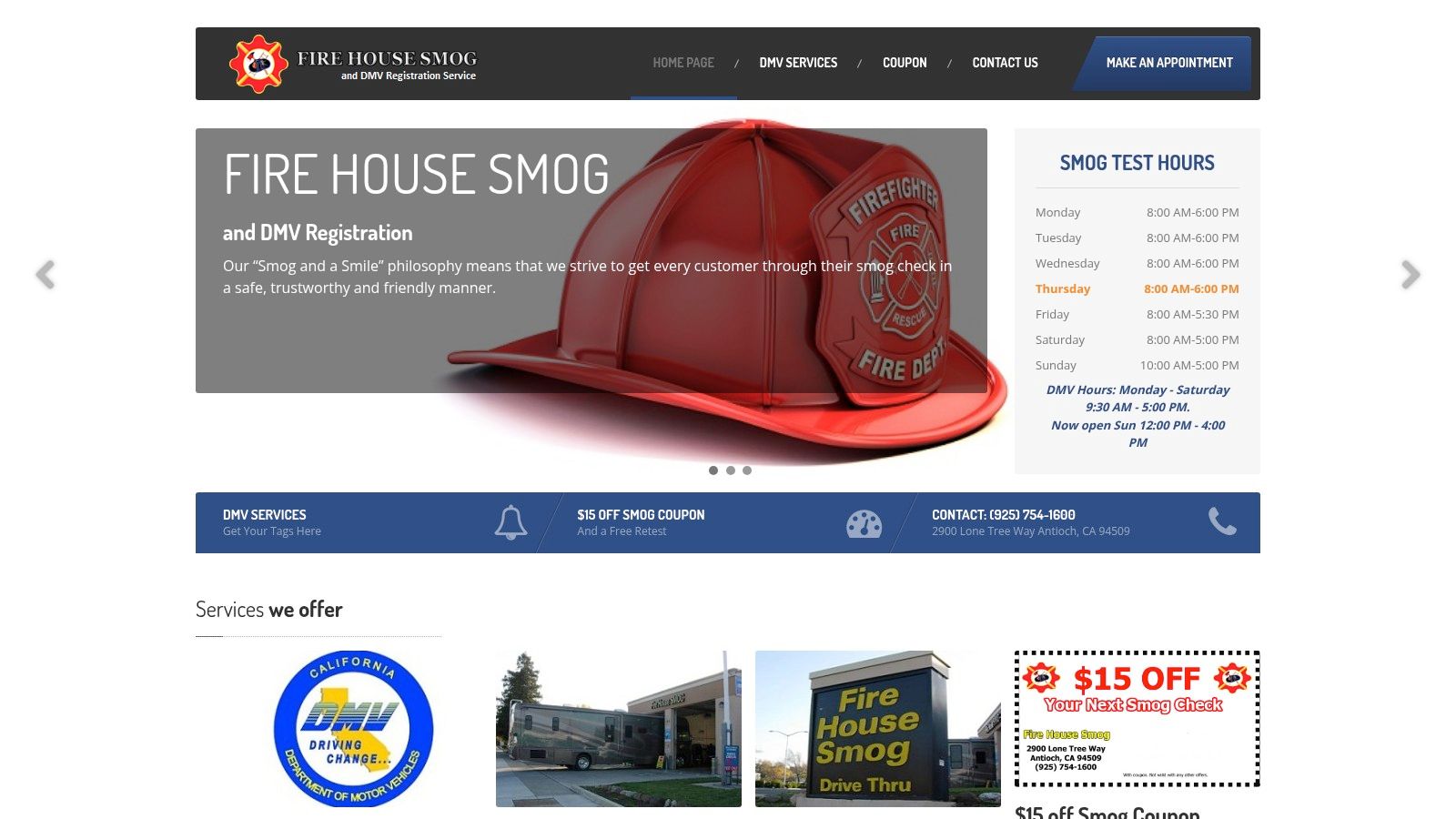
A test-only station keeps the visit focused on inspection instead of repair conversations. That matters because there's no repair upsell built into the process, so you're getting a compliance check rather than a sales pitch. For drivers whose DMV notice points them to a specific station type, that same setup aligns with the STAR structure described by California's program and STAR station guidance (California STAR program FAQ).
Why the layout affects your clock
Two bays reduce the chance that every car stacks behind a single open lane. In plain terms, more capacity usually means less waiting, especially when multiple drivers show up at the same time. That's not a fancy claim, it's just how queueing works at small stations.
The on-site DMV piece is the other time saver. If you need registration renewal help along with the smog test, completing both stops in one place means one parking spot, one check-in, and one trip. That's a real convenience for drivers who don't want to bounce between an inspection station and a DMV counter.
You can also check STAR certified smog test options nearby if your notice specifically calls for a STAR station. That keeps you from showing up at the wrong place and adding another trip to your week.
The fastest smog visit is usually the one that avoids second stops. A station that handles testing and registration in one run removes a lot of hidden time.
Frequently Asked Smog Check Questions
What happens if my car fails?
You'll need to fix the issue and return for a retest. The exact repair path depends on what failed, but the important part is not to assume the first trip is the only trip. If the car isn't ready, a fast station can still be a short stop, but it won't be a final one.
How do I know if I need a STAR station?
Your DMV renewal notice is the first place to look. California's STAR system is designed for directed and non-directed vehicles, and some notices specifically require a STAR station, so the station type matters before you drive over (STAR station FAQ). If the notice names STAR, don't guess.
How often do I need a smog check in California?
For gasoline, hybrid, and alternative-fuel vehicles model year 1976 and newer, plus diesel vehicles model year 1998 and newer, California generally requires a Smog Check when registering or renewing registration, and for most covered vehicles the standard cadence is every 2 years (California BAR). That recurring schedule is why it pays to keep the process simple and repeatable.
The cleanest way to handle it is to treat the smog visit like a quick compliance stop, not an all-day errand. If your renewal is coming due, call ahead, bring your paperwork, and choose a station that can keep the line moving.
If your registration deadline is coming up, book your visit with Fire House Smog and handle the smog check and DMV side of the errand in one trip.