
In California, most gas-powered cars and light trucks 8 model years and newer are exempt this year, while vehicles 6 model years and older, diesel trucks under 14,000 lbs, and cars sent to a STAR station by the DMV must pass an emissions test to register or renew. If you're standing at the counter in Antioch with a renewal notice in hand, the rule is simple, the DMV cares about a passing smog certificate before it finishes the paperwork.
A lot of drivers only hear the word “smog” when renewal time shows up, so the process feels bigger than it is. At the shop, it's just a set of checks that tells the state whether your vehicle is putting out too much pollution for its age and type. At the DMV counter, it becomes the gatekeeper for registration, which is why a missing certificate can stop the renewal process even when everything else looks ready.
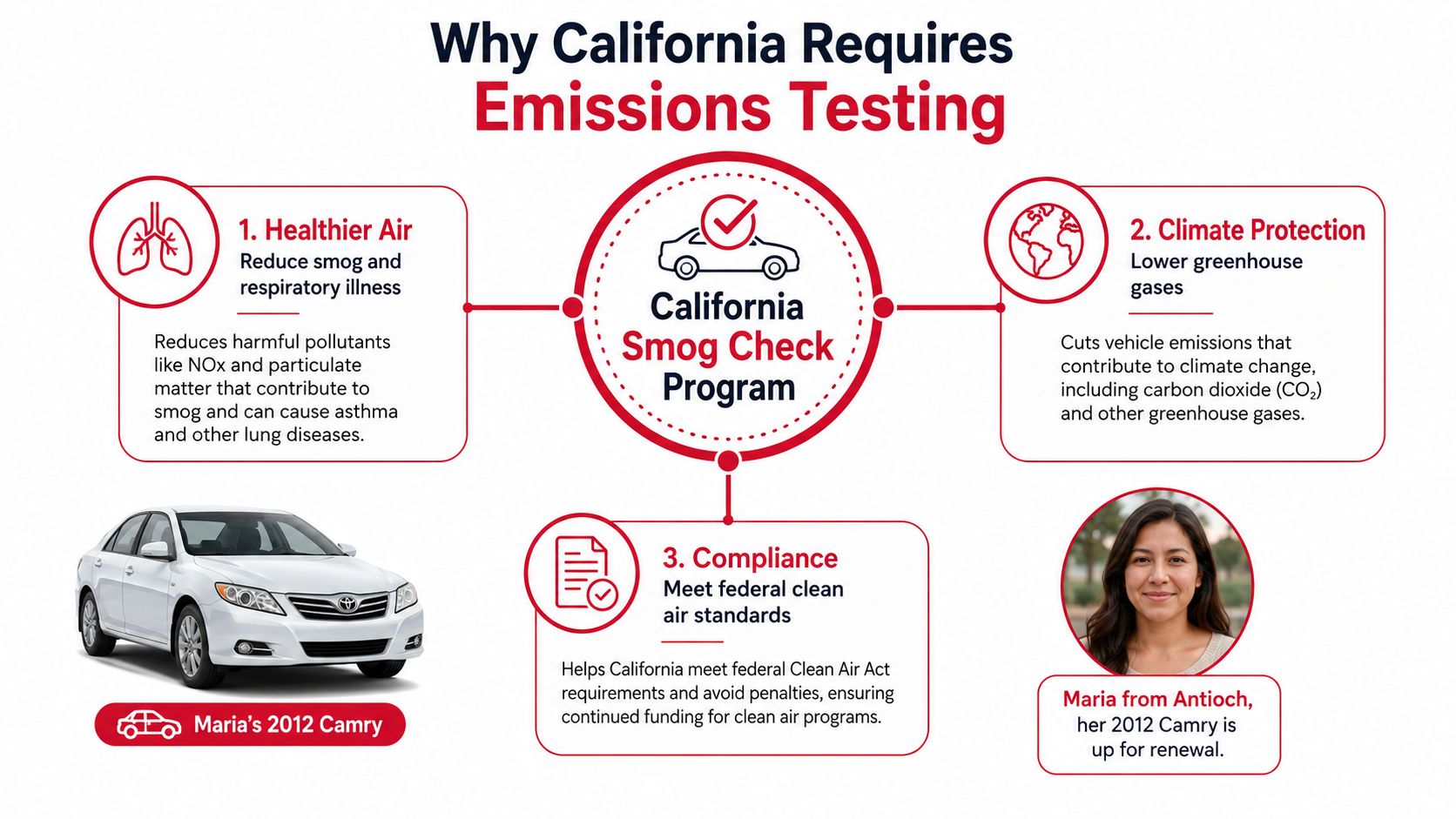
Table of Contents
- Why California Requires Emissions Testing
- Which Vehicles Must Be Tested
- STAR, Test-Only, and Regular Smog Stations Explained
- When and How Often You Need to Test
- Exemptions and Special Vehicle Cases
- How to Prepare Before You Arrive
- What Happens During the Test
- Failures, Retests and Your Next Steps
Why California Requires Emissions Testing
Maria from Antioch brings in her 2012 Camry because her registration renewal is coming up, and she wants to know why the state still asks for a smog check. The short answer is that California uses emissions testing to keep high-polluting vehicles from slipping through the registration process. In the federal framework, the Clean Air Act gave states and regulators the structure to run inspection and maintenance programs, and EPA guidance says those programs were formalized through the 1990 amendments and the original I/M rule followed in 1992 (EPA guidance on inspection and maintenance programs).
What the shop is trying to catch
A smog check is not one single test. It is an umbrella term for the visual inspection, the on-board diagnostics scan, and, for some older vehicles, the tailpipe portion that people usually picture when they hear “emissions test.” EPA describes the purpose as finding high-emitting in-use vehicles with short, warmed-up tests that can be done in idle mode or loaded mode, while still tracking real-world emissions problems (EPA emissions-testing technical guidance).
That matters in places like the Bay Area and the Central Valley because a dirty-running car doesn't stay in one zip code. It joins traffic, idles in lines, and adds to the air everyone breathes. The state's job is to reduce that risk before the vehicle gets another year on the road.
Practical rule: if the DMV needs a smog certificate, the certificate is part of the renewal, not a separate courtesy step.
How the DMV uses the test
The registration system is the enforcement hook. If the vehicle needs a smog check and the certificate doesn't clear, the DMV renewal doesn't clear either. That's why drivers often hear about emissions testing right when they need tags, plates, or a renewed registration card.
For Antioch drivers, that's usually the point where the process becomes very practical. You go to the station, the technician checks the car, and the result is sent into the registration workflow if the vehicle passes. The system is meant to be fast enough for everyday drivers, but firm enough that a failed vehicle can't skip the line.
Which Vehicles Must Be Tested
The easiest way to sort California emissions testing requirements is to put your vehicle into one of a few buckets. If your car is a newer gasoline model, you may be exempt. If it's older, diesel, or specifically flagged by the DMV, you may need to go in.
The three decision points that matter most
First, gasoline cars and light trucks 8 model years and newer are exempt this registration cycle. That means a 2018 vehicle is off the hook in 2026. Second, vehicles 6 model years and older fall into the regular biennial cycle, so they need a smog check every other renewal. Third, any vehicle that gets a DMV-directed STAR notice must go where the notice says, regardless of age.
Diesel adds a separate lane. Diesel trucks under 14,000 pounds GVWR follow a different annual rule through the state's heavy-duty program, so they don't fit neatly into the gasoline-car pattern. If you're unsure, the renewal notice usually tells you more than a general rule ever will.
Fast if-then guide
- If your gasoline car is 8 model years old or newer, you're usually exempt for this cycle.
- If your vehicle is 6 model years old or older, expect a biennial smog check.
- If the DMV mailed you a STAR-directed notice, follow that notice even if a regular station looks closer.
- If you own a diesel truck under 14,000 pounds GVWR, check the diesel-specific requirement rather than the gasoline schedule.
- If you're transferring a vehicle from out of state or changing ownership, expect an off-cycle visit.
| Vehicle Category | Model Year Rule | Test Frequency | Station Type Required |
|---|---|---|---|
| Gasoline cars and light trucks | 8 model years and newer exempt | No test this cycle | Any applicable station only if DMV directs it |
| Gasoline cars and light trucks | 6 model years and older | Every other renewal | Regular, STAR, or test-only, depending on DMV notice |
| Diesel trucks under 14,000 lbs GVWR | Separate diesel rule | Annual cycle | Follow the diesel-specific requirement |
| Out-of-state transfer or change of ownership | Based on transfer event | Off-cycle when required | As directed by the DMV notice |
| DMV-directed STAR vehicle | Any age | As directed | STAR station or test-only when specified |
If you want a station that handles California smog work and DMV paperwork in one place, Fire House Smog's STAR-certified smog station is set up for that kind of visit.
STAR, Test-Only, and Regular Smog Stations Explained
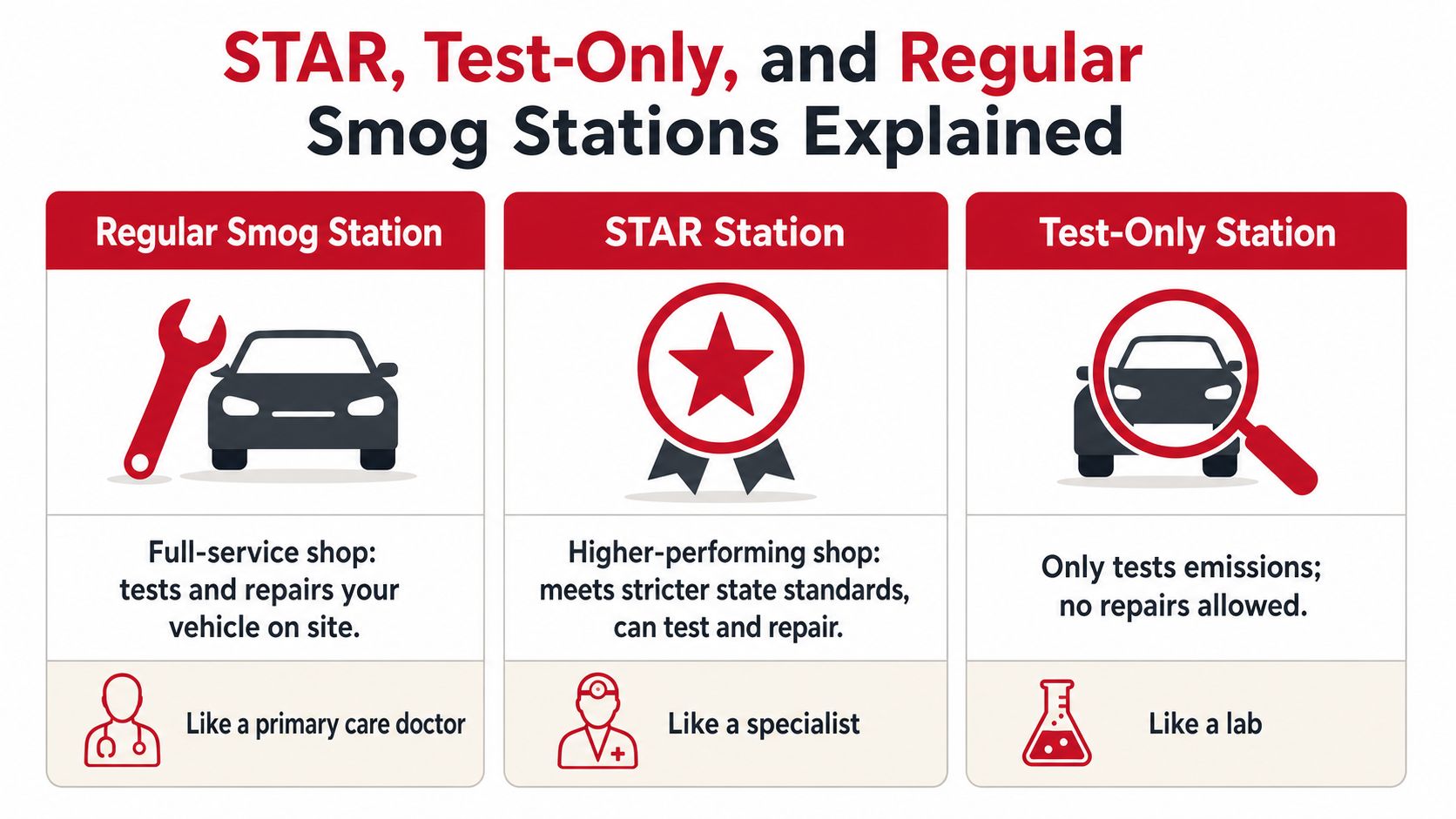
The station type changes where you're allowed to go, even when the inspection looks similar from the waiting room. A regular smog station can test vehicles and perform repairs. A STAR station meets additional state performance standards and handles vehicles that require closer oversight. A test-only station conducts the inspection but does not repair the vehicle it checks.
Why station type changes the trip
A regular station is convenient when you want testing and repairs handled at the same location. A STAR station can also test and repair, but it must meet stricter state standards. The DMV may direct certain vehicles there for closer control. A test-only station performs the inspection only. If the vehicle fails, you must take it somewhere else for diagnosis or repair.
That difference matters for drivers in Antioch and East Contra Costa County. If the DMV notice directs you to a STAR or test-only station, visiting the wrong shop can mean another drive, another line, and time away from work. The notice determines the station type, not the station your neighbor used last year.
How the DMV decides where you go
The DMV can assign a vehicle to STAR based on its inspection history or random selection. Repeated high emissions can also place the vehicle in a more closely controlled category. The state is trying to keep the highest-risk cars under closer watch.
A test-only station separates inspection from repair, so the result is focused on compliance rather than repair sales.
Read the renewal notice before choosing a location. If it says STAR, select a STAR station, such as Fire House Smog's STAR-certified smog station. If it specifies test-only, choose a station that performs inspections without repairs. Regular stations remain appropriate when the DMV does not assign a different type.
The right station prevents an avoidable second visit. At the shop counter, bring the notice and confirm the required station type before the vehicle enters the test lane.
When and How Often You Need to Test
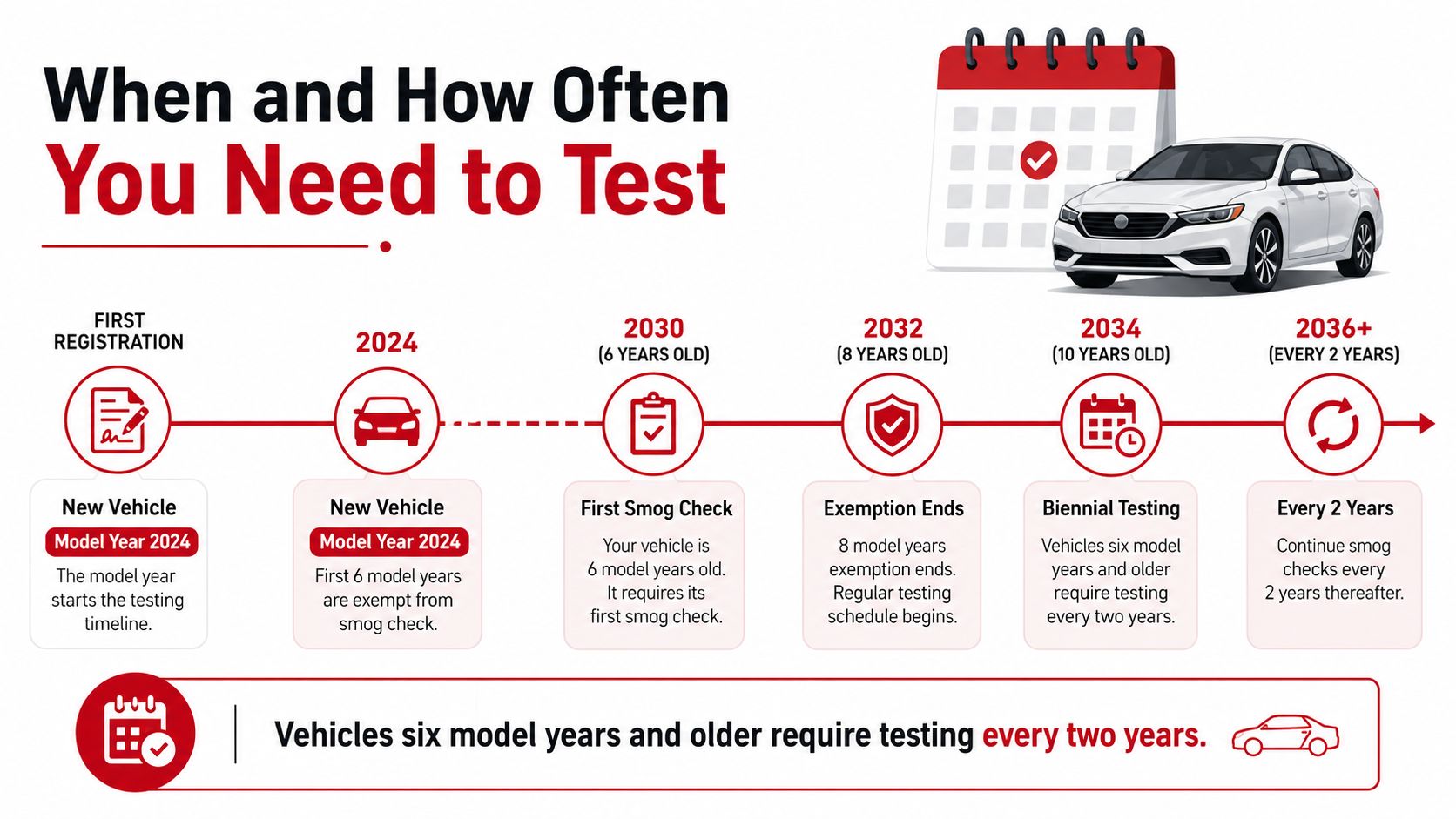
The DMV renewal notice is the best calendar you have. California's biennial cycle is tied to the vehicle's model year, not to when you bought it or when you feel like dealing with it, so the model year determines when the smog requirement starts and how often it returns.
Reading the cycle the right way
A simple way to think about it is this. Newer gasoline vehicles get a long exemption window, then the smog requirement begins once the vehicle reaches the older category that the state regulates. After that, the vehicle comes back every other renewal. The renewal notice matters because it tells you the due date the DMV wants, and that date controls the registration process.
For a 2024 model-year vehicle, the timeline starts with the no-test window, then the first required smog check comes later in the vehicle's life, and after that the pattern continues on the same two-year rhythm. The date printed by the DMV still wins if it conflicts with a general rule you heard from a friend.
Off-cycle visits that catch people off guard
Not every smog appointment follows the regular renewal clock. An out-of-state title transfer can trigger a visit before California issues plates. A change of ownership can do the same. A vehicle that's been stored, brought back into service, or previously failed and got a DMV-directed follow-up may also need to go back off-cycle.
Diesel trucks under 14,000 pounds live in their own lane, so their timing doesn't follow the same gasoline pattern. That's why the registration card and renewal notice matter so much. They're the state's instructions for your specific vehicle, not a generic sample notice.
Practical rule: if the DMV letter and a general online rule disagree, the DMV letter is the one to follow.
That rule saves drivers from showing up early, too late, or at the wrong kind of station. It also keeps the visit focused on what the DMV needs, which is the fastest path from the bay back to the renewal counter.
Exemptions and Special Vehicle Cases
Some vehicles never need a smog check, and others only need one when a specific event happens. The trick is to sort “never,” “not yet,” and “only if the DMV asks” into separate buckets. That distinction keeps drivers from paying for a test they don't owe.
Vehicles that are usually exempt
The most common exemptions are straightforward. Battery-electric vehicles and hydrogen fuel cell vehicles do not need smog tests. Motorcycles, trailers, farm equipment, and most vehicles older than 1975 are also outside the regular smog cycle. New gasoline cars and light trucks get the 8 model year exemption window described earlier, so a 2026 model sold in 2025 would be exempt through that early period.
Hybrid vehicles are different. They still follow the biennial cycle when the state places them in the tested category, because they still have a gas engine that can emit pollution. That's a common point of confusion at the counter.
Special cases that still trip people up
An out-of-state vehicle being registered in California for the first time usually must pass before plates are issued. A transfer of ownership can also bring testing back into the picture, even if the seller just had one done recently. And if the DMV has flagged a prior problem, that flag can override a driver's assumption that the car is exempt.
There are also hardship tools for some drivers. California has hardship extensions and economic hardship waivers for eligible cases, and those requests depend on income limits and proof that the needed repairs are beyond the state-set cost threshold. If a driver qualifies, that changes the repair path, but it doesn't erase the need to document the issue.
| Vehicle Type | Smog Check Required? | Notes |
|---|---|---|
| Battery-electric vehicle | No | No tailpipe emissions to test |
| Hydrogen fuel cell vehicle | No | Exempt from smog testing |
| Motorcycle | No | Outside the regular program |
| Trailer | No | Not a self-propelled emissions source |
| Most vehicles older than 1975 | No | Common exemption category |
| Hybrid vehicle | Sometimes | Follows the applicable smog cycle when required |
| Diesel truck under 14,000 lbs GVWR | Yes, under diesel rules | Separate annual requirement |
| Out-of-state first registration | Yes, when required | Must pass before plates are issued |
For drivers who want a local place to handle both emissions work and registration tasks, Fire House Smog's smog exemption guide is a useful reference before heading out.
How to Prepare Before You Arrive
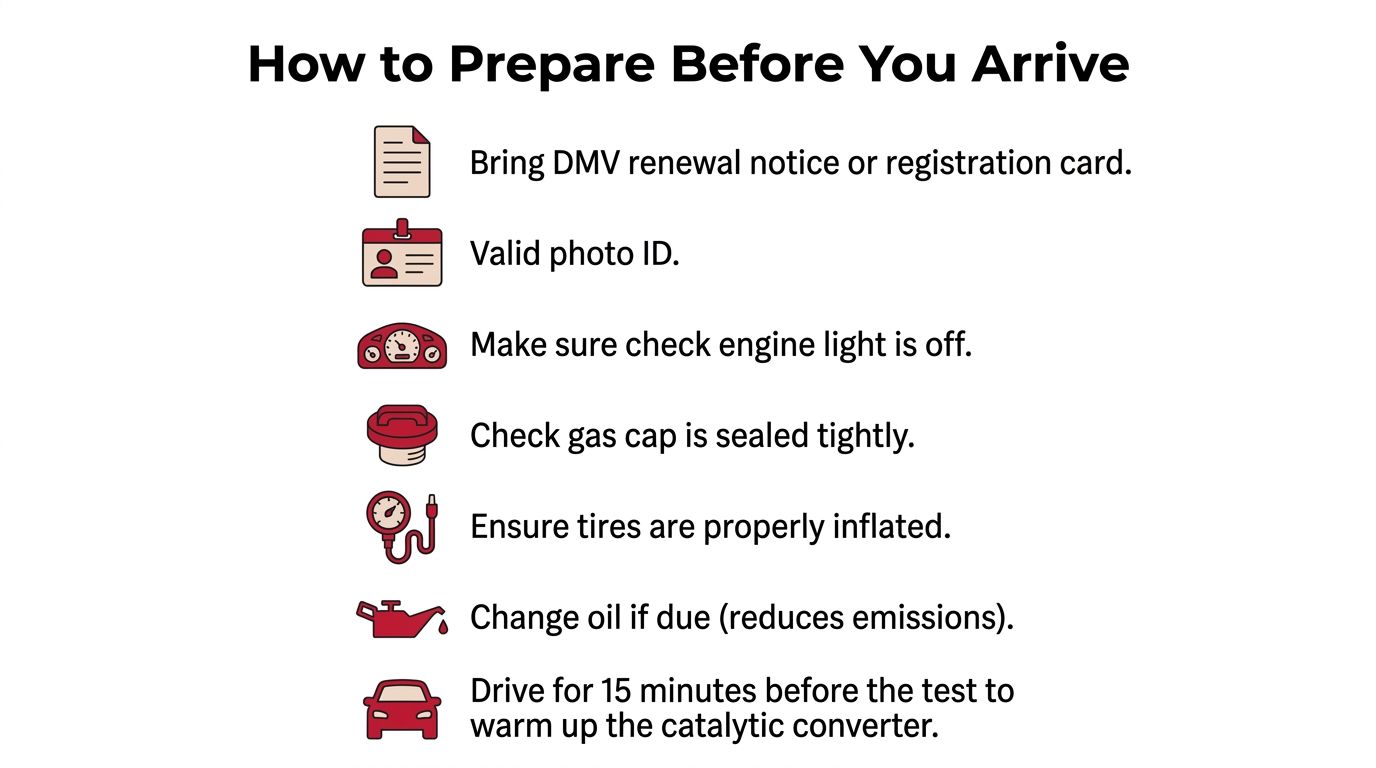
The cleanest smog visit starts the night before. A little prep helps the technician move straight into the inspection instead of pausing for paperwork, a dead battery, or a loose gas cap that could have been fixed at home in thirty seconds.
What to bring
- DMV renewal notice or registration card: This tells the station what the DMV expects.
- Valid photo ID: The shop may need to verify who's dropping off the vehicle.
- Prior smog certificate if you're retesting: That keeps the follow-up visit tied to the original failure.
- Payment method: Many shops take cash, card, and sometimes check, but it's smart to confirm before you leave.
What to check on the car
Warm the engine before you arrive. A drive of at least fifteen minutes helps the catalytic converter and other parts reach normal operating temperature, which is how the test is meant to be performed. Make sure the check engine light is off, because that light often points to a problem the scan will catch.
A tight gas cap matters too. If it doesn't seal properly, the system can fail the pressure check. Even tire pressure can help keep the car stable during any loaded testing setup, so don't ignore it if the tires look uneven.
Practical rule: if the battery was recently disconnected, take the car on a short drive first so the readiness monitors can relearn normal operation.
The inside of the car matters less than the engine, but it still helps to remove loose items so the technician can move freely and confirm the VIN without clutter. At busy stations in Antioch, arriving a few minutes early keeps the appointment smooth, especially if the renewal notice has a STAR or test-only instruction written on it.
What Happens During the Test
At a STAR station in Antioch, the visit usually starts with a quick intake at the bay. The technician checks the VIN, fuel type, and registration details so the car matches the paperwork. That first step is simple, but it prevents the wrong vehicle from getting tested under the wrong rule.
The inspection inside and under the hood
The technician then does the visual checks required for the vehicle. On newer cars, the OBD-II scan reads readiness monitors and trouble codes from the car's computer. On older vehicles, the inspection can include the tailpipe portion and related emissions checks, which is why the process looks different depending on what you drive.
Gas caps may be pressure-tested as part of the process, because a bad seal can let pollution escape where it shouldn't. The technician may also look at emissions-related parts under the hood to make sure they're present and connected. The point is not to make your life hard, it's to confirm the car still matches the emissions system it was built to use.
What the driver experiences
Most drivers wait in the lobby while the inspection runs. The full visit is usually short enough to fit into a normal errand stop, and the technician shares the result before anything gets sent into the DMV system. If the vehicle passes, the certificate moves the registration forward. If it fails, the printed result becomes the starting point for repairs.
The process is standardized statewide by BAR, so the same basic steps apply whether you're tested in Antioch or elsewhere in California. If the car fails and the station offers a retest coupon or retest policy, ask about the window and the fee before you leave. That small question can save you a second surprise trip.
Failures, Retests and Your Next Steps
A failed smog test is not the end of the road. It just tells you where the car needs work before the DMV will accept the certificate. The useful part is that the report points to the problem instead of leaving you to guess.
What the three outcomes look like
A pass means the certificate is sent to the DMV and the registration path keeps moving. A fail means you get a printed repair report that shows which component, system, or readiness item didn't meet the requirement. A directed-repair notice means the DMV wants the vehicle handled in a particular way, often because the case needs more control than a routine renewal.
After a fail, the next step is usually repair and retest. California gives drivers a 30-day window to make repairs and return, and the retest fee is a normal part of that process unless the station's policy says otherwise. Some stations offer a free-retest coupon within the required period at the same location, which can lower the cost if you come back on time.
Getting help when repair costs are the problem
The state also has Consumer Assistance Program options through ARB, including Repair Assistance and Vehicle Retirement for income-eligible drivers. Those programs can help when the repair bill is more than the vehicle owner can reasonably absorb. The exact eligibility rules matter, so this is one of those moments where the paperwork is as important as the wrench work.
The station's result page can help you understand what the paper means before you call around for repairs. If you need that translation, the emissions test results guide is a practical place to start.
Once you know the failure reason, call the shop, schedule the return visit, and confirm whether the DMV wants a STAR station for the retest. Bring the original paperwork back with you, because that keeps the second visit tied to the first one instead of starting over.
If your registration is due and you want the paperwork handled without bouncing between offices, Fire House Smog can perform the smog check and help with DMV registration tasks in Antioch. Visit Fire House Smog to plan your visit, confirm station requirements, and get your vehicle checked before the renewal deadline.