
You just got the renewal notice, and now the clock's ticking. The clean air test isn't the annoying part people think it is, it's the gate that decides whether your registration moves forward cleanly or gets stuck on a technicality you could've avoided.
For most drivers, the surprise isn't the inspection itself. It's that a car can feel fine, drive fine, and still fail because of readiness status, test conditions, or the wrong kind of station choice. California's program is large for a reason, and the rules around it are built to catch problems a quick glance never would.
Table of Contents
- Understanding the California Clean Air Test
- Vehicle Eligibility and Exemption Rules
- Inside the STAR-Certified Testing Process
- The Truth About OBD Readiness Monitors
- How to Prepare Your Vehicle for Inspection Day
- Streamlining DMV Registration and Renewals
- Navigating Retests and Common Testing Questions
Understanding the California Clean Air Test
A driver in Antioch gets the renewal notice on a Tuesday, books the first open slot, and then learns at the counter that the vehicle needs more than a standard quick check. That is the part many people miss. The clean air test is tied to California's emissions-control system, and the state expects stations to handle a large volume of inspections. The California Bureau of Automotive Repair reports more than 8,000 active Smog Check stations in calendar years 2024 to 2025, with an average annual workload of about 1,500 vehicle inspections per station (BAR performance report).
Why the inspection exists
The test exists because vehicle emissions are part of the air-quality problem, and the public-health stakes are real. The World Health Organization reported that air pollution was responsible for about 6.7 million deaths worldwide in 2019, roughly one in every eight deaths (WHO report). California uses the inspection to check whether a vehicle is releasing more pollution than it should, instead of relying on how it feels on the road.
The program also serves as an enforcement tool, not just a reminder before registration. BAR reported that licensed stations declined by 13% from 2020 while annual inspections increased by 10%, and average inspections per station rose from about 1,100 in 2020 to 1,500 in 2025 (BAR performance report). That means fewer stations are carrying more of the load.
Practical rule: station capacity matters. A busy, well-run station can save you a return trip.
What the modern test really checks
The old idea of a smog test as only a tailpipe reading no longer fits the process. For 2000-and-newer vehicles, California's inspection leans heavily on onboard diagnostics, including the malfunction-indicator lamp, diagnostic trouble codes, and emissions readiness monitors (BAR reference guide). The station is checking what the vehicle computer knows, not just what comes out of the exhaust.
That is where the hidden delay shows up. A car can drive normally and still fail if one or more readiness monitors are not set, or if the computer has not finished the checks the station needs to see. A vehicle that looks ready on the road can still be incomplete in the diagnostic system.
Vehicle Eligibility and Exemption Rules
Eligibility is where a lot of wasted trips begin, because the answer depends on fuel type, model year, weight rating, and the registration event, not just how old the car looks or how it runs on the road. California's rules start there, and the California Smog Check program is the place to verify the exact rule that applies before you head to the station.
A simple decision framework
For gasoline, hybrid, and alternative-fuel vehicles, California generally requires a smog check for model year 1976 and newer vehicles. Diesel rules are different. The requirement generally starts at model year 1998 and newer, with an exemption for diesel vehicles over 14,000 pounds GVWR under the listed rules. Older exempt vehicles can still run into a requirement if ownership, registration status, or vehicle type changes the situation.
| Vehicle Type | Model Year Requirement | Exemption Notes |
|---|---|---|
| Gasoline | 1976 and newer | Older gasoline vehicles are generally exempt under the listed rules |
| Hybrid | 1976 and newer | Same general treatment as gasoline for eligibility |
| Alternative-fuel | 1976 and newer | Check the exact registration event, not just fuel type |
| Diesel | 1998 and newer | Diesel vehicles over 14,000 pounds GVWR are exempt under the listed rules |
| Out-of-state vehicle | Depends on model year and type | Usually needs a smog check for first-time California registration |
| RV or motorhome | Depends on size and equipment | Call ahead, because not every station can physically handle it |
The registration trigger matters
A lot of drivers focus on model year and miss the registration event. California generally requires a smog check every other year for registration renewal and for first-time California registration, including vehicles purchased in another state. That means a vehicle can be exempt by age in one situation and still need paperwork review in another.
A station can only test what it can physically fit and legally evaluate. For unusual diesels, RVs, and imported vehicles, confirm the requirement before you drive over. Bay size, equipment limits, and registration history can affect the outcome as much as the vehicle itself.
Imported vehicles deserve special caution because California-compatible emissions equipment and prior registration history can change what happens at check-in. RVs can create the same problem. If the setup is unusual, do not guess, confirm the rule first and save yourself a return trip.
Inside the STAR-Certified Testing Process
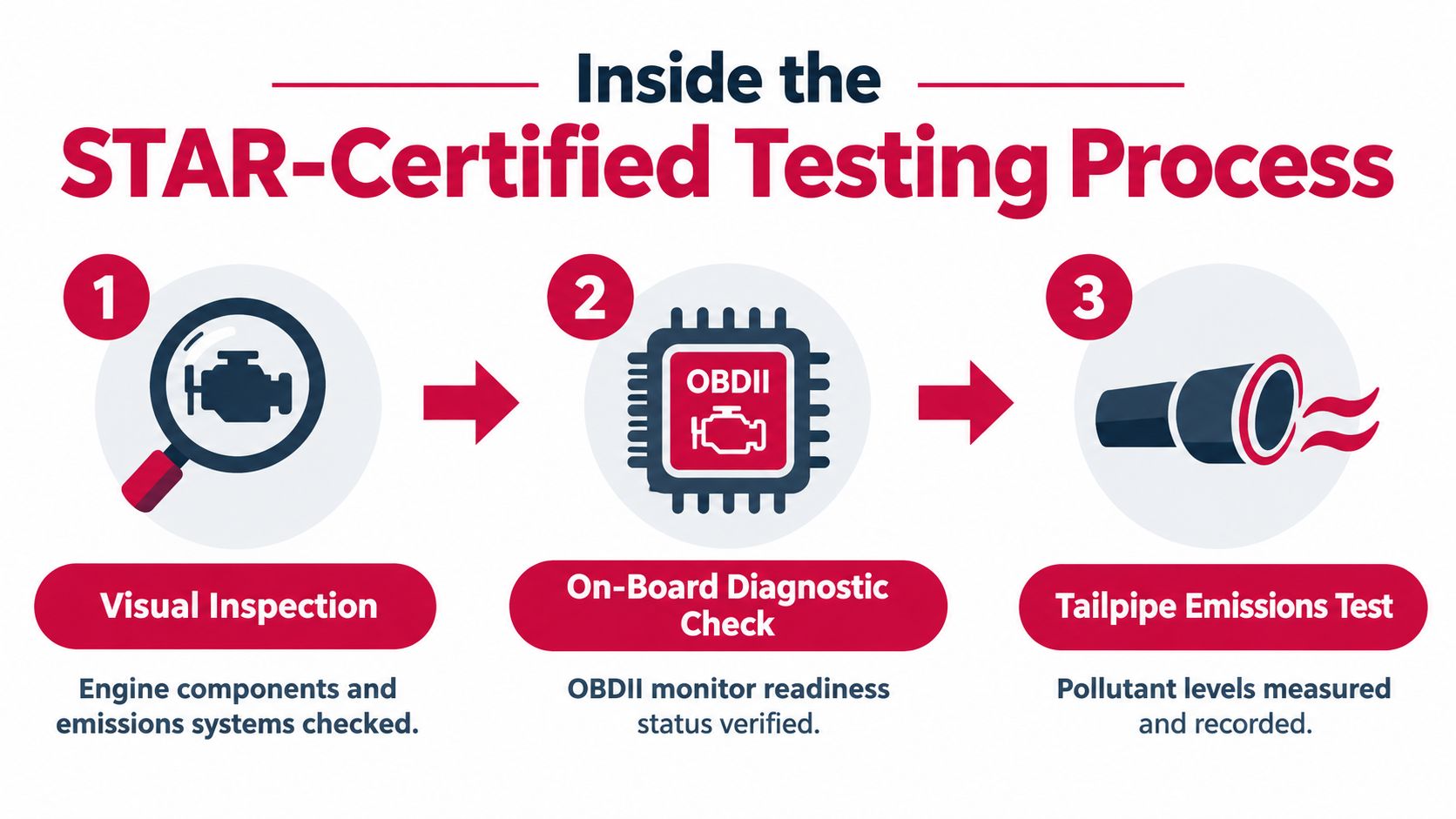
A STAR-certified test-only station is built for verification, not repair. That matters when you want a straight result instead of a parts pitch after the inspection. California's STAR program carries real weight in the field, and in calendar year 2025, 49% of licensed stations were STAR-certified, yet those stations performed 83% of all Smog Check tests (BAR performance report).
What happens in the bay
The inspection starts with a visual review of emissions-related parts, then moves into diagnostics. For 2000-and-newer vehicles, the station checks the onboard diagnostic system, including readiness status and fault codes. If a system is supposed to report ready and does not, the tester has to treat that as a testing issue.
A test-only station removes the usual conflict of interest. The station is there to measure the car against the standard, not decide what repair you should buy next. That separation saves time and keeps the conversation focused on the result.
Why the final smoke check still matters
California's procedure also includes a visible-smoke observation during the final BAR Snap Test when applicable, along with the required equipment checks and visual inspection controls. Some emissions problems show up in the computer, some show up in the exhaust, and some only appear when the engine is under load.
What STAR certification means in practice
A driver should ask one question before leaving the bay, whether the result was a standards failure or a readiness issue. That answer tells you whether you need repairs, more drive time, or a return visit.
The Truth About OBD Readiness Monitors
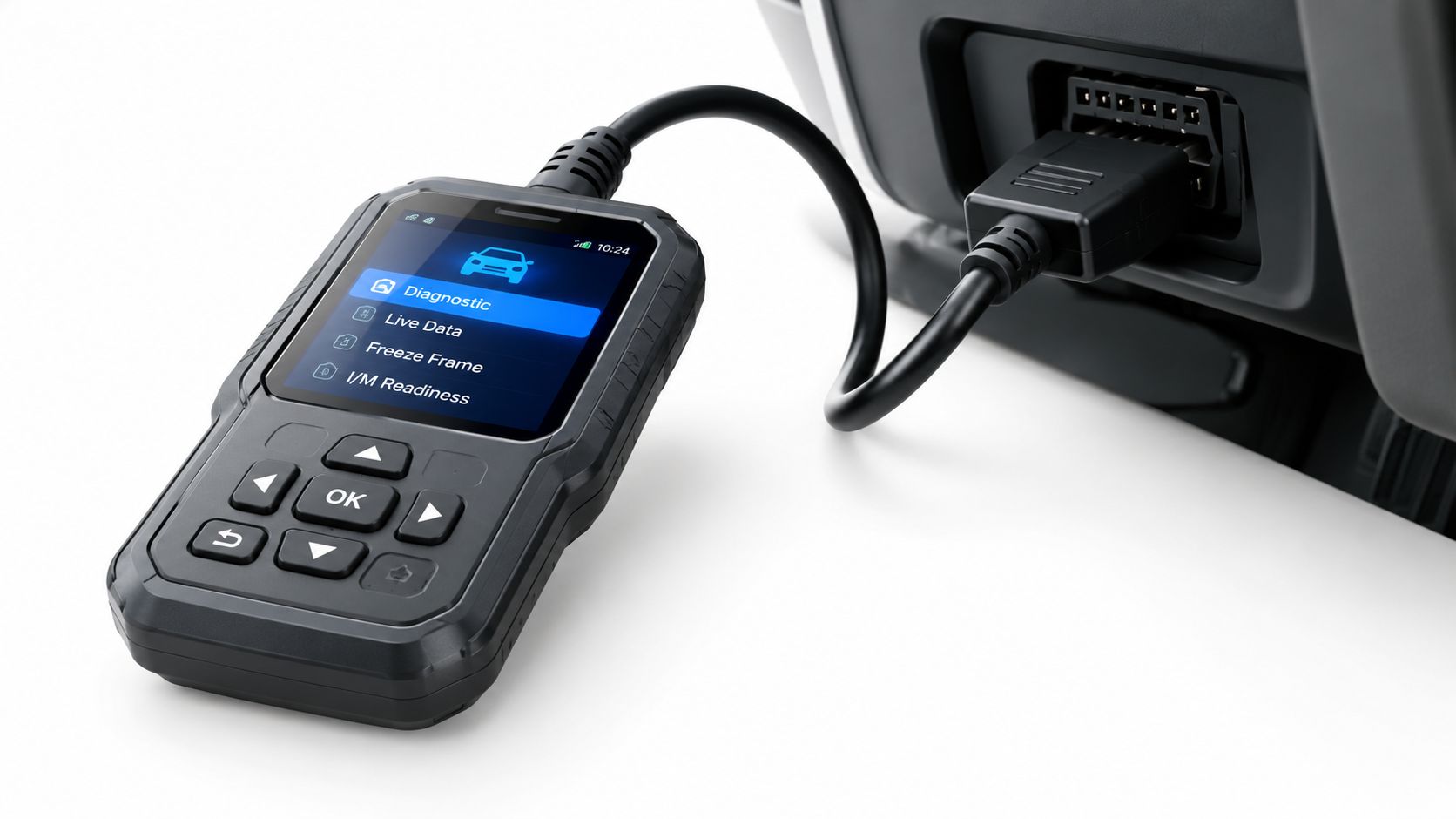
A driver clears the check-engine light the night before, rolls in expecting a cleaner result, and gets surprised when the car still is not ready. OBD readiness monitors need time and real driving conditions to reset, so a quick erase rarely helps (BAR reference guide).
“Not ready” is not the same as “clean”
EPA guidance treats an unset readiness code as unknown emissions status because the onboard diagnostics have not completed the conditions needed to evaluate one or more systems (EPA text). The car may run well, but the system still has not finished proving that its emissions checks are complete.
If a battery was disconnected or replaced, the monitors can take time to come back online. EPA guidance says drivers should allow a week or two of driving before testing so the system can reset properly (EPA text). In the bay, that delay is often the difference between a valid test and a wasted trip.
Clearing codes can leave a vehicle temporarily untestable. It does not improve the car, it only wipes out the evidence the system needs to confirm readiness.
What the monitors are watching
The OBD system checks catalytic-converter efficiency, oxygen-sensor feedback, evaporative emissions, and misfire control, and those checks do not always finish during a short idle or a quick run around the block (BAR reference guide). A vehicle can sound normal and still fail the readiness check.
For a plain-English breakdown, see what OBD readiness monitors mean for your test.
The practical lesson is simple. If the repair is done, the next step is a complete drive cycle and enough time for the monitors to finish on their own. Resetting again only pushes the problem back.
How to Prepare Your Vehicle for Inspection Day
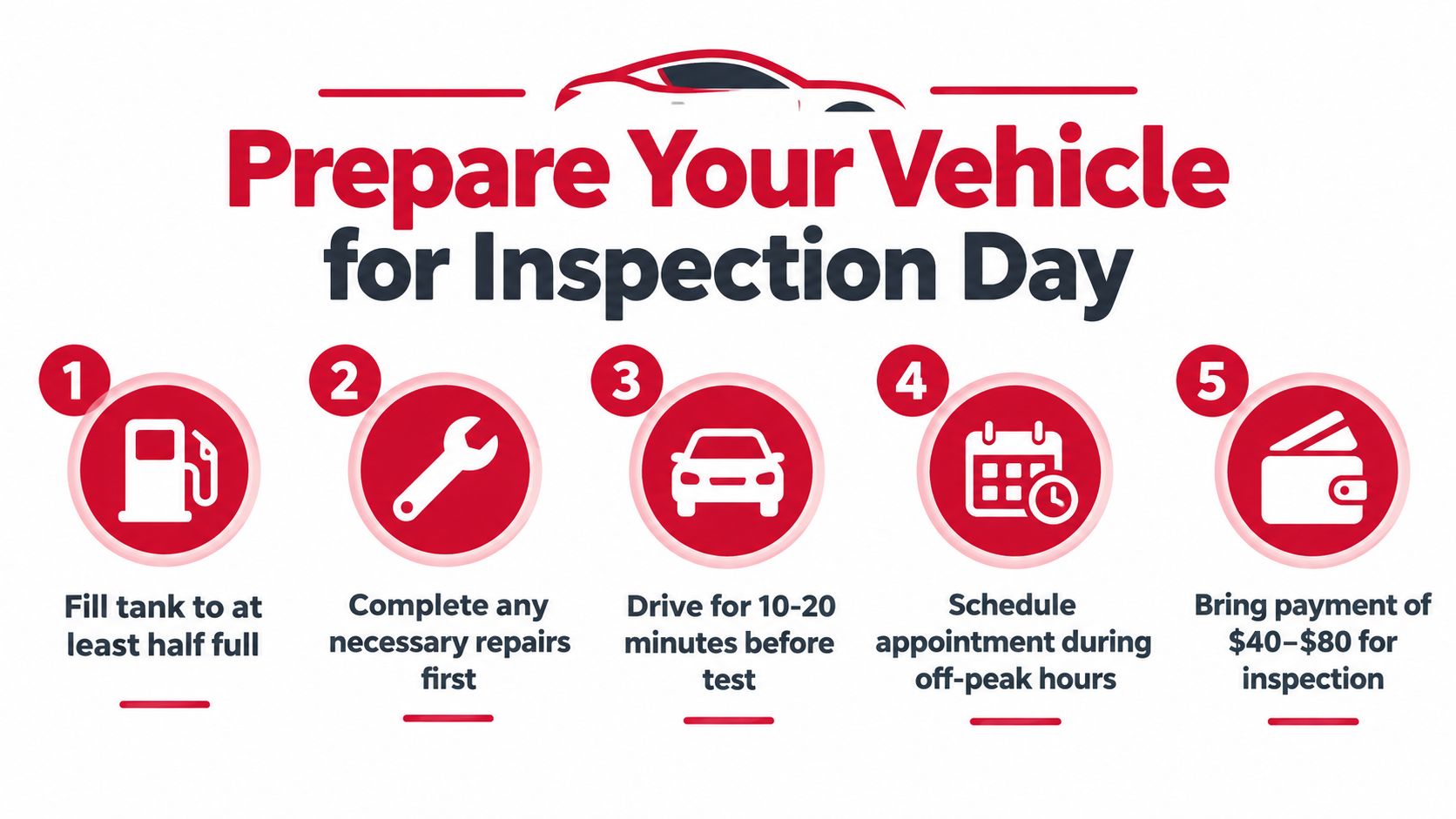
A clean test starts with a car that is warm, settled, and not doing anything odd. California's procedure calls for normal operating temperature, a low idle for at least three minutes right before the tailpipe inspection, and accessories such as air conditioning turned off. That keeps the reading stable and avoids noise in the test result.
What to do before you leave home
Start with the basics. If the check-engine light is on, do not assume the car will pass just because it drives fine. If you recently replaced the battery, cleared codes, or had software updated, tell the technician before the test starts. That context helps them judge whether the OBD monitors are still finishing their cycle or whether the vehicle is not ready.
- Warm the vehicle properly: Drive long enough for the engine to reach normal operating temperature before arrival.
- Avoid last-minute code clearing: A reset can leave the monitors incomplete and make the vehicle untestable.
- Complete a mixed drive cycle: City and highway driving give the system a better chance to finish its checks.
- Keep the car mechanically safe: The vehicle should run normally, without warning signs that make testing unreliable.
- Mention recent battery work or repairs: That context helps the station interpret readiness and timing.
What not to do on test day
Do not pull in right after a cold start if you can help it. A cold engine can run richer and temporarily change hydrocarbon and carbon monoxide output, which is why the warm-up requirement exists (BAR Smog Check Manual). Keep fans, A/C, and other accessories off unless the technician tells you otherwise. Airflow across the exhaust stream can also make the sample harder to read.
A better test day is plain and predictable. The engine is fully warmed up, the monitors are complete, and nothing has been disconnected in the last minute. If the car sat for more than two weeks before test day, plan a 20-minute highway drive first, because evaporative monitors often need that sustained run to complete.
Streamlining DMV Registration and Renewals
Passing the test is only half the errand. The time saver is getting the certificate and the registration work handled without bouncing across town to a crowded office. Fire House Smog also offers California DMV registration renewal services with on-site tag issuance, which means a driver can often handle the inspection and the registration step in one stop (DMV renewal services).
Why one-stop processing matters
The usual alternative is simple but slow. You pass the smog check, then you take the paperwork somewhere else, then you wait again. That split workflow creates the most common delay in the whole process, especially for people renewing on a deadline or transferring a car into California.
On-site registration services are useful for renewals, ownership transfers, and related registration tasks because the station can move from test result to paperwork without a second trip. That helps with the exact situations that trip people up most, including out-of-state vehicles that need a California-appropriate registration path.
Where this helps the most
This setup is especially practical for drivers who don't want to spend a morning in DMV lines. It also helps fleet operators and working owners who need the car back in service quickly, not just certified. When the station can print tags and handle the registration work in-house, the clean air test stops being an isolated task and becomes part of a completed transaction.
A good local workflow looks like this, even when the details vary by case:
- The vehicle is tested.
- The result is confirmed.
- The registration work is processed at the same location when eligible.
- The driver leaves with fewer loose ends.
That's the operational advantage, not just the convenience factor. Fewer handoffs mean fewer chances for paperwork to sit on someone's desk or for a valid test to expire while you're waiting on the next step.
Navigating Retests and Common Testing Questions
A failed result does not always mean the repair was wrong. Sometimes the fault is minor and computer-related, sometimes it is hardware, and sometimes the vehicle was not ready to be evaluated yet. In practice, that distinction matters because incomplete readiness is not the same thing as a confirmed emissions failure.
Failed test, incomplete monitor, and check-engine-light failure
These are three different outcomes, and drivers run into trouble when they treat them as one issue.
- Failed emissions: The vehicle was tested and did not meet the standard.
- Check-engine-light failure: The car cannot pass with the light on under California rules.
- Incomplete monitors: The computer has not finished its self-tests, so the emissions status is still unresolved.
The next move depends on which one you have. A genuine emissions failure points to diagnosis and repair. An incomplete monitor points to driving conditions, not parts replacement. A check-engine-light failure means the underlying issue has to be corrected before the station can certify anything.
What to ask before you return
If the vehicle failed once, do not guess at the next step. Ask whether the problem was readiness, a fault code, or a visible emissions issue. Ask whether the vehicle needs a specific drive cycle after repair instead of another quick reset.
Diesel trucks and larger RVs add a different set of concerns. California's rules still set the eligibility line, but station equipment and bay access can limit what fits comfortably, so calling ahead matters for unusual vehicle types. That point matters most for motorhomes, where the vehicle may qualify on paper but still need a station that can handle its size.
The fastest retest is the one you don't rush. Let the monitors finish, fix the underlying fault, and bring the car back under stable conditions.
A station's retest policy can help, but it does not replace readiness or repair quality. The better question is whether the first visit was done under the right conditions and whether the vehicle is ready to produce a valid result.
If you want a local station that handles the inspection without repair upselling and can also process registration after the test, visit Fire House Smog. It is a practical option when you need a clean air test, a clear explanation of readiness, and a faster path to your sticker in one stop.