
You've unpacked the boxes, changed your address, and maybe figured out which grocery store you like. Then the vehicle paperwork catches up with you. Your car still has an out-of-state title, your registration timing suddenly matters, and California wants more than just a signature and a fee.
That's often where difficulties arise. The official checklist sounds simple until you're standing at the counter missing a VIN verification, holding a smog report from the wrong time window, or learning that the base fee was only the smallest part of the total bill. An out of state title transfer in California is manageable, but it works best when you treat it like a document process first and a DMV visit second.
Drivers in Antioch and the rest of East Contra Costa County run into the same friction points over and over. The paperwork has to line up. The smog certificate has to be current. The title has to be usable, not just “some proof that I own the car.” If there's a lien, an electronic title, or a missing signature, the process slows down fast.
This guide is written the way I'd explain it to a new California resident who wants to get it done once, not twice. It focuses on what happens on the ground, what commonly fails, and how to move through the smog and registration parts with fewer surprises.
Table of Contents
- Welcome to California Now Let's Tackle the DMV
- Your Document and Fee Checklist Before You Start
- The Core Steps for a Smooth Title Transfer
- Understanding California's Smog Check Requirement
- Navigating Common Transfer Complications
- Skip the DMV Line and Finalize Your Registration
Welcome to California Now Let's Tackle the DMV
You unpack the house, update your insurance, and assume the car can wait until you have a free morning. Then the California paperwork starts asking for a VIN verification, a California smog certificate, and an original title that may still be sitting in a folder from your last state.
California handles an out of state transfer as a new vehicle record, not a simple address change. The state needs to confirm the vehicle, confirm ownership, and enter it into California's title and registration system correctly. That is why new residents get tripped up. The issue usually is not one big problem. It is a missed signature, a lender hold, a smog delay, or showing up before the vehicle record is ready to be finalized.
Where transfers usually go off track
The patterns are pretty consistent at the counter and at the smog station.
- The title is not ready for transfer: It may be signed in the wrong spot, missing a release, or still held electronically or by a lender.
- The owner handles steps in the wrong order: People head to DMV first, then learn they still need VIN verification or a California smog certificate.
- Out of state assumptions cause delays: A registration card, an old emissions test, or incomplete ownership paperwork often does not satisfy California's requirements.
- The move pushes the car paperwork down the list: By the time drivers deal with it, they are rushed and more likely to miss something.
One practical rule helps more than any checklist. Do not make your final DMV trip until the title path is clear, the smog question is settled, the VIN verification plan is set, and your California insurance is active.
A more effective approach
The smoothest cases follow the same order. First, confirm you have the ownership document that California can accept. Next, find out whether the vehicle will need smog. Then handle the verification and bring a complete packet for registration, instead of hoping the clerk can patch together missing pieces at the window.
That last part matters. California counter staff can tell you what is missing, but they usually cannot solve missing ownership records, lender delays, or failed smog issues on the spot.
At Fire House Smog, we see this every week. The official instructions tell you what the state requires. The primary frustration is knowing which item will stop the file from moving. If you want to avoid the common paperwork misses before you head out, use this California title transfer paperwork checklist.
Treat the transfer like a compliance file, not a quick errand. That mindset saves repeat trips.
Your Document and Fee Checklist Before You Start
Preparation saves more time here than speed. Before you leave home, you want a complete packet and a realistic idea of cost.
The documents that should be in your folder
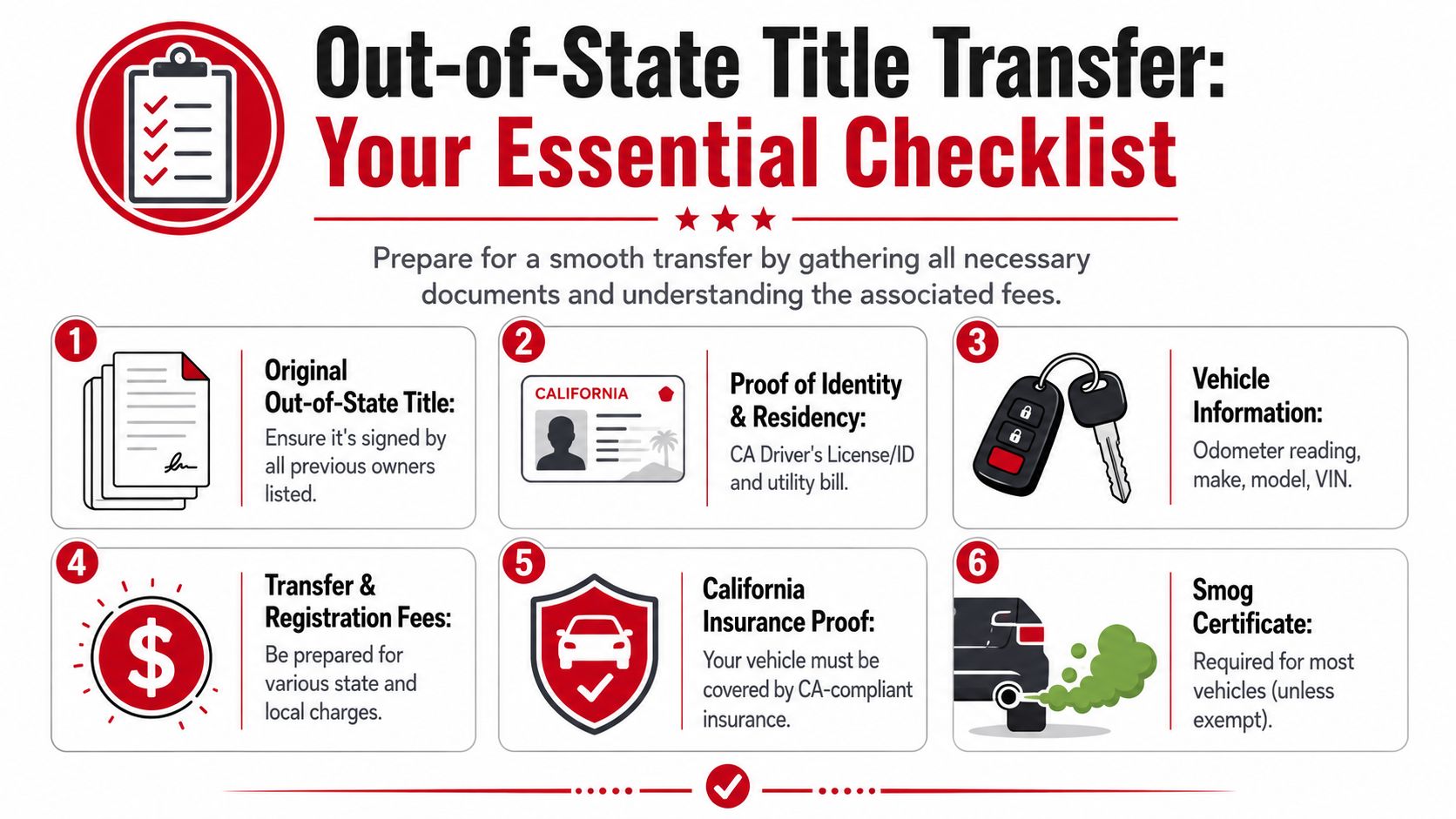
For a standard California out of state title transfer, the required core items are consistent:
- Form REG 343: This is the Application for Title or Registration.
- Form REG 31: This is the Verification of Vehicle form.
- Original out-of-state title: It should be properly signed where required.
- California insurance proof: The vehicle must be covered under California-compliant insurance.
- Smog certificate if your vehicle isn't exempt: This belongs in your packet before the final filing stage.
- Ownership support if needed: If your situation involves a lien, a missing title, or title release issues, bring the supporting records that connect ownership clearly.
If you want a practical prep sheet before you go, this title transfer paperwork checklist is useful for organizing the documents people most often forget.
The fees people underestimate
A lot of drivers hear “title transfer fee” and assume that's the whole story. It isn't.
According to California title transfer fee guidance, the base title transfer fee is $15, but the total cost typically ranges from $150 to $300 or more once use tax, registration fees, and possible penalties are added. The same source states that use tax is calculated at 7.25% to 10.25% of the purchase price, depending on the local jurisdiction.
Here's the practical breakdown:
| Cost item | What to expect |
|---|---|
| Base transfer fee | $15 |
| Use tax | 7.25% to 10.25% of purchase price, depending on location |
| Title only fee | $27 for a new title only |
| Duplicate title | $27 if a duplicate is needed |
| Registration fee if registration has lapsed | Approximately $62 |
| Total transfer cost | Often $150 to $300 or more once all required charges are included |
The checklist that prevents repeat trips
Use this as your last review before you leave:
- Check the title first: Make sure you have the original out-of-state title and that signatures are complete.
- Confirm insurance is California-compliant: Out-of-state proof often creates confusion if the policy hasn't been updated.
- Know your smog status: If your vehicle isn't exempt, don't assume you can finish the process without the certificate.
- Bring the vehicle information with you: VIN, make, model, and odometer details need to match the paperwork.
- Budget beyond the headline fee: Use tax usually changes the total more than people expect.
- Watch the clock: The same fee guidance notes that failing to complete the transfer within 30 days of purchase may trigger added penalties.
Bring originals when possible. A clean folder with complete paperwork beats trying to reconstruct ownership details at the counter.
The Core Steps for a Smooth Title Transfer
A lot of new California residents hit the same snag. They have the car, the old title, and a free morning, then find out one missing form or one unresolved title issue stops the whole filing.
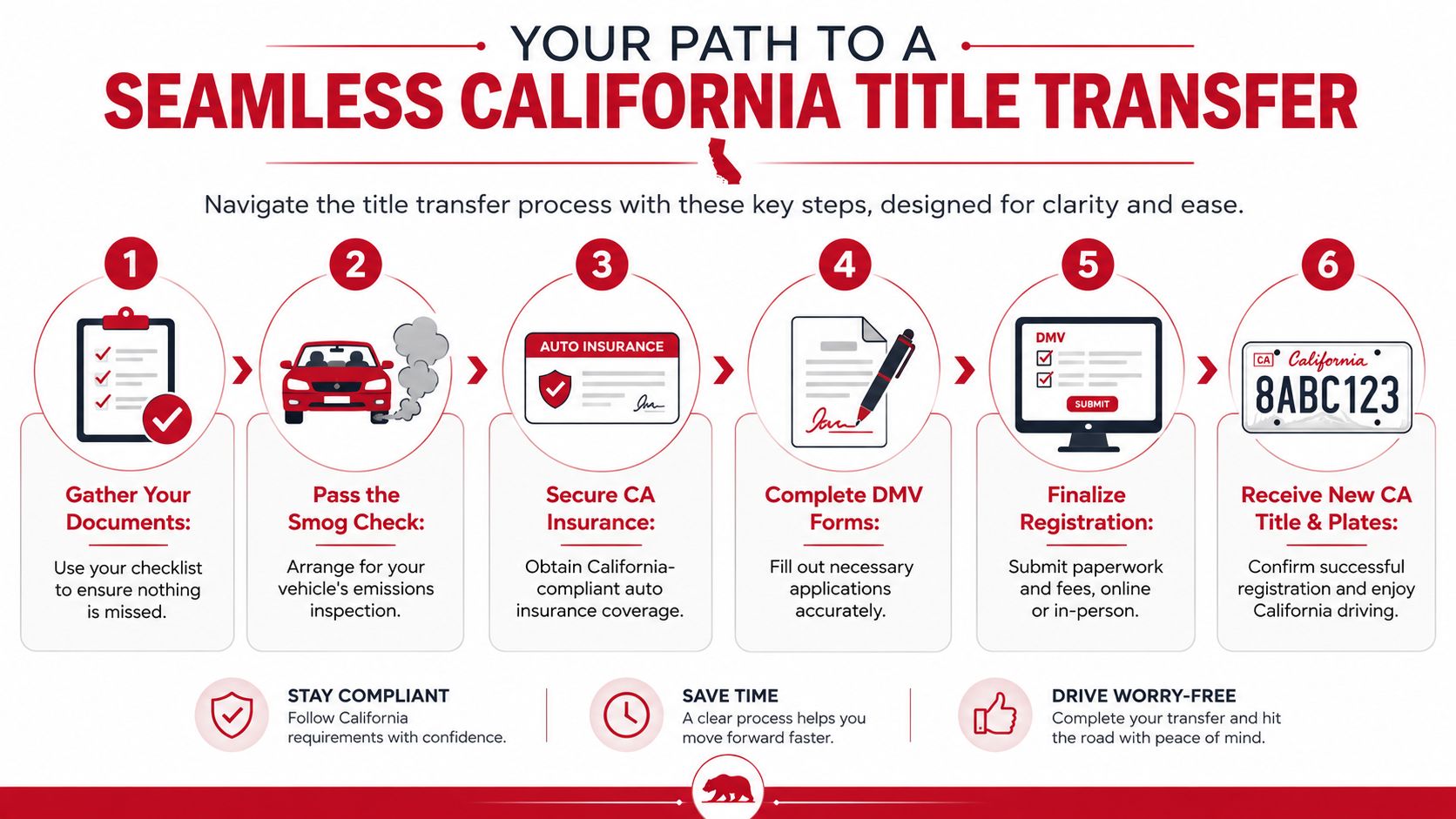
The process goes much better when you handle it in the order DMV staff and verification partners see every day. The usual filing packet includes Form REG 343, the original out-of-state title, a VIN verification on Form REG 31, a California smog certificate if your vehicle needs one, and payment for taxes and registration charges. The part the official instructions often gloss over is sequence. If you do the expensive or time-consuming steps before checking ownership problems, you can waste a trip.
Start by confirming the title can actually transfer
Check the title before you book anything.
Look for missing seller signatures, mismatched names, lienholder information that was never released, or a title that was replaced by another document in the prior state. I have seen people complete a smog check and line up at DMV only to learn the title was signed in the wrong place or still showed a bank interest. California will not clean that up for you at the counter. You have to fix it with the seller, lender, or prior state first.
If the ownership chain is not clean, stop there and resolve it before spending time on the rest.
Get the VIN verification done early
For an out-of-state vehicle, California usually wants the vehicle physically verified so the VIN and basic vehicle details match the paperwork. That is where Form REG 31 comes in.
This step causes more repeat trips than people expect because it depends on the vehicle being present and the paperwork matching what is on the car. If the VIN plate is hard to read, the door label is missing, or the title has one digit off, the application can stall until that gets sorted out. If you want a plain-English overview of what the inspector is checking, Fire House Smog has a helpful guide to California VIN verification requirements.
A simple rule helps here. Do not save VIN verification for the same visit when you plan to file everything else unless you are certain the car and documents match.
Complete smog before your final DMV filing
Handle smog before you make the registration trip, not after.
Out-of-state owners often assume a recent inspection from another state will carry over. California does not treat it that way. If your vehicle is one that needs a California smog certificate, DMV will expect that result to already be on file when you finish the registration. At Fire House Smog, this is usually the point where people get frustrated, because they thought they were one signature away from being done and instead learn the vehicle still needs a California test.
The trade-off is simple. Doing smog earlier adds one errand up front, but it prevents a failed DMV visit later.
Submit the application with a complete packet
Once the title is clean, the VIN is verified, and smog is handled if required, bring the full packet for final processing:
- Form REG 343
- The original out-of-state title
- Completed VIN verification on Form REG 31
- Smog certification, if required
- California insurance information
- Payment for fees and taxes
Small mistakes matter here. A blank odometer field, a name that does not match your ID, or a title signed with cross-outs can send the file back for correction.
Here is the order that usually saves the most time:
| Best order | Why it works |
|---|---|
| Review the title first | Catches deal-breaking ownership issues before you spend time elsewhere |
| Do the VIN verification | Identifies mismatches while the vehicle is available for inspection |
| Complete the smog check if required | Prevents the last-step registration stall that catches many new residents |
| Fill out REG 343 carefully | Reduces avoidable clerical rejections |
| Go to DMV or registration partner with everything ready | Gives the clerk one complete file instead of a partial application |
In practice, the hard part is rarely the law itself. It is the missing signature, the unreadable VIN, or the smog step left for last.
Understanding California's Smog Check Requirement
A lot of out of state transfers stall at smog. The owner has the title, the forms, the insurance, and then learns California will not finish registration until the vehicle clears emissions.
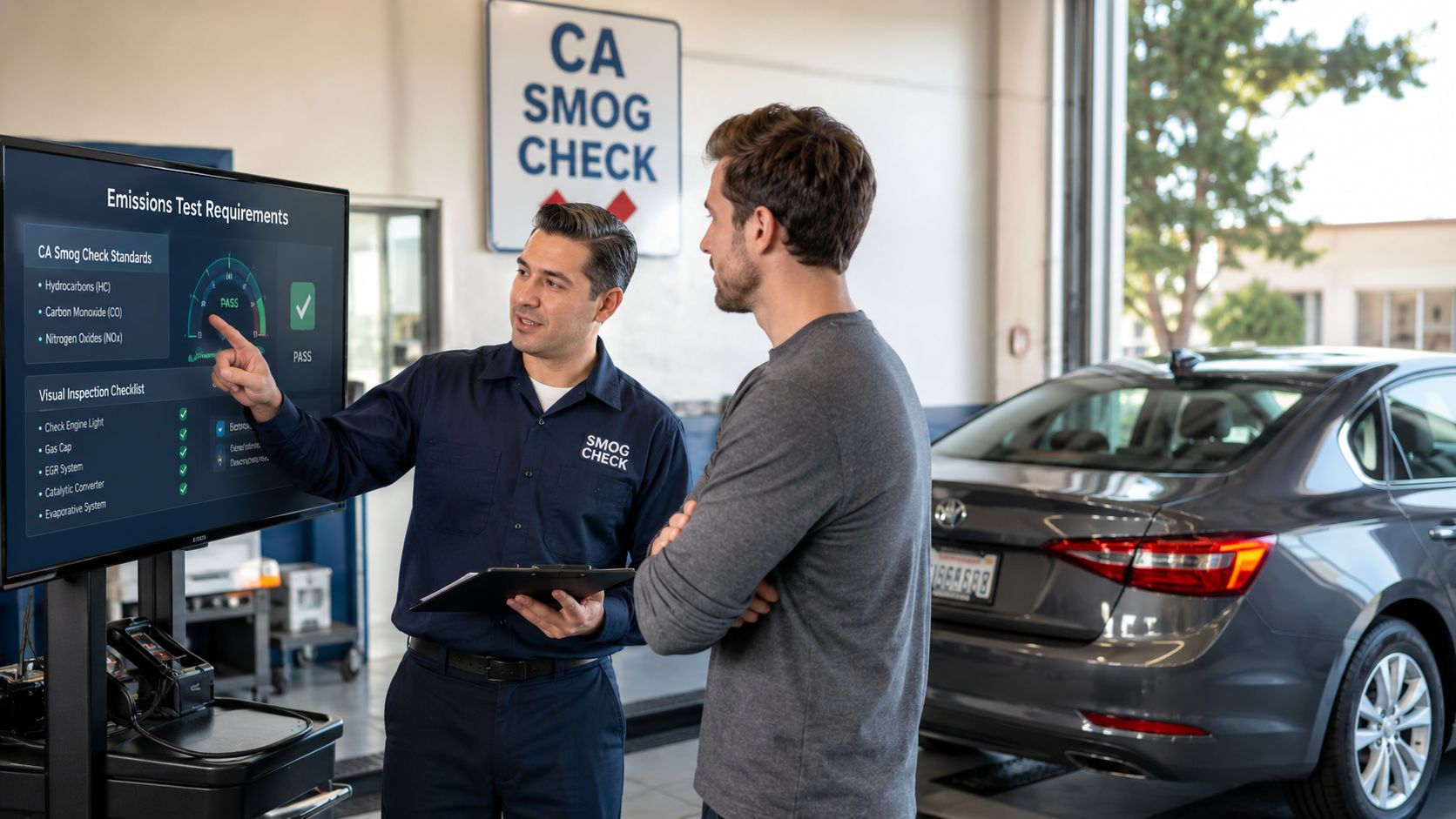
For most out of state vehicles being registered in California, a California smog certification is required before the transfer can be completed. The test has to be done at a California-licensed station, and some vehicles are directed to a STAR-certified station. The DMV summary sounds simple. The part it does not spell out is what usually goes wrong on the ground: people rely on an old test from another state, test the car too late, or assume their vehicle is exempt without confirming the rule that applies to their model year and fuel type.
Which vehicles usually need it
Start with the practical assumption that your vehicle needs a smog check unless you know it falls into an exemption. Electric vehicles are commonly exempt. Older vehicles can also fall outside the requirement based on model year and fuel type.
That is the point people should verify early.
If you drive a gasoline vehicle, a diesel vehicle, or a hybrid, and it is not clearly exempt, plan for a California smog check as part of the transfer. That keeps you from building the rest of the file around a guess.
What a STAR station changes
A STAR station is not just a regular shop with a different sign. It is a station that meets California's tighter program standards for certain inspections. If your registration case calls for a STAR inspection, going to a non-STAR shop first wastes time and money because you may have to test again at the correct facility.
That is one of the failure points the DMV website tends to gloss over. The rule is easy enough to read. The frustrating part is learning you tested at the wrong place only after you are trying to wrap up registration.
Using a shop that handles these transfer cases every day helps because staff can flag those issues before you start. At Fire House Smog, the station is STAR-certified, test-only, and also provides DMV registration services, so a new California resident can get the smog done and then finish the registration step in the same place once the paperwork is ready.
Before you go further, this video gives a helpful visual sense of the smog process and what drivers should expect.
What to do if the vehicle doesn't pass
A failed test does not kill the title transfer. It delays final registration until the emissions problem is corrected.
The first job is to read the failure report carefully and find out whether the issue looks like overdue maintenance, a sensor problem, or a repair issue that needs diagnosis. At a test-only station, the result is usually easier to trust because the shop is not trying to sell the repair in the same visit. That matters when you are deciding what to fix first and whether the car is worth further work.
One practical mistake to avoid is going straight to the DMV after a failed test and hoping the clerk can make an exception. They cannot finish the registration without a passing result when smog is required.
Treat smog as a gatekeeper item. Once it is handled correctly, the last registration step gets much easier.
Navigating Common Transfer Complications
Straightforward transfers move well. The difficult ones usually fail for predictable reasons.
According to expert data on California out-of-state transfer failures, approximately 30–40% of out-of-state title transfers face initial rejection due to documentation gaps, most often a missing valid smog certificate, incomplete REG 343 sections, or missing VIN verification on REG 31. The same source notes that when a vehicle has a lien, obtaining the title from the out-of-state lienholder can add 2–4 weeks to the process.
That tracks with what causes the most stress in real life. It's usually not a mystery rule. It's an incomplete chain of ownership or a record that California can't immediately accept.
When the title isn't clean and ready
A title can be “missing” in more than one way.
Sometimes the owner can't find it. Sometimes the lender still holds it. Sometimes the seller signed part of it but not all of it. Leased vehicles can create another version of the same problem because the registered user and the legal owner aren't always the same party on paper.
When that happens, don't rush into the DMV hoping they'll sort it out from your registration card. They usually need actual ownership documentation that supports the transfer.
Common trouble spots include:
- Active liens: The lender may need to release the lien or provide title-related paperwork before California can issue a clean new title.
- Seller errors: Missing signatures, name mismatches, or incomplete transfer sections can stop the filing.
- Lost title situations: You may need to work back through the original state or lienholder before California can finish the conversion.
- Leased vehicles: The leasing company's role changes the document path, so confirm what ownership papers they require before you schedule anything.
Why electronic titles create delays
Electronic title systems create a newer kind of problem. A driver assumes the title exists because the prior state shows ownership electronically, but California may still need a physical title or a paper version issued through the originating state's process.
The verified data specifically notes that e-title incompatibility is a growing bottleneck and that California does not universally accept out-of-state e-titles without additional verification steps. In practical terms, this means a transfer can stall even when ownership is legitimate, because the paperwork format isn't yet usable.
If your prior state used an electronic title, verify early whether a paper title must be requested. That question can save weeks.
The important takeaway is that complications aren't random. They fit patterns. If your vehicle has a lien, an electronic title, a lease structure, salvage history, or title gaps, pause and solve the ownership record before you worry about counter service speed.
Skip the DMV Line and Finalize Your Registration
Individuals can handle the forms. What they want to avoid is the long, uncertain final step.
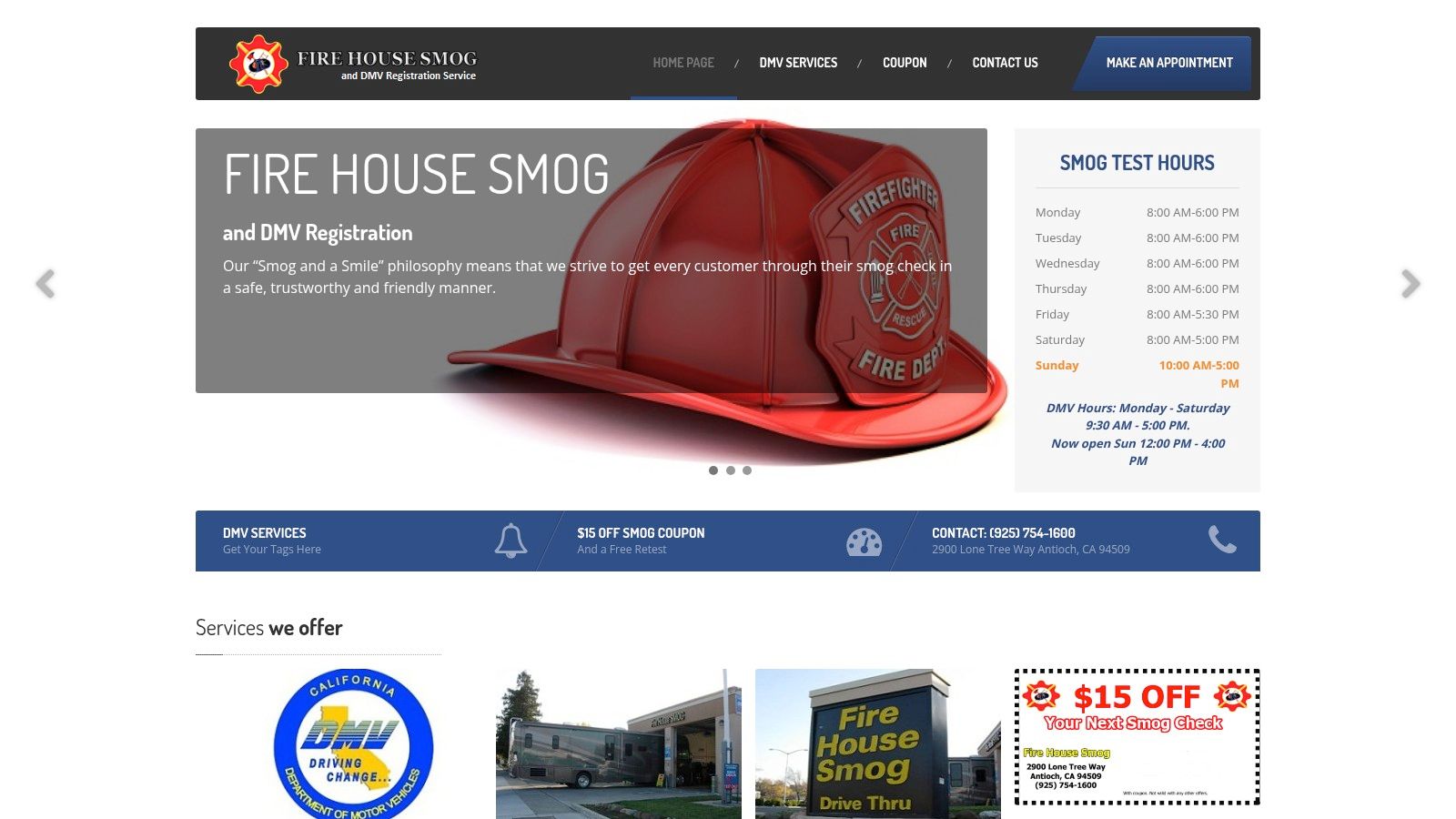
That's the part where a licensed registration service changes the experience. Instead of making the DMV counter your only option, you can use a provider that's authorized to process registration work after the vehicle clears the required compliance pieces.
What an easier final step looks like
For many Antioch-area drivers, the most practical route is to complete the smog inspection, bring the ownership paperwork together, and finalize the registration side through a local DMV service provider rather than waiting for a traditional office appointment.
A provider offering DMV registration services near Antioch can handle renewals, ownership transfers, and related registration tasks on site when your documents are in order. That matters because the final step of an out of state title transfer is rarely difficult in theory. It's difficult because of lines, scheduling, and avoidable return trips.
Local details that matter
If you're in East Contra Costa County, the practical details are straightforward:
- Location: 2900 Lone Tree Way, Antioch, CA 94509
- Phone: 925-754-1600
- DMV service hours: Monday through Saturday 9:30 AM to 5:00 PM, Sunday 12:00 PM to 4:00 PM
- Smog availability: Seven days a week, with extended evening and weekend coverage
- Service type: STAR-certified test-only smog inspections and licensed DMV registration services
- Vehicle scope: Cars, trucks, and some RVs, subject to equipment and size limits
The on-the-ground advantage is simple. You can deal with emissions compliance and registration-related processing through the same location, and the test-only setup avoids the tension that comes with mixing diagnostics, repair sales, and paperwork under one roof.
For a new resident, that often makes the whole process feel more manageable. You're not guessing which step to do next. You're finishing the transfer with a complete packet and a shorter path to plates, stickers, and updated California records.
If you want a practical place to handle the smog and registration side of an out of state title transfer, Fire House Smog offers STAR-certified smog checks and licensed DMV registration services at 2900 Lone Tree Way in Antioch. Call 925-754-1600 to confirm your vehicle type, paperwork needs, and current DMV service availability before you stop by.