
Vehicle Registration Services: The Complete Owner’s Guide
Many California registration renewals can start online, but most still depend on an in-person smog check, and title transfers usually require a physical visit. For many owners, a hybrid service center that combines digital preparation with on-site compliance checks is the most efficient path.
You submit the form, enter your payment details, and expect the process to be finished. Then the system reminds you that your vehicle needs a smog certification, or you discover that an unpaid parking ticket is blocking renewal. If you recently bought the car, the task becomes more involved because the state must verify ownership, fees, identity, and vehicle records.
That gap between online convenience and offline requirements explains why local vehicle registration services remain useful. A capable provider can help you identify the transaction, check the paperwork, complete required inspections, and issue registration materials when the state permits on-site processing.
Table of Contents
- The Reality of Modern Vehicle Registration Services
- Understanding How Vehicle Registration Works
- Types of Services You Will Encounter
- Comparing DMV Offices and Authorized Service Centers
- The Advantage of Integrated Smog and Registration Services
- How to Prepare for Your Registration Appointment
The Reality of Modern Vehicle Registration Services
You open your laptop, place the renewal notice beside it, and prepare to pay. The form seems straightforward until it asks for smog certification. Then the practical problems appear: a dashboard warning light, an unpaid parking ticket, or an address that no longer matches the DMV record.
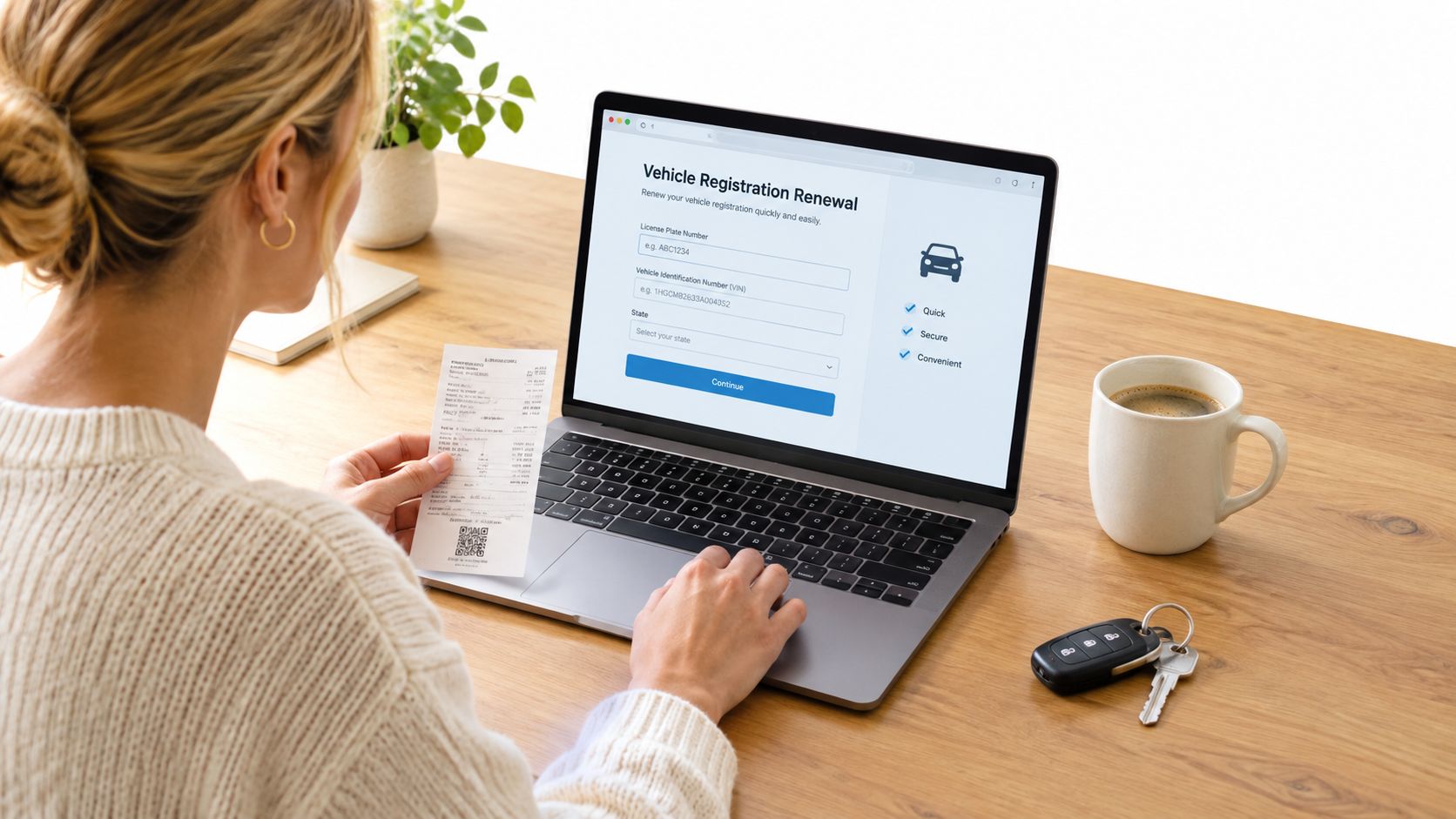
California's DMV states that a smog inspection is generally required for vehicle registration or renewal, with listed exceptions. Renewal can also be blocked by unresolved items such as missing smog certification or unpaid parking tickets. The California DMV renewal requirements show why registration is more than an online payment.
Why online renewal can stop halfway
A digital application can accept your information and payment, but it cannot inspect the vehicle. If smog certification is required, an approved inspection must happen before the renewal can be completed. The DMV also offers an online process for Planned Nonoperation filings. These filings can be submitted up to 60 days before expiration or 90 days after expiration.
The process works like a bridge with two sides. Online tools handle forms, account details, and payment, while a physical location may still need to verify the vehicle, review documents, or issue registration materials. Vehicle registration services connect those steps, so you do not have to treat each requirement as a separate search.
Practical rule: Treat online payment as one step in the transaction, not automatic proof that your registration is finished.
The local service advantage
A local center can first identify whether you need a renewal, transfer, replacement item, or compliance correction. That check helps you avoid joining the wrong queue or submitting the wrong paperwork. In Antioch and nearby East Contra Costa communities, the same visit may address emissions compliance and DMV-related documents.
The most useful hybrid process follows a clear order: prepare digitally, confirm requirements in person, then finish the remaining state transaction through an authorized channel. A provider that handles both sides can catch a missing document before it turns into a delayed notice or another trip.
Understanding How Vehicle Registration Works
Vehicle registration connects a specific vehicle to an owner record. It gives the state a way to identify the vehicle, track legal responsibility, collect required fees, and confirm that the vehicle meets applicable rules. A registration card or sticker is only the visible result of that larger administrative record.
The system developed gradually. New York became the first U.S. state to require vehicle registration on April 25, 1901. California followed later that year, Massachusetts became the first state to issue plates in 1903, and by 1918 all 48 contiguous states were issuing license plates. By 1910, 36 states required motor vehicle registration, and by 1921 every state required annual registration, according to the District of Columbia DMV vehicle registration history.
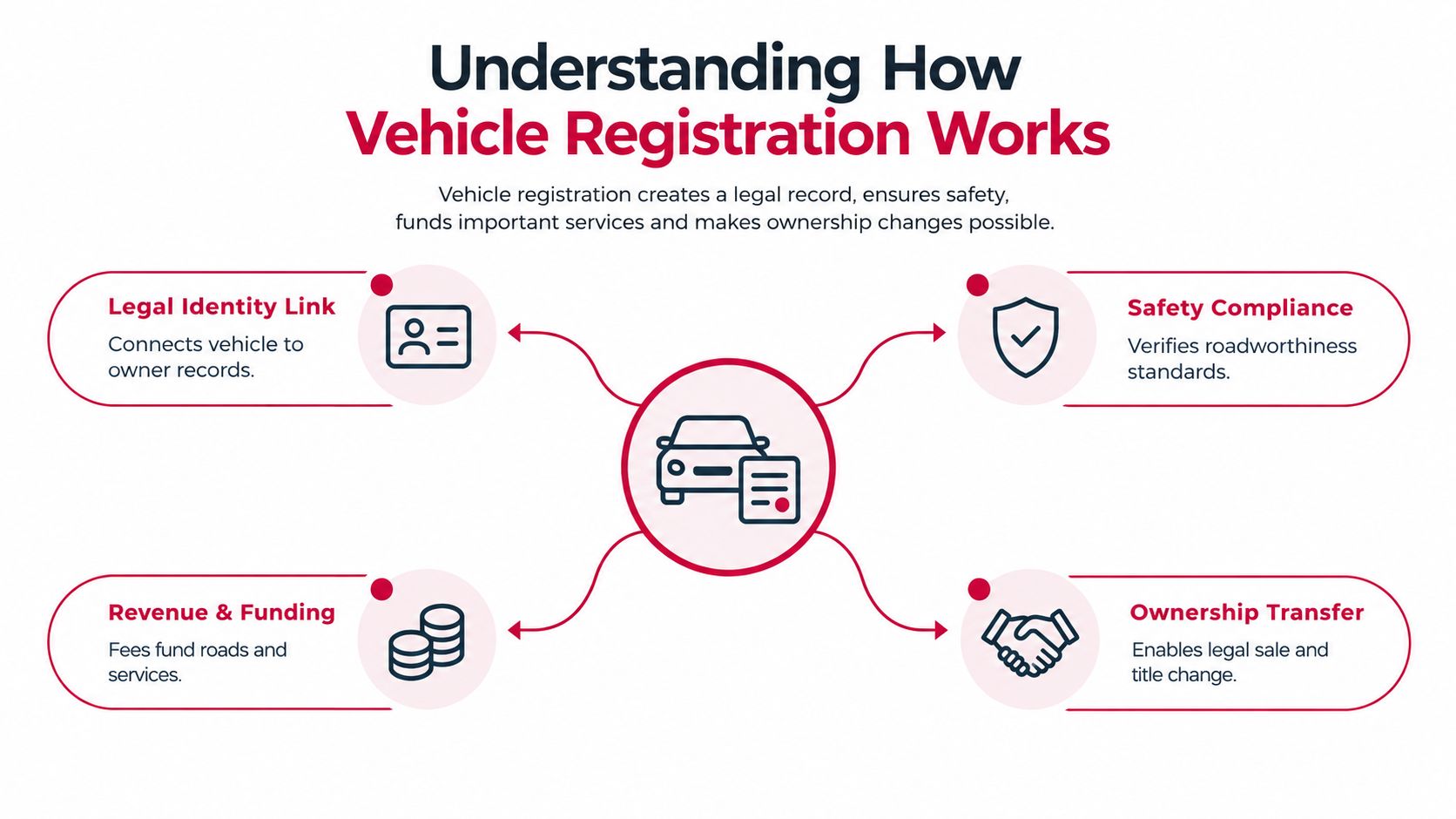
Four parts of the registration record
Registration rules differ by state, but the underlying functions are familiar:
- Legal identity link: The record connects the vehicle identification number, owner information, and address.
- Compliance check: The state can require emissions, insurance, safety, or other conditions before allowing registration.
- Fee collection: Registration charges support the administration of transportation systems and related public services.
- Ownership evidence: Registration and title processes help document a sale, transfer, or change in responsibility.
Registration and title aren't identical. The title primarily establishes ownership, while registration authorizes the vehicle to operate under the applicable state rules. A sale can therefore require both ownership paperwork and a new registration record.
Why California feels especially procedural
California combines electronic renewal with emissions compliance. The DMV says smog certification is required for registration or renewal in many cases, and the renewal won't proceed when required certification or other obligations remain unresolved. That means the process can involve a website, a physical inspection lane, and a state record review.
For a plain-language explanation of the renewal step, see this guide to what vehicle registration renewal involves. Understanding the distinction between payment, certification, and final issuance helps prevent a common mistake: assuming the transaction is complete because the first online step succeeded.
Types of Services You Will Encounter
The right service depends on what changed. A routine renewal keeps an existing registration active. A transfer changes the vehicle's ownership record. A Planned Nonoperation filing changes how the vehicle may be used. An out-of-state transaction may require documents from both the previous jurisdiction and California.
Routine renewals
A renewal is usually the most familiar transaction. You confirm the vehicle and owner information, satisfy any emissions or administrative requirements, pay the applicable charges, and receive updated registration materials. If the DMV record is clear and the vehicle is eligible, the process can be straightforward.
It can become complicated when the vehicle requires a smog check, the address is outdated, a ticket remains unpaid, or the DMV requests additional review. A service provider can help separate those issues instead of treating every delay as a payment problem.
Ownership transfers
Buying or selling a vehicle creates a different workflow. New York DMV guidance shows that first-time registration can involve plate or transfer fees, a title certificate fee, and use tax in many counties. Customers may receive one or two plates and a registration window sticker at the counter or by mail, depending on the transaction. New York's registration and title instructions illustrate why a transfer requires more than changing a name on a renewal form.
Expect to discuss:
- Proof of ownership: Title, bill of sale, or other documents required by the jurisdiction.
- Vehicle identity: VIN and related information must match the official record.
- Fees and taxes: The transaction may include separate registration, title, transfer, or use-tax charges.
- Plates and documents: The state may issue new plates, stickers, registration cards, or title materials.
Special filings and cross-state moves
Planned Nonoperation is useful when an owner intends not to operate a vehicle on public roads for a defined period. It isn't a substitute for ordinary renewal when the vehicle will continue being driven.
Out-of-state purchases and moves require extra care because the vehicle may need to leave one state's record and enter another's. Insurance proof, identity, address, emissions status, title documents, and temporary operating permissions can all matter. Ask the provider exactly which transaction they handle before arriving, especially if you bought the vehicle privately or the title is held by a lender.
Comparing DMV Offices and Authorized Service Centers
A DMV office is the official state channel. An authorized service center is a private provider permitted to handle specified transactions through a state partnership or license. Neither option eliminates the state's requirements, but the experience can differ sharply.
The California DMV estimates kiosk renewals can be completed instantly when all requirements are met. It estimates about one week for online and phone renewals and about two weeks for mail renewals, while noting that extra review can extend processing. These California DMV processing estimates make the operational trade-off clear: a local in-person provider can be useful when immediate document verification or on-site issuance is available.
Side-by-side comparison
| Feature | DMV Office | Authorized Service Center |
|---|---|---|
| Authority | Direct state agency service | Private provider authorized for specific DMV transactions |
| Routine renewal | Available through eligible channels | Often available on site, subject to authorization and eligibility |
| Document review | State staff review the transaction | Staff can check paperwork before submission or issuance |
| Smog compliance | Usually handled separately from the DMV counter | Some centers combine emissions testing with registration services |
| Complex transfers | Handles state transactions under DMV procedures | May handle transfers, plates, and related paperwork within its approved scope |
| Processing result | May be mailed or completed through an eligible state channel | On-site materials may be issued when requirements are satisfied |
| Best fit | Unusual cases requiring direct state adjudication | Eligible transactions where speed, guidance, and convenience matter |
Choosing the right channel
Use the DMV when your case involves an issue only the state can resolve, such as a disputed record, unusual ownership problem, or formal correction. An authorized center may be more practical when your documents are complete and you need a renewal, transfer, sticker, or related service without navigating multiple locations.
Check the provider's exact authority before you go. Some centers handle only renewals, while others can process ownership transfers or plate-related work. The phrase California DMV registration services should mean more than general paperwork help. Ask whether the location can complete your specific transaction and whether it can issue the needed item on site.
Before you leave home: Confirm the transaction type, required documents, inspection status, payment method, and service hours.
The Advantage of Integrated Smog and Registration Services
California's hybrid reality is easiest to understand through the emissions requirement. You can begin a renewal online, but if the vehicle needs a smog check, a physical inspection still stands between your payment and a completed registration. A title transfer adds another layer because the provider must verify ownership documents and transaction details.
An integrated center reduces handoffs. Instead of visiting a smog station, discovering a problem, then arranging a separate DMV appointment, you can have the emissions result and registration paperwork handled within one coordinated workflow, where the provider is authorized to offer both services.
Why the timing matters
A California DMV kiosk renewal can be completed instantly when all requirements are satisfied. Online and phone renewals are estimated at about one week, while mail renewals are estimated at about two weeks, according to the DMV's renewal processing information. Those estimates don't mean every case will take that long, but they show why same-visit processing can matter to someone whose expiration date is close.
The bottleneck often isn't the payment screen. It's the missing smog certification, incorrect document, unresolved fee, or incomplete transfer record. An on-site provider can focus attention on those eligibility checks before the customer leaves.
What happens if the vehicle fails
A failed smog inspection changes the plan, but it doesn't necessarily end the process. The owner may need repairs and a retest before the emissions requirement is satisfied. A center that performs the inspection and handles registration paperwork can explain what remains outstanding, while a test-only operation keeps testing separate from repair sales.
Fire House Smog is one local option that provides STAR-certified test-only smog inspections and California DMV registration services at its Antioch location. Its listed services include renewals, ownership transfers, related plate or sticker handling, and a free retest under applicable site policy and coupon terms. Verify current availability and conditions directly with the provider.
The hybrid model in practice
The efficient sequence is usually:
- Check the DMV record: Identify the renewal, transfer, or filing and look for holds.
- Prepare the documents: Match names, addresses, VIN details, title information, and insurance records.
- Complete the physical requirement: Obtain the smog inspection or other required verification.
- Finish the authorized transaction: Submit the completed information and receive the registration item when eligible.
This approach doesn't remove state rules. It puts the digital and physical steps in the right order, reducing the chance of paying first and discovering later that the record still needs action.
How to Prepare for Your Registration Appointment
Preparation starts with identifying the transaction, not with searching for the nearest office. A renewal, transfer, replacement plate request, and Planned Nonoperation filing can require different documents and follow different timelines.
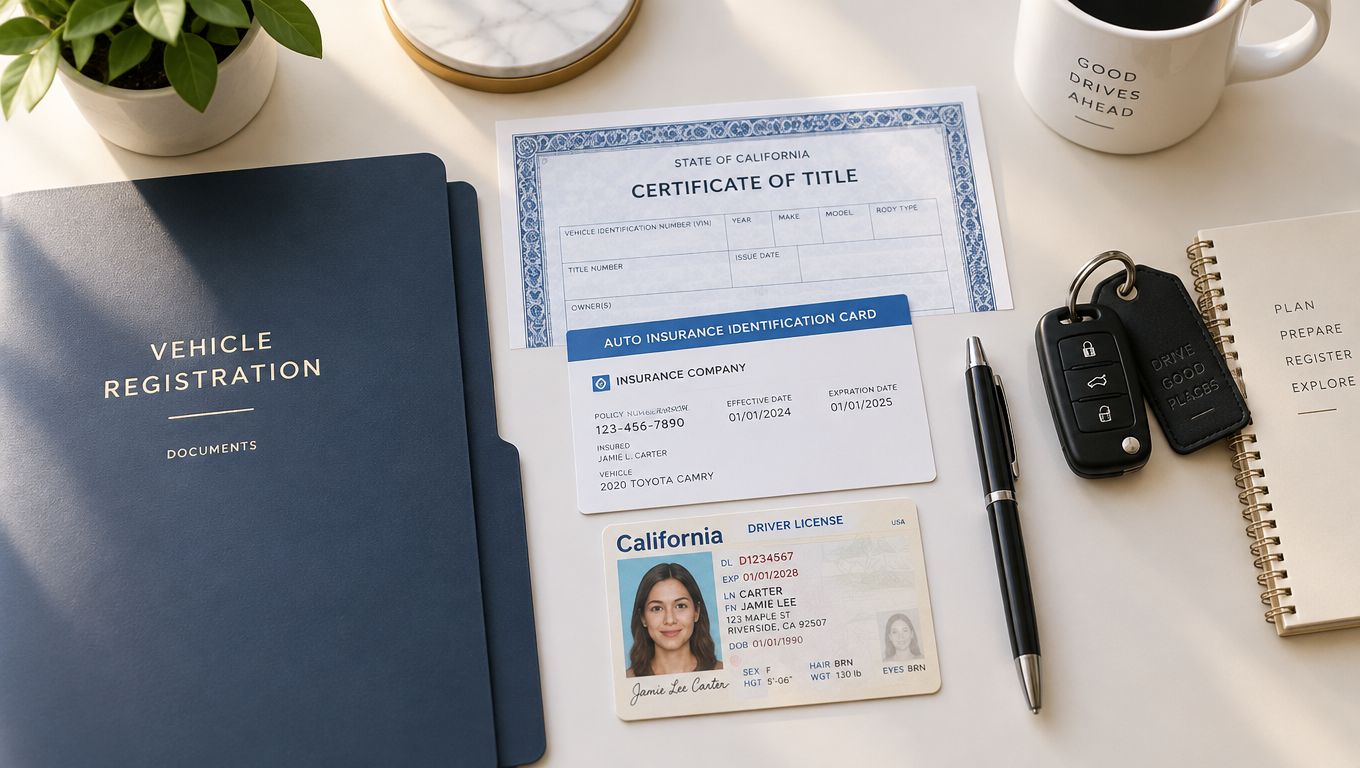
Bring the documents that match your situation. Your current registration, driver license or other identification, proof of insurance, title, and bill of sale may all be relevant, especially for a transfer. Keep the VIN and vehicle details accessible, and check that names and addresses are consistent across the paperwork.
Use this vehicle registration document checklist before leaving home:
- Renewal: Current registration, identification, insurance information, and any smog certification details.
- Ownership transfer: Title, bill of sale, buyer and seller information, identification, and payment method.
- Out-of-state vehicle: Prior title and registration, identity and address evidence, insurance, and any required inspection information.
- Problem record: Notices, receipts, parking-ticket resolution, or other documents connected to the hold.
If the vehicle has a check-engine light, address the issue before scheduling a smog test. Also confirm the center's current DMV hours rather than relying on its smog-testing schedule, since those services may operate on different timetables.
The following video can help you think through the paperwork and appointment process before you go.
Call ahead for unusual vehicles, out-of-state titles, lender-held documents, RVs, or transactions involving missing paperwork. A short conversation can reveal whether the provider handles the case and what you need to bring.
Fire House Smog offers STAR-certified test-only smog checks alongside California DMV renewals, ownership transfers, and related registration services at its Antioch location. Bring your documents, confirm the current service hours, and visit Fire House Smog to coordinate the inspection and registration steps in one place.