
Auto Diagnostic and Repair Antioch CA
That check engine light doesn't care that you're busy. Neither does a failed smog test, especially when you need the car back on the road and you don't want to throw money at parts you don't need. If you're looking for auto diagnostic and repair in Antioch, CA, the smart move is simple, get the problem confirmed first, then pay for the right fix, then retest only after the vehicle is ready.
Table of Contents
- What Auto Diagnostics Actually Involves
- How to Prepare Before Visiting a Repair Shop
- Choosing the Right Type of Station in Antioch
- Understanding Typical Costs and Timelines
- What to Do After Receiving Your Diagnosis
- Essential Questions to Ask Before Authorizing Repairs
What Auto Diagnostics Actually Involves
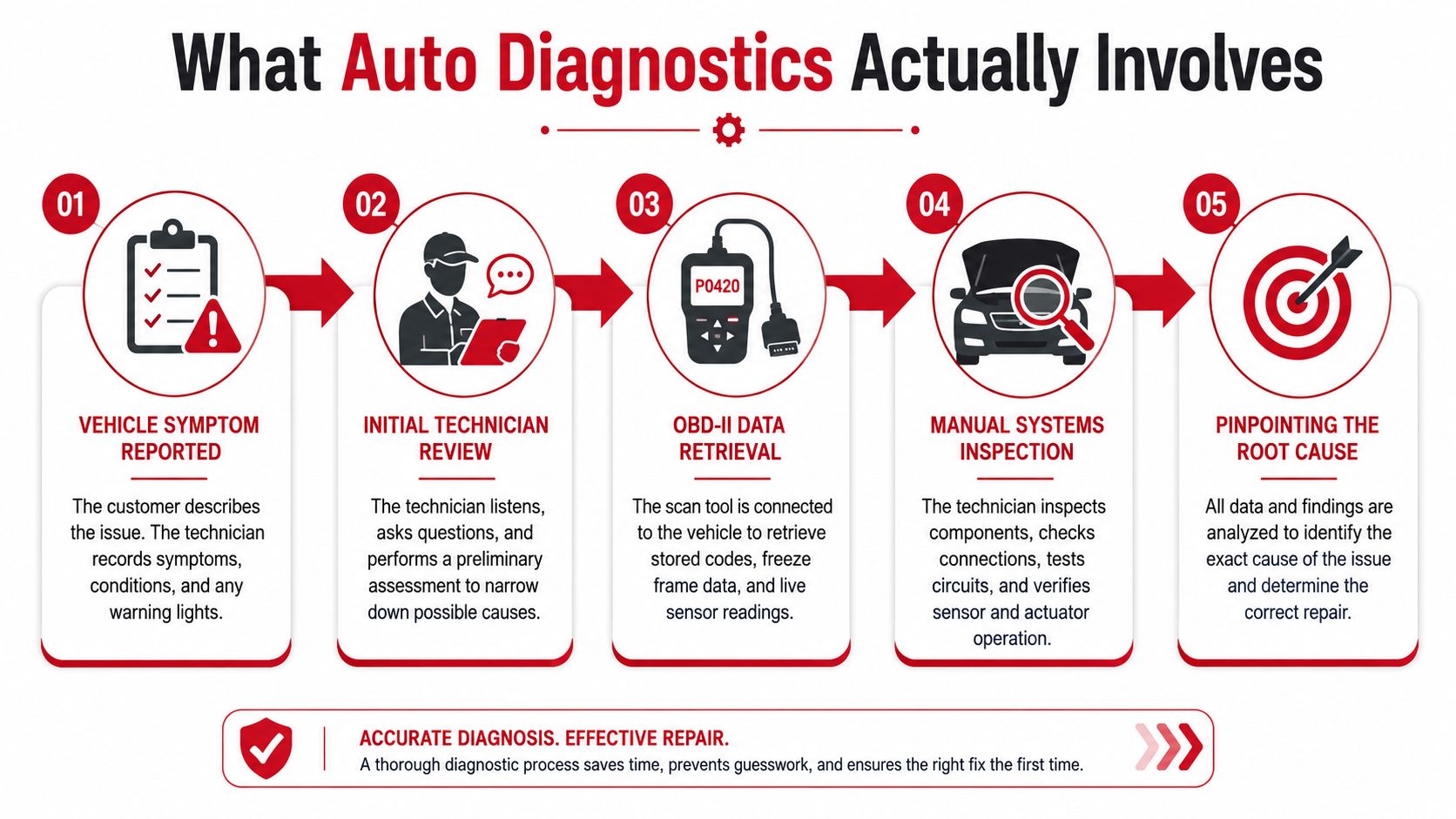
You pull into a shop in Antioch with a warning light on, or you just failed a smog test and want a fast answer. A good technician doesn't start by guessing. They start by pulling OBD-II data, checking the freeze-frame snapshot, and comparing live sensor values against what the car is doing on the bay floor.
Codes are clues, not verdicts
A fault code tells you where the computer saw a problem. It does not tell you which part should be replaced first. That's why a scan tool is only the starting point, not the finish line, in a proper auto diagnostic and repair Antioch CA workflow.
The best shops use the code as a map, then confirm the failure with manual inspection and symptom replication. If a car only acts up after warm-up, under load, or at idle, the technician has to see that behavior for themselves. Replacing the first part that “sounds right” is how people end up paying twice.
Practical rule: if a shop won't explain how it verified the failure, it's not really diagnosing, it's guessing.
The cleanest way to think about it is this. Scan the car, verify the symptoms, test the circuit or system, then decide on the repair. That order matters because modern drivability problems often share symptoms across several parts, and the wrong shortcut leads to the wrong invoice.
If you want a deeper look at why a vehicle can fail emissions for several different reasons, this guide on smog check fail reasons is worth reading.
How to Prepare Before Visiting a Repair Shop
A lot of diagnostic time gets wasted because the driver shows up with a vague story like, “It's been acting weird.” That doesn't help anyone. A better visit starts with a clean record of what happened, when it happened, and what the car was doing at the time.
Bring facts, not guesses
Write down the symptom the moment it shows up. Note whether it happened cold or hot, at idle or speed, with the A/C on, after fueling, or while climbing a hill. Those details help a technician reproduce the problem faster, which is the difference between a focused test and a wandering parts hunt.
Bring your recent maintenance history too. Oil changes, spark plugs, battery work, brake work, and any recent sensor replacement all matter because one repair can affect another system. If the car has aftermarket tuning, a modified intake, or a nonstock exhaust, say so up front. Technicians don't need a speech, they need the facts.
Have the car details ready
At check-in, give the VIN, the current fuel type, and any recent warning lights or failed inspections. If the car failed a smog test, hand over the paperwork and don't summarize it loosely. The exact failure result matters.
Bring the paperwork, not the memory.
I also tell people to show the technician any pattern. If the light comes on only after a tank of gas, or only after long freeway drives, say that. That's the kind of detail that turns a messy complaint into a useful diagnostic path.
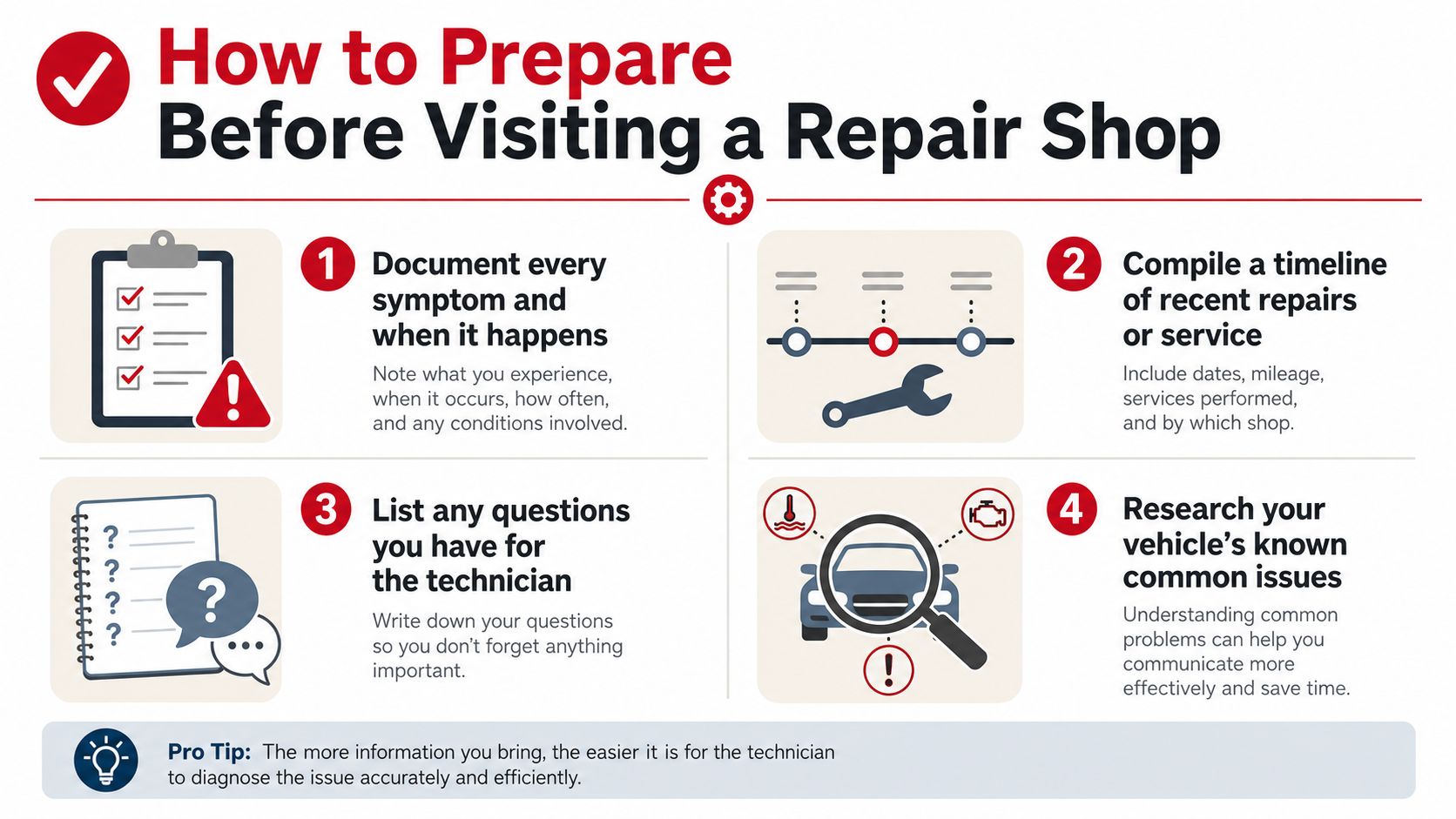
The goal is simple. Make it easy for the shop to verify the symptom, and you reduce the chance of paying for the wrong repair.
Choosing the Right Type of Station in Antioch
Not every problem belongs in the same lane. Antioch drivers usually deal with three different options, and mixing them up is how people waste time and money. A test-only smog station checks emissions compliance. A test-and-repair shop can both inspect and fix. A dealership service department usually sits in its own lane with brand-specific tools and procedures.
California's smog-check system is heavily segmented. As of December 31, 2025, the Bureau of Automotive Repair reported 2,031 Smog Check test-only stations, 3,992 test-and-repair stations, and 3,505 STAR stations statewide, plus 12,334 smog inspectors and 4,955 repair technicians California BAR licensing statistics. That scale is why station type matters. A test-only station is built for emissions verification, not repair sales. A test-and-repair shop can chase the fault and sell the fix.
Match the station to the problem
If you already know the car needs real mechanical work, start with a full repair shop. If you need an emissions test, a retest, or DMV-related paperwork after compliance work, a test-only station keeps the process cleaner because the incentives are different. Fire House Smog follows that test-only model, and its STAR-certified smog station information explains how that fits California's compliance structure.
| Station Type | Best For | Repair Services | Upsell Risk |
|---|---|---|---|
| Test-only smog station | Emissions testing, retests, compliance verification | No in-house repair sales | Lower, because the station isn't selling the fix |
| Test-and-repair shop | Diagnosis plus repair in one place | Yes | Higher, because the same shop diagnoses and repairs |
| Dealership service center | Brand-specific diagnostics and warranty work | Yes | Depends on the issue and the vehicle brand |
Use the station that fits the job. If you walk into a test-only lane expecting a repair estimate, you're at the wrong counter. If you need a precise diagnosis before you authorize any parts, a repair shop is the correct first stop.
Understanding Typical Costs and Timelines
Drivers hate diagnostic pricing because too many shops toss out a fee without explaining what it covers. That's a mistake. A proper diagnostic charge should buy actual testing, not a quick code read and a shrug.
Time depends on the complexity of the failure
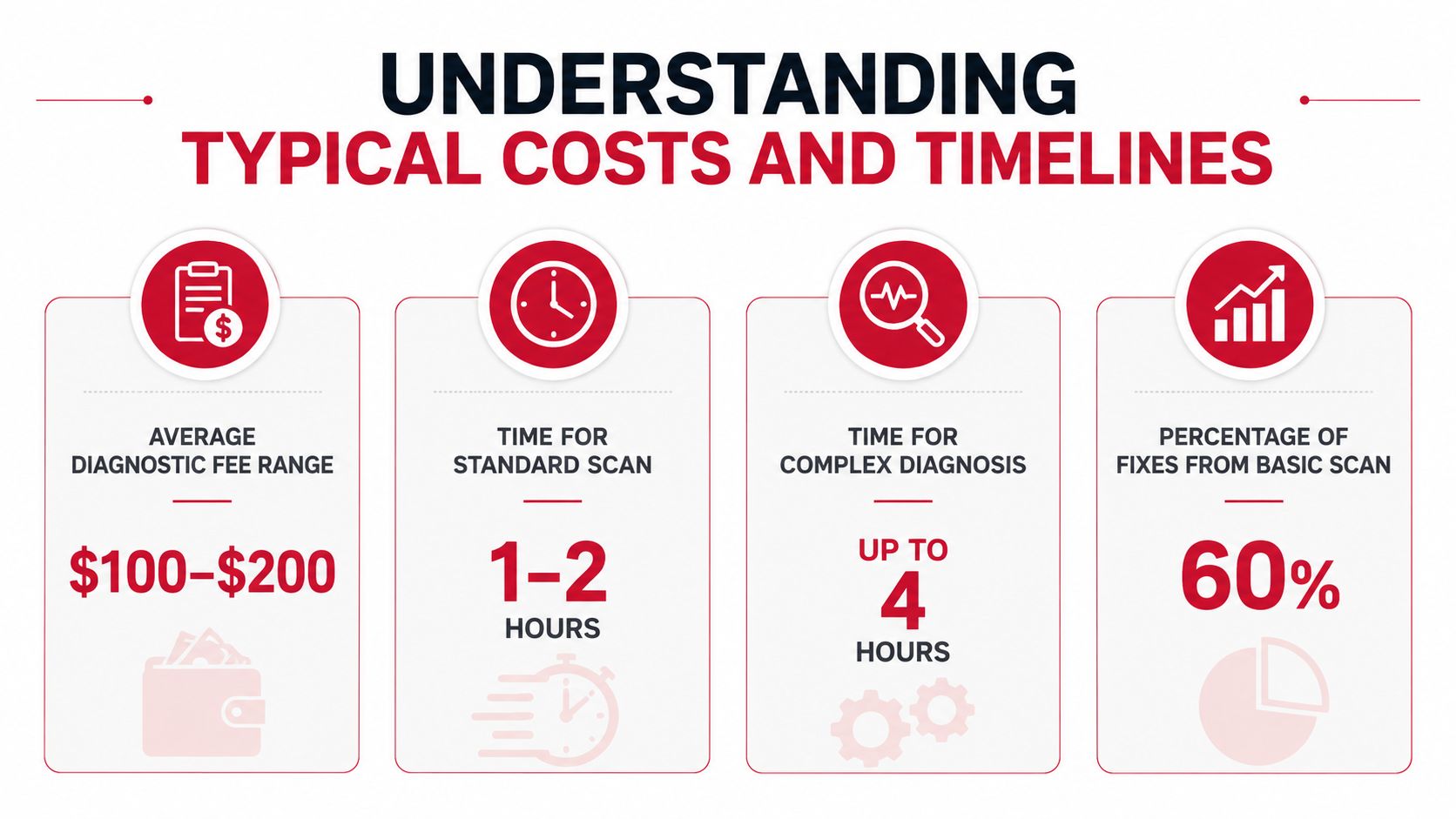
A basic diagnostic visit typically takes about 1 to 1.5 hours, while complex electrical or drivability cases can run 2 to 3 hours because the technician may need access to components, circuit testing, and live-data analysis diagnostic workflow benchmark. That timeline is normal when the shop is doing the work correctly.
What should you expect in return? Scan results, freeze-frame data, live sensor readings, and a clear explanation of what was tested next. If the shop jumps from code to part replacement without showing you the verification step, you're not buying diagnosis. You're buying hope.
Why a stepwise plan beats a flat guess
A flat diagnosis fee can be fine if the shop explains the phases. It's not fine if the fee comes with no plan. Ask how the technician will separate a sensor fault from wiring damage, vacuum issues, or a failing component elsewhere in the system. That sequence protects you from replacing the wrong part.
For smog-related work, budget expectations should reflect the difference between testing and repair. A test-only visit and a repair visit are not the same service, and the shop should tell you which one you need before anything gets authorized. If you want to compare smog pricing and service scope, the page on what a STAR smog check costs helps frame the decision.
A good estimate names the test, the likely cause, and the next verification step.
If the quote can't explain those three pieces, it's too fuzzy. Clear diagnostics save money because they stop the car from becoming a moving parts lottery.
What to Do After Receiving Your Diagnosis
A diagnosis without a decision is just paperwork. Once the shop tells you what failed, separate the job into three buckets, safety, compliance, and convenience. That order keeps you from spending money in the wrong place.
Start with the fault, not the favorite part
If the technician says a sensor circuit is bad, ask whether the code points to the sensor itself, the wiring, a connector, or an upstream issue. Don't authorize a replacement just because that part is common. Common doesn't mean correct.
This matters most after a failed smog test. The issue might be straightforward, or it might be part of a larger emissions problem that needs more testing before repairs begin. In California's regulated system, the right move is to confirm the failure path before chasing parts. That's how you avoid paying for a repair that doesn't clear the problem.
Decide when to move and when to pause
If the repair is safety-related, don't drag your feet. If it's an emissions issue and the explanation is thin, pause and ask for a second opinion. If the estimate includes several items, have the shop separate what's required now from what can wait.
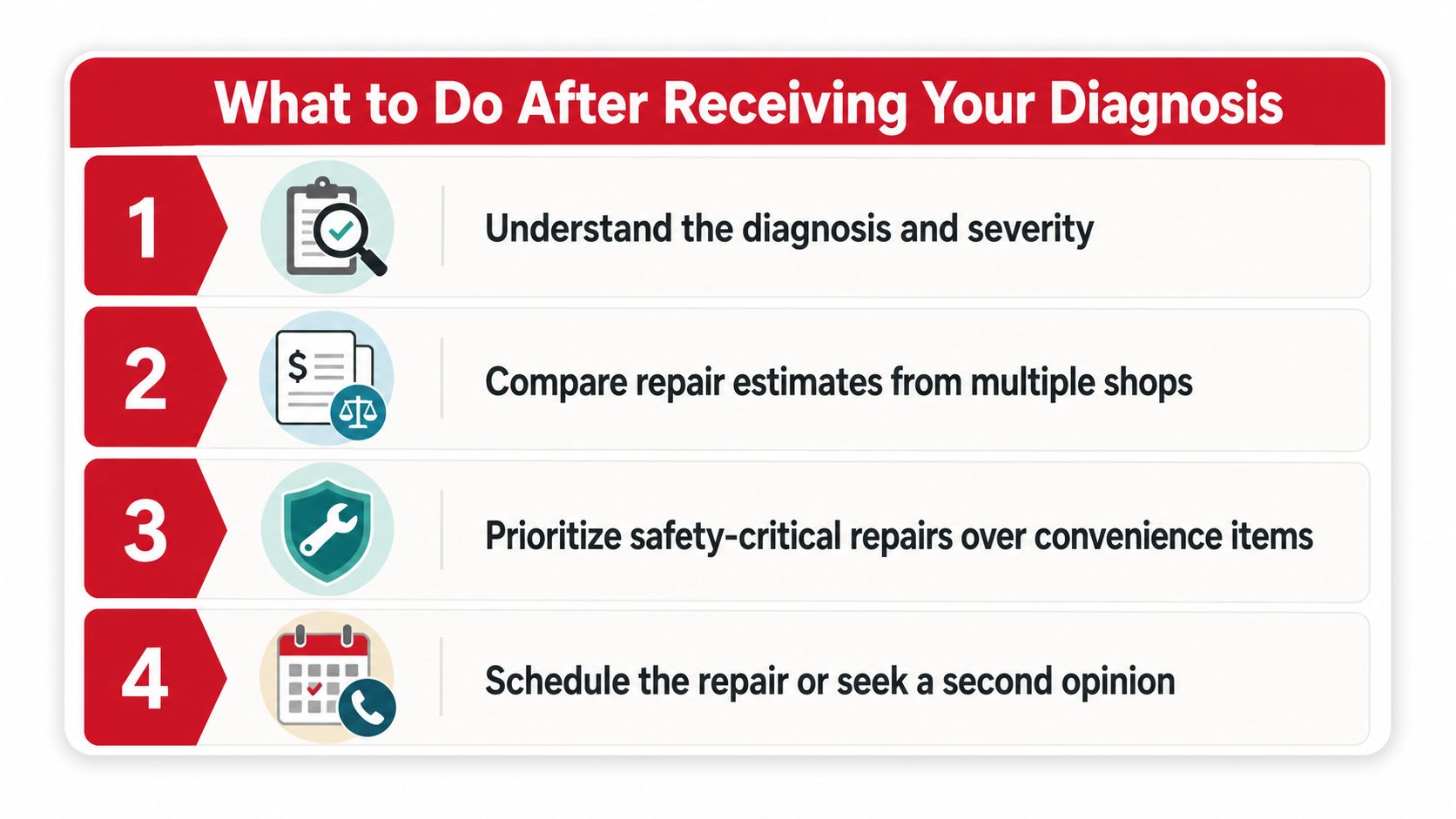
Here's the order I recommend:
- Confirm the diagnosis. Make sure the shop tested the problem, not just guessed at it.
- Check the severity. Safety-critical work comes first.
- Compare the repair path. If the issue is unclear or expensive, get another opinion.
- Plan the retest. Only retest after the actual cause has been fixed.
If the first repair doesn't solve the issue, stop and re-evaluate before stacking more parts onto the car. That's how bills grow without results. A disciplined diagnostic process saves the owner from paying for the same problem twice.
Essential Questions to Ask Before Authorizing Repairs
Most bad repair experiences start with one thing, the driver didn't ask enough questions. You don't need to sound difficult. You need to sound informed. The right questions force the shop to show its work.
Ask about the test, not just the part
Start with this. “What confirmed the failure?” Then ask, “What else did you rule out?” Those two questions expose whether the shop actually tested the problem or just jumped to the most likely culprit.
Follow with, “What's the labor broken into by phase?” If a shop can't explain how long the diagnosis, removal, repair, and verification each take, the estimate is too vague. Ask for the recommendation in writing before you agree to anything. That protects you if the repair doesn't solve the original complaint.
Ask different questions for smog-related work
For emissions issues, ask whether the repair is expected to address the specific fault code or only a common associated part. Those are not the same thing. A shop should also tell you whether the vehicle needs further diagnostic troubleshooting before any parts are replaced.
If the answer sounds like a sales pitch, keep asking.
Warranty matters too. Ask what happens if the repair doesn't fix the original issue, and ask whether the shop will recheck the same fault without charging you again for the same diagnosis. That's especially important when the first visit ends in a failed smog test and the root cause isn't obvious.
For Antioch drivers who want a test-only lane instead of a repair sale, Fire House Smog fits that role by handling emissions checks and DMV registration services without mixing in repair work. That separation is useful when you want compliance handled cleanly and you're already working with a mechanic on the fix.
If you need a straight answer on an emissions problem, or you want to handle the smog side without getting pulled into unnecessary repair pressure, visit Fire House Smog and use the Antioch test-only station for a clean, compliance-focused step forward. Bring your paperwork, ask the right questions, and let the diagnosis point you to the next move instead of letting guesswork drive the bill.