
Smog Check for Older Cars: 2026 CA Guide & Prep Tips
You open the DMV renewal notice, see the smog requirement, and immediately start doing math in your head. Is the old car going to pass. Is this going to turn into a repair bill. Did that battery disconnect last month just create a new problem.
That anxiety is common, especially when the vehicle is older but still runs fine day to day. Plenty of owners assume a car that drives well will breeze through the test, then get blindsided by an emissions failure, a readiness issue, or a rule they thought didn't apply to “classic” vehicles.
A smog check for older cars in California gets easier once you separate rumor from rule and prep the car for the test it will receive. The practical side matters just as much as the legal side. A warm engine, a complete drive cycle, and choosing the right testing path can save a lot of wasted time and unnecessary repair work.
Table of Contents
- That DMV Notice Arrived What Now
- California Smog Rules for Older Cars Explained
- Preparing Your Vintage Car for Its Smog Check
- The STAR Test Process for Pre-2000 Vehicles
- What to Do If Your Older Car Fails the Smog Check
- Your Antioch Smog Check Partner Fire House Smog
- Frequently Asked Questions About Older Car Smog Checks
- Do I need a smog check to sell an older car
- Can historic plates make my car exempt
- How long is a smog certificate valid
- What is the difference between test-only and test-and-repair
- Do all older cars get the same kind of smog test
- What is the best last-minute thing I can do before the appointment
- If my older car fails, do I have any options besides paying for repairs right away
- If my exempt older vehicle doesn't need biennial smog, can I ignore emissions equipment
That DMV Notice Arrived What Now
Most owners go through the same sequence. First comes denial. “This thing's old, but it's maintained.” Then comes the internet search spiral. One site says older cars are exempt. Another says they're not. A friend swears special plates fix the problem. None of that helps when registration is due.
The first thing to do is slow down and identify what kind of “older car” you have under California rules. A seventies car sits in a very different category than a late nineties sedan. An older diesel follows different rules than an older gasoline car. A transfer of ownership can trigger a requirement even when a routine renewal might not.
That's where people lose money. They approve repairs before confirming the actual requirement, or they go into a test with a cold engine, stale oil, or recently cleared codes and turn a manageable situation into a failure.
Practical rule: Treat the smog check like a specific inspection procedure, not a general judgment on whether your car is “good” or “bad.”
Older vehicles can still pass cleanly. The ones that struggle usually have one of three problems. The owner misunderstood the rule, the car wasn't prepared for the test conditions, or the first failure was handled poorly.
If you're holding that notice right now, the path is straightforward. Confirm whether the car is required to test, prepare it like an older vehicle instead of a modern one, understand what the station is going to do, and know your options if the first result isn't what you wanted. That approach keeps the process calm and keeps you from paying for work you may not need.
California Smog Rules for Older Cars Explained
A lot of confusion starts with one bad assumption. Owners hear “older car” and assume California treats every older vehicle the same. It doesn't.
The exemption line that matters most
For gasoline vehicles, the cutoff is simple. 1975 and older are exempt from the biennial smog check. 1976 and newer usually are not. That is why owners of late seventies, eighties, and nineties cars get caught off guard. The car may feel vintage, but under California registration rules it is still in the testing program, as reflected in California's current classic car smog rule coverage.
Fuel type changes the answer too. Many diesel vehicles follow a different year cutoff, and weight matters. Electric vehicles and motorcycles are outside the regular smog check program. Hybrids are not automatically exempt just because they are partly electric.
That distinction matters at the counter and at the test station. I have seen owners spend money chasing tune-up parts before confirming whether the car needed a test, or what kind of test applied.
A quick reference table
| Vehicle Type | Model Year | Smog Check Required? |
|---|---|---|
| Gasoline | 1975 and older | No for biennial smog requirement |
| Gasoline | 1976 and newer | Yes |
| Hybrid | 1976 and newer threshold applies within the biennial program | Yes |
| Diesel under 14,000 lbs | 1997 and older | No |
| Diesel under 14,000 lbs | 1998 and newer | Yes |
| Electric | Any model year | No |
| Motorcycle | Any model year | No |
Special situations owners miss
Registration event matters almost as much as model year.
A car can be old enough to confuse people and still avoid a regular renewal test for a period of time if it is relatively newer by DMV standards. California uses a smog abatement fee for many vehicles in their first several model years instead of requiring a physical inspection at renewal. That exception does not usually help with first-time California registration from out of state. It also does not erase smog requirements that come up during certain ownership transfers.
Here is the practical version owners should remember:
- Out-of-state vehicles: A vehicle brought into California can need a smog check even if a similar in-state renewal would not.
- Private-party sales: Smog requirements often come up at transfer, and timing can become a problem if the seller waits too long.
- Certificate timing: A passing certificate only stays usable for a limited window, so test too early and you may have to do it again.
- Late renewals: Waiting on the DMV notice does not pause penalties.
The other rule older-car owners need to know is less obvious. A vehicle can be exempt from biennial testing and still be expected to keep its original emissions equipment in place. Removing or disabling required components can still create problems under the California Smog Check Program overview.
That is where standard advice falls short. The rulebook tells you whether the car needs a test. It does not tell you how to avoid an unnecessary failure. On older cars, that usually comes down to test timing, a proper drive cycle so monitors can set, and knowing when a Smog Referee is the better option than arguing with a regular station about an engine change, label issue, or equipment question. Those are the details that save owners money.
Preparing Your Vintage Car for Its Smog Check
A smog check for older cars usually goes better when the owner focuses on simple prep, not panic repairs. Start with the basics that affect how the car runs on test day. Older engines are less forgiving than newer ones, and small issues that seem harmless in normal driving can show up during emissions testing.
What to check before you leave home
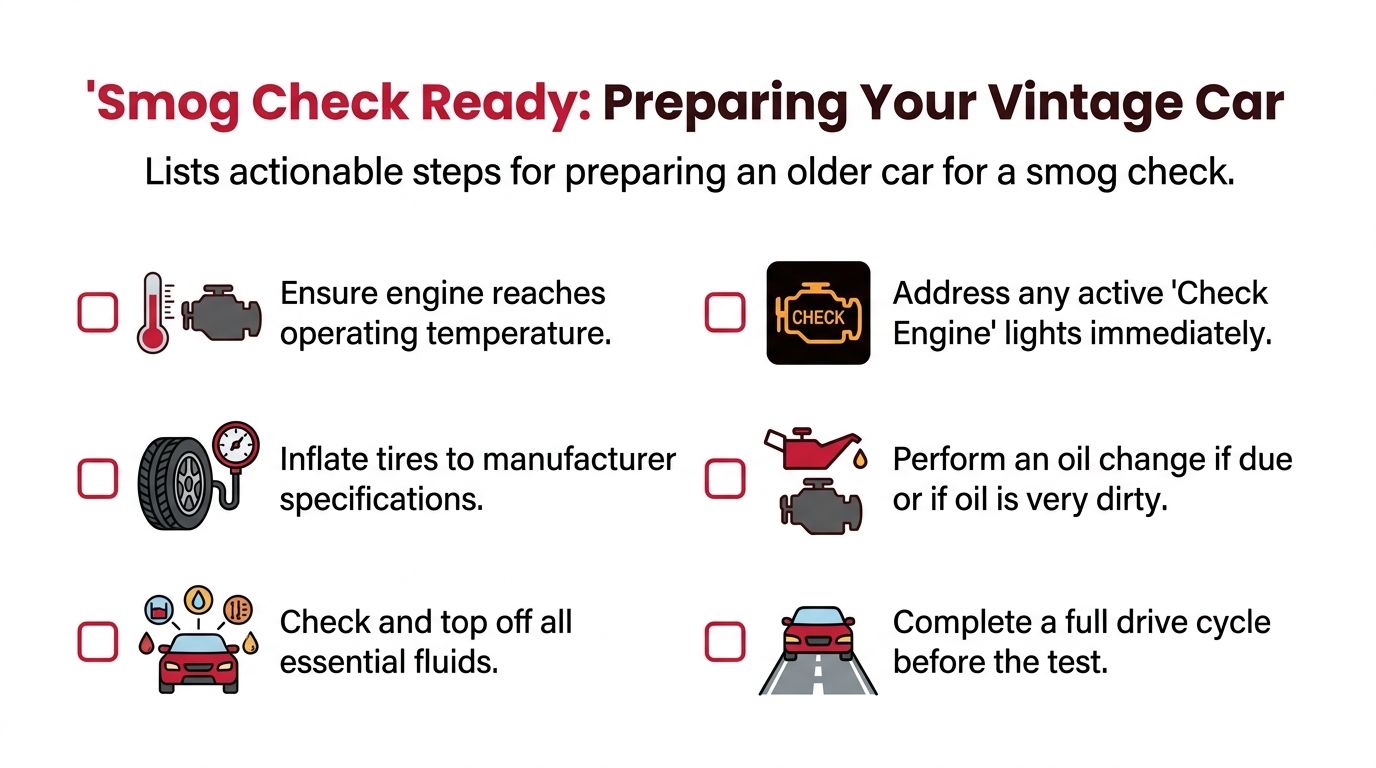
Use this as a practical pre-test checklist:
- Engine temperature: Don't show up with a cold engine. Drive long enough for full operating temperature so the catalytic converter and sensors are doing their job.
- Check Engine light: If the light is on, deal with that first. Clearing codes right before the test often creates a new problem because monitors may not be ready yet.
- Oil condition: If the oil is very dirty or overdue, change it before the test. Old oil can contribute to a rough-running engine.
- Tire pressure: Inflate tires to the correct specification. That helps the car behave normally during testing conditions.
- Fluid levels: Check and top off the basics. You want the engine operating steadily, not compensating for avoidable maintenance issues.
- Battery history: If the battery was recently disconnected or replaced, assume the car may need extra driving before it's fully test-ready.
Why the pre-test drive cycle helps
One of the most overlooked tricks is the pre-test drive cycle. Reddit users and experienced owners report that driving a specific 30-mile route, usually a mix of highway and city driving, can help prime the O2 sensors and catalytic converter, especially on 1995 to 2000 vehicles that struggle after battery disconnections, according to this owner discussion about the 30-mile drive cycle.
That advice lines up with what older-car owners see in real life. A car can feel fine and still not be ready for inspection if the monitors haven't settled back in after power loss or recent code clearing. The drive cycle gives the system time to run its checks under normal conditions.
Here's what tends to work better than random short trips:
- Start with the car fully warmed up.
- Drive a mix of steady-speed road time and stop-and-go sections.
- Avoid idling in a parking lot and calling it “warm.”
- Don't disconnect the battery again before the test.
“If you just cleared codes, don't rush straight to the station. Give the car a real drive first.”
What doesn't work is guessing. Spraying fuel additives into the tank at the last minute, clearing codes on the way over, or showing up after the car sat for days usually creates more trouble than it solves. Older cars reward steady prep, not shortcuts.
The STAR Test Process for Pre-2000 Vehicles
Older cars make people nervous partly because they expect a mysterious process. It isn't mysterious once you know what lane your vehicle falls into.
What BAR-97 means in plain English
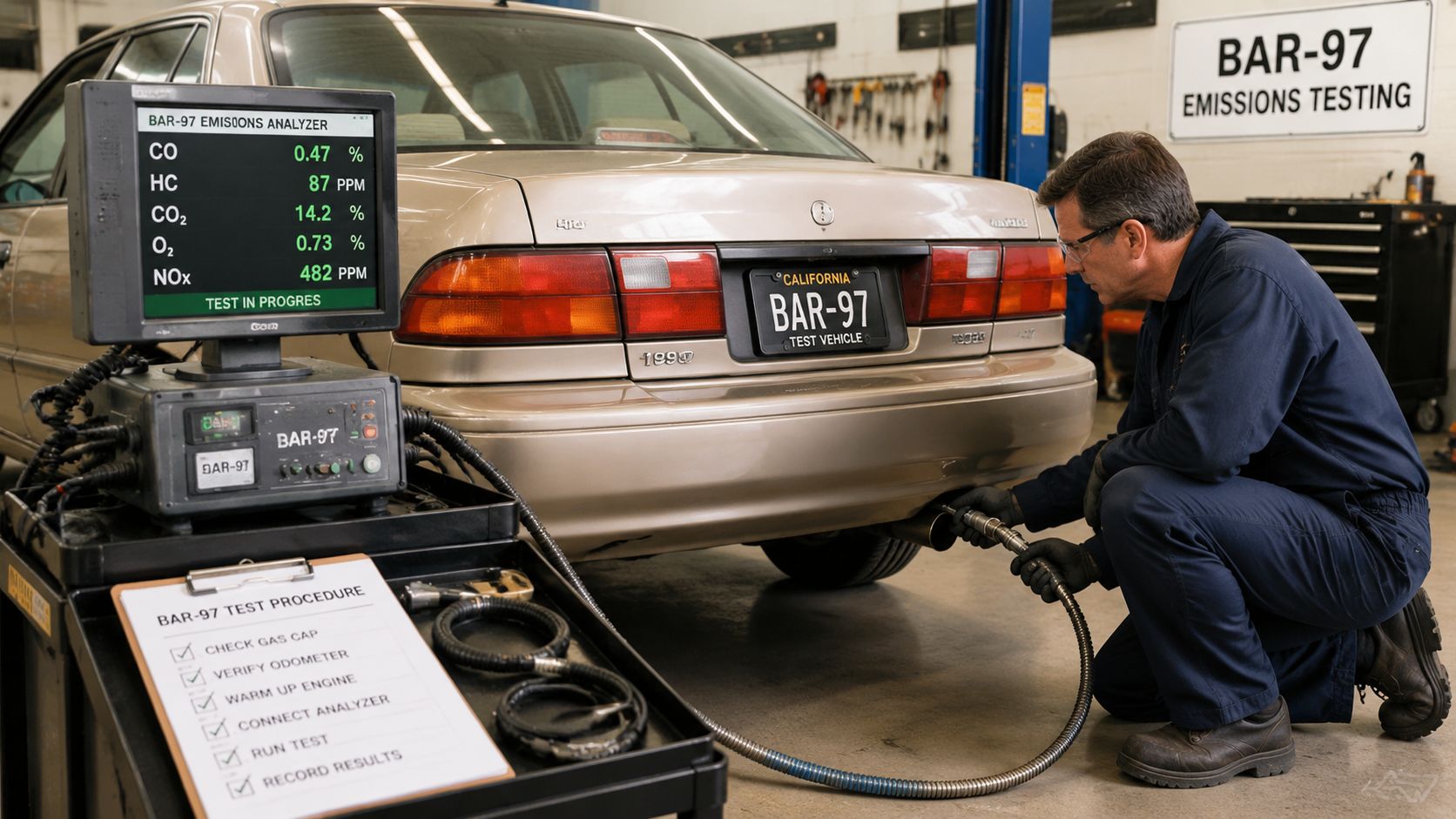
Vehicles built in 1999 and older use the BAR-97 test rather than the newer OBD-II style process used for later vehicles. That older test uses tailpipe emissions sampling and analog diagnostic equipment, and it checks what's coming out of the exhaust instead of relying mainly on the car's onboard reporting, as described in this overview of California's BAR-97 testing for older vehicles.
For owners, the practical takeaway is simple. Mechanical condition matters a lot more on these vehicles. Tune, vacuum integrity, catalytic converter health, and basic engine operation have a direct effect on the result.
The same source notes that BAR-97 testing measures HC, CO, and NOx at the tailpipe, and the inspection window for these vehicles is longer than for newer cars. That's one reason older-car smog appointments can feel more involved.
Why station type matters
If your notice requires a STAR station, pay attention to that requirement. Don't assume every shop handles the same vehicles in the same way.
For older vehicles, many owners prefer a test-only setup because the incentives are cleaner. The shop is there to inspect, not to fail the car and immediately sell a repair package. If you need a STAR inspection, a STAR smog test-only station in Antioch gives you that narrower, more impartial role.
That matters most when the car is borderline or has already had work done elsewhere. You want an accurate result first. Then, if repairs are needed, you can make a calm decision instead of reacting under pressure.
What to Do If Your Older Car Fails the Smog Check
A failed result doesn't always mean the car needs a major repair. It means you need to read the failure correctly before spending money.
Read the failure before approving repairs
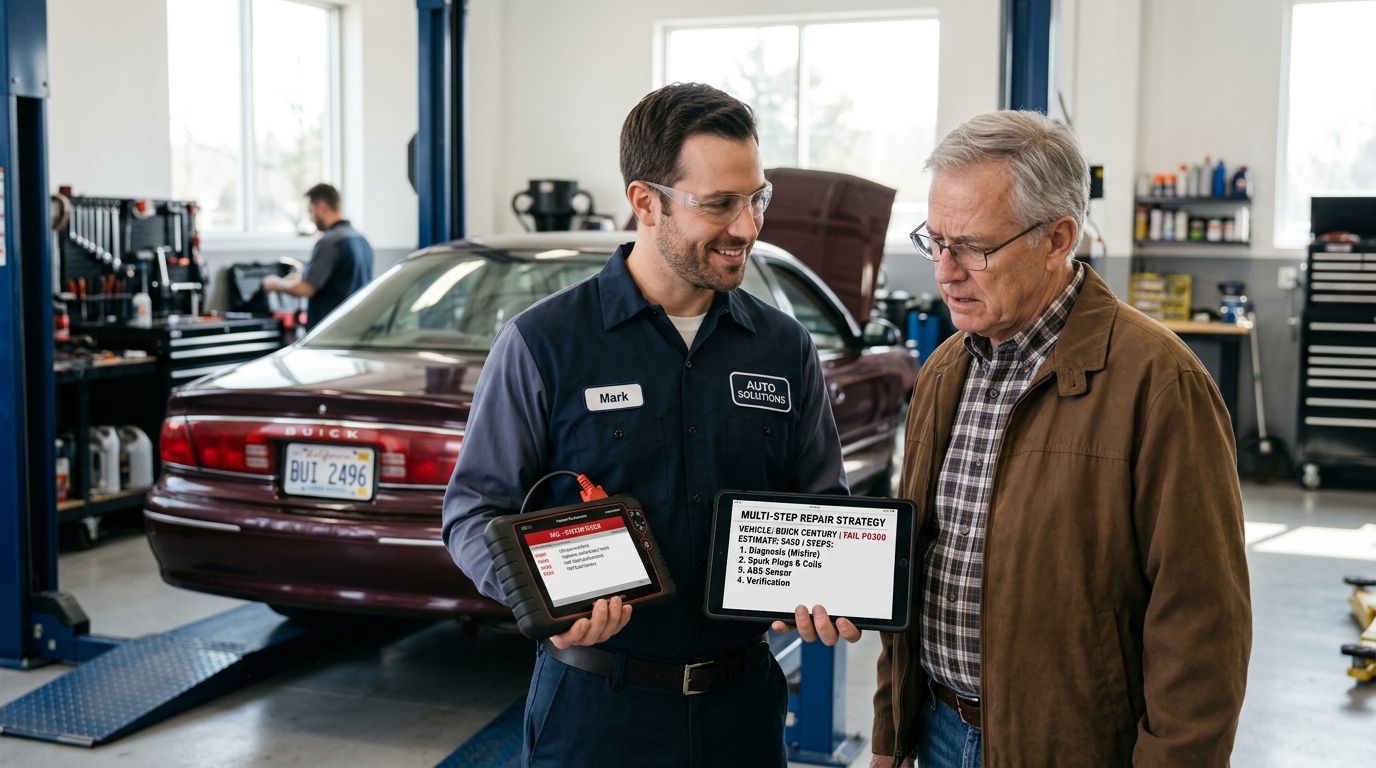
There's a big difference between a true emissions problem and a procedural issue. A car might fail because of actual tailpipe output, a readiness problem, missing or altered equipment, or something that points to a narrow fault rather than a full system rebuild.
Start with this sequence:
- Get the exact reason in writing: Don't leave with a vague memory of what the technician said.
- Match the failure to recent events: Battery disconnect, code clearing, long storage, or recent engine work can all matter.
- Avoid one-shot repair decisions: On older cars, replacing parts by guesswork gets expensive fast.
- Ask about retest policy: Some stations offer a free retest under coupon or posted policy terms, which can make a second attempt much easier after a targeted fix.
If you want a clearer sense of what usually trips cars up, this guide to common smog check fail reasons is a useful starting point.
Common mistake: Owners hear “fail” and approve everything suggested in the first five minutes. That's how small emissions problems turn into large invoices.
When to use the Smog Check Referee
Some older cars don't fit cleanly into standard advice. Collector vehicles, modified vehicles, and stubborn repeat failures are where owners should think about a second opinion.
The Smog Check Referee Program offers a free, independent technical review to determine whether the failure reflects a genuine emissions problem or a testing issue, and in some cases it may waive the repair requirement, according to the BAR Referee review process for smog check results.
That option is more valuable than most owners realize. If the car has an unusual setup, a long repair history, or a result that doesn't match how the vehicle is equipped, the referee path can keep you from chasing the wrong fix.
A short explainer helps if you haven't seen the process before.
Use the referee route when the failure feels questionable, not as a substitute for obvious maintenance. If the catalytic converter is damaged, vacuum lines are disconnected, or the engine is running poorly, that still has to be addressed. But when the case is murky, a second opinion can be the smartest move.
Your Antioch Smog Check Partner Fire House Smog
For local drivers, convenience matters almost as much as the technical side. Older cars don't love unnecessary trips, long waits, or being bounced between the test station and the DMV.
Why the setup is useful for older vehicles
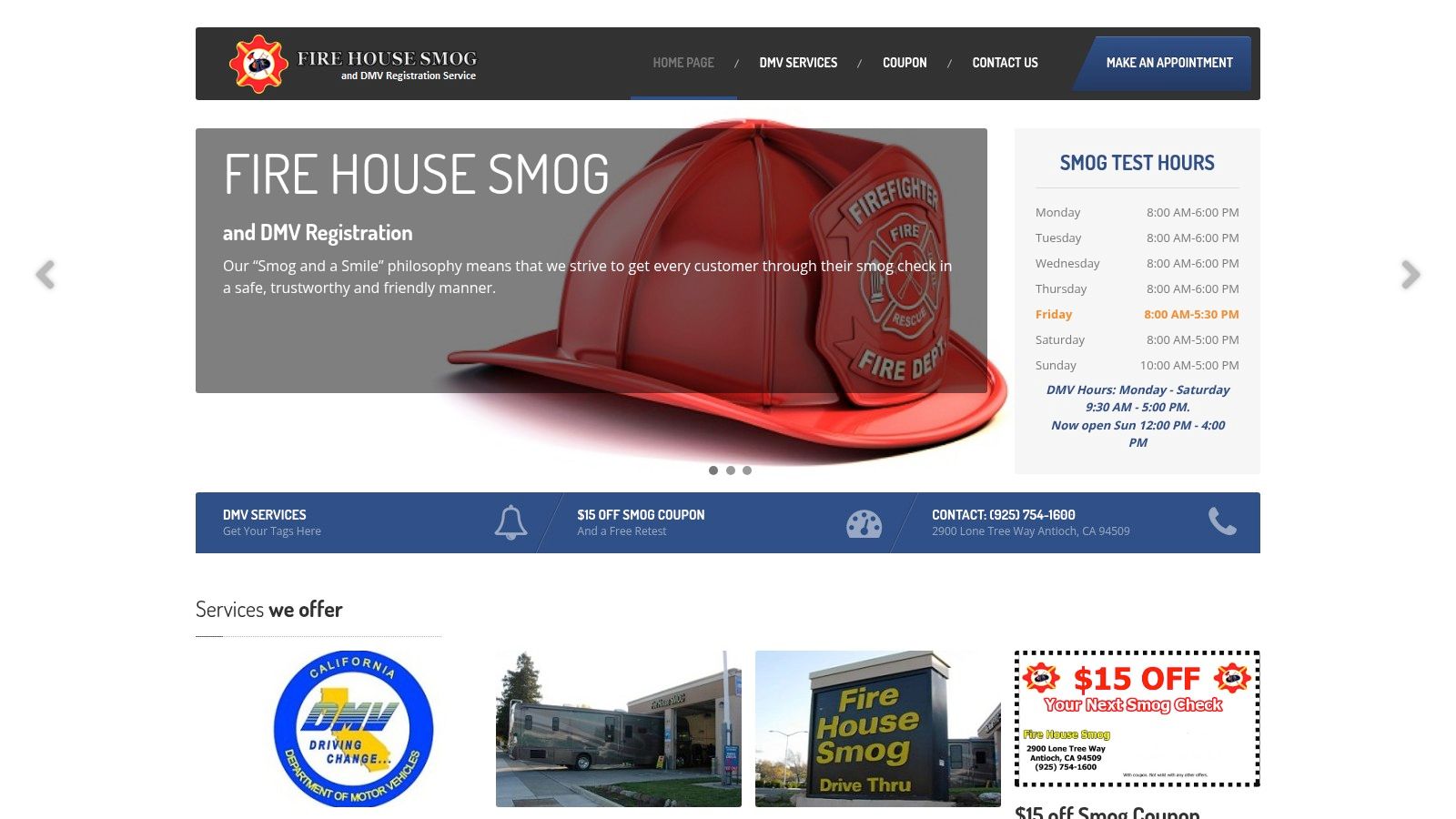
Fire House Smog is a STAR-certified test-only station and licensed DMV registration provider in Antioch. The test-only model is useful for owners who want an inspection without repair upselling, and the station's two-bay setup helps keep vehicles moving instead of stacking up in a single line.
The location also handles California DMV renewals, ownership transfers, and related registration tasks with on-site tag issuance during posted hours. That's a practical advantage when you've already done the hard part and just want the paperwork finished.
Local details that make the process easier
The shop is located at 2900 Lone Tree Way, Antioch, CA 94509, and you can reach it at 925-754-1600. Smog testing is available seven days a week, with extended weekday and weekend availability, and DMV services run Monday through Saturday from 9:30 AM to 5:00 PM and Sunday from 12:00 PM to 4:00 PM.
For Antioch and East Contra Costa County drivers, that combination solves a real problem. You don't have to line up one place for a test and another for registration handling if both are needed.
If you want station details before heading over, the Antioch smog check service page lays out the local service options clearly.
Frequently Asked Questions About Older Car Smog Checks
Do I need a smog check to sell an older car
In many private-party sales, yes. If the car is outside California's newer-vehicle transfer exemption, the seller usually needs to provide a passing smog certificate before the title changes hands.
The practical mistake is testing too early. Smog certificates expire, and older cars can drift out of tune if they sit, so line up the inspection close enough to the sale that you are not paying for the same test twice.
Can historic plates make my car exempt
Historic or collector plates do not automatically remove the smog requirement.
What matters is the vehicle's year, fuel type, and how California classifies it. I have seen owners show up convinced the plate solves everything, then lose time because the car still falls into a test-required category. Check the actual exemption status first, not the badge on the plate.
How long is a smog certificate valid
A smog certificate is valid for 90 days.
That window matters more than owners expect. If you are selling the car, finishing registration late, or waiting on DMV paperwork, watch the calendar. Once the certificate expires, the state can require a fresh test.
What is the difference between test-only and test-and-repair
A test-only station inspects the car and reports the result. A test-and-repair shop can inspect it and sell the repair work.
For an older car, test-only often gives you a cleaner starting point. You get the numbers without having to make a repair decision on the spot. If the car fails, you can compare repair options, ask better questions, and decide whether a regular shop, marque specialist, or Smog Referee makes the most sense.
Do all older cars get the same kind of smog test
No. A pre-2000 car does not move through the program the same way a newer OBD-II vehicle does, and diesel rules are different again.
That is why advice from a neighbor with a different model year can send you in the wrong direction. The right prep depends on the engine management system, the emissions label under the hood, and whether the car needs a STAR station.
What is the best last-minute thing I can do before the appointment
Give the car a proper warm-up drive.
For many older vehicles, a short freeway run followed by normal city driving helps more than any fuel additive poured in the tank the night before. The goal is to get the engine fully hot, stabilize idle quality, and, on cars that track readiness, complete enough of the drive cycle for the monitors to set. If the battery was disconnected recently or repairs were just done, do not assume a quick trip around the block is enough.
If my older car fails, do I have any options besides paying for repairs right away
Yes. Start by reading the failure printout carefully. High hydrocarbons, high carbon monoxide, and a functional failure do not point to the same problem, and treating them like they do is how owners waste money.
If the car has a hard-to-find configuration, an engine swap question, or a dispute over required equipment, the California Smog Referee program can be the right next step. It is also useful when standard shop advice is not lining up with what the car is.
If my exempt older vehicle doesn't need biennial smog, can I ignore emissions equipment
No. Exempt from routine testing does not mean free to remove emissions parts.
That catches owners during a later sale, a referee inspection, or any situation where the car is checked for required equipment. Keeping the emissions system intact is usually cheaper than trying to put a half-modified older car back to stock under deadline pressure.
If you want a straightforward smog check for older cars in East Contra Costa County, Fire House Smog offers STAR-certified test-only inspections, DMV registration help, and seven-day availability at 2900 Lone Tree Way in Antioch. Call first if you've got an unusual vehicle or RV, and bring the DMV notice so the visit goes faster.